To save content items to your account,
please confirm that you agree to abide by our usage policies.
If this is the first time you use this feature, you will be asked to authorise Cambridge Core to connect with your account.
Find out more about saving content to .
To save content items to your Kindle, first ensure no-reply@cambridge.org
is added to your Approved Personal Document E-mail List under your Personal Document Settings
on the Manage Your Content and Devices page of your Amazon account. Then enter the ‘name’ part
of your Kindle email address below.
Find out more about saving to your Kindle.
Note you can select to save to either the @free.kindle.com or @kindle.com variations.
‘@free.kindle.com’ emails are free but can only be saved to your device when it is connected to wi-fi.
‘@kindle.com’ emails can be delivered even when you are not connected to wi-fi, but note that service fees apply.
The University of Bradford places strategic priority on embedding equality, diversity and inclusion (EDI) in all it does, as evidenced by the University frequently leading the sector in social inclusion and mobility rankings (HEPI, 2023). As Bradford's vice-chancellor stated, ‘At Bradford, the principle of equality of opportunity is at the heart of who we are, what we do, how and why we do it,’ (BBC, 2023). The University's ‘Making our Diversity Count: Equality, Diversity and Inclusion Strategy 2020–25’ (University of Bradford, 2020) puts emphasis on creating and promoting an inclusive working and learning environment at the University. The University of Bradford's J. B. Priestley Library is one of the key learning spaces within the University, and the library's strategy aligns with these university goals, voicing a strong commitment to providing a truly inclusive, safe and supportive learning environment for all library users.
Reviewing the inclusivity of library study spaces for our Users
At the end of 2021, as part of a University of Bradford library staff reading and discussion group session, library staff discussed the article ‘Meeting the Needs of Parents and Carers within Library Services: Responding to Student Voices at the University of East London’ (Clover, 2017). This article talked about how the library at the University of East London had been investigating how it could be more responsive in meeting the needs of students who are parents/carers of young children. It included results from a student survey through which parents overwhelmingly requested a separate dedicated area to be set up, preferably encompassing activities for children.
Regina Everitt: Let's start with your experience of using academic libraries.
Neil Everitt: As a mature student at Birkbeck, University of London, I used the library spaces as the transition from work to study, to take time to breathe, to catch up, before evening lectures. This (precious) 45 minutes or so, three times a week, gave me the opportunity to have some ‘me time’, important to an introvert, and replenish my energy reserves before the evening lectures.
The library also created a connection with the University ‘space’. This may have been replaced by other spaces such as the Students’ Union if I had been studying full time perhaps – but the library was an important element of how I remember my Birkbeck experience. Another major element of that experience was the support provided to utilise the resources available through the library and aid my transition into academic study.
Later, studying at Cranfield University, the space in and around the library was used to collaborate as part of small study teams, as part of a larger cohort of students, designed to replicate the way teams operate in organisations. The study teams provided support to their members by dividing the workload, and working together on projects and case studies, and created natural competition between the study teams. The teams were given free rein to utilise the variety of spaces available at the University, but speed was needed to bag the most appropriate space for the task, to avoid five tired and over-caffeinated individuals huddling around a single laptop screen as a spreadsheet was analysed or last-minute tweaks to a presentation were agreed.
Dietterlin and other Renaissance artists supported an empirical approach to architectural image-making, one that emerged in treatises like Dietterlin’s Architectura. Such treatises became sites of conflict between rationalist and empirical mathematical traditions, with Dietterlin’s mixed arithmetic and geometrical design procedures marking a pivotal turn toward empiricism. The development of prints in architectural texts – from geometrical illustrations in masonic incunables to Dürer’s 1525 Lesson on Measurement and archaeological renderings by Sebastiano Serlio, Philibert De L’Orme, and Hans Blum – shows how Dietterlin and his contemporaries increasingly rejected received knowledge in favor of the empirical epistemology also practiced by period artists and natural philosophers. As architectural treatises shifted from rationalist to empirical approaches to architectural design, they aligned architecture with the empirical culture of Renaissance image-making exemplified in Dietterlin’s Architectura.
My son visited his mates in their first year of university. Upon his return, I was keen to hear what they thought about the campus. Having been to the University for a meeting, I was aware that it had a large, modern library with fantastic courtyard views over lush gardens. Although one of my university libraries has a wonderful view overlooking the Royal Albert Docks in London, I confess to having a bit of garden envy.
‘Good weekend?’ I asked. ‘Yeah, good,’ he said in near-monosyllabic detail. ‘They have a great library,’ I said, foraging for a more textured response. He is used to excitement about libraries from me. He has what I hope are fond memories of whiling away the time in the children's section in the local public library, flipping through picture books.
‘Oh, I don't even think they know where that is,’ he laughed.
Well, it's there when they discover they need it, I thought to myself. Unsurprisingly, in the heady, early days of university life, the ‘perceived value’ of the university library may not be obvious to some students. However, as course demands set in (such as the need for learning resources, study spaces and research skills development), the library's value comes to the fore. Bain & Company Inc. identify 30 elements of value for customers, and group them on a pyramid in four categories: functional, emotional, life changing and social impact – like Maslow's hierarchy of needs (Almquist et al., 2016). The functional or lowest rung of the ladder covers basic needs.
This agenda-setting volume disrupts conventional notions of time through a robust examination of the relations between temporality, infrastructure and urban society. With global coverage of diverse cities and regions from Berlin to Jayapura, this book re-evaluates the temporal complexities that shape our infrastructured worlds.
This work is a fascinating attempt to probe deep into the socio-cultural ramifications of the visual artefacts of ancient India, which has a rich heritage of iconographic treasures of varying sizes and styles. The art objects selected for analysis are mainly from the Mathura region of the Kushan era and belong to a period between 50 - 60 and 300 of the Common Era. This period is perceived as that of 'multicultural environment' enriched with different streams of tradition. According to the author they are directly related to the themes of abundance and fertility, its perceived cause. The author demonstrates how these distant fragments of visual imagery can yield rich insights of the world view of the communities which produced them. The work critically analyses the representation of 'spiritual deities' consisting of Ekanamsha, Hariti, Matrikas, Naigamesha, Shashthi and Skanda who were associated with the function of child protection. Understandably, they were the products of a belief in supernatural powers which could offer psychological protection to women cutting across different socio-economic classes at the times of great psychological stress like pregnancy, childbirth and puerperium. The artefacts are carved in stone. Sometimes they are projected as isolated individuals and at other times as belonging to multi-character panels. Depending on their size, they had different functions: bigger objects could be fixed at some places and smaller ones carried from place to place.
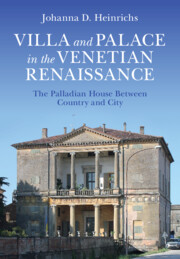
Designed by Andrea Palladio, the Villa Pisani at Montagnana was the country residence of a Venetian nobleman, Francesco Pisani. Unusually, its design combines features of both villa and palace architecture, and it challenges the conventional view of a villa as subsidiary to the urban palace, the true seat of an elite family. In this book, Johanna D. Heinrichs offers the first comprehensive study of the Villa Pisani, providing a critical analysis of Palladio's hybrid design, the villa's original setting and uses, and the preoccupations of its patron. Heinrichs argues that the Villa Pisani served as the owner's principal residence. She also shows how a microhistorical approach can provide new insights about a familiar Renaissance building type and about the theory and practice of a canonical architect. Based on scrutiny of original documents and visual sources, Heinrichs's study is supported by a rich illustration program composed of photographs, plans, maps, and digital reconstructions.
The films in this chapter address themes of futurities, digital technologies of the moving image, socio-cultural movements and cultural restitution. In an interview with the journalist Oulimata Gueye, the Kenyan writer and film director Wanuri Kahiu debates science fiction and whether the layered contemporary meanings and interpretations of Afrofuturism are a trend. Kahiu said she considers science fiction to be a longstanding feature of the African oral tradition, stating there have always been
people in all parts of Africa that have either looked to space, or […] who are seers, who could see into the future, and who could disseminate the future and tell people what is going to happen, so we’ve always been able to draw from things that are outside of this world to be able to make sense of what is inside of the world.
Wanuri Kahiu, Pumzi, Kenya, 2009, 20 Minutes
In the short film Pumzi (meaning breath in Swahili), the Nairobi-based director imagines a future dystopian world and inadvertently ventures via science fiction into the lively genre of Afrofuturism. In the scenario, survivors of a World War Three, the ‘Water War’, live in a hermetic underground soci-ety. This future is a totalitarian, technocratic culture governed by military personnel. The protagonist, Asha (Kudzani Moswela), like all citizens, must wear tubes to recycle her bodily fluids in a context of extreme water scarcity and chooses to break free to the contaminated surface.
Asha, a scientifically trained conservator, works alone in an almost empty laboratory of a sanitized natural history museum. She is a member of a hierarchical and fully technocratic society, lodged far underground after a water war contaminated the surface. Water is so scarce in this quiet chthonian environment that she and her co-inhabitants use grafted-on tubing to recycle their bodily fluids through frequent exercise. When Asha receives an anonymous, unauthorized parcel containing a jar of soil with high humidity content and no radioactivity, she contacts her superior who appears remotely on a screen without uttering words. Communication is transmitted and monitored by an unknown process. Her superior does not believe Asha. She orders her to throw the sample away and to take her dream suppressant medication. Asha breaks the rules and plants a seed in the soil, waters it and observes it grow.
Here, it has less to do with thinking of the city as a superstructure (which it certainly is) than as a production of meaning or direction [sens] whose significations inform our social and political reality, but, above all, our imaginaries and our projections.
Felwine Sarr
Most architects, urbanists, landscape architects and designers broadcast and disseminate their work by means of public speaking tours. In recent years, this practice has been augmented by recorded versions that can be streamed anytime and often are embedded into their company websites. Rwandan architect Christian Benimana, who leads the Africa Studio in the Boston-based architectural practice Mass Design, gave a talk to a large audience in Arusha, Tanzania, on August 2017, as part of the popular Ted Talk series.
In his talk, entitled ‘The Next Generation of Architects and Designers’, Benimana speaks of the African continent's urgent near-future needs to match the population growth, which he estimated would require 700,000,000 sustainable housing units, more than 300,000 schools and 85,000 medical clinics to be built by 2050. He translated those numbers into seven medical clinics, 25 schools and about 60,000 housing units per day. Benimana is optimistic that this massive task can be achieved sustainably by African architects who understand the landscape and the population's needs. He illustrates his talk with examples of his own work, such as a new prototype project, the Kasungu Maternity Village, attached to the Kasungu District Hospital in Malawi. Completed in 2015, it provides shelter and antenatal care for expectant mothers from their thirty-sixth week, which helps reduce maternity casualties.
He also presented the work of other architects in the Ted Talk, which includes a prototype project by the Nigerian architect Kunlé Adeyemi, whose Amsterdam- and Lagos-based design and development practice NLÉ proposed the Makoko Floating School project of A-frame triangular structures on barges to serve as schools and community centres for Makoko's floating informal settlement in Lagos, and Diébédo Francis Kéré in Burkina Faso, who designed the Lycée Schorge secondary school (completed 2018) in Kougoudou, a region with a population of about 200,000. The school was built from locally sourced materials using local construction processes and involves and serves the local community.
In a 20-minute interview, Djibril Diop Mambéty (1945–1998) was asked how to make a movie, to which he responded with a monologue:
You want to know how to make movies, is that it? OK, to make movie, it's simple. One closes the eyes. Have you closed your eyes? You close your eyes. You see points of light. Shut your eyes tightly. The points become clearer. People come into focus. Life is created. The mind works, but not more than the heart. A whole story unfolds in the direction of the wind that you want. The story is here, and then you open your eyes and have a story. Do the same thing. Voilà.
In this micro-performance, the film director Mambéty, who filmed the locations where he lived, places that he knew and frequented in Dakar, reveals an inner landscape of cinematic creation from the beginning, familiar and yet ex novo. This study of documentary and dramatic African film is viewed through cinematic portals and is intended to interpret the post-colonial environment and to anticipate the future; a range of examples of African film and video – documentary and fiction – present, evaluate and critique the transformation of urban and rural landscapes in Africa. Operating from differing points of view and at varying levels of investigation, these chapters demonstrate the development and professionalization of African cinema over the years, and also discuss the role cinema plays in highlighting these landscapes by juxta-posing the empirical data that the moving image provides, and in relation to the various domains within, that may not be similar but may adjoin and interconnect. The visual and aural nature of cinema and its photographic and documentary character also allow for the discussion and critique of contemporary issues in the urban and rural dynamic of development, from related subjects on climate change, such as deforestation, sustainability and biodiversity, water and food supply, inequity and women's rights, political instability, security and sovereignty.
These selected works comprise multiplatform digital video, cinema and streamed moving images, which, with an emphasis on documentaries, open the door to rethinking and eventually to the possibilities of fresh proposals responding to the situations portrayed. Cinematic media convey important visual information regarding the urban and rural built environments in Africa's numerous geographic zones and diverse territories that are projected for major evolution and development over the coming decades.