To save content items to your account,
please confirm that you agree to abide by our usage policies.
If this is the first time you use this feature, you will be asked to authorise Cambridge Core to connect with your account.
Find out more about saving content to .
To save content items to your Kindle, first ensure no-reply@cambridge.org
is added to your Approved Personal Document E-mail List under your Personal Document Settings
on the Manage Your Content and Devices page of your Amazon account. Then enter the ‘name’ part
of your Kindle email address below.
Find out more about saving to your Kindle.
Note you can select to save to either the @free.kindle.com or @kindle.com variations.
‘@free.kindle.com’ emails are free but can only be saved to your device when it is connected to wi-fi.
‘@kindle.com’ emails can be delivered even when you are not connected to wi-fi, but note that service fees apply.
Activity at the sculpture workshop at Aphrodisias seems to have continued up until the early fifth century AD. But it is conventional to establish a terminus for Greek sculpture about a century earlier. Setting aside the geopolitical changes signalled by Constantine's decision to locate (in AD 324) his administration on the site of an old Greek colony called Byzantium, the stylistic evidence from the last major pagan monument erected at Rome – the triumphal arch voted by the Senate in Constantine's honour (AD 312–15) – is enough, in the eyes of many modern observers, to mark the end of ‘Classical antiquity’. Further to describe it as a definitive ‘decline of form’ is tendentious; yet by this time, it seems (to judge by an edict attributed to Constantine), the traditional craft skills of Greek sculptors were in short supply. Materially, there is only sparse and scattered evidence for their practice.
To draw a line with the Arch of Constantine is to say that whatever happens to Greek sculpture thereafter must be counted as part of its ‘afterlife’. The term afterlife may, however, raise expectations that this chapter fails to meet. In German it would be Nachleben: and that word brings with it a specialized discipline within academic art history, which is the study of how the forms of images in the Classical repertoire were utilized by artists from the early Middle Ages onwards. Aby Warburg (1886–1929) was the pioneer of this discipline and is honoured by an institute to his name. The sort of Nachleben that fascinated Warburg may be typified by one of his first case-studies, following the visual trail of a Classical motif usually referred to as the Dancing Maenad (Figure 12.1). The prototype of this motif remains obscure: an Athenian monument of the late fifth century seems likely, possibly a representation of the Chorus from Euripides’ The Bacchae by an artist called Kallimachos, famed for his ‘fussy’ drapery. There may have been eight or nine of these figures, all in various postures of Dionysiac ecstasy, on the original monument; numerous copies and derivations from them were made, in many media, in Roman times. For Warburg, the power of the motif consisted in its encapsulation of an extreme emotional state: an artist had only to ‘quote’ the figure of a frenzied Maenad to evoke that psychological state.
This book is the offspring of another. Entitled Understanding Greek Sculpture, it was published in 1996 and went out of print several years ago. As any author would, I wished for a reissue – or rather, a second edition, correcting and updating where necessary. This wish developed into the more ambitious project of entire renovation. Motives were mixed: since I could not trace the ‘floppy disk’ where the words of the original text were stored, the book would have to be rewritten – but in any case I was glad of the opportunity to implement numerous pentimenti of style and substance, while adding several further chapters and extra material throughout.
The basic structure remains – along with the intention to provide an ‘understanding’ of Greek sculpture. In a fresh introductory section I have outlined the historic and aesthetic justification for studying this body of ancient art; here it may be worth adding a reminder that the ‘power of art’ is rarely self-sufficient. If artists of today require (as they seem to) critics and commentators to ‘explain’ their work, how much greater the need for glossaries on work produced 2,000 or more years ago? And naturally we create our own academic priorities for this as for any other field of study. Since 1996, there have been two distinct trends in research and writing about Classical art in general, and Greek sculpture in particular. The first has been to investigate ‘the viewer's share’ – to focus not so much on how images were produced as on how they were received. It remains rare to have any insight about the contemporary response to sculptures of the fifth century BC and earlier. Yet the exploration of later texts related to images and attention to the literary genre of ekphrasis – the descriptive ‘speaking-out’ of writers alluding to works of art, from Homer onwards – has become more sensitive and sophisticated; and there is even some fresh evidence (notably from papyrus remains of the thirdcentury BC poet Posidippus). An evolutionary and collective account of ancient response is still difficult to compose. This study, nonetheless, tries to maintain alertness to the religious power of images in their original function: a ‘theology of viewing’ wherever sculpture was once situated.
The vocabulary of procreation is much favoured by Classical art historians and archaeologists. Many accounts of Greek art are framed in terms of ‘seeds’ being ‘sown’, techniques ‘hatched’ or ‘conceived’, forms ‘born’ and so on. But to anyone surveying the various accounts of the ‘birth’ of Greek art, the genesismetaphor must soon lose its usefulness: for the claimed parentage turns out to be less a matter of forensic certainty and more to do with political correctness or partisan bias. Thus Turkish authorities will claim ancient Anatolia as an indispensable supplier of motifs, monsters and other decorative devices; Jewish scholars may be inclined to stress the role of the Phoenicians, and not only as commercial transmitters of Eastern objects; Egyptologists insist that only a knowledge of ‘the Egyptian canon’ and Egyptian stone-cutting methods could have enabled the Greeks to have progressed from figurines to monumental statues; while staunch philhellenes will argue that Cycladic, Minoan and Mycenaean sites yield all the necessary precedents and prototypes for the figurative styles we now generally salute as ‘Greek’.
What is at stake here? In the over-arching narrative of Western art history, it is the origin of an artistic tradition that runs from Classical antiquity to our own time: a hiatus from Byzantium to the late Middle Ages, then ‘rebirth’ with the European Renaissance and thence an unbroken artistic-academic flow of inherited ideals to modernity. (It does not matter if there have been periods of revolt and reaction against ‘the Classical’ – the fixed point of absolute ‘perfection’ is still there.) According to this narrative, the ‘great names’ of art history – including, say, Leonardo, Michelangelo, Titian, Velazquez, Delacroix, Manet, Cézanne, Picasso – essentially built their work upon an awareness of what had been achieved by artists in ancient Greece – even if the work of those artists (such as the fourth-century painter Apelles) has disappeared, and even if (in the case of Cézanne and Picasso, at least) an awareness of non-Western and prehistoric art was also there.
So it becomes a loaded question – to ask, how did it start? But the very attempt to locate a time and place for the ‘genesis’ of Greek art is probably a misguided effort.
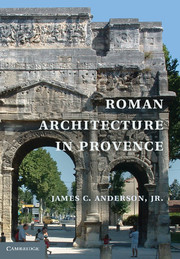
This book provides a survey of the architecture and urbanism of Provence during the Roman era. Provence, or 'Gallia Narbonensis' as the Romans called it, was one of the earliest Roman colonies in Western Europe. In this book, James C. Anderson, jr. examines the layout and planning of towns in the region, both those founded by the Romans and those redeveloped from native settlements. He provides an in-depth study of the chronology, dating and remains of every type of Roman building for which there is evidence in Provence. The stamp of Roman civilization is apparent today in such cities as Orange, Nimes and Arles, where spectacular remains of bridges, theaters, fora and temples attest to the sophisticated civilization that existed in this area during the imperial period and late antiquity. This book focuses on the remains of buildings that can still be seen, exploring decorative elements and their influence from Rome and local traditions, as well as their functions within the urban environment.
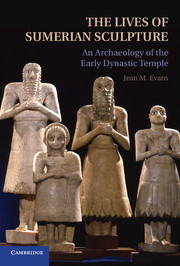
This book examines the sculptures created during the Early Dynastic period (2900–2350 BC) of Sumer, a region corresponding to present-day southern Iraq. Featured almost exclusively in temple complexes, some 550 Early Dynastic stone statues of human figures carved in an abstract style have survived. Chronicling the intellectual history of ancient Near Eastern art history and archaeology at the intersection of sculpture and aesthetics, this book argues that the early modern reception of Sumer still influences ideas about these sculptures. Engaging also with the archaeology of the Early Dynastic temple, the book ultimately considers what a stone statue of a human figure has signified, both in modern times and in antiquity.