To save content items to your account,
please confirm that you agree to abide by our usage policies.
If this is the first time you use this feature, you will be asked to authorise Cambridge Core to connect with your account.
Find out more about saving content to .
To save content items to your Kindle, first ensure no-reply@cambridge.org
is added to your Approved Personal Document E-mail List under your Personal Document Settings
on the Manage Your Content and Devices page of your Amazon account. Then enter the ‘name’ part
of your Kindle email address below.
Find out more about saving to your Kindle.
Note you can select to save to either the @free.kindle.com or @kindle.com variations.
‘@free.kindle.com’ emails are free but can only be saved to your device when it is connected to wi-fi.
‘@kindle.com’ emails can be delivered even when you are not connected to wi-fi, but note that service fees apply.
The birth of tragedy in late sixth-century Attica was a moment of major innovation in Greek poetry and society. For the first time, gods and mythical figures came to life and walked onto the stage before the eyes of their audiences. Homeric bards sung about them, but tragic poets gave them a voice, making them interact both with each other and with a collective entity, the chorus. Combining the legends of epic with the songs of various lyric genres, tragedy was a hybrid genre that appropriated and transformed other artistic traditions. Its flexible and rich texture contributed to its appeal, and so did its production: masks, music, dance and stage effects in general.
This chapter focuses on the dramatic festivals held from the Hellenistic to the Roman period. My discussion is chronologically arranged into two main parts, one covering the Hellenistic period and the other the Roman period. Each section follows the same arrangement: after reviewing various sources for actors’ activities and dramatic festivals, I consider both the premieres and post-premiere performances recorded. Although festival catalogues regularly attest to the performance of both ‘new’ and the ‘old’ tragedies, they name the plays staged only rarely. Other types of records, however, allow us to identify the plays that formed the repertoire of later actors. While the performance reception of newly composed dramas remains elusive, especially after the Early Hellenistic period, ancient theatres did continue to host tragedies that premiered in the fifth and fourth centuries, and Euripides’ plays are prominent among them. Actors ensured their survival among the larger public, and their performances helped create a shared cultural heritage.
The introduction serves three main purposes. First, I present the topic of the book and its main goal: to identify the Greek tragedies that ancient actors continued to stage from the fourth century BC to the third century AD. In addition to surveying the relevant scholarly literature, I also introduce the terminology used in the book. Second, I describe the four types of ancient sources that allow us to reconstruct the repertoire of ancient actors: inscriptions, literary records, tragedy-related vases and Roman tragedies. I discuss each category of records separately, presenting previous studies and addressing their contribution to my own work. Third, I summarise the four chapters making up the book and I describe how I have arranged the two Appendices collecting ancient sources, one related to identifiable Greek tragedies (Appendix I) and the other to their unidentifiable counterparts (Appendix II).
This chapter identifies the tragedies that ancient actors kept performing in three areas: fourth-century Athens and Attica, fourth-century Sicily and South Italy, and Republican Rome. My discussion is organised by poet, starting with the canonical tragedians: Aeschylus, Sophocles and Euripides. Although Aeschylus’ tragedies quickly lost appeal with theatrical audiences across Greece, at least a few of them survived in fourth-century Sicily and South Italy and were later adapted by Roman dramatists for Latin-speaking audiences. Sophocles’ tragedies fared generally better than Aeschylus’, but Euripides clearly had the largest impact on actors’ activities. Many of his tragedies can be consistently found in different venues. While the plays by the three canonical tragedians can be more easily traced in the theatre-related sources, the tragedies by other authors also survived in later theatres. Their plays as well were reproduced on the theatre-related pots from across fourth-century Sicily and South Italy and were later staged in Rome in their Latin adaptations.
This chapter discusses both the dramatic and the literary canons of Greek tragedy. First, I review the plays that entered the repertoire of ancient actors by focusing on the elements that they share. These include specific features, scenes and motifs, ranging from accessible Greek to large main roles, recognition and reunion scenes, mad heroes, the legends surrounding Dionysus and those related to Athens. Second, I discuss the scholarly activities that preserved most of the extant tragedies. My discussion spans from fourth-century Athens to the Byzantine period. Drawing from literary and papyrological sources, I identify the reasons underlying the literary selection of Greek tragedies: a narrow focus on the three canonical tragedians, generic definitions, considerations about specific authors and plays as well as pedagogical needs. Finally, I discuss the relationship between the two canons, arguing for their independence. They derive from two different kinds of selection, each driven by its own set of criteria.
This chapter discusses both premieres and post-premiere performances in Classical Athens and Attica by focusing on their venues and on the tragedies involved. The main dramatic festivals in Athens, the Great Dionysia and the Lenaea, offered post-premiere performances only rarely, but the Dionysia held in the demes, the Attic Dionysia, had a more flexible schedule allowing for both types of dramatic events. After discussing the ancient evidence for dramatic contests at the Attic Dionysia, I argue that these festivals had a key role in the early formation of the dramatic canon. As for the tragedies involved, I present three case-studies: Libation Bearers and Edonians by Aeschylus and Euripides’ Telephus. Dramatic texts suggest that these tragedies were mounted time and again already in Classical Attica, and these early performances laid the groundwork for the popularity that these tragedies enjoyed with later actors and audiences.
Book IX of the Odyssey is one of the most often read and discussed sections of Homeric poetry. It contains Odysseus' narrative of his encounter with Polyphemus the Cyclops, which not only typifies him as the trickster-hero that he is, but also resonates thematically with later parts of the narrative. This edition provides solid support in reading, understanding, and enjoying this essential episode. The Commentary is designed to be helpful to undergraduates, postgraduates, and scholars, providing assistance in understanding Homeric language from elementary to advanced levels. The constant attention to narratological details contributes to the literary appreciation of the episode. The Introduction offers a particularly full guide to Homeric meter, language and dialect as well as discussing in detail the place which the Cyclops episode occupies both in the Odyssey as a whole and in Greek mythology and culture as an expression of the colonial imagination.
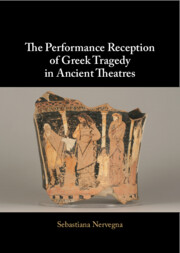
Greek tragedy enjoyed a rich afterlife on ancient stages. This book reconstructs that history across the entire Mediterranean area, from the fourth century BC to the early third century AD. It is based on an extensive collection of primary sources ranging from inscriptions and festival catalogues to literary records, tragedy-related vases from fourth-century Sicily and South Italy, and the Greek models of Roman Republican tragedies, with each one placed in its historical context. Sebastiana Nervegna identifies the Greek tragedies that formed the ancient theatrical repertoire, assesses how actors contributed to their survival and considers how public audiences continued to enjoy the theatrical masterpieces of Classical Athens. This is the first work entirely dedicated to the circulation of Greek tragedies among the larger public throughout antiquity.
The Athenian experience may help us to sharpen several decisive questions of our time: In what form do the mechanisms of inclusion and exclusion that run through a group build a true society that is more than the sum of its disparate networks? Conversely, by what processes does a society come to tear itself apart, or even disintegrate? How do heterogeneous social arenas and temporalities coexist within it? Under what conditions should the fervor of exceptional situations be maintained without sinking into totalitarian unity? All these questions unfold with clarity in one quite singular moment of the history of Athens: the civil war of 404/3 BC.
This chapter takes as a starting point one of the great figures of the Athenian civil war: Archinus, a resistance fighter against the Thirty from the outset and the main architect of the reconciliation in 403. By a strange turn of events, Archinus endeavored to recast Athenian law and to mark the permanence of the community beyond the vicissitudes of the civil war. Archinus, a tireless promoter of a reunified city, managed to gather two groups around his project, which each presented symmetrical evolutions: on the one hand, all the democrats who, having fought against the Thirty, did not want to open the civic body to new entrants, even deserving ones; and on the other hand, all ‘those from the town’ who were ready to cooperate with the restored democracy, such as Rhinon, a fascinating political ‘weather vane’ who appears, in many respects, to have been Archinus’ alter ego in the oligarch camp. After violently opposing each other during the civil war, these men agreed to merge into a single chorus, dancing in step within a seemingly pacified city. However, this irenic vision must be put into perspective in view of the violent upheavals experienced during the reconciliation process. Far from being a foregone conclusion, reconciliation actually went hand in hand with the maintenance of a strong political conflict, as illustrated by an astonishing profusion of trials between 403 and 399, attested to both by numerous law court speeches and by extraordinary epigraphic sources (i.e. curses [katadesmoi] engraved on lead tablets and buried in the ground). These clashes clearly worked to the advantage of the ‘moderates’ on both sides, who succeeded, at the time, in winning before the Assembly and in the courts and, subsequently, in imposing their version of history in the city.