To save content items to your account,
please confirm that you agree to abide by our usage policies.
If this is the first time you use this feature, you will be asked to authorise Cambridge Core to connect with your account.
Find out more about saving content to .
To save content items to your Kindle, first ensure no-reply@cambridge.org
is added to your Approved Personal Document E-mail List under your Personal Document Settings
on the Manage Your Content and Devices page of your Amazon account. Then enter the ‘name’ part
of your Kindle email address below.
Find out more about saving to your Kindle.
Note you can select to save to either the @free.kindle.com or @kindle.com variations.
‘@free.kindle.com’ emails are free but can only be saved to your device when it is connected to wi-fi.
‘@kindle.com’ emails can be delivered even when you are not connected to wi-fi, but note that service fees apply.
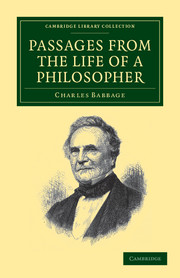
The mathematician and engineer Charles Babbage (1791–1871) is best remembered for his 'calculating machines', which are considered the forerunner of modern computers. Over the course of his life he wrote a number of books based on his scientific investigations, but in this volume, published in 1864, Babbage writes in a more personal vein. He points out at the beginning of the work that it 'does not aspire to the name of autobiography', though the chapters sketch out the contours of his life, beginning with his family, his childhood and formative years studying at Cambridge, and moving through various episodes in his scientific career. However, the work also diverges into his observations on other topics, as indicated by chapter titles such as 'Street Nuisances' and 'Wit'. Babbage's colourful recollections give an intimate portrait of the life of one of Britain's most influential inventors.
This brief guide is ideal for science and engineering students and professionals to help them communicate technical information clearly, accurately, and effectively. The focus is on the most common communication forms, including laboratory reports, research articles, and oral presentations, and on common issues that arise in classroom and professional practice. This book will be especially useful to students in a first chemistry or physics laboratory course. Advanced courses will often use the same formatting as required for submission to technical journals or for technical report writing, which is the focus of this book. Good communication habits are appropriate in all forms of technical communication. This book will help the reader develop effective communication skills. It is also ideal as a reference on stylistic and grammar issues throughout a technical career. Unlike most texts, which concentrate on writing style, this book also treats oral presentations, graphing, and analysis of data.
The purpose of this book is to give a coherent account of the different perspectives on science and technology that are normally studied under various disciplinary heads such as philosophy of science, sociology of science and science policy. It is intended for students embarking on courses in these subjects and assumes no special knowledge of any science. It is written in a direct and simple style, and technical language is introduced very sparingly. As various perspectives are sketched out in this book, the reader moves towards a consistent conception of contemporary science as a rapidly changing social institution that has already grown out of its traditional forms and plays a central role in society at large. It will appeal to students in a wide range of scientific disciplines and complement well Professor Ziman's earlier books.
After expanding steadily for centuries, science is reaching its limits to growth. We can no longer afford the ever increasing cost of exploring ever wider research opportunities. In the competition for resources, science is becoming much more tightly organised. A radical, pervasive and permanent structural change is taking place. It already affects the whole research system, from everyday laboratory life to national budgets. The scientific enterprise cannot avoid fundamental change, but excessive managerial insistence on accountability, evaluation, 'priority setting', etc. can be very inhospitable to expertise, innovation, criticism and creativity. Can the research system be reshaped without losing many features that have made science so productive? This trenchant analysis of a deep-rooted historical process does not assume any technical knowledge of the natural sciences, their history, philosophy, sociology or politics. It is addressed to everybody who is concerned about the future of science and its place in society.
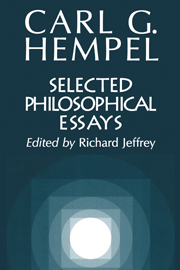
Carl Gustav Hempel (1905–97) was one of the preeminent figures in the philosophical movement of logical empiricism. He was a member of both the Berlin and Vienna circles, fled Germany in 1934 and finally settled in the US where he taught for many years in New York, Princeton, and Pittsburgh. The essays in this collection come from the early and late periods of Hempel's career and chart his intellectual odyssey from a rigorous commitment to logical positivism in the 1930s (when Hempel allied himself closely with Carnap) to a more sociological approach close in spirit to the work of Neurath and Kuhn. The collection brings together essays which have up till now been difficult to find, four of which are appearing in English for the first time. Cumulatively they offer a fresh perspective on Hempel's intellectual development and on the rise and demise of logical empiricism.
This engaging volume for the general reader explores how individuals and societies remember, forget and commemorate events of the past. The collection of eight essays takes an interdisciplinary approach to address the relationships between individual experience and collective memory, with leading experts from the arts and sciences. We might expect scientists to be concerned with studying just the mental and physical processes involved in remembering, and humanities scholars to be interested in the products of memory, such as books, statues and music. This collection exposes the falseness of such a dichotomy, illustrating the insights into memory which can be gained by juxtaposing the complementary perspectives of specialists venturing beyond the normal boundaries of their disciplines. The authors come from backgrounds as diverse as psychoanalysis, creative writing, neuroscience, social history and medicine.
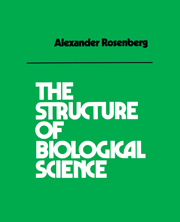
This book provides a comprehensive guide to the conceptual methodological, and epistemological problems of biology, and treats in depth the major developments in molecular biology and evolutionary theory that have transformed both biology and its philosophy in recent decades. At the same time the work is a sustained argument for a particular philosophy of biology that unifies disparate issues and offers a framework for expectations about the future directions of the life sciences. The argument explores differences between autonomist and anti-autonomist views of biology. The result is a vindication of reductionism, but one that is unexpectedly hollow. For it leaves the exponents of the autonomy of biology from physical science with as much as their view of biology really requires - and rather more than the reductionist might comfortably concede. Professor Rosenberg shows how the problems of the philosophy of biology are interconnected and how their solutions are interdependent, However, this book focuses more on the direct concerns of biologists, rather than the traditional agenda of philosophers' problems about biology. This departure from earlier books on the subject results both in greater understanding and relevance of the philosophy of science to biology as a whole.
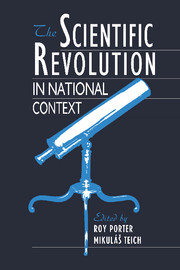
The 'scientific revolution' of the sixteenth and seventeenth century continues to command attention in historical debate. Controversy still rages about the extent to which it was essentially a 'revolution of the mind', or how far it must also be explained by wider considerations. In this volume, leading scholars of early modern science argue the importance of specifically national contexts for understanding the transformation in natural philosophy between Copernicus and Newton. Distinct political, religious, cultural and linguistic formations shaped scientific interests and concerns differently in each European state and explain different levels of scientific intensity. Questions of institutional development and of the transmission of scientific ideas are also addressed. The emphasis upon national determinants makes this volume an interesting contribution to the study of the Scientific Revolution.
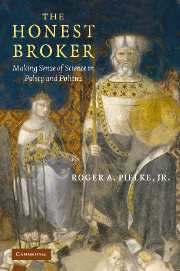
Scientists have a choice concerning what role they should play in political debates and policy formation, particularly in terms of how they present their research. This book is about understanding this choice, what considerations are important to think about when deciding, and the consequences of such choices for the individual scientist and the broader scientific enterprise. Rather than prescribing what course of action each scientist ought to take, the book aims to identify a range of options for individual scientists to consider in making their own judgments about how they would like to position themselves in relation to policy and politics. Using examples from a range of scientific controversies and thought-provoking analogies from other walks of life, The Honest Broker challenges us all - scientists, politicians and citizens - to think carefully about how best science can contribute to policy-making and a healthy democracy.
The detailed, practical, step-by-step advice in this user-friendly guide will help students and researchers to communicate their work more effectively through the written word. Covering all aspects of the writing process, this concise, accessible resource is critically acclaimed, well-structured, comprehensive, and entertaining. Self-help exercises and abundant examples from actual typescripts draw on the authors' extensive experience working both as researchers and with them. Whilst retaining the user-friendly and pragmatic style of earlier editions, this third edition has been updated and broadened to incorporate such timely topics as guidelines for successful international publication, ethical and legal issues including plagiarism and falsified data, electronic publication, and text-based talks and poster presentations. With advice applicable to many writing contexts in the majority of scientific disciplines, this book is a powerful tool for improving individual skills and an eminently suitable text for classroom courses or seminars.
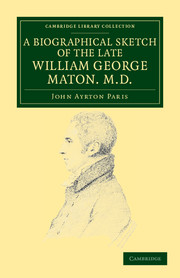
English physician William George Maton (1774–1835) was a polymath who had a special interest in botany: a shell and a parrot were among species named in his honour. His writings on natural history included a catalogue of the plant and animal life around Salisbury, Wiltshire, which was published posthumously in 1843 and is reissued as the second part of this composite work. The first part contains a sketch of Maton's life and work by fellow physician and writer John Ayrton Paris (c. 1785–1856), first presented to the Royal College of Physicians, and subsequently published in 1838. Paris discusses Maton's early life, his contributions to the growing field of botany, his other scientific and antiquarian interests, and his distinguished medical career, during which he was appointed physician-extraordinary to Queen Charlotte, wife of George III, and later physician-in-ordinary to the duchess of Kent and the young Princess (later Queen) Victoria.
William Thomson, Baron Kelvin (1824–1907), was educated at Glasgow and Cambridge. While only in his twenties, he was awarded the University of Glasgow's chair in natural philosophy, which he was to hold for over fifty years. He is best known through the Kelvin, the unit of measurement of temperature named after him in consequence of his development of an absolute scale of temperature. These volumes collect together Kelvin's lectures for a wider audience. In a convivial but never condescending style, he outlines a range of scientific subjects to audiences of his fellow scientists. The range of topics covered reflects Kelvin's broad interests and his stature as one of the most eminent of Victorian scientists. Volume 1, published in 1889, includes talks about the constitution of matter and basic topics in physics such as light, heat, electricity and gravity.
Contrary to prevailing opinion, the roots of modern science were planted in the ancient and medieval worlds long before the Scientific Revolution of the seventeenth century. Indeed, that revolution would have been inconceivable without the cumulative antecedent efforts of three great civilisations: Greek, Islamic, and Latin. With the scientific riches it derived by translation from Greco-Islamic sources in the twelfth and thirteenth centuries, the Christian Latin civilisation of Western Europe began the last leg of the intellectual journey that culminated in a scientific revolution that transformed the world. The factors that produced this unique achievement are found in the way Christianity developed in the West, and in the invention of the university in 1200. As this 1997 study shows, it is no mere coincidence that the origins of modern science and the modern university occurred simultaneously in Western Europe during the late Middle Ages.
Sir Isaac Newton (1642–1727) left a voluminous legacy of writings. Despite his influence on the early modern period, his correspondence, manuscripts, and publications in natural philosophy remain scattered throughout many disparate editions. In this volume, Newton's principal philosophical writings are for the first time collected in a single place. They include excerpts from the Principia and the Opticks, his famous correspondence with Boyle and with Bentley, and his equally significant correspondence with Leibniz, which is often ignored in favor of Leibniz's later debate with Samuel Clarke. Newton's exchanges with Leibniz place their different understandings of natural philosophy in sharp relief. The volume also includes 'De Gravitatione', offered here in a corrected translation, which is crucial for understanding Newton's relation to his great predecessor Descartes. In a historical and philosophical introduction, Andrew Janiak examines Newton's philosophical positions and his relations to canonical figures in early modern philosophy.
This compact volume covers the main developments in the social sciences since the Second World War. Chapters on economics, human geography, political science, psychology, social anthropology, and sociology will interest anyone wanting short, accessible histories of those disciplines, all written by experts in the relevant field; they will also make it easy for readers to make comparisons between disciplines. A final chapter proposes a blueprint for a history of the social sciences as a whole. Whereas most of the existing literature considers the social sciences in isolation from one other, this volume shows that they have much in common; for example, they have responded to common problems using overlapping methods, and cross-disciplinary activities have been widespread.
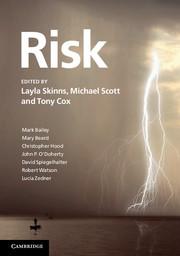
Recent events from the economic downturn to climate change mean that there has never been a better time to be thinking about and trying to better understand the concept of risk. In this book, prominent and eminent speakers from fields as diverse as statistics to classics, neuroscience to criminology, politics to astronomy, as well as speakers embedded in the media and in government, have put their ideas down on paper in a series of essays that broaden our understanding of the meaning of risk. The essays come from the prestigious Darwin College Lecture Series which, after twenty-five years, is one of the most popular public lecture series at the University of Cambridge. The risk lectures in 2010 were amongst the most popular yet and, in essay form, they make for a lively and engaging read for specialists and non-specialists alike.
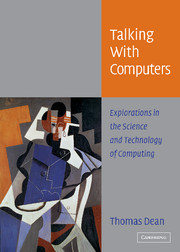
In this lively series of essays, Tom Dean explores interesting fundamental topics in computer science with the aim of showing how computers and computer programs work and how the various subfields of computer science are connected. Along the way, he conveys his fascination with computers and enthusiasm for working in a field that has changed almost every aspect of our daily lives. The essays touch on a wide range of topics, from digital logic and machine language to artificial intelligence and searching the World Wide Web, considering such questions as:How can a computer learn to recognize junk email?What happens when you click on a link in a browser?How can you program a robot to do two things at once?Are there limits on what computers can do?The author invites readers to experiment with short programs written in several languages. Through these interactions he grounds the models and metaphors of computer science and makes the underlying computational ideas more concrete. The accompanying web site http://www.cs.brown.edu/~tld/talk/ provides easy access to code fragments from the book, tips on finding and installing software, links to online resources, exercises and sample lectures.
Scientific research requires both innovation and attention to detail, clever breakthroughs and routine procedures. This indispensable guide gives students and researchers across all scientific disciplines practical advice on how to succeed. All types of scientific careers are discussed, from those in industry and academia to consulting, with emphasis on how scientists spend their time and the skills that are needed to be productive. Strategic thinking, creativity and problem-solving, the central keys to success in research, are all explored. The reader is shown how to enhance the creative process in science, how one goes about making discoveries, putting together the solution to a complex problem and then testing the solution obtained. The social dimension of science is also discussed from the development and execution of a scientific research program to publishing papers, as well as issues of ethics and science policy.
When the New Organon appeared in 1620, part of a six-part programme of scientific inquiry entitled 'The Great Renewal of Learning', Francis Bacon was at the high point of his political career, and his ambitious work was groundbreaking in its attempt to give formal philosophical shape to a new and rapidly emerging experimentally-based science. Bacon combines theoretical scientific epistemology with examples from applied science, examining phenomena as various as magnetism, gravity, and the ebb and flow of the tides, and anticipating later experimental work by Robert Boyle and others. His work challenges the entire edifice of the philosophy and learning of his time, and has left its mark on all subsequent philosophical discussions of scientific method. This volume presents a new translation of the text into modern English by Michael Silverthorne, and an introduction by Lisa Jardine that sets the work in the context of Bacon's scientific and philosophical activities.