To save content items to your account,
please confirm that you agree to abide by our usage policies.
If this is the first time you use this feature, you will be asked to authorise Cambridge Core to connect with your account.
Find out more about saving content to .
To save content items to your Kindle, first ensure no-reply@cambridge.org
is added to your Approved Personal Document E-mail List under your Personal Document Settings
on the Manage Your Content and Devices page of your Amazon account. Then enter the ‘name’ part
of your Kindle email address below.
Find out more about saving to your Kindle.
Note you can select to save to either the @free.kindle.com or @kindle.com variations.
‘@free.kindle.com’ emails are free but can only be saved to your device when it is connected to wi-fi.
‘@kindle.com’ emails can be delivered even when you are not connected to wi-fi, but note that service fees apply.
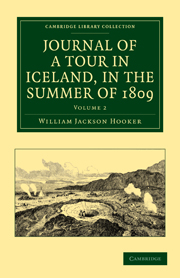
Sir William Jackson Hooker (1785–1865) was an eminent British botanist, best known for expanding and developing the Royal Botanic Gardens at Kew into a leading centre of botanic research and conservation. At the age of nineteen he undertook an expedition to Iceland, his first outside Britain. Unfortunately, all his specimens and notes were destroyed in a fire on the return voyage (described in Volume 1), but he was able, with the help of the notes made by Sir Joseph Banks on an earlier expedition, to write this account. His work was first published privately in 1811, but a second edition was published in 1813 and is reproduced here. In 1809 England and Denmark-Norway were at war, and Iceland was a Danish dependency. Volume 2 offers Hooker's first-hand observations on the relationship between the two countries, and also includes detailed descriptions of the many volcanoes on the island.
This book considers the underlying forces which helped to produce a revolution in seventeenth-century medicine. It shows how in the period between 1630 and 1730 medicine came to represent something more than a marginal activity unrelated to social and intellectual phenomena and also how it was influenced and formed by the same developments in religion, politics, science and commerce which shaped the general history of the seventeenth century. In an attempt to divert the historiography of the subject away from Newton, natural philosophy and the 'scientific revolution', the essays in this volume not only place medicine into a 'context' of political, religious and social change but also explore the dynamics which fashioned the nature of medicine in the age of revolution. Not surprisingly, religion emerges as perhaps the greatest external force for change, colouring most aspects of national and local life and interacting with the growth in the extent of medical knowledge and practice.
Symbols, Impossible Numbers, and Geometric Entanglements is the first history of the development and reception of algebra in early modern England and Scotland. Not primarily a technical history, this book analyses the struggles of a dozen British thinkers to come to terms with early modern algebra, its symbolic style, and negative and imaginary numbers. Professor Pycior uncovers these thinkers as a 'test-group' for the symbolic reasoning that would radically change not only mathematics but also logic, philosophy and language studies. The book furthermore shows how pedagogical and religious concerns shaped the British debate over the relative merits of algebra and geometry. Positioning algebra firmly in the Scientific Revolution and pursue Newton the algebraist, it highlights Newton's role in completing the evolution of algebra from an esoteric subject into a major focus of British mathematics. Other thinkers covered include Oughtred, Harriot, Wallis, Hobbes, Barrow, Berkeley and MacLaurin.
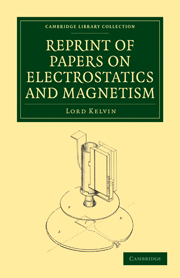
William Thomson, Baron Kelvin (1824–1907), born with a great talent for mathematics and physics, was educated at Glasgow and Cambridge. While only in his twenties, he was appointed to the University of Glasgow's Chair in Natural Philosophy, which he was to hold for over fifty years. He is best known for lending his name to the Kelvinunit of measurement for temperature, after his development of an absolute scale of temperature. This book is a corrected 1884 edition of Kelvin's 1872 collection of papers on electrostatics and magnetism. It includes all his work on these subjects previously published as articles in journals including the Cambridge Mathematical Journal and the Transactions of the Royal Society. Kelvin also wrote several new items to fill gaps in this collection, so that its coverage of the state of electromagnetic research in the late nineteenth century is comprehensive.
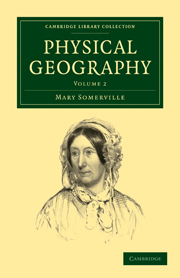
Mary Somerville (1780–1872) would have been a remarkable woman in any age, but as an acknowledged leading mathematician and astronomer at a time when the education of most women was extremely restricted, her achievement was extraordinary. Laplace famously told her that 'There have been only three women who have understood me. These are yourself, Mrs Somerville, Caroline Herschel and a Mrs Greig of whom I know nothing.' Mary Somerville was in fact Mrs Greig. After (as she herself said) translating Laplace's work 'from algebra into common language', she wrote On the Connexion of the Physical Sciences (1834), also reissued in this series. Her next book, the two-volume Physical Geography (1848), was a synthesis of geography, geology, botany, astronomy and zoology, drawing on the most recent discoveries in all these fields to present an overview of current understanding of the natural world and the Earth's place in the universe.
John William Strutt, third Baron Rayleigh (1842–1919), was an English physicist best known as the co-discoverer of the element argon, for which he received the Nobel Prize in Physics in 1904. Rayleigh graduated from Trinity College, Cambridge, in 1865 and after conducting private research was appointed Cavendish Professor of Experimental Physics in 1879, a post which he held until 1884. These highly influential volumes, first published between 1877 and 1878, contain Rayleigh's classic account of acoustic theory. Bringing together contemporary research and his own experiments, Rayleigh clearly describes the origins and transmission of sound waves through different media. This textbook was considered the standard work on the subject for many years and provided the foundations of modern acoustic theory. Volume 2 discusses theories of aerial vibrations, with discussions of experimental procedures of aerial vibrations in tubes and rectangular chambers, and the theory of resonators.
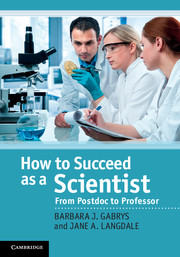
This unique, practical guide for postdoctoral researchers and graduate students explains how to build and perfect the necessary research tools and working skills to build a career in academia and beyond. It is based on successful training workshops run by the authors: first, it describes the tools needed for independent research, from writing papers to applying for academic jobs; it then introduces skills to thrive in a new job, including managing and interacting with others, designing a taught course and giving a good lecture; and it concludes with a section on managing your career, from how to manage stress to understanding the higher education system. Packed with helpful features encouraging readers to apply the theory to their individual situation, the book is also illustrated throughout with real-world case studies to enable readers to learn from others' experience. It is a vital handbook for everyone seeking to make a successful scientific career.
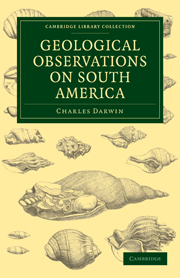
First published in 1846, Darwin's Geological Observations made up the third part of his memoir of his voyage on the Beagle during the years 1832–1836. While the first part (1842) focused on the structure and distribution of coral reefs and the second (1844) described the volcanic islands visited during the voyage, this third instalment is devoted exclusively to South America, where Darwin spent the longest period of the expedition. It discusses South America's geological and seismic history, the mineral content of lava and granite, and the deformation of metamorphic rock. Separate chapters cover different geographical areas, and topics include the formation of the East and West Coasts and the pampas, the plains and valleys of Chile, and the structure of the Cordillera. Geological Observations also includes detailed maps of South America and sketches of the terrain.
In the last two decades there has been a change in the typical career path in academia, particularly in the UK. Previously, the normal trajectory would have been from PhD through one or two postdocs, to probationary lecturer/tenure-track Assistant Professor, and then to a tenured post. Nowadays, however, a favoured intermediate step between a postdoc and an academic job is an independent research fellowship (IRF). In this chapter we offer guidance on applying for IRFs and provide details of the various fellowships currently on offer.
The theory
An IRF allows you to build up an independent research programme before taking on teaching and administration commitments. The best fellowships range from 5 to 8 years – enough time to establish your own research group, break into a new field or map out a new one, and lay solid foundations for your future research programme. Importantly, applying for academic jobs from this position allows prospective employers to make a concrete assessment of your ability to gain research funding, to manage a research group and to publish independent research papers. Assuming that you have proven ability in these areas, you are in a strong position when applying for academic jobs – not only do you already have a good track record, but your employer knows that you will have the time and professional maturity to take on new teaching and administration duties. If you do not have proven ability in these areas, the fellowship has served to allow you to realise this for yourself.
You will have just made the transition from being one of the most academically able and experienced postdocs in a research group to being the most inexperienced PI in the department. Although you only really learn from your own errors, you can avoid mistakes if you know ahead of time what they are likely to be. In this chapter we asked four young PIs to recall their experiences of the postdoc–PI transition and to offer their advice for avoiding problems – the advice is remarkably consistent.
The theory
There is a constant tension between change and routine, and in the context of an academic career it is perhaps most visible during the transition from postdoc to PI. Before we turn to the practicalities of doing well during this period, it is worthwhile considering the wider background. Life is change – stars are born, live and die on such a long timescale that humans cannot even imagine, and at the other end of the scale processes in living cells occur over nanoseconds. However, as the popular saying goes, ‘only busy cashiers and wet babies like change’. Change unsettles us and our biological reaction is of the ‘fight or flight’ type. But change also brings renewal and opportunities, and in a professional environment, if it is tackled well, it can strengthen your career prospects for years to come.
As seen in Chapters 8 and 9, you can start your independent research career either in the context of an academic job or as an independent research fellow. Although the two positions carry different duties and expectations, they share one thing in common – time has to be managed differently from when you were a postdoc. While many postdocs work very hard, they often work at hours to suit themselves (certainly not 9–5). However, as a PI you have to fit in with other people – either in the context of time-tabled lectures and meetings or to oversee the work of your research group.
In most HE institutions, a lectureship/assistant professorship, whether permanent or fixed-term, is the first step on the career ladder to a professorship. Before applying for such a position, it is therefore important to ask yourself whether an academic job is what you really want. What skills have you acquired that would ensure success outside academia? What else is out there that can be challenging and rewarding? Are you better suited to eventually managing a multi-million-pound corporation or running a charity? Would you be happier as a senior partner in a patent office, as head of research in a governmental institution or as a senior administrator in a university? We explore different options and give examples of very successful people who left academia to make their mark elsewhere.
The theory
It is obvious that the number of people with higher degrees far exceed the number of places available in academia. It is also obvious that academia is not the best career choice for everyone. For example, if you are a great researcher but do not enjoy teaching, then academia is not the place for you. However, your scientific skills – such as analytical reasoning, ability to solve problems in an unorthodox way (thinking outside the box), to communicate to a wide audience and to synthesise diverse sources of information – open many avenues for you.
Before deciding on a career path you will need to think carefully about your principles and priorities (see Chapter 1) and to gather information from several sources. There are many alternative careers in science and most universities organise careers meetings where non-academics talk to postdocs about their own career trajectories following a science PhD and postdoc. Even better, if you know a scientist working outside academia – talk to him or her – what have they done since being a postdoc or PhD student, what excited and inspired them and what frustrated them? You will also need to assess your own skills – most universities have a Careers Service or Human Resources office that can help you do this.
You have a new job, possibly a new home and certainly new responsibilities. This is an exciting, challenging and often daunting phase of an academic career. How can you ease the transition? This is a good time to take stock of your strengths and weaknesses. What are you naturally good (or bad) at? Are what you perceive as your strengths seen as strengths or weaknesses by those who work with you? Knowing the answers to these questions can help you plan the early stages of this career phase so that you maximise your potential. In this chapter we discuss the general concept of Belbin profiles and what each classification means. More importantly, we discuss which roles within academia will come naturally to each profile and which will need more effort.
The theory
The previous chapters have emphasised the development from dependence on others to independence: how to increasingly take a lead in actions and have more responsibilities. Thus far, interacting with others has been in the background, yet scientists increasingly work in groups and sometimes in large multinational teams. To be effective in the context of a team requires an understanding of what you are naturally good at and an acceptance of the fact that some things are better left to others.
In the last century there was considerable research into effective team-working strategies. In the 1980s and 1990s Meredith Belbin, from the Henley Management School, proposed a model based on ‘team roles’ (Belbin, 1981). In his words:
The term ‘team role’ refers to a tendency to behave, contribute and interrelate with others at work in certain distinctive ways. For practical purposes, one needs to discriminate sharply between a person’s team role and ‘functional role’, where the latter refers to the job demands that a person has been engaged to meet by supplying the requisite technical skills and operational knowledge.
This distinction between team and functional roles is helpful in the case of a conflict between a person’s natural inclinations and job requirements; it can help in renegotiating the role. While originally developed in the context of management teams, this model was subsequently shown to be more generic and valid for non-management teams (Belbin, 2003). A recent review summarises progress since the inception of the original hypothesis (Aritzeta et al., 2007).
Over the course of your career, your science will be enhanced through interactions with others, both in your own field and beyond. Our accomplishments are noticed and appreciated by others, but we also need to notice and appreciate the achievements of others. In academia such interdependence is seen in networking, collaborations and in ‘community service’. In this chapter we explore the benefits and costs of these three endeavours.
The theory
Covey’s philosophy for success (see Chapter 1) is focused on developing seven ‘habits’, of which three relate to how we deal with others. Since we act upon, and are acted on, by the world around us, it is essential to identify the limits of our influence. In this context there is a Circle of Concern that comprises events and actions that we have no real influence over, but which still affect us, and a Circle of Influence that comprises events and actions that we have some control over (Covey et al., 1994). The art is to focus our efforts on the latter (note that proactive people ensure that the circle of concern is encompassed by the circle of influence).
Covey’s main audience is managers and industrialists – can scientists, and in particular academics, benefit in any way from his philosophy? One of the main aims of science is the production of knowledge (Ziman, 2000) and on this premise many similarities can be found. For example, scientists are promoted on the basis of the quality and number of papers published (output), the total amount of grant funding awarded (resources necessary for production) and on their national and international reputation (brand name). More importantly, the success of Covey’s philosophy is in large part due to a combination of ethical principles, self-development and action in the real world. In his approach ‘fundamental principles’ such as fairness, integrity and honesty form the cornerstone of behaviour (Covey, 2004). It may be no coincidence that each of these principles is central to the scientific process.
There are so many theories of how best to manage people that whole courses are run on this topic alone. Here we advocate thinking ‘win–win’ and ‘seeking first to understand’ in order to create synergy. In practical terms, we provide a number of scenarios that require a management solution. These are managing up (your bosses), sideways (your peers) and down (your research group). We recognise that different management skills are required to handle different situations; however, the ‘win–win, seek first to understand and synergise’ approach underlies all cases.
The theory
Managing people is an art not a science and some would even say a black art. There is an apocryphal saying that managing academics is like herding cats or pushing a wheelbarrow full of frogs. However, you only have to look at the success of ‘big science’ projects such as the Large Hadron Collider to realise that this saying is only partially true.
Managing people in academia, or more generally in research, does not necessarily mean working within well-defined hierarchical structures, such as those found in industry. However, there is a common code of good practice, which underlies managing others. It requires recognition of the fact that we are interdependent on others for achieving outstanding results. In the context of Covey’s seven habits of effective people (Chapter 1), a good group leader would think ‘win–win’ (habit 4), seek first to understand (habit 5) and synergise (habit 6) (Covey, 2004). What does this mean?
Have you ever heard anyone saying that they didn’t get their grant funded because the proposal wasn’t well written or because it was ill conceived? Probably not – but often it is the reason why funding is refused. This chapter outlines good practice for grant writing based on project management guidelines, and gives a blueprint for what makes a good application. An application for neutron beam time illustrates the points made. References are made to guidelines provided by major funding agencies.
The theory
Your life as a postdoc or an independent research fellow depends critically on obtaining grants from a funding body, such as the Research Councils in the UK, the National Science Foundation in the US, or the European Commission in Europe. Competition for this funding is fierce and, in order to secure money, you or your supervisor will have to submit a research proposal that will be judged by a panel of experts. Whether funds are awarded will depend greatly on how novel your proposal is (your vision), how well planned it is, and how cost effective it is. To succeed, at least in the short term, your novel idea must fit within a certain funding stream and must be viewed positively by your peers. Whilst it is recognised that there are risks inherent to every project, these risks have to be identified and managed appropriately. Furthermore, as the funding agencies are publicly accountable for the grants they give out, you will need to justify how you intend to spend their money.
Before getting carried away and spending a lot of time writing and developing your ideas, you should check your eligibility to apply for a particular award. Depending on your official status, different options will be open to you. For example, if you are on your first postdoc, you can apply for a variety of personal fellowships or for conference travel funds, but would not normally be eligible to act as a principal investigator on a multi-million pound research programme. At the end of this chapter, we list links to various funding agencies and schemes.
Postdocs are vital for the health and wealth of your research group, not least because most scientific papers have a postdoc as first author. When you recruit someone to a postdoctoral position, it is therefore important to be able to develop a positive working relationship with them. In this chapter we consider how to recruit, supervise, guide and motivate postdocs. In particular, we suggest goals for an ‘ideal’ supervisor and suggest practical ways to achieve those goals.
The theory
Postdoctoral researchers occupy a transition zone between well-defined PhD study and equally well-defined PI positions. In effect, postdocs can be compared to medieval journeymen – having finished an apprenticeship, they would hone their skills by travelling from one master to another until they were competent enough to become masters themselves (Harris, 2008). But how do modern-day journeymen find a job that pays a salary and has future employment prospects? Most postdocs are funded by personal fellowships or by research grants awarded to PIs. As a PI, you have to consider very carefully who you want to employ on a grant, particularly as it is becoming increasingly difficult to attract research funding. Unlike graduate students who embark on a course of study with the defined endpoint and goal, postdocs embark on a project for many different reasons. Maximising the potential of both your research programme and of your postdocs’ careers (be they ultimately in science or not) requires that you recognise what these reasons are.
Recruitment
There are a number of reasons why people decide to carry out postdoctoral research – for example:
They are committed to a career in academia and this is the next step towards becoming a PI.
They are interested in research, but are not yet sure whether they want to stay in academia or move across to industry. They see a postdoc in academia as less likely to close doors at this stage.
They know they don’t want to stay in scientific research but recognise that scientific skills are important. They want to hone these skills further before doing something different.
They don’t really know what they want to do, but they are good experimentalists. A postdoc is thus a job to fill the time and pay the bills while they think of an alternative career.
Depending on an individual’s motivation for doing postdoctoral research, they will have different needs and expectations. You will also have different expectations, depending on the type of project that needs to be carried out. For example, do you want someone who will challenge you and who will take the work in directions you might not think of, or do you want someone to complete a defined piece of work that requires a certain skill? Either way, it is crucial to clarify expectations on both sides before you hire someone and you therefore need to ask penetrating questions at interview (see examples in Box 14.1).