To save content items to your account,
please confirm that you agree to abide by our usage policies.
If this is the first time you use this feature, you will be asked to authorise Cambridge Core to connect with your account.
Find out more about saving content to .
To save content items to your Kindle, first ensure no-reply@cambridge.org
is added to your Approved Personal Document E-mail List under your Personal Document Settings
on the Manage Your Content and Devices page of your Amazon account. Then enter the ‘name’ part
of your Kindle email address below.
Find out more about saving to your Kindle.
Note you can select to save to either the @free.kindle.com or @kindle.com variations.
‘@free.kindle.com’ emails are free but can only be saved to your device when it is connected to wi-fi.
‘@kindle.com’ emails can be delivered even when you are not connected to wi-fi, but note that service fees apply.
The estrangement and frequent mutual incomprehension existing between theology and the sciences today reflects chiefly cultural phenomena, arising from particular methodological determinations reached by both disciplines in early modernity that, over time, mutated into irreconcilable metaphysical visions. What had been distinct modes of inquiry within a unified intellectual pursuit of a single comprehensive transcendent truth now came to be understood as entirely unrelated bodies of factual knowledge pursuing separate ends. This change, however, involved several logically unsustainable revisions of previous categories: ‘revelation’, ‘science’, and ‘nature’, for instance, and ‘causality,‘ in particular. Yet these developments imposed limits upon both theology and the sciences that inhibited the power of either to understand many of its own claims. Lately, in physics and the life sciences especially, there has been a healthy movement away from purely mechanical models of causality. Whether theology can recover a dimension of scientifically informed natural philosophy is yet to be seen. But if the two cultures can be disencumbered of their early modern metaphysical prejudices, they might find that they naturally converge upon a shared horizon of ultimate explanation that provides each with its animating logic and reveals each to be only a limited mode of that final wisdom.
Scientific knowledge, like other forms of knowledge, is a ‘culture’; that is, it is embedded in practices, relations and histories. The stand-off between ‘science’ and ‘religion’ has a lot to do with the failure to recognize this and with the anxiety that any concessions here will damage the truth claims of science. It is argued that a view of truthfulness that sees it as a sustainable, corrigible set of practices in coping with an environment we do not control or possess allows us to maintain a form of realism while acknowledging that there may be diverse sets of practices which legitimately embody the same principle of sustainable engagement – including the practices of traditional religious faith.
This chapter investigates the conditions for dialogue between science and religion, and asks what makes dialogue possible or desirable. Sometimes, dialogue has simply amounted to theology and religion accommodating themselves to the sciences, and this can serve to reinforce unhelpful ways of categorising science and religion. Different models for dialogue are suggested by past relations between natural philosophy and religion, understood as formative practices (rather than proposition-generating activities). An alternative approach is also suggested by the problem of incommensurability, initially applied in different ways by Thomas Kuhn, Paul Feyerabend, and Alasdair MacIntyre to the relations between competing scientific frameworks, but which is also applicable also to science–religion relations. Thinking of ‘science’ and ‘religion’ in terms of historical traditions, to use MacIntyre’s expression, leads to a different understanding of their possible relationships. Historical and sociological descriptions of scientific and religious practices, in short, should play a more prominent role in our understandings of sciences, religions, and their relations.
This chapter uses historic examples – the Enlightenment origins of modern computing and the methods of medieval painters – to juxtapose the modern and pre-modern everyday experiences of work. It acknowledges that the official (albeit impracticable) disqualification of human intuition, aesthetics and proprioception in the pursuit of modern science has been responsible for significant technical advances. However, it also recognises that exactly the same disqualification also limits the modern scientific worldview, excluding much of what it means to be human. That impact is not restricted to specialist behaviours in the scientific laboratory but also has impoverishing consequences for those who interact with the scientific laboratory’s everyday technological products. It suggests that moving beyond the territorial disputes of ‘science and religion’ will require re-engagement of the whole human in the structured pursuit of material knowledge, methodologically complicating post-modern science but simultaneously enriching post-modern everyday lived experience.
‘Scientism’ is not the artificial dissolution of an otherwise natural and good boundary that divides modern science from other interpretations of the world, such as religion or metaphysics, but constitutes the essence of modern science precisely to the extent that this latter understands itself as making a radical break with the prior study of the world that called itself ‘natural philosophy’. This chapter argues that science becomes ‘scientism’ the moment it denies it is a philosophy of the whole of reality, and pretends instead to limit itself simply to quantitative abstractions and strictly empirical methods. In restricting the scope of its inquiry, and thus claiming a certain ‘epistemic humility’ or ‘modesty’ for itself, science follows a pattern that can be discovered in other instances of the rise of modernity, such as that in politics or economics, and presents analogous problems. The only way to avoid scientism, that is, the totalitarian domination of an abstract conception of nature, is to recover the original aspiration of science as an inquiry into being qua mobile: science must recognize itself most basically as an interpretation of nature, understood as the internal principle of motion and rest that sets the defining horizon for things.
This chapter reflects on the ongoing scientific revolution as a metaphysical and even theological revolution, whose unarticulated presuppositions about being, nature, knowledge and truth have governed the so-called dialogue between science and religion. The essence of this revolution is captured in the Baconian triumph of art over nature, which conceives of nature mechanistically and knowledge pragmatically in advance of scientific inquiry and has produced a scientific and technological civilization that exceeds even Bacon’s utopian imagination in the New Atlantis and offers both promise and peril for the human future. Simultaneously challenging and conceding the stunning triumph of this utopian vision, and in dialogue with John Milbank’s poetic and ‘magical’ proposal to enfold its genuine achievements within a radically creational ontology, Hanby attempts to set forth some principles for any genuine dialogue in the future and for any conception of being, nature, knowledge and truth adequate to the Christian doctrine of God and the Christian vision of creation.
Inherited discussions of ‘science and religion’ too much assume an interaction between two historically constant phenomena in terms of stories of ‘progress’ and ‘conflict’. Instead, it is better to recognise long-term and varying modes of tension between three different approaches to nature, pivoted about attitudes to ‘enchantment’ and to transcendence versus immanence. Within such a perspective, it appears that the dominant model of science as ‘disenchanted transcendence’ is a Newtonian one that historically quickly proved inadequate. Alternative and earlier traditions of ‘natural magic’ later returned under new guises and are closer to the essence of the ‘ergetic’ or experimental attitude that lies at the real core of ‘science’. The Newtonian model also implausibly suppressed the realities of motion, time, change, substantial form and secondary qualities. But contemporary physics points towards their restoration and to nature as a vital habit and form-shaping process, as well as to the ‘magical’ character of powers and causes. Magic, rightly understood, is a necessary mediator between religion as theory and science as practice and is a crucial aspect of an ergetic understanding of ‘enchanted transcendence’ which is the most promising perspective for today.
Material for alternative framings of science is sought in the context of high medieval natural philosophy. The chapter reviews the work of thirteenth-century English scholar Robert Grosseteste on light and colour, as well as his reflective comments on a theological teleology of science, with additional reference to his patristic and early medieval sources. The visual metaphor of insight and imagination, and the restorative and reconciliatory purpose of engaging with nature, emerge strongly. A concluding section discusses which aspects of such a pre-modern framing might still inform a theology of science today, and reflects on other contributions in this volume from that perspective taken together with a personal experience of pursuing science
Can physics be beneficial for bringing about human moral and spiritual goods? Modern physics is perpetually in search for grand unification of our world-pictures, but its method is arbitrarily self-limiting in ruling out any place in its conception of nature for the human as spiritual and moral beings. But this estrangement between nature and the human has not always been the case. Drawing from Pierre Hadot’s pioneering work, this essay retrieves the notion of physics as ‘spiritual exercise’ from ancient philosophy and early Christianity for reimagining the enterprise of physics today. Envisaged as spiritual exercise, ancient physics goes beyond a mere acquisition of ‘objective’ knowledge of nature towards the fashioning of human moral and spiritual transformation. Illustrating from Origen of Alexandria, I show that this vision of physics is principally grounded upon a metaphysics that unites all parts of nature, including human nature, into a single whole. This chapter argues that it is desirable to retrieve the ancient vision today not as a displacement of modern physics but through the re-invention of natural philosophy alongside it. This retrieval should give urgency to the task of rethinking the desirability of a comprehensive and unified metaphysical account of nature for today.
The present literature on science and religion tends to be dominated by three genres: a conflict genre, according to which science and religion are locked into a relationship of perennial opposition; a disentangling genre, in which science does one sort of thing and religion does another; and a synthetic genre, in which science and religion are integrated, overlapped, or in some way related to each other in generally positive ways. While on the face of it these approaches could hardly be more divergent, in fact they share a common commitment to the idea that ‘science’ and ‘religion’ are valid, trans-historical categories that capture more or less perennial features of human culture. If it is true that science and religion, albeit in various guises, have been the chief lenses through which the world has been interpreted, then posing the question of how they relate to each other makes good sense. But what if it is not true? The guiding principle of the present collection is that we can initiate a much more fruitful discussion if we begin by questioning these two basic categories that frame and delimit the current conversation about how to interpret the world. After Science and Religion is thus an exploration of how the discussion might be changed if we were to relinquish, or at least critically examine, these two categories ‘science’ and ‘religion’.
This chapter considers one of the major alternatives to reductionist, mechanistic philosophy in the seventeenth century, focusing upon three key English figures: Herbert of Cherbury, Robert Greville, and Anne Conway. While these thinkers have typically been relegated to the margins of the history of philosophy and science, they nonetheless represent a significant, if largely eclipsed tradition, and one that shows how, during this period, ‘disenchanted’ understandings of nature were not the sole option, and how they could co-exist with scientific conceptions of nature. Accordingly, these figures exemplify ways of being modern and scientific without abandoning an ‘enchanted’ view of the natural world.
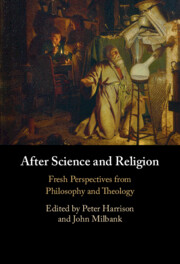
The popular field of 'science and religion' is a lively and well-established area. It is however a domain which has long been characterised by certain traits. In the first place, it tends towards an adversarial dialectic in which the separate disciplines, now conjoined, are forever locked in a kind of mortal combat. Secondly, 'science and religion' has a tendency towards disentanglement, where 'science' does one sort of thing and 'religion' another. And thirdly, the duo are frequently pushed towards some sort of attempted synthesis, wherein their aims either coincide or else are brought more closely together. In attempting something fresh, and different, this volume tries to move beyond tried and tested tropes. Bringing philosophy and theology to the fore in a way rarely attempted before, the book shows how fruitful new conversations between science and religion can at last move beyond the increasingly tired options of either conflict or dialogue.