To save content items to your account,
please confirm that you agree to abide by our usage policies.
If this is the first time you use this feature, you will be asked to authorise Cambridge Core to connect with your account.
Find out more about saving content to .
To save content items to your Kindle, first ensure no-reply@cambridge.org
is added to your Approved Personal Document E-mail List under your Personal Document Settings
on the Manage Your Content and Devices page of your Amazon account. Then enter the ‘name’ part
of your Kindle email address below.
Find out more about saving to your Kindle.
Note you can select to save to either the @free.kindle.com or @kindle.com variations.
‘@free.kindle.com’ emails are free but can only be saved to your device when it is connected to wi-fi.
‘@kindle.com’ emails can be delivered even when you are not connected to wi-fi, but note that service fees apply.
JAPAN'S INDUSTRIAL REVOLUTION began around 1886, but its universities had in fact been turning out graduates in mechanical engineering since 1879. A first intermediate-level engineering school, set up in 1881 under the name of Tōkyō Shokkō-gakkō (Tōkyō Vocational School), produced graduates from 1886 on. By 1920 more than 14,000 engineers and technicians had passed through colleges of this type and through Japan's universities. This figure equates broadly to that of America of 30 years before, of United Kingdom of 40 years earlier, and Germany ten years prior to that, though the rate of increase was somewhat higher than America's and had exceeded that of the other two countries. A particular feature was the advance of Japan's industrial revolution in parallel with the rapid training of engineers and technicians at its higher industrial education institutions. This study looks at the mechanical engineers who played a pivotal role as the industrial revolution unfolded, and examines the features of education in the early universities and the activities of their graduates before the First World War. The aim is to clarify the part played by engineers who graduated from universities during Japan's industrial revolution.
During the period of Japan's rapid economic growth after the Second World War much research was done on the technical education in the late 19th and early 20th centuries by Miyoshi Nobuhiro and colleagues. More recently, Toda Kiyoko has produced detailed work which takes a new look at this subject, and Wada Masanori cites evidence to criticized previous research that focused on the success element of the Imperial College of Engineering, the first institution to produce graduates in mechanical engineering.
In relation to the careers of engineers who enjoyed an advanced industrial education, Morikawa Hidemasa has analysed 170 specialist managers in large enterprises of the Meiji period and shown that 36 of them came from science-based higher educational institutions. He then pointed out that among graduates of the Imperial University and its forerunners, those who had been in the engineering stream became specialist managers more quickly than those who had studied the humanities. In addition, he maintained that as seven of the specialist managers from the engineering side had been university lecturers before turning to the private sector, universities of the Meiji period were ‘open-minded’ and their research-based education ‘practical’.
THIS PAPER EXAMINES the major characteristics of technology formation in the Japanese railways through an analysis of the railway engineers’ groups at the Imperial Government Railway (IGR) during the first half of the Meiji period. In particular, it focuses on the role of an intra-firm vocational school, the Training School for Railway Engineers (TSRE, Kōgisei Yōsei-jo) as a way to examine the relationship between training institutions and the transfer of technology.
Of particular interest is the question of why the TSRE could play an important role for the independence of railway technology in Meiji Japan, compared with the other training institutions such as the Imperial College of Engineering (ICE, Kōbu-dai-gakkō).
TSRE was a retraining institution for young engineers. Its course of study was relatively short at one to two years. It was established in May 1877 within the Railway Bureau in Ōsaka as an educational institution for the fast-track education of civil engineers for railway construction, and provided short-term, intensive training in basic science as well as specialized disciplines such as civil engineering. Instructors at TSRE includedboth top-level hired foreign engineers (o-yatoi gaikokujin) and Japanese engineers who had studied abroad. TSRE's curriculum emphasized both basic and practical subjects. The students were divided into three classes, and the students in the first class completed their course of studies concurrently with a work assignment in a construction zone and received on-the-job training (see Appendix 1). Such emphasis on readiness to take up work assignments can also be seen in the type of students who were admitted to TSRE.
There are several groups of source materials related with TSRE. The first group deals with educational history. Amano Ikuo, a specialist in educational history, is an example. He was the first to focus on the significant role of TSRE and its graduates in 1965. He investigated the formation and distribution of engineering manpower in the early Meiji period, and described the following difference. In the Civil Engineering Bureau, the mainstream engineers were trained by the ‘formal type’ education at ICE from the late 1870s. In contrast, mainstream engineers in the Railway Bureau were trained by ‘external-type’ elements like study abroad, and ‘informal-type’ education such as the TSRE, from 1870 to 1894. This is a significant point, but Amano does not explain why such differences in the recruitment systems of these two sections occurred.
UNTIL RECENTLY, LITTLE was known about the situation in the late 1880s of science education in Japanese schools, especially primary schools. This was not least due to a lack of sources. It was not until the discovery of some students’ notebooks from this period that concrete insights into the content and teaching methods of such lessons became possible. In 2007, the late Kimura Hatsuo (1931–2018), professor emeritus of Nagoya University, Faculty of Engineering, found several notebooks of his grandfather, Endō Shunkichi, in his parents’ house in Murakami, an old castle town at the coast of the Sea of Japan in Niigata prefecture. The cover of a representative example of such a notebook is shown in Fig.The discovery triggered a comprehensive study on this topic by a larger group of scholars, some results of which are presented below.
In 2008, Kimura wrote an article to introduce what the student about 100 years ago learned in physics (butsuri). For Kimura, these notes were interesting mainly because of their age. However, his article unexpectedly caused a great stir among researchers specialized on the history of science education, because at that time, in 1890 (Meiji 23) there should no longer have been a subject of physics (butsuri) in the official curriculum of higher primary schools.
The point is, that the subject of butsuri which had so far represented science education at Japanese schools, was officially replaced in 1886 by a new subject called rika (“science”). This is regarded as a turning point in science education in Japan, because rika, even though also meaning science, had a different connotation. Instead of emphasising “principles” as was the case in butsuri, the subject rika tended more in the direction of a comprehensive natural history. In other words, after 1886 primary school official curricula no longer contained the subject of butsuri, but instead had rika.
According to the Shōgakkō-rei (Ordinance of Primary Schools) from 1886, compulsory education was four years for ordinary primary school, and four years for higher primary school. The author of the notebooks, Endō Shunkichi, was born in 1875 (Meiji 8), so was 15 years old in 1890 and probably a student of a higher primary school.
WOMEN TEACHERS TRAINED in the science and skills of silk production made a significant contribution to the development of the Japanese silk-reeling industry in the Meiji period. During the preceding Edo period (1603–1867), the production of raw silk developed as an additional way for farmers to earn income. Sericulture and silk production – except for the cultivation of mulberry trees to feed the silkworms – were the work of women. A single woman would carry out the work of reeling silk: boiling the cocoons in a small pot of hot water over a fire and then twisting the fibres from the cocoons and reeling them onto a reel (Fig. 1).
In the 1860s, the demand for Japanese raw silk rose as a substitute for European raw silk, which had been devastated by the epidemic of pébrine, a microsporidian parasitic disease of the silkworm. Driven by export demand, the Japanese silk industry rapidly expanded its production. However, the rapid increase in the number of silk producers – induced by high yarn prices – and the increase in low-quality yarn led to a decline in the reputation of Japanese yarn. The Meiji government, concerned about the loss of profits from the export of raw silk, built European-style silk mills in Japan with government funds and encouraged the establishment of silk mills modelled after them.
It is said that the original silk-reeling instructors were women who learned the Western reeling method at government-run model mills such as the Tomioka Silk Mill, and then taught them to women workers in mills all over Japan. The Tomioka Silk Mill was opened in 1872 by a Frenchman, Paul Brunat, who had been hired as a technical director by the government to buy a complete set of equipment in France, and to employ maintenance staff and technical instructors. In response to the govern-ment's call, women came to work at the Tomioka Silk Filature, learning from French instructors and the Japanese women who had been trained by them. They learned how to sort the cocoons they had purchased in large quantities, how to draw the fibres from cocoons boiled in water and twist them together to make raw silk, and how to reel it onto a spool at the speed of a steampowered machine.
AN EDUCATIONAL ENGINEERING institution named Kōgaku-ryō was founded in 1871 by the Kōbushō (Ministry of Public Works). The institution was opened to prospective students in 1873 and changed its name to Kōbu-dai-gakkō (Imperial College of Engineering, abbr. ICE) as part of a reform of the administration in January 1877.
In December 1885, the college was placed under the jurisdiction of the Ministry of Education. With the promulgation of the Imperial University Ordinance in March 1886, ICE was annexed to the Faculty of Arts and Crafts of the University of Tōkyō and taken over by the College of Engineering at the Imperial University. During its operation from 1871 to 1886, a total of 211 students graduated from ICE.
Students and faculty members at the ICE recognized that the facilities – the drawing office, experiment laboratories and museum, along with the classrooms – were reputed to be the finest in Asia. The ICE also maintained close relations with the boards of the Ministry of Public Works since it was under its direct control, and its students were allowed to visit each board. ICE represents the prehistory of the College of Engineering at the Imperial University, so is key to the history of higher technical education in Japan. Furthermore, the history of ICE can help elucidate the relationship between industrialization and education, overseas exchange, and the modernization and industrialization of Japan.
Many studies on ICE have been conducted, mainly in the fields of history of education and history of technology – for example, searching for the history of the college itself, focusing on people involved in the college, such as founder Yamao Yōzō (1837–1917) and principal Henry Dyer (1848–1918), and considering the college the origin of education in each engineering field. Furthermore, as described below, other studies explore the model and origin of the unique educational system of ICE.
Despite these numerous studies, it seems that research on ICE has not progressed further. Previous research has tended to praise the college as Japan's first modern advanced institution for technical education. But the practice of the college has still not been sufficiently revealed. To evaluate it fairly, it is necessary to focus on negative aspects, such as contradictions and difficulties related to the establishment and operation of ICE, that have been neglected in previous studies.
FRANCOIS LÉONCE VERNY (1837–1908) was a French naval engineer who was ordered to establish a ‘modern’ arsenal in Yokosuka, equipped with dockyards, ironworks and a school of vocational education and training for technical personnel. It was ‘modern’ because the machine tools, such as grinding machines, circular saws, drills, steam engines and steam hammers brought from the Netherlands, the United Kingdom and France, were of the highest technical standard.
Verny, however, brought not only technical equipment, but also the operating personnel who gave lessons to Japanese learners in a technical school housed in a building named Kōsha (lit. school building, which soon became the official name for the school) at the shipyard developed by Verny. Between 1865 and 1907 this school educated and trained nearly 300 engineers and technical foremen. Some of its first students went on to become specialized engineers, technicians, foremen, and administrators at other shipyards, naval arsenals, and factories in Nagasaki, Ishikawajima and Kure, or teachers at technical institutions. A second school, for foremen, was established in 1872.
According to human capital theory, a country can develop only if its citizens can benefit from education and the vocational training system. Human resources such as ‘engineers’ are the result of higher education and therefore constitute a core factor in a country's development. In this sense, Japan owes much to the contribution of French professionals in the training of the first generation of engineers at the beginning of Japan's modernization.
Verny transplanted the concepts and curricula of schools he had attended in France – the École Polytechnique and the École d’Application du Génie Maritime – into the technical school at the Yokosuka Navy Dockyard. But how far were the concepts from these schools in France transferred into the technical education and training system in the Yokosuka school? This chapter addresses the following questions: First, who was Verny, and how can his concept of technical education at the Yokosuka Dockyard be characterized? Second, how were the technical schools at the dockyard organized? In addition, why were these technical schools the beginning of ‘modern’ technical education in Japan? Third, to what extent did technical knowledge acquired in the Yokosuka Dockyard have an impact on Japanese industrialization?
INTRODUCTION: ‘THE STUDY OF MINING’ AND GLOBAL MINING LITERACY
STANDING ON THE verge of collapse, reform-minded late Qing officials placed hope in restoring power through modernizing science and technology in order to resist foreign encroachments. Similar to the emphasis on technical education during the Meiji period in Japan (1868–1912), those Chinese governors attached strategic importance to promoting science and technology in the Self-strengthening Movement (zìqiìng yùndòng,1861–1895), although the Chinese government did not undertake the thorough institutional reform that took place in Japan. By 1895, they had established morethan twenty technical schools modelled on Western systems. Also parallel to the development of Western-style education, more than 500 books were translated by missionaries and their Chinese collaborators from Western languages into Chinese from 1860 to 1900. Although some of these books addressed ethical and religious topics, the majority of them were on scientific and technical subjects, accounting for over 70% of all the translations.
Some of these books, particularly the important translations published by the Translation Bureau of the Jiangnan Arsenal and Beijing School of Foreign Languages, were also quickly exported to Japan. The Chinese scientific terms disseminated to Japan in various books and journals before and after 1860 had a great influence on the early Meiji scholars, who commonly possessed a solid knowledge of classical Chinese. During this period, Dutch works declined in popularity among Japanese scholars, who now began to prefer other Western works, especially those in English. The Chinese translations provided an important and timely vehicle for their quick grasp of English. After 1880, a language standardization reform took place in Japan to unify Japanese speech and writing, and the modern Japanese lexicon in the natural sciences took its initial shape. Although almost no contemporary Chinese scholars paid attention to the changes and development of scientific works in Japan at that time, Japan became a crucial knowledge exporter to China in the decades that followed.
After China's defeat in the Sino-Japanese war in 1895, the Japanese achievements in educational reform during the Meiji period began to draw the attention of the late Qing reformers.
IN 1886, THE Kōbu-dai-gakkō (Imperial College of Engineering, ICE) became part of the newly established Imperial University. ICE began as Kōgaku-ryō (as already described in Chapter 5 of this volume). It was established under the Ministry of Public Works in 1871 and accepted its first students in 1873. It changed its name to Kōbu-dai-gakkō in January 1877 following the reform of the government system. In December 1885, together with the abolition of the Ministry of Public Works, the operation of ICE was transferred to the Ministry of Education. Then, as part of the Imperial University Ordinance in March 1886, ICE was merged with the Faculty of Engineering and Design (Kōgei-gakubu) at the University of Tōkyō, and was transformed into the College of Engineering (Kōka Daigaku) of the Imperial University.
By investigating the developments surrounding the closure in more detail, this chapter reconsiders the significance of ICE in technical education in Japan.
ICE lies at a prehistoric crossroads of the Imperial University. As the starting point for the introduction of engineering into Japan, the college was critical in the history of higher education and technology in the country. The fact that ICE has been examined by many researchers underscores its significance. Some studies not only describe the historical facts about the college, but also emphasize that its education has traditionally been seen as sophisticated, and consider the college as having been highly successful.
On the other hand, the college has as yet scarcely been analysed from a critical standpoint, and its historical significance has not been fairly assessed. This chapter revises the conventional view of the college by discussing the Ministry of Public Works’ role in its foundation and the educational situation, which greatly differs depending on the ‘branches’ involved. This chapter re-evaluates the meaning of the college's closure by scrutinizing its original purpose and achievements.
Many researchers have covered ICE's closure and its transition to the College of Engineering at the Imperial University. Regarding the establishment of the Imperial University, some scholars have taken a positive view of the founding of the College of Engineering from the beginning of a university. Since Tachi Akira's paper in 1976, the negative view that it represented the end of ICE's original education has become a popular view in the history of higher education.
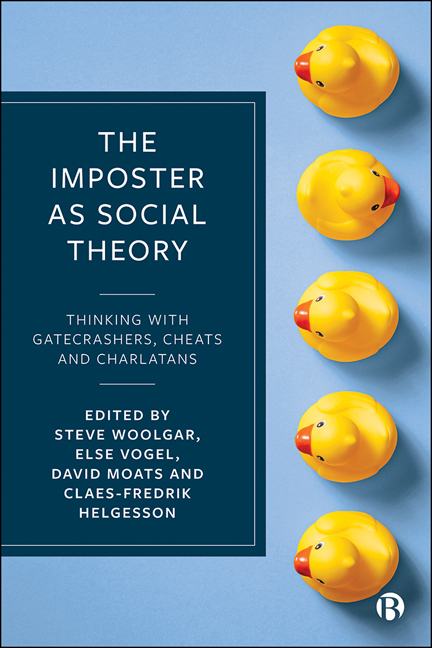
Edited by expert scholars, this volume explores the 'imposter' through empirical cases, including click farms, bikers, business leaders and fraudulent scientists, providing insights into the social relations and cultural forms from which they emerge.
From the very outset Darwin’s extensive use of metaphor in the Origin has proved controversial, with some people thinking Darwin was thereby committed to ascribing intentions or even consciousness to nature, and others fearing that readers would be misled into thinking that he was. Also, some have argued (e.g. Gillian Beer) that Darwin should be regarded as much as a poet as a scientist. We argue that, on the contrary, his metaphors have a substantively scientific role, and do real work in the development of his argument. Firstly, as Darwin himself stresses, ‘such metaphorical expressions… are almost necessary for brevity’. Secondly, they provide a method for forming new concepts (as in the case of ‘struggle’). Thirdly, and, most significantly, the use of metaphor enables Darwin to explore further the analogy between NS and AS and directly compare the achievements of human breeding and those of the struggle for existence.
Our task here is to address four authors who have given different accounts of Darwin’s argument from ours: Richard A. Richards; Peter Gildenhuys; James Lennox; and D. Graham Burnett. Viewing analogical argumentation as hopelessly unclassy, each has sought to save Darwin’s reputation by denying that he founded his theory of natural selection on an analogical argument, and by offering alternative, non-analogical readings of Darwin’s argumentation. For Lennox, Darwin met the adequacy requirement of the vera causa tradition not through analogy but through speculative conjectures: “Darwinian thought experiments,” Lennox calls them. For Richards, the Origin should be read as an experimental report, in which artificial selection is the cause of new domesticated varieties that periodically go feral, allowing us, as the varieties return to the wild state, to observe the effects of natural selection in action. Explaining why these revisionist accounts cannot be accepted will confirm our explicit views about analogical argumentation, and some implicit ones about relating texts and contexts.
The concept of analogy was first analysed in classical Greek thought. By 'analogy' was meant a four-term relation: A is to B as C is to D. Initially, within Greek mathematics, analogy expressed the equality of the relative magnitudes of two line pairs, when the ratio of line A to line B is identical with the ratio of line C to line D. An analogy asserted a proportionality. And the theory of similar triangles exhibits the basic form of argument by analogy, with a set of valid proofs showing which additional properties, equiangularity say, the two triangles must share. In Euclid are all the features of the analogical relationship relevant to our enquiry. For analogy was soon taken beyond its mathematical confines, especially by Aristotle, in exploring how these geometrical concepts can be applied in empirical contexts. These explorations kept the commitment to proportionality, which persists in every modern analyst of analogy knowingly upholding the Aristotelian tradition.