To save content items to your account,
please confirm that you agree to abide by our usage policies.
If this is the first time you use this feature, you will be asked to authorise Cambridge Core to connect with your account.
Find out more about saving content to .
To save content items to your Kindle, first ensure no-reply@cambridge.org
is added to your Approved Personal Document E-mail List under your Personal Document Settings
on the Manage Your Content and Devices page of your Amazon account. Then enter the ‘name’ part
of your Kindle email address below.
Find out more about saving to your Kindle.
Note you can select to save to either the @free.kindle.com or @kindle.com variations.
‘@free.kindle.com’ emails are free but can only be saved to your device when it is connected to wi-fi.
‘@kindle.com’ emails can be delivered even when you are not connected to wi-fi, but note that service fees apply.
Infertility affects 10–15% of couples at the age of conception. Mounting evidence supports that not only are paternal factors crucial during fertilization, but also for embryogenesis. This review aims to provide some clues about the contribution of male factors to reproductive success and live birth, as such contributions can be as important as that of the female. Semen is composed of two fractions: sperm and seminal plasma. Regarding the former, the integrity of sperm components (i.e., centrioles, DNA integrity and methylation, histone-to-protamine ration, specific proteins, etc.) has been proven to be essential for some of the events occurring upon engulfment of the spermatozoon into the oocyte cytoplasm. The metabolic status of sperm also seems to shape their potential fertilizing capacity. Furthermore, seminal plasma appears to modulate the female reproductive tract, and has been suggested to support embryo implantation. In spite of the aforementioned, it remains largely unaddressed how paternal factors interact with maternal ones, and whether the latter may mask the former. While assisted reproductive techniques (ART) are useful to rescue infertility, a better understanding about the contribution of semen to fertilization, embryo development and implantation can increase the efficiency of these techniques, and address further the causes of total fertilization failure, implantation deficiency and recurrent miscarriage.
During the past one hundred or so years, urbanists have composed grand narratives regarding the development of urban design and the international dissemination of planning models. Yet, building upon this historiography, whilst the transnational dimension of modern city planning has centred itself upon the diffusion of the British garden city, far less attention has been put upon the global reach of the American City Beautiful. Owing to the ethnocentricity of American planning history literature, thus, the chronicle of the City Beautiful has anchored itself, literally and figuratively, to the North American continent. Yet, in truth, grand American-inspired plans were implemented throughout the world; indeed, they were carried out long after the City Beautiful's popularity had waned in North America, and they were executed under a variety of cultural and political conditions.
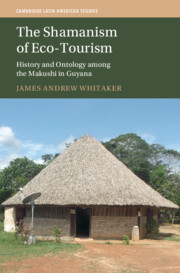
In the first book in English to focus specifically on the Makushi in Guyana, James Andrew Whitaker examines how shamanism informs Makushi interactions with outsiders in the context of historical missionization and contemporary tourism. The Makushi are an Indigeneous people who speak a Cariban language and live in Guyana, Brazil, and Venezuela. Combining ethnohistory, ethnographic fieldwork, and archival research, this book elucidates a shamanic framework that is seen in Makushi engagements with outsiders in the past and present. It shows how this framework structures interactions between Makushi groups and various visitors in Guyana. Similar to how Makushi shamans draw in spirit allies, Makushi groups seek human outsiders and form strategic partnerships with them to obtain desired resources that are used for local goals and transformative projects. The book advances recent scholarship concerning ontological relations in Amazonia and is positioned at the cusp of debates over Amazonian relations with alterity.
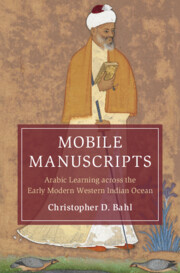
In this essential new work, Christopher D. Bahl departs from the established historiography on trade, shipping, and pilgrimage to argue for the emergence of Arabic learning as a crucial form of transoceanic mobility from the fifteenth to the seventeenth centuries. From Egypt to the Hijaz, Yemen and further on to Gujarat and the Deccan, networks of manuscript circulation created shared social and cultural spaces across the early modern western Indian Ocean, in which South Asia was a key node of connection. Largely unstudied Arabic manuscripts from collections in eight different archives offer a new source base to explore the region as a hub of Arabic scholarly culture, while marginalia and notes provide an empirical treasure trove for the study of social spaces and cultural practices. This is the first book to trace these truly transoceanic encounters between scholars, sultans, scribes, readers, and librarians.
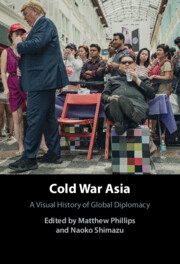
This innovative, interdisciplinary and international collection of essays offers fresh perspectives on the history of global diplomacy. Experts in history, international relations, art history and performance art have come together to examine a series of visual sources relating to Asia's role in global diplomacy during the Cold War. They explore how leaders, including Indonesia's Sukarno, the Philippines' Imelda Marcos and Thailand's King Bhumibol, exploited the symbolic value of diplomacy to emphasise their agency in relationships with Great Powers. These case studies demonstrate the significance of Asian diplomacy in understanding the Cold War, shifting away from the use of 'war' as the dominant criterion for analysis of the region. Cold War Asia sheds critical light onto how culture shapes international relations, widening the lens of analysis to embed the role of gender, religion, and ethnicity, as well as the material world, into our understanding of diplomacy.
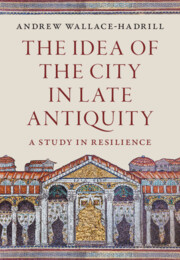
The city was one of the central and defining features of the world of the Greek and Roman Mediterranean. Challenging the idea that the ancient city 'declined and fell', Andrew Wallace-Hadrill argues that memories of the past enabled cities to adapt and remain relevant in the changing post-Roman world. In the new kingdoms in Italy, France and Spain cities remained a key part of the structure of control, while to contemporary authors, such as Cassiodorus in Ostrogothic Italy, Gregory of Tours in Merovingian Gaul, and Isidore in Visigothic Spain, they remained as crucial as in antiquity. The archaeological evidence of New Cities founded in this period, from Constantinople to Reccopolis in Spain, also shows the deep influence of past models. This timely and exhilarating book reveals the adaptability of cities and the endurance of the Greek and Roman world.
This Element examines evolving methods of cultivating the embodied self, including healing diseases and creating a superior person, in late Warring States and early imperial East Asia. It analyses many topics, including the textualization of bodily regimens and therapies, their systematization, their dissemination among different (and sometimes rival) social groups, and the diversity of traditions – religious, pharmacological, nourishing of life – that contested and combined to form a hegemonic medical practice. These topics in turn feature several issues: models of the body, regimens of cultivating and extending vitality, models of disease, and therapies for these ailments. All these ideas will be refined and extended through comparison with early Western medical traditions.
Historiographic reasoning from evidentiary inputs is sui generis. Historiography is neither empirical, nor self-knowledge, nor a genre of fiction or ideology. Historiographic reasoning is irreducible to general scientific or social science reasoning. The book applies Bayesian insights to explicate historiographic reasoning as probable. It distinguishes epistemic transmission of knowledge from evidence from the generation of detailed historiographic knowledge from multiple coherent and independent evidentiary inputs in three modular stages. A history of historiographic reasoning since the late 18th century demonstrates that there was a historiographic scientific revolution across the historical sciences in the late 18th and early 19th centuries. The underdetermination of historiography by the evidence, counterfactual historiographic reasoning, and false reasoning and other fallacies are further explained and discussed in terms of the probabilistic relations between the evidence and historiography.
This Element in Global Urban History seeks to promote understanding of the urban history of Africa. It does so by undertaking four main tasks. Firstly, it employs race, ethnicity, class, and conflict theory as conceptual frameworks to analyze the spatial structures, social, and political-economic dynamics of African cities from global, comparative, and transnational perspectives. Secondly, it proposes a new typology of the continent's cities. Thirdly, it identifies and draws into focus an important but oft-ignored part of Africa's urban history, namely Indigenous cities. It focuses more intensely on the few that still exist to date. Fourthly, it employs conflict, functional, and symbolic interactionist theories as well as elements of the race ideology to explain the articulation of racism, ethnicity, and classism in the continent's urban space. This is done mainly but not exclusively from historical perspectives.
This chapter details the increasingly indispensable part German big business played in expelling German Jews from economic life and dispossessing them, including in the annexed regions of Austria and the Czech lands. Avarice and self-defense were the principal motivators, with the latter becoming increasingly important as time passed.
What drove the transformation of Britain’s population, economy and environment so that by 1819 it was arguably the most rapidly industrializing and urbanizing society in the world?
How, given the murder of those demanding a more representative political system at Peterloo in 1819, did more Britons, at home and in the colonies, get to vote by 1885?
By the 1720s, the city born of shogunal vision and warrior needs pulsed with townspeople, the artists and merchants of commoner status who began to rival samurai in number among the residents of Edo. With a staggering one million people calling Edo home, the shogun’s capital also became the city of Edoites through a dance of shogunate authority, samurai prestige, and commoner interests. Destructive fires were occasions for such negotiations, and their frequency left a deep imprint on the physical landscape and culture of the city. Kabuki theater too was a site of political push and pull, as well as rambunctious amusement for both townspeople and samurai partaking in the flourishing urban popular culture of the world’s largest city.
Nazism and war had devastated Berlin. The city was divided into different zones under Allied administration, but cooperation soon broke down. While the Soviets retained control over the central and eastern districts, the western sectors were administered by the Americans, British, and French. Following the Berlin blockade and airlift of 1948–49, the division of Berlin was effected with the foundation of the Federal Republic (FRG) in the west and the German Democratic Republic (GDR) in the east. The two halves of the city began to diverge, with rebuilding under different ideological auspices in the 1950s. Growing discontent with an economically constrained and politically repressive system under communism meant that many East Germans were using crossing points that were still open within Berlin in order to escape via West Berlin to West Germany. The erection of the Berlin Wall in 1961 sealed both the division of the city and the division between West and East Germany.