To save content items to your account,
please confirm that you agree to abide by our usage policies.
If this is the first time you use this feature, you will be asked to authorise Cambridge Core to connect with your account.
Find out more about saving content to .
To save content items to your Kindle, first ensure no-reply@cambridge.org
is added to your Approved Personal Document E-mail List under your Personal Document Settings
on the Manage Your Content and Devices page of your Amazon account. Then enter the ‘name’ part
of your Kindle email address below.
Find out more about saving to your Kindle.
Note you can select to save to either the @free.kindle.com or @kindle.com variations.
‘@free.kindle.com’ emails are free but can only be saved to your device when it is connected to wi-fi.
‘@kindle.com’ emails can be delivered even when you are not connected to wi-fi, but note that service fees apply.
Linguistic imitation is not mere repetition, but is instead a foundational mechanism of language use. It underpins the engagement and categorisation of meaning as a conceptual pact among speakers. This book redefines imitation as the creative engine of human communication, showing how language evolves through our engagement with what others say. It discusses dialogic resonance – the reuse and reshaping of communicative constructions – as a unifying framework that bridges pragmatics and construction grammar. Combining evidence from first and second language acquisition, intercultural communication and neurodiverse interaction, the book highlights the crucial role of imitation in shaping social conformity, engagement, categorisation and innovation. It combines detailed qualitative case studies with innovative corpus-based and statistical analyses to provide new theoretical insights and methodological tools. It is essential reading for scholars and students of linguistics, psychology, education and sociology, and for anyone interested in how language emerges from the creative interplay of human voices.
It is crucial to apply robust analytic methods to the study of discourses deemed 'ideological'. This book applies the Guidelines and Procedures for ideological research, as presented in Verschueren's Ideology in Language Use, to an exciting new area of study; discourses intended to improve humanity. It analyses the discourse of Amnesty International appeal letters, to show (contrary to what the field of critical discourse analysis often assumes) that ideological discourse can sometimes have a positive, rather than a negative, agenda. It explores how Amnesty's choice of words, sentence structures, speech acts, and other discourse elements, enact its ideological meanings, functions, frames of reference and interpretation, as well as the social, interactional, and ideological positioning of discourse participants in its reports, communications, and appeals. These findings have wider implications not only for the field of discourse analysis, but also for theories within pragmatics, such as speech act theory and (im)politeness.
Many lawsuits arise over disagreements about language and about the meanings of everyday words, phrases, and sentences. This book draws on over fifty cases involving disputed meanings in the American legal system where the author served as an expert witness or consultant, to explore the interaction between language and law. Stepping back from the legal specifics and their outcomes, it analyzes the disputes from the perspective of the language sciences, especially semantics and pragmatics, and language comprehension. It seeks to understand why, and in what areas of English grammar, lexis, and usage, they have arisen among speakers who do not normally miscommunicate and disagree like this. The cases involve contracts, patents, advertising, trademarks, libel, and defamation, and descriptive insights and methods from the language sciences are applied to each case to make explicit the meanings that speakers would normally assign to English.
The topic of linguistic networks unites different frameworks in cognitive linguistics. This Element explores two approaches to networks, specifically Construction Grammar of the Goldberg variety and Word Grammar as developed by Hudson, and how they inform work on language change. Both are usage-based theories, but while the basic units of Construction Grammar are conventionalized form-meaning pairings gathered in a construct-i-con, the basic units of Word Grammar are words in dependency and other relations. Construction Grammar allows for schematic, hierarchized abstract generalizations attributable to social groups, whereas Word Grammar focuses on relations at the micro-level and attributable primarily to individuals. Consequences of the differences are discussed with reference to perspectives on the diachronic development of causal connectives in English, especially because.
The first of its kind, this textbook provides a comprehensive introduction to the study of semantics and pragmatics from an interactionist perspective, grounded entirely on empirical methods of social/behavioural science. Designed for advanced undergraduate students, beginning graduate students, and practicing researchers, it responds to the growing requirement that rather than relying on their own native speaker intuitions, students gather and analyze semantic data in a broad range of research contexts, from fieldwork to psycholinguistic and child language research. Practical in its approach, it provides the tools that the advanced student needs in order to 'do' this semantic research, in both field and laboratory contexts. This is facilitated by an innovative view of meaning that combines reference and mental representations as aspects of communicative interaction. It is accompanied by a glossary of terms and a range of exercises for students, along with model answers to the exercises for instructors.
Emotion plays a critical role in every human interaction and permeates all social activity. Displaying, responding to, and talking about emotions is thus central to human language, communication, and social interaction. However, emotions are multidimensional, indeterminate, and inherently situated phenomena, which makes studying them in contextualised settings challenging for researchers. This groundbreaking book illustrates what a sociopragmatic perspective brings to the broader scholarly understanding of emotion and its role in social life, and sets out to lay the necessary foundations for a sociopragmatic theorisation of emotion. It brings together a renowned team of multidisciplinary scholars to demonstrate how evaluation, relationships, and morality are central to any account of emotions in discourse and interaction. It also exemplifies how a sociopragmatic approach to emotions pays more attention to the role that different discourse systems play in how emotions are expressed, interpreted, responded to, and talked about across different languages and cultures.
Building on the logical tradition of possible world semantics, this innovative book explores the rich and diverse empirical domain of modality in language, offering an ambitious theory of linguistic modality as indicative of uncertainty. It covers a wide variety of languages ranging from English, Greek, Italian and French, to Native American and Asian languages, and studies modals alongside evidentials, questions, and imperatives, to enable a deeper understanding of modality. The authors introduce a new analysis of linguistic necessity as conveying evidential bias, identifying new categories such as flexible necessity modals, and offering a framework for the linguistic category of evidentiality as a branch of epistemic modality. They also study the relationship between questions and modals through the concepts of nonveridical equilibrium, reflection, and evidential bias. Laying out the formal semantic tools step-by-step, it is essential reading for both scholars and students of semantics, philosophy, computational linguistics, typology and communication theory.
This Element presents a computational theory of syntactic variation that brings together (i) models of individual differences across distinct speakers, (ii) models of dialectal differences across distinct populations, and (iii) models of register differences across distinct contexts. This computational theory is based in Construction Grammar (CxG) because its usage-based representations can capture differences in productivity across multiple levels of abstraction. Drawing on corpora representing over 300 local dialects across fourteen countries, this Element undertakes three data-driven case-studies to show how variation unfolds across the entire grammar. These case-studies are reproducible given supplementary material that accompanies the Element. Rather than focus on discrete variables in isolation, we view the grammar as a complex system. The essential advantage of this computational approach is scale: we can observe an entire grammar across many thousands of speakers representing dozens of local populations.
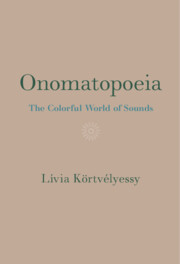
How do languages capture and represent the sounds of the world? Is this a universal phenomenon? Drawing from data taken from 124 different languages, this innovative book offers a detailed exploration of onomatopoeia, that are imagic icons of sound events. It provides comprehensive analysis from both theoretical and empirical perspectives, and identifies the prototypical semiotic, phonological, morphological, syntactic, word-formation, and socio-pragmatic features of onomatopoeia. Supported with numerous examples from the sample languages, the book highlights the varied scope of onomatopoeia in different languages, its relationship to ideophones and interjections, and the role of sound symbolism, particularly phonesthemes, in onomatopoeia-formation. It introduces an onomasiological model of onomatopoeia-formation, identifies onomatopoeic patterns, and specifies the factors affecting the similarities and differences between onomatopoeias standing for the same sound event. Filling a major gap in language studies, it is essential reading for researchers and students of phonology, morphology, semiotics, poetics, and linguistic typology.
Speech act theory has been foundational in establishing pragmatics as an independent field of inquiry; yet, recent pragmatic research appears to have drifted away from the theoretical investigation of speech acts. This Element explores the reasons why this is so, focusing on the difference of perspective that emerges when the scope of the discipline is viewed through a narrow versus a broad lens. Following an overview of the initial exposition of speech act theory by Austin, it tracks its evolution, through subsequent Searlean and Gricean elaborations, to the currently received view. This view is then found to have diverged substantially from Austin's original vision, largely due to its alignment with the narrow conception of pragmatics. Against this backdrop, it is suggested that embracing the broad take on the discipline can allow for a reintegration of Austin's vision into the way we theorise about speech acts.
Chapter 4 maps prototypical features of onomatopoeia by means of extensive empirical data on 124 sample languages and bear on the phonological, morphological, syntactic, word-formation, semantic, and sociopragmatic characteristics. The prototypical features are identified primarily, but not exclusively, on the basis of the markedness theory. It is postulated that the defining properties of onomatopoeias are marked relative to the properties of the general non-onomatopoeic word-stock in the sense of aberration from the latter’s properties. This claim does not mean that all onomatopoeias in natural languages or all onomatopoeias in a given language are marked in all the defining characteristics. Their prototypical characteristics should be viewed in the sense that onomatopoeia as a class of words has the capacity to deviate from the characteristics common to the non-onomatopoeic word-stock. It is postulated that these prototypical, defining features of onomatopoeia are marked features in the majority of languages, even if the languages differ in the degree of manifestation of these features at individual levels of language description. The discussion is supported by numerous examples.
Chapter 2 identifies various types of sound-related words in order to define the scope of onomatopoeia and the place of onomatopoeia in the system of language. It argues in favour of its ‘narrow’ definition by reserving this notion exclusively for direct sound imitation to distinguish onomatopoeia from signs based on cross-modal iconicity, from interjections, and from onomatopoeia-based derivatives and semantic shifts. This chapter also illustrates the different status and functions of onomatopoeic words in the sample languages.
Chapter 3 concentrates on the semiotics of onomatopoeia, mainly the frequently discussed issues of iconicity, arbitrariness, and motivation. It is claimed that rather than opposing terms, arbitrariness and motivation are complementary notions. It introduces the concept of causality into the discussion of the nature of onomatopoeia as linguistic signs. The chapter discusses five basic oppositions: causality versus noncausality; arbitrariness versus nonarbitrariness; iconicity versus non-iconicity; motivation versus lexicalization; and conventionalization versus nonconventionalization. Considerable attention is paid to the views that criticize Saussure’s comprehension of onomatopoeia and his concept of arbitrariness. Arguments are presented in support of Saussure’s position. In addition, Peirce’s triad of hypo-icons (image, diagram, metaphor) is discussed in terms of their relevance to the characterization of onomatopoeias.
For languages that recognize ideophones, it is quite common to discuss onomatopoeia under the umbrella of ideophones, that is, words based on our sensory perception: hearing, seeing, touching, smelling, tasting, and psychological feeling. This chapter examines the similarities and differences between onomatopoeia conceived as causally determined direct sound imitations and cross-modal ideophones to evaluate whether the ‘all-sensory’ approach is justified or whether onomatopoeia represents – from a cross-linguistic point of view – a class of words of their own. While similarities and shared features exist between onomatopoeias and other sensory signs, the available literature offers numerous indications of a different status of ideophones and onomatopoeia. Some of the reasons are of universal nature, and others are language specific. This chapter starts with an overview of the characteristic features of ideophones. Its structure maps the individual points of onomatopoeia description presented in Chapter 3 (semiotic characteristics), Chapter 4 (phonological, morphological, syntactic, semantic, word-formation, and sociopragmatic characteristics), and Chapter 6 (cross-linguistic similarities), as well as the word-class and open-class criteria. This is followed by a comparison of ideophones as cross-modal sensory words with onomatopoeia as monomodal sensory words. The final sections look at their universal and language-specific similarities and differences.
The final chapter provides a brief summary of the achievements, identifies limitations of the presented research, and indicates the directions of future onomatopoeia exploration.