To save content items to your account,
please confirm that you agree to abide by our usage policies.
If this is the first time you use this feature, you will be asked to authorise Cambridge Core to connect with your account.
Find out more about saving content to .
To save content items to your Kindle, first ensure no-reply@cambridge.org
is added to your Approved Personal Document E-mail List under your Personal Document Settings
on the Manage Your Content and Devices page of your Amazon account. Then enter the ‘name’ part
of your Kindle email address below.
Find out more about saving to your Kindle.
Note you can select to save to either the @free.kindle.com or @kindle.com variations.
‘@free.kindle.com’ emails are free but can only be saved to your device when it is connected to wi-fi.
‘@kindle.com’ emails can be delivered even when you are not connected to wi-fi, but note that service fees apply.
Marine sessile invertebrates with outer skeleton constitute additional substrate for a diverse group of epibiotic organisms. Colonial hydroids are no exception. Large numbers of motile and sessile organisms use hydroid colonies covered with chitinous perisarc for permanent or temporal attachment. Such epibiotic associations between colonial hydroids and microorganisms are poorly studied and mostly known for subtropical regions. There are no data about the development of such epibiotic association and type of its specificity yet. The present paper for the first time describes the epibiotic association of the colonial thecate hydroid Dynamena pumila from the high latitude sea. We reconstruct the spatial and temporal development of such epibiotic community and analyse the organization of the multicomponent biofilm covering the hydroid colony. Comparison of the epibiotic community in different seasons indicates for holding out of the basal features and components of the community during the whole year. Ultrastructural investigations revealed that components of the biofilm affect the outer skeleton of the hydroid colony that results in penetration of the microorganisms into the skeleton and even soft tissues. Our data allow supposing that association of hydroid D. pumila with a microorganism community has features of a symbiotic system.
Austinixa aidae inhabits burrows of the ghost shrimp Callichirus major at Perequê-açu beach, Ubatuba, Brazil. We described the host-use pattern and sexual dimorphism of A. aidae to test for monogamy given the generality of this mating system in the subfamily Pinnothereliinae (family Pinnotheridae) to which A. aidae belongs. Against expectations, A. aidae lives as solitary individuals within burrows more frequently than expected by chance alone. Additional observations suggested that A. aidae exhibits a polygynandrous mating system with males moving among burrows in search of receptive females. First, only 21% of the burrows harboured heterosexual pairs of crabs and the body size of paired crabs was poorly correlated. This suggests pair instability and frequent shifts among burrows by male and/or female crabs, as reported before for other symbiotic crustaceans in which the body size of paired crabs is poorly correlated. Second, males paired with females that were sexually receptive (without embryos) or that have been receptive recently (carrying early embryos) were found more frequently than expected by chance alone. The above agrees with that reported for species in which sexual pairing does not last long. Third, sexual dimorphism in terms of claw size and coloration was evident. Claws were larger in males than in females, a condition that argues in favour of male–male competition in A. aidae. In addition, the body coloration of males was more similar to the sand grains of the beach than that of females. This sex-specific coloration suggests that males are ‘better adapted' than females to roam on the surface of the beach in search of burrows because their coloration should diminish the risk of detection by predators. Experiments are needed to reveal the details of the polygynandrous mating system herein inferred for A. aidae and to understand those conditions favouring particular reproductive strategies in symbiotic decapod crustaceans.
A new bathyal leucothoid amphipod, Leucothoe cathalaa sp. nov., is described and illustrated based on specimens collected at the Le Danois Bank (‘El Cachucho’ Marine Protected Area), southern Bay of Biscay. This species can be distinguished from the other species of the genus Leucothoe by the hardly visible eyes (translucent ocelli, in preserved specimens); antenna 1 with minute accessory flagellum; coxae 1–3 with 2 serrations on posterodistal margin; epimeron 3 posterodistal corner produced, bifid, with one seta between blunt lobes and telson apex pointed without accessory teeth. In live specimens, the eyes are easily visible, each represented as a rounded whitish-pigmented spot. The new species has been found living on fine sandy soft-bottoms between 486 and 574 m depth at the top of the bank. An identification key to the deep Atlantic European species of Leucothoe is provided, as well as ecological and biological comments.
Seasonal changes in spatial structure of biomass of submerged aquatic vegetation (SAV) and environmental variables were evaluated in Celestun Lagoon, an estuarine habitat in Mexico. Geostatistical techniques were used to evaluate spatial autocorrelation and to predict the spatial distribution by kriging. The relative contribution of 11 environmental variables in explaining the spatial structure of biomass of SAV was evaluated by canonical correspondence analysis. Spatial partitioning between species of SAV was evident: the seagrasses Halodule wrightii and Ruppia maritima dominated the seaward and central zones of the lagoon, respectively, whereas the green alga Chara fibrosa was constrained to the inner zone. The spatial structure and seasonal variability of SAV biomass were best explained by organic carbon in the sediments, salinity and total suspended solids in the water column. Analysis at different spatial scales allowed identifying the importance of spatial structure in biotic and abiotic variables of this estuarine habitat.
The city of São Sebastião (SS), in south-eastern Brazil, is one of the hotspots for marine research since the establishment of the Centre of Marine Biology of the University of São Paulo in the 1960s. The SS region experienced intense transformation during the past 50 years, including increasing urbanization and construction of maritime facilities. Ascidian surveys during the past 50 years have found 62 species, eight of which were described as new and 12 are introduced. Didemnidae and Styelidae are the most speciose families in São Sebastião Channel, with 20 and 15 species respectively. Phallusia nigra, Didemnum psammatodes, Trididemnum orbiculatum, Botrylloides nigrum and Symplegma rubra are the most common ascidians. Most of the species are of tropical origin and São Paulo is their southern geographical limit. Comparisons of reports of the ascidians from different time periods allowed detection of species introductions and shifts in assemblage structure in terms of both species composition and abundance. Additionally, we discuss the main taxonomic issues regarding ascidians from south-eastern Brazil and identify profitable areas for future research. We believe that the temporal data compiled here will serve as a baseline for monitoring and management of ascidians in SS. Additionally, this study provides one of the most detailed datasets of ascidian diversity from the south-western Atlantic Ocean.
Sponges (phylum Porifera) are important components of the benthic marine fauna known for their interactions with vertebrates and a large sort of invertebrates seeking for food, shelter or substrate for attachment. Studies on this subject, however, were restricted only to the macrofauna inhabiting sponges of the class Demospongiae. In the present work, we describe the macrofauna associated with a calcareous sponge in Brazil, Paraleucilla magna. Individuals of this allegedly non-native species were monthly collected during one year in Rio de Janeiro (Brazil). Fifty taxa representing 10 animal phyla were found associated with P. magna. The most frequent and abundant taxa were Crustacea, Mollusca, Polychaeta and Bryozoa, while echinoderms, cnidarians, ascidians, nemerteans, platyhelminthes and sponges were less frequent or even rare and less abundant. Juveniles of several taxa and pregnant females of Crustacea were found associated with P. magna, but these associations were not exclusive. The macrofauna associated with P. magna did not present a clear seasonality, although it was possible to observe a change in the community composition alongside the year. The volume of the sponges was significantly related to the diversity index (H′) and number of taxa, but not with evenness (J′) and number of individuals. Our results show that P. magna is used as a substrate for attachment and/or shelter by its associates and that most of these associations are just opportunistic. The data presented here reiterate a previous proposal that sponges are important biodiversity reservoirs and that they should be seriously considered in conservation programmes.
The harbour porpoise is seriously depleted and threatened with extinction in the Baltic Sea. It is usually assumed that Baltic porpoises form a separate population unit, although the evidence for this has been disputed lately. Here, a 3-D geometric morphometric approach was employed to test a number of hypotheses regarding population structure of the harbour porpoise in the Baltic region. 277 porpoise skulls from Denmark, Sweden, Finland, Germany and Poland were measured with a suite of 3-D landmarks. Statistical analyses revealed highly significant shape differences between porpoises from the North Sea, Belt Sea and the inner Baltic Sea. A comparison of the directionalities of the shape vectors between these units found differences that cannot be attributed to a general, continual shape trend going from the North Sea to the inner Baltic Sea. These vectors indicate a morphological adaptation to the specific sub-areas. Such adaptation may be the result of the topographic peculiarities of the area with variable topography and shallow waters, e.g. in the Belt Sea porpoises, there may be a greater reliance on benthic and demersal prey. The present results show that isolation by distance alone is an unlikely explanation for the differences found within the Baltic region and thus support previously reported molecular indications of a separate population within the inner Baltic Sea.
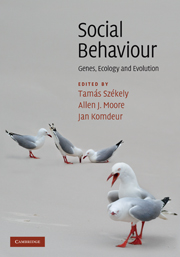
Humans live in large and extensive societies and spend much of their time interacting socially. Likewise, most other animals also interact socially. Social behaviour is of constant fascination to biologists and psychologists of many disciplines, from behavioural ecology to comparative biology and sociobiology. The two major approaches used to study social behaviour involve either the mechanism of behaviour - where it has come from and how it has evolved, or the function of the behaviour studied. With guest articles from leaders in the field, theoretical foundations along with recent advances are presented to give a truly multidisciplinary overview of social behaviour, for advanced undergraduate and graduate students. Topics include aggression, communication, group living, sexual behaviour and co-operative breeding. With examples ranging from bacteria to social mammals and humans, a variety of research tools are used, including candidate gene approaches, quantitative genetics, neuro-endocrine studies, cost-benefit and phylogenetic analyses and evolutionary game theory.
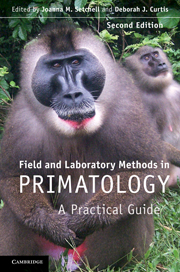
Building on the success of the first edition and bringing together contributions from a range of experts in the field, the second edition of this guide to research on wild primates covers the latest advances in the field, including new information on field experiments and measuring behaviour. It provides essential information and advice on the technical and practical aspects of both field and laboratory methods, covering topics such as ethnoprimatology; remote sensing; GPS and radio-tracking; trapping and handling; dietary ecology; and non-invasive genetics and endocrinology. This integrated approach opens up new opportunities to study the behavioural ecology of some of the most endangered primates and to collect information on previously studied populations. Chapters include methodological techniques; instructions on collecting, processing and preserving samples/data for later analysis; ethical considerations; comparative costs; and further reading, making this an invaluable tool for postgraduate students and researchers in primatology, behavioural ecology and zoology.
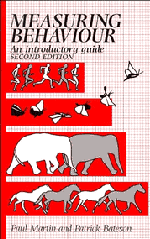
Measuring Behaviour is a guide to the principles and methods of quantitative studies of behaviour, with an emphasis on techniques of direct observation, recording and analysis. In this new edition, all sections have been updated and revised, some have been expanded and others introduced for the first time. Aimed primarily at undergraduate and graduate students in biology and psychology who are about to embark upon behavioural research projects, this book provides a concise review of methodology that will also be of interest to scientists of all disciplines in which behaviour is measured. Written with brevity and clarity, it is intended, above all, as a practical guide book.
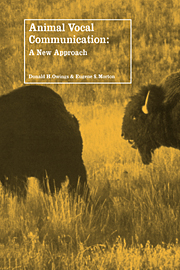
This book will be a landmark text for all those interested in animal communication. Animal Vocal Communication explicitly avoids human-centred concepts and approaches and links communication to fundamental biological processes instead. It offers a conceptual framework - assessment/management - that allows us to integrate detailed studies of communication with an understanding of evolutionary perspectives. Self-interested assessment is placed on par with the signal production (management) side of communication, and communication is viewed as reflecting regulatory processes. Signals are used to manage the behaviour of others by exploiting their active assessment. The authors contend that it is this interplay between management and assessment that results in the functioning and evolution of animal communication; it is what communicative behaviour accomplishes that is important, not what information is conveyed.
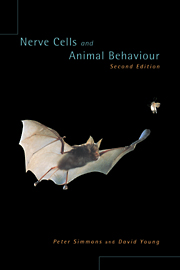
This new edition of Nerve Cells and Animal Behaviour has been updated and expanded by Peter Simmons and David Young in order to take into account more recent advances while still maintaining the accessibility of the book to university students. The book introduces the reader to the way in which nervous systems of animals control behaviour without assuming any prior knowledge of neurophysiology. Using a carefully selected series of behaviour patterns students are taken from an elementary-level introduction to a point where sufficient detail has been assimilated to allow a satisfying insight into current research on how nervous systems control and generate behaviour. Only examples where it has been possible to establish a clear link between the activity of particular nerve cells and a pattern of behaviour have been used. This book is essential reading for students of zoology, psychology and physiology and serves as a clear introduction to neuroethology.
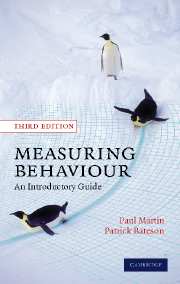
Measuring Behaviour has established itself as a standard text. Largely rewritten, updated and reorganised, this third edition is, as before, a guide to the principles and methods of quantitative studies of behaviour, with an emphasis on techniques of observation, recording and analysis. It provides the basic knowledge needed to measure behaviour, doing so in a succinct and easily understood form. The sections on research design and the interpretation and presentation of data have been greatly expanded. Written with brevity and clarity, Measuring Behaviour is, above all, a practical guide book. Aimed primarily at undergraduate and graduate students in biology and psychology who are about to embark upon quantitative studies of animal and human behaviour, this book provides a concise review of methodology that will be of great value to scientists of all disciplines in which behaviour is measured, including biological anthropology, the social sciences and medicine.
Wolves excitedly greet each other as members of the pack come together; a bumble bee uses its long tongue to reach the nectar at the base of a foxglove flower; a mongoose swiftly and deftly bites its prey to death; young cheetahs rest quietly together, very close to sleep. Now in full colour, this revised and updated edition of Manning and Dawkins' classic text provides a beautifully written introduction to the fundamentals of animal behaviour. Tinbergen's four questions of causation, evolution, development and function form the fundamental framework of the text, illustrated with fascinating examples of complex behavioural mechanisms. The authors provide accounts of all levels of behaviour from the nerve cell to that of the population. The strengths of An Introduction to Animal Behaviour as a textbook include its clear explanations and concise, readable text and the enthusiasm of the authors for their subject.
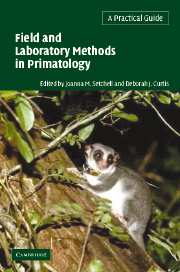
Field and Laboratory Methods in Primatology is a manual for students and researchers studying wild primates. Technological advances allow fieldworkers to collect a wide range of data, store samples for later analysis, and collect information remotely. These methods open up opportunities to gain new insights on previously studied populations and are the means of collecting data on species that have, until now, been difficult to study. However, information on the practicalities of using such methodology in the field has largely been lacking. Here, in this indispensable reference, experienced fieldworkers provide the first comprehensive guide to the wide variety of techniques available for the study of wild primates. Covering everything from pre-trip planning to laboratory analysis of endocrine and genetic samples, packed full of tips and emphasising practicalities and ethics throughout, it is a must-have for all field primatologists and others studying free-ranging animals.
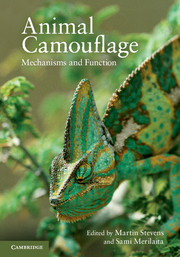
In the last decade, research on the previously dormant field of camouflage has advanced rapidly, with numerous studies challenging traditional concepts, investigating previously untested theories and incorporating a greater appreciation of the visual and cognitive systems of the observer. Using studies of both real animals and artificial systems, this book synthesises the current state of play in camouflage research and understanding. It introduces the different types of camouflage and how they work, including background matching, disruptive coloration and obliterative shading. It also demonstrates the methodologies used to study them and discusses how camouflage relates to other subjects, particularly with regard to what it can tell us about visual perception. The mixture of primary research and reviews shows students and researchers where the field currently stands and where exciting and important problems remain to be solved, illustrating how the study of camouflage is likely to progress in the future.
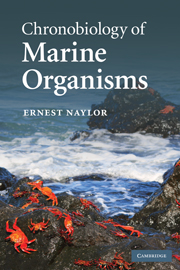
Do intertidal organisms simply respond to the rise and fall of tides, or do they possess biological timing and navigation mechanisms that allow them to anticipate when conditions are most favourable? How are the patterns of growth, development and reproduction of some marine plants and animals related to changes in day-length or to phases of the moon? The author describes how marine organisms, from single cells to vertebrates, on sea shores, in estuaries and in the open ocean, have evolved inbuilt biological clockwork and synchronisation mechanisms which control rhythmic processes and navigational behaviour, permitting successful exploitation of highly variable and often hostile environments. Adopting a hypothesis-testing and experimental approach, the book is intended for undergraduate and postgraduate students of marine biology, marine ecology, animal behaviour, oceanography and other biological sciences and also as an introduction for researchers, including physiologists, biochemists and molecular biologists entering the field of chronobiology.
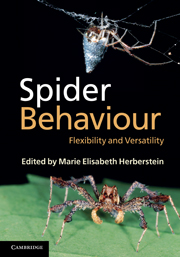
Spiders are often underestimated as suitable behavioural models because of the general belief that due to their small brains their behaviour is innate and mostly invariable. Challenging this assumption, this fascinating book shows that rather than having a limited behavioural repertoire, spiders show surprising cognitive abilities, changing their behaviour to suit their situational needs. The team of authors unravels the considerable intra-specific as well as intra-individual variability and plasticity in different behaviours ranging from foraging and web building to communication and courtship. An introductory chapter on spider biology, systematics and evolution provides the reader with the necessary background information to understand the discussed behaviours and helps to place them into an evolutionary context. Highlighting an under-explored area of behaviour, this book will provide new ideas for behavioural researchers and students unfamiliar with spiders as well as a valuable resource for those already working in this intriguing field.
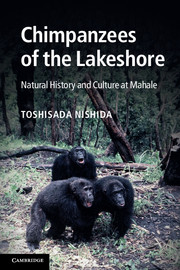
Chimpanzees are humanity's closest living relations and are of enduring interest to a range of sciences, from anthropology to zoology. In the West, many know of the pioneering work of Jane Goodall, whose studies of these apes at Gombe in Tanzania are justly famous. Less well-known, but equally important, are the studies carried out by Toshisada Nishida on the eastern shore of Lake Tanganyika. Comparison between the two sites yields both notable similarities and startling contrasts. Nishida has written a comprehensive synthesis of his work on the behaviour and ecology of the chimpanzees of the Mahale Mountains. With topics ranging from individual development to population-specific behavioural patterns, it reveals the complexity of social life, from male struggles for dominant status to female travails in raising offspring. Richly illustrated, the author blends anecdotes with powerful data to explore the fascinating world of the chimpanzees of the lakeshore.
This study aims to describe the epibiota of the spider crab, Schizophrys dahlak with special reference to epizoic diatoms. Specimens were collected from the Suez Canal between autumn 2008 and summer 2009. Macro-epibionts consisted of the tube worm Hydroides elegans, the barnacles Balanus amphitrite and B. eburneus, the bivalve Brachidontes variabilis and the urochordate Styela plicata. Total coverage of macro-epibionts was greater on females' carapaces than those of males with apparent seasonal variations. The highest coverage was noticed in spring and winter for both males and females. Sixty-five diatoms taxa were recorded as epibionts belonging to 25 genera. The maximal total averages of cell count were observed during summer and spring with the highest average of 10.9 and 4.4 × 10³ cells dm−2 for males and females, respectively. A single diatom taxon, Fragilaria intermedia, comprising 73.5% of all epizoic diatoms, was the most dominant species during spring, whereas Amphora coffeaeformis and Cocconeis placentula were the dominants during summer. The masking behaviour of S. dahlak was discussed in terms of the significant role of epizoic diatoms.