To save content items to your account,
please confirm that you agree to abide by our usage policies.
If this is the first time you use this feature, you will be asked to authorise Cambridge Core to connect with your account.
Find out more about saving content to .
To save content items to your Kindle, first ensure no-reply@cambridge.org
is added to your Approved Personal Document E-mail List under your Personal Document Settings
on the Manage Your Content and Devices page of your Amazon account. Then enter the ‘name’ part
of your Kindle email address below.
Find out more about saving to your Kindle.
Note you can select to save to either the @free.kindle.com or @kindle.com variations.
‘@free.kindle.com’ emails are free but can only be saved to your device when it is connected to wi-fi.
‘@kindle.com’ emails can be delivered even when you are not connected to wi-fi, but note that service fees apply.
Caveat Emptor – let the buyer beware. Good advice for almost anything from buying cars or houses or making investments and, for that matter, in trying to make sense out of the nature–nurture debates. As is true about anything within the academic disciplines, the nature–nurture debates rest on certain basic assumptions about theory, methodology, and analysis. What is the subject matter? How is it defined and measured? How are data collected? How are they analyzed? How are they interpreted? These are not, in fact, questions unique to the nature–nurture debates but rather are generic to all aspects of the study of human development. Nevertheless, the nature–nurture debates often serve as the primary battleground for skirmishes between opposing sides on each of these issues. It is in this sense that I define one of the nature–nurture debates as the “proxy debate.”
This chapter is mostly about the proxy debate because it is these questions and assumptions on which they rest that speak to the heart and soul of human development as a discipline. These questions and assumptions can perhaps best be grouped together in two, admittedly overlapping, broad categories. The first refers to issues related to the question of the most appropriate level of analysis one should use in the study of human development, and it is this issue that serves to differentiate the classic debate from, for the most part, the new debate. The second broad category relates to a host of issues concerning research design and analysis, and it is this issue that most often serves to put the two sides of the classic debate at odds with each other.
Here is a riddle for you. What has been solved over and over again and yet still remains unsolved? The answer – the nature–nurture debate. Admittedly not a very good riddle, but nevertheless a true statement. The question is like one of those candles we used to have on our birthday cakes when we were children, the ones we would blow out and they would just light again and we would blow them out again and once more they would relight. Eventually we caught on that the problem wasn't with our blowing but with the candle. The focus of this book reflects the same sentiment. The problem isn't in the answer; it is in the question. We need some new candles to light.
The Nature–Nurture Debates: Bridging the Gap reviews both contemporary and historical approaches to the problem, from the perspective of both theory and method and the implications of each of these approaches. Without giving too much of the plot away, suffice it to say that the candle that needs replacing is the reductionist model. An approach that partitions variance into independent main effects will never resolve the debate because, by definition, it has no choice but to perpetuate it. The “new candle” is one consistent with the emerging perspective of a true developmental science, a multidisciplinary concept that is a worthy successor to the all-too-often static perspective of child psychology.
There is no question but that one's genotype significantly influences one's course of development. And there is no question but that one's environment significantly influences one's course of development. But there is now also no question that the way that the classic debate has attempted, for more than 100 years, to explain the role of each has done more harm than good, both in terms of our conceptual understanding of the course of development and in terms of the inappropriate policy and practice recommendations that have flowed from such a flawed perspective. As I said earlier, it really is incredible.
The classic debate's reliance on main-effects statistical models simply no longer reflects what we understand about the interdependence of nature and nurture. A statistical model not only needs to be mathematically accurate; it needs to accurately model the phenomenon of interest as well. The main-effects model may pass the first test, but it no longer passes the second test. In fact, it may never have passed the second test because partitioning variance is at heart an illusion. There is in reality no such thing as an independent effect.
It's really incredible when you think about it. Here we are, well into the twenty-first century, and we are still fighting over the role of nature and nurture in human development. And it isn't even a new fight; it's not even a twentieth-century fight. It actually goes back to the nineteenth century and probably even before that. So why is it that we cannot get this question answered and move on to a new one? Is it because we haven't yet gotten the necessary data to make a conclusion one way or the other? Do we not yet have a powerful enough computer to sort everything out? Have we not identified the best method and statistics to collect and analysis the relevant data? One answer to these questions is, of course, “yes” to all these possibilities, but there is also another possibility. It may also be that we are having trouble coming up with the answer because we continue to ask the wrong questions.
The Nature–Nurture Debates: Bridging the Gap is an attempt to make sense out of the nature–nurture debate, to explain why this debate is still even a debate. I mean, after all, how many other topics in any of the sciences have been debated for more than 150 years without any resolution? Making sense out of the debate requires an examination of several issues and questions. For starters, what in fact are we talking about when we talk about nature and nurture? How is each measured, and how is its relative contribution assessed? What is the history of the debate? Have there been solutions that we now no longer accept? What were they? Why were they rejected? What has changed in our understanding of the course of human development? How has this change redefined the debate? What difference does it really make anyway how much nature and nurture influence our development? Is this essentially an academic debate that may never be answered to everyone's satisfaction, or are there important practical implications as well? What are the major theoretical positions in the debate? What does each have to offer? What claims does each make? What data does each provide?
One of the things that all students of human development are taught in their research methodology and statistics classes is that methodology and statistics are designed to be neutral, that is, the results of an experiment should reflect the data collected rather than how the data were collected or analyzed. This is the bedrock, the basis on which we claim our work to be objective, to be scientific. However, at least with respect to nature and nurture, and, in particular, the early history of the classic debate, this fundamental assumption simply doesn't appear to be true. In fact, most of the research methods and statistics used in the debate, then and now, evolved out of a desire of those whom we would now recognize as nativists to have an “objective” way of demonstrating the dominant position of nature over nurture rather than an objective means to assess the relative importance of the two.
Like just about everything in Western thought, this brief history lesson goes all the way back to the ancient Greek philosophers, Plato (437–347 b.c.e.) and Aristotle (384–322 b.c.e.). Today we would call Plato a nativist (Simpson et al. 2005), although it was not a term he made use of. Nevertheless, Plato argued that experience was simply insufficient to account for all the knowledge and abilities humans possess. Because these things cannot be taught, they must instead be present at birth, that is, they are innate. On the other hand, Aristotle, Plato's student, might have been the first empiricist, more precisely, possibly the first epigeneticist. As Anandalakshmy and Grinder (1970) explain it,
Aristotle described development as a process of continual integration and differentiation and insisted that the more complex growth patterns were irreducible to simpler elements or atoms. From the epigenetic viewpoint, maturity is not simply a summation of earlier structures but a novel synthesis of them. (pp. 1118–19)
One of the major – if not the major – points of this book is that the nature–nurture debate continues to be fought along two battlefronts and that these two fronts represent different levels of analysis, that is, different metatheories. One metatheory reflects a belief that the life sciences, including the study of human development, can best be modeled using the same principles as those that work so well for the physical sciences, that is, a belief that complicated phenomena can best be understood as reflecting the cumulative effects of several antecedents each acting essentially independent of each other. The design and use of methodology allowing for the partitioning of variance into independent main effects is consistent with this worldview.
Scholars working within this reductionist metatheoretical tradition, such as those involved in the classic debate, typically reject the notion that there is a metatheoretical value reflected in their work. Rather, they argue that as empirical researchers (whether the focus is on nature or nurture), they are simply capturing what there is to be found with respect to the causes of human development and, further, that their research methods are neutral, that is, if the data show that it is possible to partition nature and nurture, it is so because it is possible to partition nature and nurture, not because the methodology artificially creates such a result. And finding evidence for such main effects, they report them, to both the scholarly community and to the general public. And so people picking up their morning papers (or iPads, as might be the case), read that scientists have found the God gene (Wade 2009), that bad driving might be genetic (McHughen et al. 2010), that political orientation might be genetic (Alford et al. 2005), and of course that the poor may not only be poorer than the rest of us but in some way might be genetically different as well (Rowe 2005).
This chapter and the next examine the four relatively distinct approaches to the nature–nurture debate. In this chapter, we look at models favoring a reductionist approach to the issue, that is, models that attempt to examine the influence of variables independently of each other. In the next chapter, we look at models favoring a systems approach, that is, models that see variables in constant interaction with each other. The reductionist approach is the classic debate; the systems approach, the new debate.
The classic debate is just that, a classic. It seems to have been going on forever and, given the elements of the debate, is likely to continue going on forever. The players change periodically as do the particular statistics, but the fundamental question is always the same: What percentage of the variance is caused by nature and what percentage of the variance is caused by nurture? The fact that there seems to be no end in sight to the classic debate is perhaps one reason why many have abandoned reductionist approaches to development and have moved on to the more integrative, systemic ones.
Working memory is currently a 'hot' topic in cognitive psychology and neuroscience. Because of their radically different scopes and emphases, however, comparing different models and theories and understanding how they relate to one another has been a difficult task. This volume offers a much-needed forum for systematically comparing and contrasting existing models of working memory. It does so by asking each contributor to address the same comprehensive set of important theoretical questions on working memory. The answers to these questions provided in the volume elucidate the emerging general consensus on the nature of working memory among different theorists and crystallize incompatible theoretical claims that must be resolved in future research. As such, this volume serves not only as a milestone that documents the state-of-the-art in the field but also as a theoretical guidebook that will likely promote new lines of research and more precise and comprehensive models of working memory.
The Cambridge Handbook of Creativity is a comprehensive scholarly handbook on creativity from the most respected psychologists, researchers and educators. This handbook serves both as a thorough introduction to the field of creativity and as an invaluable reference and current source of important information. It covers such diverse topics as the brain, education, business, and world cultures. The first section, 'Basic Concepts', is designed to introduce readers to both the history of and key concepts in the field of creativity. The next section, 'Diverse Perspectives of Creativity', contains chapters on the many ways of approaching creativity. Several of these approaches, such as the functional, evolutionary, and neuroscientific approaches, have been invented or greatly reconceptualized in the last decade. The third section, 'Contemporary Debates', highlights ongoing topics that still inspire discussion. Finally, the editors summarize and discuss important concepts from the book and look to what lies ahead.
Karniol engagingly presents social development in children through the language of preference management. Conversational excerpts garnered from around the world trace how parents talk about preferences, how infants' and children's emergent language conveys their preferences, how children themselves are impacted by others' preferences, and how they in turn influence the preferences of adults and peers. The language of preferences is used to crack into altruism, aggression, and morality, which are ways of coming to terms with other people's preferences. Behind the scenes is a cognitive engine that uses transformational thought – conducting temporal, imaginal, and mental transformations – to figure out other people's preferences and to find more sophisticated means of outmanoeuvring others by persuading them and playing with one's own mind and other people's minds when preferences are blocked. This book is a unique and sometimes amusing must-read for anyone interested in child development, language acquisition, socialisation, and communication.
This book is a definitive reference source for the growing, increasingly more important, and interdisciplinary field of computational cognitive modeling, that is, computational psychology. It combines breadth of coverage with definitive statements by leading scientists in this field. Research in computational cognitive modeling explores the essence of cognition and various cognitive functionalities through developing detailed, process-based understanding by specifying computational mechanisms, structures, and processes. Given the complexity of the human mind and its manifestation in behavioral flexibility, process-based computational models may be necessary to explicate and elucidate the intricate details of the mind. The key to understanding cognitive processes is often in fine details. Computational models provide algorithmic specificity: detailed, exactly specified, and carefully thought-out steps, arranged in precise yet flexible sequences. These models provide both conceptual clarity and precision at the same time. This book substantiates this approach through overviews and many examples.
While many of us are concerned with the loss of communal spaces and ties that broaden one's sense of self beyond the 'me' or 'I' and into the 'we' and 'us', less clear are the educational advantages of a community approach in terms of learning curricular content. The chapters in this 2004 volume explore the theoretical, design, learning, and methodological questions with respect to designing for and researching web-based communities to support learning. The authors, coming from diverse academic backgrounds (computer science, information science, instructional systems technology, educational psychology, sociology, and anthropology), are frank in examining what we do and do not know about the processes and practices of designing communities to support learning. Taken as a collection, these manuscripts point to the challenges and complex tensions that emerge when designing for web-supported community, especially when the focal practice of the community is learning.
This book is a comprehensive survey of our scientific knowledge about human intelligence, written by a researcher who has spent more than 30 years studying the field, receiving a Lifetime Contribution award from the International Society for Intelligence. Human Intelligence takes a non-ideological view of a topic in which, too often, writings are dominated by a single theory or social viewpoint. The book discusses the conceptual status of intelligence as a collection of cognitive skills that include, but also go beyond, those skills evaluated by conventional tests; intelligence tests and their analysis; contemporary theories of intelligence; biological and social causes of intelligence; the importance of intelligence in social, industrial, and educational spheres; the role of intelligence in determining success in life, both inside and outside educational settings; and the nature and causes of variations in intelligence across age, gender, and racial and ethnic groups.
Language is like a vast spider's web. In this volume Jean Aitchison explores the different facets of this web. She begins with the cobweb of false worries which surrounds language. She then discusses how language evolved in the human species, how children acquire it, and how educated English speakers remember 50,000 or more words. Finally, she argues that people are right to be concerned about language, though not in the ways traditionally assumed. This is the text of the 1996 BBC Reith lectures, slightly revised for publication, with illustrations and full references, and an afterword which looks at the reception of the lectures.
This book presents a comprehensive theory of consciousness. The initial chapter distinguishes six main forms of consciousness and sketches an account of each one. Later chapters focus on phenomenal consciousness, consciousness of, and introspective consciousness. In discussing phenomenal consciousness, Hill develops the representational theory of mind in new directions, arguing that all awareness involves representations, even awareness of qualitative states like pain. He then uses this view to undercut dualistic accounts of qualitative states. Other topics include visual awareness, visual appearances, emotional qualia, and meta-cognitive processing. This important work will interest a wide readership of students and scholars in philosophy of mind and cognitive science.
Emotions are central to human behavior and experience. Yet scientific theory and research ignored emotions during most of the twentieth century. This situation changed dramatically during the last 30 years of that century, which witnessed an upsurge of interest in emotions in a number of disciplines. This book arises from the 24 keynote papers presented at a symposium held in June 2001 that had the same title as this volume. The aim of that meeting was to review the state of research on emotions from a multidisciplinary perspective. Each chapter is authored by an acknowledged authority in the field. Together they provide an overview of what is being studied and thought about emotions, in disciplines ranging from neurophysiology and experimental psychology to sociology and philosophy.
What is the relationship between common-sense, or 'folk', psychology and contemporary scientific psychology? Are they in conflict with one another? Or do they perform quite different, though perhaps complementary, roles? George Botterill and Peter Carruthers discuss these questions, defending a robust form of realism about the commitments of folk psychology and about the prospects for integrating those commitments into natural science. Their focus throughout the book is on the ways in which cognitive science presents a challenge to our common-sense self-image - arguing that our native conception of the mind will be enriched, but not overturned, by science. The Philosophy of Psychology is designed as a textbook for upper-level undergraduate and beginning graduate students in philosophy and cognitive science, but as a text that not only surveys but advances the debates on the topics discussed, it will also be of interest to researchers working in these areas.
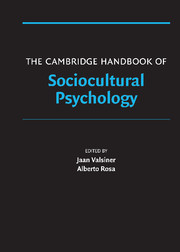
This book, first published in 2007, is an international overview of the state of our knowledge in sociocultural psychology - as a discipline located at the crossroads between the natural and social sciences and the humanities. Since the 1980s, the field of psychology has encountered the growth of a new discipline - cultural psychology - that has built new connections between psychology, sociology, anthropology, history and semiotics. The handbook integrates contributions of sociocultural specialists from fifteen countries, all tied together by the unifying focus on the role of sign systems in human relations with the environment. It emphasizes theoretical and methodological discussions on the cultural nature of human psychological phenomena, moving on to show how meaning is a natural feature of action and how it eventually produces conventional symbols for communication. Such symbols shape individual experiences and create the conditions for consciousness and the self to emerge; turn social norms into ethics; and set history into motion.