To save content items to your account,
please confirm that you agree to abide by our usage policies.
If this is the first time you use this feature, you will be asked to authorise Cambridge Core to connect with your account.
Find out more about saving content to .
To save content items to your Kindle, first ensure no-reply@cambridge.org
is added to your Approved Personal Document E-mail List under your Personal Document Settings
on the Manage Your Content and Devices page of your Amazon account. Then enter the ‘name’ part
of your Kindle email address below.
Find out more about saving to your Kindle.
Note you can select to save to either the @free.kindle.com or @kindle.com variations.
‘@free.kindle.com’ emails are free but can only be saved to your device when it is connected to wi-fi.
‘@kindle.com’ emails can be delivered even when you are not connected to wi-fi, but note that service fees apply.
The questions of how a large population of neurons in the brain functions, how synchronized firing of neurons is achieved, and what factors regulate how many and which neurons fire under different conditions form the central theme of this book. Using a combined experimental-theoretical approach unique in neuroscience, the authors present important techniques for the physiological reconstruction of a large biological neuronal network. They begin by discussing experimental studies of the CA3 hippocampal region in vitro, focusing on single-cell and synaptic electrophysiology, particularly the effects a single neuron exerts on its neighbours. This is followed by a description of a computer model of the system, first for individual cells then for the entire detailed network, and the model is compared with experiments under a variety of conditions. The results shed significant light into the mechanisms of epilepsy, electroencephalograms, and biological oscillations and provide an excellent test case for theories of neural networks. Researchers in neurophysiology and physiological psychology, physicians concerned with epilepsy and related disorders, and researchers in computational neuroscience will find this book an invaluable resource.
There has been an enormous increase in research activity aimed at elucidating the basis for cortical activity in the brain. Among modern techniques used in this area of scientific endeavour, few have proved as popular as computer simulation. Model neural networks are the subject of intense study, and some remarkable properties have already come to light: these networks are able to discriminate, remember and associate. Professor Cotterill has assembled leading experts in this burgeoning field to produce an exciting review of advances. The volume covers the creation of computer models of neural networks, and their use in the study of neural function, of cognition, memory and vision. The results and future directions explored here will have an important bearing on research into brain function, physiology, psychology, biophysics and artificial intelligence.
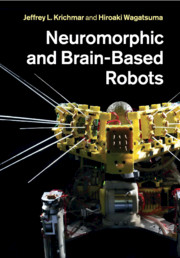
Neuromorphic and brain-based robotics have enormous potential for furthering our understanding of the brain. By embodying models of the brain on robotic platforms, researchers can investigate the roots of biological intelligence and work towards the development of truly intelligent machines. This book provides a broad introduction to this groundbreaking area for researchers from a wide range of fields, from engineering to neuroscience. Case studies explore how robots are being used in current research, including a whisker system that allows a robot to sense its environment and neurally inspired navigation systems that show impressive mapping results. Looking to the future, several chapters consider the development of cognitive, or even conscious robots that display the adaptability and intelligence of biological organisms. Finally, the ethical implications of intelligent robots are explored, from morality and Asimov's three laws to the question of whether robots have rights.
From the time of birth through the early school years, young children rapidly acquire two complex cognitive systems: They organize their experiences into concepts and categories, and they acquire their first language. How do children accomplish these critical tasks? How do conceptual systems influence the structure of the language we speak? How do linguistic patterns influence how we view reality? These questions have captured the interest of such theorists as Piaget, Vygotsky, Chomsky and Whorf but until recently very little has been known about the relation between language and thought during development. Perspectives on Language and Thought presents current observational and experimental research on the links between thought and language in young children. Chapters from leading figures in the field focus on the acquisition of hierarchical category systems, concepts of time, causality, and logic and the nature of language learning in both peer and adult-child social interactions.
A central and largely unsolved problem in the brain sciences is to understand the functional architecture of the vertebrate nervous system. Many questions about this architecture revolve around the issue of action selection. Because it is a fundamental property of neurons to be selective with regard to the patterns of input activity to which they respond, claims that particular brain subsystems are specifically or preferentially involved in the selection of action, as distinct to other aspects of control, must meet more stringent requirements (see below). It is also by no means inevitable that the functional decomposition of the brain will contain specialist action-selection mechanisms (see Seth, this volume). Appropriate behavioural switching could be a global property of nervous system function, and of its embedding in a body and environment, that cannot be attributed to specific subcomponents of brain architecture. In other words, it is plausible that an animal may ‘flip’ from one integrated pattern of behavioural output to another without some identifiable internal ‘switch’ being thrown. On the other hand, theoretical arguments can be presented, based for instance on the benefits that accrue from modularity (Bryson, 2005; Prescott et al., 1999; Wagner and Altenberg, 1996), to suggest that biological control systems may include specialised action-selection components. Hence, one important debate in this field is whether there are specialised mechanisms for action selection in animal nervous systems, and, if so, where these might be found (see also Prescott, 2007, for an evolutionary perspective on this question).
Neural substrates for action selection in cortico-basal ganglia loops
Redgrave et al. (1999) have proposed that, to be considered as a candidate action-selection mechanism, a neural subsystem should exhibit the following properties. First, it should have inputs that carry information about both internal and external cues relevant to decision making. Second, there should be some internal mechanism that allows calculation of the urgency or ‘salience’ that should be attached to each available action. Third, there should be mechanisms that allow for the resolution of conflicts between competing actions based on their relative salience. Finally, the outputs of the system should be configured so as to allow the expression of winning actions whilst disallowing losers. There is now a growing consensus in the neuroscience literature that the basal ganglia – a group of functionally related structures found in the mid- and forebrain of all vertebrates – meet these criteria and therefore may represent an important neural action-selection substrate.