To save content items to your account,
please confirm that you agree to abide by our usage policies.
If this is the first time you use this feature, you will be asked to authorise Cambridge Core to connect with your account.
Find out more about saving content to .
To save content items to your Kindle, first ensure no-reply@cambridge.org
is added to your Approved Personal Document E-mail List under your Personal Document Settings
on the Manage Your Content and Devices page of your Amazon account. Then enter the ‘name’ part
of your Kindle email address below.
Find out more about saving to your Kindle.
Note you can select to save to either the @free.kindle.com or @kindle.com variations.
‘@free.kindle.com’ emails are free but can only be saved to your device when it is connected to wi-fi.
‘@kindle.com’ emails can be delivered even when you are not connected to wi-fi, but note that service fees apply.
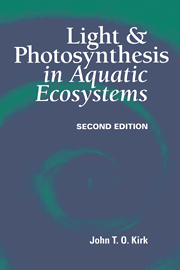
Penetration of light into aquatic ecosystems is greatly affected by the absorption and scattering processes that take place within the water. Thus within any water body, the intensity and colour of the light field changes greatly with depth and this has a marked influence on both the total productivity of, and the kinds of plant that predominate in, the ecosystem. This study presents an integrated and coherent treatment of the key role of light in aquatic ecosystems. It ranges from the physics of light transmission within water, through the biochemistry and physiology of aquatic photosynthesis, to the ecological relationships which depend on the underwater light climate.
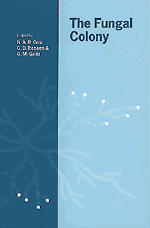
Fungi are amongst the simplest of eukaryotes. Their study has provided useful paradigms for processes that are fundamental to the way in which higher cells grow, divide, establish form and shape, and communicate with one another. The majority of work has been carried out on the budding yeast Saccharomyces cerevisiae, but in nature unicellular fungi are greatly outnumbered by filamentous forms for which our knowledge is much less well developed. This volume focuses on the analysis of the filamentous life style, particularly on the hyphae which constitute the fungal mycelial colony. It provides the most recent insights into the molecular genetics and physiological mechanisms underlying the elaboration of the branching mycelium and the interactions between individual fungal mycelia. As such it offers much to interest mycologists and, equally, those working in the fields of cell biology, developmental biology, physiology and biochemistry.
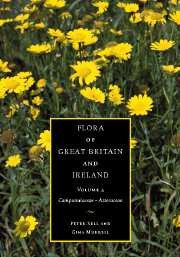
This critical Flora provides a definitive account of the native species, naturalised species, frequent garden escapes and casuals found in the British Isles. Full keys and descriptions will enable the user to name all plants occurring in the wild, plus some ornamental trees and shrubs. For the first time detailed accounts of all the large apomictic genera are given and many infraspecific variants included. Each species entry begins with the accepted Latin name, synonyms and the common English name. A detailed description follows, including information on flowering period, pollination and chromosome number. Separate descriptions are given for infraspecific taxa. Information on the status, ecology and distribution (including worldwide distribution) of the species and infraspecific taxa is also given. Clear black and white line drawings illustrate an extensive glossary and also illuminate the diagnostic features in a number of groups of plants.
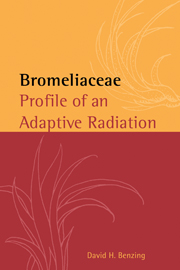
This book, first published in 2000, presents a synthesis of the extensive information available on the biology of Bromeliacea, a largely neotropical family of about 2700 described species. Reproductive and vegetative structure and related physiology, ecology and evolution are emphasized, rather than floristics and taxonomy. Guiding questions include: why is this family inordinately successful in arboreal (epiphytic) and other typically stressful habitats and also so important to extensive fauna beyond pollinators and frugivores in the forest canopy? Extraordinary and sometimes novel mechanisms that mediate water balance, tolerance for high and low exposures, and mutualisms with ants have received much study and allow interesting comparisons among plant taxa and help explain why members of this taxon exhibit more adaptive and ecological variety than most other families of flowering plants. This volume concentrates on function and underlying mechanisms, thus will round out a literature that otherwise mostly ignores basic biology in favour of taxonomy and horticulture.
Diatoms are microscopic algae which are found in virtually every habitat where water is present. This volume is an up-to-date summary of the expanding field of their uses in environmental and earth sciences. Their abundance and wide distribution, and their well-preserved glass-like walls make them ideal tools for a wide range of applications as both fossils and living organisms. Examples of their wide range of applications include as environmental indicators, for oil exploration, and for forensic examination. The major emphasis is on their use in analysing ecological problems such as climate change, acidification and eutrophication. The contributors to the volume are leading researchers in their fields and are brought together for the first time to give a timely synopsis of a dynamic and important area. This book should be read by environmental scientists, phycologists, limnologists, ecologists and palaeoecologists, oceanographers, archaeologists and forensic scientists.
Plastids reside in all plant cells, and take on different forms in relation to their cellular function, biochemistry and storage capacity. The modern era of molecular biology and molecular genetics has enabled much to be learnt about how plastids function, and how they relate to their evolutionary past. In this accessible text, Kevin Pyke expertly describes how the plastids are highly complex organelles at the very core of plant cellular function, providing final year undergraduate and graduate students with an overview of plastid biology and recent developments in the field. Topics covered include: a consideration of different plastid types and how they relate to cell function; plastid genomes and how proteins are imported into plastids; photosynthesis and core aspects of plastid biochemistry; plastid signalling and functionality within a cellular context; and plastid genetic manipulation. Supplementary colour images are available online at www.cambridge.org/9780521885010.
Patterns in Plant Development offers an introduction to the development of the whole plant. It is essentially a factual book that describes the complex phenomena of development in vascular plants. The point of view is structural, and emphasis is placed on the experimental approach to development. The book deals with lower vascular plants (e.g. ferns) as well as seed plants, so that the treatment of the plant, beginning with the embryo and continuing through the phase of secondary growth (the vascular cambium) is presented. The book is written so that anyone who has completed a basic first-year university course in biology or botany will be able to use it without difficulty. Sufficient background information is provided so that the reader is not required to have an extensive technical background.
What determines the number and size of the seeds produced by a plant? How often should it reproduce them? How often should a plant produce them? Why and how are seeds dispersed, and what are the implications for the diversity and composition of vegetation? These are just some of the questions tackled in this wide-ranging review of the role of seeds in the ecology of plants. The authors bring together information on the ecological aspects of seed biology, starting with a consideration of reproductive strategies in seed plants and progressing through the life cycle, covering seed maturation, dispersal, storage in the soil, dormancy, germination, seedling establishment, and regeneration in the field. The text encompasses a wide range of concepts of general relevance to plant ecology, reflecting the central role that the study of seed ecology has played in elucidating many fundamental aspects of plant community function.
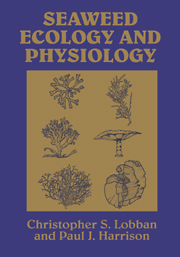
A rewritten and re-organised edition of The Physiological Ecology of Seaweeds (1985). Seaweed Ecology and Physiology surveys the broad literature, but it is not merely an update of the earlier book. This book contains an introductory chapter reviewing seaweed morphology, cytology, and life histories. The chapter on community level ecology now includes six guest essays by senior algal ecologists which conveys the excitement of phycological research. The treatment of tropical seaweeds had been expanded, reflecting the growing literature from tropical regions, and the authors' experiences in the tropics. The final chapter on mariculture is much larger, and includes a case study on how principles of physiological ecology were applied in developing the carrageenan industry. Finally there is an appendix summarising the taxonomic position and nomenclature of the species mentioned in the book.
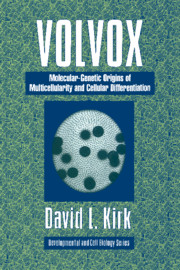
The central thesis of this book is that Volvox and its unicellular and colonial relatives provide a wholly unrivalled opportunity to explore the proximate and ultimate causes underlying the evolution, from unicellular ancestors, of multicellular organisms with fully differentiated cell types. A major portion of the book is devoted to reviewing what is known about the genetic, cellular and molecular basis of development in the most extensively studied species of Volvox: V. cateri, which exhibits a complete division of labour between mortal somatic cells and immortal germ cells. However, this topic has been put in context by first considering the ecological conditions and cytological preconditions that appear to have fostered the evolution of organisms of progressively increasing size and with progressively increasing tendency to produce terminally differentiated somatic cells. The book concludes by raising the question of whether the germensoma dichotomy may have evolved by similar or different genetic pathways in different species of Volvox. Biologists and phycologists interested in development, genetics and cellular evolution will find this a fascinating work.
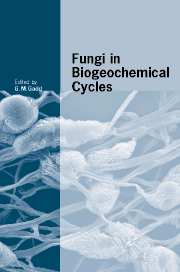
Fungi play important roles in the cycling of elements in the biosphere but are frequently neglected within microbiological and geochemical research spheres. Symbiotic mycorrhizal fungi are responsible for major transformations and redistribution of inorganic nutrients, while free-living fungi have major roles in the decomposition of organic materials, including xenobiotics. Fungi are also major biodeterioration agents of stone, wood, plaster, cement and other building materials, and are important components of rock-inhabiting microbial communities. The aim of this book is to promote further understanding of the key roles that free-living and symbiotic fungi (in mycorrhizas and lichens) play in the biogeochemical cycling of elements, the chemical and biological mechanisms that are involved, and their environmental and biotechnological significance. Where appropriate, relationships with bacteria are also discussed to highlight the dynamic interactions that can exist between these major microbial groups and their integrated function in several kinds of habitat.
Molybdenum (Mo) deficiencies in field-grown plants were first recorded more than 50 years ago and this book condenses all the information currently available on the subject of molybdenum as it relates to soils, crops and livestock. The book reviews our knowledge of the chemistry and mineralogy of Mo, the extraction of available Mo from various soils, the various analytical methods of determining Mo in soils and plants, the biochemical role of Mo in crop production, the technology and application of Mo fertilizers to crops, the response to Mo of various temperate and tropical crops, Mo deficiency and toxicity in various plant species, the interaction of Mo with other plant nutrients, and the distribution of Mo within the plant. Factors affecting the availability of soil Mo to plants and Mo status in the semi-arid and sub-humid tropics are also discussed.
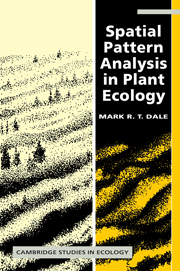
The predictability of the physical arrangement of plants, at whatever scale it is viewed, is referred to as their spatial pattern. Spatial pattern is a crucial aspect of vegetation which has important implications not only for the plants themselves, but also for other organisms which interact with plants, such as herbivores and pollinators, or those animals for which plants provide a habitat. This book describes and evaluates methods for detecting and quantifying a variety of characteristics of spatial pattern. As well as discussing the concepts on which these techniques are based, examples from real field studies and worked examples are included, which, together with numerous line figures, help guide the reader through the text. The result is a book that will be of value to graduate students and research workers in the fields of vegetation science, conservation biology and applied ecology.
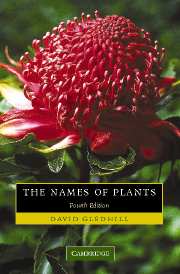
The Names of Plants is an invaluable reference for botanists and horticulturalists. The first section gives an historical account of the significant changes in the ways that plants have been known and named. It documents the problems associated with an ever-increasing number of common names of plants, and the resolution of these problems through the introduction of International Codes for both botanical and horticultural nomenclature. It also outlines the rules to be followed when plant breeders name a new species or cultivar. The second section comprises a glossary of generic and specific plant names, and components of these, from which the reader may interpret the existing names of plants and construct new names. With explanations of the International Codes for both Botanical Nomenclature (2000) and Nomenclature for Cultivated Plants (1995), this edition contains a greatly expanded glossary, which includes the Greek, Latin, or other source of each plant name.
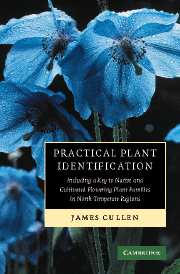
Practical Plant Identification is an essential guide to identifying flowering plant families (wild or cultivated) in the northern hemisphere. Details of plant structure and terminology accompany practical keys to identify 318 families into which flowering plants are divided. Specifically designed for practical use, the keys can easily be worked backwards for checking identifications. Containing descriptions of families and listings of the genera within, it also includes a section on further identification to generic and specific levels. A successor to the author's bestselling The Identification of Flowering Plant Families, this guide is updated, and retains the same concise user-friendly approach. Cullen skillfully leads the reader from restrictive disciplines of older taxonomy, into an era of increasing numbers of plant families defined by DNA analysis. Aimed primarily at students of botany and horticulture, this is a perfect introduction to plant identification for anyone interested in plant taxonomy.
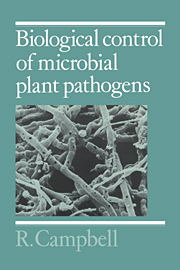
The book describes the biological ways in which diseases of plants, caused by pathogenic microbes, can be controlled without the use of chemical pesticides. The basis of biocontrol (in microbiology, ecology and plant pathology) is described and many examples of control measures in commercial use or development are given. There is increasing interest in biocontrol from the general public, environmentalists and the major world agrochemical companies, and this easily read text presents recent developments in the subject. The book provides enough references and literature citations to allow a more detailed investigation of particular diseases or control systems to be made. This textbook is suitable for graduate and undergraduate students in botany, biology, microbiology, plant pathology, agriculture, horticulture, crop science, microbial ecology, crop protection and related courses.
The global spread of plant species by humans is both a fascinating large scale experiment and, in many cases, a major perturbation to native plant communities. Many of the most destructive weeds today have been intentionally introduced to new environments where they have had unexpected and detrimental impacts. This 2003 book considers the problem of invasive introduced plants from historical, ecological and sociological perspectives. We consider such questions as 'What makes a community invasible?', 'What makes a plant an invader?' and 'Can we restore plant communities after invasion?' Written with advanced students and land managers in mind, this book contains practical explanations, case studies and an introduction to basic techniques for evaluating the impacts of invasive plants. An underlying theme is that experimental and quantitative evaluation of potential problems is necessary, and solutions must consider the evolutionary and ecological constraints acting on species interactions in newly invaded communities.
As we have seen in earlier chapters, Darwin did not provide direct evidence for natural selection in his Origin of Species. In the post-Darwinian period, many patterns of variation in plants explicable in terms of selection were described, but the demonstration of natural selection in wild populations remained elusive. Then, in the 1950s, detailed studies of air pollution and sites contaminated with heavy metals began in earnest, providing a number of thoroughly investigated and convincing cases of natural selection in action in animals and plants (Antonovics, Bradshaw & Turner, 1971; Taylor, Pitelka & Clegg, 1991; Macnair, 1981, 1990, 1997; Shaw, 2001).
Bell and Treshow (2002) discuss the long history of concern about the effects of pollution. For example, the diarist John Evelyn published the celebrated account Fumifugium: Or the Inconvenience of the Aer and Smoake of London Dissipated in 1661. As the industrial revolution gathered pace in the nineteenth century, there was a marked deterioration in air quality in towns and cities. As urban growth accelerated and industrialisation developed in Europe and North America, trees and other vegetation were often killed or damaged, especially in towns and cities, and near smelters, factories and industrial installations. Lichens proved to be particularly sensitive indicators of the growing problem of air pollution (Bates, 2002).
The world has been transformed by human activities, and mankind is centre stage in the evolutionary drama now being played out in the world's ecosystems. In this chapter, different groups of plant species in the evolutionary play are introduced – native, wild, crop, weedy, introduced, invasive, feral and endangered species. On the face of it there would appear to be little difficulty in assigning plants to species, and deciding into which category particular species fall. But as we shall see, in confronting the following major questions, there are many complications. How are species to be defined? How many species of plants are there in the world? How are native and introduced species distinguished? What do conservationists mean by wildlife? How many species are cultivated, weeds or invasive? In response to different kinds of environmental change and disturbance, how many species are presently at risk of extinction, and are current extinction rates greater than those of the past? Is there any agreement on the numbers of species that are endangered? Is there any evidence that conservationists might have exaggerated the situation?
Species
The concept of the species is at the heart of any consideration of evolution, and both the theory and the practice of conservation are to a large extent based on these concerns. Different groups of plants – wild, cultivated etc. – are widely discussed in terms of the numbers of species they contain. In considering these estimates, however, a major concern must be faced.
While there are examples of remarkable natural long-range dispersal of plants (Ridley, 1930), human-mediated trans-global movement of a wide range of organisms has resulted in an extraordinary dispersal of alien species. A very large number of species have been, and are being, accidentally or deliberately transported vast distances to new regions across the world, well beyond the limits of natural dispersal. Some of these have proved to be winners: others have been less successful.
There are a number of important reviews of the introduced species, including invasive species (Gibbs & Meischke, 1985; Drake et al., 1989; Williamson, 1996; Mooney & Hobbs, 2000; Sandlund, Schei & Viken, 2001; Sax, Stachowicz & Gains, 2006). These sources provide information on a wide range of issues, including the economic damage wrought by introductions, and provide detailed information on the attempts to control invasions. The control of introduced plant species by pesticides or biological means will be discussed in some detail in Chapter 15.
Here, our main focus is on plants and considers microevolutionary issues relating to success or failure of introduced taxa. However, reference will also be made to introduced animals, fungi and micro-organisms, as these influence the native plants in many ecosystems. The following questions are considered: by what means have plant species been introduced to new territories, and how many of these have become established in functioning populations? What factors are important in determining whether or not species are successful as introductions, and what factors determine whether introductions become invasive?