To save content items to your account,
please confirm that you agree to abide by our usage policies.
If this is the first time you use this feature, you will be asked to authorise Cambridge Core to connect with your account.
Find out more about saving content to .
To save content items to your Kindle, first ensure no-reply@cambridge.org
is added to your Approved Personal Document E-mail List under your Personal Document Settings
on the Manage Your Content and Devices page of your Amazon account. Then enter the ‘name’ part
of your Kindle email address below.
Find out more about saving to your Kindle.
Note you can select to save to either the @free.kindle.com or @kindle.com variations.
‘@free.kindle.com’ emails are free but can only be saved to your device when it is connected to wi-fi.
‘@kindle.com’ emails can be delivered even when you are not connected to wi-fi, but note that service fees apply.
“If you can look into the seeds of time, and say which grain will grow and which will not, speak then to me.”
Banquo, from Shakespeare's Macbeth
Perhaps this book is my attempt to hold a conversation with Banquo? He would be a fierce critic of the scientific stature of plant ecology, judging from this quote, and I doubt that I could get him to speak at all. He demands, not only predictive ability, but a very fine-grained level of predictive ability. In this book I attempt to develop a predictive theory of plant community assembly. By “predictive” I mean that the theory should be able to quantitatively tell us the relative abundance of each species in the local community under natural field conditions and based on information that can be collected in practice. By “theory” I mean a formal method of both performing such predictions and also of being able logically to deduce why such predictions actually hold in nature based on known biological processes – in this case, the process of natural selection.
I warn you at the outset that the predictive theory presented in this book would not satisfy Banquo even if it were to succeed. Such fine-scale predictive ability – being able to “say which grain will grow and which will not” – is likely forever beyond our grasp. The reason for this is explained in Chapter 2. We must remain forever mute before Banquo.
The previous chapter described a verbal model of community assembly: trait-based environmental filtering. This conceptual model views the environmental conditions of a site as a series of “filters” consisting of various selection pressures. These selection pressures reflect the probability of a given species being able to immigrate into the site and then to survive and reproduce. Such demographic probabilities vary between species because each species has a unique set of functional traits and because such functional traits bias these probabilities. The problem with this verbal model is that we don't know how to formally link traits with such probabilities. We now have to build such formal links.
With a chapter title including the words “Bayesian statistics”, “information theory” and the “Maximum Entropy Formalism” you might be tempted to skip to the next one. Please resist this understandable temptation because, although this chapter is more statistical than ecological, it will develop the statistical and mathematical methods upon which the ecological theory is based. If you are a typical reader then you will be reading this book in order to learn about the links between organismal traits and ecological communities. If so then, for you, the theoretical content of the book is only a means to an end. In order to convince you that reading this chapter will be worthwhile let's be clear about what we are trying to accomplish and, equally important, what we are trying to avoid.
Epiphytes (plants which grow on other plants, not parasitically but for support), comprise more than one-third of the total vascular flora in some tropical forests. Growing within tropical forest canopies, epiphytes are subject to severe environmental constraints, and their diverse adaptations make them a rich resource for studies of water balance, nutrition, reproduction and evolution. This book synthesizes the body of information from research on epiphytes and their relations with other tropical biota, and provides a comprehensive overview of basic functions, life history, evolution, and the place of epiphytes in complex tropical communities. Tropical ecologists and zoologists as well as plant scientists will find this volume a useful guide to research on the twenty-five thousand species of epiphytes which root in the crowns of tropical trees.
When you look at vegetation, you can concentrate on the things you see (plants or species) or on the properties of these things (the traits of plants). As the previous chapter has emphasized, most ecologists working at the population and community levels have concentrated on the things, not their properties, and, because of this conceptual framework, the process of community assembly has usually been seen as a demographic one. Despite this majority tradition there has always been, even from the beginnings of plant ecology as a scientific discipline, two minority approaches in the study of plant communities. The first minority approach, used especially by plant geographers, concentrated on morphological properties of plants and how, on average, such morphologies change as a function of major climatic variables such as temperature and precipitation (Warming and Vahl 1909, DuRietz 1931, Raunkiaer 1934, Holdridge 1947, Box 1981, 1995, 1996). In fact Warming, who can reasonably be called the father of plant ecology, had an explicitly trait-based approach. A small group of American prairie ecologists applied this approach to the regional, rather than the global, scale during the first half of the twentieth century but without much impact on community ecology (Steiger 1930, DuRietz 1931, Dykserhuis 1949, Knight 1965). A second minority approach is based on the notion of ecological “strategies” (Southwood 1977). Grime's CSR scheme (Grime 1974, 1977) is perhaps best known to contemporary plant ecologists but Grime (2001, page 5) documents a continuous history dating back to MacLeod (1894).
I approach this chapter with trepidation. Since the model proposed in this book is rather different from traditional models in community ecology, I want to discuss those aspects of model-building that will allow you to judge it relative to others. It might be fun to embark on a long-winded discussion about the philosophy of modeling in ecology, but only on a Friday afternoon, only if accompanied by cool beer and good friends, and especially if done in moderation. Since these conditions are not present (except, I hope, for the presence of friends) I will be brief.
Another reason why I am uneasy with this chapter is that I want to avoid giving the impression that I view previous modeling attempts in community ecology to be useless. On the contrary, these previous attempts were inspired (and have inspired me) and are of high quality. At the same time, it is important that I contrast my approach with previous ones. It is important that you understand both the differences with other models and also why I think that previous modeling approaches have failed, at least by the criteria that I am using. After all, if even I don't think that the approach is an advance over previous attempts then why should you invest your time in reading this book? I reconcile these two contradictory messages by appealing to the nature of scientific research.
Increased industrial and agricultural activity this century has led to vast quantities of the earth's soil and groundwater resources becoming contaminated with hazardous chemicals. Bioremediation provides a technology based on the use of living organisms, usually bacteria and fungi, to remove pollutants from soil and water, preferably in situ. This approach, which is potentially more cost-effective than traditional techniques such as incineration of soils and carbon filtration of water, requires an understanding of how organisms transform chemicals, how they survive in polluted environments and how they should be employed in the field. This book examines these issues for many of the most serious and common environmental contaminants, resulting in a volume which presents the most recent position on the application of bioremediation to the cleanup of polluted soil and water.
Winds over topography and inside forests produce mechanical reactions in trees, and eventually failure in stems and roots when stressed by storms. The mechanics of these reactions and the physiological responses to wind in leaves, stems and root systems, and the important ecological consequences of wind-throw are described in this book. Management techniques of forests in windy climates are detailed, including the use of models predicting risk of wind damage. It is clear that the whole field of wind effects on trees has benefited from recent multi-disciplinary research, and significant advances in knowledge of most parts of the subject have been made in the last decade. This book brings the up-to-date theories, methodologies and results together, and gives the reader a sense of coherence in this complex but fascinating field.
Biology of Citrus provides a concise and comprehensive discussion of all major developmental, genetic and horticultural aspects of citriculture in an easily readable text. The book deals with the history, distribution and climatic adaptation of the crop, followed by taxonomy and systematics, including a horticultural classification of edible citrus species. Subsequent chapters cover tree structure and function, reproductive physiology, including flowering, fruiting, productivity, ripening, post-harvest and fruit constituents. The main aspects of cultivated citrus, such as rootstocks, irrigation, pests, viruses and diseases are dealt with, leading to a concluding chapter that considers genetic improvement, including the use of tissue culture and plant biotechnology. The book includes many specially produced original illustrations and the extensive reading lists will make it invaluable for students and citrus specialists.
Eilif Dahl, who died in 1993, had one of the most original and creative minds in plant geography. His approach went far beyond the description of distribution patterns and the establishment of correlations between distributions and particular climatic variables. His understanding of physiological mechanisms that influenced and controlled the observed distributional patterns was a key feature of his numerous ideas and hypotheses. He was also aware of the importance of history as an influence on present-day plant distribution, especially in arctic plants. In The Phytogeography of Northern Europe Dahl brings to bear his wide range of interests in physics, chemistry, geology, climatology, meteorology and mathematics, as well as plant ecology and plant systematics, to analyse and explain the distribution of individual plant taxa across north-western Europe. This book will stand as a testament to the ideas and inspiration of a fine scientist.
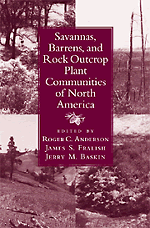
Savannas and barrens were major components of the historic North American landscape before it was extensively altered by agricultural and urban development during the past century. Rock outcrop plant communities and serpentine barrens are of interest because they are refugia for endemic species adapted to extreme environmental conditions. Many of these communities have been reduced to less than one per cent of their original area and are imperiled ecosystems. This book provides a coherent, readable summary of the technical information available on savannas, barrens and rock outcrop plant communities. It is organized by region into four parts: eastern south-eastern region, central/midwest region, western/south-western region, and northern region. Written by internationally recognized regional specialists, each chapter includes a description of the climate, geology, soils associated with the community, and information about its historic and current vegetation.
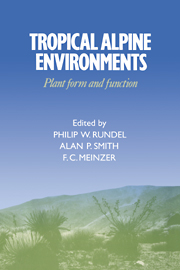
Plants growing in tropical alpine environments (at altitudes above the closed canopy forest and below the limit of plant life) have evolved distinct forms to cope with a hostile environment characterized by cold, drought and fire. Unlike temperate alpine environments, where there are distinct seasons of favourable and unfavourable conditions for growth, tropical alpine habitats present summer conditions every day and winter conditions every night. Using examples from all over the tropics, this fascinating account reviews, for the first time, the unique form and functional relationships of tropical alpine plants examining both their physiological ecology and population biology. It will appeal to anyone interested in tropical vegetation and plant physiological adaptations to hostile environment, as well as to researchers in biogeography and ecology.
Threats to fungi and fungal diversity throughout the world have prompted debates about whether and how fungi can be conserved. Should it be the site, or the habitat, or the host that is conserved? All of these issues are addressed in this volume, but coverage goes beyond mere debate with constructive guidance for management of nature in ways beneficial to fungi. Different parts of the world experience different problems and a range of examples are presented; from Finland in the North to Kenya in the South, and from Washington State, USA in the West to Fujian Province, China in the East. Equally wide-ranging solutions, are put forward, from voluntary agreements, through land management techniques, to primary legislation. Taken together, these provide useful suggestions about how fungi can be included in conservation projects in a range of circumstances.
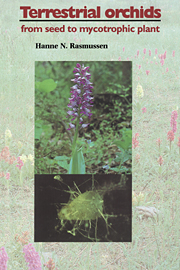
Terrestrial orchids have great appeal, but unfortunately they rank among the most vulnerable of all plant species, and little is known about how they reproduce in nature. This book contains a detailed survey of the biology of terrestrial orchids, from seed dispersal to establishment and life of the adult plant, based on comparisons of field and culture experiments. The unusual mode of obtaining energy by means of mycorrhiza is examined and evaluated in terms of plant structure and function and the impact of this mycotrophic nutrition on orchid evolution. The book makes it clear that an understanding of germination, life histories and seasonal phenology in natural habitats is essential for success of culture methods, propagation and conservation. The final chapter is a systematic presentation of the life history, endophytes and propagation of thirty-six genera of terrestrial orchids. Environmental plant physiologists will find this a stimulating book; for all those who are involved in orchid horticulture the book is indispensable.
Bioremediation is an expanding area of environmental biotechnology, and may be defined as the application of biological processes to the treatment of pollution. Much bioremediation work has concentrated on organic pollutants, although the range of substances that can be transformed or detoxified by micro-organisms includes both natural and synthetic organic materials and inorganic pollutants, such as toxic metals. The majority of applications developed to date involve bacteria and there is a distinct lack of appreciation of the potential roles and involvement of fungi in bioremediation, despite clear evidence of their metabolic and morphological versatility. This book highlights the potential of filamentous fungi, including mycorrhizas, in bioremediation and discusses the physiology and chemistry of pollutant transformations.
Dictyostelia are soil amoebae capable of extraordinary feats of survival, motility, chemotaxis, and development. Characterised by their ability to transform from a single-celled organism into an elaborate assemblage of thousands of synchronously-moving cells, Dictyostelids are often referred to as 'social amoebae', and have been the subjects of serious study since the 1930s. Research in this area has been instrumental in understanding many problems in cellular biology. Beginning with the history of Dictyostelids and discussing each stage of their development, this book considers the evolution of this unique organism, analyses the special properties of the Dictyostelid genome, and presents in detail the methods available, at the time of the book's original publication in 2001, to manipulate their genes. Representing the synthesis of such material and with an emphasis on combining classical experiments with modern molecular findings, this book will be essential for researchers and graduates in developmental and cellular biology.
Plants are an advantageous group for the consideration of the development of biological form. Plants share most aspects of cell biology with other organisms, yet their embryonic development continues throughout their life, their cells do not move relative to each other and their structure is relatively simple. The chapters in this book are centred around the structure of tissues and its purpose is to try and predict what should be looked for at a molecular level so as to account for observable forms. Each chapter deals with a defined problem such as the role of hormones as correlative agents, tissue polarization, apical meristems and cell lineages. The final chapter develops an alternative approach to the problem of the specification of biological form, that of 'epigenetic selection'. The chapters are centred around the structure of tissues, an intermediate and neglected level between overt morphology and biochemistry, and will be of great interest to all those engaged in attempting to understand the principles behind plant development.
Bringing together bacterial structure and function, taxonomy, environmental microbiology, induction and development of plant disease, molecular genetics and disease control, Dr Sigee unifies the field, at the same time as emphasising exciting developments in cell and molecular biology. The book is written in a clear and concise manner, illustrated with numerous tables, diagrams and photographs.