To save content items to your account,
please confirm that you agree to abide by our usage policies.
If this is the first time you use this feature, you will be asked to authorise Cambridge Core to connect with your account.
Find out more about saving content to .
To save content items to your Kindle, first ensure no-reply@cambridge.org
is added to your Approved Personal Document E-mail List under your Personal Document Settings
on the Manage Your Content and Devices page of your Amazon account. Then enter the ‘name’ part
of your Kindle email address below.
Find out more about saving to your Kindle.
Note you can select to save to either the @free.kindle.com or @kindle.com variations.
‘@free.kindle.com’ emails are free but can only be saved to your device when it is connected to wi-fi.
‘@kindle.com’ emails can be delivered even when you are not connected to wi-fi, but note that service fees apply.
Seagrasses occur in coastal zones throughout the world, in the part of the marine habitat that is most heavily influenced by humans. Decisions about coastal management therefore often involve seagrasses, but despite a growing awareness of the importance of these plants, a full appreciation of their role in coastal ecosystems has yet to be reached. This book provides an entry point for those wishing to learn about their ecology, and gives a broad overview of the state of knowledge, including progress in research and research foci, complemented by extensive literature references to guide the reader to more detailed studies. It will be valuable to students of marine biology wishing to specialize in this area and also to established researchers wanting to enter the field. In addition, it will provide an excellent reference for those involved in the management and conservation of coastal areas that harbour seagrasses.
The Consultative Group on International Agricultural Research (CGIAR) is an association of agricultural research centres which together represent an important force in genetic conservation of crops and their wild relatives. Under the CGIAR umbrella, the centres are collectively custodians of international genetic resource collections for crops that provide 75 per cent of the world's food energy. This volume considers the status of the key collections, in each case providing details of the botany, distribution and agronomy of the species concerned, in addition to extensive information on germplasm conservation and use. The book presents a unique synthesis of knowledge drawn from the CGIAR centres, providing an invaluable source of reference for all those concerned with monitoring, maintaining and utilizing the biodiversity of our staple crop species.
The nutrition of a vegetative fungal colony can be viewed as a web of interconnected processes. In this volume, the author provides a mechanistic basis to the subject, focusing on the processes at the plasma membrane, the modulating effects of the fungal wall, and the fate of nutrients entering the fungus. The major emphasis is physiological, but biochemical and molecular biological information has also been drawn upon when appropriate, to reflect the power of a multifaceted approach and further encourage such study. A comprehensive review of what is known about the more commonly studied fungal species is complemented by information on other fungi, to provide an indication of the diversity of nutritional processes which exist in the fungal kingdom.
Grasses occupy a greater area of the world's land surface than any other plant family, occurring in almost every terrestrial environment and providing a vital source of food for humans and animals. This volume presents the most recent information on their population biology, bringing together contributions from researchers studying both applied and fundamental aspects of this important group of plants. Demographic, physiological, ecological and molecular approaches to understanding grass populations are considered in relation to reproduction and to aspects of life history patterns such as dispersal, germination, seedling establishment, population dynamics and reproduction. Other areas covered include the role of genetic variation and phenotypic plasticity in shaping life history traits, the impact of biotic factors, and the ecology of specific species in major grass-dominated ecosystems in Africa, Australia and Japan.
Our knowledge of pollen, the gold dust that carries the male germ line of flowering plants and is vital for sexual reproduction and seed formation, has 'come of age' with the publication of this book. Here, for the first time in a single volume, are all the ideas and techniques developed in the last two decades concerning the manipulation of pollen and pollen tubes in plant breeding and biotechnology. Pollen has never been an easy topic to come to grips with, with its variable and often inexplicable terminology that has made it a more difficult field in which to work. This book will remedy that, with its overview of pollen biology and pollen-pistil interactions that explains terms and concepts of the male function of pollen in a way that is readily understandable to the student and professional plant scientist and plant breeder.
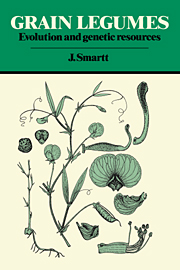
This volume provides a wide-ranging survey of all the major grain legumes from the standpoint of both their evolution and their potential for further development and improvement as economically important food crops. The legumes have a vital role to play in both the developed and developing worlds by providing an alternative nitrogen source to the artificial fertilizers, which, although boosting cereal yields, often have had adverse environmental effects. The grain legumes are a valuable crop possessing the ability to fix nitrogen by Rhizobium biosynthesis and thus contribute to the natural nitrogen cycle. The book surveys the changes which have occurred in the course of domestication of the plants which have evolved into our pulse crops and oilseed legume crops. The author then discusses the benefits to be gained from evaluation and improvement of grain legume genetic resources. It is through this comparative approach that the overall potential of these crops is highlighted.
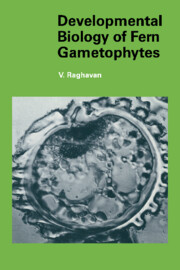
The aim of the series is to present relatively short accounts of areas of developmental and cell biology where sufficient information has accumulated to allow a considered distillation of the cells. This book studies the developmental biology of fern gametophytes, from their beginning through growth and maturation to their reproductive strategies. The books are intended to interest and instruct advanced undergraduates and graduate students and to make an important contribution to teaching cell and developmental biology. At the same time, they should be of value to biologists who, while not working directly in the area of a particular volume's subject matter, wish to keep abreast of developments relative to their particular interests.
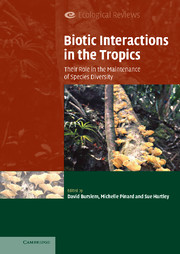
Tropical ecosystems house a significant proportion of global biodiversity. To understand how these ecosystems function we need to appreciate not only what plants, animals and microbes they contain, but also how they interact with each other. This volume, first published in 2005, synthesises the state of knowledge in this area, with chapters providing reviews or case studies drawn from research conducted in both Old and New World tropics and including biotic interactions among taxa at all trophic levels. In most chapters plants (typically trees) are the starting point, but, taken together, the chapters consider interactions of plants with other plants, with micro-organisms and with animals, and the inter-relationships of human-induced disturbance with interactions among species. An underlying theme of the volume is the attempt to understand the maintenance of high diversity in tropical regions, which remains one of the most significant unexplained observations in ecological studies.
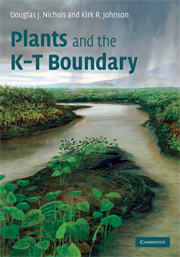
In this text, two of the world's leading experts in palynology and paleobotany provide a comprehensive account of the fate of land plants during the 'great extinction' about 65 million years ago. They describe how the time boundary between the Cretaceous and Paleogene Periods (the K–T boundary) is recognised in the geological record, and how fossil plants can be used to understand global events of that time. There are case studies from over 100 localities around the world, including North America, China, Russia and New Zealand. The book concludes with an evaluation of possible causes of the K–T boundary event and its effects on floras of the past and present. This book is written for researchers and students in paleontology, botany, geology and Earth history, and everyone who has been following the course of the extinction debate and the K–T boundary paradigm shift.
Biology of Apples and Pears is a comprehensive reference book on all aspects of pomology at the organ, tree and orchard level. It provides detailed information on propagation, root and shoot growth, root stock effects, canopy development in relation to orchard design, flowering, pollination, fruit set, fruit growth, fruit quality factors and quality retention in store. It also deals with mineral nutrition, water-relations and irrigation, diseases and pests and biotechnology. The book emphasises the scientific basis of modern tree and orchard management and fruit storage. It describes key cultivar differences and their physiology and genetics and environmental effects and cultivar x environment interactions in tropical and sub-tropical as well as temperate zone conditions. It is written for fruit growers, extension workers, plant breeders, biotechnologists and storage and crop protection specialists as well as for researchers and students of pomology and horticulture.
With their team of contemporary scholars, the editors present a thorough coverage of fundamental topics necessary for obtaining an up-to-date understanding of the biology of ferns and lycophytes. The book is organized into major topics that build from the individual and its biochemistry and structure, to genetics and populations, to interactions among individuals and the conservation of species, and concludes with perspectives on evolutionary history and classification. Each chapter is organized to review past work, explore current questions, and suggest productive directions for continued discoveries about these fascinating groups of organisms. Written for upper undergraduates, graduates and academic researchers, Biology and Evolution of Ferns and Lycophytes fills a major gap in biological, organism-level, evolutionary literature by providing a review of the biology and evolution of this important group of vascular land plants.
Temperate-zone forests have been shaped by fire, wind and grazing over thousands of years. This book provides a major contribution to the study of their dynamics by considering three important themes:The combined influence of wind, fire and herbivory on the successional trajectories and structural characteristics of forestsThe interaction of deciduous and evergreen tree species to form mosaics which, in turn, influence the environment and disturbance regimeThe significance of temporal and spatial scale with regard to the overall impact of disturbancesThese themes are explored via case studies from the forests in the Lake States of the USA (Minnesota, Wisconsin and Michigan) where the presence of large primary forest remnants provides a unique opportunity to study the long-term dynamics of near-boreal, pine and hardwood-hemlock forests. The comparability of these forests to forests in other temperate zones allows generalizations to be made that may apply more widely.
The family Gentianaceae is a diverse lineage of over 1500 angiosperm species, including many tropical and temperate trees, shrubs, and herbs with a wide range of floral types and colours. This volume provides the first comprehensive review of the family, covering phylogeny, classification, biogeography, palynology, phytochemistry and morphology, and also presents the first classification of the entire family to be published for over 100 years, generated using modern molecular- and morphology-based phylogenetic data. The volume places the Gentianaceae in context with its relatives in the order Gentianales and subclass Asteridae; presents an updated, phylogenetic classification of tribes, subtribes, and genera; investigates the corroborative value of morphological features in phylogenetic diagnoses; and comprehensively summarizes palynology, seed morphology, and phytochemistry. Descriptions of each of the 87 gentian genera are provided, as are discussions on morphological evolution and biogeography for each major evolutionary lineage.
Communities of microscopic plant life, or phytoplankton, dominate the Earth's aquatic ecosystems. This important new book by Colin Reynolds covers the adaptations, physiology and population dynamics of phytoplankton communities in lakes and rivers and oceans. It provides basic information on composition, morphology and physiology of the main phyletic groups represented in marine and freshwater systems and in addition reviews recent advances in community ecology, developing an appreciation of assembly processes, co-existence and competition, disturbance and diversity. Although focussed on one group of organisms, the book develops many concepts relevant to ecology in the broadest sense, and as such will appeal to graduate students and researchers in ecology, limnology and oceanography.
Meristematic cells in plants become the many different types of cells found in a mature plant. This is achieved by a selective response to chemical signals both from neighbouring cells and distant tissues. It is these responses that shape the plant, its time of flowering, the sex of its flowers, its length of survival or progress to senescence and death. How do plants achieve this? This treatise addresses this question using well-chosen examples to illustrate the concept of target cells. The authors discuss how each cell has the ability to discriminate between different chemical signals, determining which it will respond to and which it will ignore. The regulation of gene expression through signal perception and signal transduction is at the core of this selectivity and the Target Cell concept. This volume will serve as a valuable reference for all researchers working in the field of plant developmental biology.
The major environmental changes that bryophytes are facing (Chapter 10) have increasingly brought about concerns for their conservation. Conservation biology is a fairly new, multidisciplinary science that has developed to deal with the crisis confronting biological diversity (Primack 1993). As a crisis discipline, conservation biology appeared in response to a rising political demand to face the dramatic loss of biodiversity and the need to take steps to anticipate, prevent and reverse the trend (Heywood & Iriondo 2003). Subsequent ratification of the ‘Convention on Biological Diversity’ at the United Nations conference held in Rio in 1992 by most of the world's governments has placed the subject of biodiversity firmly on the political agenda.
The development of the concept of conservation biology is closely interrelated with that of biodiversity. Biodiversity is defined in the Convention on Biological Diversity as ‘the variability among living organisms, from all sources … and the ecological complexes of which they are part’.
In this broad conservation picture, bryophytes were initially completely overlooked. Cryptogams in general were, for example, the focus of only about 4% of published papers between 2000 and 2005 in leading conservation journals (Hylander & Jonsson 2007). The situation has, however, been changing recently and there has been an increasing awareness of the necessity to include cryptogams in general, and bryophytes in particular, in conservation programmes (Hylander & Jonsson 2007).
Bryophytes are familiar and attractive components of many natural landscapes such as peatlands, tundra environments and moist forests, where their shaggy coverings on branches, crags and boulders, add distinction to the landscape (Figs. 2.1,2.2). In particular, epiphytic bryophytes make up a conspicuous portion of many rain forest canopies, hanging from branches (Fig. 8.6) and densely festooning tree trunks (Wolf 1993, Kürschner & Parolly 2004).
Less appealingly, they also occasionally grow on unexpected substrates, like the leather of a discarded boot, or a rusty iron pipe. Even in modern cities where air pollution and the man-made environment may seem unrelenting, bryophytes are able to colonize crevices in masonry (Bates 2000). The occurrence of bryophytes in a wide range of terrestrial and freshwater habitats suggests intriguing questions on how they manage to colonize, adapt and develop in such environments. The occurrence of bryophytes in nearly every ecosystem on earth (all but salt water and permanently frozen ecosystems) also raises questions about their ecological significance in those ecosystems. This is the focus of the present chapter, where we will explore the contribution of bryophytes to ecosystem functioning and, more precisely, how they may influence vegetation dynamics, soil formation and characteristics, global geochemical cycles and hence, climate regulation.
Water and biogeochemical cycles
Bryophytes contribute to a substantial proportion of the global biomass in a range of ecosystems (Fig. 2.3) and hence play a major role in the cycling of carbon and nutrients through growth and decomposition.
The common ancestor to the Marchantiophyta arose immediately after the conquest of land, some 450 mya. Their evolutionary history is, however, also characterized by a more recent diversification during the early Tertiary Period. This diversification may coincide with the establishment of modern rainforests and resulted in species rich crown groups such as the Lejeuneaceae (Heinrichs et al. 2007). With approximately 5000 extant species currently recognized, liverworts compose a diverse lineage of land plants, represented on every continent and in nearly all ecosystems. Some species are virtually invisible to the naked eye, whereas others rival mosses in their stature. Although the experienced eye may easily distinguish liverworts from other bryophytes in the wild, not a single conspicuous unifying morphological vegetative character defines them. The architecture of the gametophyte varies from thallose, with or without internal differentiation, to leafy, with leaves divided in some lineages into two or more lobes. It is only after sexual reproduction is completed that liverworts reveal their shared ancestry: the sporangium is enclosed by an epidermis lacking stomata and elevated above the maternal protective tissue on a translucent seta that elongates after sporogenesis. Furthermore, the capsule lacks a columella and the sterile cells within the sporangium develop into elaters. Except for the Blasiales, liverworts lack endophytic cyanobacteria, but most species establish symbiotic associations with mycorrhizal fungi. Although inconspicuous at the landscape level, liverworts form diverse assemblages in moist habitats such as temperate and tropical rainforests, where they thrive on trunks and leaves.