To save content items to your account,
please confirm that you agree to abide by our usage policies.
If this is the first time you use this feature, you will be asked to authorise Cambridge Core to connect with your account.
Find out more about saving content to .
To save content items to your Kindle, first ensure no-reply@cambridge.org
is added to your Approved Personal Document E-mail List under your Personal Document Settings
on the Manage Your Content and Devices page of your Amazon account. Then enter the ‘name’ part
of your Kindle email address below.
Find out more about saving to your Kindle.
Note you can select to save to either the @free.kindle.com or @kindle.com variations.
‘@free.kindle.com’ emails are free but can only be saved to your device when it is connected to wi-fi.
‘@kindle.com’ emails can be delivered even when you are not connected to wi-fi, but note that service fees apply.
When British Romantic writers came into contact with experimental sciences, they encountered unfamiliar languages, methods and discourses, but they also discovered the experimental practices of modern scientists, their observation devices and their specific ways of sensing the world. The accommodation of the Romantics' senses to these strange sensorialities points to two main tropisms: a tropism towards sight, through prisms or telescopes, and a tropism towards touch, as scientists developed new methods to apprehend their objects through direct contact. The interest these writers showed in the development of the sciences of sensation thus invites a shift in our conception of the interactions between visibility and tactility in the Romantic imagination. What is the status of the 'image' in the Romantic 'imagination'? Is it purely visual? Or is there also something haptic to it? Ultimately, Sophie Musitelli asks, did the Romantics succeed in their attempts at turning touch into a visionary sense?
This article reports on a study of the selection of academic top leaders from 1900 to 2025 in six highly ranked universities on the 2024 Academic Ranking of World Universities. These institutions represent the United States (Harvard and Stanford) with presidents as leaders, the United Kingdom (Cambridge and Oxford) with vice-chancellors, and Scandinavia (Copenhagen and Oslo) with rectors. For the population as a whole, the study shows an increase in the length of tenure, and in the selection of female leaders and of externals, while there has also been a decline in the number of recruitments per decade, in recruitment ages and the recruitment of persons with a background in STEM disciplines and Medicine (STEMM). A comparison between the six universities has demonstrated that Harvard and Stanford differ from the other four by having much lower numbers of recruitments, longer length of tenures, lower recruitment ages and recruiting externals earlier than their European counterparts. The Europeans started recruiting externals and female leaders in the 1990s. Oslo has so far not recruited any outsider, and Stanford has picked only male leaders. High shares of STEMM leaders are exhibited by Stanford and Oslo, while Harvard and Oxford have had low shares. An analysis of the most recent recruitments demonstrates that Harvard, Stanford and Copenhagen include outsiders in the decision process and keep candidacies secret. The latter is also the case for Cambridge and Oxford, which, however, do not include externals in the decision process. Oslo also leaves it to internals to decide but has a process where candidacies are publicly known. For the future, it is expected that non-US institutions will follow the top US universities more and more, thereby increasingly involving search consultants. The patterns on the Anglo-American market for academic leaders found in the present study are likely to develop further.
Yasunari Kawabata appropriates narrative elements from Western fairy tales in his late work, House of the Sleeping Beauties, applying the central image of the ‘sleeping beauty’ to a dark story set at night, shrouded in the gloominess and cold that often loom in people’s late lives. Viewed through the lens of narrative gerontology, Kawabata deals with different forms of narrative foreclosure in crafting the story. At the subject level, old Eguchi, as the protagonist and main narrator, ventures into a secret place in pursuit of unusual experiences to restart his own life story and break through the narrative foreclosure in his old age. At the object level, the ‘sleeping beauties’ fall into narrative foreclosure in their deep slumber, becoming the ‘Other’, unable to speak for themselves. In his unique way, Kawabata endows them with expressive power through sincere sympathy. In addition, the writer also breaks through his own narrative foreclosure in his late career by subverting the classic fairy tale to explore and confront death, revealing an active attitude towards aging. However, Kawabata’s suicide appears to counteract all these efforts, turning them into a mystery of ending.
Pindar was the single most important, canonical and influential lyric poet in the ancient Greek world, and he remains one of the most demanding and rewarding poets whose work has come down to us from antiquity. This volume represents the most comprehensive introduction to the poet and his reception yet published. Eighteen leading contemporary scholars contribute individual chapters that together help to provide a holistic understanding of Pindar's poetry, its major themes and its subsequent reception throughout more than two millennia. The book will be invaluable for students, teachers, and scholars, as well as those with a general interest in poetry.
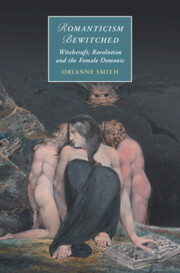
The Romantic-era witch was a remarkably flexible symbol of political and social disorder. The then-recent seventeenth-century witch hunts had already revealed deep anxieties about the subversive potential of women, and the witches who stalk the pages of Gothic poetry and prose or glare menacingly from works of art by Henry Fuseli and William Blake embody revolutionary anger and the possibility of radical social transformation. Despite the fears surrounding such figures, however, the Romantic period also saw witchcraft open up in conceptually new ways, enabling writers and artists to envision alternative means of interacting in the world that were not predicated on the subordination of women and other marginalized groups. Here, Orianne Smith embarks on an interdisciplinary reimagining of witchcraft, women's writing, religion, and social reform, providing original insights on the history of witchcraft and its influence on public discourse, literature and art.
This is the first anthology of eighty speeches by forty-two world famous and under-researched African American freedom fighters, liberators and human rights campaigners living and working in Scotland, Ireland, Wales and England in the nineteenth century. Their pioneering and revolutionary works are supported by an in-depth introductory essay, author biographies, scholarly annotations and detailed bibliographies.
All these human rights orators testify to their lifelong 'fight for freedom' across their radical and revolutionary works. All their lives, they warred against the 'sufferings and horrors' of enslavement as a centuries-old 'cursed institution.' 'Words are weapons' in their fight for Black liberation. Across their life's works, they all protested against the rise of the 'spirit of slavery' in white supremacist and white racist US and British transatlantic societies.
The Spirit of Aristophanes is a wide-ranging collection of new studies of ancient literature and culture from fifth-century drama to the Roman novel. The essays use an array of approaches that will appeal to scholars and students interested in classical studies, gender and sexuality, literary history, performance and textual criticism.
This volume has been prepared in tribute to Jeffrey Henderson, William Goodwin Aurelio Professor of Greek Language and Literature Emeritus of Boston University and General Editor of the Loeb Classical Library. His vibrant research on classical literature, political ideology, civic culture, identity, obscenity and translation has shaped scholarly discourse for decades and has inspired each of the essays in this volume.
This is the first scholarly anthology of nineteen narratives written by African American authors and published in Britain and Ireland in the nineteenth century.
These literary works share the powerful life stories of inspirationally pioneering writers: Charles Freeman, Phebe Ann Jacobs, Benjamin Crompton Chisley/William Jones, John Hart, John Williams, Henry (surname unknown), James Watkins, William Gustavus Allen, John Comber, Sarah Parker Remond, James Cheeney Thompson, Dinah Hope Browne, John Sella Martin, Lewis Smith, James Alfred Johnson, D. E. Tobias and Benjamin William Brown.
Their narratives are reproduced alongside an in-depth introductory essay, author biographies, scholarly annotations and a detailed bibliography.
All these authors testify to their lifelong 'fight for freedom' across their radical and revolutionary works. Throughout their lives, they warred against the 'sufferings and horrors' of enslavement as a centuries-old 'cursed institution'. 'Words are weapons' in their fight for Black liberation. Across their life's works, they protested against the rise of the 'spirit of slavery' in white supremacist and white racist American and British transatlantic societies.
What did Australians read? This book answers this question in terms of books rather than newspapers and considers the long nineteenth century, interpreted as running from 1788 to 1901. In the wake of this primary question, several others arise: how did Australians acquire the books they read, and how did readers in the outback overcome the handicaps of distance and remoteness? Did they read for pleasure, instruction, self-edification, or spiritual sustenance? More importantly, how did Australian readers respond to the books they read? The evidence is drawn from autobiographical sources, in which individual readers related their personal reading experiences and responses. At the same time, the book pursues a second and related question: What did Australians write? Reference is made here not to the kind of writing we know as ‘literature’, but to the non-literary writing which cultural historians call ‘ordinary writings’. These are the writings of everyday life, represented in this book by diaries, journals, hand-written newspapers and correspondence. The focus is wide enough to include the everyday cultural practices of people of low social status and little education. The writing practices of the partially literate, including writing delegated to a third party, have their place here. In this double investigation, the book draws on evidence from a cohort of 101 nineteenth-century readers and writers. They are a heterogeneous group of autobiographers, coming from Melbourne and Sydney to rural Queensland and Western Australia. They come from the city and the bush, from coastal towns and the interior, from sheep stations, gold diggings and city offices. They show us the perennial importance of Shakespeare and the Bible, the popularity of the English canon, the prestige of poetry and the importance of religious reading. Books held the Empire together but, as they travelled, their meanings changed according to the local cultural environment. This book registers such nuances in the Australian context. The writing of this group is represented by some prolific diarists and correspondents. In the late-nineteenth century, the eastern colonies became world leaders in sending letters. The postal environment which made this possible is also examined.
This book is a full-length study of contemporary American fiction of ‘passing’. It takes as its point of departure the return of racial and gender passing in the 1990s in order to make claims about wider trends in contemporary American fiction. The book accounts for the return of tropes of passing in fiction by Phillip Roth, Percival Everett, Louise Erdrich, Danzy Senna, Jeffrey Eugenides and Paul Beatty. These writers are attracted to the trope because passing narratives have always foregrounded the notion of textuality in relation to the legibility of black subjects passing as white. The central argument of the book, then, is that contemporary narratives of passing are concerned with articulating and unpacking an analogy between passing and authorship. The book promises to inaugurate dialogue on the relationships between identity, postmodernism and authorship in contemporary American fiction.
This chapter examines the enduring significance of religion as a category of identity in contemporary U.S. society, analysing the ways in which religious discourse overlaps with raced and gendered identities in two novels by contemporary German American-Ojibway writer Louise Erdrich: Tracks (1988) and The Last Report on the Miracles at Little No Horse (2001). Perhaps because of scholars' profound commitment to anti-essentialism from the 1980s on, race and gender, as categories that have been historically conceived as rooted in the body, have received the most attention. Erdrich's preoccupation with religious identity is mapped upon the bodies of two women who pass in order to take up their Catholic vocations. In her comprehensive study of tranvestism, Marjorie Garber warns against restricting discussions of cross-dressing ‘to the context of an emerging gay and lesbian identity’. For her, the cross-dresser represents a ‘third term’ that ‘questions binary thinking and introduces crisis’ and which ‘puts in question the idea of one: of identity, self-sufficiency, self-knowledge’. In Tracks and The Last Report, the category in crisis is Catholicism.
Passing is typically associated with a period stretching from post-Reconstruction to the Civil Rights Movement (the 1890s to the 1960s) or, even more specifically, yoked to the years of the Harlem Renaissance. According to Gayle Wald, by the time John Howard Griffin's memoir, Black Like Me, appeared in 1961, ‘passing was already beginning to “pass” out of style for African Americans, going the way of Jim Crow buses and segregated lunch counters’. This book examines texts in which protagonists not only play at racial and gender identities, but where authors play on the boundaries between novel and other types of textual production, between fiction and history, between novelistic genres, between author(ial persona) and protagonist. It analyses novels that pass as memoirs, as well as narratives whose dramatic impetus often derives from embedded documentation: letters, emails, poems, medical reports, dictionary or encyclopaedia entries. The book argues that passing and postmodernism make compatible bedfellows, and that only by revealing the instability of the category of blackness can the equation of ‘race’ with ‘blackness’ be disputed and ultimately dismantled.
In her famous defence of Bill Clinton, Toni Morrison articulated succinctly the question with which all standard racial passing narratives wrestle: if blackness is not physically manifest, then what is it? A form of behaviour? A state of mind? A set of cultural affiliations? Conversely, if blackness is physically apparent but the behaviour/state of mind/cultural affiliations do not accompany this, is the subject still ‘black’? This chapter analyses Paul Beatty's The White Boy Shuffle (1996) and Philip Roth's The Human Stain (2000), neither of which fits easily within the ‘standard racial pass’ (black-to-white) and ‘reverse racial pass’ (white-to-black) schema that Phillip Brian Harper elucidates: the first, because it features an African American protagonist who passes to become black(er); the second, because it foregrounds black-for-Jewish passing. Both Gunnar Kaufman from The White Boy Shuffle and Coleman Silk from The Human Stain grapple with the weight of their genealogy and ancestors. Both rely on their bodies as a key site of self-definition through their commitment to their respective sports (basketball; boxing). Both are, moreover, committed writers.
This chapter examines contemporary first-person fictions of adolescence in which the protagonists' adolescence, as an in-between stage that is not childhood and not adulthood, is inextricably bound up with other indeterminacies mapped upon their bodies, especially those of race and gender. Danzy Senna's Caucasia (1998) and Jeffrey Eugenides's Middlesex (2002) invoke the alienating experience of adolescence as a lens through which to refract their protagonists' ‘othered’ bodies. Crucially, in both novels, the protagonists engage, with varying degrees of commitment and success, in the act of creative writing, which serves to reflect back inevitably upon the authorship of the novels themselves. In Caucasia, non-normative gender and sexual identities accompany the subject's racial in-betweenness, while in Middlesex, indeterminacy of sexual orientation and ethnicity go hand in hand with the protagonist's ambiguously gendered body. Caucasia is a contemporary novel of racial passing, while Middlesex is not ‘about’ gender passing in the strictest sense, for its protagonist is intersexed.
In his satirical response to the controversies involving J. T. LeRoy and James Frey, Tim Carvell makes explicit the connections between the acts of passing and writing. This is due in no small part to the fact that the visual economies of race and gender are transliterated onto the book jacket he describes in the form of an author photograph. This chapter examines three recent controversies of authorship in which the connection between the contemporary fascination with the theme of passing and authorial concealment, subterfuge and deception becomes glaringly evident. The first is the exposure of LeRoy as a ‘fake’; the second, the ‘embellishments’ Frey added to his memoir of drug and alcohol addiction, A Million Little Pieces (2005); and the third, the passing of a middle-class white woman, Margaret Seltzer, as Margaret B. Jones, a working-class ‘mixedblood’, in authoring a ghetto memoir entitled Love and Consequences: A Memoir of Hope and Survival (2008). In producing embellished or ‘fake’ memoirs, itself a form of (auto)biography, the authors in question also engage in acts of racial and gender passing.
This chapter focuses on contemporary fiction that deploys passing plots in order to consider the act of writing, in particular, examining texts which invoke passing at both a narrative and meta-narrative level in order to reflect upon the politics of the literary marketplace. It looks at two African American novels: Percival Everett's Erasure (2001) and Hannah Crafts's The Bondwoman's Narrative (2002). In Erasure, the attempt to resolve the seemingly incompatible demands of autobiography and sociology, and the facility with which ‘authenticity’ may be faked, are evident in the publicity surrounding the appearance of Juanita Mae Jenkins's book, We's Lives in Da Ghetto.