To save content items to your account,
please confirm that you agree to abide by our usage policies.
If this is the first time you use this feature, you will be asked to authorise Cambridge Core to connect with your account.
Find out more about saving content to .
To save content items to your Kindle, first ensure no-reply@cambridge.org
is added to your Approved Personal Document E-mail List under your Personal Document Settings
on the Manage Your Content and Devices page of your Amazon account. Then enter the ‘name’ part
of your Kindle email address below.
Find out more about saving to your Kindle.
Note you can select to save to either the @free.kindle.com or @kindle.com variations.
‘@free.kindle.com’ emails are free but can only be saved to your device when it is connected to wi-fi.
‘@kindle.com’ emails can be delivered even when you are not connected to wi-fi, but note that service fees apply.
Today's environmental decimation and climate crises have arisen from our drive for individual material prosperity. We even appreciate nature primarily for its fulfilment of our interests, whether economic productivity, aesthetic pleasure, or personal well-being. And yet, we still ask how we have reached this dire ecological condition and what it is that has kept us from acting effectively to maintain a thriving and diverse biosphere. This collection of essays by major scholars from around the world analyzes how the industrial, imperialist Victorian era gave rise to today's unwillingness to move beyond our acquisitive drive. But it also explores the Victorians' initiation of the modern environmentalist movement, formulation of the first legislation defending rights of nonhuman animals, and invention of literary forms for contesting environmental degradation. In this most unlikely of eras, the volume uncovers both valuable insights into the limitations of our own environmentalism and innovative suggestions for overcoming them.
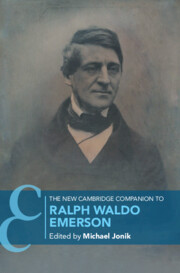
While Emerson's place in American literary history has remained secure, the New Cambridge Companion to Ralph Waldo Emerson draws on a wealth of recent Emerson scholarship which has highlighted his contemporary relevance for questions of philosophy and politics, ecology and science, poetics and aesthetics, or identity and race, and connects these to the key formal and interpretive issues at stake in understanding his work. The volume's contributors engage the full breadth of Emerson's writing, developing novel approaches to canonical works like Nature, the essays 'Self-Reliance' 'Experience,' or to his poetry and journals, and bringing critical attention to his lectures and to the long-overlooked texts of his later period. This New Cambridge Companion to Ralph Waldo Emerson thus both bears witness to the new Emersons that have emerged in the past decades, and draws a new circle in Emerson's reception.
This book unravels the complexities of traditional storytelling and uses creative analytical techniques to uncover the meanings of the stories we tell. The reader is first acquainted with conceptualisations of how stories make meaning in our lives, then guided through a selection of stories from the rich traditions of Scotland's Traveller and Nawken/Nacken communities.
Beginning with a nuanced historical overview of the communities, Traveller Storytelling in Scotland: Folklore, Ideology and Cultural Identity then draws on archives, texts and interviews to introduce readers to the unique and vibrant folklore of Scotland's Travellers and Nawken/Nacken. It connects ethnology and literary criticism to contextualise folklore and reveal how its ideological priorities underpin cultural identity. Utilising diverse analytical techniques, this book is a timely examination of a folkloric idiom that has, until now, been sorely in need of further scrutiny. It showcases the sophistication and enduring relevance of folkloric expressions to contemporary Scottish culture.
Liliane Campos argues that contemporary fiction is shaping a new, multi-scalar view of life. In the early twenty-first century, humans face complex relations of dependency with the invisibly small and the ungraspably huge, from the viral to the planetary. Entangled Life examines how Anglophone fiction imagines this ecological interdependence. It outlines an emergent poetics across a range of genres, including realist fiction, science-fiction, weird fiction and dystopian fiction. Arguing that literary form performs epistemic and ethical work, Campos analyses the rhetorical strategies through which these stories connect human and nonhuman scales. She shows that fiction uses three recurrent devices – critical synecdoche, ontological metalepsis and scalar irony – to shape our awareness of other scales and forms of life, and our response-ability towards them. This title is also available as open access on Cambridge Core.
Portrait photography increased in popularity during the modernist period and offered new ways of seeing and understanding the human face. This book examines how portrait photographs appeared as literary motifs in the works of three modernist writers with personal experience of the medium: Marcel Proust, Franz Kafka and Virginia Woolf. Combining perspectives from literary, visual and media studies, Marit Grøtta discusses these writers’ ambivalent views on portrait photographs and the uncertain status of technical images in the early twentieth century more generally. In reconsidering the attention paid to analogue photographs in literature, this book throws light on both modernist reactions to portrait photography and on our relationships to photographs today.
Because analysis and interpretation are key components of this book, it is crucial that the primary source material be made as transparent and accessible as possible. To achieve this, this study approaches oral storytelling in the same way that a literary critic would approach printed literature. Niles advocates this approach, citing the ‘often irrelevant oppositions of orality versus literacy’ (1999: 200) when trying to understand the narrative expressions of any given culture or society. By dissolving differentiations between oral and printed media, oral narratives become open to the same formal textual analysis that amounts to close readings of any given ‘text’. These close readings are then used in tandem with contextual factors – such as the cultural identity of the narrator, and/or any metanarrative provided by them – to infer meanings from the narrative. Additionally, close readings can be augmented through the consideration of other contextual factors. These include, but are not limited to: intertextuality, both with printed literature and other recognised narratives, such as Märchen [fairy tales] and international tales; local legends; biographical and autobiographical details; and historical incidents that are woven into the narrative and are verifiable by independent corroborative evidence.
This chapter expands on the concept that the Travellers’ storytelling traditions function as negotiations of their marginalisation. First, it takes a close look at stories about place, then by returning to the story of Geordie McPhee introduced in Chapter 3. It provides further detailed examples of how super-empirical story spaces function as quintessential ideological locations. Throughout this chapter, we retain the term ‘supernatural’ in keeping with the literature with which we engage and to describe certain characters. The term super-empirical is reserved for the definition of the story spaces as a genre. Citing Degh, Braid notes that legends function to challenge listeners’ understanding of the world and invite them to modify their beliefs and worldviews (2002: 74). This chapter expands upon such conceptualisations of legends – this expansion is necessary because although the examples provided conform to ideas around ‘legends’, they also display characteristics that set them apart. For instance, the stories have alignments with ATU magic tales, take place in liminal story spaces, or have direct relationships with place-names. From this perspective, the narratives under examination in this chapter inhabit a particular ‘story space’ that does not necessarily require a label for the stories to be investigable. It is not that these stories defy classification, only that the present study's questions can be sufficiently addressed without engaging in it. At the same time, as we have seen in previous chapters, this study continues to draw comparisons between the Travellers’ stories and other cultural expressions to better understand the former.
This article explores the relationship between urban violence in Guayaquil, Ecuador’s economic capital, and two works of contemporary Ecuadorian literature. I introduce the term mangrove gothic to analyze how María Fernanda Ampuero’s short-story collection Pelea de gallos (2018) and Mónica Ojeda’s novel Mandíbula (2018) appropriate gothic tropes to depict the violent realities of twenty-first-century Guayaquil. The mangrove gothic encompasses the narrative strategies through which these authors inscribe fear into the experience of living in—or having lived in—Guayaquil, where oppressive humidity and heat, social hierarchies, and violence haunt the urban space. At the same time, the term offers geographic, social, and cultural specificity to the broader category of the “new Latin American female gothic.” In doing so, it counters the risk of homogenizing Latin American literature under a single transnational trend tailored for global consumption.
This article examines the relationship between experiences of mental ill health in Mary Elizabeth Braddon’s life and the representations of insanity in her fiction. It discusses the response of the periodical press to the famous sensation novelist’s illness and disappearance from public view in 1869, which reveal the cultural stigmas around psychological distress and confinement in asylums, despite the prevalence of mental ill health in the period. Examples from a range of novels across Braddon’s career are discussed to trace the development of her literary treatment of “madness” and asylums. I contend that this representation becomes more informed and sensitive following her own experience of mental ill health. The article considers the place of the private lunatic asylum in the lives of the mid-Victorian middle classes, focusing particularly on Brooke House, the Metropolitan Licensed House in which it is suggested for the first time that Braddon may have been a patient. Previously unknown archival sources are examined for the first time in connection with Braddon’s research on psychological conditions and treatments as well as the Victorian press’s response to her illness in 1869.
In Marcel Proust's seven-volume novel In Search of Lost Time [À la recherche du temps perdu], the first-person narrator repeatedly affirms that we do not see things objectively but perceive the world through a subjective filter. In this narrative, leading toward the narrator becoming a writer, portrait photographs come to play an intriguing role. Insofar as photographs are pictures produced outside the narrator's consciousness, bearing a trace of “reality,” he must come to terms with their meaning and status, and they perform a singular attraction on him. Especially, portrait photographs of the women he dreams about feeds his desires, as they seem to promise access, contact, and love. As the narrative unfolds, this love of photographs gives insight into the sentimental education of the narrator.
Proust wrote The Search at a time when photographs were already spread widely, and the novel is rich in insight about the early days of technical images. The first volume was published in 1913, whereas the story of the whole series spans from the late nineteenth century to the aftermath of the First World War. Just as Benjamin two decades later, Proust could thus look back at the rise of portrait photography and describe the spread of the medium as well as the various responses to it over time. Born in 1871, Proust witnessed the “industrialization” of photography firsthand and saw how private people started to purchase portrait photographs and learned to pose. He also saw how photographs travelled from the private to the public sphere, first with the popularity of celebrity cards and postcards and later with the emergence of the illustrated press. But Proust tells a story that Benjamin did not tell: depicting everyday responses to photographs, he shows what it was like to live with the new regime of technical images.
We have seen how one function of the stories within Traveller storytelling traditions is to express and transmit complex Travellercentric themes between the people who share them. In this chapter, we consider narratives where supernatural elements appear within empirical reality and see how supernatural narratives serve a crucial social function within the Travellers’ storytelling traditions. This chapter also reconceptualises the nomenclature in describing such stories, accounting for their status within the Travellers’ traditions and advocates the term super-empirical to describe ‘fantastical’ story spaces. The ubiquity of the fantastic in international traditions speaks to its universal relevance to social life, while its local manifestations are ideal subjects for interrogations into the social experience of discrete communities.
The super-empirical world is an exemplary conduit for the sense of cultural continuity that we have encountered time and again throughout this book. This chapter gives a brief summary of historical attitudes toward the supernatural in Scotland and how these attitudes affected later folkloric scholarship. This summary illuminates previous conceptualisations of the supernatural in Scotland's folklore to place the Travellers’ traditions within the context of the wider Scottish traditions. This summary is not intended to be comprehensive, but rather to invoke specific collectors of Scottish folklore, arguing that their contributions continue to shape the way we understand storytelling to this day. The chapter goes go on provide an overview of the fantastical in the Travellers’ traditions using extant examples from the SSS Archives and related literature. Insights from critical analyses of the fantastic are then brought to bear on the super-empirical narratives of the Travellers. Our purpose here is to reinforce the conclusions of the preceding chapters with further detailed evidence.
The groups referred to by policy makers today as ‘Gypsy/Travellers’ have been known by a variety of appellations in the past. The most common of these historical names for the Travellers in Scotland was ‘Tinker’, a term which, as noted above, is considered by many modern Travellers as derogatory and unacceptable. The wider pan-European perspective of Travellers as ‘Other’ is useful to consider before going into detail about the connotations of the term ‘Tinker’ and how its meaning became loaded with derision. The works of Heinrich Grellmann (1787), John Hoyland (1816), Walter Simson (1865) and David Macritchie (1894) are evidence of a fascination with the Other in elite European society during the lateeighteenth century, and throughout the nineteenth century. The editor's introduction to Simson's volume from 1865 captures the somewhat patronising interests precisely; ‘the discovery and history of barbarous races of men, besides affording exquisite gratification to the general mind of civilised society, have always been looked upon as important’ (James Simson 1865: 27). Grellmann's earlier account, Historischer Versuch über die Zigeuner [Dissertation on the Gipsies] (1787), began an association in the literature between native itinerant groups and immigrants from the Orient by consolidating various stereotypes. Grellmann's negative, stereotypical images of heathen wanderers who ‘like locusts, have overrun most European countries’ (1787: 2) homogenised all itinerant peoples who shared similar nomadic lifestyles. Hoyland's A Historical Survey of the Customs, Habits & Present State of The Gypsies (1816) cites Grellmann often, and the stereotypical imagery of the latter's dissertation is replicated. The first Gypsies in Europe ‘appeared ragged and miserable’, says Hoyland, and ‘in like manner their descendants have continued for hundreds of years, and still remain’ (1816: 37).