To save content items to your account,
please confirm that you agree to abide by our usage policies.
If this is the first time you use this feature, you will be asked to authorise Cambridge Core to connect with your account.
Find out more about saving content to .
To save content items to your Kindle, first ensure no-reply@cambridge.org
is added to your Approved Personal Document E-mail List under your Personal Document Settings
on the Manage Your Content and Devices page of your Amazon account. Then enter the ‘name’ part
of your Kindle email address below.
Find out more about saving to your Kindle.
Note you can select to save to either the @free.kindle.com or @kindle.com variations.
‘@free.kindle.com’ emails are free but can only be saved to your device when it is connected to wi-fi.
‘@kindle.com’ emails can be delivered even when you are not connected to wi-fi, but note that service fees apply.
What can disability teach us about knowledge, art, and community? Jonathan Hsy explores this question through medieval writings, bringing their authors' voices into conversation with crip theory and activist-oriented disability studies. Discussing major European writers Julian of Norwich, Margery Kempe, Thomas Hoccleve, and Teresa de Cartagena – alongside non-European authors Ibn Battuta, Bai Juyi, and Shangguan Wan'er – Hsy reveals the remarkable global variety of disability life writing in the period. Across genres – spiritual visions, lyric poetry, and travel narratives – medieval authors craft inventive ways to theorize their own experiences of blindness, deafness, mobility, aging, and mental and chronic illness. Challenging social stigma and systems of marginalization, these writers offer – Hsy shows – compelling insights into language, time, gender, and bodies in perpetual transformation. Their voices from the past remain urgent today, teaching us about the dynamic relationship between mind, body, and spirit, and the power of storytelling to create social change.
The Cambridge History of Irish Poetry is a one-volume, multi-authored history of the poetic traditions on the island of Ireland and their relation to the courses of poetry beyond its shores. It attends to the crucial developments in the history of Irish poetry as well as the social, political, and cultural conditions underlying those developments, including the complex position of poets in Ireland during different historical eras. Individual chapters describe the ways in which formal, aesthetic, and compositional practices were inflected by political and social structures; provide expert accounts of the institutional and textual histories that have shaped the body of Irish poetry as we have it; and highlight the tradition's major texts, writers, and formations. Unparalleled in scope and depth, this book offers the most comprehensive and authoritative critical account of the Irish poetic tradition.
Anaïs Nin in Context restores Nin as a central voice of twentieth-century literature. Best known for her diaries and erotica, Nin was also an experimental novelist, essayist, and cultural figure, whose work resonates with questions of sexuality, creativity, and identity. This volume assembles an international team of scholars to explore Nin's life and legacy across seven thematic sections: life and genres; interpersonal and artistic influences; subjectivity and the mind; gender and women's rights; geographical settings; sociocultural contexts; and reception. Together, the thirty-four essays situate Nin within artistic circles from Paris to New York, examine her engagement with feminism and psychoanalysis, and trace her enduring afterlife in film, graphic novels, and contemporary scholarship. Accessible yet rigorous, Anaïs Nin in Context will serve students, researchers, and readers eager to reassess Nin's contributions and understand her as a cosmopolitan writer, whose voice continues to speak to issues pertaining to the woman artist.
This ambitious history of industrial and cultural revolution illuminates the formation of a new idiom of energy and economy in nineteenth-century America. In 1851, Ralph Waldo Emerson made an arduous journey to Pittsburgh, Pennsylvania. There, in a series of lectures, he articulated modern ideas of industrial power, the soul's economy, and a value system premised on a new set of prime movers, fossil fuels. Emerson asked a practical question: 'How shall I live?' His response was to create a mythic language centered on the energy-and-economy dialectic. This book vividly shows how other authors, from Catharine Beecher, who laid the groundwork for the environmental canon, and W. E. B. Du Bois, who poeticized labor, to Henry Adams and Edith Wharton, as well as conservationists, homemakers, and coal miners, built on Emerson's 'practical question' to give fresh purpose to human existence in a radically altered world.
This Cambridge Companion offers a rich range of contexts for studying the literary histories of New Orleans. Some of the essays offer a deep focus on the significance of iconic figures such as Tennessee Williams, William Faulkner, and Kate Chopin. Other essays detail long traditions of writing not widely known beyond the city but that complicate our understanding of American literary history in new ways, as in the chapters on queer writers or Mardi Gras or the Asian presence in the city's literary imagination or how deadly nineteenth-century epidemics continue to shape the ways the world has come to read the city as a capital of Gothic horror fiction. These fresh perspectives on one of the most storied cities in the world are an essential resource for those who seek to piece together their own understanding of New Orleans as an historic and living flashpoint in the global literary imagination.
Though considered a minor novel, A Laodicean is crucial in Thomas Hardy's career, literary art, and exploration of nineteenth-century religious issues. This is the first authoritative variorum edition of the novel, featuring a full account of its history, references, sources, and literary-religious importance. It explores Hardy's interpretation of English religious culture and his engagement with the debate between Anglicanism, Catholicism, and secularism, woven not only through its treatment of Anglican-Catholic histories of place, but also through the love lives of the main characters, connected as these are with their gradual accommodation of innate secularism alongside their growing religious interest. Alongside extensive explanatory notes, an introductory essay provides new and enlightening insights into the novel's fascinating contexts and into the process of its composition, its reception, its various editions, and the novel's rich dialects and geographies.
The Cambridge History of the Irish Novel appears at a moment when the novel in Ireland is particularly vibrant, with new work by Irish novelists achieving global prominence. The Cambridge History of the Irish Novel offers the first full multi-author survey of the Irish novel to extend from the earliest Irish novels in the seventeenth century to the present. Each of its forty-seven chapters is written by a leading scholar in the field. Cutting across this chronological organisation, The Cambridge History of the Irish Novel also features more than 300 internal cross-references, allowing the reader to track, for instance, the recurrence of the gothic, or the transnational, across genres, across readerships, and across centuries. As such, The Cambridge History of the Irish Novel provides, quite simply, the most extensive view of one of the world's great cultures of the novel.
Revisiting the Romantic period as one of revolution, abolitionism, and mass print, Emily Wing Rohrbach explores the bound book's political force across literary genres. Innovative readings illuminate interplays of meaning between poetics and material format, showing how Romantics thought carefully, and sometimes anxiously, about the material forms in which their words would circulate. They understood the book's capacity to expose the cultural status quo as a product of choice and chance. Rohrbach puts conventionally 'Romantic' authors, such as Keats and Landon, in conversation with early Black Atlantic authors from the perspective of book history for the first time. She thus reveals an association between a politics of social equality and the book as a reading technology that is visible, however unevenly, across these authors' works. This title is part of the Flip it Open Programme and may also be available open access. Check our website Cambridge Core for details.
Expanding our understanding of the moments which define Shakespeare's practice, this collection richly combines literary studies with analyses based on new advances in computational scholarship. Ranging widely across Shakespeare's dramatic writings, it invites us to pay close critical attention to the points at which words are shaped into something new or surprising. Bringing together a distinguished team of international scholars, the chapters show that Shakespeare's creative morphology is also an act of collective meaning-making, where what might be shaped through words – their creative potential – is transformed into something 'strange and admirable'.
In the crucible of New World encounters - discursive, ideological, and experiential – there developed multiple forms of English nationhood. Elizabeth Sauer showcases the value of a literary critical and cultural account thereof, uncovering, historicizing, and reviewing a rich array of contributions by British, English, and Anglo-American poets, preachers, polemicists, and printers. The casebook studies and alternative canon that make up her study reveal just how vital the transatlantic context and the traffic in books were for the development of the nascent English nation. Among the authors examined are Edmund Spenser, Richard Hakluyt, Francis Bacon, John Winthrop, John Eliot, Roger Williams, Anne Bradstreet, John Milton, John Bunyan, George Fox, William Penn, and Daniel Defoe. Over a century's worth of literary and cultural evidence confirms that research into the early modern wave of nation formation, with its ideological coordinates and cultural mythmaking, enriches understanding of England's protean identity.
During the nineteenth century, a plethora of literary authors began imagining that humanity could affect the global climate. Paradoxically, they did this not through the scientific paradigm of global warming, but its perverse inverse: climate control. Rigorously contextualized by the climate events, science, and technology of the nineteenth century, this study compares how canonical figures such as Mark Twain and neglected authors such as Rokeya Hossain represented global climate control as an apocalyptic, utopian, and literary invention. It argues that these authors expressed a shift to an Anthropocene awareness not through prophetic representations of catastrophic change but rather through Promethean fantasies of control. Revelatory for scholars working in both nineteenth-century studies and the environmental humanities, this is the story of the progressive inscription of atmospheric control into ensuing Western modernism and modernity long before the advent of 'global warming'.
Brazil has captivated global audiences through its vibrant multiculturalism, manifesting in music, football, and gastronomy. However, beyond figures such as Pelé, and cultural staples such as bossa nova and caipirinha, Brazilian culture boasts a distinguished literary tradition, exemplified by writers such as Machado de Assis, Clarice Lispector, and Guimarães Rosa. This volume provides readers with a comprehensive engagement with Brazilian literature, tracing its development in tandem with the nation's social history. The chapters emphasize literary analysis while critically incorporating the sociohistorical contexts that have shaped Brazil's rich cultural landscape. Covering the trajectory from the emergence of the Brazilian novel to contemporary works within the genre, this book guides readers through a broad spectrum of themes, including Blackness, Jorge Amado, Indigeneity, Macunaíma, political violence, feminism, and Graciliano Ramos. Each chapter balances scholarly depth with accessibility, catering both to newcomers to Brazilian studies and to seasoned academics.
Seamus Deane combined academic rigour with an expressive style that was characterised by both passion and commitment. Without losing any scholarly precision or acuity, he succeeded in engaging broader audiences in some of the key debates of his time. These included: the role of culture in creating political structures and conflict; the responsibility of artists, particularly writers, to articulate alternatives; and the need to think beyond Northern Ireland's political stalemate and imagine a New Ireland. This essential book brings together for the first time Deane's early writings and demonstrates his continuing relevance. It shows his mastery of Irish literature and the striking originality of his readings of canonical texts as well as of contemporary writers. It will delight all those already familiar with Deane's unique voice, while also engaging a fresh generation of readers who will encounter here one of the great literary stylists of the island of Ireland.
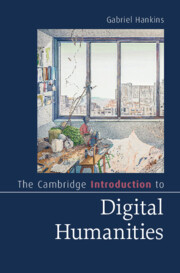
How are the humanities transformed in the digital era? This book describes the transformation of the humanities by the largest shifts in the production of knowledge since the printing press. It addresses a wide range of disciplines, providing a history of those shifts and how humanists have responded to them. It argues that we are all digital humanists now, since we are all addressed by an era of pervasive digital research, reading, teaching, and learning. This book provides a history of digital transformations in the humanities since the first computers, defines the digital humanities through specific communities, conversations, tactics, and intersections, and poses the key questions of the field. Rather than particular technologies or tools, this Introduction centers on the lasting intellectual objects, methods, and concerns of the humanities from the late medieval period to the explosive growth of generative AI.
The year 1859 produced major works by writers including George Eliot, Charles Darwin, and Charles Dickens. They represent some of the greatest literary, political, social, and scientific achievements of the Victorian period, and have come to embody a substantial part of what we mean by the term 'Victorian'. In Britain in 1859: Custom, History, Modernity, these enduring texts are read alongside key events of the year; other significant publications from authors such as Collins, Smiles, Mill, Tennyson, and Beeton; and newspapers and periodicals. Gail Marshall reveals a year which was innovatory but also deeply conflicted about how to accommodate and acknowledge change within contemporary thought and practice. Custom, as the year's predominant and most readily available historical form, enabled the Victorians of 1859 to negotiate with the past as they faced the future.
The Cambridge Companion to Modern Arabic Literature redefines how we engage with Arabic literary traditions in a global context. This comprehensive and accessible companion situates modern Arabic literature at the forefront of debates about time, language, geography, and media. Through incisive case studies and close readings, leading scholars explore the dynamic intersections of Arabic literature with postcolonial, feminist, and ecological thought, as well as its transnational and translational dimensions. From the Nahda to the Anthropocene, from fuṣḥā to ʿāmmiyya, and from the Maghrib to the Arab diaspora, the companion maps the evolving contours of Arabic literary production. Far from being peripheral, Arabic literature emerges as a vital force in reimagining the dynamics of comparative and world literary studies. This companion is an essential resource for scholars, students, and readers seeking to understand the transformative power of modern Arabic literature.
Scholars have long known that writers such as Shakespeare, Milton and Marvell drew upon alchemy – the craft of chemical transmutation – to depict the transformative operations of the male literary imagination. But how did the female contemporaries of these male authors utilise alchemical discourse? Sajed Chowdhury shows that alchemy had particular relevance for women because of its affiliation with 'kitchen chymistry': the domestic production of medicine, culinary ingredients and cosmetics. He analyses how women writers manipulated 'chymical' discourse to foreground the transformative intellectual agency of female alchemical practitioners. Diverse authors and genres are discussed, including medical papers and prose meditations by Grace Mildmay, poetry by Hester Pulter and plays and fiction by Margaret Cavendish. Reintegrating women's literary thought and practice to early modern British 'chymical' understandings of mind, soul and body, this study is a landmark in histories of science and women's writing.
This Element offers the first comprehensive study of George Crabbe's engagement with medical thought and practice in his poetry. Drawing on his interest in illness, care, and healing as a trained physician, surgeon, apothecary, and obstetrician, it addresses how his medical expertise and awareness inform his assessment of social problems, his perspective on the role of a poet, and his views on education and religion. The study examines the intersection between Crabbe's poetic achievement and medical discourse in advancing humanist healing for mind and soul, and explores how his verse registers systemic and ethical issues surrounding poverty, addiction, intoxication, and madness through an unsentimental and truthful style. By tracing the moral and social implications of the connection between medical vision and poetic philosophy, it recovers Crabbe as a significant poet-physician of the long eighteenth century and invites renewed attention to the cultural work of his poetry in health and medicine.
East Asian voices have long been marginalised in Western literature, though recent global waves of East Asian popular culture have begun to shift the landscape. Among the newest entrants to this global phenomenon are children's picture books - an emerging yet potent force with unparalleled potential for long-term impact. Despite their limited visibility in publishing, picture books are central to early education and childhood wellbeing, shaping future generations. As such, East Asian picture books represent a doubly marginalised field that has been largely overlooked. This timely and essential Element addresses that gap. Drawing on a comprehensive dataset independent of publisher self-reporting, it offers both a historical overview of East Asian representation spanning more than a century and in-depth case studies, providing a ground-breaking account of this overlooked but increasingly influential domain.