To save content items to your account,
please confirm that you agree to abide by our usage policies.
If this is the first time you use this feature, you will be asked to authorise Cambridge Core to connect with your account.
Find out more about saving content to .
To save content items to your Kindle, first ensure no-reply@cambridge.org
is added to your Approved Personal Document E-mail List under your Personal Document Settings
on the Manage Your Content and Devices page of your Amazon account. Then enter the ‘name’ part
of your Kindle email address below.
Find out more about saving to your Kindle.
Note you can select to save to either the @free.kindle.com or @kindle.com variations.
‘@free.kindle.com’ emails are free but can only be saved to your device when it is connected to wi-fi.
‘@kindle.com’ emails can be delivered even when you are not connected to wi-fi, but note that service fees apply.
The Aesthetics of Risk in Franco-East Asian Literatures is the first book that examines the concept of risk in non-anglophone world literature. Focusing on how risk is produced and reshaped by literary aesthetics, Li argues that risk is a creative rather than negative force in world literature. Instead of disaster narratives, Li approaches risk from the fresh perspective of ludic aesthetics, or playful, gamelike, illusionistic and experimental literary strategies. Comparatively analysing an original selection of texts by modern and contemporary French-Francophone and East Asian writers, each chapter focuses on a particular genre such as the novel, life-writing, poetry, and image-texts. The reimagination of risk in literature is revealed to be closely related to different forms of play such as structured games, masquerade, poetic and intermedial experimentation. Franco-East Asian literatures help us rethink risk in linguistically diverse and cross-cultural contexts, providing a new paradigm for comparative criticism and world literature.
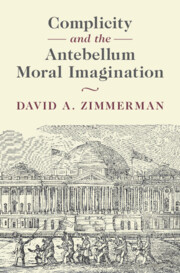
By what routes and on what grounds do moral blame and shame for social wrongs fall on individuals, groups, and institutions? To answer this question is necessarily to excite the moral imagination, to envision our moral connection to social, economic, and political harms that may appear remote or opaque. Between 1830 and 1860, American religious authorities, novelists, abolitionists, market activists, and political insiders trained this imagining. They delineated how moral complicity radiated across urban social networks, criminal conspiracies, political structures, and economic systems. In this original study, Zimmerman illuminates how new conceptions of moral complicity and participatory sin emboldened activists, animated new literary forms, sparked political controversy, and seeded a plan to racially transfigure the Atlantic economy. In media ranging from gothic convent tales to imperial trade proposals, complicity critics conjured not only the dangers but also the responsive duties and opportunities raised by new forms of sociomoral enmeshment.
This volume offers literary histories and analyses of a wide range of genres in African literature and verbal arts. It provides a holistic and accessible presentation of African literary history that incorporates different types of texts, different regions of the continent, and different languages (English, French, Swahili, Hausa). Both genres with a longer history and those with more recent histories in Africa receive attention. The genres covered include memoirs, travelogues, Shairi, protest poetry, activist theatre, dictator novels, child soldier narratives, prison writing, speculative fiction, market literature, environmental literature, graphic narrative, and queer writing. The volume furnishes overviews of other genres such as campus narrative, crime fiction, and romance. Genres belonging to popular culture as well as those associated with high literary forms are discussed. This collection of literary histories also shows how popular and high literary cultures have intersected and diverged in different locations across Africa since the early 1900s.
Eyes function as organs of both perception and expression: they can see, but they can also show. Challenging a long-running scholarly bias in favour of their visual function, Weeping Eyes foregrounds the organ's major role in affect and emotion, probing the different ways that tears are conceptualised in both sentimental and scientific literature. Centred around the rise of ophthalmology as a discipline in Britain at the turn of the nineteenth century, it considers how historical developments in ocular science shaped literary depictions of seeing and feeling. By rethinking what it can mean to cry, Megan Nash overturns critical paradigms that have long dominated ideas of the eyes and vision, and tackles some of the most pressing conceptual questions of affect studies.
The Italian; or, The Confessional of the Black Penitents (1796) was the final novel that Ann Radcliffe published in her lifetime. With her monumental The Mysteries of Udolpho (1794), it is widely considered her finest work – a nearly perfect combination of suspense, romance, social critique, and deep psychology. Set in Naples in the decades before the French Revolution, it chronicles the adventures of two lovers, Ellena di Rosalba and Vincentio di Vivaldi, whose intended marriage provokes the ire not just of Vivaldi's powerful parents, but also of the Holy Inquisition. Since its first publication, readers have admired The Italian's sharply drawn characters, evocative landscapes, brilliantly constructed plot, and unrivalled atmospherics. Arguably no other Romantic novelist has depicted the human capacity for evil so palpably while providing such a range of beauties for readers to savour. This edition presents the definitive text along with a full introduction and explanatory notes.
This volume is an extensive edited collection devoted to the work of the 2017 Nobel Literature Laureate, Sir Kazuo Ishiguro, featuring contributions from the most established Ishiguro scholars. It contains major new chapters on each of his novels, including the first published essay on Klara and the Sun as well as his short-story collection Nocturnes and his screenplays. Situating Ishiguro’s work within current debates regarding modernism, postmodernism and postcolonialism, the chapters examine his engagement with the defining concerns of the contemporary novel, including national identity, Britishness, cosmopolitanism, memory, biotechnology, terrorism, Brexit, immigration and populist politics. Discussing Ishiguro as both a British and a global author, the collection contributes to debates regarding the politics of publishing of ethnic writers, examining how Ishiguro has managed to shape a career in resistance to narrow labelling where many other writers have struggled to achieve long-term recognition. The collection opens with an extensive introduction by the co-editors which examines Ishiguro’s body of work as a whole and Ishiguro’s evolving literary reputation in light of his recent personal and commercial success. The book then offers individual chapters on each of Ishiguro’s novels, his short-story collection and his television and film work, as well as his recent journalistic interventions. Each chapter aims to extend and update existing criticism on Ishiguro via engagement with the most up-to-date critical frameworks, while at the same time staying true to each text’s most prominent thematic concerns. Given the prominence of its contributors and its comprehensive coverage, Kazuo Ishiguro: Twenty-First-Century Perspectives will be the definitive volume of Ishiguro scholarship for years to come.
What was the role of insects in defining the human during the British eighteenth century? If humans have always been both helpfully and antagonistically entangled with insects, why were insects absent from the stories told in the eighteenth-century realist novel? Through close ecocritical readings of classic eighteenth-century works including Robinson Crusoe and Emma, Elizabeth Kowaleski Wallace reconsiders the history of entomology as science and art and places anthropomorphism in its historical context. She examines how insects were collected, classified, transported, and illustrated, touching on places and phenomena such as the Dead Zoo, and shows how they helped establish a particular way of thinking about the place of the human in the natural world. Encouraging us to rethink the traditional humanistic paradigms issuing from the Enlightenment, Wallace demonstrates that, in light of newer biological perspectives like symbiosis, a renewed concept of the human is imperative.
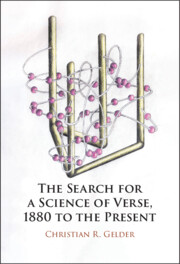
From large-scale quantitative studies in the digital humanities to AI-generated poetry, scientific reading seemingly reigns supreme. However, these reading practices preceded, and often shaped, modern literary criticism and the rise of close reading. The Search for a Science of Verse restores this history, tracing the unruly and deeply political attempts to fashion a scientific account of poetry from 1880 onwards. It also investigates a set of modern poets, from Laura Riding to Veronica Forrest-Thomson, who thought about how their verse offers a form of knowledge not reducible to scientific explanation. It gives an account of the singularity of poetic thinking in their work, which actualises instances of meaning-making that prioritise the singular over the rule-governed. The Search for a Science of Verse is thus a historical inquiry into how techno-scientific reason sought to exert its full domination over the poetic imagination—and how that imagination, in turn, responded.
Dante's Divina Commedia/Divine Comedy (completed c. 1321) is considered one of the greatest works in Western literature, and its three canticles – Inferno, Purgatorio, and Paradiso – have had a powerful influence on subsequent literature and thought. Dante shares the classical idea that political philosophy aims to defend the philosophic life, and in Paradiso he does just that, defending philosophy, understood as a way of life, against its subordination to Christianity. Paul Stern shows the contribution Dante's reflection on political life makes to his theoretical defense of the philosophic life, a life whose character and goodness are conveyed by his intensely self-reflective poetry. On his account, Dante's approach can guide our judgment of any proposal for the comprehensive transformation of human existence. It enables us, in short, to think more clearly about just what we should mean by paradise.
In this interdisciplinary study, Fred Schurink provides a major reinterpretation of translations of the classics in the half-century following Henry VIII's break from Rome. He reveals how translators applied ancient Greek and Roman texts to many of the key social, political, and religious developments and debates of Tudor England. Drawing on the authority of the classics and the concept of counsel, translators presented themselves as instructors and advisers to members of the regime and contributed to the development of the public sphere as a space for debate and negotiation of political opinion. Here, Schurink expands the canon of English translations of the classics by directing attention to important but overlooked authors such as Plutarch, Demosthenes, and Frontinus as well as manuscript and Neo-Latin translations. By uncovering continuities between classical translations and the manuscript marginalia of humanist scholars, he brings the histories of translation and reading into dialogue with each other.
How did Lady Church become a theological person and literary figure in patristic, medieval, and early modern texts? In this study, Lora Walsh recovers a feminine figure whose historical prominence has been overlooked. She traces the development of Lady Church in medieval and early modern England, providing new information and interpretations of works by well-known authors, including John Wyclif, William Langland, John Foxe, and John Donne, among others. She also identifies significant changes and previously unrecognized continuities in religious culture from the medieval era into early modernity. Walsh incorporates literary texts into the field of historical theology, exploring their theological background and identifying the unique contributions of literature to ecclesiological thought. She demonstrates that the feminine image of the Church was not simply a rhetorical convention. Rather, it forms part of a rich tradition that many authors conceptually refined and vividly reimagined over more than a millenium of religious history.
The article presents and discusses thirteen previously unpublished letters from the British novelist and poet Rose Macaulay to the Irish poet and novelist Katharine Tynan, who in 1913 initiated a correspondence and friendship when she wrote to congratulate Rose on winning with The Lee Shore in a prestigious and valuable Novel Competition which she too had entered. Katharine continued to express admiration for Rose’s writing, especially her novels, not only in her letters to Rose (not preserved), but also in memoirs and articles. Rose in turn praised Katharine’s work, especially her poetry, emphasising particularly the comfort it gave her and others in wartime. She herself had lost several friends, including Rupert Brooke, and was anxious about her brother, who was serving in the army. Katharine’s two sons were in the army too. Rose took an interest in Katharine’s daughter, Pamela Hinkson, who was showing early promise as a writer. In 1925 Katharine sent Rose a novel, The Victors, by Peter Deane. When Rose replied, she did not realise that Peter Deane was a pseudonym used by Pamela, let alone that the sad story was closely based on the postwar experiences of Katharine’s elder son.
The essay is the first detailed study of Richard Williams Reynolds (1867–1947). It reveals that, although born in Liverpool, he was the illegitimate son of Brigadier-General Daniel Harris Reynolds of Arkansas by Annie Franklin, a British settler who had been widowed just before the Civil War, in which her lover fought for the Confederate Army. Educated at King Edward’s School (KES), Birmingham, and Balliol College, Oxford, Richard spent the 1890s in London, where he trained for the Bar and did some journalism. His membership of the Fabian Society brought him into close friendship with the writer Edith Nesbit. In 1900 he joined the staff of KES. His most famous pupil was J. R. R. Tolkien. In 1910 he married the novelist Dorothea Deakin, Nesbit’s niece, with whom he had three daughters. In 1922 he retired from KES. He and his family moved to Capri, where they associated with Axel Munthe and other writers and artists. But Dorothea died in 1924, and in 1935–1936 Richard suffered further losses on a Greek-tragic scale – the deaths of his daughters Diana and Pamela, and of the second wife whom he had just married. Pamela, a promising poet, perished in a fall down a cliff.
The essay is a detailed study of the visit Virginia Woolf made to Greece with Leonard Woolf, Roger Fry, and Roger’s sister Margery Fry in April–May 1932 – the one happy time in an otherwise unhappy year for Virginia. The study, the first by a classical scholar, is based on close examination of the primary sources, published and unpublished. These are: Virginia’s diaries and letters; Roger’s letters; Leonard’s pocket-diary; and Virginia and Leonard’s photographs. After explanation of the background to the holiday and discussion of the relations between members of the party, especially Virginia and Roger, the exact itinerary and timetable are set out. Many of the scenes in the photographs are correctly identified for the first time, including one in which the Woolfs and Frys are seen standing in front of a ruined temple in Athens. The temple, said by leading Bloomsbury writers to be on the Acropolis, is shown to be no such thing. Comparison of the published versions of Virginia’s diary and letters with the manuscripts of them reveals some significant errors, including one that seriously misrepresents her assessment of Roger’s character – no trivial matter, given her admiration for him and their close friendship.
Chapter 4 focuses on G. W. M. Reynolds, a hugely important figure in the development of both the popular press and Chartism. Refusing to accept the commonplace reading of Reynolds as a commercial entrepreneur using a half-baked radicalism to sell copy, the chapter argues that Reynolds was a dedicated radical attempting to maximise the size of his audience by folding into The Mysteries of London (1844–45) the non-radical, the reformist, and liberal. Reynolds’s radicalism continues to be widely questioned simply because the popular is not deemed to be compatible with a genuine radicalism. But Reynolds’s radicalism, his engagement with Chartist positions before he formally took the banner and declared himself a Chartist, becomes clear when measured against a Chartism that itself was filled with ambiguities, incongruities, and differences. The chapter offers a new reading of The Mysteries of London focused on its theme of vengeance by comparing it not to middle-class literature but to Chartist literature.
Continuing the discussion of Ishiguro’s formal sensibilities but focusing exclusively on An Artist of the Floating World, Rebecca Karni interrogates what she describes as ‘Ishiguro's tempered presentational realism and practice’. Karni proposes that those aspects of Ishiguro’s writing which appear to offer points of entry into a complex and ambiguous body of work – ‘the deceptive surface transparency of the author's prose, in addition to his Japanese background’ – often result in readings which are inherently reductive (essentialist or Orientalist). Karni explores Ishiguro’s tactics of evasion, which, she argues, result in texts which sustain ‘meaning in ways that go beyond signification’. Taking the idea of ‘presentation’ from Hans-Georg Gadamer – refining this with the usage of the same term in Japanese cinema studies – Karni thinks through the ways in which Ishiguro both borrows from the expectations of traditional realist texts and undercuts these through his characteristic narrative and narratological techniques. Ishiguro’s first two novels, Karni suggests, are peculiarly apposite examples of his presentational realism. Her chapter interrogates the ways in which the novels provoke the reader’s hermeneutic impulse, the desire to uncover, to move ‘from signifier to the supposedly “hidden” signified’, while simultaneously playing on the futility of such interpretative practices. In this way, Karni argues, Ishiguro’s literary devices work to provoke more profound and wide-ranging questions about fiction, the novel as form, and the practice of reading more broadly.
The introduction sets out the argument of the book, that early Victorian popular literature includes previously unrecognised radical political content, demonstrating knowledge of and sympathy with the Chartist movement. It provides a new theoretical framework for reading popular literature, first by reviewing the main ways this literature and popular culture as a whole are most commonly approached, and then by challenging the assumptions behind that criticism. Whereas the dominant criticism has tended towards seeing popular literature as providing the means for some degree of cultural confrontation, it has been adamant in its refusal to accept that cultural confrontations can have a political counterpart, insisting for the most part on the place of social hegemony and the inherently conservative aspects of commercial enterprise. The chapter also outlines the complex relationship between cultural and political confrontations on the one hand, and the equally complex relationship between popular literature and radical politics on the other. Radicalism is treated as a force helping to construct the category of the popular. The popular, in turn, is understood to be exploring the radical to help expand its own market power.