To save content items to your account,
please confirm that you agree to abide by our usage policies.
If this is the first time you use this feature, you will be asked to authorise Cambridge Core to connect with your account.
Find out more about saving content to .
To save content items to your Kindle, first ensure no-reply@cambridge.org
is added to your Approved Personal Document E-mail List under your Personal Document Settings
on the Manage Your Content and Devices page of your Amazon account. Then enter the ‘name’ part
of your Kindle email address below.
Find out more about saving to your Kindle.
Note you can select to save to either the @free.kindle.com or @kindle.com variations.
‘@free.kindle.com’ emails are free but can only be saved to your device when it is connected to wi-fi.
‘@kindle.com’ emails can be delivered even when you are not connected to wi-fi, but note that service fees apply.
Laves phase NbCr2-based composites toughened with different volume fractions of Cr phase were fabricated by spark plasma sintering (SPS). The microstructural evolution and mechanical properties of these spark plasma sintered NbCr2/Cr composites were investigated. The mechanical properties evaluations indicate that the introducing of Cr phase consolidated by SPS has a beneficial effect on the mechanical properties of the NbCr2 Laves phase. When the content of Cr phase in the NbCr2 Laves phase increases to 30 wt%, the hardness measured by a Berkovich nanoindenter operated with the continuous stiffness measurements mode attains the maximum value of 13.44 GPa, which is increased by about 56% over the as-cast NbCr2 Laves phase. More importantly, the room-temperature fracture toughness of the NbCr2-30wt%Cr alloy is increased to 18.9 MPa·m1/2, which is 16 times higher than that of the as-cast NbCr2 Laves phase (1.2 MPa·m1/2). The microstructural analysis indicates that the residual of Cr phase and formation of Nb solid solution can provide remarkable toughening of the NbCr2 Laves phase by fine grain toughening, dual ductile phase toughening, and interface toughening mechanisms. A possible formation mechanism of Nb solid solution during SPS has been proposed by considering the composition distribution.
In this present study, the influence of different casting processes on high cycle fatigue behavior of Mg–10Gd–3Y–0.5Zr magnesium alloy was investigated by using porosity-free low-pressure sand-casting (LPS) bars and gravity permanent mold casting (GPM) ingots. The results show that the fatigue properties of both LPS and GPM Mg–10Gd–3Y–0.5Zr alloy in as-cast condition are determined by Mg matrix and eutectic phase. However, the fatigue property improvement for LPS alloy by T6 heat treatment is significantly superior to that of GPM alloy. The different degree of enhancement of fatigue properties for two conditions of the alloy is related to different crack initiation mechanism. The fatigue crack of the LPS alloy initiates from the free surface of the sample, while the crack of the GPM alloy initiates from porosities or inclusions near the surface of the sample. Meanwhile, the crack of slip band has a crucial effect on the fatigue crack initiation of both as-cast and T6 conditions for LPS alloy.
The effects of stress-aging processing on corrosion resistance of an Al–Zn–Mg–Cu alloy were investigated. It is found that the one-stage stress-aged alloy is strongly sensitive to the electrochemical corrosion. The poor corrosion resistance of the one-stage stress-aged alloy can be attributed to fine intragranular aging precipitates and continuous distribution of grain boundary precipitates. Meanwhile, the incomplete precipitation of solute atoms results in high electrochemical activity of aluminum matrix. However, when the alloy is two-stage stress-aged, the corrosion resistance is greatly improved. Furthermore, the corrosion resistance decreases firstly and then increases with increasing the first stage stress-aging temperature. Increasing external stress can enhance the corrosion resistance of the two-stage stress-aged alloy. These phenomena are mainly related to aging precipitates within grains and along grain boundaries. The coarse and relatively low-density intragranular aging precipitates, as well as the discontinuously distributed grain boundary precipitates can enhance the corrosion resistance of the stress-aged alloy.
An Al–10.83Zn–3.39Mg–1.22Cu–0.16Zr–0.16Sc alloy was produced using the spray deposition technology. The microstructure evolution within temperature ranging between 613 K and 733 K during hot pressing process at different initial strain rate was investigated in a transmission electron microscope (TEM). Partial resolution of the primary precipitates in the deposited microstructure, such as η-MgZn2 and Al3(ScZr), took place. Moreover, new secondary η-MgZn2 and Al3(ScZr) precipitated from the super saturated solid solution and their effects on the recrystallization were also analyzed. The Al3(ScZr) and η-MgZn2 precipitation can act as barriers for the movement of both dislocations and grain boundaries, which are the main factors for hindering the recrystallization. Additionally, the dislocation slide during hot deformation was also investigated in detail. The spray deposition Al–Zn–Mg–Cu alloy own the well deformability, and the typical perfect dislocations can be found in the hot deformation Al–Zn–Mg–Cu alloy.
An instrumented indentation method is developed for generating maps of time-dependent viscoelastic and time-independent plastic properties of polymeric materials. The method is based on a pyramidal indentation model consisting of two quadratic viscoelastic Kelvin-like elements and a quadratic plastic element in series. Closed-form solutions for indentation displacement under constant load and constant loading-rate are developed and used to determine and validate material properties. Model parameters are determined by point measurements on common monolithic polymers. Mapping is demonstrated on an epoxy-ceramic interface and on two composite materials consisting of epoxy matrices containing multiwall carbon nanotubes. A fast viscoelastic deformation process in the epoxy was unaffected by the inclusion of the nanotubes, whereas a slow viscoelastic process was significantly impeded, as was the plastic deformation. Mapping revealed considerable spatial heterogeneity in the slow viscoelastic and plastic responses in the composites, particularly in the material with a greater fraction of nanotubes.
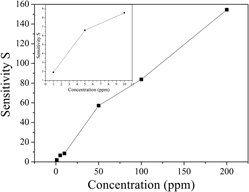
Diethyl ether is widely used in the fields of diesel engines, agriculture, food, chemical, biological, pharmaceutical, and medical industries. It is necessary to carry out real-time monitoring of this molecule due to its harmful effects on human health. In this study, a highly sensitive SnO2/rGO gas-sensing material has been prepared by a hydrothermal method. The surface adsorption and reaction processes between the SnO2/rGO gas-sensing film and diethyl ether have been studied by the in situ diffuse-reflectance Fourier-transform infrared spectroscopy at different temperatures. The results show that the SnO2/rGO gas-sensing material has high sensitivity to diethyl ether, and the lowest detection limit can reach 1 ppm, and that ethyl $\left( {{\rm{C}}{{\rm{H}}_{\rm{3}}}\mathop {{\rm{C}}{{\rm{H}}_{\rm{2}}}}\nolimits^ \cdot } \right)$, oxethyl $\left( {{\rm{C}}{{\rm{H}}_{\rm{3}}}{\rm{C}}{{\rm{H}}_2}{{\rm{O}}^ \cdot }} \right)$, ethanol (CH3CH2OH), formaldehyde (HCHO), acetaldehyde (CH3CHO), ethylene (C2H4), H2O, and CO2 surface species are formed during diethyl ether adsorption at different temperatures. A possible mechanism of the reaction process is discussed.
The corrosion resistance behavior of age-treated at 250 °C, 150 °C and solution-treated at 540 °C Al–4.2 wt%Ag alloys were investigated in a 3.5 wt% NaCl solution using cyclic potentiodynamic polarization (CPP) and electrochemical impedance spectroscopy measurements. Furthermore, the Vickers microhardness, microstructure, and phase analysis were studied by Vickers microhardness test, scanning electron microscopy (SEM), and x-ray diffraction. The Vickers microhardness test indicated significant increase in the hardness of the aged samples due to precipitation formation in the Al matrix. SEM images of all samples after corrosion tests showed pitting corrosion. Furthermore, it is found that the presence of ageing precipitates (Ag2Al plates) in the age-treated samples created local galvanic cells and can led to the formation of the anodic and cathodic sites. Hence, the corrosion resistance decreased compared to the solution-treated sample without any precipitates. In addition, for more ageing temperature at 250 °C in comparison with 150 °C, was made more anodic and cathodic sites due to more Ag2Al precipitates formation, and decreased resistance to pitting corrosion. Besides, the aluminum and silver oxides were corrosion products. The major phase was aluminum oxide because the Al was the main element of the alloy.
This study investigates the ternary intermetallic phases in the Mg–Zn–Ca system, which is of great interest for metallic biodegradable implant applications. According to published phase diagrams, the key alloy composition studied herein is located within the Ca2Mg5Zn5, Ca2Mg6Zn3, and IM1 phase fields. Through controlled cooling of the melt, a quasibinary ∼Ca2Mg5Zn5–Mg microstructure was obtained. The large polygonal grains had a composition of Ca2Mg5Zn5 as determined by energy-dispersive x-ray spectroscopy (EDX). Differential scanning calorimetry revealed that Ca2Mg5Zn5 begins to form at ∼417 °C, and the eutectic temperature is ∼369 °C. Based on single-crystal x-ray diffraction data, Ca2Mg5Zn5 was determined to be hexagonal (P63/mmc), with lattice parameters of a = 9.5949(3) Å and c = 10.0344(3) Å. This was also verified by transmission electron microscopy. Further refinements, which considered the possibility of mixed Mg/Zn sites, significantly improved the data fit compared to the initial ordered structural model. The final refined structure possesses a composition of Ca16Mg42Zn42, very similar to the chemical analysis results from EDX.
Kesterite-type compound semiconductors, containing copper and zinc, have photovoltaic properties depending on cation distribution in the crystal structure. Anomalous diffraction allows discrimination of isoelectronic cations, in principle allowing a straightforward determination of site occupation factors from data collected at multiple energies close to the X-ray absorption edges of copper and zinc. However, extremely strong correlation between structural parameters precludes this. We present a recipe based on the direct dependency between refined occupation factors and atomic scattering power, which allows to lift the correlations and to detect issues of individual diffraction patterns or assumptions in the model, thereby allowing for reliable quantitative analysis of the Cu/Zn distribution.
Graphene is a 2D carbon allotrope that has attracted significant attention because its properties have a wide range of applications. Graphene was deposited on the polycrystalline nickel substrate with a dimension of 0.10 mm × 10 mm × 10 mm via thermal chemical vapor deposition (TCVD). The natural carbon source was obtained from a commercial palm oil as a carbon precursor. The D, G, and 2D bands described the vibration of graphitic layer and overtone of the D band at 1352, 1594, and 2716 cm−1, respectively. The lowest G band full width at half maximum (FWHM) was 38.7 cm−1 at 900 °C deposition temperature. In the x-ray diffraction (XRD) pattern, the FWHM of Ni (200) peak was 0.38°. Raman spectroscopy, UV–vis spectrophotometry, atomic force microscopy, XRD, and field emission scanning electron microscopy characterized the synthesized graphene. Multilayer graphene was successfully synthesized from the palm oil via TCVD.
The key to improve the conversion efficiency of perovskite solar cells lies in the identification and control of different limiting factors. Both intrinsic and extrinsic losses are shown here to be detrimental on conversion efficiency well below the thermodynamic limit. The effect of varying radiative and Auger recombination processes as inevitable intrinsic losses on device performance is shown in this work. The extrinsic losses are shown to impose severe bounds on efficiency limits. Such extrinsic losses include realistic material optical properties, finite diffusion length, ideality factor, parasitic resistance, and parasite absorption. Thus, this work presents the roadmap and the possible approaches in achieving performance beyond what is currently demonstrated in the highest efficiency perovskite solar cells. Additionally, the impact of light concentration, important in Auger limited devices is investigated. Finally, the impact of Auger recombination for perovskite with finite diffusion length in a two-terminal perovskite/silicon tandem device is investigated.
Generally, the obvious work hardening, dynamic recrystallization (DRX), and dynamic recovery behaviors can be found during hot deformation of Ni-based superalloys. In the present study, the classical dislocation density theory is improved by introducing a new dislocation annihilation item to represent the influences of DRX on dislocation density evolution for a Ni-based superalloy. Based on the improved dislocation density theory, the peak strain corresponding to peak stress and the critical strain for initiating DRX can be determined, and the improved DRX kinetics equations and grain size evolution models are developed. The physical framework and algorithmic idea of the improved dislocation density theory are clarified. Moreover, the deformed microstructures are characterized and quantitatively correlated to validate the improved dislocation density theory. It is found that the improved dislocation density-based models can precisely characterize hot deformation and DRX behaviors for the studied superalloy under the tested conditions.
We introduce a method to measure accurately surface residual stresses in the pre-equilibrium state, which were generated in workpieces during the milling process. The method takes into account strain changes and uses the inverse calculation. Material in the stress layer was removed layer by layer, and the strain change on the opposite side of the machined surface was measured. We also consider the change of the bending moment caused by the changed neutral layer. The stress values were calculated from the last layer to the first layer, and the residual stresses generated by milling are measured. We created a finite element model of a real workpiece and the measured stress values were used as inputs for the model. The measuring method was validated using finite element analysis. We find that our measuring method can be successfully used in practice to measure surface residual stresses and it provides reliable indicators for evaluating the surface properties of machined workpieces.
The crystal structure of trandolapril has been solved by parallel tempering using the FOX software package with laboratory powder diffraction data submitted to and published in the Powder Diffraction File. Rietveld refinement was performed with the software package GSAS yielding orthorhombic lattice parameters of a = 19.7685(4), b = 15.0697(4), and c = 7.6704(2) Å (C24H34N2O5, Z = 4, space group P212121). The Rietveld refinement results were compared with density functional theory (DFT) calculations performed with CRYSTAL14. While the structures are similar, discrepancies are observed in the configuration of the octahydroindole ring between the Rietveld and DFT structures, suggesting the refined and calculated molecules are diastereomers.
N-acylamino acid isomers: ortho, meta, and para-methylhippuric acids, are specific xylene metabolites. Here, we report X-ray powder diffraction data, unit-cell parameters, and space groups for the three isomer (C10H11NO3), [ortho-methylhippuric acid 2 mHA, monoclinic P21/n cell, a = 8.522(1), b = 10.443(1), c = 10.734(1) Å, β = 92.43(1)°, V = 954.5(1) Å3; meta-methylhippuric acid 3 mHA, monoclinic C2/c cell a = 20.0951(2), b = 10.485(1), c = 10.074(2) Å, β = 119.08(1)°, V = 1933.9(1) Å3; para-methylhippuric acid 4 mHA, orthorhombic P212121 cell, a = 5.1794(7), b = 8.279(1), c = 22.276(2) Å, V = 955.2(2) Å3], space group. In each case, all measured diffraction peaks were indexed and are consistent with the corresponding space group.
Double deformation technique is often used to study static recrystallization (SRX) behavior of materials, and SRX volume fraction can be calculated by the analysis of the stress–strain curve from this technique. The suggested methods to analyze the curve are different, which may lead to different results or even large deviation. In the present research, the methods were discussed based on the stress–strain curves from double deformation compression tests. The results showed that 2% offset method agrees well with 5% total strain method and they can give a better evaluation of SRX volume fraction for the tested steel in the absence of precipitates. While the results from 2% offset or 5% total strain method deviate from the ones from area measurement method when precipitation occurs. Therefore, area measurement method is more suitable when precipitates play a role in SRX process. However, the strain should be large enough to perform this method.