To save content items to your account,
please confirm that you agree to abide by our usage policies.
If this is the first time you use this feature, you will be asked to authorise Cambridge Core to connect with your account.
Find out more about saving content to .
To save content items to your Kindle, first ensure no-reply@cambridge.org
is added to your Approved Personal Document E-mail List under your Personal Document Settings
on the Manage Your Content and Devices page of your Amazon account. Then enter the ‘name’ part
of your Kindle email address below.
Find out more about saving to your Kindle.
Note you can select to save to either the @free.kindle.com or @kindle.com variations.
‘@free.kindle.com’ emails are free but can only be saved to your device when it is connected to wi-fi.
‘@kindle.com’ emails can be delivered even when you are not connected to wi-fi, but note that service fees apply.
The interaction between computer and mathematics is becoming more and more important at all levels as computers become more sophisticated. This book shows how simple programs can be used to do significant mathematics. The purpose of this book is to give those with some mathematical background a wealth of material with which to appreciate both the power of the microcomputer and its relevance to the study of mathematics. The authors cover topics such as number theory, approximate solutions, differential equations and iterative processes, with each chapter self-contained. Many exercises and projects are included giving ready made material for demonstrating mathematical ideas. Only a fundamental knowledge of mathematics is assumed and programming is restricted to 'basic BASIC' which will be understood by any microcomputer. The book may be used as a textbook for algorithmic mathematics at several levels, with all the topics covered appearing in any undergraduate mathematics course.
Industrial mathematics is growing enormously in popularity around the world. This book deals with real industrial problems from real industries. Presented as a series of case studies by some of the world's most active and successful industrial mathematicians, this volume shows clearly how the process of mathematical collaboration with industry can not only work successfully for the industrial partner, but also lead to interesting and important mathematics. The book begins with a brief introduction, where the equations that most of the studies are based upon are summarised. Thirteen different problems are then considered, ranging from cooking of cereal to the analysis of epidemic waves in animal populations. Throughout the work the emphasis is on telling industry what they really want to know. This book is suitable for all final year undergraduates, master's students, and Ph.D. students who are working on practical mathematical modeling.
Many phenomena in nature, engineering or society when seen at an intermediate distance, in space or time, exhibit the remarkable property of self-similarity: they reproduce themselves as scales change, subject to so-called scaling laws. It's crucial to know the details of these laws, so that mathematical models can be properly formulated and analysed, and the phenomena in question can be more deeply understood. In this 2003 book, the author describes and teaches the art of discovering scaling laws, starting from dimensional analysis and physical similarity, which are here given a modern treatment. He demonstrates the concepts of intermediate asymptotics and the renormalisation group as natural attributes of self-similarity and shows how and when these notions and tools can be used to tackle the task at hand, and when they cannot. Based on courses taught to undergraduate and graduate students, the book can also be used for self-study by biologists, chemists, astronomers, engineers and geoscientists.
Almost every scientist has heard of catastrophe theory and knows that there has been a considerable amount of controversy surrounding it. Yet comparatively few know anything more about it than they may have read in an article written for the general public. The aim of this book is to make it possible for anyone with a comparatively modest background in mathematics - no more than is usually included in a first year university course for students not specialising in the subject - to understand the theory well enough to follow the arguments in papers in which it is used and, if the occasion arises, to use it. Over half the book is devoted to applications, partly because it is not possible yet for the mathematician applying catastrophe theory to separate the analysis from the original problem. Most of these examples are drawn from the biological sciences, partly because they are more easily understandable and partly because they give a better illustration of the distinctive nature of catastrophe theory. This controversial and intriguing book will find applications as a text and guide to theoretical biologists, and scientists generally who wish to learn more of a novel theory.
This comprehensive text and reference work on numerical weather prediction, first published in 2002, covers not only methods for numerical modeling, but also the important related areas of data assimilation and predictability. It incorporates all aspects of environmental computer modeling including an historical overview of the subject, equations of motion and their approximations, a modern and clear description of numerical methods, and the determination of initial conditions using weather observations (an important science known as data assimilation). Finally, this book provides a clear discussion of the problems of predictability and chaos in dynamical systems and how they can be applied to atmospheric and oceanic systems. Professors and students in meteorology, atmospheric science, oceanography, hydrology and environmental science will find much to interest them in this book, which can also form the basis of one or more graduate-level courses.
Written in an appealing and informal style, this text is a self-contained second course on mathematical methods dealing with topics in linear algebra and multivariate calculus that can be applied to statistics, operations research, computer science, econometrics and mathematical economics. The prerequisites are elementary courses in linear algebra and calculus, but the author has maintained a balance between a rigorous theoretical and a cookbook approach, giving concrete and geometric explanations, so that the material will be accessible to students who have not studied mathematics in depth. Indeed, as much of the material is normally available only in technical textbooks, this book will have wide appeal to students whose interest is in application rather than theory. The book is amply supplied with examples and exercises: complete solutions to a large proportion of these are provided.
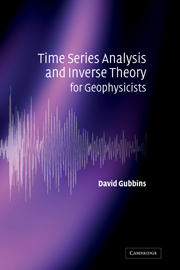
This unique textbook provides the foundation for understanding and applying techniques commonly used in geophysics to process and interpret modern digital data. The geophysicist's toolkit contains a range of techniques which may be divided into two main groups: processing, which concerns time series analysis and is used to separate the signal of interest from background noise; and inversion, which involves generating some map or physical model from the data. These two groups of techniques are normally taught separately, but are here presented together as parts I and II of the book. Part III describes some real applications and includes case studies in seismology, geomagnetism, and gravity. This textbook gives students and practitioners the theoretical background and practical experience, through case studies, computer examples and exercises, to understand and apply new processing methods to modern geophysical datasets. Solutions to the exercises are available on a website at http://publishing.cambridge.org/resources/0521819652
The partial differential equations that govern scalar and vector fields are the very language used to model a variety of phenomena in solid mechanics, fluid flow, acoustics, heat transfer, electromagnetism and many others. A knowledge of the main equations and of the methods for analyzing them is therefore essential to every working physical scientist and engineer. Andrea Prosperetti draws on many years' research experience to produce a guide to a wide variety of methods, ranging from classical Fourier-type series through to the theory of distributions and basic functional analysis. Theorems are stated precisely and their meaning explained, though proofs are mostly only sketched, with comments and examples being given more prominence. The book structure does not require sequential reading: each chapter is self-contained and users can fashion their own path through the material. Topics are first introduced in the context of applications, and later complemented by a more thorough presentation.
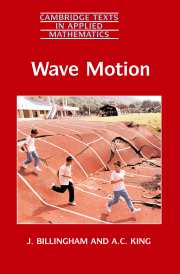
Waves are a ubiquitous and important feature of the physical world, and throughout history it has been a major challenge to understand them. They can propagate on the surfaces of solids and of fluids; chemical waves control the beating of your heart; traffic jams move in waves down lanes crowded with vehicles. This introduction to the mathematics of wave phenomena is aimed at advanced undergraduate courses on waves for mathematicians, physicists or engineers. Some more advanced material on both linear and nonlinear waves is also included, thus making the book suitable for beginning graduate courses. The authors assume some familiarity with partial differential equations, integral transforms and asymptotic expansions as well as an acquaintance with fluid mechanics, elasticity and electromagnetism. The context and physics that underlie the mathematics is clearly explained at the beginning of each chapter. Worked examples and exercises are supplied throughout, with solutions available to teachers.
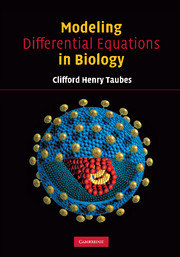
Based on a very successful one-semester course taught at Harvard, this text teaches students in the life sciences how to use differential equations to help their research. It needs only a semester's background in calculus. Ideas from linear algebra and partial differential equations that are most useful to the life sciences are introduced as needed, and in the context of life science applications, are drawn from real, published papers. It also teaches students how to recognize when differential equations can help focus research. A course taught with this book can replace the standard course in multivariable calculus that is more usually suited to engineers and physicists.
The mathematical theory underlying many sporting activities is of considerable interest to both applied mathematicians and sporting enthusiasts alike. Here Professor de Mestre presents a rigorous account of the techniques applied to the motion of projectiles. This equips the reader for the final section of the book in which an enlightening collection of sporting applications is considered, ranging from soccer to table-tennis and high-jump to frisbees. The presentation should be accessible to most undergraduate science students and provides an ideal setting for the development of mathematical modelling techniques.
Random walks are stochastic processes formed by successive summation of independent, identically distributed random variables and are one of the most studied topics in probability theory. This contemporary introduction evolved from courses taught at Cornell University and the University of Chicago by the first author, who is one of the most highly regarded researchers in the field of stochastic processes. This text meets the need for a modern reference to the detailed properties of an important class of random walks on the integer lattice. It is suitable for probabilists, mathematicians working in related fields, and for researchers in other disciplines who use random walks in modeling.
Perturbation methods are one of the fundamental tools used by all applied mathematicians and theoretical physicists. In this book, the author has managed to present the theory and techniques underlying such methods in a manner which will give the text wide appeal to students from a broad range of disciplines. Asymptotic expansions, strained coordinates and multiple scales are illustrated by copious use of examples drawn from all areas of applied mathematics and theoretical physics. The philosophy adopted is that there is no single or best method for such problems, but that one may exploit the small parameter given some experience and understanding of similar perturbation problems. The author does not look to perturbation methods to give quantitative answers but rather to give a physical understanding of the subtle balances in a complex problem.
This textbook, covering the basic mathematics taught to first-year students of science and engineering, reflects the growing awareness that ancillary mathematics should not be taught in isolation from its applications. Topics covered include calculus, ordinary and partial differential equations and statistics. Each chapter starts with two or three examples setting the new techniques to be studied in the context of the scientific world; the mathematics is then presented, along with worked examples. Numerical methods are integrated with analytical techniques where appropriate. The resulting textbook provides the teacher with a rich and varied source of applications for classroom use and students with a textbook for self-learning, giving insight into the significance and role of mathematics in science and engineering.
The theories of bifurcation, chaos and fractals as well as equilibrium, stability and nonlinear oscillations, are part of the theory of the evolution of solutions of nonlinear equations. A wide range of mathematical tools and ideas are drawn together in the study of these solutions, and the results applied to diverse and countless problems in the natural and social sciences, even philosophy. The text evolves from courses given by the author in the UK and the United States. It introduces the mathematical properties of nonlinear systems, mostly difference and differential equations, as an integrated theory, rather than presenting isolated fashionable topics. Topics are discussed in as concrete a way as possible and worked examples and problems are used to explain, motivate and illustrate the general principles. The essence of these principles, rather than proof or rigour, is emphasized. More advanced parts of the text are denoted by asterisks, and the mathematical prerequisites are limited to knowledge of linear algebra and advanced calculus, thus making it ideally suited to both senior undergraduates and postgraduates from physics, engineering, chemistry, meteorology etc. as well as mathematics.
This introduction to complex variable methods begins by carefully defining complex numbers and analytic functions, and proceeds to give accounts of complex integration, Taylor series, singularities, residues and mappings. Both algebraic and geometric tools are employed to provide the greatest understanding, with many diagrams illustrating the concepts introduced. The emphasis is laid on understanding the use of methods, rather than on rigorous proofs. Throughout the text, many of the important theoretical results in complex function theory are followed by relevant and vivid examples in physical sciences. This second edition now contains 350 stimulating exercises of high quality, with solutions given to many of them. Material has been updated and additional proofs on some of the important theorems in complex function theory are now included, e.g. the Weierstrass–Casorati theorem. The book is highly suitable for students wishing to learn the elements of complex analysis in an applied context.
The real world can be modelled using mathematics, and the construction of such models is the theme of this book. The authors concentrate on the techniques used to set up mathematical models and describe many systems in full detail, covering both differential and difference equations in depth. Amongst the broad spectrum of topics studied in this book are: mechanics, genetics, thermal physics, economics and population studies. Any student wishing to solve problems via mathematical modelling will find that this book provides an excellent introduction to the subject.
Ordinary differential equations - the building blocks of mathematical modelling - are also key elements of disciplines as diverse as engineering and economics. While mastery of these equations is essential, adhering to any one method of solving them is not: this book stresses alternative examples and analyses by means of which the student can build an understanding of a number of approaches to finding solutions and understanding their behaviour. This book offers not only an applied perspective for the student learning to solve differential equations, but also the challenge to apply these analytical tools in the context of singular perturbations, which arises in many areas of application. An important resource for the advanced undergradute, this book would be equally useful for the beginning graduate student investigating further approaches to these essential equations.
Computing developed as a branch of mathematics, only to drift away from this home as computer science diverged towards more general topics such as the theory of how a computer works. Recently the emphasis has become more mathematical and the new disciplines of software engineering and information technology have emerged. This book is designed to form the basis of a one year course in discrete mathematics for first year computer scientists or software engineers. The material presented covers much of undergraduate algebra with a particular bias towards the computing applications. Topics covered include mathematical logic, set theory, finite and infinite relations and mappings, graphs, graphical algorithms and axiom systems. It concludes with implementations of many of the algorithms in Modula-2 to illustrate how the mathematics may be turned into concrete calculations. Numerous examples and exercises are included with selected solutions to the problems appearing in the appendix. Discrete mathematics is the basic language which every student of computing should take pride in mastering and this book should prove an essential tool in this aim.
An engagingly-written account of mathematical tools and ideas, this book provides a graduate-level introduction to the mathematics used in research in physics. The first half of the book focuses on the traditional mathematical methods of physics – differential and integral equations, Fourier series and the calculus of variations. The second half contains an introduction to more advanced subjects, including differential geometry, topology and complex variables. The authors' exposition avoids excess rigor whilst explaining subtle but important points often glossed over in more elementary texts. The topics are illustrated at every stage by carefully chosen examples, exercises and problems drawn from realistic physics settings. These make it useful both as a textbook in advanced courses and for self-study. Password-protected solutions to the exercises are available to instructors at www.cambridge.org/9780521854030.