Refine search
Actions for selected content:
3904 results in Philosophy texts
Book III
- from Nicomachean Ethics
-
- Book:
- Aristotle: <I>Nicomachean Ethics</I>
- Published online:
- 28 May 2018
- Print publication:
- 20 November 2014, pp 37-58
-
- Chapter
- Export citation
Acknowledgments
-
- Book:
- Aristotle: <I>Nicomachean Ethics</I>
- Published online:
- 28 May 2018
- Print publication:
- 20 November 2014, pp vi-vi
-
- Chapter
- Export citation
Contents
-
- Book:
- Aristotle: <I>Nicomachean Ethics</I>
- Published online:
- 28 May 2018
- Print publication:
- 20 November 2014, pp v-v
-
- Chapter
- Export citation
Index
-
- Book:
- Aristotle: <I>Nicomachean Ethics</I>
- Published online:
- 28 May 2018
- Print publication:
- 20 November 2014, pp 206-210
-
- Chapter
- Export citation
Glossary
-
- Book:
- Aristotle: <I>Nicomachean Ethics</I>
- Published online:
- 28 May 2018
- Print publication:
- 20 November 2014, pp 202-205
-
- Chapter
- Export citation
Nicomachean Ethics
-
- Book:
- Aristotle: <I>Nicomachean Ethics</I>
- Published online:
- 28 May 2018
- Print publication:
- 20 November 2014, pp 1-2
-
- Chapter
- Export citation
Introduction
-
- Book:
- Aristotle: <I>Nicomachean Ethics</I>
- Published online:
- 28 May 2018
- Print publication:
- 20 November 2014, pp vii-xxxv
-
- Chapter
- Export citation
Book X
- from Nicomachean Ethics
-
- Book:
- Aristotle: <I>Nicomachean Ethics</I>
- Published online:
- 28 May 2018
- Print publication:
- 20 November 2014, pp 181-201
-
- Chapter
- Export citation
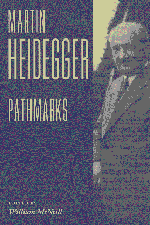
Pathmarks
-
- Published online:
- 05 November 2014
- Print publication:
- 28 April 1998
-
- Book
- Export citation
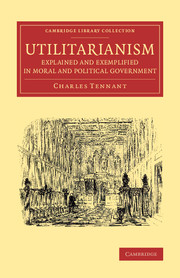
Utilitarianism Explained and Exemplified in Moral and Political Government
-
- Published online:
- 05 November 2014
- Print publication:
- 20 March 2014
- First published in:
- 1864
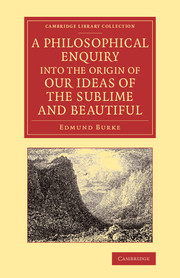
A Philosophical Enquiry into the Origin of our Ideas of the Sublime and Beautiful
- With an Introductory Discourse Concerning Taste; and Several Other Additions
-
- Published online:
- 05 October 2014
- Print publication:
- 02 January 2014
Contents
-
- Book:
- Utilitarianism
- Published online:
- 05 June 2015
- Print publication:
- 21 August 2014, pp vii-viii
-
- Chapter
- Export citation
CHAPTER IV - OF WHAT SORT OF PROOF THE PRINCIPLE OF UTILITY IS SUSCEPTIBLE
-
- Book:
- Utilitarianism
- Published online:
- 05 June 2015
- Print publication:
- 21 August 2014, pp 52-61
-
- Chapter
- Export citation
CHAPTER III - OF THE ULTIMATE SANCTION OF THE PRINCIPLE OF UTILITY
-
- Book:
- Utilitarianism
- Published online:
- 05 June 2015
- Print publication:
- 21 August 2014, pp 39-51
-
- Chapter
- Export citation
Frontmatter
-
- Book:
- Utilitarianism
- Published online:
- 05 June 2015
- Print publication:
- 21 August 2014, pp i-vi
-
- Chapter
- Export citation
CHAPTER V - OF THE CONNEXION BETWEEN JUSTICE AND UTILITY
-
- Book:
- Utilitarianism
- Published online:
- 05 June 2015
- Print publication:
- 21 August 2014, pp 62-96
-
- Chapter
- Export citation
CHAPTER II - WHAT UTILITARIANISM IS
-
- Book:
- Utilitarianism
- Published online:
- 05 June 2015
- Print publication:
- 21 August 2014, pp 8-38
-
- Chapter
- Export citation
CHAPTER I - GENERAL REMARKS
-
- Book:
- Utilitarianism
- Published online:
- 05 June 2015
- Print publication:
- 21 August 2014, pp 1-7
-
- Chapter
- Export citation
X - Queries to the Opticks [1721]
-
- Book:
- Newton: Philosophical Writings
- Published online:
- 05 August 2014
- Print publication:
- 14 August 2014, pp 169-188
-
- Chapter
- Export citation
Frontmatter
-
- Book:
- Newton: Philosophical Writings
- Published online:
- 05 August 2014
- Print publication:
- 14 August 2014, pp i-iv
-
- Chapter
- Export citation
