Refine search
Actions for selected content:
28358 results in Astrophysics
Search for gravitational-wave transients associated with magnetar bursts during the third Advanced LIGO and Advanced Virgo observing run
-
- Journal:
- Proceedings of the International Astronomical Union / Volume 16 / Issue S363 / June 2020
- Published online by Cambridge University Press:
- 27 February 2023, pp. 187-190
- Print publication:
- June 2020
-
- Article
-
- You have access
- Export citation
Exploring the neutron star zoo: An observational review
-
- Journal:
- Proceedings of the International Astronomical Union / Volume 16 / Issue S363 / June 2020
- Published online by Cambridge University Press:
- 27 February 2023, pp. 51-60
- Print publication:
- June 2020
-
- Article
-
- You have access
- Export citation
Absorption spectra from galactic wind models: a framework to link PLUTO simulations to TRIDENT
-
- Journal:
- Proceedings of the International Astronomical Union / Volume 16 / Issue S362 / June 2020
- Published online by Cambridge University Press:
- 20 January 2023, pp. 56-63
- Print publication:
- June 2020
-
- Article
-
- You have access
- Open access
- Export citation
A New Code for Relativistic Hydrodynamics and its Application to FR II Radio Jets
-
- Journal:
- Proceedings of the International Astronomical Union / Volume 16 / Issue S362 / June 2020
- Published online by Cambridge University Press:
- 20 January 2023, pp. 87-93
- Print publication:
- June 2020
-
- Article
-
- You have access
- Export citation
Thermal atmospheric escape of close-in exoplanets
-
- Journal:
- Proceedings of the International Astronomical Union / Volume 16 / Issue S362 / June 2020
- Published online by Cambridge University Press:
- 20 January 2023, pp. 173-174
- Print publication:
- June 2020
-
- Article
-
- You have access
- Export citation
-
In this work we applied the previously developed self-consistent 1D model of hydrogen-helium atmosphere with suprathermal electrons to close-in hot neptune GJ 436 b. The obtained height profile of density shows the two-scale structure of the planetary atmosphere. The mass-loss rate is found to be about
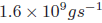 .
.
 .
.Magnetic field dissipation in nucleonic neutron star cores
-
- Journal:
- Proceedings of the International Astronomical Union / Volume 16 / Issue S363 / June 2020
- Published online by Cambridge University Press:
- 27 February 2023, pp. 347-349
- Print publication:
- June 2020
-
- Article
-
- You have access
- Export citation
HARM3D+NUC: GRMHD, nuclear tables and neutrino leakage
-
- Journal:
- Proceedings of the International Astronomical Union / Volume 16 / Issue S363 / June 2020
- Published online by Cambridge University Press:
- 27 February 2023, pp. 228-232
- Print publication:
- June 2020
-
- Article
-
- You have access
- Export citation
IAU volume 16 issue 362 Cover and Front matter
-
- Journal:
- Proceedings of the International Astronomical Union / Volume 16 / Issue S362 / June 2020
- Published online by Cambridge University Press:
- 20 January 2023, pp. f1-f14
- Print publication:
- June 2020
-
- Article
-
- You have access
- Export citation
Rates and environments of neutron star binaries
-
- Journal:
- Proceedings of the International Astronomical Union / Volume 16 / Issue S363 / June 2020
- Published online by Cambridge University Press:
- 27 February 2023, pp. 33-42
- Print publication:
- June 2020
-
- Article
-
- You have access
- Export citation
Stellar activity effects on the atmospheric escape of hot Jupiters
-
- Journal:
- Proceedings of the International Astronomical Union / Volume 16 / Issue S362 / June 2020
- Published online by Cambridge University Press:
- 20 January 2023, pp. 158-163
- Print publication:
- June 2020
-
- Article
-
- You have access
- Open access
- Export citation
The GLEAM 4-Jy (G4Jy) Sample: I. Definition and the catalogue
- Part of
-
- Journal:
- Publications of the Astronomical Society of Australia / Volume 37 / 2020
- Published online by Cambridge University Press:
- 01 June 2020, e018
-
- Article
-
- You have access
- HTML
- Export citation
-
The Murchison Widefield Array (MWA) has observed the entire southern sky (Declination, $\delta< 30^{\circ}$) at low radio frequencies, over the range 72–231MHz. These observations constitute the GaLactic and Extragalactic All-sky MWA (GLEAM) Survey, and we use the extragalactic catalogue (EGC) (Galactic latitude, $|b| >10^{\circ}$) to define the GLEAM 4-Jy (G4Jy) Sample. This is a complete sample of the ‘brightest’ radio sources ( $S_{\textrm{151\,MHz}}>4\,\text{Jy}$), the majority of which are active galactic nuclei with powerful radio jets. Crucially, low-frequency observations allow the selection of such sources in an orientation-independent way (i.e. minimising the bias caused by Doppler boosting, inherent in high-frequency surveys). We then use higher-resolution radio images, and information at other wavelengths, to morphologically classify the brightest components in GLEAM. We also conduct cross-checks against the literature and perform internal matching, in order to improve sample completeness (which is estimated to be $>95.5$%). This results in a catalogue of 1863 sources, making the G4Jy Sample over 10 times larger than that of the revised Third Cambridge Catalogue of Radio Sources (3CRR; $S_{\textrm{178\,MHz}}>10.9\,\text{Jy}$). Of these G4Jy sources, 78 are resolved by the MWA (Phase-I) synthesised beam ( $\sim2$ arcmin at 200MHz), and we label 67% of the sample as ‘single’, 26% as ‘double’, 4% as ‘triple’, and 3% as having ‘complex’ morphology at $\sim1\,\text{GHz}$ (45 arcsec resolution). We characterise the spectral behaviour of these objects in the radio and find that the median spectral index is $\alpha=-0.740 \pm 0.012$ between 151 and 843MHz, and $\alpha=-0.786 \pm 0.006$ between 151MHz and 1400MHz (assuming a power-law description, $S_{\nu} \propto \nu^{\alpha}$), compared to $\alpha=-0.829 \pm 0.006$ within the GLEAM band. Alongside this, our value-added catalogue provides mid-infrared source associations (subject to 6” resolution at 3.4 $\mu$m) for the radio emission, as identified through visual inspection and thorough checks against the literature. As such, the G4Jy Sample can be used as a reliable training set for cross-identification via machine-learning algorithms. We also estimate the angular size of the sources, based on their associated components at $\sim1\,\text{GHz}$, and perform a flux density comparison for 67 G4Jy sources that overlap with 3CRR. Analysis of multi-wavelength data, and spectral curvature between 72MHz and 20GHz, will be presented in subsequent papers, and details for accessing all G4Jy overlays are provided at https://github.com/svw26/G4Jy.


Exploring Populations of Low Mass Merging Compact Binary Systems with Single Einstein Telescope
-
- Journal:
- Proceedings of the International Astronomical Union / Volume 16 / Issue S363 / June 2020
- Published online by Cambridge University Press:
- 27 February 2023, pp. 363-364
- Print publication:
- June 2020
-
- Article
-
- You have access
- Open access
- Export citation
Hydrodynamical Simulations of Misaligned Accretion Discs in Binary Systems: Companions tear discs
-
- Journal:
- Proceedings of the International Astronomical Union / Volume 16 / Issue S362 / June 2020
- Published online by Cambridge University Press:
- 20 January 2023, pp. 177-183
- Print publication:
- June 2020
-
- Article
-
- You have access
- Open access
- Export citation
Two-dimensional MHD model of gas flow dynamics near a young star with a jet and a protoplanetary disk
-
- Journal:
- Proceedings of the International Astronomical Union / Volume 16 / Issue S362 / June 2020
- Published online by Cambridge University Press:
- 20 January 2023, pp. 279-281
- Print publication:
- June 2020
-
- Article
-
- You have access
- Export citation
The non-trivial magnetic configuration in neutron stars
-
- Journal:
- Proceedings of the International Astronomical Union / Volume 16 / Issue S363 / June 2020
- Published online by Cambridge University Press:
- 27 February 2023, pp. 173-186
- Print publication:
- June 2020
-
- Article
-
- You have access
- Open access
- Export citation
X-ray Polarization at the Crossroads
-
- Journal:
- Proceedings of the International Astronomical Union / Volume 16 / Issue S363 / June 2020
- Published online by Cambridge University Press:
- 27 February 2023, pp. 80-91
- Print publication:
- June 2020
-
- Article
-
- You have access
- Open access
- Export citation
IAU volume 16 issue 362 Cover and Back matter
-
- Journal:
- Proceedings of the International Astronomical Union / Volume 16 / Issue S362 / June 2020
- Published online by Cambridge University Press:
- 20 January 2023, pp. b1-b4
- Print publication:
- June 2020
-
- Article
-
- You have access
- Export citation
Probing Magnetars Using Spectral Lines with Future Telescopes
-
- Journal:
- Proceedings of the International Astronomical Union / Volume 16 / Issue S363 / June 2020
- Published online by Cambridge University Press:
- 27 February 2023, pp. 318-321
- Print publication:
- June 2020
-
- Article
-
- You have access
- Open access
- Export citation
Modelling the deformability of magnetized neutron stars in the light of future continuous gravitational waves detection
-
- Journal:
- Proceedings of the International Astronomical Union / Volume 16 / Issue S363 / June 2020
- Published online by Cambridge University Press:
- 27 February 2023, pp. 199-202
- Print publication:
- June 2020
-
- Article
-
- You have access
- Open access
- Export citation
Multiparticle collision simulations of dense stellar systems and plasmas
-
- Journal:
- Proceedings of the International Astronomical Union / Volume 16 / Issue S362 / June 2020
- Published online by Cambridge University Press:
- 20 January 2023, pp. 134-140
- Print publication:
- June 2020
-
- Article
-
- You have access
- Open access
- Export citation
