To save content items to your account,
please confirm that you agree to abide by our usage policies.
If this is the first time you use this feature, you will be asked to authorise Cambridge Core to connect with your account.
Find out more about saving content to .
To save content items to your Kindle, first ensure no-reply@cambridge.org
is added to your Approved Personal Document E-mail List under your Personal Document Settings
on the Manage Your Content and Devices page of your Amazon account. Then enter the ‘name’ part
of your Kindle email address below.
Find out more about saving to your Kindle.
Note you can select to save to either the @free.kindle.com or @kindle.com variations.
‘@free.kindle.com’ emails are free but can only be saved to your device when it is connected to wi-fi.
‘@kindle.com’ emails can be delivered even when you are not connected to wi-fi, but note that service fees apply.
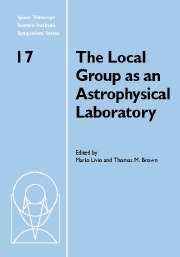
The Local Group of galaxies consists of the Milky Way and all of its neighbours. The proximity of these galaxies allows for detailed studies of the processes that have led to their formation, structures, and evolution. In particular, studies of the Local Group can test predictions of structure formation that are based on dark energy and cold dark matter. This book presents a collection of review papers, written by world experts, on some of the most important aspects of Local Group Astrophysics. It is an invaluable resource for both professional researchers and graduate students in this fascinating area of research.
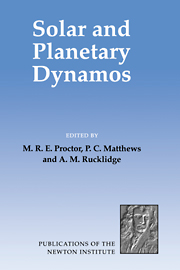
Dynamo theory is the study of how large-scale magnetic fields can arise in bodies such as the Earth, Sun and stars, and it brings together researchers in such diverse subjects as geophysics, astronomy and nuclear reactor technology. In this book are papers on the theory of dynamos, delivered at the Isaac Newton Institute for Mathematical Sciences in Cambridge in September 1992, and these have been carefully brought together to form a unified presentation. Topics covered include: modelling of solar magnetic field generation, theoretical studies of the galaxies, and papers on 'fast dynamos', study of magnetic field regeneration in fluid of very high electrical conductivity. This volume represents a comprehensive record of research into the theory of dynamos.
The classification of galaxies according to their shape is a fundamental tool in astronomy. It is through classification schemes that astronomers build a deeper understanding of how galaxies form and evolve. This long-awaited book by one of the pioneers of the field provides a concise and up-to-date summary of current ideas about galaxy morphology and classification. This is the first book dedicated entirely to the shapes and classifications of galaxies. It introduces the most widely used schemes, explains how they have developed and what they can tell us about galaxies. We are also shown how very distant galaxies (seen with the Hubble Space Telescope, for instance) often defy standard classification schemes. Finally, we look at recent work on the use of computers to automatically classify digital images of galaxies. This topical volume provides graduate students and researchers with a unique and indispensable reference on the classification and shape of galaxies.
The purpose of this chapter is to lay out the basic physical foundations of cosmicray transport in space. We will discuss the basic physics of the cosmic-ray transport equation, first written down by Parker (1965). This equation is remarkably robust and is widely used to study cosmic-ray transport in the solar system and the interstellar medium. The chapter starts with a general background on cosmic rays in the solar system. The transport equation itself is not formally derived, but the basic physical processes that lead to the various terms in this equation are discussed in detail. We will also address what assumptions are made about this equation and under what conditions it is applicable. At the end of this chapter, we provide a few applications related to specific heliophysics phenomena, such as the propagation of solar-energetic particles in the inner heliosphere, the modulation of galactic cosmic rays, and the drift motions of cosmic rays in the solar system.
Cosmic rays in the solar system
A fundamental and outstanding problem in astrophysics concerns the origin of high-energy charged particles in space. This problem has been known since the early 1900s when Victor Hess performed his famous electroscope experiments on balloon flights to demonstrate that the excess atmospheric radiation increased with increasing distance from the Earth's surface. This led to the discovery of cosmic rays. In the 1920s Chapman and Ferraro considered the effect on Earth of localized and intermittent streams of corpuscular radiation. It was later determined that the solar corpuscular radiation had two components: one that was steady, now known as the solar wind, and the other intermittent, that we now know to be solar energetic particles.
Sunspots, the white light manifestation of solar active regions, were first observed through telescopes in 1610 by Galileo and Harriot, but it was not until nearly 250 years later that the flare phenomenon was first observed by Carrington (1859), who noted a white light “conflagration” in a sunspot group (see Fig. 2.2) and speculated (correctly) that it originated above the sunspot group. It was not for almost another century – during the post-war years of the late 1940s – that solar observations strayed outside the confines of the visible spectrum into invisible wavelengths both longward (radio) and shortward (X-rays) of visible light. The launch of the Sputnik 1 satellite in late 1957 ushered in the space age which, for the first time, made vast portions of the electromagnetic spectrum accessible for sustained study. Over the last half-century, extraordinary progress has been made in developing successive generations of both ground- and space-based instrumentation to characterize and to understand radiative signatures of both quiescent and energetic processes on the Sun and in the heliosphere, although gaps remain. In this chapter we discuss radiation from energetic particles, with an emphasis on the radio, hard X-ray (HXR), and λ-ray wavelength bands. For it is in these bands that radiative signatures of the most energetic particles, those accelerated by violent processes on the Sun and in the heliosphere, are detected. In other words, the focus is on the extreme frontiers of the electromagnetic spectrum, on the extreme departures from equilibrium conditions, and on the extreme energies involved.
Heliophysical particles: universal processes and problems
At the time the very first satellites were launched half a century ago, the space environment was portrayed by mainstream media as the science fiction home where Flash Gordon fought evil aliens. The very real threat of Earth's radiation belts was not even imagined in either the fantasy or science worlds so no consideration was given to how the very energetic particles of the belts, traveling near the speed of light and capable of penetrating solid material, might affect instrumentation. Yet it was the diminished performance of the Geiger counter designed by James Van Allen (Van Allen et al., 1958; see also Section 3.1), that led to the eventual discovery of the belts. Van Allen speculated that the unusually low flux measurements returned by his experiment were actually a sign that the instrument had saturated, overwhelmed by a previously unknown and very large population of energetic particles.
The conjecture was confirmed by the dozens of satellites launched to probe Earth's magnetosphere providing a qualitative depiction and understanding of the radiation belts. (For a list of satellites with radiation belt particle data visit the Virtual Radiation Belt Observatory on line.) The belts consist of protons and electrons trapped in Earth's magnetic field forming torus-shaped regions extending from ˜1.5 to ˜10 Earth radii (RE) (see Fig. 11.1). The protons form only a single belt. The electrons form two belts separated at ˜2.5 RE by a minimum flux region known as the slot (Lyons and Thorne, 1973).
A solar flare is narrowly defined as a sudden atmospheric brightening, traditionally in chromospheric Hα emission but more practically now as a coronal soft X-ray source. The physical processes resulting in a flare include restructurings of the magnetic field, non-thermal particle acceleration, and plasma flows. Flares have intimate relationships with other observable phenomena such as filament eruptions, jets, and coronal mass ejections (CMEs). Chapter 6 discusses our current theoretical understanding, and in this chapter we review the observational aspects of these phenomena.
The phenomena associated with the term “solar flare” dominate our thinking about energy conversion from magnetic storage to other forms in the solar corona on time scales below a few minutes. The distinction between a gas dominated by hydrodynamic forces and a magnetized plasma becomes obvious in the solar atmosphere and in the solar wind. At first glance we do not need plasma physics to explain the basic (interior) structure of a star; hydrodyamics, nuclear physics, and the theory of radiative transfer seem to do quite well. Nevertheless, this apparently simple medium drives the currents that result in the violent and beautiful phenomena we see so readily above its surface (see Vol. III). We need plasma physics to describe them.
Understanding the flaring solar atmosphere (photosphere, chromosphere, and corona; see Chapter 8 in Vol. I for descriptions of these regions), since it involves electrodynamics, requires a strong overlap with magnetospheric physics as well as with astronomical techniques useful for studying stellar atmospheres.
The purpose of this chapter is to provide space scientists with detailed knowledge of how the environment of space interacts with, and degrades, spacecraft systems. In particular, the goal is to highlight how these interactions are tied to the parameters that describe the environment in order to show how uncertainties in knowledge of the environment can lead to uncertainties in the prediction of the effects themselves. This in turn leads the designer to over-engineer spacecraft systems in order to ensure that the various effects are properly mitigated throughout the life of a spacecraft. As a result, improvements in models of the space environment could lead to better predictions of these space environmental effects.
The field of space environment effects is split into five separate categories depending on the nature of the environment itself. Two of these categories are directly related to the energetic particle environment: plasma and radiation. Two environments are indirectly dependent on solar conditions: neutral and micrometeroid/orbital debris. The final environment is essentially independent: vacuum. The vacuum, neutral, and micrometeoroid/orbital debris categories will be examined briefly for completeness. The plasma and radiation effects will be examined in more detail. In particular, it will be seen how keV energy particles lead to spacecraft charging; MeV energy particles lead to total-dose radiation effects; while GeV energy particles lead to single-event effects in electronic devices.
Overview of space environment effects
The field of space environment effects is relatively new, having not been an area of concern before the first spacecraft launches some 50 years ago (Tribble, 2003; Hastings and Garrett; 1996).
Planetary magnetospheres, by their very nature, provide plenty of possibilities for the development of energy conversion processes. Fundamentally a planetary magnetosphere (see e.g. Vol. I, Chapter 10) is simply the interface between two distinct regions: on the outside, the solar wind; on the inside, the ionosphere, atmosphere, and surface of the planet. The quite different motions of matter within the two regions, together with the role of the magnetic field in mediating the interaction between them, lead (almost unavoidably, it seems) to configurations of changing energy; the changes occur on a variety of time scales, ranging from quasistatic to explosive.
In keeping with the general approach adopted in this series of textbooks, this chapter aims to present energy conversion in planetary magnetospheres in general terms as part of a sub-branch of physics, namely the discipline of magnetospheric physics (which in turn is a sub-branch of heliophysics). Many of the concepts and basic results, however, originate from specific observations at and near Earth; accordingly, the chapter begins (Section 10.2) with a phenomenological overview of geophysical processes related to space storms and radiation. The physical description of energy conversion processes is then developed (Sections 10.3, 10.4, 10.5) and applied to interpret the phenomenology of energy-conversion events, both at Earth (Section 10.6) and at other planets (Section 10.7). The chapter concludes (Section 10.8) with a sketch of a possibly universal process.
The opening chapter of Volume I, Heliophysics: Plasma Physics of the Local Cosmos, gave an overview of heliophysics that ranged from the deep interior of the Sun to the most distant reaches of the heliopause beyond the orbit of Pluto. The bottom line is that we are talking about a system, knit together by particles and fields, that displays complex behavior at scales from less than seconds to more than centuries, and meters to terameters. The heliosphere may thus appear to be an extremely enriched physical system that contains more than enough phenomenology to keep us focused on an ever-increasing supply of intriguing questions. That is why we need to find patterns in the form of universal processes.
Pure research leads to an increase in our understanding of heliophysics for its own sake. At the same time, this understanding improves our predictive abilities, which help us mitigate financial, technological, and societal impacts. Conversely, as we strive to improve our technological operations in the space weather environment, these help to advance our theoretical understanding of radiation effects and other essential physical phenomena because they drive the modeling process to be more accurate and relevant to engineering issues (see Chapter 13). Heliophysics research is one of the few examples in astronomy where such a direct mutually reinforcing and stimulating relationship is found.
In this chapter, I explore how the human experience of heliophysics has provided certain kinds of interesting boundary conditions to the theoretical modeling of heliophysical phenomenology.
This chapter describes several types of shocks, focusing on the ones that prevail in the heliosphere. The chapter addresses why shocks happen, describes the Rankine–Hugoniot jump conditions, reviews the classification of shocks, discusses contact and tangential discontinuities, and closes with a discussion of the physical processes yet to be explored for shocks. The sections contain specific examples such as coronal shocks, shocks driven by coronal mass ejections, planetary shocks, and the termination shock and heliopause. For further reading, we refer to Burlaga (1995), Kallenrode (2004), Gurnett and Bhattacharjee (2005), Goedbloed and Poedts (2004), Kulsrud (2005), and Opher (2009), upon whose work much of this chapter is based.
Introduction
Shock waves are an important manifestation of solar activity. They play an important role in space weather because they can accelerate particles to high energies, creating solar energetic particle (SEP) events, and produce storms at Earth (Gopalswamy et al., 2001). They also produce radio emission at various distances from the Sun, which allows us to track shock propagation throughout the corona and heliosphere.
Near the Sun, shocks are believed to be mainly driven by solar disturbances such as coronal mass ejections (CMEs). The CMEs and the SEP events associated with them are of particular importance for space weather because they endanger human life in outer space and pose major hazards for spacecraft. High-energy solar protons (> 100 MeV) can be accelerated within a short period of time (˜1 h) after the initiation of CMEs, which makes them difficult to predict, and therefore they pose a serious concern for the design and operation of both manned and unmanned space missions.
Over the past few centuries, our awareness of the couplings between the Sun's variability and the Earth's environment, and perhaps even its climate, has been advancing at an ever increasing rate. The Sun is a magnetically variable star and for planets with intrinsic magnetic fields, planets with atmospheres, or planets like Earth with both, there are profound consequences and impacts. Today, the successful increase in knowledge of the workings of the Sun's magnetic activity, the recognition of the many physical processes that couple the realm of the Sun to our galaxy, and the insights into the interaction of the solar wind and radiation with the Earth's magnetic field, atmosphere and climate system have tended to differentiate and isolate the solar heliospheric and geo-space sub-disciplines of the physics of the local cosmos. In 2001, the NASA Living With a Star (LWS) program was initiated to reverse that trend.
The recognition that there are many connections within the Sun–Earth systems approach has led to the development of an integrated strategic mission plan and a comprehensive research program encompassing all branches of solar, heliospheric, and space physics and aeronomy. In doing so, we have developed an interdisciplinary community to address this systems-science. This has raised awareness and appreciation of the research priorities and challenges among the LWS scientists and has led to observational and modeling capabilities that span traditional discipline boundaries. The successful initial integration of the LWS sub-disciplines, under the newly coined term “heliophysics”, needed to be expanded into the early education of scientists.
Ionizing radiation is radiation that has enough energy to cause ionization in matter, and when it passes through the tissues of the body it has sufficient energy to damage DNA (Hall, 1994). Examples are α-particles (helium nuclei), β-particles (electrons or positrons), γ-rays, X-rays and neutrons. While there are many benefits to the use of X-rays, radioisotopes, and other radioactive materials in industry, research, and power generation, their use entails exposure of personnel from normal use as well as accidents. Though some small amounts of radioisotopes are used in manned space missions for instrument calibration and research, the vast majority of crew exposures are due to the environment in which they work.
Whether an activity is controlled by the Nuclear Regulatory Commission (NRC), the Department of Energy (DOE), or the Occupational Safety and Health Administration (OSHA), an operational radiation protection program is required so that doses to personnel and members of the public are monitored and documented in order that exposures may be kept at a minimum. NASA's program includes active and passive personnel dosimetry, vehicle shielding design requirements, as well as real-time active monitoring of the heliosphere to watch for changes in the environment that would be indicative of an impending solar particle event (SPE).
Units
When considering the amount of radiation absorbed by living tissue, the standard unit known as the gray (Gy) is employed, in which 1 Gy equals 1 J of radiation energy absorbed per kilogram of tissue (the older unit of 1 rad = 0.01 Gy).
In this chapter, we review the basic principles and characteristics of shock acceleration. After a brief description of the pertinent kinetic scales at shocks and a discussion of heating versus acceleration, we outline the different mechanisms that contribute to accelerating charged particles at shocks. The main emphasis throughout this chapter is on ions, and more importantly, on protons. Acceleration of other ion species or electrons is mentioned in passing and when contrasting interesting differences. Also, we restrict the discussion to the collisionless and non-relativistic shocks that occur in the heliosphere. Finally, we describe particle acceleration at interplanetary shocks and at the Earth's bow shock in greater detail, and discuss the differences between these two. Throughout the chapter, fundamental, underlying principles, historic results, and current research interests are brought together as much as possible.
Introduction
More than half a century ago, energetic particle events detected at Earth with energies into the GeV range were for the first time unambiguously associated with activity in the solar corona. While this link was established based on concomitant solar flare observations, in the 1970s and early 1980s evidence accumulated that so-called “gradual” solar energetic particle (SEP) events are actually caused by acceleration at coronal and interplanetary (IP) shocks (Sarris and Van Allen, 1974; Cliver et al., 1982; Mason et al., 1984). The 1970s and early 1980s also saw a rapid development in the theory of charged particle acceleration at shocks, and the realization that virtually all heliospheric shocks carry with them energetic particle populations.