To save content items to your account,
please confirm that you agree to abide by our usage policies.
If this is the first time you use this feature, you will be asked to authorise Cambridge Core to connect with your account.
Find out more about saving content to .
To save content items to your Kindle, first ensure no-reply@cambridge.org
is added to your Approved Personal Document E-mail List under your Personal Document Settings
on the Manage Your Content and Devices page of your Amazon account. Then enter the ‘name’ part
of your Kindle email address below.
Find out more about saving to your Kindle.
Note you can select to save to either the @free.kindle.com or @kindle.com variations.
‘@free.kindle.com’ emails are free but can only be saved to your device when it is connected to wi-fi.
‘@kindle.com’ emails can be delivered even when you are not connected to wi-fi, but note that service fees apply.
The third chapter is titled ‘Rebirth in the Bhagavad-gītā’; the topic of rebirth occupies a major place in the Gītā’s philosophy and very clearly represents the second tier or perhaps storey of the Three-Storey-House structure. It is so important that it is not possible to understand the philosophy of the Gītā without understanding this fundamental idea. The idea of rebirth, based upon the existence of the soul as the ultimate subjective principle, enables the turning of karma into karma-yoga, and it enables examining svabhāva or human nature from an external point of view, or ‘from above’, so to speak. It places dharma within the ethical ladder, and it underlies the yoga system. It is necessary for understanding the Gītā’s Upaniṣadic jñāna or liberating knowledge, and it is also fundamental for understanding the Gītā’s theme of bhakti, as without it, bhakti turns into mere emotionalism. This chapter aims at placing this central idea at the centre or heart of the Gītā’s philosophy. As such, this chapter is divided into four sections, which are ‘Looking at Saṃsāra “from Above”’, ‘Ontological Aspects: – The Nature of the Soul’, ‘Transmigration and Rebirth’ and finally, ‘The Detached Yogic View; Body–Self Relations’.
The topic of the sixth chapter is ‘Jñāna and the Upaniṣadic Nature of the Bhagavad-gītā’; the Gītā is one of the triple foundations of Vedānta, known as the prasthānatrayī, along with the Brahma Sūtra and the Upaniṣads. This chapter argues that as opposed to the Upaniṣads, the unique structure of the Bhagavad-gitā allows a categorization and characterization of this knowledge in the generally accepted philosophical terms of ethics, ontology and epistemology. Moreover, this chapter argues that the Gītā’s concept of jñāna or knowledge is systematic and unified, but as opposed to the generally accepted philosophical practice which makes linear arguments that start with premises and develop into larger conclusions, this type of knowledge is not linear but is hierarchical in that it leads to higher and higher states of being and consciousness, which could be considered mystical. Moreover, the Gītā has its own epistemic system according to which it differentiates philosophical knowledge based upon linear arguments from mystical knowledge, which is considered in different terms.
While many studies of Islamic law have centered on the development of legal theory and substantive law, especially in their formative period of development, Mariam Sheibani instead argues that the rich legal history of the post-formative period and the Islamic legal philosophy that developed in it have been comparatively neglected. This innovative study traces the ethical turn in medieval Islamic legal philosophy through the pioneering work of the prominent jurist and legal philosopher Izz al-Dīn Ibn ʿAbd al-Salām (d. 660/1262). Sheibani demonstrates how Ibn ʿAbd al-Salām advanced a comprehensive analysis of the law's purposive and coherent rationality, articulated in a distinctive genre, with direct bearing on legal doctrine and social praxis. Ibn ʿAbd al-Salām expanded on previous theological and legal reasoning, furthering two ideas developed by Khurasani Shāfiʿīs: maṣlaḥa (human benefit) and qawāʿid (legal maxims). He also sought to embody and deploy the teachings of his legal philosophy for socio-religious reform in Ayyubid Damascus and Cairo, breaking with the dominant formalism of legal practice. The new forms of legal reasoning and writing that Ibn ʿAbd al-Salām developed would influence subsequent jurists from diverse legal schools and across regional traditions until the present day.
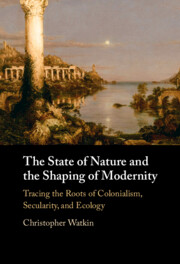
The state of nature is a powerful idea at the heart of the fragmented and sometimes conflicting stories the modern West tells about itself. It also makes sense of foundational Western commitments to equality and accumulation, freedom and property, universality and the individual. By exploring the social and cultural imaginaries that emerge from the distinct and often contradictory accounts of the state of nature in the writing of Hobbes, Locke and Rousseau, The State of Nature and the Shaping of Modernity offers a fresh perspective on some of the most pressing debates of our time, showing how the state of nature idea provides a powerful lens through which to focus the complex forces shaping today's political and cultural landscape. It also explores how ideas about human nature and origins drive today's debates about colonialism, secularism, and the environment, and how they can shed new light on some of society's most heated debates.
In 1963, Martin Luther King, Jr. wrote Letter from Birmingham Jail in response to white clergy members who had urged him to cease demonstrating against segregation laws, follow the standards of law and order, and pursue change through official governmental channels. These remonstrations mirror arguments invoked to delegitimize dissent and provide support for legal but immoral governmental policies such as American slavery, Nazi atrocities, and apartheid. At the heart of religious justifications for such arguments is Romans 13:1–7, which endorses human government as God ordained but can be interpreted to require unqualified obedience to law. It is also the go to passage used by Christians to describe the role and authority of police officers in their law enforcement capacity. The way Romans 13 has often been interpreted and applied, however, is exegetically and theologically problematic. Most importantly, the passage is not describing the role of individual police officers as is often argued, but rather the operation of human government as an institution. This flawed starting point has led to a cascade of other interpretive errors, which include describing police officers as agents of God’s wrath and delegitimizing dissent against unjust laws. It also promotes some of the most pernicious features of American law enforcement, including the alienating idea of police as the thin blue line, the we-they mentality that demeans those being policed, the use of warrior to describe the policing role, the militarization of law enforcement, and the systemic racism that plagues U.S. policing. In this article, the author offers a more exegetically and theologically accurate reading of Romans 13, with very different implications for role of law enforcement, and gestures toward a much-needed Christian theology of policing.
This article invites readers to consider certain questions too rarely asked: What are we doing when we consider or fail to consider something or someone? What implications, especially theological implications, does our considering or failing to consider have for ethics as reflection on our moral lives? Finally, will considering our considering help us to become more considerate human beings? Three major figures from the Christian tradition—Bernard Lonergan, Bernard of Clairvaux (author of De Consideratione), and Thomas Aquinas—help us to answer these questions in ways that urge us to consider not only their own words and ideas, but also those of others, especially ourselves. As teachers, they also lead us to ask how consideration might become a more frequent focus of education, broadly understood. And in closing, the reader is asked to consider the possibility that everyone, in their serious questioning, or considering, is “theologizing” in a way.
The Origins of Scholasticism provides the first systematic account of the theological and philosophical ideas that were debated and developed by the scholars who flourished during the years immediately before and after the founding of the first official university at Paris. The period from 1150-1250 has traditionally been neglected in favor of the next century (1250-1350) which witnessed the rise of intellectual giants like Thomas Aquinas, Albert the Great, and John Duns Scotus, who famously popularized the major works of Aristotle. As this volume demonstrates, however, earlier scholastic thinkers laid the groundwork for the emergence of theology as a discipline with which such later thinkers actively engaged. Although they relied heavily on traditional theological sources, this volume highlights the extent to which they also made use of philosophy not only from the Greek but also the Arabic traditions in ways that defined the role it would play in theological contexts for generations to follow.