To save content items to your account,
please confirm that you agree to abide by our usage policies.
If this is the first time you use this feature, you will be asked to authorise Cambridge Core to connect with your account.
Find out more about saving content to .
To save content items to your Kindle, first ensure no-reply@cambridge.org
is added to your Approved Personal Document E-mail List under your Personal Document Settings
on the Manage Your Content and Devices page of your Amazon account. Then enter the ‘name’ part
of your Kindle email address below.
Find out more about saving to your Kindle.
Note you can select to save to either the @free.kindle.com or @kindle.com variations.
‘@free.kindle.com’ emails are free but can only be saved to your device when it is connected to wi-fi.
‘@kindle.com’ emails can be delivered even when you are not connected to wi-fi, but note that service fees apply.
This chapter looks at local politics in 1980s Manchester. With its history of radicalism, from Peterloo and the free trade movement to the Suffragettes, the city had long been a Labour stronghold. But in the 1980s a struggle broke out between the old guard and young pretenders. The Thatcher government was squeezing council budgets, and militant young leftists wanted to fight back. Councillors Pat Karney and Graham Stringer led the charge, but their focus on radical political gestures did little to win over voters facing high unemployment, and they were widely labelled the ‘loony left’. The Conservative victory in the 1987 general election prompted them to change tack. They decided that the only way Manchester could finance a better future was to compete for central government funding competitions, European grants and private investment. This ushered in a new entrepreneurial period for the city leadership.
Deporting Black Britons provides an ethnographic account of deportation from the UK to Jamaica. It traces the painful stories of four men who were deported after receiving criminal convictions in the UK. For each of the men, all of whom had moved to the UK as children, deportation was lived as exile – from parents, partners, children and friends – and the book offers portraits of survival and hardship in both the UK and Jamaica. Based on over four years of research, Deporting Black Britons describes the human consequences of deportation, while situating deportation stories within the broader context of policy, ideology, law and violence. It examines the relationship between racism, criminalisation and immigration control in contemporary Britain, suggesting new ways of thinking about race, borders and citizenship in these anti-immigrant times. Ultimately, the book argues that these stories of exile and banishment should orient us in the struggle against violent immigration controls, in the UK and elsewhere.
Art and culture are supposed to bring society together. Culture is bad for you challenges the received wisdom that culture is good for us. It does this by demonstrating who makes who and consumes culture are marked by significant inequalities and social divisions.The book combines the first large-scale study of social mobility into cultural and creative jobs, hundreds of interviews with creative workers, and a detailed analysis of secondary datasets. The book shows how unpaid work is endemic to the cultural occupations, excluding those without money and contacts. It explores unequal access to cultural education and demonstrates the importance of culture in childhood. The book looks at gender inequalities, analysing key moments when women leave cultural occupations, while men go on to senior roles. Culture is bad for you also theorises the mechanisms underpinning the long-term and long-standing class crisis in cultural occupations. In doing so it highlights the experiences of working-class origin women of colour as central to how we understand inequality.Addressing the intersections between social mobility, ethnicity, and gender, the book argues that the creative sector needs to change. At the moment cultural occupations strengthen social inequalities, rather than supporting social justice. It is only then that everyone in society will be able to say that culture is good for you.
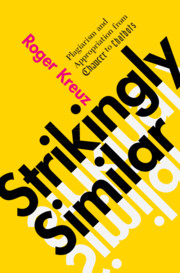
Plagiarism and appropriation are hot topics when they appear in the news. A politician copies a section of a speech, a section of music sounds familiar, the plot of a novel follows the same pattern as an older story, a piece of scientific research is attributed to the wrong researcher… The list is endless. Allegations and convictions of such incidents can easily ruin a career and inspire gossip. People report worrying about unconsciously appropriating someone else's work. But why do people plagiarise? How many claims of unconscious plagiarism are truthful? How is plagiarism detected, and what are the outcomes for the perpetrators and victims? Strikingly Similar uncovers the deeper psychology behind this controversial human behavior, as well as a cultural history that is far wider and more interesting than sensationalised news stories.
This book explains the direct link between the structure of the corporation and its limitless capacity for ecological destruction. It argues that we need to find the most effective means of ending the corporation’s death grip over us. The corporation is a problem, not merely because it devours natural resources, pollutes and accelerates the carbon economy. As this book argues, the constitutional structure of the corporation eradicates the possibility that we can put the protection of the planet before profit. A fight to get rid of the corporations that have brought us to this point may seem an impossible task at the moment, but it is necessary for our survival. It is hardly radical to suggest that if something is killing us, we should over-power it and make it stop. We need to kill the corporation before it kills us.
Senior men are in positions of power and can change the cultural sector. Much of the academic literature worried that they would not recognise inequality and would therefore be slow to act. This chapter demonstrates how senior men now understand inequality in cultural occupations, and are able to give nuanced analysis of gender, class, and racial inequalities. They are skilled at ‘inequality talk’.However, this understanding of inequality may not produce change. This is because senior men’s understanding of their own career successes do not take inequalities into account. Moreover, by embracing structural accounts of gender, class, and racial inequality in cultural occupations, senior men play down their ability, as individuals, to challenge and change systemic problems.Just as with the rest of the book’s analysis, shared experiences hide the impact of inequality, in this case the positive benefit for those who fit the somatic norm of cultural occupations.
Cultural occupations are marked by significant inequalities. This chapter uses data from the Office for National Statistics Labour Force Survey and the Longitudinal Study to analyse patterns and trends in the cultural workforce. It shows significant exclusions of women, people of colour, and working-class origin people from key cultural occupations. Overall the workforce is not representative of the rest of society.Moreover, using a range of other datasets, we see that the workforce in the cultural sector is unrepresentative in a range of other ways. The values and attitudes of the cultural workforce are very different to many other occupations in society. Their social networks reflect contacts with other people in cultural occupations, suggesting social closure of the workforce. Finally, our cultural workers recognise inequalities preventing certain social groups from succeeding. However, they are also committed to hard work and talent, meritocracy, to explaining success. Even where inequalities are recognised, this suggests cultural occupations may be slow to change.
Chapter 2 explores Jason’s story, a man who moved to the UK when he was 15 years old, and then spent nearly 15 years homeless on the streets of London before being deported to Jamaica. Jason was unable to regularise his status, and he could not access benefits because he had ‘no recourse to public funds’, and thus his story reminds us that deportation begins long before anyone gets on a plane. As the chapter shows, ‘illegal immigrants’ like Jason are invoked to justify austerity, but they also face the most extreme consequences of ‘neoliberal statecraft’ (i.e. abandonment and coercion). The chapter describes Jason’s experiences of illegality, destitution and racist violence, arguing that race, class and immigration status were mutually constitutive in his life.
Chapter 6 examines how the friends and family of Jason, Ricardo, Chris and Denico made sense of deportation, how it affected them, and what their accounts reveal about immigration control, racism and citizenship in contemporary Britain. Their experiences, including witnessing deportation, reveal some of the hierarchies of both citizenship and non-citizenship in multi-status Britain. This chapter therefore attempts to think in new ways about racism, immigration control and citizenship from the perspective of differently situated family and friends. Ultimately, the chapter argues that racism in multi-status Britain is precisely about the production of hierarchies of (non-)citizenship. This offers a method for analysing what immigration controls do and how they are lived in societies structured by racism.
The conclusion summarises the key theme running through the book: the direct link between the structure of the corporation and its limitless capacity for destruction. It asserts that, if the argument developed in this book is even partly right, this means breaking open the organisation that gives material force to the social relations of capital: the corporation. We need to find the most effective means of ending the corporation’s death grip over us. The corporation is not a problem merely because it captures natural resources, pollutes and accelerates the carbon economy. As this book has argued, the corporation eradicates the possibility that we can put the protection of the planet before profit. A fight to get rid of the corporations that have brought us to this point may seem like an impossible task at the moment, but it is necessary for our survival. And it is hardly radical to suggest that if something is killing us, we should over-power it and make it stop. We need to kill the corporation before it kills us.
This article conceives of the prevalence of death occurring during the COVID-19 pandemic in older people’s care homes in the United Kingdom (UK) through the lens of necrocapitalism. There is significant evidence that pre-pandemic marketisation policies have structured endemic neglect in the sector, but these generalised failures are frequently not highlighted in the debates around the causes of COVID-19 deaths. The article seeks to specify the way caring has been re-fashioned through a specific form of necrotic privatisation, resting on degrading the intensity of caring, institutionalised via market-orientated regulation. COVID-19 fatalities in older people’s services are necrocapitalist as pre-existing the pandemic the sector was defined by forms of slow violence, exacerbated during the crisis. The de-regulation and cost-saving at the heart of commodified care denigrate older people’s existence, reorienting the value of care in terms of its potential to generate profit.
Cultural audiences are marked by significant inequalities. Almost every artform, aside from film, is attended by only a minority of the population. We see significant differences in levels of attendance and participation by class, gender, and race, with geography, age, and disability also influential in shaping the minority who are heavily engaged in formal culture. In contrast, everyday culture is much more popular.This division is part of how the very idea of culture is marked by inequality. Hierarchies and what ‘counts’ as culture for the purposes of surveys reflect long-standing struggles over what is, and what is not, given legitimacy.Hierarchy and inequality are clear in the intersectional analysis offered by the chapter. This show that even within the minority of the population who are highly engaged in culture, cultural occupations stand out. Our artistic, literary, media, and performance workers are by far the most committed to culture. This, again, reflects a distance between cultural occupations and the rest of society.Finally, the chapter shows how these inequalities are present irrespective of the type of data, whether ticketing or survey, used for the analysis.
Money matters. Chapter 6 analyses the role of economic resources, economic capital, in access to cultural jobs. It focuses on experiences of unpaid work. Unpaid work seems to be endemic to cultural occupations, both as a route to getting in and getting on.Part of the reason cultural workers are willing to put up with low and no pay for their labour are the joys and pleasures that come from cultural work. At the same time, the chapter shows how what seems to be a shared experience of cultural work is important to keeping low and no pay a type of norm for cultural occupations.In fact, the shared experience is stratified by age and by class. Class and age reveal very different experiences of unpaid work. Older creative workers were much more likely to have the creative freedom described by their younger, middle-class origin, colleagues.Middle-class origin younger people experienced positive aspects of unpaid work. For those with the right sorts of resources associated with middle-class origins, it gave them creative freedom, as well as routes into high-profile work. For those without such resources it was often just exploitation.