

Hostname: page-component-89b8bd64d-7zcd7 Total loading time: 0 Render date: 2026-05-09T00:01:19.320Z Has data issue: false hasContentIssue false

Limit theorems for continuous-state branching processes with immigration

Published online by Cambridge University Press:  06 June 2022

Clément Foucart*
Affiliation:
Université Sorbonne Paris Nord
Chunhua Ma*
Affiliation:
Nankai University
Linglong Yuan*
Affiliation:
University of Liverpool, Xi’an Jiaotong-Liverpool University
*
*Postal address: Laboratoire Analyse, Géométrie & Applications, UMR 7539, Institut Galilée, Université Sorbonne Paris Nord, Villetaneuse, 93430, France. Email address: foucart@math.univparis13.fr
**Postal address: School of Mathematical Sciences and LPMC, Nankai University, Tianjin, 300071, P. R. China. Email address: mach@nankai.edu.cn
***Postal address: Department of Mathematical Sciences, University of Liverpool, Liverpool, L69 7ZL, UK. Email address: yuanlinglongcn@gmail.com

Abstract

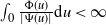
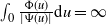
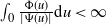
A continuous-state branching process with immigration having branching mechanism $\Psi$ and immigration mechanism $\Phi$, a CBI$(\Psi,\Phi)$ process for short, may have either of two different asymptotic regimes, depending on whether $\int_{0}\frac{\Phi(u)}{|\Psi(u)|}\textrm{d} u<\infty$ or $\int_{0}\frac{\Phi(u)}{|\Psi(u)|}\textrm{d} u=\infty$. When $\int_{0}\frac{\Phi(u)}{|\Psi(u)|}\textrm{d} u<\infty$, the CBI process has either a limit distribution or a growth rate dictated by the branching dynamics. When $\scriptstyle\int_{0}\tfrac{\Phi(u)}{|\Psi(u)|}\textrm{d} u=\infty$, immigration overwhelms branching dynamics. Asymptotics in the latter case are studied via a nonlinear time-dependent renormalization in law. Three regimes of weak convergence are exhibited. Processes with critical branching mechanisms subject to a regular variation assumption are studied. This article proves and extends results stated by M. Pinsky in ‘Limit theorems for continuous state branching processes with immigration’ (Bull. Amer. Math. Soc. 78, 1972).

Information

Type
Original Article
Copyright
© The Author(s), 2022. Published by Cambridge University Press on behalf of Applied Probability Trust

Access options

Get access to the full version of this content by using one of the access options below. (Log in options will check for institutional or personal access. Content may require purchase if you do not have access.)

Article purchase

Temporarily unavailable