




No CrossRef data available.
Article contents
The Bernoulli clock: probabilistic and combinatorial interpretations of the Bernoulli polynomials by circular convolution
Published online by Cambridge University Press: 16 November 2023
Abstract
The factorially normalized Bernoulli polynomials  $b_n(x) = B_n(x)/n!$ are known to be characterized by $b_0(x) = 1$ and $b_n(x)$ for $n \gt 0$ is the anti-derivative of $b_{n-1}(x)$ subject to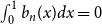 $\int _0^1 b_n(x) dx = 0$. We offer a related characterization: $b_1(x) = x - 1/2$ and $({-}1)^{n-1} b_n(x)$ for $n \gt 0$ is the $n$-fold circular convolution of $b_1(x)$ with itself. Equivalently, $1 - 2^n b_n(x)$ is the probability density at $x \in (0,1)$ of the fractional part of a sum of $n$ independent random variables, each with the beta $(1,2)$ probability density $2(1-x)$ at $x \in (0,1)$. This result has a novel combinatorial analog, the Bernoulli clock: mark the hours of a $2 n$ hour clock by a uniformly random permutation of the multiset $\{1,1, 2,2, \ldots, n,n\}$, meaning pick two different hours uniformly at random from the $2 n$ hours and mark them $1$, then pick two different hours uniformly at random from the remaining $2 n - 2$ hours and mark them $2$, and so on. Starting from hour $0 = 2n$, move clockwise to the first hour marked $1$, continue clockwise to the first hour marked $2$, and so on, continuing clockwise around the Bernoulli clock until the first of the two hours marked $n$ is encountered, at a random hour $I_n$ between $1$ and $2n$. We show that for each positive integer $n$, the event $( I_n = 1)$ has probability $(1 - 2^n b_n(0))/(2n)$, where $n! b_n(0) = B_n(0)$ is the $n$th Bernoulli number. For $ 1 \le k \le 2 n$, the difference $\delta _n(k)\,:\!=\, 1/(2n) -{\mathbb{P}}( I_n = k)$ is a polynomial function of $k$ with the surprising symmetry $\delta _n( 2 n + 1 - k) = ({-}1)^n \delta _n(k)$, which is a combinatorial analog of the well-known symmetry of Bernoulli polynomials $b_n(1-x) = ({-}1)^n b_n(x)$.
Information
- Type
- Paper
- Information
- Copyright
- © The Author(s), 2023. Published by Cambridge University Press
References
Agoh, T. (1982) On Fermat’s last theorem and the Bernoulli numbers. J. Number Theory 15(3) 414–422.CrossRefGoogle Scholar
Arakawa, T., Ibukiyama, T. and Kaneko, M. (2014) Bernoulli Numbers and Zeta Functions, Springer Monographs in Mathematics. Springer. With an appendix by Don Zagier.CrossRefGoogle Scholar
Artin, E. (1964) The Gamma Function, Athena Series: Selected Topics in Mathematics. Holt, Rinehart and Winston. Translated by Michael Butler.Google Scholar
Ayoub, R. (1974) Euler and the zeta function. Am. Math. Mon. 81(10) 1067–1086.CrossRefGoogle Scholar
Biane, P., Pitman, J. and Yor, M. (2001) Probability laws related to the Jacobi theta and Riemann zeta functions, and Brownian excursions. Am. Math. Soc. Bull. New Ser. 38(4) 435–465.CrossRefGoogle Scholar
Bourbaki, N. (1989) Lie Groups and Lie Algebras, Chapters 1–3, Elements of Mathematics (Berlin). Springer. Translated from the French, Reprint of the 1975 edition.Google Scholar
Buijs, U., Carrasquel-Vera, J. G. and Murillo, A. (2017) The gauge action, DG Lie algebras and identities for Bernoulli numbers. Forum Math. 29(2) 277–286.CrossRefGoogle Scholar
Clifton, A., Deb, B., Huang, Y., Spiro, S. and Yoo, S. (2023) Continuously increasing subsequences of random multiset permutations. Eur. J. Combin. 110 PaperNo.103708,20.CrossRefGoogle Scholar
Coelho, C. A. (2007) The wrapped gamma distribution and wrapped sums and linear combinations of independent gamma and Laplace distributions. J. Stat. Theory Pract. 1(1) 1–29.CrossRefGoogle Scholar
Costabile, F., Dell’Accio, F. and Gualtieri, M. I. (2006) A new approach to Bernoulli polynomials. Rend. Mat. Appl. (7) 26(1) 1–12.Google Scholar
De Serret, M. A. (1879) Oeuvres de Lagrange, Vol. 2. Gauthier-Villars, Imprimeur-Libraire.Google Scholar
Dilcher, K., Straub, A. and Vignat, C. (2019) Identities for Bernoulli polynomials related to multiple Tornheim zeta functions. J. Math. Anal. Appl. 476(2) 569–584.CrossRefGoogle Scholar
Durrett, R. (2019) Probability—Theory and Examples, Vol. 49 of Cambridge Series in Statistical and Probabilistic Mathematics. Cambridge University Press. Fifth edition of [MR1068527].CrossRefGoogle Scholar
Entringer, R. C. (1966) A combinatorial interpretation of the Euler and Bernoulli numbers. Nieuw Arch. Wisk (3) 14 241–246.Google Scholar
Erdélyi, A., Magnus, W., Oberhettinger, F. and Tricomi, F. G. (1953) Higher Transcendental Functions, Vol. I. McGraw-Hill Book Co., Inc. Based, in part, on notes left by Harry Bateman.Google Scholar
Graham, R. and Zang, N. (2008) Enumerating split-pair arrangements. J. Combin. Theory Ser. A 115(2) 293–303.CrossRefGoogle Scholar
Hirzebruch, F. and Schwarzenberger, L. E. (1995) Topological Methods in Algebraic Geometry, Classics in Mathematics. Springer. Translated from the German and Appendix One by R. L. E. Schwarzenberger, With a preface to the third English edition by the author and Schwarzenberger, Appendix Two by A. Borel, Reprint of the 1978 edition.Google Scholar
Horton, J. D. and Kurn, A. (1981) Counting sequences with complete increasing subsequences. Congr. Numer. 33 75–80.Google Scholar
Ikeda, N. and Taniguchi, S. (2010) The Itô-Nisio theorem, quadratic Wiener functionals, and 1-solitons. Stochast. Process. Appl. 120(5) 605–621.CrossRefGoogle Scholar
Ikeda, N. and Taniguchi, S. (2011) Euler polynomials, Bernoulli polynomials, and Lévy’s stochastic area formula. Bull. Sci. Math. 135(6-7) 684–694.CrossRefGoogle Scholar
Jordan, C. (1965) Calculus of Finite Differences, 3rd ed. Chelsea Publishing Co. Introduction by Harry C. Carver.Google Scholar
Lehmer, D. H. (1940) On the maxima and minima of Bernoulli polynomials. Am. Math. Mon. 47(8) 533–538.CrossRefGoogle Scholar
Lehmer, D. H. (1988) A new approach to Bernoulli polynomials. Am. Math. Mon. 95(10) 905–911.CrossRefGoogle Scholar
Lerch, M. (1887) Note sur la fonction ${\mathfrak{K}} \left ({w,x,s} \right ) = \sum \limits _{k = 0}^\infty{\frac{{e^{2k\pi ix}}}{{\left ({w + k} \right )^s }}}$
. Acta Math. 11 1–4.CrossRefGoogle Scholar
${\mathfrak{K}} \left ({w,x,s} \right ) = \sum \limits _{k = 0}^\infty{\frac{{e^{2k\pi ix}}}{{\left ({w + k} \right )^s }}}$
. Acta Math. 11 1–4.CrossRefGoogle Scholar ${\mathfrak{K}} \left ({w,x,s} \right ) = \sum \limits _{k = 0}^\infty{\frac{{e^{2k\pi ix}}}{{\left ({w + k} \right )^s }}}$
. Acta Math. 11 1–4.CrossRefGoogle Scholar
${\mathfrak{K}} \left ({w,x,s} \right ) = \sum \limits _{k = 0}^\infty{\frac{{e^{2k\pi ix}}}{{\left ({w + k} \right )^s }}}$
. Acta Math. 11 1–4.CrossRefGoogle ScholarLévy, P. (1951) Wiener’s random function, and other Laplacian random functions. In Proceedings of the Second Berkeley Symposium on Mathematical Statistics and Probability. University of California Press, pp. 171–187.Google Scholar
Magnus, W. (1954) On the exponential solution of differential equations for a linear operator. Commun. Pure Appl. Math. 7 649–673.CrossRefGoogle Scholar
Mazur, B. (2011) How can we construct abelian Galois extensions of basic number fields? Bull. Am. Math. Soc. (N.S.) 48(2) 155–209.CrossRefGoogle Scholar
Milnor, J. W. and Kervaire, M. A. (1960) Bernoulli numbers, homotopy groups, and a theorem of Rohlin. In Proc. Internat. Congress Math. 1958. Cambridge University Press, pp. 454–458.Google Scholar
Montgomery, H. L. (2014) Early Fourier Analysis, Vol. 22 of Pure and Applied Undergraduate Texts. American Mathematical Society.Google Scholar
Mordell, L. J. (1966) Expansion of a function in a series of Bernoulli polynomials, and some other polynomials. J. Math. Anal. Appl. 15(1) 132–140.CrossRefGoogle Scholar
Nörlund, N. E. (1924) Vorlesungen über differenzenrechnung, Vol. 13. J. Springer.CrossRefGoogle Scholar
Phillips, G. M. (2003) Interpolation and Approximation by Polynomials, Vol. 14 of CMS Books in Mathematics/Ouvrages de Mathématiques de la SMC. Springer.CrossRefGoogle Scholar
Pitman, J. and Yor, M. (2003) Infinitely divisible laws associated with hyperbolic functions. Can. J. Math. 55(2) 292–330.CrossRefGoogle Scholar
Romik, D. (2017) On the number of n-dimensional representations of SU (3), the Bernoulli numbers, and the Witten zeta function. Acta Arith. 180(2) 111–159.CrossRefGoogle Scholar
Stanley, R. P. (2012) Enumerative Combinatorics. Volume 1, Vol. 49 of Cambridge Studies in Advanced Mathematics, 2nd ed. Cambridge University Press.Google Scholar
Sun, P. (2007) Moment representation of Bernoulli polynomial, Euler polynomial and Gegenbauer polynomials. Stat. Probab. Lett. 77(7) 748–751.CrossRefGoogle Scholar
Zemyan, S. M. (2005) On the zeroes of the
$N$
th partial sum of the exponential series. Am. Math. Mon. 112(10) 891–909.CrossRefGoogle Scholar $N$
th partial sum of the exponential series. Am. Math. Mon. 112(10) 891–909.CrossRefGoogle Scholar
$N$
th partial sum of the exponential series. Am. Math. Mon. 112(10) 891–909.CrossRefGoogle Scholar