Contents
Research Article
Valuing vulnerable Asian options with liquidity risk under Lévy processes
-
- Published online by Cambridge University Press:
- 07 February 2022, pp. 653-673
-
- Article
- Export citation
Optimal management and valuation of a natural resource: the case of optimal harvesting
-
- Published online by Cambridge University Press:
- 11 March 2022, pp. 674-694
-
- Article
- Export citation
On approximation of the analytic fixed finite time large t probability distributions in an extreme renewal process with no-mean inter-renewals
-
- Published online by Cambridge University Press:
- 20 May 2022, pp. 695-710
-
- Article
-
- You have access
- Open access
- HTML
- Export citation
-
We consider an extreme renewal process with no-mean heavy-tailed Pareto(II) inter-renewals and shape parameter $\alpha$ where $0\lt\alpha \leq 1$. Two steps are required to derive integral expressions for the analytic probability density functions (pdfs) of the fixed finite time $t$ excess, age, and total life, and require extensive computations. Step 1 creates and solves a Volterra integral equation of the second kind for the limiting pdf of a basic underlying regenerative process defined in the text, which is used for all three fixed finite time $t$ pdfs. Step 2 builds the aforementioned integral expressions based on the limiting pdf in the basic underlying regenerative process. The limiting pdfs of the fixed finite time $t$ pdfs as $t\rightarrow \infty$ do not exist. To reasonably observe the large $t$ pdfs in the extreme renewal process, we approximate them using the limiting pdfs having simple well-known formulas, in a companion renewal process where inter-renewals are right-truncated Pareto(II) variates with finite mean; this does not involve any computations. The distance between the approximating limiting pdfs and the analytic fixed finite time large $t$ pdfs is given by an $L_{1}$ metric taking values in $(0,1)$, where “near $0$” means “close” and “near $1$” means “far”.


Nonlinear and unbalanced urn models with two types of strategies: a stochastic approximation point of view
-
- Published online by Cambridge University Press:
- 20 May 2022, pp. 711-729
-
- Article
- Export citation
-
In this paper, we treat a nonlinear and unbalanced $2$-color urn scheme, subjected to two different nonlinear drawing rules, depending on the color withdrawn. We prove a central limit theorem as well as a law of large numbers for the urn composition. We also give an estimate of the mean and variance of both types of balls.

Dependence comparisons of order statistics in the proportional hazards model
-
- Published online by Cambridge University Press:
- 21 April 2022, pp. 730-736
-
- Article
-
- You have access
- Open access
- HTML
- Export citation
-
Let $X_1, \ldots, X_n$ be mutually independent exponential random variables with distinct hazard rates $\lambda _1, \ldots, \lambda _n$ and let $Y_1, \ldots, Y_n$ be a random sample from the exponential distribution with hazard rate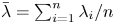 $\bar \lambda = \sum _{i=1}^{n} \lambda _i/n$. Also let $X_{1:n} \lt \cdots \lt X_{n:n}$ and $Y_{1:n} \lt \cdots \lt Y_{n:n}$ be their associated order statistics. It is proved that for $1\le i \lt j \le n$, the generalized spacing $X_{j:n} - X_{i:n}$ is more dispersed than $Y_{j:n} - Y_{i:n}$ according to dispersive ordering and for $2\le i \le n$, the dependence of $X_{i:n}$ on $X_{1:n}$ is less than that of $Y_{i:n}$ on $Y_{1 :n}$, in the sense of the more stochastically increasing ordering. This dependence result is also extended to the proportional hazard rates (PHR) model. This extends the earlier work of Genest et al. [(2009)]. On the range of heterogeneous samples. Journal of Multivariate Analysis 100: 1587–1592] who proved this result for $i =n$.


Corrigendum
Correction to “On the distribution of winners’ scores in a round-robin tournament”
-
- Published online by Cambridge University Press:
- 20 May 2022, pp. 737-739
-
- Article
-
- You have access
- HTML
- Export citation
Research Article
Improved bounds for the solutions of renewal equations
-
- Published online by Cambridge University Press:
- 06 June 2022, pp. 740-777
-
- Article
- Export citation
Lost sales obsolescence inventory systems with positive lead time: a system-point level-crossing approach
-
- Published online by Cambridge University Press:
- 26 May 2022, pp. 778-800
-
- Article
- Export citation
-
In this article, we provide a comprehensive analyses of two continuous review lost sales inventory system based on different replenishment policies, namely $(s,S)$ and $(s,Q)$. We assume that the arrival times of demands form a Poisson process and that the demand sizes have i.i.d. exponential distribution. We assume that the items in stock may obsolete after an exponential time. The lead time for replenishment is exponential. We also assume that the excess demands and the demands that occurred during stock out periods are lost. Using the system point method of level crossing and integral equation method, we derive the steady-state probability distribution of inventory level explicitly. After deriving some system performance measures, we computed the total expected cost rate. We also provide numerical examples of sensitivity analyses involving different parameters and costs. As a result of our numerical analysis, we provide several insights on the optimal $(s,S)$ and $(s,Q)$ policies for inventory systems of obsolescence items with positive lead times. The better policy for maintaining inventory can be quantified numerically.


Equivalency of multi-state survival signatures of multi-state systems of different sizes and its use in the comparison of systems
-
- Published online by Cambridge University Press:
- 10 June 2022, pp. 801-817
-
- Article
- Export citation
A value-at-risk approach to futures hedge
-
- Published online by Cambridge University Press:
- 23 June 2022, pp. 818-832
-
- Article
- Export citation
Scheduling servers in a two-stage queue with abandonments and costs
-
- Published online by Cambridge University Press:
- 20 July 2022, pp. 833-851
-
- Article
-
- You have access
- Open access
- HTML
- Export citation
Varentropy of doubly truncated random variable
- Part of:
-
- Published online by Cambridge University Press:
- 08 July 2022, pp. 852-871
-
- Article
- Export citation