





Introduction
Across the globe, communities continue to experience challenges to hunger, food security, and poverty. As part of a global ‘blueprint for peace and prosperity’, the United Nations Sustainable Development Goals prioritize poverty, hunger, and food security to address these recurring issues (United Nations, n.d.). Finding available and sustainable forms of agriculture to promote food security is essential in areas of the world with limited government infrastructure and low access to monetary and technological resources (Adenle, Azadi, and Manning, Reference Adenle, Azadi and Manning2018; Heifer International, 2021). Low input sustainable agriculture utilizes local, affordable farm resources making it more accessible to people who experience poverty, low food security, and environmental challenges linked to climate change (Sarkar et al., Reference Sarkar, Kar, Chattopadhyay, Shikha, Rakshit, Tripathi, Dubey and Abhilash2020). As a form of low input agriculture, rabbit farming has increasingly been adopted to strengthen community empowerment and food security, and decrease poverty (Oseni and Lukefahr, Reference Oseni and Lukefahr2014; Mutsami and Karl, Reference Mutsami and Karl2020). Although there is a body of literature on best practices in East Africa and globally, there are gaps in community education about rabbit farming (Mbutu, Reference Mbutu2013; Mutsami and Karl, Reference Mutsami and Karl2020; Devaki, Senthilkumar, and Nisha, Reference Devaki, Senthilkumar and Nisha2021). Data from popular news media can potentially shed light on common perceptions, gaps in resources, and how information is accessed and used by the public (Rock et al., Reference Rock, McIntyre, Persaud and Thomas2011; Happer and Philo, Reference Happer and Philo2013; Mattson, Mathew, and Katz-Buonincontro, Reference Mattson, Mathew and Katz-Buonincontro2021). The purpose of this study is to examine recurring themes in news media representations regarding community perceptions of rabbit farming related to food security and poverty in East Africa.
Food security and low input agriculture in East Africa
In 2020 and 2021, food insecurity and hunger rose in East Africa and globally after several years of stability (Food and Agriculture Organization of the United Nations et al., 2022). During the COVID-19 pandemic in 2021, close to half the global population could not afford a healthy diet with rising food prices, the gender gap in food security grew, and global levels of severe food insecurity and childhood stunting and wasting rose (Food and Agriculture Organization of the United Nations et al., 2022). The pandemic coupled with high debt and climate crises in places like East Africa, exacerbated poverty and inequality, and erased earlier progress made in food security (Food and Agriculture Organization of the United Nations et al., 2022; Kamande and Martin, Reference Kamande and Martin2022; United Nations, 2022a). In 2022, 20% of people in Africa faced hunger, reaching 40% in places like Uganda, and climate extremes brought on the worst agricultural conditions in 40 years in East Africa, intensifying the risk for famine (Food and Agriculture Organization of the United Nations et al., 2022; United Nations, 2022a, 2022b).
Meeting food production, agricultural, and food security needs with a growing population in Africa continues to present critical challenges. The agricultural sector is a large part of the economy in Sub-Saharan Africa and adopting sustainable practices in the face of climate change generates considerable debate (Adenle, Azadi, and Manning, Reference Adenle, Azadi and Manning2018; Heifer International, 2021). While some reports assert that the East African region produces enough food to feed itself, constraints to improving agriculture for food security include: improving distribution systems, agricultural infrastructure (e.g., education and transportation) and policy, and crop yields; mitigating environmental degradation; continued forms of neocolonialism such as land grabbing; growing privatization of land and urbanization; low interest in adopting new technology; and understanding the needs of smallholder farms (Adenle, Azadi, and Manning, Reference Adenle, Azadi and Manning2018; Shandwick, Reference Shandwickn.d.). Social and political instability can contribute to low food security—or it can be the fallout of a failed food system in the face of environmental and climate disasters, economic crises, or global pandemics (Adenle, Azadi, and Manning, Reference Adenle, Azadi and Manning2018; Heifer International, 2021; Kamande and Martin, Reference Kamande and Martin2022).
Finding flexible, local, and low-cost solutions to food security is crucial in countries with low income and inadequate agricultural infrastructure that face the extreme effects of climate change (Mailafia, Onakpa, and Owoleke, Reference Mailafia, Onakpa and Owoleke2011; Oseni and Lukefahr, Reference Oseni and Lukefahr2014). Globally, a large proportion of people living in rural poverty and experiencing low food security are smallholder farmers, many of them women, farming on plots less than five acres (Rapsomanikis, Reference Rapsomanikis2015; Chiputwa and Qaim, Reference Chiputwa and Qaim2016; Food and Agriculture Organization of the United Nations, 2021). Smallholder farms grow an estimated 35% of the world's food, on only 12% of global agricultural land and with limited access to resources (Food and Agriculture Organization of the United Nations, 2021). Policy geared toward social protection that raises income and improves nutrition by supporting smallholder farmers and low input agriculture can be a powerful force in addressing global food security, poverty, and climate change (Rapsomanikis, Reference Rapsomanikis2015; Chiputwa and Qaim, Reference Chiputwa and Qaim2016; Devereux, Reference Devereux2016; Shikuku et al., Reference Shikuku, Winowiecki, Twyman, Eitzinger, Perez, Mwongera and Läderach2017; Adenle, Azadi, and Manning, Reference Adenle, Azadi and Manning2018; Gbegbelegbe et al., Reference Gbegbelegbe, Serem, Stirling, Kyazze, Radeny, Misiko, Tongruksawattana, Nafula, Gakii and Sonder2018; Sarkar et al., Reference Sarkar, Kar, Chattopadhyay, Shikha, Rakshit, Tripathi, Dubey and Abhilash2020;). With low input agriculture, the farmer uses available local, pre-existing, affordable farm inputs (such as natural and human resources), bypassing costly external inputs of equipment, fertilizers, pesticides, herbicides, and other expenses (Chiputwa and Qaim, Reference Chiputwa and Qaim2016; Sarkar et al., Reference Sarkar, Kar, Chattopadhyay, Shikha, Rakshit, Tripathi, Dubey and Abhilash2020).
Rabbit farming as low input farming
Rabbit farming practiced as low input farming is accessible across income levels. It can take place in backyards or urban settings and animal feed can be procured locally from sources that do not compete with human nutrition (Borter and Mwanza, Reference Borter and Mwanza2011; Mailafia, Onakpa, and Owoleke, Reference Mailafia, Onakpa and Owoleke2011). Rabbits can be raised in smaller spaces, are noise-free and relatively odor-free, and can be easily transported (Borter and Mwanza, Reference Borter and Mwanza2011; Mutsami and Karl, Reference Mutsami and Karl2020). Rabbit farming has a long history in agriculture, is found on nearly all continents, and global production and demand has increased since the 1970s (Dalle Zotte, Reference Dalle Zotte2014). Valued for their prolific reproduction (30–32 days per reproductive cycle), fast growth, and high conversion of protein and energy from feed, rabbits are also an excellent source of nutrition (Dalle Zotte, Reference Dalle Zotte2014; Mutsami and Karl, Reference Mutsami and Karl2020). Although the nutrient content of rabbit meat can rely on the quality of rabbit feed, rabbit meat is generally a rich source of protein, vitamin E, polyunsaturated and essential fatty acids, and is lower in sodium than other meats (Dalle Zotte, Reference Dalle Zotte2014). Rabbit farming contributes other products that can improve the livelihoods of smallholder farmers such as leather, fur, rabbit manure and urine for fertilizer, rabbit manure for fish feed, and rabbits sold for breeding stock (Amin, Taleb, and Rahim, Reference Amin, Taleb and Rahim2011; Serem et al., Reference Serem, Wanyoike, Gachuiri, Mailu, Gathumbi, Mwanza and Borter2013).
The effectiveness of rabbit farming as an agricultural endeavor has evolved over time with the growth of information about best cultivation practices. Overcrowding and disease, optimal cage type, and hygiene and health are common issues to address (Dalle Zotte, Reference Dalle Zotte2014). Local and export market demand for rabbit products increases as people become more educated about sustainability and nutrition and adopt the meat as a normal part of the diet (Amin, Taleb, and Rahim, Reference Amin, Taleb and Rahim2011; Borter and Mwanza, Reference Borter and Mwanza2011; Mutsami and Karl, Reference Mutsami and Karl2020). Additionally, cultural norms related to rabbit farming have been an impediment in places like Kenya and India where raising rabbits was considered a hobby for young boys (Borter and Mwanza, Reference Borter and Mwanza2011; Serem et al., Reference Serem, Wanyoike, Gachuiri, Mailu, Gathumbi, Mwanza and Borter2013; Devaki, Senthilkumar, and Nisha, Reference Devaki, Senthilkumar and Nisha2021).
Rabbit farming can support better nutrition for subsistence farmers or increase income to alleviate poverty through commercialization (Amin, Taleb, and Rahim, Reference Amin, Taleb and Rahim2011; Serem et al., Reference Serem, Wanyoike, Gachuiri, Mailu, Gathumbi, Mwanza and Borter2013; Oseni and Lukefahr, Reference Oseni and Lukefahr2014; Mutsami and Karl, Reference Mutsami and Karl2020; Devaki, Senthilkumar, and Nisha, Reference Devaki, Senthilkumar and Nisha2021). In Kenya and India, researchers found that shifting from subsistence farming to commercialization of rabbit farming can decrease multi-dimensional poverty, concluding that policy to support this would boost capacity and aid in poverty reduction (Borter and Mwanza, Reference Borter and Mwanza2011; Mutsami and Karl, Reference Mutsami and Karl2020; Devaki, Senthilkumar, and Nisha, Reference Devaki, Senthilkumar and Nisha2021). Other researchers conclude that promoting low input, family-run and smallholder projects, local technologies, and indigenous knowledge offers a sustainable solution to poverty relief and community empowerment for Africa (Oseni and Lukefahr, Reference Oseni and Lukefahr2014; Sarkar et al., Reference Sarkar, Kar, Chattopadhyay, Shikha, Rakshit, Tripathi, Dubey and Abhilash2020).
Use of popular media to understand community and health issues
Analysis of popular media is an emerging method of research to understand public perceptions and behavior. Popular media sources both reflect and inform public perceptions of issues that filter up to policy and downstream to outcomes in health and well-being (Rock et al., Reference Rock, McIntyre, Persaud and Thomas2011; Happer and Philo, Reference Happer and Philo2013). Popular media sources can include news, television, social media, and other sources commonly utilized by the public. Often called the ‘fourth estate’, news media is considered central to informed choice in pluralist democracies, can act as the translator and interpreter of technical information, frame issues to accentuate or remove them from public discussion, and impact political outcomes (Dutton, Reference Dutton2009; Happer and Philo, Reference Happer and Philo2013; Astuti and Freeman, Reference Astuti and Freeman2017).
Media coverage can improve or detract from public understandings and behavior in health and policy outcomes. For example, researchers studying the impact of news coverage of the health effects of marijuana found poor coverage of health risks and emerging science (Abraham et al., Reference Abraham, Zhang, Ahn, Woodbridge, Korenstein and Keyhani2018). In contrast, researchers looking at the issue of minimum age for legal access to tobacco found improvement in the quality of reporting on science compared to past studies (Huey and Apollonio, Reference Huey and Apollonio2018). Various types of news coverage, such as editorials in the case of local tobacco ordinances, can be used by industry to side-track public interest in health policies or legitimize the importance of individual behavior in complex issues such as climate change (Happer and Philo, Reference Happer and Philo2013; Eckler, Rodgers, and Everett, Reference Eckler, Rodgers and Everett2016). Analysis of media can also be used to understand cultural dimensions and characteristics of emerging issues such as evolving cultural creativity during the COVID-19 pandemic, and the mapping of arguments of supporters and opponents in tobacco advertising regulation (Astuti and Freeman, Reference Astuti and Freeman2017; Mattson, Mathew, and Katz-Buonincontro, Reference Mattson, Mathew and Katz-Buonincontro2021). Specific to rabbit farming in East Africa, media can be a key source of information dissemination and education in rural areas where agricultural extension is poorly funded (Mbutu, Reference Mbutu2013; Adenle, Azadi, and Manning, Reference Adenle, Azadi and Manning2018).
Since media sources can offer powerful insight regarding community and health issues, this study examines recurring themes in news media regarding perceptions of rabbit farming as a form of low input agriculture. Analyzing public perceptions in news media representations will enhance understanding of barriers and facilitators to rabbit farming and its growing importance to food security and community empowerment in East Africa.
Methods
To better understand public perceptions in media reporting about rabbit farming in East Africa, researchers used content analysis of news sources to identify recurring themes related to barriers and facilitators of rabbit farming, poverty relief, and food security for this study. Researchers focused on news articles from East Africa as a region where food security is precarious and where agricultural solutions continue to emerge (United Nations, 2022b). The East African region includes the following 13 countries: Burundi, Comoros, Djibouti, Ethiopia, Eritrea, Kenya, Rwanda, Seychelles, Somalia, South Sudan, Sudan, Tanzania, and Uganda (African Development Bank, 2019).
Data was collected in 2019–2020 using criterion sampling and Thomson Reuters Westlaw database as an available resource with access to international news articles (Moser and Korstjens, Reference Moser and Korstjens2018). One researcher collected data (the news articles) using an advanced search and the following sequential criteria and keywords for generating the sample: East Africa, rabbit projects, rabbit farming, years 2000 up to 2019, English language, and headlines and paragraphs were searched for projects specifically focused on food security and poverty relief. All news articles that met these criteria were selected and loaded into NVivo 12 for analysis. Researchers who were involved with analysis were trained by either video or Zoom training sessions in techniques for content analysis. Two of the three researchers who analyzed the data had experience with qualitative content analysis. A running audit record of the research process was kept by another researcher who conducted analysis but did not collect data.
A code book was developed using categorization and thematic analysis. Content analysis of recurring themes in the news media was performed independently by three researchers using NVivo 12 from April 2020–June 2021. Researchers conducted deductive and a priori analysis of the news articles using the following categories: community, health/nutrition, economics, process/mechanics, barriers, and facilitators. These categories were consistent with the constructs in background literature about rabbit farming related to poverty relief and food security (Serem et al., Reference Serem, Wanyoike, Gachuiri, Mailu, Gathumbi, Mwanza and Borter2013; Oseni and Lukefahr, Reference Oseni and Lukefahr2014). Researchers then used inductive open coding to examine sub-themes that emerged from within the a priori categories. Coding was an iterative process and coders met multiple times to share open coding. Axial and selective coding were performed by one researcher to merge and collapse sub-themes that were similar, further refine codes based on magnitude, frequency and extensiveness, and representative text for each code was selected (Williams and Moser, Reference Williams and Moser2019)., Researchers continued to meet to agree on axial and selective coding and descriptions of codes and reach consensus about the codebook.
To establish integrity in the research process researchers used multiple methods to promote truth-value, consistency and trustworthiness, applicability of the research findings and confidence in the representativeness of the codebook (Noble and Smith, Reference Noble and Smith2015; Wu, Wyant, and Fraser, Reference Wu, Wyant and Fraser2016; Bengtsson, Reference Bengtsson2016; Cofie, Braund, and Dalgarno, Reference Cofie, Braund and Dalgarno2022). Data source triangulation was established by using news articles across multiple countries, two decades, and diverse news sources (Carter et al., Reference Carter, Bryant-Lukosius, DiCenso, Blythe and Neville2014; Robert Wood Johnson Foundation, n.d.). Analyst triangulation was engaged by enlisting three researchers for the coding process, and all researchers used the same coding frame (Carter et al., Reference Carter, Bryant-Lukosius, DiCenso, Blythe and Neville2014; Cofie, Braund, and Dalgarno, Reference Cofie, Braund and Dalgarno2022). Coders met multiple times during analysis to discuss the research process and recurring and emerging themes; texts were revisited multiple times; and the codebook along with the running audit of the research process was reviewed by a fourth researcher who did not run analysis (Noble and Smith, Reference Noble and Smith2015; Cofie, Braund, and Dalgarno, Reference Cofie, Braund and Dalgarno2022). Additionally, quotes from text that represent codes and support findings were used in reporting (Noble and Smith, Reference Noble and Smith2015; Bengtsson, Reference Bengtsson2016).
Results
A search for rabbit projects in Africa initially yielded 7187 news articles. The term ‘rabbit projects’ was typically used in many texts to refer to programs in communities involving rabbit rearing. However, many projects were not focused on raising rabbits as a form of farming for community food security or poverty relief. The search was then narrowed to ‘rabbit farming’ in Africa and the criteria outlined in the Methods section, yielding 28 news articles after removal of duplicates (see Fig. 1 in Appendices). All articles that met these screening criteria were analyzed. News articles were examined by country and by year. More than half of all articles discussed rabbit farming in Kenya followed by Rwanda, Tanzania, and Uganda (see Table 1 in Appendices). News articles peaked in the year 2014 with no sources before the year 2006 (see Fig. 2 in Appendices).
During analysis, researchers organized data agreeing that some of the a priori categories were defined more clearly in context: some were merged, and others were more logically organized as sub-themes. For instance, the a priori theme of ‘processes/mechanics’ became ‘rabbit farming processes’; ‘economics’ was merged into ‘funding and support’; and ‘barriers’ and ‘facilitators’ became sub-themes of ‘rabbit farming processes’. While organizing themes, multiple levels emerged, and researchers characterized aspects of sub-themes. Two of the a priori categories key to logically understanding the data were the overarching themes of community and rabbit farming processes. The following sections define and describe themes and sub-themes from the analysis (see Table 2 in Appendices for a summary with exemplar in-text quotes).
Community
The a priori theme of community was defined as how rabbit farming elicits community response, empowers vulnerable populations, and other community aspects. This included how age, gender, cultural norms, and sustainability influenced decisions about rabbit farming. For instance, diverse cultures viewed raising rabbits as something often done as a hobby by young males. However, after finding out about the accessibility, income-potential, and nutrition for families in need, many female-headed households, began to adopt the practice. One woman in Kenya who had a smallholder farm shared, ‘rabbits provide the biggest and most reliable income stream, shedding the long-held myth in Embu that rabbits are household pets for young boys’ (The Star/All Africa Global Media, 2014a). Rabbit farming addressed youth and gender well-being and rural poverty relief in that ‘it employed women and youths who lack the critical production resources; land and capital’ in places like Rwanda (Rwembeho, Reference Rwembeho2014).
Other cultural norms surrounding rabbit farming for food included variation in how rabbit meat was perceived as a ‘normal’ food. Rabbit meat was ‘not considered a customary food item in the Ugandan diet’ and when added as a menu item, some restaurateurs stated that it would not sell (Nafula, Reference Nafula2006). But rabbit was not included on menus also because the supply was not consistent. Alternatively, in Kenya perceptions differed and the ‘demand for rabbit meat, which…tastes like chicken… increased countrywide’ (Irimu, Reference Irimu2015).
Diverse communities realized that rabbit farming addressed issues linked to climate change and limited land availability. In Kenya, traditions of smallholder, mixed farming with pastoralism were being interrupted by drought and climate change events, forcing communities to adjust to diminishing agricultural yields, ‘Small livestock thrive well in all seasons, unlike cattle which are affected by drought due to unavailability of enough pasture’ (Bahati Wanzala, Reference Bahati Wanzala2012). According to one farmer, ‘…[r]abbits are among the livestock species with the lowest greenhouse gas emissions and are also adaptive to the effects of climate change’ (Bahati Wanzala, Reference Bahati Wanzala2012).
Perceptions of food security
A common sub-theme was food security defined by researchers as how rabbit farming contributes to nutrition, health, and antipoverty measures. This aligns with the definition of food security outlined by the Food and Agriculture Organization as ‘a situation that exists when all people, at all times, have physical, social and economic access to sufficient, safe and nutritious food that meets their dietary needs and food preferences for an active and healthy life’ (Peng and Berry, Reference Peng, Berry, Ferranti, Berry and Anderson2019). Raising rabbits for subsistence provided families with security in knowing where their next meal would come from, improving access to nutritious food. One woman from Rwanda described how ‘rabbit farming caught her attention when there was a growing issue of malnutrition’ (Rwembeho, Reference Rwembeho2014). Others also used rabbit farming as an entrepreneurial project, commercializing their efforts for a means of employment, to increase family revenue, and reduce community poverty. Some noted the need for more females to have access to commercial farming, and that ‘while women constitute about 53 per cent of the farming population in Rwanda, only less than 10 per cent are engaged in agri-business’ (Ntirenganya, Reference Ntirenganya2017). Community members connected the issue of gender equity and raising the level of living where ‘commercial rabbit farming has a potential of raising domestic income of Sh20,000 [Kenyan shillings] per month’ (Ogada, Reference Ogada2013). One farmer described the transformation in her life; ‘Muthanje now lives her dream life since rabbits provide her with a steady source of income’ (The Star/All Africa Global Media, 2014a). Selling rabbit products could also help to address family needs beyond food, such as funding education and medical care. Networks formed, such as the Rabbit Breeders Association of Kenya, to benefit rabbit farmers and others in need, increasing community cohesion (Kilonzo, Reference Kilonzo2014). One woman in Rwanda named Mukashyaka even took on training youth to pull ‘others out of poverty,’ describing how ‘[a] family with 100 rabbits will never cry for food or other needs like students' uniform and health insurance’ (Rwembeho, Reference Rwembeho2014).
Perceived beneficial health properties
Communities also perceived beneficial health properties of rabbit meat. Realizing that rabbit farming had the potential to address issues of both under and over nutrition was a strong counterbalance to any concerns that rabbit meat was not culturally appropriate. The consumption of rabbit meat was increasingly labeled as ‘delicious’ and as a food that would address both hunger, protein, and micronutrient deficiency as well as growing concerns about chronic diseases related to food (Nafula, Reference Nafula2006). Testimony in news media demonstrated that rabbit meat was gaining ‘popularity as being the tasty and healthiest meat’ particularly in urban areas where awareness of the relationship between diet and health was strong (Devotha, Reference Devotha2018).
Rabbit farming processes
The a priori theme of rabbit farming processes was defined as any actions or activity linked to business or rabbit farming practices, and further organized in a priori sub-themes of barriers and facilitators.
Barriers
Barriers were defined as challenges and impediments to rabbit farming characterized by market challenges; technology and innovation; outside influences; and farming or cultivation challenges. Market challenges included not having a market, forcing one farmer to abandon her operation after being ‘unable to sell her stock of 80 animals’ (Odhiambo, Reference Odhiambo2013). Challenges also included lack of basic infrastructure for larger production purposes such as tanneries for rabbit hides or slaughterhouses for processing, packaging, and storing rabbit meat. In places like Tanzania, lacking a slaughterhouse with regulated practices made ‘it difficult for [the] Nyumbani Rabbit Farm to obtain Tanzania Food and Drugs Authority (TFDA) certification. With TFDA certificate, customers can trust the company brand and its products’ (Devotha, Reference Devotha2018). In terms of technology and innovation, adoption of new methods and ‘skills transfer’ was described as slow (Ntirenganya, Reference Ntirenganya2017). Deficiencies in consistent electricity for refrigerating or freezing products or lacking a food pellet production system for a reliable source of food for rabbits were also barriers. Outside influences that challenged the success of rabbit farmers involved contract farming, often with international partners, that when ‘not well-executed’ could lead to possible ‘exploitation by the different [external] parties’ (Mwangi, Reference Mwangi2014). Farming challenges consisted of lack of appropriate breeding stock, concern about in-breeding and inadequate housing. One farmer shifted to expensive corrugated iron sheet cages after losing his first cohort of rabbits when he used housing made of polyethylene bags and grass thatches (Obi, Reference Obi2014). Another farmer lost rabbits to an ant infestation because the housing was too close to the ground (Mureithi, Reference Mureithi2014).
Facilitators
Facilitators were defined as actions or resources that aid rabbit farming. Sub-themes that emerged were business practices; easy cultivation; funding and support; knowledge; and production practices.
Researchers defined business practices as diverse business and commercialization methods that benefit rabbit farming including contract farming, record keeping, new opportunities, and exporting. Contract farming was a ‘fairly new concept’ in places like Kenya that could be done across various levels (six, twelve, or 100 rabbits purchased) with access to an established export market and training about best practices (Mwangi, Reference Mwangi2014). While some warned about outside influences, others advised contract farming as the ‘best way to guarantee a market for your rabbits’ (Miyumo, Reference Miyumo2015). Record keeping was vital to success such as labeling for products and computerized alert systems that record breeding times for rabbits sending ‘…notification, for instance, when there are two days remaining for the rabbits to mate’ (Ntirenganya, Reference Ntirenganya2017).
Although many farmers turned to rabbit farming for subsistence to feed or support their family, others saw rabbit farming as a new opportunity for their own business. One farmer in Kenya grew to a total of 80 rabbit farms after researching the logistics, and another started with two rabbits for her family but quickly increased to 100, expanding to commercialized farming (Murumba, 2014a; Rwembeho, Reference Rwembeho2014). Farmers in Tanzania saw the self-employment entrepreneurial aspects such as, ‘…Mary Edward, 26, a Bachelor of Arts with Education degree holder, [who] chose to invest in rabbit farming’ after trying other forms of employment. (Devotha, Reference Devotha2018). Other entrepreneurs developed systems, supply chains, and markets to help rabbit farmers (Murumba, Reference Murumba2014a). For smallholder farms, diversifying was a means to success. One young farmer started rabbit farming and later added chickens to his farm, planning to branch out to a fruit farm as well (Irimu, Reference Irimu2015). Other farmers grew a variety of plant crops such as chilies, ginger and spices, paw paws, and various vegetables, with rabbit urine and manure providing both pesticide and fertilizer (The Star/All Africa Global Media, 2014b; Ntirenganya, Reference Ntirenganya2017).
Farmers described the draw of export markets for rabbit meat and other products, often finding that the demand was much higher than their ability to supply (Ntirenganya, Reference Ntirenganya2018). Greater government investment in rabbit farming for export was viewed by many as valuable in moving beyond subsistence to commercial farming systems that generated more income. One farmer pointed out that, ‘Rabbit and fur farming is a moneyspinner [sic] for many farmers in developed countries who rear rabbits and sell its fur to markets like China where it is used as trim on fashion accessories such as handbags or gloves’ (Muiruri, Reference Muiruri2011).
Diverse rabbit products emerged as another sub-theme, defined as various products derived from rabbit farming that increased income and efficiency. It included various meat and food products such as value-added cuts for restaurants and specialized markets, and meat loafs, samosas, sausage, kebabs, pies, and frozen and canned products (Muiruri, Reference Muiruri2011; Odhiambo, Reference Odhiambo2013; The Star/All Africa Global Media, 2014b). Non-food products included fur, fiber/wool, and leather that might be exported or used locally (Nafula, Reference Nafula2006). Farmers might also raise rabbits for sale as breeding stock, for manure for crop fertilizer, and for urine as a pesticide (Obi, Reference Obi2014; Devotha, Reference Devotha2018; Seeds of Gold Experts, 2019). According to one woman in Kenya, rabbit manure could also be used for cooking fuel using a low-cost biogas digester that eliminated the need to buy cooking gas, where ‘[e]very two kilogramme container of the fermented mass produces gas that she can use for three hours of continuous cooking’ (Chao, Reference Chao2013). Businesses even emerged to utilize by-products, such as ‘Kenya Com Rabbit Consortium Ltd’, an organization that purchase rabbit urine to make fertilizer (Kilonzo, Reference Kilonzo2014).
One of the most prominent sub-themes and attraction to rabbit farming was the easy cultivation, accessibility, and efficiency of rabbit breeding, which was viewed as an advantage. One source stated it is ‘possible to get 50 young ones from one mother in a year’ with high yield for the investment (Seeds of Gold Experts, 2019). Rabbits mature quickly, were quiet and did not smell, and could easily be raised in small farms and even urban settings (Igadwah, Reference Igadwah2014). Many sources described how ‘rabbit rearing is the cheapest venture to engage in as the initial capital, feeding and maintenance of the rabbits is low’ (The Star/All Africa Global Media, 2014b). Rabbits could be fed vegetable scraps from the farm and foods that do not compete with humans, such as hay or dried grass, tree leaves, potato or yam leaves, banana peels, and agricultural by-products (Nafula, Reference Nafula2006; Bahati Wanzala, Reference Bahati Wanzala2012; Obi, Reference Obi2014; Rwembeho, Reference Rwembeho2014).
The sub-theme of funding and support was defined as government agencies, businesses, stakeholders, organizations, and institutions that financed and promoted rabbit farming projects and were essential facilitators. Significant Kenyan government funding was reserved for rabbit farming enterprises, and the National Council for Science and Technology invested in a value chain for rabbit farming for business purposes and exporting, slaughterhouses and butcheries, and small cooperatives for rabbit farming (Muiruri, Reference Muiruri2011). Government funding was put aside to organize rabbit farmers, create employment, and subsidize smallholder farmers in Kenya ‘to build hutches, buy hybrid breeds and grinding machines that small-scale farmers can use to manufacture their own feed…[and]create a common pool in which the rabbit meat can be exported’ (Chao, Reference Chao2013). Investment also came from international sources looking to grow rabbit farming exports in East Africa. The Japanese International Co-operation Agency (JICA) ‘rolled out a Sh25 million fund to facilitate farmers’ training on commercial rabbit rearing’, even funding a grassroots organization for training and empowerment of women (Murumba, Reference Murumba2014b; Pivotal Sources, 2015).
Various organizations also offered support services for startup, growth, and maintenance of rabbit farming enterprises. This included organizations like the Rwanda Youth in Agribusiness Forum, the Rabbit Breeders Association of Kenya, and contractors such as Alcare Group, Rabbit Republic, and the Rabbit Millionaires Project (Obi, Reference Obi2014; Miyumo, Reference Miyumo2015; Ntirenganya, Reference Ntirenganya2017). Partners in the Nyumbani Rabbit Farm wanted the organization to ‘become the leading, fully integrated producers, distributors, wholesalers and retailers of rabbit products in Tanzania’ demonstrating a will to invest in the supply chain (Devotha, Reference Devotha2018). Some community members helped other community members find funds, ‘Muhigira is also planning to advise the family to start rabbit farming and he is likely to fundraise for money to help the family kick-start the business because he believes they can do it well and get some money’ (Kwibuka, Reference Kwibuka2013).
Knowledge was a sub-theme defined as aspects of education, training, and information-sharing important to rabbit farming. While formal training in business, agribusiness or in practical aspects of rabbit farming was becoming more available, significant information was shared informally within communities. One farmer met a friend in church who taught him about rabbit farming while another farmer ‘taught and encouraged her village mates, particularly the youth, to rear rabbits in a bid to tackle poverty’ (Murumba, Reference Murumba2014a; Rwembeho, Reference Rwembeho2014). The Egerton University created an education center called the Rabbit Section at Tatton Agriculture Park in Kenya, and the Kenyan government had manuals written on rabbit farming (Egerton University Experts, 2014; The Star/All Africa Global Media, 2014b). Some businesses were subcontracted to train future rabbit farmers such as The Rabbit Republic Limited, other organizations offered seminars and training for a fee, and training was offered by local agricultural officers (Kilonzo, Reference Kilonzo2014; The Star/All Africa Global Media, 2014a). Volunteers trained others in rabbit farming practices working through organizations such as the Rabbit Association of Kenya (The Star/All Africa Global Media, 2014b). Social media sites and webpages appeared with educational information about rabbit farming (Chao, Reference Chao2013). Recognizing the growing need for sharing knowledge, the Kenyan government increased efforts to fund agricultural extension services for rabbit farming (Muiruri, Reference Muiruri2011).
The sub-theme of production practices included various cultivation techniques and operational methods beneficial to rabbit farming. Cultivation techniques included proper hygiene and safety for the animals, such as cleaning cages weekly and assessing health regularly (Mureithi, Reference Mureithi2014). Managing parasites and diseases of rabbits was also considered essential including ‘coccidiosis, pasteurellosis, enteritis, and pneumonia among others’ (Rwembeho, Reference Rwembeho2014; Ntirenganya, Reference Ntirenganya2018). Giving time for does (females) to recover after giving birth, ensuring rabbits are not born during the cold season as they are born with no fur, and keeping does and bucks (males) separate except for mating purpose to prevent in-breeding were fundamental to success (Chao, Reference Chao2013). Packaging and processing for products that catered to the desired market helped maintain business, according to one entrepreneur, ‘some hotels only buy rabbit legs, others buy the whole rabbit… packed and sold per customers' choice…’ (Devotha, Reference Devotha2018).
Production practices included understanding the types of rabbits, defined as the diverse breeds used in rabbit farming for various reasons. Although Africa has its own indigenous breeds of hares and rabbits, many imported breeds were chosen for specific reasons. Size, weight, length of time to maturity and the type of product desired might be considerations, and farmers might choose to raise diverse breeds (Opinya, Reference Opinya2015). Rabbits can range in size from 1.5 kg to 8 kg (over 3.3 lbs. to 17.6 lbs.) (Bahati Wanzala, Reference Bahati Wanzala2012; Opinya, Reference Opinya2015). Typical rabbit breeds included, the Canadian Dorwan Giant, ‘New Zealand White, Californian White, Chinchilla…[and] the Dutch dwarf breed’, for example (Chao, Reference Chao2013; Kilonzo, Reference Kilonzo2014). Some rabbits were better for fur or fiber, and others for meat (‘broiler’ breeds), as one farmer explained, for ‘the best broiler rabbit… it is advisable to rear the medium breeds… they attain maturity faster, are prolific, have high meat to bone ratio and are easy to manage compared to the heavy breeds’ (Opinya, Reference Opinya2015).
Discussion
Results from this qualitative text analysis of news media representation confirm that people in communities across East Africa perceive rabbit farming as an important and accessible form of low input agriculture that can address poverty, hunger, and food security. This analysis gleaned some results that can inform future practice, policy, and research.
News articles showed growing consciousness of the need to find adequate local farming solutions, like rabbit farming, as a source of income and healthy food. Many people were aware of the ‘double burden’ of the public health crises of hunger and chronic diseases related to industrialized diets in East Africa and especially for communities with low access to resources (Mbogori et al., Reference Mbogori, Kimmel, Zhang, Kandiah and Wang2020). One article from 2013 recounted the potential for Sh20,000 earnings per month (~$232.25 US dollars in 2013) in Kenya (‘US Dollar to Kenyan Shilling Spot Exchange Rates for, 2013,’ n.d.). As of December of 2022, the average monthly income of Kenyans was Sh20,123 (~$160 US dollars January 2023), so this was a significant sum (Mwaniki, Reference Mwaniki2022). For some, rabbit farming brought independence in employment, good nutrition for their family, funds for other necessities like school and medical care, and community cohesion as they helped others find pathways out of poverty.
The issue of gender and rabbit farming within communities emerged on multiple levels. There was growing awareness of how traditions and policies favored males, including land rights, inheritance, and other traditions that discriminate against women in many societies through East Africa and beyond (Ghebru, Reference Ghebru2019; Gaddis, Lahoti, and Swaminathan, Reference Gaddis, Lahoti and Swaminathan2021). Some cultural norms related to rabbit farming discouraged women from this venture. Yet many women transcended this – at times with the assistance of community members and external supporters who offered training and other resources. Ensuring that emerging youth projects and other programs that support low input agriculture (like rabbit farming) are inclusive of females will be crucial to addressing global issues of equity, poverty, and food security. This also means that education and information are accessible to women (Diaz and Najjar, Reference Diaz and Najjar2017; Akter et al., Reference Akter, Erskine, Spyckerelle, Branco and Imron2020; ‘Expert; Take,’ et al., 2022).
Coping with climate change through sustainable practices has gained importance in communities. In this analysis, climate change had a heavy impact on how people could farm, decreasing access to traditional pasture and agricultural land-use. Rabbit farming offered easy cultivation and flexibility for farming in urban settings, backyards or on smallholder farms with a good potential for yield. Many low input practices for rabbit farming were also sustainable. Farmers used available plant and vegetable scraps for rabbit feed; rabbit urine and manure to generate cooking fuel, fertilizer, and pesticide; and diversified their farm to include various crops and other animals. These practices build diverse and holistic nutrition on the farm, support soil and farm ecology, and prevent potentially toxic synthetic pesticides from entering the eco-system (Sarkar et al., Reference Sarkar, Kar, Chattopadhyay, Shikha, Rakshit, Tripathi, Dubey and Abhilash2020). These are also accessible practices using knowledge from within the community. Promoting such shared community knowledge in the face of climate change would improve both rabbit farming and collective agency of communities in addressing food security (ICARDA Communication Team, 2021).
Many barriers and facilitators found in this analysis were connected. Policies, market, knowledge, and production infrastructure could facilitate rabbit farming, or if lacking, could create barriers. National policy must be carefully implemented to protect indigenous people and the land they live and grow food on. While many indigenous farmers in East Africa have traditionally had smallholder farms, land grabbing by foreign investors has diminished availability and access to land, making rabbit farming more appealing because it can be done on less land (Makutsa, Reference Makutsa2010; Kamara et al., Reference Kamara, Conteh, Rhodes and Cooke2019). Described as neocolonialism, international land grabbing and interference, which can extend to contract farming, has the potential to exploit local farmers, displace indigenous people, and exacerbate poverty and food insecurity (Makutsa, Reference Makutsa2010; Baragona, Reference Baragona2012; Laishley, Reference Laishley2014; Kamara et al., Reference Kamara, Conteh, Rhodes and Cooke2019). Government and other forms of support to create infrastructure for production, markets and knowledge-transfer are also necessary. Shifting from subsistence to commercial farming can increase well-being, but training commercial farmers on how to run businesses, building large-scale distribution infrastructure (processing and packaging), and regulation of the rabbit farming industry and market would also promote success (Saridakis et al., Reference Saridakis, Georgellis, Muñoz Torres, Mohammed and Blackburn2021). Micro-financing that is flexible and accounts for community context, and community crowd-funded farming projects could increase access to rabbit farming for many (Borter and Mwanza, Reference Borter and Mwanza2011; Weber and Musshoff, Reference Weber and Musshoff2017; Beesabathuni, Lingala, and Kraemer, Reference Beesabathuni, Lingala and Kraemer2018; Idi, Makinta, and Mamadi et al., Reference Idi, Makinta and Mamadi2019; Kamara et al., Reference Kamara, Conteh, Rhodes and Cooke2019; Mutsami and Karl, Reference Mutsami and Karl2020; Toesland, Reference Toesland2022). Although there is information on best practices in rabbit farming and business, transfer of that information is uneven, making stronger infrastructure vital to continued success (Adenle, Azadi, and Manning, Reference Adenle, Azadi and Manning2018). Because agricultural extension services can be underfunded by governments, other forms of knowledge-transfer that are more cost effective, such as social media and other virtual forms, will need to fill in this gap (Kiptot et al., Reference Kiptot, Karuhanga, Franzel and Nzigamasabo2016; ESAFF, 2020; ICARDA Communication Team, 2021;Abdulai et al., Reference Abdulai, Tetteh Quarshie, Duncan and Fraser2023). If there is poor access to the internet, maintaining hardcopy news media and other local news outlets as sources of accessible knowledge-transfer would be crucial (Mbutu, Reference Mbutu2013; Abdulai et al., Reference Abdulai, Tetteh Quarshie, Duncan and Fraser2023).
There are limits to this analysis. First, researchers used only articles written or translated to English, and important discussion written in local languages may have been missed (Mbutu, Reference Mbutu2013). However, many countries in East Africa have adopted English as a working language including countries represented in this analysis: Uganda, Rwanda, Kenya, and Tanzania. Our study examined news sources from the year 2000–2019 but did not examine or find changes over time that may have occurred with growing adoption of rabbit farming. We also focused on written news sources – whereas visual and contemporary digital and social media sources can also have a significant impact, even if limited within many rural and impoverished areas (Boeck et al., Reference Boeck, Juillard, Dicker, Joseph and Sakran2021). Additionally, many countries in East Africa were not represented and this may be related to the language used for analysis, news media infrastructure in the respective countries, how the database adopted media, or low adoption of the farming practice. Finally, our study is a qualitative study measuring the community perceptions of barriers and facilitators of rabbit farming related to food security and poverty represented in news media with applicability to inform general discussions on this topic. However, it cannot stand alone as a source to understand rabbit farming, food security, and poverty in East Africa. More diverse qualitative and quantitative research needs to be done to map out best practices in overcoming barriers and magnifying facilitators in rabbit farming.
In conclusion, findings in this study of recurring themes of news media representations support the perceived importance of rabbit farming to food security and poverty relief to communities in East Africa. As a form of low input, sustainable agriculture, rabbit farming shifts away from emergency food assistance toward a more dignified means of promoting food security, independence, and community empowerment. Relevant sub-themes in this analysis include awareness of the complexity of issues related to nutrition, sustainability, and the role of gender and cultural norms in shaping efforts. The easy cultivation of rabbits, funding, support, and protective policy for indigenous smallholder farms were themes that were also significant. Additionally, investment in infrastructure for market, production, and knowledge-transfer of best practices were critical themes linked to success for rabbit farmers throughout East Africa. Finally, this study demonstrates how data from popular news media can contribute to more holistic understandings of food systems and food security globally. Future studies might explore rabbit farming, food security, and poverty in relation to indigenous and expert-driven knowledge-transfer, funding, and community empowerment in East Africa using social media and other forms of news media.
Data availability statement
All data used for this analysis is publicly available through the internet or news databases.
Acknowledgements
Thanks to Nicholas Salamone, graduate student in the Masters in Community Nutrition program at West Chester University, who assisted with background for this project.
Author's contributions
Kimberly E. Johnson, conceptualized, planned and organized the research; recruited other researchers; advised and planned data collection; analyzed and interpreted data, kept audit of research process and collated code book; background literature review and writing of paper; communication with co-authors; revisions and submission to publishers.
Julia Hayes, assisted with planning and organizing project; data collection and analysis; data interpretation; background literature review and assisted with writing of literature review; final draft and revisions.
Patricia Davidson, assisted with planning and organizing project; data analysis and interpretation; review of final draft.
Chiwoneso B. Tinago, assisted with conceptualization, planning and organizing project; training for content analysis; review of audit of research process and code book; assisted with literature review; data interpretation; review of final draft.
Geoffrey Anguyo, conceptualization and review of project planning; review of research progress and advising on analysis and interpretation; review of final draft.
Competing interests and Funding statement
None.
Appendices

Figure 1. Data collection process.
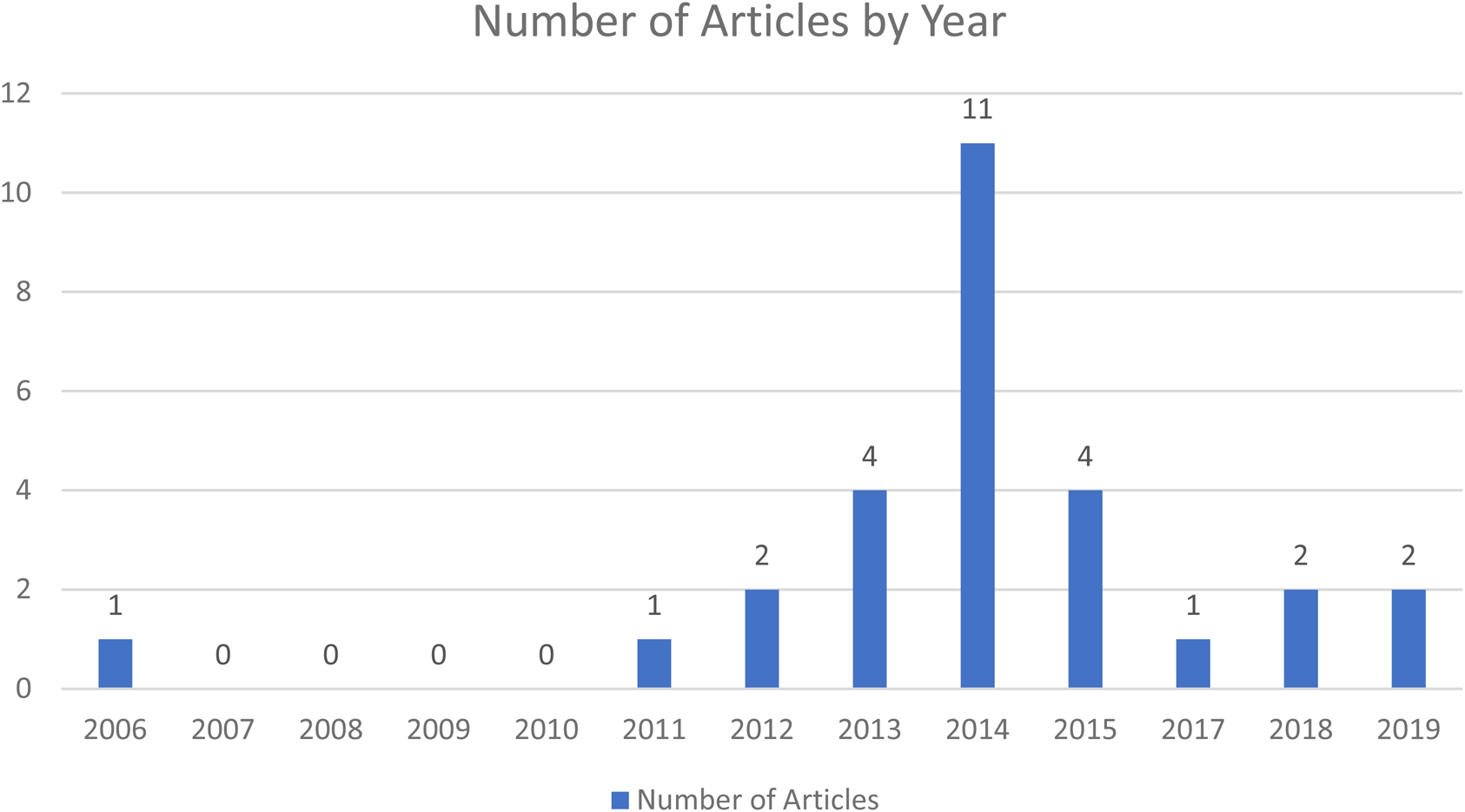
Figure 2. Number of news articles by year.
Table 1. News articles by title, journal, year, and country in chronological order

Table 2. Themes, definitions, and examples from text


 Open access

