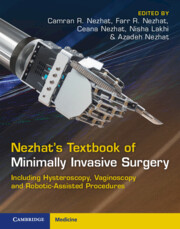
 Nezhat's Textbook of Minimally Invasive Surgery
 Including Hysteroscopy, Vaginoscopy and Robotic-Assisted Procedures
Book contents
- Nezhat’s Textbook of Minimally Invasive Surgery
- Nezhat’s Textbook of Minimally Invasive Surgery
- Copyright page
- Dedication
- Contents
- Online Resources
- Contributors
- Foreword
- Preface
- Chapter 1 A History of Modern-Day Video Surgery with and without Robotic Assistance
- Chapter 2 Equipment for Operative Laparoscopy and Hysteroscopy
- Chapter 3 Anesthesia
- Chapter 4 Patient Positioning and Operating Room Setup
- Chapter 5 Laparoscopic Access
- Chapter 6 Laparoscopic Suturing
- Chapter 7 Pelvic Anatomy
- Chapter 8 Hysteroscopy
- Chapter 9 Fertility
- Chapter 10 Management of Adnexal Masses
- Chapter 11 Endometriosis
- Chapter 12 Video Laparoscopic Adhesiolysis and Adhesion Prevention
- Chapter 13 Video Laparoscopic Sterilization
- Chapter 14 Leiomyomas
- Chapter 15 Hysterectomy
- Chapter 16 Pelvic Floor Procedures
- Chapter 17 Video Laparoscopy
- Chapter 18 Gynecologic Malignancy
- Chapter 19 Video Laparoscopic Surgery during Pregnancy
- Chapter 20 Pediatric Surgery
- Chapter 21 Video Laparoscopic Aortic Surgery
- Chapter 22 Additional Procedures for Pelvic Surgeons
- Chapter 23 Simulation Training in Minimally Invasive Surgery
- Chapter 24 Robotic-Assisted Laparoscopy
- Chapter 25 Vascular Surgery and Management of Pelvic Complications
- Chapter 26 Fetal Surgery
- Chapter 27 Hemostatic Agents in Minimally Invasive Surgery
- Chapter 28 New Techniques in Minimally Invasive Surgery
- Book part
- Index
- References
Chapter 14 - Leiomyomas
Published online by Cambridge University Press: 06 November 2025

Book contents
- Nezhat’s Textbook of Minimally Invasive Surgery
- Nezhat’s Textbook of Minimally Invasive Surgery
- Copyright page
- Dedication
- Contents
- Online Resources
- Contributors
- Foreword
- Preface
- Chapter 1 A History of Modern-Day Video Surgery with and without Robotic Assistance
- Chapter 2 Equipment for Operative Laparoscopy and Hysteroscopy
- Chapter 3 Anesthesia
- Chapter 4 Patient Positioning and Operating Room Setup
- Chapter 5 Laparoscopic Access
- Chapter 6 Laparoscopic Suturing
- Chapter 7 Pelvic Anatomy
- Chapter 8 Hysteroscopy
- Chapter 9 Fertility
- Chapter 10 Management of Adnexal Masses
- Chapter 11 Endometriosis
- Chapter 12 Video Laparoscopic Adhesiolysis and Adhesion Prevention
- Chapter 13 Video Laparoscopic Sterilization
- Chapter 14 Leiomyomas
- Chapter 15 Hysterectomy
- Chapter 16 Pelvic Floor Procedures
- Chapter 17 Video Laparoscopy
- Chapter 18 Gynecologic Malignancy
- Chapter 19 Video Laparoscopic Surgery during Pregnancy
- Chapter 20 Pediatric Surgery
- Chapter 21 Video Laparoscopic Aortic Surgery
- Chapter 22 Additional Procedures for Pelvic Surgeons
- Chapter 23 Simulation Training in Minimally Invasive Surgery
- Chapter 24 Robotic-Assisted Laparoscopy
- Chapter 25 Vascular Surgery and Management of Pelvic Complications
- Chapter 26 Fetal Surgery
- Chapter 27 Hemostatic Agents in Minimally Invasive Surgery
- Chapter 28 New Techniques in Minimally Invasive Surgery
- Book part
- Index
- References
Summary
Leiomyomas or myomas are estimated to affect 20–25% of women of reproductive age and is the most common diagnosis in patients 35–54 years old.[1,2] Historically, many of these women undergo a hysterectomy for treatment. Increasingly, more patients are seeking alternative options to hysterectomy and are requesting uterine preservation during treatment for symptomatic fibroids. Perhaps accordingly, the rate of inpatient hysterectomy performed for myomas decreased from 44% in 2000 to 31% in 2008.
Information
- Type
- Chapter
- Information
- Nezhat's Textbook of Minimally Invasive SurgeryIncluding Hysteroscopy, Vaginoscopy and Robotic-Assisted Procedures, pp. 369 - 427Publisher: Cambridge University PressPrint publication year: 2025
References
References
Nezhat, C, Kho, K, Goldfarb, H, Seidman, D. Laparoscopic myomectomy. In Kavi, M, Levinson, C, Wetter, PA, eds. Prevention and Management of Laparoendoscopic Surgical Complications, 3rd ed. Society of Laparoendoscopic Surgeons; 2011.Google Scholar
American College of Obstetricians and Gynecologists. Women’s Health: Stats and Facts. ACOG Media; 2011.Google Scholar
Munro, MG, Critchley, HO, Broder, MS, Fraser, IS, FIGO Working Group on Menstrual Disorders. FIGO classification system (PALM-COEIN) for causes of abnormal uterine bleeding in nongravid women of reproductive age. Int J Gynaecol Obstet 2011;113(1):3–13.CrossRefGoogle ScholarPubMed
Donnez, J, Dolmans, MM. Uterine fibroid management: from the present to the future. Hum Reprod Update 2016;22(6):665–686.CrossRefGoogle ScholarPubMed
Sinclair, DC, Mastroyannis, A, Taylor, HS. Leiomyoma simultaneously impair endometrial BMP-2-mediated decidualization and anticoagulant expression through secretion of TGF-β3. J Clin Endocrinol Metab 2011;96:412–421.CrossRefGoogle ScholarPubMed
Galliano, D, Bellver, J, Días-Garcia, C, Simón, C, Pellicer, A. ART and uterine pathology: how relevant is the maternal side for implantation? Hum Reprod Update 2015;21:13–38.CrossRefGoogle Scholar
Friedman, AJ, Rein, MS, Harrison-Atlas, D, Garfield, JM, Doubilet, PM. A randomized, placebo-controlled, double-blind study evaluating leuprolide acetate depot treatment before myomectomy. Fertil Steril 1989;52(5):728–733.CrossRefGoogle ScholarPubMed
Lumsden, MA, West, CP, Baird, DT. Goserelin therapy before surgery for uterine fibroids. Lancet 1987;1(8523):36–37.CrossRefGoogle ScholarPubMed
Fedele, L, Vercellini, P, Bianchi, S, Brioschi, D, Dorta, M. Treatment with GnRH agonists before myomectomy and the risk of short-term myoma recurrence. Br J Obstet Gynaecol 1990;97(5):393–396.CrossRefGoogle ScholarPubMed
Beyth, Y. Gonadotropin-releasing hormone analog treatment should not precede conservative myomectomy. Fertil Steril 1990;53(1):187–188.Google Scholar
Englund, K, Blanck, A, Gustavsson, I, et al. Sex steroid receptors in human myometrium and fibroids: changes during the menstrual cycle and gonadotropin-releasing hormone treatment. J Clin Endocrinol Metabol 1998;83:4092–4096.Google Scholar
Nisolle, M, Gillerot, S, Casanas-Roux, F, et al. Immunohistochemical study of the proliferation index, oestrogen receptors and progesterone receptors A and B in leiomyomata and normal myometrium during the menstrual cycle and under gonadotrophin-releasing hormone agonist therapy. Hum Reprod 1999;14:2844–2850.CrossRefGoogle Scholar
Donnez, J, Tatarchuk, TF, Bouchard, P, et al. Ulipristal acetate versus placebo for fibroid treatment before surgery. N Engl J Med 2012;366:409–420.CrossRefGoogle ScholarPubMed
Donnez, J, Tomaszewski, J, Vázquez, F, et al. Ulipristal acetate versus leuprolide acetate for uterine fibroids. N Engl J Med 2012;366:421–432.CrossRefGoogle ScholarPubMed
Pohl, O, Osterloh, I, Gotteland, JP. Ulipristal acetate – safety and pharmacokinetics following multiple doses of 10–50 mg per day. J Clin Pharm Ther 2013;38:314–320.CrossRefGoogle ScholarPubMed
Pohl, O, Zobrist, RH, Gotteland, JP. The clinical pharmacology and pharmacokinetics of ulipristal acetate for the treatment of uterine fibroids. Reprod Sci 2015;22:476–483.CrossRefGoogle ScholarPubMed
Donnez, J, Hudecek, R, Donnez, O, et al. Efficacy and safety of repeated use of ulipristal acetate in uterine fibroids. Fertil Steril 2015;103:519–527.CrossRefGoogle ScholarPubMed
Donnez, J, Arriagada, P, Donnez, O, Dolmans, MM. Current management of myomas: the place of medical therapy with the advent of selective progesterone receptor modulators. Curr Opin Obstet Gynecol 2015;27:422–431.CrossRefGoogle ScholarPubMed
Donnez, O, Donnez, J, Dolmans, MM, et al. Low pain score after total laparoscopic hysterectomy and same-day discharge within less than 5 hours: results of a prospective observational study. J Minim Invasive Gynecol 2015;22:1293–1299.CrossRefGoogle ScholarPubMed
Buttram, VC, Reiter, RC. Uterine leiomyomata: etiology, symptomatology and management. Fertil Steril 1981;36:433–445.Google ScholarPubMed
Daniell, JF, Gurley, LD. Laparoscopic treatment of clinically significant symptomatic uterine fibroids. J Gynecol Surg 1991;7(1):37–40.CrossRefGoogle Scholar
Nezhat, C, Nezhat, F, Silfen, SL, Schaffer, N, Evans, D. Laparoscopic myomectomy. Int J Fertil 1991;36(5):275–280.Google ScholarPubMed
Chittawar, PB, Frank, S, Pouwer, AW, Farquhar, C. Minimally invasive surgical techniques versus open myomectomy for uterine fibroids. Cochrane Database Syst Rev 2014;(10):CD004638.Google Scholar
Parker, WH, Rodi, IA. Patient selection for laparoscopic myomectomy. J Am Assoc Gynecol Laparosc 1994;2(1):23–26.CrossRefGoogle ScholarPubMed
Carter, JE. Laparoscopic myomectomy. In Wetter, PA, Kavic, MS, Levinson, CJ, et al., eds. Prevention & Management of Laparoendoscopic Surgical Complications. Society of Laparoscopic & Robotic Surgeons. 2005: Chapter 20.Google Scholar
Zhang, Y, Ma, D, Li, X, Zhang, Q. Role of barbed sutures in repairing uterine wall defects in laparoscopic myomectomy: a systemic review and meta-analysis. J Minim Invasive Gynecol 2016;23(5):684–691.CrossRefGoogle ScholarPubMed
Seidman, DS, Nezhat, CH, Nezhat, F, Nezhat, C. The role of laparoscopic-assisted myomectomy (LAM). JSLS 2001;5(4):299–303.Google ScholarPubMed
Nezhat, C, Nezhat, F, Bess, O, Nezhat, CH, Mashiach, R. Laparoscopically assisted myomectomy: a report of a new technique in 57 cases. Int J Fertil Menopausal Stud 1994;39(1):39–44.Google ScholarPubMed
Hasson, HM, Rotman, C, Rana, N, Sistos, F, Dmowski, WP. Laparoscopic myomectomy. Obstet Gynecol 1992;80(5):884–888.Google ScholarPubMed
Advincula, AP, Xu, X, Goudear, S 4th, Ransom, SB. Robot-assisted laparoscopic myomectomy versus abdominal myomectomy: a comparison of short-term surgical outcomes and immediate costs. J Minim Invasive Gynecol 2007;14(6):698–705.CrossRefGoogle ScholarPubMed
Nezhat, C, Lavie, O, Hsu, S, et al. Robotic-assisted laparoscopic myomectomy compared with standard laparoscopic myomectomy–a retrospective matched control study. Fertil Steril 2009;91(2):556–559.CrossRefGoogle ScholarPubMed
Iavazzo, C, Mamais, I, Gkegkes, ID. Robotic assisted vs laparoscopic and/or open myomectomy: systematic review and meta-analysis of the clinical evidence. Arch Gynecol Obstet 2016;294(1):5–17.CrossRefGoogle ScholarPubMed
Committee Opinion No. 628: robotic surgery in gynecology. Obstet Gynecol 2015;125(3):760–767.CrossRefGoogle Scholar
Nezhat, C, Lewis, M, Kotikela, S, et al. Robotic versus standard laparoscopy for the treatment of endometriosis. Fertil Steril 2010;94(7):2758–2760.CrossRefGoogle ScholarPubMed
Myers, E, McCrory, D, Barber, M. Management of uterine fibroids: evidence report/technology assessment no. 34. Rockville, MD: Agency for Healthcare Research and Quality; 2001.Google Scholar
Lewis, EI, Srouji, SS, Gargiulo, AR. Robotic single-site myomectomy: initial report and technique. Fertil Steril 2015;103(5):1370–1377 e1.CrossRefGoogle ScholarPubMed
Nezhat, C, Zurawin, RK. Development and history of morcellators. Curr Opin Obstet Gynecol 2018;30(1):65–68.CrossRefGoogle ScholarPubMed
US Food and Drug Administration. Quantitative assessment of the prevalence of unsuspected uterine sarcoma in women undergoing treatment of uterine fibroids: summary and key findings. April 14, 2014.Google Scholar
Kho, KA, Anderson, TL. Nezhat, CH. Intracorporeal electromechanical tissue morcellation: a critical review and recommendations for clinical practice. Obstet Gynecol 2014;124(4):787–793.CrossRefGoogle ScholarPubMed
US Food and Drug Administration. Safety communications: laparoscopic uterine power morcellation in hysterectomy and myomectomy. April 18, 2014.Google Scholar
Nezhat, F, Apostol, R, Greene, AD, Pilkinton, ML. To morcellate or not to morcellate: a cross-sectional survey of gynecologic surgeons. JSLS 2017;21(1):e2016.00092.CrossRefGoogle ScholarPubMed
AAGL Advancing Minimally Invasive Gynecology Worldwide. AAGL practice report: morcellation during uterine tissue extraction. J Minim Invasive Gynecol 2014;21(4):517–530.CrossRefGoogle Scholar
American College of Obstetricians and Gynecologists. Power morcellation and occult malignancy in gynecologic surgery: a special report. May 2014.Google Scholar
Statement of the Society of Gynecologic Oncology to the Food and Drug Administration’s Obstetrics and Gynecology Medical Devices Advisory Committee concerning safety of laparoscopic power morcellation. July 10–11, 2014.Google Scholar
Brown, J. AAGL advancing minimally invasive gynecology worldwide: statement to the FDA on power morcellation. J Minim Invasive Gynecol 2014;21(6):970–971.CrossRefGoogle Scholar
Pritts, EA, Parker, WH, Brown, J, Olive, DL. Outcome of occult uterine leiomyosarcoma after surgery for presumed uterine fibroids: a systematic review. J Minim Invasive Gynecol 2015;22(1):26–33.CrossRefGoogle ScholarPubMed
Mandato, VD, Torricelli, F, Pirillo, D, et al. Impact of the Food and Drug Administration Safety Communication on the use of power morcellator in daily clinical practice: an Italian survey. J Minim Invasive Gynecol 2016;23(2):206–214.CrossRefGoogle ScholarPubMed
Barron, KI, Richard, T, Robinson, PS, Lamvu, G. Association of the U.S. Food and Drug Administration morcellation warning with rates of minimally invasive hysterectomy and myomectomy. Obstet Gynecol 2015;126(6):1174–1180.CrossRefGoogle Scholar
Harris, JA, Swenson, CW, Uppal, S, et al. Practice patterns and postoperative complications before and after US Food and Drug Administration safety communication on power morcellation. Am J Obstet Gynecol 2016;214(1):98 e1–98 e13.CrossRefGoogle ScholarPubMed
Kho, KA, Nezhat, CH. Evaluating the risks of electric uterine morcellation. JAMA 2014;311(9):905–906.CrossRefGoogle ScholarPubMed
Nezhat, C. The dilemma of myomectomy, morcellation, and the demand for reliable metrics on surgical quality. JAMA Oncol 2015;1(1):78–79.CrossRefGoogle ScholarPubMed
Taylan, E, Sahin, C, Zeybek, B, Akdemir, A. Contained morcellation: review of current methods and future directions. Front Surg 2017;4:15.CrossRefGoogle ScholarPubMed
Pritts, EA, Parker, WH, Olive, DL. Fibroids and infertility: an updated systematic review of the evidence. Fertil Steril 2009;91:1215–1223.CrossRefGoogle ScholarPubMed
Casini, ML, Rossi, F, Agostini, R, Unfer, V. Effects of the position of fibroids on fertility. Gynecol Endocrinol 2006;22:106.CrossRefGoogle ScholarPubMed
Bulletti, C, Ziegler, DDE, Levi Setti, P, et al. Myomas, pregnancy outcome, and in vitro fertilization. Ann N Y Acad Sci 2004;1034:84.CrossRefGoogle ScholarPubMed
Vercellini, P, Maddalena, S, De Giorgi, O, et al. Determinants of reproductive outcome after abdominal myomectomy for infertility. Fertil Steril 1999;72:109.CrossRefGoogle ScholarPubMed
Fauconnier, A, Dubuisson, JB, Ancel, PY, Chapron, C. Prognostic factors of reproductive outcome after myomectomy in infertile patients. Hum Reprod 2000;15:1751.CrossRefGoogle ScholarPubMed
Dubuisson, JB, Fauconnier, A, Chapron, C, Kreiker, G, Norgaard, C. Second look after laparoscopic myomectomy. Hum Reprod 1998;13:2102–2106.CrossRefGoogle ScholarPubMed
Lieng, M, Istre, O, Langebrekke, A. Uterine rupture after laparoscopic myomectomy. J Am Assoc Gynecol Laparosc 2004;11:92.CrossRefGoogle ScholarPubMed
Banas, T, Klimek, M, Fugiel, A, Skotniczny, K. Spontaneous uterine rupture at 35 weeks’ gestation, 3 years after laparoscopic myomectomy, without signs of fetal distress. J Obstet Gynaecol Res 2005;31:527.CrossRefGoogle ScholarPubMed
Grande, N, Catalano, GF, Ferrari, S, Marana, R. Spontaneous uterine rupture at 27 weeks of pregnancy after laparoscopic myomectomy, J Minim Invasive Gynecol 2005;12:301.CrossRefGoogle ScholarPubMed
Parker, WH, Iacampo, K, Long, T. Uterine rupture after laparoscopic removal of a pedunculated myoma. J Minim Invasive Gynecol 2007;14:362.CrossRefGoogle ScholarPubMed
Claeys, J, Hellendorn, I, Hamerlynch, T, Bosteels, J, Weyers S, . The risk of uterine rupture after myomectomy: a systematic review of the literature and meta-analysis. Gynecol Surg 2014;11(3):197–206.CrossRefGoogle Scholar
Pitter, MC, Gargiulo, AR, Bonaventura, LM, et al. Pregnancy outcomes following robot-assisted myomectomy. Hum Reprod 2013;28(1):99–108.CrossRefGoogle ScholarPubMed
Parker, WH, Einarsson, J, Istre, O, Dubuisson, JB. Risk factors for uterine rupture after laparoscopic myomectomy. J Minim Invasive Gynecol 2010;17(5):551–554.CrossRefGoogle ScholarPubMed
Glass Lewis, M, Ekúndayò, OT. Cost and distribution of hysterectomy and uterine artery embolization in the United States: regional/rural/urban disparities. Med Sci (Basel) 2017;5(2):10.Google ScholarPubMed
Goodwin, SC, Bonilla, SC, Sacks, D, et al. Reporting standards for uterine artery embolization for the treatment of uterine leiomyomata. J Vasc Interv Radiol 2003 Sep; 14(9 Pt 2):S467–S476.CrossRefGoogle ScholarPubMed
Schirf, BE, Vogelzang, RL, Chrisman, HB. Complications of uterine fibroid embolization. Semin Intervent Radiol 2006 Jun;23(2):143–149.CrossRefGoogle ScholarPubMed
Rajan, DK, Beecroft, JR, Clark, TWI, et al. Risk of intrauterine infectious complications after uterine artery embolization. J Vasc Interv Radiol 2004;15:1415–1421.CrossRefGoogle ScholarPubMed
Spies, JB, Spector, A, Roth, AR, et al. Complications after uterine artery embolization for leiomyomas. Obstet Gynecol 2002;100:873–880.Google ScholarPubMed
Kaump, GR, Spies, JB. The impact of uterine artery embolization on ovarian function. J Vasc Interv Radiol 2013;24:459–467.CrossRefGoogle ScholarPubMed
Spies, JB, Bruno, J, Czeyda-Pomershim, F, et al. Long-term outcome of uterine artery embolization of leiomyomata. Obstet Gynecol 2005;106(5 Pt 1):933–939.CrossRefGoogle ScholarPubMed
Fischer, K, McDannold, NJ, Tempany, CM, et al. Potential of minimally invasive procedures in the treatment of uterine fibroids: a focus on magnetic resonance-guided focused ultrasound therapy. Int J Womens Health 2015;7:901–912.Google ScholarPubMed
Braun, KM, Latif, EZ, Reqush, L, et al. Surgeons’ early experience with the Acessa procedure: gaining proficiency with new technology. Int J Womens Health 2016;8:669–675.CrossRefGoogle ScholarPubMed
Kramer, B, Hahn, M, Taran, FA, et al. Interim analysis of a randomized controlled trial comparing laparoscopic radiofrequency volumetric thermal ablation of uterine fibroids with laparoscopic myomectomy. Int J Gynaecol Obstet 2016;133(2):206–211.CrossRefGoogle ScholarPubMed
Hahn, M, Brucker, S, Kraemer, D, et al. Radiofrequency volumetric thermal ablation of fibroids and laparoscopic myomectomy: long-term follow-up from a randomized trial. Geburtshilfe Frauenheilkd 2015;75(5):442–449.Google ScholarPubMed
Brucker, SY, Hahn, M, Kraemer, D, et al. Laparoscopic radiofrequency volumetric thermal ablation of fibroids versus laparoscopic myomectomy. Int J Gynaecol Obstet 2014;125(3):261–265.CrossRefGoogle ScholarPubMed
References
Vedantham, S, Goodwin, SC, McLucas, B, Mohr, G. Uterine artery embolization: an underused method of controlling pelvic hemorrhage. Am J Obstet Gynecol 1997;176(4):938–948.CrossRefGoogle ScholarPubMed
Spies, JB, Ascher, SA, Roth, AR, et al. Uterine artery embolization for uterine leiomyomata. Obstet Gynecol 2001;98:29–34.Google Scholar
Hutchins, FL Jr, Worthington-Kirsch, R. Embolotherapy for myoma-induced menorrhagia. Obstet Gynecol Clin North Am 2000;27:397–405.CrossRefGoogle ScholarPubMed
Spies, JB, Roth, AR, Jha, RC, et al. Leiomyomata treated with uterine artery embolization: factors associated with successful symptom and imaging outcome. Radiology 2002;222:45–52.CrossRefGoogle ScholarPubMed
Razavi, MK, Hwang, G, Jahed, A, Modanloo, S, Chen, B. Abdominal myomectomy versus uterine fibroid embolization in the treatment of symptomatic uterine leiomyomas. AJR Am J Roentgenol 2003;180(6):1571–1575.CrossRefGoogle ScholarPubMed
Scheurig-Muenkler, C, Lembcke, A, Froeling, V, et al. Uterine artery embolization for symptomatic fibroids: long-term changes in disease-specific symptoms and quality of life. Hum Reprod 2011;26(8):2036–2042.CrossRefGoogle ScholarPubMed
Hirst, A, Dutton, S, Wu, O, et al. A multi-centre retrospective cohort study comparing the efficacy, safety and cost-effectiveness of hysterectomy and uterine artery embolisation for the treatment of symptomatic uterine fibroids. The HOPEFUL study. Health Technol Assess 2008 Mar;12(5):1–248, iii.CrossRefGoogle ScholarPubMed
Goodwin, SC, Spies, JB, Worthington-Kirsch, R, et al. Uterine artery embolization for treatment of leiomyomata: long-term outcomes from the FIBROID Registry. Obstet Gynecol 2008 Jan;111(1):22–33.CrossRefGoogle ScholarPubMed
De Brujin, AM, Ankum, WM, Reekers, JA, et al. Uterine artery embolization vs hysterectomy in the treatment of symptomatic uterine fibroids: 10-year outcome from the randomized EMMY trial. Am J Obstet Gynecol 2016;215:745.Google Scholar
Gupta, JK, Sinha, AS, Lumsden, MA, Hickey, M. Uterine artery embolization for symptomatic uterine fibroids. Cochrane Database Syst Rev 2012;5:CD005073.Google Scholar
Razavi, MK, Wolanske, K, Hwang, G, et al. Angiographic classification of ovarian to uterine artery anastamoses: incidence and significance in UFE. Radiology 2002;294:707–712.CrossRefGoogle Scholar
de Bruijn, AM, Smink, M, Lohle, PNM. Uterine artery embolization for the treatment of adenomyosis: a systematic review and meta-analysis. J Vasc Interv Radiol 2017 Dec;28(12):1629–1642.CrossRefGoogle ScholarPubMed
Mohan, PP, Hamblin, MH, Vogelzang, RL. Uterine artery embolization and its effect on fertility. J Vasc Interv Radiol 2013;24:925–930.CrossRefGoogle ScholarPubMed
Karlsen, K, Hrobjartsson, A, Korsholm, M, et al. Fertility after UAE: a systemic review. Arch Gynecol Obstet 2018;297:13–25.CrossRefGoogle Scholar
References
Sunkara, KS, Khairy, M, El-Toukhy, T, et al. The effect of intramural fibroids without uterine cavity involvement on the outcome of IVF treatment: a systematic review and meta-analysis. Hum Reprod 2010;25(2):418–429.CrossRefGoogle ScholarPubMed
Shavell, VI, Thakur, M, Sawant, A, et al. Adverse obstetric outcomes associated with sonographically identified large uterine fibroids. Fertil Steril 2012;97:107–110.CrossRefGoogle ScholarPubMed
Mais, V, Ajossa, S, Guerriero, S, et al. Laparoscopic versus abdominal myomectomy: a prospective, randomized trial to evaluate benefits in early outcome. Am J Obstet Gynecol 1996;174(2):654–658.CrossRefGoogle ScholarPubMed
Seracchioli, R, Rossi, S, Govoni, F, et al. Fertility and obstetric outcome after laparoscopic myomectomy of large myomata: a randomized comparison with abdominal myomectomy. Hum Reprod 2000;15(12):2663–2668.CrossRefGoogle ScholarPubMed
Palomba, S, Zupi, E, Falbo, A, et al. A multicenter randomized, controlled study comparing laparoscopic versus minilaparotomic myomectomy: reproductive outcomes. Fertil Steril 2007;88(4):933–941.CrossRefGoogle ScholarPubMed
Dubuisson, JB, Lecuru, F, Foulot, H, et al. Myomectomy by laparoscopy: a preliminary report of 43 cases. Fertil Steril 1991;56:827–830.CrossRefGoogle ScholarPubMed
Nezhat, C, Nezhat, F, Silfen, SL, et al. Laparoscopic myomectomy. Int J Fertil 1991;36:275–280.Google ScholarPubMed
Seracchioli, R, Manuzzi, L, Vianello, F, et al. Obstetric and delivery outcome of pregnancies achieved after laparoscopic myomectomy. Fertil Steril 2006;86(1): 159–165.CrossRefGoogle ScholarPubMed
Sizzi, O, Rossetti, A, Malzoni, M, et al. Italian multicenter study on complications of laparoscopic myomectomy. J Minim Invas Gynecol 2007;14(4):453–462.CrossRefGoogle ScholarPubMed
Spong, CY, Landon, MB, Gilbert, S, et al. Risk of uterine rupture and adverse perinatal outcome at term after cesarean delivery. Obstet Gynecol 2007;110:801–807.CrossRefGoogle ScholarPubMed
Garnet, JD. Uterine rupture during pregnancy. An analysis of 133 patients. Obstet Gynecol 1964;23:898–905.Google ScholarPubMed
Liu, G, Zolis, L, Kung, R, et al. The laparoscopic myomectomy: a survey of Canadian gynaecologists. J Obstet Gynaecol Can 2010;32(2):139–148.CrossRefGoogle ScholarPubMed
Einarsson, JI, Matteson, KA, Schulkin, J, et al. Minimally invasive hysterectomies-a survey on attitudes and barriers among practicing gynecologists. J Minim Invasive Gynecol 2010;17(2):167–175.CrossRefGoogle ScholarPubMed
Nezhat, C, Lewis, M, Kotikela, S, et al. Robotic versus standard laparoscopy for the treatment of endometriosis. Fertil Steril 2010;94(7):2758–2760.CrossRefGoogle ScholarPubMed
Reiley, CE, Akinbiyi, T, Burschka, D, et al. Effects of visual force feedback on robot-assisted surgical task performance. J Thorac Cardiovasc Surg 2008;135:196–202.CrossRefGoogle ScholarPubMed
Vlaovic, PD, Sargent, ER, Boker, JR, et al. Immediate impact of an intensive one- week laparoscopy training program on laparoscopic skills among postgraduate urologists. J Soc Laparoendo Surgeons 2008;12(1):1–8.Google ScholarPubMed
Passerotti, CC, Passerotti, AM, Dall’Oglio, MF, et al. Comparing the quality of the suture anastomosis and the learning curves associated with performing open, freehand, and robotic-assisted laparoscopic pyeloplasty in a swine animal model. J Am Coll Surg 2009;208(4):576–586.CrossRefGoogle Scholar
Stefanidis, D, Wang, F, Korndorffer, JR Jr, et al. Robotic assistance improves intracorporeal suturing performance and safety in the operating room while decreasing operator workload. Surg Endosc 2010;24(2):377–382.CrossRefGoogle ScholarPubMed
Sexton, JB, Thomas, EJ, Helmreich, RL. Error, stress, and teamwork in medicine and aviation: cross sectional surveys. Br Med J 2000;320(7237):745–749.CrossRefGoogle Scholar
Arora, S, Sevdalis, N, Nestel, D, et al. The impact of stress on surgical performance: a systematic review of the literature. Surgery 2010;147(3):318–330.CrossRefGoogle ScholarPubMed
Wilson, MR, Poolton, JM, Malhotra, N, et al. Development and validation of a surgical workload measure: the Surgery Task Load Index (SURG-TLX). World J Surg 2011;35(9):1961–1969.CrossRefGoogle ScholarPubMed
Norman, DA, Bobrow, DG. On data-limited and resource-limited processes. Cogn Psychol 1975;7:44–64.CrossRefGoogle Scholar
Zheng, B, Cassera, MA, Martinec, DV, et al. Measuring mental workload during the performance of advanced laparoscopic tasks. Surg Endosc 2010;24(1):45–50.CrossRefGoogle ScholarPubMed
Choussein, S, Srouji, SS, Wietsma, A, et al. Robotic assistance confers ambidexterity to laparoscopic surgeons. J Minim Invasive Gynecol 2018 Jan;25(1):76–83.CrossRefGoogle ScholarPubMed
Sutton, E, Youssef, Y, Meenaghan, N, et al. Gaze disruptions experienced by the laparoscopic operating surgeon. Surg Endosc 2010;24(6): 1240–1244.CrossRefGoogle ScholarPubMed
Wiegmann, DA, ElBardissi, AW, Dearani, JA, et al. Disruptions in surgical flow and their relationship to surgical errors: an exploratory investigation. Surgery 2007;142(5):658–665.CrossRefGoogle ScholarPubMed
Park, A, Lee, G, Seagull, FJ, et al. Patients benefit while surgeons suffer: an impending epidemic. J Am Coll Surg 2010;210(3):306–313.CrossRefGoogle ScholarPubMed
Lee, G, Lee, T, Dexter, D, et al. Ergonomic risk associated with assisting in minimally invasive surgery. Surg Endosc 2009;23(1):182–188.CrossRefGoogle ScholarPubMed
van Det, MJ, Meijerink, WJ, Hoff, C, et al. Optimal ergonomics for laparoscopic surgery in minimally invasive surgery suites: a review and guidelines. Surg Endosc 2009;23(6):1279–1285.CrossRefGoogle ScholarPubMed
Mansoor, SN, Arabia, DH, Rathore, FA. Ergonomics and musculoskeletal disorders among health care professionals: prevention is better than cure. J Pak Med Assoc 2022 Jun;72(6):1243–1245.Google ScholarPubMed
Craven, R, Franasiak, J, Mosaly, P, Gehrig, PA. Ergonomic deficits in robotic gynecologic oncologic surgery: a need for intervention. J Minim Invasive Gynecol 2013 Sep-Oct;20(5):648–655.CrossRefGoogle ScholarPubMed
Lenihan, JP Jr, Kovanda, C, Seshadri- Kreaden, U. What is the learning curve for robotic assisted gynecologic surgery? J Minim Invas Gynecol 2008;15(5):589–594.CrossRefGoogle Scholar
Woelk, JL, Casiano, ER, Weaver, AL, et al. The learning curve of robotic hysterectomy. Obstet Gynecol 2013;121(1):87–95.CrossRefGoogle ScholarPubMed
Seamon, LG, Fowler, JM, Richardson, DL, et al. A detailed analysis of the learning curve: robotic hysterectomy and pelvic-aortic lymphadenectomy for endometrial cancer. Gynecol Oncol 2009;114(2):162–167.CrossRefGoogle ScholarPubMed
Akl, MN, Long, JB, Giles, DL, et al. Robotic-assisted sacrocolpopexy: technique and learning curve. Surg Endosc 2009;23(10):2390–2394.CrossRefGoogle ScholarPubMed
Advincula, AP, Song, A, Burke, W, et al. Preliminary experience with robot- assisted laparoscopic myomectomy. J Am Assoc Gynecol Laparosc 2004;11(4):511–518.CrossRefGoogle ScholarPubMed
Advincula, AP, Xu, X, Goudeau, S 4th, et al. Robot-assisted laparoscopic myomectomy versus abdominal myomectomy: a comparison of short-term surgical outcomes and immediate costs. J Minim Invasive Gynecol 2007;14(6):698–705.CrossRefGoogle ScholarPubMed
Nezhat, C, Lavie, O, Hsu, S, et al. Robotic-assisted laparoscopic myomectomy compared with standard laparoscopic myomectomy – a retrospective matched control study. Fertil Steril 2009;91(2):556–559.CrossRefGoogle ScholarPubMed
Bedient, CE, Magrina, JF, Noble, BN, et al. Comparison of robotic and laparoscopic myomectomy. Am J Obstet Gynecol 2009;201(6):566.e1–5.CrossRefGoogle ScholarPubMed
Barakat, EE, Bedaiwy, MA, Zimberg, S, et al. Robotic-assisted, laparoscopic, and abdominal myomectomy: a comparison of surgical outcomes. Obstet Gynecol 2011;117(2 Pt 1):256–265.CrossRefGoogle ScholarPubMed
Gargiulo, AR, Srouji, SS, Missmer, S, et al. Conventional laparoscopic myomectomy versus robot-assisted laparoscopic myomectomy: a comparative study in a high volume center. J Minim Invasive Gynecol 2010;17(6):S32–S33.CrossRefGoogle Scholar
Alessandri, F, Remorgida, V, Venturini, PL, et al. Unidirectional barbed suture vs. continuous suture with intracorporeal knots in laparoscopic myomectomy: a randomized study. J Minim Invasive Gynecol 2010;17:725–729.CrossRefGoogle Scholar
Pitter, MC, Gargiulo, AR, Bonaventura, LM, et al. Pregnancy outcomes following robot-assisted myomectomy. Hum Reprod 2012;120(2 Pt 1):284–291.Google Scholar
Pitter, MC, Srouji, SS, Gargiulo, AR, et al. Fertility and symptom relief following robot-assisted laparoscopic myomectomy. Obstet Gynecol Int 2015;2015:967568.CrossRefGoogle ScholarPubMed
Meredith, SM, Sanchez-Ramos, L, Kaunitz, AM. Diagnostic accuracy of transvaginal sonography for the diagnosis of adenomyosis: systematic review and metaanalysis. Am J Obstet Gynecol 2009;201(1):107.e1–6.CrossRefGoogle ScholarPubMed
Parker, WH. The utility of MRI for the surgical treatment of women with uterine fibroid tumors. Obstet Gynecol 2012;206(1):31–36.Google ScholarPubMed
Moghadam, R, Lathi, RB, Shahmohamady, B, et al. Predictive value of magnetic resonance imaging in differentiating between leiomyoma and adenomyosis. J Soc Laparoendo Surgeons 2006;10(2):216–219.Google ScholarPubMed
Goto, A, Takeuchi, S, Sugimura, K, et al. Usefulness of Gd-DTPA contrast- enhanced dynamic MRI and serum determination of LDH and its isozymes in the differential diagnosis of leiomyosarcoma from degenerated leiomyoma of the uterus. Int J Gynecol Cancer 2002;12(4):354–361.CrossRefGoogle ScholarPubMed
Lakhman, Y, Veeraraghavan, H, Chain, J, et al. Differentiation of uterine leiomyosarcoma from atypical leiomyoma: diagnostic accuracy of qualitative MR imaging features and feasibility of texture analysis. Eur Radiol 2017 Jul;27(7):2903–2915.CrossRefGoogle ScholarPubMed
Nagai, T, Takai, Y, Akahori, T, et al. Novel uterine sarcoma preoperative diagnosis score predicts the need for surgery in patients presenting with a uterine mass. Springerplus 2014 Nov 18 3:678.CrossRefGoogle ScholarPubMed
Nagai, T, Yakai, Y, Akahori, T, et al. Highly improved accuracy of the revised PREoperative sarcoma score (rPRESS) in the decision of performing surgery for patients presenting with a uterine mass. Springerplus 2015 Sept 17;4:520.CrossRefGoogle ScholarPubMed
US Food and Drugs Administration. UPDATED Laparoscopic Uterine Power Morcellation in Hysterectomy and Myomectomy: FDA Safety Communication. November 24, 2014. www.fda.gov/MedicalDevices/Safety/AlertsandNotices/ucm424443.htmGoogle Scholar
US Food and Drugs Administration. FDA in brief: FDA releases new findings on the risks of spreading hidden uterine cancer through the use of laparoscopic power morcellators. December 14, 2017. www.fda.gov/NewsEvents/Newsroom/FDAInBrief/ucm589137.htmGoogle Scholar
Koh, C, Janik, G. Laparoscopic myomectomy: the current status. Cur Opin Obstet Gynecol 2003;15(4): 295–301.CrossRefGoogle ScholarPubMed
Cohen, SL, Senapati, S, Gargiulo, AR, et al. Dilute versus concentrated vasopressin administration during laparoscopic myomectomy: a randomized controlled trial. BJOG 2017 Jan;124(2):262–268.CrossRefGoogle Scholar
Celik, H, Sapmaz, E. Use of a single preoperative dose of misoprostol is efficacious for patients who undergo abdominal myomectomy. Fertil Steril 2003;79:1207–1210.CrossRefGoogle ScholarPubMed
Ragab, A, Khaiary, M, Badawy, A. The use of single versus double dose of intra-vaginal prostaglandin e2 “misoprostol” prior to abdominal myomectomy: a randomized controlled clinical trial. J Reprod Infertil 2014;15:152–156.Google ScholarPubMed
Topsoee, MF, Settnes, A, Ottesen, B, Bergholt, T. A systematic review and meta-analysis of the effect of prophylactic tranexamic acid treatment in major benign uterine surgery. J Gynaecol Obstet 2017 Feb;136(2):120–127.Google ScholarPubMed
Tulikangas, PK, Smith, T, Falcone, T, et al. Gross and histologic characteristics of laparoscopic injuries with four different energy sources. Fertil Steril 2001;75(4): 806–810.CrossRefGoogle ScholarPubMed
Bailey, AP, Lancerotto, L, Gridley, C, et al. Greater surgical precision of a flexible carbon dioxide laser fiber compared to monopolar electrosurgery in porcine myometrium. J Minim Invasive Gynecol 2014;21(6):1103–1109.CrossRefGoogle ScholarPubMed
Barton, S, Gargiulo, AR. Robot-assisted laparoscopic myomectomy and adenomyomectomy with a flexible CO2 laser device. J Robot Surg 2012;7(2):157–162.CrossRefGoogle ScholarPubMed
Choussein, S, Srouji, SS, Farland, LV, Gargiulo, AR. Flexible carbon dioxide laser fiber versus ultrasonic scalpel in robot-assisted laparoscopic myomectomy. J Minim Invasive Gynecol 2015 Nov-Dec;22(7):1183–1190.CrossRefGoogle ScholarPubMed
Bush, AJ, Morris, SN, Millham, FH, et al. Women’s preferences for minimally invasive incisions. J Minim Invasive Gynecol 2011;18(5):640–643.CrossRefGoogle ScholarPubMed
Gargiulo, AR, Bailey, AP, Srouji, SS. Robot-assisted single incision laparoscopic myomectomy: initial report and technique. J Robot Surg 2012;7(2):137–142.CrossRefGoogle ScholarPubMed
Gargiulo, AR, Choussein, S, Srouji, SS, Cedo, LE, Escobar, PF. Coaxial robot-assisted laparoendoscopic single-site myomectomy. J Robotic Surg 2017 Mar;11(1):27–35.CrossRefGoogle ScholarPubMed
Lewis, EI, Srouji, SS, Gargiulo, AR. Robotic single site myomectomy: initial report and technique. Fertil Steril 2015;103(5):1370–1377.CrossRefGoogle ScholarPubMed
Gargiulo, AR, Lewis, EI, Kaser, DJ, Srouji, SS. Robotic single site myomectomy: a step by step tutorial. Fertil Steril 2015;104(5):e13.CrossRefGoogle ScholarPubMed
Moawad, GN, Tyan, P, Paek, T, et al. Comparison between single-site and multiport robot-assisted myomectomy. J Robot Surg 2019;13(6):757–764.CrossRefGoogle ScholarPubMed
Srouji, SS, Kaser, DK, Gargiulo, AR. Techniques for contained morcellation in gynecologic surgery. Fertil Steril 2015;103(40):e34.CrossRefGoogle ScholarPubMed
Moawad, GN, Samuel, D, Abi Khalil, ED. Abdominal approaches to tissue containment and extraction in minimally invasive gynecologic surgery. J Minim Invasive Gynecol 2016;23(7):1032.CrossRefGoogle ScholarPubMed
Gargiulo, AR, Nezhat, C. Robot-assisted laparoscopy, natural orifice transluminal endoscopy, and single-site laparoscopy in reproductive surgery. Semin Reprod Med 2011;29(2):155–168.CrossRefGoogle ScholarPubMed
Behera, MA, Likes, CE, Judd, JP, et al. Cost analysis of abdominal, laparoscopic, and robotic-assisted myomectomies. J Minim Invasive Gynecol 2012;19:52–57.CrossRefGoogle ScholarPubMed
References
Podratz, K. Degrees of freedom: advances in gynecological and obstetrical surgery. In Remembering Milestones and Achievements in Surgery: Inspiring Quality for a Hundred Years 1913–2012. American College of Surgeons; July 13, 2016.Google Scholar
Kelley, WE. The evolution of laparoscopy and the revolution in surgery in the decade of the 1990s. JSLS 2008;12(4):351–357.Google Scholar
Page, B. Camran Nezhat: the advent of advanced operative video-laparoscopy. In Nezhat, C, ed. Nezhat’s History of Endoscopy. Tuttlingen, Germany: Endo Press; 2011: 159–187.Google Scholar
Aarts, JWM, Nieboer, TE, Johnson, N, et al. Surgical approach to hysterectomy for benign gynaecological disease. Cochrane Database Syst Rev, 2015(3):CD003677.Google ScholarPubMed
Steiner, RA, Wright, E, Tadir, Y, Haller, U. Electrical cutting device for laparoscopic removal of tissue from the abdominal cavity. Obstet Gynecol 1993;81(3):471–474.Google ScholarPubMed
Hampton, T. Critics of fibroid removal procedure question risks it may pose for women with undetected uterine cancer. JAMA 2014;311(9):891–893.CrossRefGoogle ScholarPubMed
Milad, MP, Milad, EA. Laparoscopic morcellator-related complications. J Minim Invasive Gynecol 2014;21(3):486–491.CrossRefGoogle ScholarPubMed
Kho, KA, Nezhat, C. Parasitic myomas. Obstet Gynecol 2009;114(3):611–615.CrossRefGoogle ScholarPubMed
Donnez, O, Squifflet, J, Leconte, I, et al. Posthysterectomy pelvic adenomyotic masses observed in 8 cases out of a series of 1405 laparoscopic subtotal hysterectomies. J Minim Invasive Gynecol 2007;14(2):156–160.CrossRefGoogle ScholarPubMed
Hilger, WS, Magrina, JF. Removal of pelvic leiomyomata and endometriosis five years after supracervical hysterectomy. Obstet Gynecol 2006;108(3 Pt 2):772–774.CrossRefGoogle ScholarPubMed
Sepilian, V, Della Badia, C. Iatrogenic endometriosis caused by uterine morcellation during a supracervical hysterectomy. Obstet Gynecol 2003;102(5 Pt 2):1125–1127.Google ScholarPubMed
Canis, M, Pouly, JL, Wattiez, A, et al. Laparoscopic management of adnexal masses suspicious at ultrasound. Obstet Gynecol 1997;89(5 Pt 1):679–683.CrossRefGoogle ScholarPubMed
Fentie, DD, Barrett, PH, Taranger, LA. Metastatic renal cell cancer after laparoscopic radical nephrectomy: long-term follow-up. J Endourol 2000;14(5):407–411.CrossRefGoogle ScholarPubMed
Turner, T, Alvarez Secord, A, Lowery, WJ, et al. Metastatic adenocarcinoma after laparoscopic supracervical hysterectomy with morcellation: a case report. Gynecol Oncol Case Rep 2013;5:19–21.CrossRefGoogle ScholarPubMed
Einstein, MH, Barakat, RR, Chi, DS, et al. Management of uterine malignancy found incidentally after supracervical hysterectomy or uterine morcellation for presumed benign disease. Int J Gynecol Cancer 2008;18(5):1065–1070.CrossRefGoogle ScholarPubMed
Nezhat, C, Kho, K. Iatrogenic myomas: new class of myomas? J Minim Invasive Gynecol 2010;17(5):544–550.CrossRefGoogle ScholarPubMed
Kho, KA, Nezhat, CH. Evaluating the risks of electric uterine morcellation. JAMA 2014;311(9):905–906.CrossRefGoogle ScholarPubMed
Levitz, J. Doctors eye cancer risk in uterine procedure. The Wall Street Journal, December 18, 2013.Google Scholar
US Food and Drug Administration. Laparoscopic uterine power morcellation in hysterectomy and myomectomy: FDA safety communication. April 17, 2014.Google Scholar
US Food and Drug Administration. FDA warns against using laparoscopic power morcellators to treat uterine fibroids. November 24, 2014.Google Scholar
Desai, VB, Guo, XM, Xu, X. Alterations in surgical technique after FDA statement on power morcellation. Am J Obstet Gynecol 2015;212(5):685–687.CrossRefGoogle ScholarPubMed
Park, J-Y, Park, SK, Kim, D-Y, et al. The impact of tumor morcellation during surgery on the prognosis of patients with apparently early uterine leiomyosarcoma. Gynecol Oncol 2011;122(2):255–259.CrossRefGoogle ScholarPubMed
Oduyebo, T, Rauh-Hain, AJ, Meserve, EE, et al. The value of re-exploration in patients with inadvertently morcellated uterine sarcoma. Gynecol Oncol 2014;132(2):360–365.CrossRefGoogle ScholarPubMed
Lieng, M, Istre, O, Busund, B, Qvigstac, E. Severe complications caused by retained tissue in laparoscopic supracervical hysterectomy. J Minim Invasive Gynecol 2006;13(3):231–233.CrossRefGoogle ScholarPubMed
Takeda, A, Mori, M, Sakai, K, et al. Parasitic peritoneal leiomyomatosis diagnosed 6 years after laparoscopic myomectomy with electric tissue morcellation: report of a case and review of the literature. J Minim Invasive Gynecol 2007;14(6):770–775.CrossRefGoogle ScholarPubMed
Abu-Rafeh, B, Vilos, GA, Misra, M. Frequency and laparoscopic management of ovarian remnant syndrome. J Am Assoc Gynecol Laparosc 2003;10(1):33–37.CrossRefGoogle ScholarPubMed
Rivard, C, Salhadar, A, Kenton, K. New challenges in detecting, grading, and staging endometrial cancer after uterine morcellation. J Minim Invasive Gynecol 2012;19(3):313–316.CrossRefGoogle ScholarPubMed
Schneider, A. Recurrence of unclassifiable uterine cancer after modified laparoscopic hysterectomy with morcellation. Am J Obstet Gynecol 1997;177(2):478–479.CrossRefGoogle ScholarPubMed
Toubia, T, Moulder, JK, Schiff, LD, et al. Peritoneal washings after power morcellation in laparoscopic myomectomy: a pilot study. J Minim Invasive Gynecol 2016;23(4):578–581.CrossRefGoogle ScholarPubMed
Sandberg, EM, van den Haak, L, Bosse, T, Jansen, FW. Disseminated leiomyoma cells can be identified following conventional myomectomy. BJOG 2016;123(13):2183–2187.CrossRefGoogle ScholarPubMed
Serur, E, Lakhi, N. Laparoscopic hysterectomy with manual morcellation of the uterus: an original technique that permits the safe and quick removal of a large uterus. Am J Obstet Gynecol 2011;204(6):566 e1–2.CrossRefGoogle ScholarPubMed
Favero, G, Anton, C, Silva e Silva, A, et al. Vaginal morcellation: a new strategy for large gynecological malignant tumor extraction: a pilot study. Gynecol Oncol 2012;126(3):443–447.CrossRefGoogle ScholarPubMed
Srouj, SS, Kaser, DJ, Gargiulo, AR. Techniques for contained morcellation in gynecologic surgery. Fertil Steril 2015;103(4):e34.CrossRefGoogle Scholar
Truong, M, Advincula, A. The Extracorporeal C-Incision Tissue Extraction (ExCITE) technique. OBG Management 2014;26(11):56.Google Scholar
Guan, X, Walsh, TM, Osail, P, Xu, D. Laparoscopic single-site myomectomy of 11-cm intramural myoma. J Minim Invasive Gynecol 2015;22(6):936–937.CrossRefGoogle ScholarPubMed
Lewis, EI, Srouji, SS, Gargiulo, AR. Robotic single-site myomectomy: initial report and technique. Fertil Steril 2015;103(5):1370–1377 e1.CrossRefGoogle ScholarPubMed
Magrina, JF. Self-retaining retractor for vaginal operations. J Gynecol Surg 1991;7(1):33–36.CrossRefGoogle ScholarPubMed
Kho, KA, Shin, JH, Nezhat, C. Vaginal extraction of large uteri with the Alexis retractor. J Minim Invasive Gynecol 2009;16(5):616–617.CrossRefGoogle ScholarPubMed
Kovac, S, Zimmerman, C. Advances in Reconstructive Vaginal Surgery, 2nd ed. Philadelphia: Lippincott Williams & Wilkins; 2007.Google Scholar
Wong, WS, Lee, TC, Lim, CE. Novel vaginal “paper roll” uterine morcellation technique for removal of large (>500 g) uterus. J Minim Invasive Gynecol 2010;17(3):374–378.CrossRefGoogle ScholarPubMed
Nezhat, F, Brill, AI, Nezhat, CH, Nezhat, C. Adhesion formation after endoscopic posterior colpotomy. J Reprod Med 1993;38(7):534–536.Google ScholarPubMed
Ghezzi, F. Cromi, A, Uccella, S, et al. Transumbilical versus transvaginal retrieval of surgical specimens at laparoscopy: a randomized trial. Am J Obstet Gynecol 2012;207(2):112 e1–6.CrossRefGoogle ScholarPubMed
Uccella, S, Cromi, A, Bogani, G, et al. Transvaginal specimen extraction at laparoscopy without concomitant hysterectomy: our experience and systematic review of the literature. J Minim Invasive Gynecol 2013;20(5):583–590.CrossRefGoogle ScholarPubMed
Teng, FY, Muzsnai, D, Perez, R, et al. A comparative study of laparoscopy and colpotomy for the removal of ovarian dermoid cysts. Obstet Gynecol 1996;87(6):1009–1013.CrossRefGoogle ScholarPubMed
Advincula, A. Truong, M. Minimally invasive tissue extraction made simple: the extracorporeal c-incision tissue extraction. OBG Management 2015;27(12):40–45.Google Scholar
Kho, KA, Brown, DN. Surgical treatment of uterine fibroids within a containment system and without power morcellation. Clin Obstet Gynecol 2016;59(1):85–92.CrossRefGoogle ScholarPubMed
References
Hyams, LL. Adenomyosis: its conservative surgical treatment (hysteroplasty) in young women. NY J Med 1952;52: 2778–2783.Google ScholarPubMed
Fujishita, A, Masuzaki, H, Khan, KN, et al. Modified reduction surgery for adenomyosis. Gynecol Obstet Invest 2004;57(3):132–138.CrossRefGoogle ScholarPubMed
Nishida, M, Takano, K, Arai, Y, et al. Conservative surgical management for diffuse uterine adenomyosis. Fertil Steril 2010 Jul 1;94(2):715–719.CrossRefGoogle ScholarPubMed
Grimbizis, GF, Mikos, T, Tarlatzis, B. Uterus-sparing operative treatment for adenomyosis. Fertil Steril 2014 Feb 1;101(2):472–487.CrossRefGoogle ScholarPubMed
Osada, H. Surgical Procedure to Conserve the Uterus for Future Pregnancy in Patients Suffering from Diffuse Adenomyosis: A Comprehensive Manual and Procedure DVD. Tokyo: Medical View; 2006.Google Scholar
Osada, H, Silber, S, Kakinuma, T, et al. Surgical procedure to conserve the uterus for future pregnancy in patients suffering from massive adenomyosis. Reprod Biomed Online 2011 Jan 1;22(1):94–99.CrossRefGoogle ScholarPubMed
Osada, H, Nagaishi, M, Teramoto, S. Shikyukin furappuho niyoru shikyu-senkinsho tekishutsujutsu: Rinshoteki choki-yogo oyobi shikyuharetsu-yobokoka no kento [Adenomyomectomy by uterine muscle flap method: clinical outcome and investigation of the preventive effect on uterine rupture]. Obstet Gynecol (Tokyo) 2017;84:1303–1315.Google Scholar
Morimatsu, Y, Matsubara, S, Higashiyama, N, et al. Uterine rupture during pregnancy soon after a laparoscopic adenomyomectomy. Reprod Med Biol 2007 Sep 1;6(3):175–177.CrossRefGoogle ScholarPubMed
Nezhat, C, Nezhat, F, Bess, O, et al. Laparoscopically assisted myomectomy: a report of a new technique in 57 cases. Intl J Fertil Menopausal Stud 1994;39(1):39–44.Google ScholarPubMed
Dubuisson, JB, Fauconnier, A, Deffarges, JV, et al. Pregnancy outcome and deliveries following laparoscopic myomectomy. Hum Reprod 2000;15:869–873.CrossRefGoogle ScholarPubMed
Parker, WH, Einarsson, J, Istre, O, Dubuisson, JB. Risk factors for uterine rupture after laparoscopic myomectomy. J Minim Invasive Gynecol 2010;17:551–554.CrossRefGoogle ScholarPubMed
Cobellis, L, Pecori, E, Cobellis, G. Comparison of intramural myomectomy scar after laparotomy or laparoscopy. Int J Gynaecol Obstet 2004;84:87–88.CrossRefGoogle ScholarPubMed
Kitade, M, Kumakiri, J, Kuroda, K, et al. Shikyu-senkinsho gappei-funin ni taishite fukukukyoka shikyu-onzon-ryoho wa yukoka? – jutsugo-ninshinritsu to senko-shujutsu no umu ni yoru shusanki-yogo no kento [Is laparoscopic uterine preservation surgery effective against infertility associated with uterine adenomyosis? – A study of perinatal prognosis by postoperative pregnancy rate and the presence of prior surgery]. J Jpn Soc Endometriosis 2017;38:70.Google Scholar
Osada, H. Uterine adenomyosis and adenomyoma: the surgical approach. Fertil Steril 2018 Mar 31;109(3):406–417.CrossRefGoogle ScholarPubMed
Nezhat, C, Li, A, Abed, S, et al. Strong association between endometriosis and symptomatic leiomyomas. JSLS 2016 Jul;20(3):PMC5019190.CrossRefGoogle ScholarPubMed
Pollio, F, Staibano, S, Mascolo, M, et al. Uterine dehiscence in term pregnant patients with one previous cesarean delivery: growth factor immunoexpression and collagen content in the scarred lower uterine segment. Am J Obstet Gynecol 2006 Feb 1;194(2):527–534.CrossRefGoogle ScholarPubMed
Werner, S, Grose, R. Regulation of wound healing by growth factors and cytokines. Physiol Rev 2003 Jul;83(3):835–870.CrossRefGoogle ScholarPubMed
Magyary, G. Uber die Wundeheilung nach electrischen Operationen. Arch kiln Chir 1931;169:737–753.Google Scholar
Amaral, JF. The experimental development of an ultrasonically activated scalpel or laparoscopic use. Surg Laparosc Endosc 1994;79:555–559.Google Scholar
Hauberrisser, E. Zur Wundeheilung bei Anwendung des Hochfrequentzschnittes. Unter besonderer Berucksichitigung der Mund-, Kiefer- und Gesichtchirurgie.Bruns Beit 1931;153:257–274.Google Scholar
Rosin, RD, Exarchakos, G, Ellis, H. An experimental study of gastric healing following scalpel and diathermy incisions. Surgery 1976;79:555–559.Google ScholarPubMed
Ghafarnejad, M, Akrami, M, Davari-Tanha, F, et al. Vasopressin effect on operation time and frequency of electrocauterization during laparoscopic stripping of ovarian endometriomas: a randomized controlled clinical trial. J Reprod Infertil 2014;15:199–204.Google ScholarPubMed
Saeki, A, Matsumoto, T, Ikuma, K, et al. The vasopressin injection technique for laparoscopic excision of ovarian endometrioma: a technique to reduce the use of coagulation. J Minim Invasive Gynecol 2010 Mar 1;17(2):176–179.CrossRefGoogle ScholarPubMed
Guise, JM, McDonagh, MS, Osterweil, P, et al. Systematic review of the incidence and consequences of uterine rupture in women with previous caesarean section. BMJ 2004 Jul 1;329(7456):19.CrossRefGoogle ScholarPubMed
Bujold, E, Mehta, SH, Bujold, C, et al. Interdelivery interval and uterine rupture. Am J Obstet Gynecol 2002 Nov 1;187(5):1199–1202.CrossRefGoogle ScholarPubMed
References
Rokitansky, C. Uber Uterusdrusen-Neubildungen in Uterus und Ovarial-Sarcomen. Zeitschrift der Kaiserlich Koenigl Gesellschaft der Aerzte zu Wien 1860;37:577–581.Google Scholar
Von Recklinghausen, FD. Uber die Adnocysten der uterustumoren und Ubereste des Wolffschen Organs. Deutsche Medizinische Wochenschrift 1893;19:824–826.Google Scholar
Kossmann, R. Die Abstammung der Druseneinschlusse in den Adenomyomen des Uterus und der Tube. Archiv fur Gynaecologie 1897;54:381.Google Scholar
Iwanoff, N. Drussiges cystenhaltiges Uterusfibrom compliciert durch Sarcom und Carcinom. Monatsschrift fur Geburtshilfe und Gynaecologie 1898;5:295–300.Google Scholar
Meyer, R. Eine unbekannte Art von Adenomyom des Uterus mit einer kritischen Besprechung der Urnierenhypothese v. Recklinghausens Zeischcrift fur Geburtshilfe ung Gynaecologie 1903;49:464–507.Google Scholar
Hudelist, G, Keckstein, J, Wright, JT. The migrating adenomyoma: past views on the etiology of adenomyosis and endometriosis. Feril Steril 2009;92:1536–1543.CrossRefGoogle ScholarPubMed
Mehaseeb, MK, Bell, SC, Pringle, JH, et al. Uterine adenomyosis is associated with ultrastructural features of altered contractility in the inner myometrium. Fertil Steril 2010;93:2130–2136.CrossRefGoogle Scholar
Leyendecker, G, Wildt, L. A new concept of endometriosis and adenomyosis: tissue injury and repair (TIAR) . Horm Mol Biol Clin Invest 2011;5:125–142.Google ScholarPubMed
Liu, X, Nie, J, Guo, SW. Elevated immunoreactivity to tissue factor and its association with dysmenorrhea severity and the amount of menses in adenomyosis. Human Reprod 2011;26:337–345.CrossRefGoogle ScholarPubMed
Juo, SH, Wang, TN, Lee, JN et al. CYP17, CYP1A1 and COMT polymorphisms and the risk of adenomyosis in Taiwanese women. Human Reprod 2006;21:1498–1502.CrossRefGoogle ScholarPubMed
Azziz, R. Adenomyosis: current perspectives. Obstet Gynecol Clin North Am 1989 Mar;16:221–235.CrossRefGoogle ScholarPubMed
Leyendecker, G, Wildt, L, Mall, G. The pathophysiology of endometriosis and adenomyosis: tissue injury and repair. Arch Gynecol Obstet 2009;280:529–538.CrossRefGoogle ScholarPubMed
Ota, H, Igarashi, S, Hatazawa, J, et al. Endothelial nitric oxide synthase in the endometrium during the menstrual cycle in patients with endometriosis and adenomyosis. Fertil Steril 1998;69:303–308.CrossRefGoogle ScholarPubMed
Bird, CC, McElin, TW, Manalo-Estrella, P. The elusive adenomyosis of the uterus–revisited. Am J Obstet Gynecol 1972;112:583–593.CrossRefGoogle ScholarPubMed
Uduwela, AS, Perera, MA, Aiqing, L, et al. Endometrial–myometrial interface: relationship to adenomyosis and changes in pregnancy. Obstet Gynecol Surv 2000;55:390–400.CrossRefGoogle ScholarPubMed
Ferenczy, A. Pathophysiology of adenomyosis. Hum Reprod Update 1998;4:312–322.CrossRefGoogle ScholarPubMed
Matalliotakis, IM, Kourtis, AI, Panidis, DK. Adenomyosis. Obstet Gynecol Clin North Am 2003;30:63–82.CrossRefGoogle ScholarPubMed
Parazzini, F, Vercellini, P, Panazza, S, et al. Risk factors for adenomyosis. Hum Reprod 1997;12:1275–1279.CrossRefGoogle ScholarPubMed
Vercellini, P, Parazzini, F, Oldani, S, et al. Adenomyosis at hysterectomy: a study on frequency distribution and patient characteristics. Hum Reprod 1995;10:1160–1162.CrossRefGoogle Scholar
Taran, FA, Weaver, AL, Coddington, CC, et al. Characteristics indicating adenomyosis coexisting with leiomyomas: a case-control study. Hum Reprod 2010;25:1177–1182.CrossRefGoogle ScholarPubMed
Bergholt, T, Eriksen, L, Berendt, N, et al. Prevalence and risk factors of adenomyosis at hysterectomy. Hum Reprod 2001;16:2418–2421.CrossRefGoogle ScholarPubMed
Levgur, M, Abadi, MA, Tucker, A. Adenomyosis: symptom, histology, and pregnancy terminations. Obstet Gynecol 2000;95:688–691.Google ScholarPubMed
Harris, WJ, Daniell, JF, Baxter, JW. Prior cesarean section. A risk factor for adenomyosis? J Reprod Med 1985;30:173–175.Google ScholarPubMed
Benson, RC, Sneeden, VD. Adenomyosis: a reappraisal of symptomatology. Am J Obstet Gynecol 1958;76:1044–1057.CrossRefGoogle ScholarPubMed
Peric, H, Fraser, IS. The symptomatology of adenomyosis. Best Pract Res Clin Obstet Gynaecol 2006;20:547–555.CrossRefGoogle ScholarPubMed
Weiss, G, Maseela, llP, Schott, LL, et al. Adenomyosis a variant, not a disease? Evidence from hysterectomized menopausal women in the Study of Women’s Health Across the Nation (SWAN) . Fertil Steril 2009;91:201–206.CrossRefGoogle ScholarPubMed
Nishida, M. Relationship between the onset of dysmenorrhea and histologic findings in adenomyosis. Am J Obstet Gynecol 1991;165:229–231.CrossRefGoogle ScholarPubMed
Sammour, A, Pirwany, I, Usubutun, A, et al. Correlations between extent and spread of adenomyosis and clinical symptoms. Gynecol Obstet Invest 2002;54:213–216.CrossRefGoogle ScholarPubMed
Takeuchi, H, Kitade, M, Kikuchi, I, et al. Diagnosis, laparoscopic management, and histopathologic findings of juvenile cystic adenomyoma: a review of nine cases. Fertil Steril 2010;94:862–868.CrossRefGoogle ScholarPubMed
Lazzeri, L, Morosetti, G, Centini, G, et al. A sonographic classification of adenomyosis: interobserver reproducibility in the evaluation of type and degree of the myometrial involvement. Fertil Steril 2018;110:1154–1161.CrossRefGoogle ScholarPubMed
Van, den Bosch, T, Dueholm, M, Leone, FP, et al. Terms, definitions and measurements to describe sonographic features of myometrium and uterine masses: a consensus opinion from the Morphological Uterus Sonographic Assessment (MUSA) group. Ultrasound Obstet Gynecol 2015;46:284–298.Google Scholar
Sakhel, K, Abuhamad, A. Sonography of adenomyosis. J Ultrasound Med 2012;31:805–808.CrossRefGoogle ScholarPubMed
Valentini, AL, Speca, S, Gui, B, et al. Adenomyosis: from the sign to the diagnosis. Imaging, diagnostic pitfalls and differential diagnosis: a pictorial review. Radiol Med 2011;116:1267–1287.CrossRefGoogle Scholar
Ascher, SM, Arnold, LL, Patt, RH, et al. Adenomyosis: prospective comparison of MR imaging and transvaginal sonography. Radiology 1994;190:803–806.CrossRefGoogle ScholarPubMed
Eisenberg, V, Arbib, N, Schiff, E, et al. Sonographic signs of adenomyosis are prevalent in women undergoing surgery for endometriosis and may suggest a higher risk of infertility. Biomed Res Int 2017;2017:8967803.CrossRefGoogle ScholarPubMed
Bazot, M, Daraï, E, Rouger, J, et al. Limitations of transvaginal sonography for the diagnosis of adenomyosis, with histopathological correlation. Ultrasound Obstet Gynecol 2002;20:605–611.CrossRefGoogle ScholarPubMed
Dartmouth, K. A systematic review with meta-analysis: the common sonographic characteristics of adenomyosis. Ultrasound 2014;22:148–157.CrossRefGoogle ScholarPubMed
Kepkep, K, Tuncay, YA, Göynümer, G, et al. Transvaginal sonography in the diagnosis of adenomyosis: which findings are most accurate? Ultrasound Obstet Gynecol 2007;30:341–345.CrossRefGoogle ScholarPubMed
Exacoustos, C, Brienza, L, Di Giovanni, A, et al. Adenomyosis: three-dimensional sonographic findings of the junctional zone and correlation with histology. Ultrasound Obstet Gynecol 2011;37:471–479.CrossRefGoogle ScholarPubMed
Meredith, SM, Sanchez-Ramos, L, Kaunitz, AM. Diagnostic accuracy of transvaginal sonography for the diagnosis of adenomyosis: systematic review and metaanalysis. Am J Obstet Gynecol 2009;201:107.e1-6.CrossRefGoogle ScholarPubMed
Vandermeulen, L, Cornelis, A, Kjaergaard Rasmussen, C, et al. Guiding histological assessment of uterine lesions using 3D in vitro ultrasonography and stereotaxis. Facts Views Vis Obgyn 2017;9:77–84.Google ScholarPubMed
Sharma, K, Bora, MK, Venkatesh, BP, et al. Role of 3D ultrasound and doppler in differentiating clinically suspected cases of leiomyoma and adenomyosis of uterus. J Clin Diagn Res 2015;9:QC08-12.Google ScholarPubMed
Puente, J, Fabris, A, Patel, J, et al. Adenomyosis in infertile women: prevalence and the role of 3D ultrasound as a marker of severity of the disease. Reprod Biol Endocrinol 2016;14:60.CrossRefGoogle ScholarPubMed
Andres, MP, Borrelli, GM, Ribeiro, J, et al. Transvaginal ultrasound for the diagnosis of adenomyosis: systematic review and meta-analysis. J Minim Invasive Gynecol 2018;25(2):257–264.CrossRefGoogle ScholarPubMed
Sofic, A, Husic-Selimovic, A, Carovac, A, et al. The significance of MRI evaluation of the uterine junctional zone in the early diagnosis of adenomyosis. Acta Inform Med 2016;24:103–106.CrossRefGoogle ScholarPubMed
Agostinho, L, Cruz, R, Osório, F, et al. MRI for adenomyosis: a pictorial review. Insights Imaging 2017;8:549–556.CrossRefGoogle ScholarPubMed
Brown, HK, Stoll, BS, Nicosia, SV, et al. Uterine junctional zone: correlation between histologic findings and MR imaging. Radiology 1991;179:409–413.CrossRefGoogle ScholarPubMed
Scoutt, LM, Flynn, SD, Luthringer, DJ, et al. Junctional zone of the uterus: correlation of MR imaging and histologic examination of hysterectomy specimens. Radiology 1991;179:403–407.CrossRefGoogle ScholarPubMed
Kang, S, Turner, DA, Foster, GS, et al. Adenomyosis: specificity of 5 mm as the maximum normal uterine junctional zone thickness in MR images. AJR Am J Roentgenol 1996;166:1145–1150.CrossRefGoogle Scholar
Reinhold, C, McCarthy, S, Bret, PM, et al. Diffuse adenomyosis: comparison of endovaginal US and MR imaging with histopathologic correlation. Radiology 1996;199:151–158.CrossRefGoogle Scholar
Bazot, M, Cortez, A, Darai, E, et al. Ultrasonography compared with magnetic resonance imaging for the diagnosis of adenomyosis: correlation with histopathology. Hum Reprod 2001;16:2427–2433.CrossRefGoogle ScholarPubMed
Dueholm, M, Lundorf, E, Hansen, ES, et al. Magnetic resonance imaging and transvaginal ultrasonography for the diagnosis of adenomyosis. Fertil Steril 2001;76:588–594.CrossRefGoogle ScholarPubMed
Champaneria, R, Abedin, P, Daniels, J, et al. Ultrasound scan and magnetic resonance imaging for the diagnosis of adenomyosis: systematic review comparing test accuracy. Acta Obstet Gynecol Scand 2010;89:1374–1384.CrossRefGoogle ScholarPubMed
Polina, L, Nyapathy, V, Mishra, A, et al. Noninvasive treatment of focal adenomyosis with MR-guided focused ultrasound in two patients. Indian J Radiol Imaging 2012;22:93–97.Google ScholarPubMed
Shiina, T, Nightingale, KR, Palmeri, ML, et al. WFUMB guidelines and recommendations for clinical use of ultrasound elastography: Part 1: basic principles and terminology. Ultrasound Med Biol 2015;41:1126–1147.CrossRefGoogle ScholarPubMed
Nightingale, K. Acoustic radiation force impulse (ARFI) imaging: a review. Curr Med Imaging Rev 2011;7:328–339.CrossRefGoogle ScholarPubMed
Cosgrove, D, Piscaglia, F, Bamber, J, et al. EFSUMB guidelines and recommendations on the clinical use of ultrasound elastography. Part 2: clinical applications. Ultraschall Med 2013;34(3):238–253.Google ScholarPubMed
Acar, S, Millar, E, Mitkova, M, et al. Value of ultrasound shear wave elastography in the diagnosis of adenomyosis. Ultrasound 2016;24:205–213.CrossRefGoogle ScholarPubMed
Frank, ML, Schafer, SD, Mollers, M, et al. Importance of transvaginal elastography in the diagnosis of uterine fibroids and adenomyosis. Ultraschall Med 2016;37:373–378.Google ScholarPubMed
Stoelinga, B, Hehenkamp, WJ, Brolmann, HA, et al. Realtime elastography for assessment of uterine disorders. Ultrasound Obstet Gynecol 2014;43:218–226.CrossRefGoogle ScholarPubMed
Zhang, M, Wasnik, AP, Masch, WR, et al. Transvaginal ultrasound shear wave elastography for the evaluation of benign uterine pathologies: a prospective pilot study. J Ultrasound Med 2019;38:149–155.CrossRefGoogle ScholarPubMed
Moghadam, R, Lathi, RB, Shahmohamady, B, et al. Predictive value of magnetic resonance imaging in differentiating between leiomyoma and adenomyosis. JSLS 2006;10:216–219.Google ScholarPubMed
Fedele, L, Bianchi, S, Frontino, G. Hormonal treatments for adenomyosis. Best Pract Res Clin Obstet Gynaecol 2008;22:333–339.CrossRefGoogle ScholarPubMed
Lin, J, Sun, C, Zheng, H. Gonadotropin-releasing hormone agonists and laparoscopy in the treatment of adenomyosis with infertility. Chin Med J (Engl) 2000;113:442–445.Google ScholarPubMed
Fedele, L, Bianchi, S, Raffaelli, R, et al. Treatment of adenomyosis-associated menorrhagia with a levonorgestrel-releasing intrauterine device. Fertil Steril 1997;68:426–429.CrossRefGoogle ScholarPubMed
Rabinovici, J, Stewart, EA. New interventional techniques for adenomyosis. Best Pract Res Clin Obstet Gynaecol 2006;20:617–636.CrossRefGoogle ScholarPubMed
Fujishita, A, Masuzaki, H, Khan, KN, et al. Modified reduction surgery for adenomyosis. A preliminary report of the transverse H incision technique. Gynecol Obstet Invest 2004;57:132–138.CrossRefGoogle ScholarPubMed
Nishida, M, Takano, K, Arai, Y, et al. Conservative surgical management for diffuse uterine adenomyosis. Fertil Steril 2010;94:715–719.CrossRefGoogle ScholarPubMed
Cheung, VYT. Current status of high intensity focused ultrasound for the management of uterine adenomyosis. Ultrasonography 2017;36:95–102.CrossRefGoogle ScholarPubMed
Osada, H, Silber, S, Kakinuma, T, et al. Surgical procedure to conserve the uterus for future pregnancy in patients suffering from massive adenomyosis. Reprod Biomed Online 2011;22:94–99.CrossRefGoogle ScholarPubMed
Nezhat, C, Hood, J, Winer, W, et al. Videolaseroscopy and laser laparoscopy in gynaecology. Br J Hosp Med 1987;38:219–224.Google ScholarPubMed
Van Praagh, I. Conservative surgical treatment for adenomyosis uteri in young women: Local excision and metroplasty. Can Med Assoc J 1965;93:1174–1175.Google Scholar
Wood, C, Maher, P, Woods, R. Laparoscopic surgical techniques for endometriosis and adenomyosis. Diagn Ther Endosc 2000;6:153–168.CrossRefGoogle ScholarPubMed
Wang, CJ, Yuen, LT, Chang, SD, et al. Use of laparoscopic cytoreductive surgery to treat infertile women with localized adenomyosis. Fertil Steril 2006;86:462.e5-8.CrossRefGoogle ScholarPubMed
Kang, L, Gong, J, Cheng, Z, et al. Clinical application and midterm results of laparoscopic partial resection of symptomatic adenomyosis combined with uterine artery occlusion. J Minim Invasive Gynecol 2009;16:169–173.CrossRefGoogle ScholarPubMed
Osada, H. Uterine adenomyosis and adenomyoma: the surgical approach. Fertil Steril 2018;109:406–417.CrossRefGoogle ScholarPubMed
Nishida, M, Otsubo, Y, Ichikawa, R, et al. Prevention of uterine rupture during pregnancy after adenomyomectomy. Obstet Gynecol Surg, 2016;Medical View, Tokyo. 27:69–76.Google Scholar
Saremi, AT, Bahrami, H, Salehian, P, et al. Treatment of adenomyomectomy in women with severe uterine adenomyosis using a novel technique. Reprod Biomed Online 2014;28:753–760.CrossRefGoogle ScholarPubMed
Pistofidis, G, Makrakis, E, Balinakos, P, et al. Report of 7 uterine rupture cases after laparoscopic myomectomy: update of the literature. J Minim Invasive Gynecol 2012;19:762–767.CrossRefGoogle ScholarPubMed
Sizzi, O, Rossetti, A, Malzoni, M, et al. Italian multicenter study on complications of laparoscopic myomectomy. J Minim Invasive Gynecol 2007;14(4):453–462.CrossRefGoogle ScholarPubMed
Peric, H, Fraser, IS. The symptomatology of adenomyosis. Best Pract Res Clin Obstet Gynaecol 2006;20:547–555.CrossRefGoogle ScholarPubMed
Accessibility standard: WCAG 2.0 A
Why this information is here
This section outlines the accessibility features of this content - including support for screen readers, full keyboard navigation and high-contrast display options. This may not be relevant for you.Accessibility Information
The HTML of this chapter
conforms to version 2.0 of the
Web Content Accessibility Guidelines
(WCAG), ensuring core accessibility principles are addressed and meets the basic
(A)
level of WCAG compliance, addressing essential accessibility barriers.
Content Navigation
Table of contents navigation
Allows you to navigate directly to chapters, sections, or non‐text items through a linked table of contents, reducing the need for extensive scrolling.
Allows you to navigate directly to chapters, sections, or non‐text items through a linked table of contents, reducing the need for extensive scrolling.
Index navigation
Provides an interactive index, letting you go straight to where a term or subject appears in the text without manual searching.
Provides an interactive index, letting you go straight to where a term or subject appears in the text without manual searching.
Reading Order & Textual Equivalents
Single logical reading order
You will encounter all content (including footnotes, captions, etc.) in a clear, sequential flow, making it easier to follow with assistive tools like screen readers.
You will encounter all content (including footnotes, captions, etc.) in a clear, sequential flow, making it easier to follow with assistive tools like screen readers.
Short alternative textual descriptions
You get concise descriptions (for images, charts, or media clips), ensuring you do not miss crucial information when visual or audio elements are not accessible.
You get concise descriptions (for images, charts, or media clips), ensuring you do not miss crucial information when visual or audio elements are not accessible.
Visual Accessibility
Use of colour is not sole means of conveying information
You will still understand key ideas or prompts without relying solely on colour, which is especially helpful if you have colour vision deficiencies.
You will still understand key ideas or prompts without relying solely on colour, which is especially helpful if you have colour vision deficiencies.
Structural and Technical Features
ARIA roles provided
You gain clarity from ARIA (Accessible Rich Internet Applications) roles and attributes, as they help assistive technologies interpret how each part of the content functions.
You gain clarity from ARIA (Accessible Rich Internet Applications) roles and attributes, as they help assistive technologies interpret how each part of the content functions.