


The prevalence of childhood overweight and obesity has been increasing globally; worldwide, 41 million children under 5 years of age are estimated to be overweight or obese( 1 ). Among this age group in Australia, one child in four is reported to be overweight or obese( 2 ). This is particularly concerning because overweight children often become overweight or obese adults, as early childhood is a time when children learn about foods and form their dietary patterns and preferences( Reference Ogden, Carroll and Kit 3 – Reference Birch 5 ). Obesity in children and adults is associated with a number of chronic diseases including CVD, cancer and diabetes mellitus( Reference Sokol 6 – 9 ). Tackling the increasing rates of overweight and obesity in early childhood could help reduce rates in adolescence and adulthood, in addition to the burden of chronic disease. Therefore, understanding the reasons for the increase in childhood overweight and obesity is of paramount importance for the prevention of obesity and overweight in children( Reference Storfer-Isser and Musher-Eizenman 10 ).
While the causes of childhood overweight and obesity are complex, one of the main contributing factors is poor diet, especially excess consumption of energy-dense foods and sugar-sweetened beverages (SSB), and low consumption of fruit and vegetables( Reference Boots, Tiggemann and Corsini 11 ). Australian pre-school children consume more than one-third of their daily kilojoules from energy-dense, nutrient-poor foods and beverages such as snack foods, confectionery and SSB( 12 ). Greater understanding of the factors influencing the consumption of both energy-dense foods and fruit and vegetables among pre-school children will aid in the development of interventions to improve diet in this age group( 2 , Reference Boots, Tiggemann and Corsini 11 ). Parents, as the main food providers, play an influential role in the dietary intake of children( Reference Park and Walton-Moss 13 ). Mothers are of particular importance as many of them spend significantly more time with their children than fathers across several situations including mealtimes( Reference Scaglioni, Salvioni and Galimberti 14 ). Mothers also tend to be the main providers of household food( Reference Moreira, Moreira and Fiates 15 ). Maternal influence over a child’s dietary intake is thought to be strongest in early childhood as early childhood is likely to be where the influences on children’s behaviours are greatest( Reference Carnell, Cooke and Cheng 16 , Reference Cooke, Wardle and Gibson 17 ). This is particularly important as dietary habits formed in early childhood can influence eating habits throughout the child’s lifespan( Reference Campbell and Hesketh 18 ).
Parenting styles are one potential influence on young children’s diets. Parenting styles have been defined as parenting behaviours and practices which influence the development of a child( Reference Baumrind 19 , Reference Vollmer and Mobley 20 ). The four commonly defined parenting styles were conceptualised by Maccoby and Martin in 1983 based on parental demandingness and responsiveness. These are authoritative (high demandingness/high responsiveness), authoritarian (high demandingness/low responsiveness), permissive (low demandingness/high responsiveness) and disengaged (low demandingness/low responsiveness)( Reference Maccoby and Martin 21 ). More recently, demandingness and responsiveness have been re-labelled as control and warmth( Reference Wake, Nicholson and Hardy 22 ).
Parenting styles have been found to influence the dietary intake of pre-school children (age 1·5–5 years); previous studies in Australia and South Korea have found evidence to suggest that children with authoritative parents have a higher intake of fruit and vegetables compared with children of parents who employ other styles( Reference Park and Walton-Moss 13 , Reference Peters, Dollman and Petkov 23 ). These studies examined the primary carers which were primarily mothers( Reference Park and Walton-Moss 13 , Reference Peters, Dollman and Petkov 23 ). Similar associations have been found among children over 5 years of age in other Western countries, including a lower intake of unhealthy foods( Reference Kremers, Brug and de Vries 24 – Reference Pearson, Atkin and Biddle 28 ). However, one Australian study did not find evidence of an association between parenting styles and the dietary intake of pre-school children( Reference Parletta, Peters and Owen 29 ).
Although associations between parenting styles and child dietary intake have been reported previously, to our knowledge no studies have examined factors that may moderate these associations. Lack of time is a common reason that people give for not eating healthy foods, as preparing nutritious foods takes time( Reference Venn and Strazdins 30 ). Since the 1980s there has been a rise in women entering the workforce with a shift away from ‘stay at home mothers’( Reference Wajcman 31 , Reference Pocock 32 ). With more hours being worked and fewer hours spent at home, poor work–life balance may result in poorer health outcomes for dependants and other household members( Reference Pocock 32 ). Previous studies have reported that maternal employment is associated with feelings of time strain and poorer health status( Reference Artazcoz, Cortès and Benavides 33 , Reference Hagqvist, Toivanen and Vinberg 34 ). The family structure, such as the presence of a second parent in the home, shapes the parents’ ability to provide support and control their children’s health-related behaviours( Reference Augustine and Kimbro 35 ). Previous research has found evidence that children from single-parent families are at a higher risk of overweight and obesity and are more likely to consume unhealthy snacks than children from dual-parent families( Reference Augustine and Kimbro 35 – Reference Huffman, Kanikireddy and Patel 39 ). These associations may be due to greater time constraints experienced by single parents( Reference Byrne, Cook and Skouteris 37 ).
While studies have demonstrated that time constraints, such as single parenting or the number of hours a mother works, can have negative impacts on the health of dependants, their potential influence on the relationships between parenting styles and children’s food consumption has not been investigated or considered in parenting theory( Reference Venn and Strazdins 30 , Reference Jabs, Devine and Bisogni 40 – Reference Craig, Powell and Smyth 43 ). Therefore, the present study focuses on the moderating effects of the presence of a second parent in the home (parenting arrangements) and the mother’s employment status (full-time, part-time or not employed) regarding parenting styles and the dietary intake of pre-school children. Understanding such moderating effects will help to inform the development of intervention strategies focused on reducing the prevalence of obesity among pre-school children( Reference Byrne, Cook and Skouteris 37 ).
The present study aims to examine associations between maternal parenting styles and both healthy and unhealthy dietary intake (four discretionary food groups, three healthy food groups and one SSB item) in two nationally representative samples of Australian pre-school children (the infant and child cohorts, see below). In addition, time-related pressures such as the presence of a second parent in the home and the mother’s employment status are considered as moderators of this relationship.
Methods
Study design and sample
The present study involved secondary analysis of the data from the Longitudinal Study of Australian Children (LSAC), which is a nationally representative data set involving children from across Australia. The LSAC data were collected to provide information to develop policies in the areas of parenting, family relationships and functioning, early childhood education and schooling, child care and health. Full details of the study design and sampling protocols are provided elsewhere( Reference Soloff, Lawrence and Johnstone 44 ). The LSAC consists of two cohorts: the infant cohort (aged 0–1 years at recruitment) and the child cohort (aged 4–5 years). Both cohorts commenced data collection in 2004 with follow-up assessments collected every two years. The most recent assessment was in 2016( Reference Soloff, Lawrence and Johnstone 44 ).
The cohorts were randomly selected using the Health Insurance Commission Medicare database in which most Australians are represented( Reference Soloff, Lawrence and Johnstone 44 ). An invitation to participate was sent to parents of children of the appropriate ages, parents then had four weeks to withdraw from the study if they did not wish to include their child( Reference Soloff, Lawrence and Johnstone 44 ).
The data for the LSAC were collected using both face-to-face interviews and telephone interviews with the parent who identified as the child’s primary caregiver (usually the mother, known as ‘parent 1’) and face-to-face interviews with the child (beginning only when children were 10 years of age). Where applicable, the child’s pre-school teacher and other resident parent (usually the father, known as ‘parent 2’) were asked to complete paper questionnaires. Written consent forms were obtained for each child participating in the study and the study was approved by the Australian Institute of Family Studies Ethics Committee.
Of the 18 800 families that were invited to participate in the study, 54 % agreed to take part. This resulted in 5107 children in the infant cohort and 4983 children in the child cohort at wave 1 (2004)( Reference Soloff, Lawrence and Johnstone 44 ). The present cross-sectional study used data from wave 3 of the infant cohort (2008) and wave 1 of the child cohort as the focus was on examining dietary intake of pre-school children aged 4–5 years.
Outcome measures
The LSAC data include the reported frequency of consumption of twelve food and drink groups during face-to-face interviews. These questions were from the Amherst Health and Activity Study( Reference Sallis, Taylor and Dowda 45 ). The validity and reliability of this questionnaire are unknown. The primary parent or caregiver was asked to report their child’s food and drink consumption in the 24 h prior to the interview. The question asked of the parents was ‘In the last 24 hours has your child had the following foods and drinks once, more than once, or not at all?’
Eight of the twelve food and drink questions for children aged 4–5 years (i.e. wave 3 and wave 1 of the infant and child cohorts, respectively) were considered in the present study. There were four discretionary food groups (hot takeaway foods/snacks, savoury/sweet snacks), one SSB item and three healthy food groups (raw/cooked vegetables, fruit). Hot takeaway foods included meat pies, hamburgers, hot dogs, sausages or sausage rolls, while takeaway snacks included hot chips or French fries. Cold savoury snacks were foods such as potato chips while cold sweet snacks included biscuits (cookies), doughnuts, cake or chocolate. SSB included soft drink and cordial. Raw vegetables included salad and raw vegetables, while cooked vegetables and fruit included all cooked vegetables and fresh fruit, respectively.
Exposure measures
In the LSAC, parenting styles for parents of children aged 4–5 years were assessed based on parenting dimensions of warmth and control( Reference Thornton and Williams 46 ). During face-to-face interviews with the primary caregiver (a written questionnaire was completed by the secondary caregiver), parents were asked to rate their parenting behaviours on these two dimensions. The warmth parenting dimension was assessed by averaging the scores of six items from the Child Rearing Questionnaire, for example: ‘How often do you have warm, close times together with this child?’( Reference Paterson and Sanson 47 ). The control parenting dimension was assessed by averaging the scores of five items from the National Longitudinal Survey of Children and Youth, for example: ‘When you discipline this child, how often does he/she ignore the punishment?’ (reverse scored)( 48 ). The responses were recorded on five-point Likert scales, ranging from 1 (never/almost never) to 5 (all the time). Each parenting dimension has demonstrated good reliability and internal consistency (r=0·73–0·83), as well as good validity when modelled against a variety of coexisting family and parental characteristics in previous studies( Reference Wake, Nicholson and Hardy 22 , Reference Zubrick, Smith and Nicholson 49 ).
The warmth and control parenting dimension scores were divided and combined into the four categorical parenting styles as per Wake et al.( Reference Wake, Nicholson and Hardy 22 ). Following this approach, as data for both parental warmth and control have been shown to be positively skewed and there are no standard cut-off points for these scales, the scores were dichotomised at the least positive tertile. Therefore, parental warmth and control scores that fell above the 66th percentile were considered high warmth and high control, while the rest were classified as low warmth and low control. The combination of high warmth and high control was classified as authoritative; low warmth and high control as authoritarian; high warmth and low control as permissive; and low warmth and low control as disengaged. The present study focused on the parenting styles of mothers only as 98 % of the primary caregivers were mothers and mothers are shown to be the main providers of household food( Reference Moreira, Moreira and Fiates 15 ). Hereafter, for the sake of brevity, these styles are indicated by the terms ‘authoritative mothers’, ‘authoritarian mothers’, ‘permissive mothers’ and ‘disengaged mothers’.
Potential confounders
The potential confounders of the associations between parenting styles and child dietary intake included maternal age, number of children in the household (0, 1, 2 or ≥3), maternal country of birth (Australia/not Australia), maternal education level (less than Year 12, Year 12, trade/certificate or tertiary) and parenting arrangements (single- or two-parent home). All confounders were measured at the same time point as the parenting and diet measures, apart from the number of children in the household and level of maternal education for the infant cohort which were measured at wave 1 only. These wave 1 variables were thus considered for the infant cohort.
Moderators
Maternal employment status (full-time, part-time or not employed) and parenting arrangements (single- or two-parent home) when the children were aged 4–5 years were considered as moderators of the relationship between parenting style and child dietary intake. Information regarding the mother’s working status and the presence of a second parent in the home was collected during the face-to-face interviews with the primary caregiver and by written questionnaires with the secondary caregiver.
Statistical analysis
The statistical analyses were conducted using the statistical software package Stata version 14 (2015).
As the response categories for each of the dietary intake outcomes were ordinal, Brant tests were used to test the proportional odds assumption to determine if ordinal regression models could be fitted. The Brant tests were significant at the 5 % significance level. Therefore, separate multinomial regression models were fitted to examine associations between the parenting styles and each of the outcomes. As per previous studies, disengaged parenting style was considered as the comparator category in all analyses( Reference Park and Walton-Moss 13 , Reference Alsharairi and Somerset 50 ). As the consumption of takeaway snacks and takeaway foods more than once per day was low in the infant cohort (0·5 and 1·5 %, respectively), logistic regression models were fitted to consider the odds of consuming these food groups once v. not at all for this cohort. Both unadjusted and adjusted regression models were fitted to obtain crude and adjusted relative risk ratios (RRR) and 95 % CI of the associations between independent variables (parenting styles) and each of the outcomes. Adjusted analyses accounted for the number of children in the household, maternal country of birth, maternal education level, maternal age and parenting arrangements. As children were sampled from within postcodes in the LSAC, this clustered sampling was accounted for by using clustered standard errors in the analysis.
To determine if the associations between parenting styles and dietary intake differed depending on the time pressure variables (parenting arrangements and mother’s employment status), interactions between parenting style and each of the characteristics were included in separate models for each of the food and beverage intake outcomes. Where there was evidence of an interaction at the 5 % significance level, stratified models were fitted for each category of the moderator.
A complete case analysis was conducted assuming missing data were missing completely at random. Of the 4386 participants at wave 3 of the infant cohort, 3607 (82 %) had complete data for all study variables and were included in analysis, while of the 4983 participants at wave 1 of the child cohort, 4661 (94 %) had complete data. Descriptive characteristics of the included participants were compared with those of the full sample and the excluded participants. The descriptive characteristics of the complete case sample were similar to those of the full samples for both cohorts.
Results
Demographic and parenting characteristics
Descriptive characteristics of the two cohorts are shown in Table 1. Just over half of the children were male in both cohorts, with a mean age of 4·24 (sd 0·43) years (infant cohort) and 4·17 (sd 0·38) years (child cohort). Most lived with two parents (90 and 87 % in the infant and child cohorts, respectively). In both cohorts, a large proportion of the mothers reported being the primary carer of the child (99 and 97 %, respectively). The mean age of the mothers was fairly similar in both cohorts; 35·58 (sd 5·17) years in the infant cohort compared with 34·63 (sd 5·33) years in the child cohort. The proportion of mothers born in Australia was lower in the infant cohort (68 %) than the child cohort (77 %). Both cohorts had similar proportions of women in full-time employment (21 % in infant cohort; 20 % in child cohort).
Demographic and parenting style characteristics of the Longitudinal Study of Australian Children cohortsFootnote †
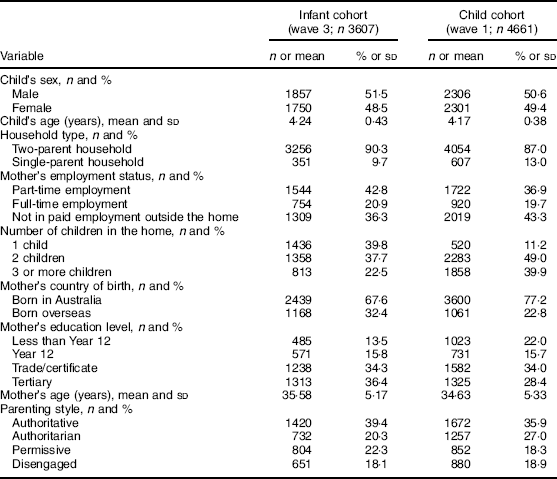
† Number of children in the home and maternal education were measured at wave 1 for the infant cohort.
Parenting styles were similar in both cohorts; 39 % of mothers from the infant cohort and 36 % from the child cohort were classified as having an authoritative parenting style, while the others were classified as authoritarian (20 % infant cohort; 27 % child cohort), permissive (22 % infant; 18 % child) and disengaged (18 % infant; 19 % child).
Reported food and beverage consumption
Table 2 shows that, prior to the day of data collection, while under a third of the children from the infant cohort consumed SSB once or more per day, almost half of the child cohort consumed SSB at least once per day. In contrast, consumption of cold savoury snacks (e.g. potato crisps) once or more per day was similar in both cohorts (~30 %), as was the consumption of cold sweets snacks (cakes, biscuits, etc.; ~75 %) and takeaway snacks and/or hot takeaway foods (~25 %) once or more each day. The consumption of cooked vegetables (~75 %) and raw vegetables (~40 %) once or more each day was similar in both cohorts, as was fruit intake, although 77 % ate fruit more than once per day in the infant cohort while 62 % ate fruit more than once per day in the child cohort.
Maternal reports of child’s food and beverage intakes in the last 24 h in the Longitudinal Study of Australian Children cohorts
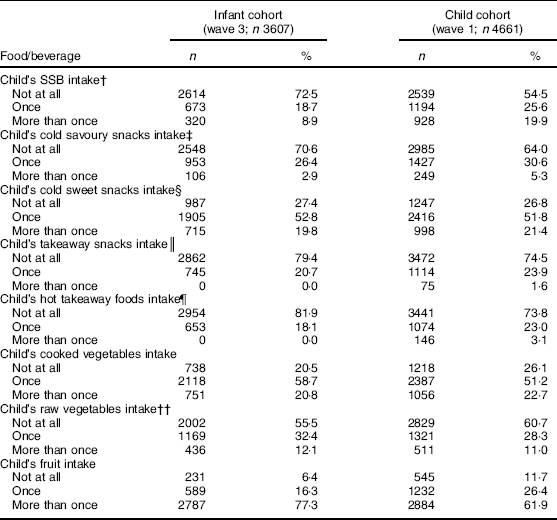
SSB, sugar-sweetened beverages.
† SSB include soft drink and cordial.
‡ Cold savoury snacks include foods such as potato chips.
§ Cold sweet snacks include biscuits, doughnuts, cake or chocolate.
║ Takeaway snacks include hot chips or French fries.
¶ Hot takeaway foods include meat pies, hamburgers, hot dogs, sausages or sausage rolls.
†† Raw vegetables include raw vegetables or salad.
Associations of food and beverage consumption with maternal parenting styles and other variables
Overall, there was evidence of an association between maternal parenting styles and the intake of some foods and SSB by pre-school children (Tables 3 and 4). In general, associations were similar in both cohorts. After adjusting for confounders, authoritative mothers reported that their children had higher intakes of healthy foods including cooked and raw vegetables, compared with the children of disengaged mothers in both cohorts (Tables 3 and 4). Similarly, in the child cohort, authoritarian mothers reported higher consumption of fruit and cooked vegetables (but not raw vegetables; Tables 3 and 4) compared with disengaged mothers. However, these associations were not shown in the infant cohort (Table 3).
AdjustedFootnote † multinomialFootnote ‡ regression models of the association between parenting style and child dietary outcomes in the last 24 h in the Longitudinal Study of Australian Children infant cohort (n 3607)
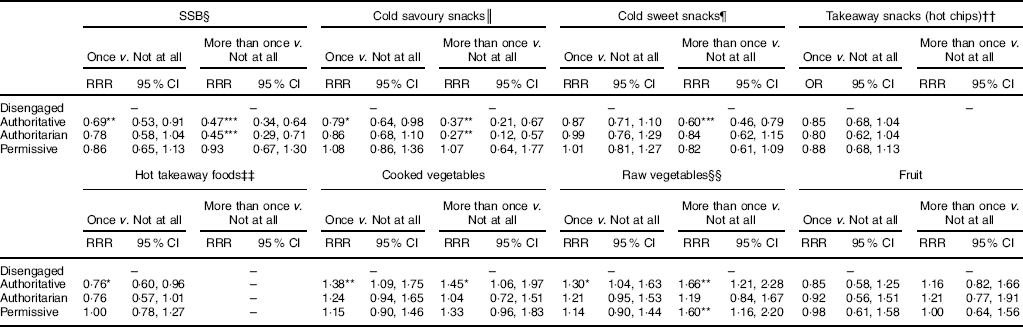
SSB, sugar-sweetened beverages; RRR, relative risk ratio.
*P<0·05, **P<0·01, ***P<0·001.
† Adjusted for number of children in the household, mother’s country of birth, mother’s education level, mother’s age and the presence of a second parent in the home. Results were similar in the unadjusted model (see online supplementary material; Supplemental Table 1).
‡ Logistic regression models were used for takeaway snacks and hot takeaway foods due to the low numbers who consumed these items more than once.
§ SSB include soft drink and cordial.
║ Cold savoury snacks include foods such as potato chips.
¶ Cold sweet snacks include biscuits, doughnuts, cake or chocolate.
†† Takeaway snacks include hot chips or French fries.
‡‡ Hot takeaway foods include meat pies, hamburgers, hot dogs, sausages or sausage rolls.
§§ Raw vegetables include raw vegetables or salad.
AdjustedFootnote † multinomial regression models of the association between parenting style and child dietary outcomes in the last 24 h in the Longitudinal Study of Australian Children child cohort (n 4661)
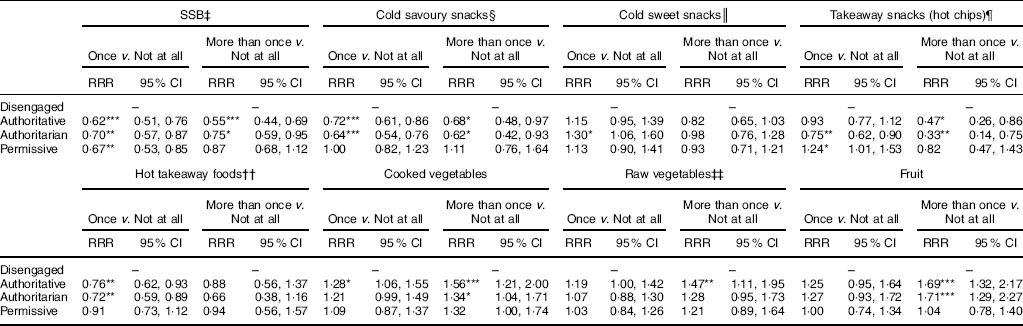
SSB, sugar-sweetened beverages; RRR, relative risk ratio.
*P<0·05, **P<0·01, ***P<0·001.
† Adjusted for number of children in the household, mother’s country of birth, mother’s education level, mother’s age and the presence of a second parent in the home. Results were similar in the unadjusted model (see online supplementary material; Supplemental Table 2).
‡ SSB include soft drink and cordial.
§ Cold savoury snacks include foods such as potato chips.
║ Cold sweet snacks include biscuits, doughnuts, cake or chocolate.
¶ Takeaway snacks include hot chips or French fries.
†† Hot takeaway foods include meat pies, hamburgers, hot dogs, sausages or sausage rolls.
‡‡ Raw vegetables include raw vegetables or salad.
Compared with disengaged mothers, authoritative mothers reported that their children had lower consumption of unhealthy foods including cold savoury snacks (like potato crisps), hot takeaway foods (like meat pies, hamburgers) and SSB (soft drink, cordial) in both cohorts. In general, the findings also suggested that the authoritarian mothers reported their children had lower intakes of these foods in both cohorts (Tables 3 and 4). However, there was no difference for takeaway snacks and hot takeaway foods in the infant cohort, among whom very few children consumed these more than once per day (Table 3).
The food and beverage intakes of children of permissive mothers did not differ significantly from those of the children of disengaged mothers in either cohort (Tables 3 and 4), except for a lower reported consumption of SSB and a higher consumption of takeaway snacks among children of permissive mothers in the child cohort and a higher consumption of raw vegetables in the infant cohort.
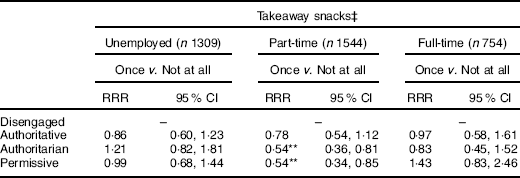
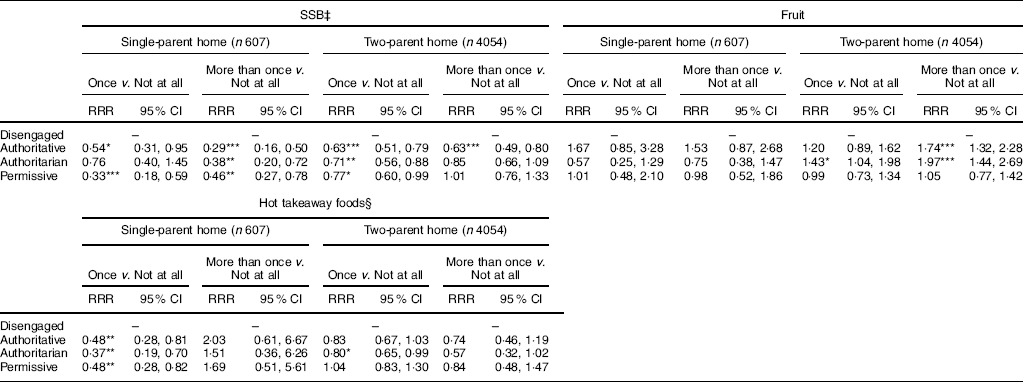
In general, there was little evidence to suggest that the associations between maternal parenting styles and child dietary intake were moderated by either parenting arrangements or maternal employment status. However, there were statistically significant interactions in four of the models suggesting that mothers’ working status may moderate the association between parenting styles and takeaway snacks in the infant cohort (P=0·027) and parenting arrangements may moderate the association between parenting styles and SSB (P<0·001), fruit (P=0·019) and hot takeaway foods (P=0·048) intake in the child cohort. The stratified associations between parenting styles and takeaway snacks stratified by mothers’ working status for the infant cohort are shown in Table 5. The stratified associations between parenting styles and fruit intake, SSB intake and hot takeaway food intake stratified by parenting arrangements for the child cohort are shown in Table 6.
AdjustedFootnote † logistic regression models of the associations between parenting style and child’s intake of takeaway snacks in the last 24 h in the Longitudinal Study of Australian Children infant cohort, stratified by mothers’ working status
RRR, relative risk ratio.
**P<0·01.
† Adjusted for number of children in the household, mother’s country of birth, mother’s education level, mother’s age and the presence of a second parent in the home.
‡ Takeaway snacks include hot chips and fries.
AdjustedFootnote † multinomial regression models of the associations between parenting style and child intake of sugar-sweetened beverages, fruit and hot takeaway foods in the last 24 h in the Longitudinal Study of Australian Children child cohort, stratified by parenting arrangements
SSB, sugar-sweetened beverages; RRR, relative risk ratio.
*P<0·05, **P<0·01, ***P<0·001.
† Adjusted for number of children in the household, mother’s country of birth, mother’s education level, mother’s age and the presence of a second parent in the home.
‡ SSB include soft drink and cordial.
§ Hot takeaway foods include meat pies, hamburgers, hot dogs, sausages or sausage rolls.
The findings in the child cohort suggest that, in single-parent homes, children with permissive mothers had lower consumption of SSB (more than once compared with not at all) than those with disengaged mothers. However, this was not the case for children in two-parent homes. The findings also suggest that in single-parent homes, children with authoritarian mothers had lower consumption of SSB (more than once compared with not at all) than those with disengaged mothers. On the other hand, in two-parent homes, children with authoritarian mothers had lower consumption of SSB (once compared with not at all) than those with disengaged mothers. Differences between single-parent homes and two-parent homes were also found for consumption of SSB in children of authoritarian mothers.
Furthermore, it appears that children in two-parent homes with authoritarian mothers consumed more fruit than those who had disengaged mothers (Table 6). This difference was not found among children from single-parent homes. There was also evidence of a difference in hot takeaway food consumption between children of authoritative mothers and disengaged mothers that was not apparent for children in two-parent homes. In contrast, children in single-parent homes with permissive mothers consumed fewer hot takeaway foods (at once per day) than those with disengaged mothers. This was not the case among children from two-parent homes.
In addition, in the infant cohort, the findings suggest that among mothers who are in part-time employment, children with permissive mothers and authoritarian mothers had lower consumption of takeaway snacks (once compared with not at all) than those with disengaged mothers. This was not the case among children whose mothers were unemployed or in full-time employment.
Discussion
The present study found that in general, across two nationally representative cohorts of Australian pre-school children, maternal authoritative parenting style is mostly positively associated with children’s intake of healthy foods. Additionally, maternal authoritative and/or authoritarian parenting styles are generally negatively associated with children’s intake of unhealthy foods. It also found that some of these associations were moderated by parenting arrangements and mothers’ employment status. However, importantly, these findings were not consistent across both cohorts.
Our findings are consistent with previous studies of pre-school children that found the authoritative parenting style is associated with higher intakes of fruit (with the exception of the infant cohort) and vegetables( Reference Park and Walton-Moss 13 , Reference Peters, Dollman and Petkov 23 , Reference Alsharairi and Somerset 50 ). However, children of authoritarian mothers had greater intakes of cooked vegetables and fruit in only the child cohort and there were no associations between authoritarian parenting style and healthy food consumption in the infant cohort, which is consistent with a study of adolescents’ fruit and vegetable intakes( Reference Lytle, Varnell and Murray 27 ) but not with previous studies of the relationships between authoritarian parenting and pre-school children’s food consumption( Reference Park and Walton-Moss 13 , Reference Peters, Dollman and Petkov 23 , Reference Parletta, Peters and Owen 29 ). This may be due to the higher number of participants in the present study and the study conducted among adolescents( Reference Lytle, Varnell and Murray 27 ). Furthermore, the present study examined fruit and vegetables separately, whereas previous studies have grouped them together( Reference Park and Walton-Moss 13 , Reference Peters, Dollman and Petkov 23 , Reference Parletta, Peters and Owen 29 ).
Our study suggests that authoritative mothers and authoritarian mothers tend to foster similar food consumption patterns in their children regarding unhealthy foods, as both parenting styles tended to be associated with lower consumption of unhealthy foods compared with intakes among children of disengaged mothers. One interesting difference between the dietary intakes of children of authoritative mothers and those of children of authoritarian mothers was the higher consumption of cold sweet snacks (biscuits, doughnuts, cake, chocolate) among children of authoritarian mothers compared with children of disengaged mothers in the child cohort. This association was not found among children of authoritative mothers.
Previous studies of the relationships between parenting styles and the dietary intakes of pre-school children have not found any associations between parenting styles and unhealthy dietary intake( Reference Peters, Dollman and Petkov 23 , Reference Parletta, Peters and Owen 29 ). Discrepancies between the present study and previous studies may be due to the broader groups of foods examined within our study, as previous studies examined the associations of parenting styles in relation to only four groups of foods, including fat from dairy, sweetened beverages and non-core foods( Reference Peters, Dollman and Petkov 23 , Reference Parletta, Peters and Owen 29 , Reference Magarey, Golley and Spurrier 51 ), as well as the different measures of parenting styles used( Reference Peters, Dollman and Petkov 23 , Reference Parletta, Peters and Owen 29 , Reference Reitman, Rhode and Hupp 52 ). While children of both authoritative mothers and authoritarian mothers had healthier dietary intakes in the child cohort when compared with those of disengaged mothers, children of authoritative mothers had a higher intake of raw vegetables while children of authoritarian mothers had a higher intake of cold sweet snacks, compared with children of disengaged mothers. This may be due to the higher levels of warmth given by authoritative mothers, as previous research has shown lower levels of parental warmth are associated with higher intakes of unhealthy foods( Reference Boots, Tiggemann and Corsini 11 , Reference McPhie, Skouteris and McCabe 53 ).
To our knowledge, the present study is the first to examine moderators of parenting styles and pre-school children’s dietary intake. Importantly, our findings were not consistent across both the infant and the child cohorts. Our results indicate, in the child cohort, that children who live in two-parent homes with authoritarian mothers have higher intakes of fruit compared with children of disengaged mothers. Previous research has suggested that children who live in two-parent homes have healthier dietary intakes compared with children who live in single-parent homes; however, the current study has shown that this may also be dependent on maternal parenting style( Reference Byrne, Cook and Skouteris 37 , Reference Huffman, Kanikireddy and Patel 39 , Reference Baek, Paik and Shim 54 ). Considering single-parent homes, the current study found, in the child cohort, that children of authoritative mothers who lived in single-parent homes had a lower intake of hot takeaway foods compared with children of disengaged mothers who lived in single-parent homes. The current study also found that children of permissive mothers who lived in single-parent homes had lower intakes of SSB than children of disengaged mothers who lived in single-parent homes. Additionally, children who lived in single-parent homes with permissive mothers had lower intakes of hot takeaway foods compared with children of disengaged mothers. These results may be due to children of disengaged mothers being more exposed to unhealthy diets, which could be compounded by being in a single-parent home.
The present study found, in the infant cohort, that children of permissive mothers and authoritarian mothers who were in part-time employment had lower intakes of takeaway snacks compared with children of disengaged mothers whose mothers were unemployed or in full-time employment. This may be due to the measures of maternal employment status used, as previous research has shown that other factors such as the nature of employment and psychological effects of employment may be more important than simply examining employment status. Other factors of maternal employment could be included in future research( Reference Oddo, Surkan and Hurley 55 ). Further research focusing on the influence of other potential moderators relating to time pressures and resource limitations may provide further insights into the impact of these moderators on associations between parenting styles and children’s food consumption. As the results are not consistent across both cohorts, future research is important to determine the effects of these moderators.
The results presented in the current study have important implications for health promotion. In particular, these results could be important in providing advice to parents regarding their parenting style and approach to feeding their child and reducing unhealthy food consumption. Training parents in the skills and behaviours associated with a positive parenting style, such as an authoritative parenting style, could be the focus of future intervention programmes.
The limited number of response categories in the dietary questions, as well as only one day of dietary intake, may have limited the estimates of the child’s dietary intake, therefore not capturing the child’s usual dietary intake. They may also have limited the validity of the questions in detecting significant differences between sub-populations. Future research should focus on a more comprehensive assessment of the children’s dietary intake, such as a diet quality index score. Additionally, future research should investigate these associations longitudinally to track the influence of early parenting styles on dietary intake in later childhood, as well as explore the moderators of these associations further.
A major strength of the present study was the use of a nationally representative data set, which makes the findings generalisable to the wider population. A limitation was the study’s cross-sectional design, which did not allow for investigation of causal relationships. Additionally, two variables in the infant cohort (maternal education and the number of children in the home) were measured at wave 1 only, which may not be representative of the cohort at wave 3. Furthermore, as parenting dimensions and styles and health-related behaviours, such as dietary intake, may be considered to have different degrees of social desirability, it is possible that mothers may have over- or under-reported both their parenting dimensions and their children’s dietary behaviours. The study findings need to be confirmed in future studies.
Conclusion
The present study found that children of mothers who reported an authoritative parenting style were more likely to have healthier dietary intakes compared with children whose mothers reported a disengaged style of parenting. The study also found that parenting arrangements and mothers’ working status may moderate the associations between mothers’ parenting style and children’s consumption of SSB, hot takeaway foods, takeaway snacks and fruit intake. Promoting a positive parenting style, such as an authoritative parenting style, as well as supporting parents to overcome limitations in time and resources to prevent unhealthy dietary intake in children could be the focus of future interventions.
Acknowledgements
Financial support: Funding for this study was provided from HDR funding support from the School of Exercise and Nutrition Sciences, Faculty of Health, Deakin University. The funder had no role in the design, analysis or writing of this article. Conflict of interest: The authors declare no conflicts of interest. Authors contributions: All authors contributed to the research design. A.J.B. performed the statistical analysis for the manuscript and drafted the paper. All authors contributed to a critical review of the manuscript during the writing process. All authors approved the final version to be published. Ethics of human subject participation: This study was conducted according to the guidelines laid down in the Declaration of Helsinki and all procedures involving human subjects were approved by the Australian Institute of Family Studies Ethics Committee. Written informed consent was obtained from all subjects.
Supplementary material
To view supplementary material for this article, please visit https://doi.org//10.1017/S1368980018003671



