


A healthy diet is an important factor in the treatment and prevention of obesity in childhood( Reference Barlow 1 , 2 ), yet parents report many issues with providing healthy food for their children( Reference Dwyer, Needham and Simpson 3 – Reference Slater, Bowen and Corsini 6 ). In particular, they describe child resistance and picky eating as challenges they find hard to overcome( Reference Dwyer, Needham and Simpson 3 , Reference Power, Bindler and Goetz 5 – Reference Hoerr, Utech and Ruth 8 ). Parents want to know how to feed their children in a way that brings these problem behaviours under control and results in a healthier diet( Reference Slusser, Prelip and Kinsler 4 , Reference Fulkerson, Story and Neumark-Sztainer 7 , Reference McKee, Maher and Deen 9 ).
To be able to advise parents how to appropriately feed their children in a healthy way that might overcome, reduce or prevent problem food behaviours, a clear understanding of the relationships between parental feeding practices and problem eating behaviours must first be established. While fussy eating has previously been linked with various parental feeding practices, inconsistent results are clearly apparent( Reference van der Horst 10 – Reference Blissett, Meyer and Haycraft 15 ). Furthermore, most of these investigations have used a questionnaire limited to measuring controlling feeding practices( Reference Birch, Fisher and Grimm-Thomas 16 ), restricting the current perspective to only this aspect.
To date, there is evidence to suggest that restrictive feeding practices are associated with both fussy and emotional eating( Reference van der Horst 10 , Reference Farrow, Galloway and Fraser 11 , Reference Blissett, Meyer and Haycraft 15 ), although not all studies have shown a relationship( Reference Webber, Cooke and Hill 12 , Reference Powell, Farrow and Meyer 13 , Reference Blissett, Meyer and Haycraft 15 ). Restriction might also encourage secretive eating behaviours such as food hiding( Reference Kenyon, Fulkerson and Kaur 17 ). Greater food fussiness has been associated with greater parental pressure to eat( Reference Farrow, Galloway and Fraser 11 , Reference Webber, Cooke and Hill 12 ). However, child control of food intake, presumably the antithesis of restriction and pressure, has also been associated with overeating( Reference Savage, Haisfield and Fisher 18 ) and could cause or exacerbate food fussiness( Reference Rigal, Chabanet and Issanchou 19 ). Because of the limited range of feeding practices examined, more complete measures of feeding practices need to be utilised to gain a broader understanding of the dynamics of these relationships. Only one study appears to have used a more comprehensive assessment of feeding practices( Reference Powell, Farrow and Meyer 13 ) and determined that fussy eating was not related to restriction or pressure, but instead negatively associated with monitoring, providing balance and variety in the diet and a healthy food environment.
Parents want to know how to feed their children healthily. With child obesity of prime concern, it is of interest to examine the links between parent feeding and child eating behaviours in overweight children. The aim of the present study is to examine the associations between parental feeding practices, dietary intake and a range of problem food behaviours in overweight 4–8-year-old New Zealand children. Broad measures are used and the moderating effect of fussy eating on the relationships between parental feeding practices and dietary intake is examined.
Methods
Participants
The MInT (Motivational Interviewing and Treatment) Study( Reference Taylor, Brown and Dawson 20 ) was a two-phase randomised controlled trial in which Phase 1 screened for overweight in children aged 4–8 years. Phase 2 was a two-year, family-based intervention to prevent excessive weight gain in the children identified as overweight( Reference Taylor, Brown and Dawson 20 ). Data from the baseline measures of Phase 2 were used in the present analysis.
Participants were recruited from nine primary care practices and two secondary care clinics in Dunedin, New Zealand, between March 2010 and August 2011. Parents were invited to bring their child to a health check at which the child’s height, weight, body composition and blood pressure were measured while the parent completed several questionnaires. If the child was identified as overweight (BMI≥85th percentile( Reference Kuczmarski, Ogden and Guo 21 )) the parent was invited back to a follow-up appointment two weeks after the health check at which he/she was invited into the second phase of the MInT Study, i.e. the two-year lifestyle intervention. If he/she agreed to this, the parent attended a baseline appointment for Phase 2 where he/she completed further questionnaires. The study was conducted according to the guidelines laid down in the Declaration of Helsinki and all procedures involving human subjects were approved by the Lower South Regional Ethics Committee (LRS/09/09/039). Informed written consent was obtained from a parent or guardian of all participating children.
Parents answered questions on maternal education and child ethnicity using the New Zealand 2006 census questions( 22 ). Maternal education was subsequently categorised into: some secondary; completed secondary; tertiary qualification (not university degree); university degree; and other. Participants were able to identify with more than one ethnic group and if so, ethnicity was prioritised as recommended by Statistics New Zealand in the following order of priority: Māori; Pacific Island; Asian; New Zealand European; and Other.
Socio-economic status (SES) was determined using the New Zealand deprivation index 2006 (NZDep2006)( Reference White, Gunston and Salmond 23 ), which used the participant’s home address to identify the level of deprivation in that neighbourhood on a scale from 1 to 10. From this, SES was categorised as high (low deprivation, NZDep2006 1–3), medium (NZDep2006 4–7) or low (high deprivation, NZDep2006 8–10).
Measures
Children’s height was measured to the nearest 0·1 cm with a portable Leicester Height Measure (Invicta Plastics Ltd, Leicester, UK) and weight was measured to the nearest 0·1 kg using digital scales (Tanita BC-418). Measures were obtained in duplicate and averages calculated. BMI was calculated and the Centers for Disease Control and Prevention’s growth charts( Reference Kuczmarski, Ogden and Guo 21 ) used to determine Z-scores. Children were categorised as normal weight (BMI<85th percentile), overweight (85th percentile≤BMI<95th percentile) or obese (BMI≥95th percentile). Only children identified as overweight or obese were included in the present analysis.
Parental feeding practices were assessed with the Comprehensive Feeding Practices Questionnaire (CFPQ)( Reference Musher-Eizenman and Holub 24 ) using the five factors determined by a thorough factor analysis in the full (including normal weight) MInT Study sample of 1093 children( Reference Haszard, Williams and Dawson 25 ); namely, ‘healthy eating guidance’ (how much a parent teaches, models and encourages healthy eating), ‘monitoring’ (how much a parent keeps track of the unhealthy food that the child consumes), ‘parent pressure’ (how much the parent pressures the child to eat or uses food to elicit good behaviour), ‘restriction’ (how much the parent restricts the child’s food intake) and ‘child control’ (how much the child determines which food is consumed and when). The CFPQ is a forty-nine-item questionnaire and answers were given on 5-point response scales from ‘never’ to ‘always’ for questions and from ‘disagree’ to ‘agree’ for statements( Reference Musher-Eizenman and Holub 24 ). Participant scores were calculated as the average of all items in the subscale. If one answer in a subscale was missing, this was imputed by the average of the other items; if more than one item was missing then the subscale was coded as missing.
Dietary intake was assessed using three scales from the Children’s Dietary Questionnaire (CDQ)( Reference Magarey, Golley and Spurrier 26 ). The CDQ consists of twenty-nine questions about the child’s intakes of fruit and vegetables, sweet drinks, dairy foods and non-core foods. Questions cover both variety and frequency of consumption over the past 24 h and 7 d. Non-core foods consist of items such as confectionery, biscuits, chips and takeaways. Data are collated to form scores for fruit and vegetables (recommended score is ≥14), sweetened beverages (recommended score ≤1) and non-core foods (recommended score ≤2)( Reference Magarey, Golley and Spurrier 26 ).
Problem behaviours in overweight children were measured using the Lifestyle Behaviour Checklist (LBC)( Reference West and Sanders 27 ). Only the questions related to problem food behaviours were used in the present analysis (questions 1–15) and included items such as whinging about food, refusing to eat food, requesting food continuously, sneaking food and eating food to comfort themselves. Responses to how much these behaviours had been problems in the last month were recorded on a 7-point response scale from ‘not at all’ to ‘very much’.
Fussy eating was assessed using the average of questions 4–8 of the LBC; i.e. refusing to eat foods and exhibiting resistance or difficult behaviour around food (whinging, yelling, arguing or having a tantrum). This score was named ‘fussy eating’ and participants were then grouped into two groups: fussy eaters (having a fussy eating score greater than the mean) and non-fussy eaters (having a fussy eating score less than or equal to the mean). The mean was used to split the groups rather than the median so that only those participants who were exhibiting greater than average fussy behaviour would be classed as fussy.
Analysis
Means, standard deviations, medians and ranges were calculated for each of the dietary intake scores and the problem food behaviours. Pair-wise correlations were calculated between the food behaviour problem questions and parental feeding practices and dietary intake scores.
Means and standard deviations for the five feeding practices, dietary intake scores and BMI Z-scores were calculated for both fussy eaters and non-fussy eaters and two-tailed t tests determined if the means were significantly different, using a significance level of P<0·05.
Regression analyses for the dietary intake scores were undertaken for each of the feeding practices. These were adjusted for ethnicity, SES, sex and age and also for clusters present when a family had more than one child in the study. Non-standardised (B) regression coefficients, 95 % confidence intervals and P values were calculated. To determine if fussy eating moderated the relationships between dietary intake and parental feeding practices, these regressions were also undertaken with an interaction term. If the interaction term was significant, then the regressions were stratified for fussy and non-fussy eaters. All analyses were undertaken with the statistical software package Stata 12·0.
Missing data
As the questionnaires were completed online, there was very little missing data. Six participants had missing data for SES and were therefore excluded list-wise from the final regression analyses. For those who were missing only one item from a feeding practices subscale, missing values were imputed from the average of the answered questions in the scale. There was only one participant who had more than one unanswered question for two of the feeding practices scales (healthy eating guidance and parent pressure) and this participant was excluded list-wise from analyses involving these scales.
Results
Sample characteristics
Two hundred and three children entered Phase 2 of the MInT Study and had parents who completed all of the baseline measures. In this sample of overweight children, 55 % were female and the average age was 6·4 (sd 1·4) years, with a range of 4·1–9·0 years. In total there were 193 families in Phase 2, eight families had two children and one family had three children enrolled in the study. Table 1 shows further demographic information. The sample was slightly over-representative of Māori (the indigenous people of New Zealand) when compared with national data (15 % of the population) and under-representative of Pacific Island (7 %) and Asian (9 %) ethnicities( 22 ). However, this sample demonstrated greater diversity than is seen in the local area population and was a sample of overweight children, whose demographics differ from national figures. There were good proportions of low SES (25 %) and low maternal education (30 %) in this sample, capturing a diverse range of children. Forty per cent of the sample was classified as obese and 60 % as overweight.
Baseline characteristics of the study participants; overweight children aged 4–8 years (n 203), Dunedin, New Zealand, MInT (Motivational Interviewing and Treatment) Study

† One missing, two ‘New Zealanders’ (not European) and one Brazilian.
‡ Not university degree.
§ Four missing, with the remaining indicating certificates in cooking, massage, unit standards or correspondence courses.
|| 85th percentile≤BMI<95th percentile( Reference Kuczmarski, Ogden and Guo 21 ).
¶ BMI≥95th percentile( Reference Kuczmarski, Ogden and Guo 21 ).
Dietary intake and problem food behaviours
Table 2 demonstrates descriptive statistics for the dietary intake and problem food behaviours in this sample. Just over half (53 %) the sample achieved the recommended intake for fruit and vegetables (i.e. score of ≥14)( Reference Magarey, Golley and Spurrier 26 ). Even fewer children met the recommendation for non-core food intake (37 %), but 130 participants (64 % of the sample) were consuming sweet drinks within recommended amounts (i.e. score of ≤1).
Descriptive statistics for dietary intake and problem food behaviours among overweight children aged 4–8 years (n 203), Dunedin, New Zealand, MInT (Motivational Interviewing and Treatment) Study
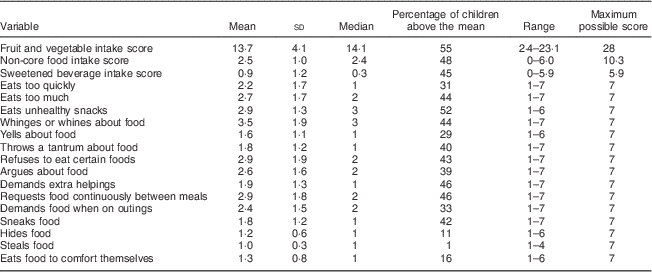
Different problem food behaviours had different distributions, with whinging and arguing about food, refusing foods, requesting and demanding food having higher means than the other problem behaviours. As only three participants scored >1 (minimum value) on the stealing food question, this question was removed from subsequent analyses.
Problem food behaviours, feeding practices and dietary intake
As shown in Table 3, both eating too quickly and eating too much were linked with lower levels of parent pressure and higher levels of restriction. Eating unhealthy snack foods was related to less healthy eating guidance and monitoring and more child control. Fussy eating behaviours such as whinging, yelling or refusing food were associated with less monitoring and more parent pressure, restriction and child control, and also with the consumption of fewer fruit and vegetables and more sweet drinks. More frequent food requests from the child were associated with lower levels of healthy eating guidance and monitoring from the parent and more restrictive or child-controlled feeding practices. Sneaking food was related to greater parent pressure and non-core food intake by the child, while hiding food was related only to greater sweetened beverage intake. Meanwhile children who were more likely to eat to comfort themselves when feeling let down or depressed were also exposed to greater levels of restrictive feeding practices from parents.
Pair-wise correlations between problem food behaviours, parental feeding practices and dietary intake among overweight children aged 4–8 years (n 203), Dunedin, New Zealand, MInT (Motivational Interviewing and Treatment) Study
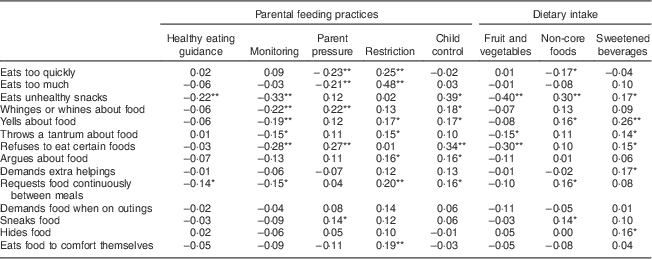
*P<0·05, **P<0·01.
Fussy eating
The reliability coefficient (Cronbach’s α) for the fussy eating scale (questions 4–8 from the LBC) was 0·84, indicating good internal consistency. The mean score for fussy eating was 2·44 (sd 1·2) with a range of 1–6·8. Seventy-four children (out of 203) were categorised as fussy eaters, by having a fussy eating score greater than the mean. Parents of fussy eaters reported higher levels of parent pressure and child control and also less monitoring of food intake (Table 4). Fussy eaters also consumed less fruit and vegetables than non-fussy eaters, although reported non-core food intake did not differ.
BMI Z-scores, parental feeding practices and dietary intake scores, for fussy eaters compared with non-fussy eaters, among overweight children aged 4–8 years (n 203), Dunedin, New Zealand, MInT (Motivational Interviewing and Treatment) Study

† Scores from the Comprehensive Feeding Practices Questionnaire (possible range: 1–5).
‡ Scores from the Children’s Dietary Questionnaire.
Table 5 presents the dietary intake regression coefficients for feeding practices in the whole sample, adjusted for ethnicity, SES, sex and age. In the main, these adjustments strengthened the associations with foods but not sweet drinks (data not shown). This showed that healthy eating guidance was associated with greater fruit and vegetable consumption (B=1·5) and lower non-core food (B=−0·4) and sweetened beverage consumption (B=−0·5). By contrast, inverse associations were observed with child control (fruit and vegetables: B=−1·1; non-core foods: B=0·5), although no relationship to sweet drink intake was seen. Higher levels of monitoring were also related to lower non-core food and sweet drink intake (B=−0·4 and −0·5, respectively). A 1-point increase in fruit and vegetable score or non-core food score is equivalent to an increase in variety or frequency of consumption of that food group of approximately one type or time each day( Reference Magarey, Golley and Spurrier 26 ). A 1-point increase in score for the sweet drink scale is approximately equal to an extra sweet drink serving per day( Reference Magarey, Golley and Spurrier 26 ).
Linear regression resultsFootnote † for dietary intake scores and feeding practices among overweight children aged 4–8 years (n 197), Dunedin, New Zealand, MInT (Motivational Interviewing and Treatment) Study
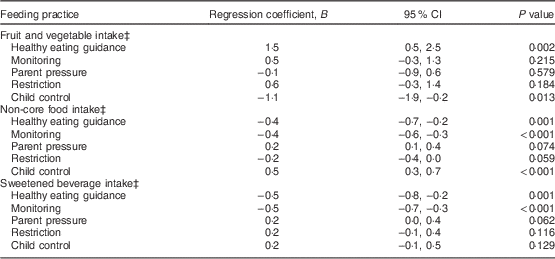
† Adjusted for ethnicity, socio-economic status, age and sex and also family clusters (n 196 for healthy eating guidance and parent pressure analyses).
‡ Scores from the Children’s Dietary Questionnaire.
These regressions were also undertaken with an interaction term for fussy eating and the feeding practice. These indicated that fussy eating moderated the associations between fruit and vegetable consumption and both restriction (interaction term P=0·003) and monitoring (interaction term P=0·043). This moderation was most pronounced with restriction, where the relationship between increased restriction and greater fruit and vegetable consumption was very strong with fussy eaters (B=2·9; 95 % CI 1·5, 4·3; P<0·001) but not at all present with non-fussy eaters (B=0·1; 95 % CI −0·9, 1·1; P=0·873). Monitoring showed a stronger positive (though non-significant) relationship with fruit and vegetable consumption among fussy eaters compared with non-fussy eaters (fussy eaters: B=1·0; 95 % CI −0·1, 2·2; P=0·076; non-fussy eaters: B=−0·4; 95 % CI −1·4, 0·6; P=0·459).
Discussion
The present analysis used a comprehensive measure of feeding practices to investigate associations with problem eating behaviours and diet in overweight children. From this it was seen that more structure and oversight of the feeding environment by parents was related to fewer problem eating behaviours by these children, particularly fussy eating. This is contrary to previous studies, which used more limited measures of feeding practices and have suggested that more parental control may be detrimental to a child’s diet and eating behaviours( Reference van der Horst 10 , Reference Farrow, Galloway and Fraser 11 , Reference Birch and Fisher 28 ).
Parents who guided their child’s eating in a healthy way had children who consumed more fruit and vegetables and fewer non-core foods and sweet drinks. Similar negative associations with less healthy foods were also seen with parental monitoring of food intake, with the parents of fussy children monitoring less, which has been shown in previous research( Reference Powell, Farrow and Meyer 13 , Reference Blissett, Meyer and Haycraft 15 ). Results suggest that healthy eating guidance and, in particular, monitoring may have a greater positive effect on the diets of fussy children than non-fussy children or that a lack of these influences has exacerbated or caused fussy eating. Alternatively it may be that with particularly picky children, a reduction in these positive feeding practices has occurred in response to the child’s eating behaviours.
Higher levels of parent pressure (urging the child to eat and/or using food as a reward) were reported by parents of fussy children. It seems logical that parents would urge their child to eat if he/she refused food and also that parents might use food as a reward to overcome resistant behaviour. This is also consistent with the currently available literature( Reference Farrow, Galloway and Fraser 11 – Reference Powell, Farrow and Meyer 13 ).
Perhaps a surprising result was the strong positive association between restriction and fruit and vegetable consumption seen only in fussy eaters. Restriction is a controlling practice where parents limit consumption of unhealthy foods and also the amount of food consumed, which could understandably elicit a conflictive response from the child. This was illustrated by the higher reported levels of restriction in the parents of children classed as fussy. However, the positive relationship with fruit and vegetable intake suggests that if an overweight child who is a picky eater has a parent who limits food intake, then that child’s fruit and vegetable consumption is greater than that of a picky child with a parent who does not limit food intake. A 1-point increase in restriction by the parent equates to approximately a 3-point increase in fruit and vegetable score, suggesting an increase in both variety and frequency of fruit and vegetable consumption each day. This would appear to be a meaningful improvement.
Child control was consistently associated with fussy eating behaviours and with a lower intake of fruit and vegetables and a higher intake of non-core foods. Fussy eating is a problem for parents and the associations presented here highlight a lack of structure and control from the parent. However, given the cross-sectional nature of these analyses it is unknown whether this occurs as a response or a contribution to the fussy eating, or if there is an unaccounted confounder.
Eating too quickly and eating too much were related to more restriction and less pressure from parents. Both these parental feeding practices could be either a response to this child eating behaviour or a cause. For example, a parent who restricts food might groom a child to eat quickly and to then be perceived to eat too much. Or it could be that a child who eats too quickly and/or too much requires more restriction from a parent. Eating unhealthy snacks was related to those parental feeding practices that might make the household more conducive to consuming more unhealthy snacks; that is, less healthy eating guidance and monitoring, and more child control.
Children who requested food continuously between meals ate more non-core foods and understandably this frequent requesting was also associated with a higher degree of perceived restriction by the parent. However, there was also less guidance and monitoring, and more child control, suggesting limited structure in the feeding environment, which might leave a child unsure about when and what food will be allowed, leading to more asking and then to more regulation by the parent. An overweight child who continuously asks for food is likely to be stressful for a parent and strategies to reduce this would be helpful, such as having set eating times that the whole family is aware of and adheres to; not having highly desirable food available in the home; and having healthy foods available to direct the child towards.
An unusual result is the correlation between parent pressure and sneaking food, which although weak might be picking up a rebellious response by the child to the overt control exhibited by the parent. Future research could explore links between children’s behaviour (such as non-compliance) and feeding practices to clarify this theory. Indeed, it may be that training parents in behaviour management techniques results in changes to the feeding practices used and improvement in other aspects, including diet, problem food behaviours and ultimately weight in children( Reference West, Sanders and Cleghorn 29 , Reference Gerards, Sleddens and Dagnelie 30 ).
Eating for comfort was associated with restriction, which has been seen previously( Reference Blissett, Meyer and Haycraft 15 ). This might indicate that children who comfort-eat are in more need of restrictive feeding practices. While longitudinal evidence has suggested that girls eat more in the absence of hunger if their parents exhibit more restriction at home( Reference Fisher and Birch 31 , Reference Birch, Fisher and Davison 32 ), this observation was from an experimental setting where the restriction was removed for a while and therefore is not directly comparable to a parental report of comfort eating in the home environment. Furthermore, restriction was not related to secretive eating behaviours, such as food hiding or sneaking in this sample.
The present analysis of problem food behaviours and feeding practices responds to the need for evidence-based recommendations for how parents feed their children, given that child behaviour is cited as a major barrier. A reasonable sized and diverse sample was used to examine associations between problem food behaviours, dietary intake and parental feeding practices, so that for each analysis there were greater than ten participants per variable. However, it may still be that this sample did not have the power to detect associations, in particular for the possibility of interactions between fussy eating and feeding practices on dietary intake. Furthermore, it is a possibility that some of the significant results may have occurred by chance. This sample consisted of overweight children only, so the results are not generalisable to other populations. However, this is a group of great relevance and these results may be used to inform intervention studies looking to treat overweight in children of this age. Replication of the study in a sample of children of all sizes (not just overweight) might offer a deeper understanding of how feeding practices are related to problem food behaviours and whether these have greater or lesser associations in overweight children. While further longitudinal and experimental research is needed, the study has revealed interesting associations and proposed theories that require testing. Hypotheses to examine include: If fussy eating is treated, does this improve the diets and weight of children? Does more child control of feeding cause or exacerbate fussy food behaviour in overweight children? Does a more structured feeding environment result in fewer requests for food or less fussiness? Is fussy eating related to weight status and/or weight gain? And finally, is child non-compliance (i.e. refusing to eat or behave appropriately with eating) related to feeding practices and dietary intake?
To conclude, associations between parental feeding practices, dietary intake and problem food behaviours exist in overweight children and indicate that a more structured food environment might be advantageous for children of this age.
Acknowledgements
Financial support: This work was supported by the Health Research Council of New Zealand (grant number HRC 09/087B). The Health Research Council of New Zealand had no role in the design, analysis or writing of this article. Conflict of interest: None. Authorship: R.W.T. is Principal Investigator of the MInT Study. R.W.T. and J.J.H. designed the study; J.J.H. collected and analysed data; J.J.H. wrote the draft manuscript; R.W.T., P.M.L.S. and S.M.W., supervised; all authors contributed to writing of the manuscript. Ethics of human subject participation: Ethical approval was obtained from the Lower South Regional Ethics Committee (LRS/09/09/039) and informed, written consent was obtained from a parent or guardian of all participating children.



