


Introduction
Marine fishing is estimated to be a USD 100 billion industry, with seafood comprising 19% of global human protein consumption (Botsford et al., Reference Botsford, Castilla and Peterson1997; Pauly, Reference Pauly2009). Fishing has severely affected marine ecosystems, and potentially has major spillover effects on food and livelihood security (Pauly et al., Reference Pauly, Christensen, Guenette, Pitcher, Sumaila and Walters2002). Fisheries are prone to serious lapses in regulation, monitoring and management because of their open access nature (Botsford et al., Reference Botsford, Castilla and Peterson1997; Cooke & Cowx, Reference Cooke and Cowx2006). The lack of effective monitoring also results in failure to assess the true state of fisheries and stocks (Worm et al., Reference Worm, Hilborn, Baum, Branch, Collie and Costello2009; Branch et al., Reference Branch, Jensen, Ricard, Ye and Hilborn2011), particularly in developing countries. Stock assessment-based management in developing countries could prove unreliable (see Kasim et al., Reference Kasim, Muthiah, Pillai, Yohannan, Manojkumar, Said Koya, Menon, Pillai and Ganga2002, and Muthiah et al., Reference Muthiah, Pillai, Kasim, Bhat, Joseph and Jayaprakash2003, for contradicting recommendations about seerfish exploitation) given the inconsistency of ecological baselines and lack of scientific knowledge about the multi-species fisheries in these countries. Management action based on single-species assessments also results in conflicts between regulating agencies and the multi-species nature of the actual fishery (Beddington et al., Reference Beddington, Agnew and Clark2007). Inconsistent knowledge about multi-species fisheries and fishing practices contributes to fish declines and the imperiled state of many fisheries (Ban & Vincent, Reference Ban and Vincent2009).
National fisheries laws and international treaties are often not linked to the local realities that fishermen face (Allison, Reference Allison2001). Local participation in fisheries management predicates understanding and building on the existing trends and patterns of resource use (St. Martin, Reference St Martin2001; Chan et al., Reference Chan, Pringle, Ranganathan, Boggs, Chan and Ehrlich2007; Ostrom, Reference Ostrom2007). Although better fishery management could create and preserve sustainable fishing practices, ensuring compliance with regulations requires local acceptance and participation (Bavinck & Johnson, Reference Bavinck and Johnson2008). Fishery managers must acknowledge that people's perceptions about a fishery influence their resource extraction patterns and local fisheries management (Castillo & Saysel, Reference Castillo and Saysel2005; Beddington et al., Reference Beddington, Agnew and Clark2007). These perceptions are particularly important in developing countries such as India, where centralized governance of fisheries is poorly enforced. Fishing behaviour, practice and the success of future management interventions is influenced by perceptions about the fishery (Hansen et al., Reference Hansen, Ban, Jones, Kaufman, Panes, Yasué and Vincent2011) but there have been few studies in India that have systematically documented these perceptions and practices.
The Indian fishery has expanded almost four-fold in the mechanized and industrial sectors over the last 50 years (Bhathal & Pauly, Reference Bhathal and Pauly2008) but despite an increase in marine exports (MPEDA, 2011) studies have predicted an overall decline in fish stocks (Bhathal & Pauly, Reference Bhathal and Pauly2008; Lobo et al., Reference Lobo, Balmford, Arthur and Manica2010). Our study explores these predicted declines by providing baseline information on fishermen's perceptions of the state of fish stocks and bycatch, documenting current fishing practices and management in the context of existing legal structures and exploring the potential for using sustainable techniques. We identify the main social and economic drivers of perceptions and highlight the key factors that have allowed fishermen to adapt in response to their perceptions. We hypothesize that an individual's socio-economic characteristics drive perceptions about the fishery and also influence an individual's willingness to use more sustainable fishing practices. Thus, we expect that more educated, richer and older fishermen would be more open to ideas of sustainability. We specifically compare fishing communities in the Indian states of Maharashtra and Tamil Nadu, as these states account for 20% of India's marine fish production (Ministry of Agriculture, 2010) but differ in fishing histories and laws (Simmonds, Reference Simmonds1878; Thurston, Reference Thurston1890; Silas et al., Reference Silas, Pillai and Siraimeetan1985; Bavinck, Reference Bavinck2003). As defining a fishing ‘community’ can be problematic (Leach et al., Reference Leach, Mearns and Scoones1999), we expand the definition of communities to include spatial and socio-economic factors, to identify real community-binding forces. By highlighting the most important factors that influence perceptions and fishing practice we make recommendations to improve and develop better management plans for sustainable fisheries in developing countries such as India.
Study area
We selected study areas in two states, to represent the diverse set of ecological and social conditions in which fishing occurs on the eastern and western coasts of India (Fig. 1a). In Tamil Nadu, state fisheries are near-shore in coral reefs or sea grass beds (Sridhar et al., Reference Sridhar, Kasturi, Rangan, Pearlin, Natarajan and Jairaj2007), and fishermen constitute c. 10% of the population (Census, 2011). We focused on fishing villages in Ramnathapuram district (Fig. 1b), some of which are in the Gulf of Mannar Biosphere Reserve, a Marine Protected Area (Silas, Reference Silas1977; Sridhar et al., Reference Sridhar, Kasturi, Rangan, Pearlin, Natarajan and Jairaj2007). Fishing along this 271 km coast was formerly conducted by non-mechanized gill-netting and has gradually become more mechanized (Bhathal & Pauly, Reference Bhathal and Pauly2008). The proximity of the international boundary with Sri Lanka, which at the closest point is c. 12 km from the shore, results in a narrow Exclusive Economic Zone, with mechanized trawl netters and artisanal fishermen using the same fishing space.
(a) The locations of the study areas on the western and eastern coasts of India, and details of (b) Ramnathapuram district in Tamil Nadu, and (c) the Ratnagiri and Sindhudurg districts in Maharashtra. The black dots in (b) and (c) indicate the villages where surveys were conducted.

The Maharashtra state fisheries are coastal and offshore fisheries, which include species found on the continental shelf and in the open ocean (Srinath, Reference Srinath, Joseph and Jayaprakash2003). The study area encompassed villages across the Ratnagiri district, which supports 67,615 fishermen, and Sindhudurg district, which has 25,375 fishermen (Fig. 1c; Government of Maharashtra, 2003). The mode of fishing ranges from traditional drag netting (rampan) to more modern purse-seining techniques. These fishing techniques can be used in a larger area because of India's wide Exclusive Economic Zone in this region.
Methods
Questionnaire survey
We interviewed 352 fishermen, using a semi-structured questionnaire across both study sites. To refine the questionnaire we conducted a pilot study in Tamil Nadu in December 2010. Each respondent was informed of the goals of the study, contact information of the interviewers was provided and verbal consent was sought from the respondents. Some respondents agreed to be recorded or videographed and, upon their encouragement, these interviews were collated into a short documentary for display within each of their communities. The final questionnaire consisted of 37 questions covering demographics, fishing vessels, distance travelled, regular fishing areas, target and bycatch species, perceptions of change in catch, and willingness to change. The questionnaire was designed to incorporate a mix of multiple choice and open-end answers, as well as some repeat questions to triangulate and detect fabricated responses (Denzin, Reference Denzin1970). Leading questions were avoided by careful framing of each question in both Marathi (spoken in Maharashtra) and Tamil (spoken in Tamil Nadu). We ensured that information provided about fish was comparable by asking for a measure similar to catch per unit effort (CPUE), rather than annual catch sizes. Fishermen were asked if they noticed a difference in the amount of catch at each fishing attempt (dip of net or toss of line) in the present compared to what they used to obtain 5 or 10 years ago. In addition to the authors, volunteers who spoke the local dialect and represented a cross-section of religions (an important consideration in some of the fishing communities) were trained as interviewers. We used a modification of the snowball sampling approach (Goodman, Reference Goodman1961), in which respondents were asked to introduce us to users of other types of fishing gear or techniques. Our final interviews with fishermen were conducted from January 2011 until the end of March 2011, and focused on fishermen. Respondents were interviewed by trained volunteers who spoke the same dialect and belonged to the same religion. This strategy was particularly useful in Tamil Nadu, where the responses of fishermen were likely to be biased by the faith of interviewers and the language they spoke (A. Lobo, pers. comm., 2010).
This questionnaire allowed us to examine perceptions of fishermen, their fishing practices and their intentions with regard to fishing techniques and sustainability but it did not allow us to determine whether these perceptions were based on the real dynamics of fish stocks. The focus of this study was instead to examine fishing behaviour in response to fishermen's perceptions, whether or not these perceptions reflected the actual state of the ecosystem. We also set out to examine how willing they would be to change to more sustainable practices.
Data on the spatial distribution of fishing effort were collected using a participatory geographical information system approach (Quan et al., Reference Quan, Oudwater, Pender and Martin2001). A map-based interview was conducted with volunteer fishermen, to collect local knowledge, as suggested by Close & Hall (Reference Close and Hall2006), by showing respondents maps on which were marked locations of local fish landing sites and prominent coastal features. The respondents were oriented to the maps and the information provided was validated by having these maps checked by other respondents (including those from other villages in each study site). Interviewees, who were not comfortable with marking locations directly on the map, verbally identified their fishing grounds and this information was transferred onto the map by the interviewers, who were familiar with the area and type of information provided by respondents.
Government fishing regulations, schemes and subsidies
We searched for and collated laws related to the fisheries in the study regions, to understand how legislation might affect fishing practices. We identified the major state-level fisheries laws from FAO (2012) and conducted searches using Google, Google Scholar and Web of Knowledge, using the keywords India, Tamil Nadu, Maharashtra, Gulf of Mannar, Ratnagiri, fishing, fisheries, law, act, rules, NCDC [National Co-operative Development Corporation], and fishing schemes, to identify further orders that modified these laws and affected fishing communities. We limited our search to documents that could have had an effect after India gained independence in 1947. By asking questions such as ‘When did you change fishing practices?’ (followed by prompts for timeline) and ‘What prompted you to change your fishing practices?’ (if applicable), ‘Have you found certain government schemes useful?’, ‘Are there any species that are prohibited from being caught by law?’, ‘Are there any fishing practices that are considered illegal?’ and ‘Are you aware of people using illegal practices or catching prohibited species?’ we tried to identify the awareness of fishermen with respect to fishing rules and the importance of financial schemes in encouraging certain fishing practices.
Analysis
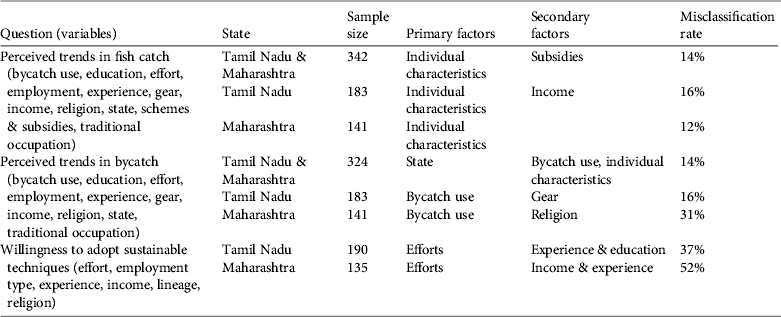
We used classification trees (De'ath & Fabricius, Reference De'ath and Fabricius2000) to model the drivers of perceptions and analyse willingness to adopt new methods. We chose variables that represented social and cultural values (e.g. education, religion), economic values (e.g. income, sale of bycatch) and fishing practices (e.g. experience, gear used). The variables used to generate classification trees are listed in Table 1. As the variables influencing perceptions were likely to differ between states, we explored the predictors of fishermen's perception of change both separately and by pooling data. To identify important predictors and verify the accuracy of the models, we built conditional inference random forests (Breiman, Reference Breiman2001). The χ2 test was used for comparison of perceived declines in Tamil Nadu and Maharashtra. We analysed the predictors of willingness to change separately for each state. Analysis was carried out with Excel 2003 (Microsoft, Redmond, USA) and the packages rpart (Therneau & Atkinson, Reference Therneau and Atkinson2012) and party (Hothorn et al., Reference Hothorn, Buelhmann, Dudoit, Molinaro and Der Laan2006) in R v. 2.12.1 (R Development Core Team, 2012).
Results of the classification trees indicating the primary variables that explained fishermen's responses to each of our main questions. The variables used in analysis are in parentheses after each question, and misclassification rates are quoted for all trees.
Fishing zones were collated from map-based interviews, by georeferencing the locations provided, using Quantum GIS (Quantum GIS Development Team, 2009). The fishing zone maps were classified based on gear type to determine how different gear users spread out in the sea and whether they claim to follow spatial regulations. The fishermen in Tamil Nadu delineated their fishing zones based on distance from the shore, whereas those in Maharashtra reported sea floor depths. These depths were converted to distances using bathymetry maps from C-MAP (Jeppesen, 2007) and transferred onto the digital maps.
Results
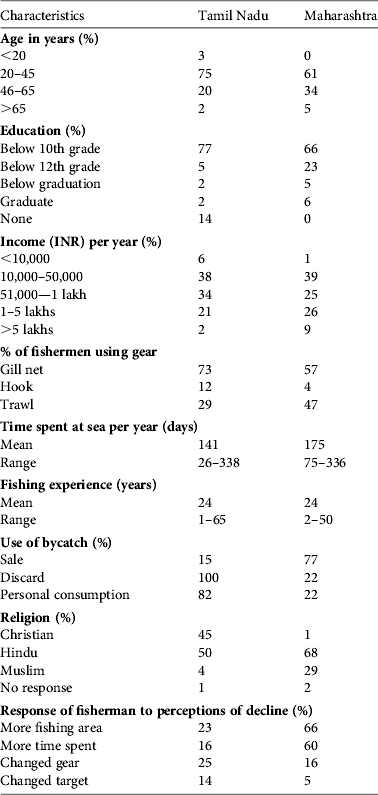
We analysed the responses of 188 fishermen from 23 villages in Tamil Nadu and 154 fishermen from 39 villages in Maharashtra, after discarding 10 interviews for which triangulation indicated the fishermen were fabricating responses. All respondents were male except for one female respondent in Maharashtra who fished. The majority of respondents were aged 20–45 years. Most respondents had not completed high school education and had spent a mean of 24 years fishing. More respondents claimed to discard bycatch in Tamil Nadu than in Maharashtra. The characteristics of respondents are summarized in Table 2.
Detailed individual, social, economic and fishing characteristics of respondents in fishing communities of Maharashtra and Tamil Nadu (Fig. 1).
Perceptions
In response to our question about perceptions of change in fish-catch over the last 20 years, 82.6% of respondents in Tamil Nadu perceived a decline in fish caught compared to 89.6% in Maharashtra (χ2 = 7.69, P = 0.02). Eighty-three percent of small-scale fishermen in Tamil Nadu stated that large-scale trawling was responsible for declines. In Maharashtra 30% of trawler owners surprisingly reported trawling as a cause for fish decline and 26% stated that industrial gear was responsible for overfishing. Other reasons cited included the use of illegal gears (22%), the 2004 Indian Ocean tsunami (18%) and pollution (13%), fishing during the monsoon ban in Maharashtra, night trawling and the use of small mesh size nets.
In response to our question (n = 324) about perceptions of change in bycatch over the same period, most respondents (95%) did not recognize the category ‘bycatch’ as they did not go out with the intention to target solely one or a few species, only ‘preferring or hoping to catch more lucrative species’ (translation from interviews in Tamil Nadu). Only the purse-seiners tended to have definite targets. Most respondents spoke of their catch in terms of higher and lower economic values that were more and less preferred, respectively. In Tamil Nadu 73% of respondents perceived a decrease in lower economic value species compared to 65% in Maharashtra (χ2 = 8.54, P = 0.01).
Drivers of perceptions
The most important predictors of perceptions about catch identified by both the classification trees (Fig. 2) and the random forest analysis (n = 342, c statistic = 0.87) were individual characteristics of fishermen, such as their experience, religion, receipt of government schemes and subsidies, and sale of bycatch. Experienced fishermen whose families had been engaged in this livelihood for several generations were more perceptive of declines in Tamil Nadu. They described very high rates of decline during open-ended answers, making comparisons with hearsay about catch from previous generations. Older Tamil Nadu fishermen noticed declines over the last 22 years but only current generation Maharashtra fishermen noticed declines (over the last 10 years). Fishermen with over 50 years of fishing experience, who were Christians from Tamil Nadu or Muslims in Maharashtra, were more likely to perceive catch declines. Religion also emerged as an important predictor when the responses from each state were analysed separately (Table 1).
The classification tree indicating the most important drivers of perceptions of catch.
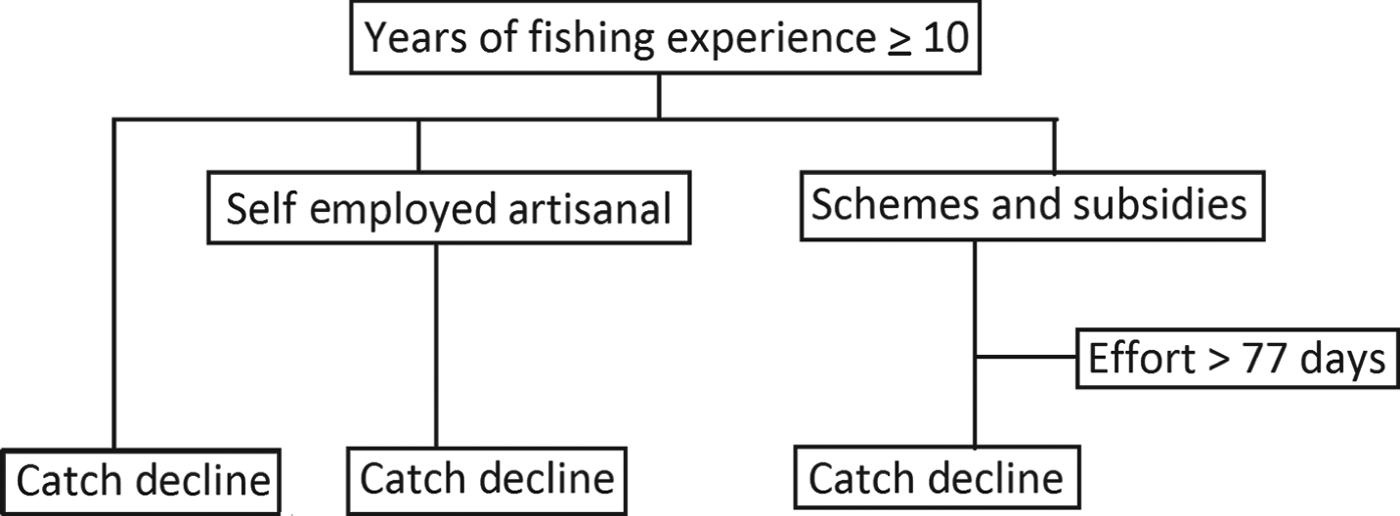
Another important predictor was government schemes and subsidies. Among those who availed themselves of subsidies, 80% perceived decline in fish catch and were more likely to fish for > 74 days per year. During the interviews many fishermen expressed a need for further subsidies, for them to make ends meet. The details of how these predictors interacted with each other are illustrated in Fig. 2.
Perceived declines in bycatch (lower-value species) were greater in Tamil Nadu than in Maharashtra. An important factor predicting perceptions of decline was the use of bycatch for sale and personal consumption. Eighty-four percent of respondents who sold bycatch operated trawl nets in Tamil Nadu (n = 183). Muslims were more likely to be trawl boat owners or workers in Maharashtra. Perceptions of decline in bycatch were also related to the religion of the respondent. A greater proportion of Muslims and Christians perceived declines as they constituted 75% of the respondents who sold these low-value species. This model had a low misclassification rate (Table 2) and high variable accuracy (c statistic = 0.87), suggesting that the predictions are reliable.
Response to perceptions
Fishermen initiated several responses to catch declines. More fishermen in Tamil Nadu (10%) reported shifting their fishing practices to target new species compared to Maharashtra (3%; χ2 = 10.31, P = 0.001). The change in fishing area is greater in Maharashtra than in Tamil Nadu (χ2 = 22.1, P < 0.001), where 67% of Maharashtra fishermen have increased the spatial extent of their fishing zones (Table 1). Some Tamil Nadu fishermen (25%) admitted to changing their fishing gear from traditional to gill or trawl nets.
There was a high degree of spatial overlap between the users of different fishing gears. Fishermen using gill nets travelled large distances that were comparable to the distances travelled by trawl fishermen, who generally had much larger boats with more powerful engines (Fig. 3). Fishermen on smaller boats achieved these distances by camping in villages along the way. Both purse-seining and trawling were conducted in zones that are legally designated for artisanal use only (Ministry of Agriculture, 2004). The mean estimated fishing ground in Maharashtra was c. 3,000 km2 and in Tamil Nadu it was > 7,000 km2.
Overlap in areas used by artisanal (n = 178), trawl (n = 62) and purse-seine (n = 39) fishermen. The areas of most intense use are indicated by the most intense colour. The double line around the coastal boundary of India indicates the limits of the exclusive artisanal zone.

Willingness to use sustainable practices
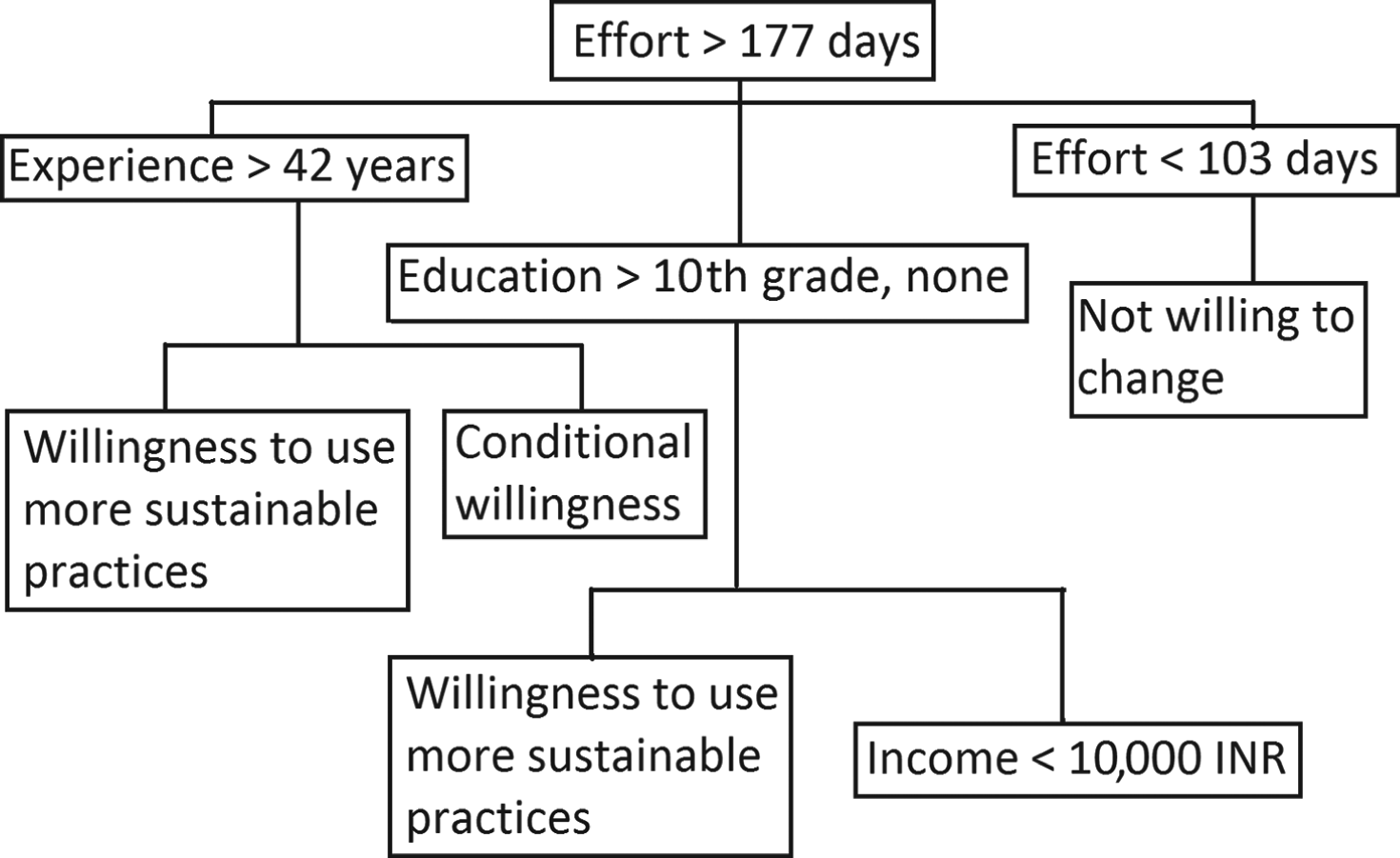
The classification trees for willingness to change to sustainable practices (Fig. 4) identified fishermen who spent more days at sea as more likely to accept new modes of fishing. Respondents who fished for > 177 days and those with > 42 years of fishing experience were more accepting of changing fishing methods and using sustainable technology. In Tamil Nadu 62% of fishermen were willing to change their mode of fishing only under certain circumstances (45% were in favour of government implementation of new methods or banning current methods). In Maharashtra 55% of fisherman were willing to change their mode of fishing, and 30% of those were agreeable to change without any preconditions. Many stated that falling fish prices ‘due to the development of aquaculture’ (translation from interviews) exacerbated ‘the effect of declining catches’. While they recognized that practices must change to sustain their livelihood, fear of adopting new techniques mainly stemmed from the perceived associated risks and loss of profit. Those who fished for < 103 days per year were less willing to change (Fig. 4). A significant factor influencing responses was profit, with 7% of the total respondents ready to change provided the new mode was profitable. The results of these classification trees are also summarized in Table 1.
The classification tree indicating the most important drivers of willingness to use sustainable alternatives for fishing.
Influence of regulations and government schemes
We found two types of government initiatives that affect fisheries in post-colonial India: government schemes that encourage certain fishing practices and regulations that limit or discourage fishing practices (Table 3). Most fisheries schemes that affect the study sites seem to be aimed at mechanizing the fleet and modifying gears. Central government-sponsored schemes have promoted the development of offshore deep-water vessels since 1997 in Maharashtra but there have been no similar schemes in Tamil Nadu. Tamil Nadu fisheries, however, have fuel subsidies for existing craft (Government of Tamil Nadu, 1983). In open-ended answers, trawl-vessel owners in Maharashtra stated that the National Co-operative Development Corporation's schemes to subsidize trawlers encouraged them to switch from gill net fishing to trawling. Many stated that they might not have considered switching except that this scheme made trawl vessels seem more affordable.
Fishery regulations and schemes in the states of Tamil Nadu and Maharashtra that are intended to regulate fishing. Sources: Government of Tamil Nadu (1983), Kolhatkar (Reference Kolhatkar1983), Government of Maharashtra (2003).
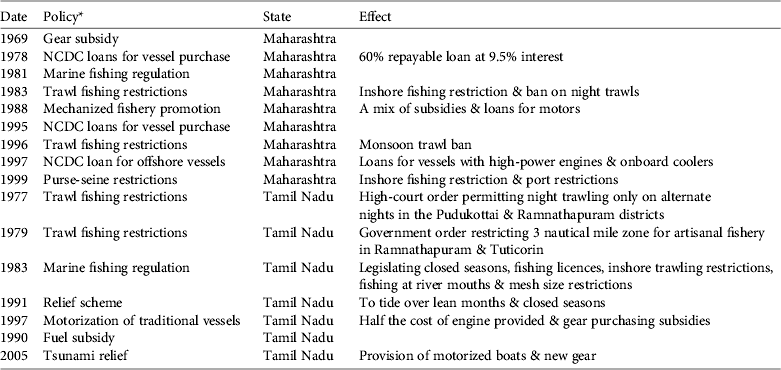
* NCDC, National Co-operative Development Corporation
Government regulations are based at the level of the state and have been further modified at smaller scales, such as districts, by high court and fishery department orders (Bavinck, Reference Bavinck2003). In response to open-ended questions about prohibited and illegal activities, fishermen told us about the following regulations.
In 1983 Maharashtra banned trawling at night (Kolhatkar, Reference Kolhatkar1983), a regulation with which compliance is high, and Tamil Nadu created a closed season lasting 2 months and legislated the need to purchase fishing licenses (Government of Tamil Nadu, 1983), with which compliance is low. Monsoon trawling was banned later in Maharashtra (Kolhatkar, Reference Kolhatkar1983). This was soon followed by a relief scheme in both states to tide fishermen over the closed season but access to the relief money was difficult because of the bureaucracy involved.
Artisanal, trawl-boat and purse-seine fishermen were all aware of a legally designated artisanal fishing zone within 3 nautical miles (4.8 km) off the coast. Respondents using gill-nets in Tamil Nadu supported this legislation but revealed that trawl and purse-seine boats fish in these waters. Respondents using the latter types of gear also admitted fishing in shallow waters (Fig. 3), saying that species of highest economic value were found in coastal near-shore waters. Trawl-boat owners and workers reported not following spatial regulations because of the economic constraints of high fuel costs associated with fishing further from shore.
Discussion
Our study confirms that fishery management at the study sites is largely ad hoc. The majority of the fishermen (83% in Tamil Nadu and 90% in Maharashtra) perceived declines in total catch, as a consequence of which they have modified their fishing practices. Our hypothesis that an individual's socio-economic characteristics would drive perceptions was confirmed with respect to factors such as experience and income. However, more detailed analysis by state and for lower economic value species suggested that factors such as religion, receipt of government schemes and subsidies, and sale of bycatch are also important drivers of perceptions. Our hypothesis that more educated, wealthier and more experienced fishermen would be more willing to use more sustainable fishing methods was not supported. Fishermen spending more time at sea were more open to changing their fishing methods, and most fishermen were only open to more profitable methods. Government schemes and subsidies allowed fishermen to shift to new vessels, gear and targets. However, compliance with government regulations pertaining to the new fishing technologies, particularly those intended to limit the spatial distribution of different gear users, was poor. Non-compliance with regulations, combined with utilization of government-sponsored schemes and subsidies, allowed fishermen to create new livelihood opportunities. Thus, modifying the government's input into fisheries could prove an important management tool.
We observed that individuals with differing fishing experience vary in their expectations. As change in fish catch size was noticed by older generations of fishermen in Tamil Nadu, compared to Maharashtra, the decline in the Tamil Nadu fishery probably occurred earlier. Given this difference in perceptions we believe that each generation is adjusting their expectations to the current scenario. This is symptomatic of the shifting baseline syndrome (Pauly et al., Reference Pauly, Watson and Alder2005). The pattern in Maharashtra is different as it has a more recent history of industrialized fishing, particularly bottom trawling.
We found that fishermen respond to perceived catch decline by changing preference for species, fishing areas or gear. Although regulations prevented the use of certain gear such as dynamite, or the use of gear in certain areas, such as inshore trawling, fishermen did not comply because they perceived benefits in terms of increased catch when using illegal fishing practices. Hence, many fishermen preferred to adopt techniques being subsidized or encouraged by the government, as risks were perceived to be fewer and responsibility was shared with the authorities. Thus it appears that government schemes have achieved their long-term intention of increasing seafood export through mechanization of the fleet, but social and ecological sustainability of fisheries has been compromised in the process.
Opportunities for community-based management
Opportunities for local fisheries management exist in some communities, where local decisions are adhered to and upheld (Bavinck, Reference Bavinck1996). However, according to the respondents of this study, their communities have been ineffective in creating common property management regimes that restrict resource access to members of the community. The maps of fishing regions indicate perceived overlaps in fishing grounds, which could be responsible for reported conflicts between groups using different gear. Consequently, the community appears to be divided by gear use, with a large percentage of gill-netters blaming industrialized fishing for declines in catch. In Maharashtra purse-seining is relatively new, and most trawl-boat owners blamed purse seines for the perceived decline in catch. The lack of law enforcement pertaining to gear-based fishing zones is the main source of contention among users of different gear.
At the same time the fishery has expanded spatially (Fig. 3) and temporally (Table 1). Maharashtra fishermen have expanded their fishing area (Table 1), which is not possible in Tamil Nadu because of the proximity of the international boundary with Sri Lanka. Additionally, fishermen in both areas spend a lot of time at sea and, given the limitations of fishing during storms, the monsoon, constraints of pay load, ice carrying and engine capacity, there may not be many opportunities for fishermen to increase their effort. Fishermen are driven to fish as much as possible, without consideration for community rules or state boundaries (Fig. 3).
The absence of a homogenous, unified community to create and enforce local rules could result in a free-for-all as described in the Tragedy of the Commons (Hardin, Reference Hardin1968). At the same time externally imposed quotas or rules seem to cause severe socio-economic upheavals (Copes & Charles, Reference Copes and Charles2004). The recognition that a fishery can be managed at a local level provides an opportunity for future conservation interventions. Rather than focus effort on government interventions that will not result in compliance, investments could be made in grass-roots community empowerment to establish, monitor and enforce rules.
Improving fishing practice and sustainability
We found that fishermen with more experience are more likely to perceive declines and are more willing to change their practices. Thus, awareness efforts need to be focussed on the younger generation of fishermen. However, this group requires some assurance of profits or shared responsibility in losses, such as is perceived in government schemes. This reliance on the government as a buffer, despite obvious flouting of laws in other cases, has been documented elsewhere, such as in Kenya (McClanahan et al., Reference McClanahan, Davies and Maina2005). There is often verbal agreement between government and resource user groups but actual enforcement or compliance is lacking.
The lack of clear distinctions between targets and bycatch, and the use of bycatch to buffer fishing losses (Lobo et al., Reference Lobo, Balmford, Arthur and Manica2010), suggests that regulations banning individual species or creating species-specific quotas will not be well received by the fishing communities. Thus, using detailed stock assessments to identify species-specific catch limits cannot improve management in this system. These factors suggest that fishing needs to be decoupled from the dynamics of the market before it can become sustainable. Jentoft (Reference Jentoft2000) suggests that a viable fishery can only be achieved by a well-functioning, cohesive and well-governed fishing community. Building the social health of the community needs input, not only at the local level but also from supporting structures such as the government. Fishermen themselves suggest that they could enforce gear-based zonation laws if the government would provide police support for making arrests. Some trawl boat owners in Maharashtra suggested that controlled fishing could be achieved by removing fuel subsidies and interest-free loans.
Our study shows two ways to help fishing communities create a sustainable fishery. Firstly, revision of government schemes to encourage sustainable fishing practices would allow fishermen to see sustainable fishing techniques as viable alternatives to their current modes of fishing. Fishermen are also open to adopting schemes generated by non-governmental organizations if they have confidence in their profit-generating potential. They also want these organizations to share in the responsibility for any losses that occur. Secondly, the respondents to this study do not always comply with existing regulations but would like to enforce some regulations on the fishery if supported by the appropriate government authority. Currently the fisheries are managed by the fishing communities, by default, so it is important that conservation interventions empower these communities to monitor and regulate their fisheries. Given the perceived state of the fishery, the failure to regulate and implement these changes will eventually lead to the death of the fishing industry in these areas.
Acknowledgements
We thank the National Centre for Biological Sciences, the Ravi Sankaran Inlaks Fellowship and the DeFries-Bajpai Foundation for funding, and the Centre for Wildlife Studies for supporting this work. We are grateful to A. Kumar, K.S. Krishnan, R. Chellam and R. Arthur for advice. D. Panicker, N. Kelkar, C. Krishna, H. Ponniah, Pritika M, S. Carr, Venkatesh K.M., B. Raja, K. Deshpande, A. Marathe and N. Narkar provided support during data collection. We thank G. Hyde, A. Kumar, Srinivas V. and two anonymous reviewers for comments.
Biographical sketches
Divya Karnad is a marine and coastal ecologist interested in human–wildlife interactions, particularly in fisheries, conservation and policy. She engages with public discourses on conservation policy through newspapers and other media. Mayuresh S. Gangal currently works as an independent researcher in marine ecosystems. Krithi K. Karanth is a conservation ecologist with interests in species extinctions and distributions, human–wildlife conflicts, land-use change, and the policy implications of conservation interventions in India.



