


In the past three decades obesity has evolved from a minor issue that concerned only a few endocrinologists to a major challenge associated with morbidity and premature mortality worldwide(Reference Black, Moon and Baird1–Reference Lucan3). Obesity is associated with an elevated risk of various chronic diseases, such as type-2 diabetes, hypertension, dyslipidemia, coronary heart disease, and certain types of cancer, and consumes substantial social resources(Reference Coven4–9). The global obesity rate among men and women increased from 3·2 % and 6·4 % in 1975 to 10·8 % and 14·9 % in 2014, respectively(Reference Cobb, Appel and Franco10). It is projected that, by 2025, global obesity prevalence may reach 18 % in men and exceed 21 % in women, and severe obesity may exceed 6 % in men and 9 % in women(Reference Cobb, Appel and Franco10).
The socio-ecological model emphasizes the role of social, economic, and built environment in individuals’ obesogenic behaviours. In particular, the neighbourhood food environment has received increasing attention and been hypothesized to be linked with diet quality and obesity among local residents. A large body of literature has examined neighbourhood food environment in relation to diet and/or obesity. Roy et al.(Reference Roy, Kelly and Rangan11) reviewed the relationship between neighbourhood food environment and dietary behaviour among young adults in college and university settings. Nutrition labelling, healthy food provision and portion size were found to be associated with diet quality among students(Reference Roy, Kelly and Rangan11). A review by Engler-Stringer et al.(Reference Engler-Stringer, Le and Gerrard12) found moderate evidence linking community food environment to diet among children and adolescents – the majority of included studies reported at least one positive association between neighbourhood food environment and diet, whereas the remaining four studies reported a null relationship. Holsten(Reference Holsten6) reviewed community food environment and obesity in the USA and Australia in both children and adults, and found mixed results – five studies reported significant findings whereas the other two reported a null relationship. Gamba et al.(Reference Gamba, Schuchter and Rutt5) reviewed the influence of community food environment on obesity among Americans of all ages, and found 80 % of studies reported at least one significant result. Cobb et al.(Reference Cobb, Appel and Franco10) reviewed the relationship of local food environment and obesity in the USA and Canada. Among the 71 studies included in the review, the estimated impact of local food environment on obesity was predominantly null(Reference Cobb, Appel and Franco10). Osei-Assibey et al.(Reference Osei-Assibey, Dick and Macdiarmid13) reviewed the relationship between neighbourhood food environment and prevalence for overweight and obese children under eight years of age. Their results suggest that restricting food advertising, providing food items in smaller portions and offering alternatives to sugar-sweetened beverages (SSB) were associated with reduced childhood obesity. Williams et al.(Reference Williams, Scarborough and Matthews14) reviewed the influence of food outlets near schools on food purchases, consumption and body weight among children. They found little evidence regarding the impact of the retail food environment surrounding schools on food purchases or consumption, but some evidence linking retail food environment to students’ body weight(Reference Williams, Scarborough and Matthews14).
In sum, despite the large body of literature that assessed the neighbourhood food environment in relation to diet and/or obesity, study findings have been rather mixed and inconclusive. Discrepancies across studies could be partially due to heterogeneous populations and geographical locations, and differences in research methodologies (e.g. cross-sectional v. longitudinal study design) and measurements (e.g. objective v. self-perceived neighbourhood food environment measures). The majority of studies on the neighbourhood food environment and diet/obesity exclusively focused on children and adults in developed countries (e.g. USA, Canada, UK, New Zealand, or Australia), whereas research on populations residing in the developing countries is relatively lacking. The types and conditions of the neighbourhood food environment between developed countries and developing countries are often remarkably different, and so are people’s dietary patterns and habits. Findings learned from the developed world may not be directly transferable to the developing country setting, which calls for studies specific to the latter.
Since the market reforms in 1978, China has transitioned from a centrally-planned to a more market-oriented economy and has experienced rapid economic and social development(15). In spite of that, China’s market reforms are far from complete, and its per capita income remains that of a developing country and is less than a quarter of the average of OECD countries(15). There are still an estimated 373 million Chinese below the ‘upper middle income’ international poverty line of $5·5 a day(15). The rapid urbanization in China has produced multiple megacities and numerous mid- to large-size cities, with built environment areas exponentially increased. At the same time, partially attributable to the transition towards a high-energy Western diet and a sedentary lifestyle, the prevalence of obesity in China has increased substantially during this period. Based on data from the China Health and Nutrition Survey, the obesity rate in China increased from 2·9 % among men and 4·6 % among women in 1991 to 11·8 % among men and 11·0 % among women in 2011(Reference Mi, Zhang and Wang16). The rapid rise in obesity prevalence coincides with the increasing prevalence of type-2 diabetes, dyslipidemia, non-alcoholic fatty liver disease, and cardiovascular disease among the Chinese population(Reference Mi, Zhang and Wang16). The food environment and its evolution over time might profoundly impact Chinese people’s diet and body weight. This study, to our knowledge, is the first that systematically reviews the existing literature regarding the impact of neighbourhood food environment on diet and adiposity in China. Findings from this review can be informative to policymakers and stakeholders in an effort to design and modify certain features of the neighbourhood food environment that promote healthy diet, increase diet diversity, and contribute to a healthy weight among the Chinese population. This review also identifies limitations and gaps in this field that warrant future research. Given the rapid urbanization, economic development, and nutrition transition in China, the review could serve as an important piece of scientific evidence to inform urban designs conducive to healthy eating.
Methods
Study selection criteria
Studies that met all of the following criteria were included in the review: (i) study designs: longitudinal studies, cohort studies, or cross-sectional studies; (ii) study participants: people of all ages; (iii) exposures: neighbourhood food environment (e.g. restaurants, supermarkets, wet markets, fast-food restaurants, or convenience stores); (iv) outcomes: diet and/or body weight status; (v) article type: peer-reviewed publications; (vi) search timeframe: from the inception of an electronic bibliographic database to 8 August 2018; (vii) country: China; and (viii) language: articles written in English.
Studies that met any of the following criteria were excluded from the review: (i) studies that incorporated no outcome pertaining to diet and body weight status; (ii) studies that evaluated a food environment beyond the neighbourhood or local level (e.g. city, country, or urban–rural comparison); (iii) studies without human participants; (iv) studies conducted in experimental rather than naturalistic settings; (v) articles not written in English; (vi) letters, editorials, study/review protocols, or review articles; or (vii) Chinese participants residing outside mainland China, Hong Kong, and Macao.
Search strategy
A keyword search was performed in three electronic bibliographic databases: the Cochrane Library, PubMed, and Web of Science. The search algorithm is documented in Table 1. Titles and abstracts of the articles identified through the keyword search were screened against the study selection criteria. Potentially relevant articles were retrieved for evaluation of the full text. Two co-authors of this review independently conducted title and abstract screening and identified potentially relevant articles. Inter-rater agreement was assessed using the Cohen’s kappa (κ = 0·8).
Search algorithm
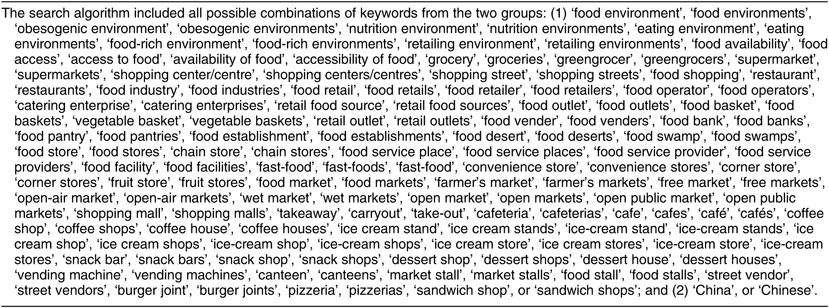
The MeSH terms ‘China’ and ‘Chinese’ were included in the PubMed search. All keywords in PubMed were searched with the ‘[All fields]’ tag, which are processed using Automatic Term Mapping. The search function TS = Topic was used in Web of Science, which launches a search for topic terms in the fields of title, abstract, keywords, and Keywords Plus.
Data extraction and preparation
A standardized data extraction form was used to collect the following methodological and outcome variables from each included study: authors, publication year, country, study design, sample size, age range, proportion of female participants, sample characteristics, statistical model, attrition rate, geographical coverage, setting, type of food environment measure, detailed measure of food environment, type of diet measure, detailed measure of diet, type of body weight status measure, detailed measure of body weight status, estimated effects of food environment on diet or body weight status, and key findings on the relationship between food environment and diet or body weight status.
Data synthesis
A tabulation of extracted data by two co-authors of this review revealed that no two studies provided quantitative estimates for the impact of the neighbourhood food environment on diet and/or body weight status focusing on the same food environment, diet, and body weight measure. This precluded meta-analysis. Therefore, we summarize the common themes and findings of the included studies narratively.
Study quality assessment
We used the National Institutes of Health’s Quality Assessment Tool for Observational Cohort and Cross-Sectional Studies to assess the quality of each included study. This assessment tool rates each study based on fourteen criteria. For each criterion, a score of one was assigned if ‘yes’ was the response, whereas a score of zero was assigned otherwise. A study-specific global score ranging from zero to fourteen was calculated by summing up scores across all criteria. The study quality assessment helped measure the strength of scientific evidence but was not used to determine the inclusion of studies.
Results
Identification of studies
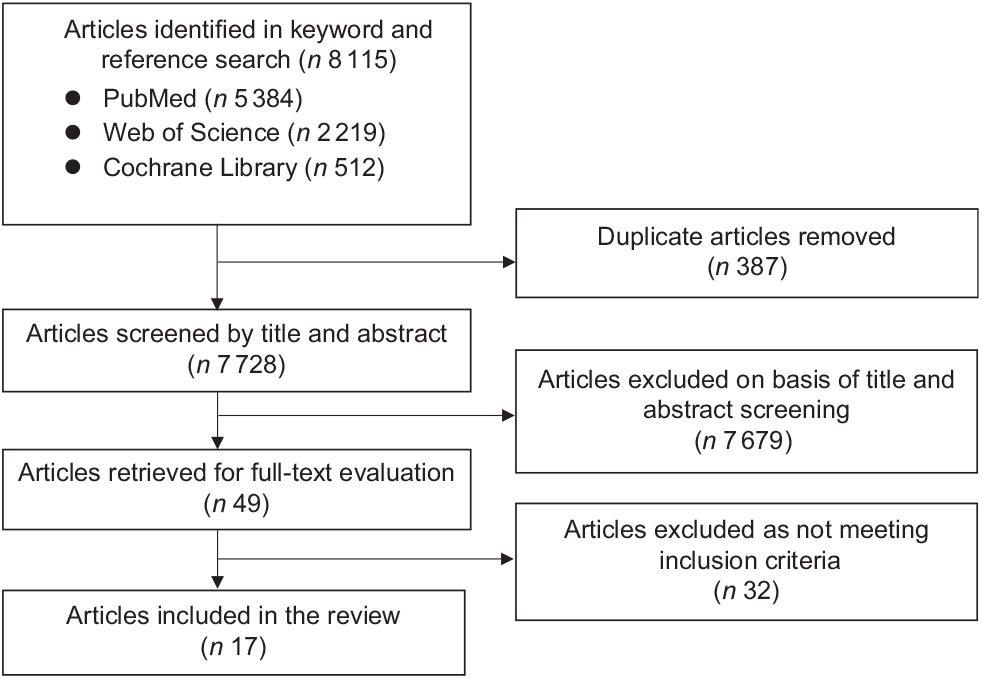
Figure 1 shows the study selection flow chart. We identified 8115 articles in total through the keyword and reference search. After removing duplications, 7728 unique articles underwent title and abstract screening, in which 7679 articles were excluded. The full texts of the remaining forty-nine articles were reviewed against the study selection criteria. Of these, thirty-two articles were excluded. The primary reasons for exclusion are lack of neighbourhood food environment measures, no outcome reported on diet and obesity, and participants’ residence outside mainland China, Hong Kong and Macao. The remaining seventeen studies that examined the relationship between neighbourhood food environment and diet and/or body weight status were included in the review(Reference Wang and Shi17–Reference Zhang, van der Lans and Dagevos33).
Study selection flowchart
Basic characteristics of the included studies
Table 2 summarizes basic characteristics of the seventeen included studies. One study was conducted in Hong Kong, China, one study was conducted in two cities (i.e. Guangzhou and Hechi), one study was conducted in four cites (i.e. Beijing, Shanghai, Nanjing and Xi’an), one study was conducted nationally, five studies were conducted in a single city (i.e. Xi’an, Kunming, Wuhan or Nanjing), and the remaining eight studies were conducted in nine Chinese provinces. All included studies were published in or after 2010. Six studies exclusively focused on diet, nine studies exclusively focused on body weight status, and the remaining two studies examined both diet and body weight status. Nine studies adopted a longitudinal study design, and the remaining eight studies adopted a cross-sectional study design. Sample sizes were generally large but varied substantially across studies. One study had a sample size between twenty and ninety-nine, five had a sample size between 100 and 999, six had a sample size between 1000 and 9999, and the remaining five had a sample size above 10 000. The mean and median sample size were 8517 and 1804, respectively, with a standard deviation of 10 436 and a range from 12 to 28 063. The majority (n 9) of studies recruited adults aged 18 years and older, and the remaining eight recruited children and/or adolescents aged 6–18 years. Most included studies (n 13) recruited both males and females who were largely equally distributed in the samples, and the remaining four studies did not report the gender distribution in their samples. A variety of statistical models were applied across studies, including linear regression, logistic regression, multilevel latent class model, Bayesian hierarchical regression, generalized estimating equation, and Poisson regression. The majority of studies (n 12) adjusted for some individual sociodemographics (i.e. age, sex, perceived family affluence, highest parental education, and BMI z-score) in the statistical analyses.
Basic characteristics of the studies included in the review
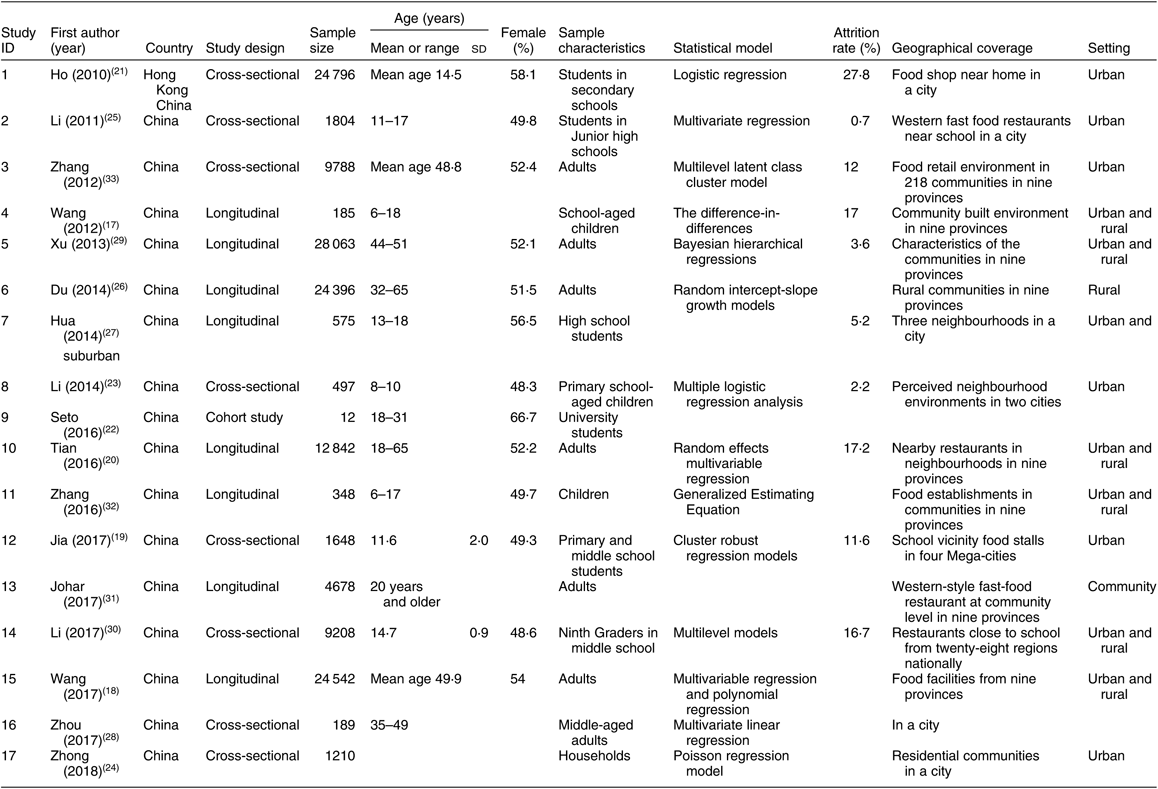
Table 3 summarizes measures of food environment, diet, and body weight status among the included studies. The majority (n 12) of the studies adopted subjective food environment measures reported by school administrators, community leaders, local officials, parents, and/or participants themselves; whereas five studies adopted objective food environment measures. Specific subjective measures of food environment included both general questions (e.g. ‘Whether a grocery store was available within a 5-min walking distance from home?’ or ‘How many supermarkets/wet markets/fast-food restaurants are there in your neighbourhood?’) and more specific characteristics pertaining to the food environment (e.g. walking distance to a convenience store). Only two studies used subjective food environment measures known to be validated in previous research (i.e. perceived neighbourhood environment questionnaires). Objective food environment measures were constructed based on geographical information system (GIS) (e.g. proximity to a grocery store, free market, restaurant, or food stall), global positioning system (GPS) via smart phone (e.g. number of food establishments), Wuhan Geographic Information Center (e.g. point-of-interest data for supermarkets, fresh food markets, fast-food restaurants, convenience stores, and indoor restaurants), and Baidu Map (e.g. locations of wet markets and supermarkets, and density of neighbourhood food establishments).
Measures of food environment, diet and body weight status in the studies included in the review
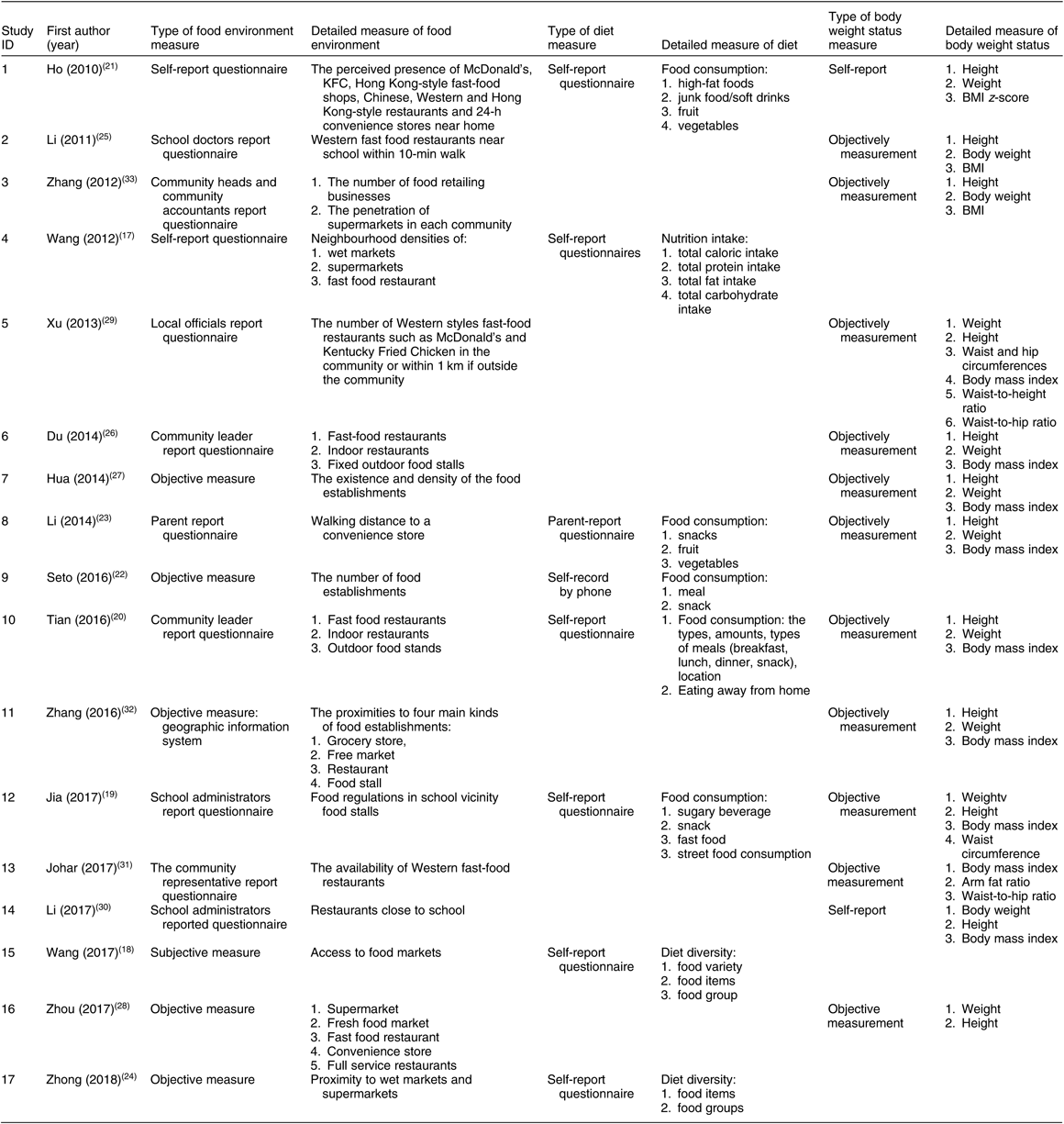
Diet outcomes included food consumption (n 5), diet diversity (n 2), and nutrient intakes (n 1). Seven studies measured diet using questionnaires administered to parents and/or participants themselves, whereas one study used a smart phone to record a voice-annotated video. Parent- and/or self-reported diet questionnaires included both standardized questionnaires (e.g. a translated version of an eight-item instrument NEWS-A) and general questions (e.g. ‘How many times per week did you drink sugary beverages/eat snacks/eat at a Western-style fast-food restaurant/eat at a street food stall in the last three months?’). Among the studies that adopted subjective diet measures, only one study used measures known to be validated in previous research (i.e. food frequency questionnaire). Body weight status included body mass index (BMI) (n 4), overweight (n 2), obesity (n 2), and waist-to-height ratio/waist-to-hip ratio (n 2). BMI-related measures were based on both objectively measured (n 9) and self-reported (n 1) height and weight.
Key findings
Food environment in relation to diet
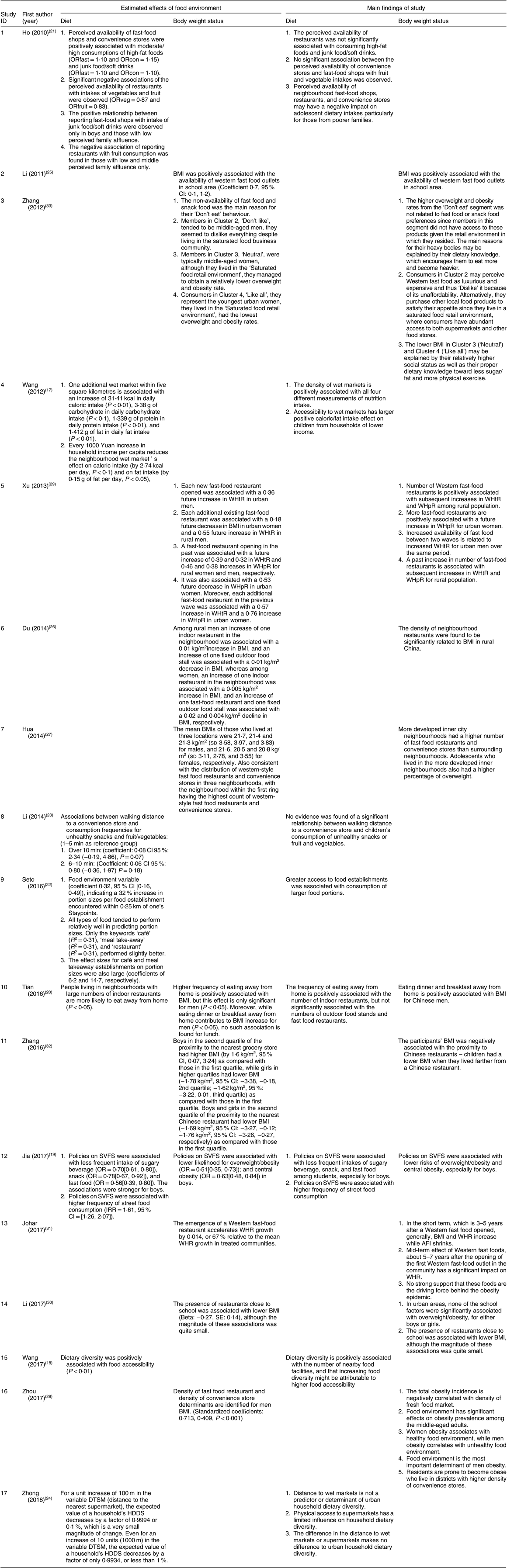
A wet market is a market that sells fresh meat and produce. Indoor restaurants refer to those that are operated indoors or inside an enclosed structure that has a roof and well-covered walls, and in which cooking and eating are performed indoors. Food stalls refer to those that are operated outdoors at a fixed place; it may have a roof, but no walls, and cooking and eating are performed outdoors. Table 4 summarizes the estimated effects of food environment on diet and/or body weight status among study participants in China. Among the eight studies that provided some quantitative estimates of the relationship between food environment measures and diet, six reported at least one statistically significant relationship in the expected direction, whereas the remaining two exclusively reported null effects. Among the statistically significant findings, the density of wet markets was found to be positively associated with all four measurements of nutrient intakes (i.e. total energy, protein, total fat, and carbohydrate intakes), and the impact was largest among children from low-income households(Reference Wang and Shi17). The number of nearby food facilities (e.g. fast-food restaurants, indoor restaurants, food stalls, food carts, bakeries, fruit shops, and supermarkets) was found to be positively associated with dietary diversity among local residents(Reference Wang, Liu and Fan18). Policies on school vicinity food stalls (SVFS) were found to be associated with less frequent intake of SSB, snacks, and fast-food at school, especially among boys(Reference Jia, Li and Xue19). In contrast, the number of indoor restaurants in a neighbourhood was found to be positively associated with the frequency of eating away from home(Reference Tian, Zhong and von Cramon-Taubadel20). Perceived availability of fast-food shops and convenience stores was positively associated with consumption of junk food/soft drinks and high-fat foods(Reference Ho, Wong and Lo21). Greater access to food establishments (e.g. bakery, bar, cafeteria, convenience store, grocery or supermarket, liquor store, meal delivery, meal takeaway, and restaurant) was found to be associated with larger portion size(Reference Seto, Hua and Wu22). Perceived availability of restaurants in a neighbourhood was associated with reduced vegetable and fruit intake(Reference Ho, Wong and Lo21). Policies on SVFS were associated with higher frequency of street food consumption among students(Reference Jia, Li and Xue19). Among the statistically nonsignificant findings, perceived availability of convenience stores and fast-food shops was not found to be associated with vegetable and fruit intake(Reference Ho, Wong and Lo21). Perceived availability of restaurants was not associated with consumption of junk food/soft drinks and high-fat foods(Reference Ho, Wong and Lo21). Walking distance to a convenience store was not associated with children’s consumption of unhealthy snacks or fruit/vegetables(Reference Li, Adab and Cheng23). Distance to a wet market was not associated with urban households’ diet diversity, and access to a supermarket had limited influence on households’ dietary diversity(Reference Zhong, Si and Crush24). Number of food stalls and fast-food restaurants was not associated with the frequency of eating away from home(Reference Tian, Zhong and von Cramon-Taubadel20).
Estimated effects of food environment on diet or body weight status in the studies included in the review
Food environment in relation to body weight
Among the eleven studies that estimated the relationship between food environment and body weight status, ten reported a statistically significant association, whereas the remaining one reported a null relationship. The availability of western fast-food outlets in a school area was positively associated with BMI(Reference Li, Dibley and Yan25). The number of indoor restaurants was associated with increased BMI(Reference Du, Su and Wang26), but the effect tended to concentrate among men(Reference Tian, Zhong and von Cramon-Taubadel20). More developed inner-city neighbourhoods had a higher number of fast-food restaurants and convenience stores than surrounding neighbourhoods, and adolescents who lived in those inner-city neighbourhoods had a higher percentage of overweight(Reference Hua, Seto and Li27). Residents living in districts with a higher density of convenience stores were more likely to be obese(Reference Zhou, Tan and Tao28). Number of Western fast-food restaurants was associated with increased waist-to-height ratio and waist-to-hip ratio among rural residents(Reference Xu, Short and Liu29). On the other hand, the presence of restaurants close to a school was not associated with overweight or obesity among students(Reference Li, Xue and Wen30). The number of neighbourhood outdoor food stalls was associated with lower BMI among rural residents(Reference Du, Su and Wang26). The number of fast-food restaurants was negatively associated with BMI among urban and rural women(Reference Du, Su and Wang26, Reference Xu, Short and Liu29). The density of fresh food markets was negatively associated with obesity among local residents(Reference Zhou, Tan and Tao28). Policies on SVFS were associated with lower risks of overweight, obesity and central obesity among boys(Reference Jia, Li and Xue19).
Study quality assessment
Table 5 reports criterion-specific and global ratings from the study quality assessment. The included studies on average scored eight out of fourteen, with a range from six to eleven. All studies included in the review clearly stated the research question and objective, specified and defined the study population, had a participation rate above 50 %, recruited participants from the same or similar populations during the same time period, and pre-specified and uniformly applied inclusion and exclusion criteria to all potential participants. Most studies measured and statistically adjusted key potential confounding variables for their impact on the relationship between exposures and outcomes (n 14), implemented valid and reliable outcome measures (n 12), and examined different levels of the exposure in relation to the outcome (n 10). In contrast, none of the studies had the outcome assessors blinded to the exposure status of the participants, provided a sample size justification using power analysis, or measured exposures of interest (e.g. food environment characteristics) prior to the outcomes. Eight studies had a reasonably long follow-up period that was sufficient for changes in outcomes to be observed, assessed the exposures more than once during the study period, and six studies implemented valid and reliable exposure measures.
Study quality assessment
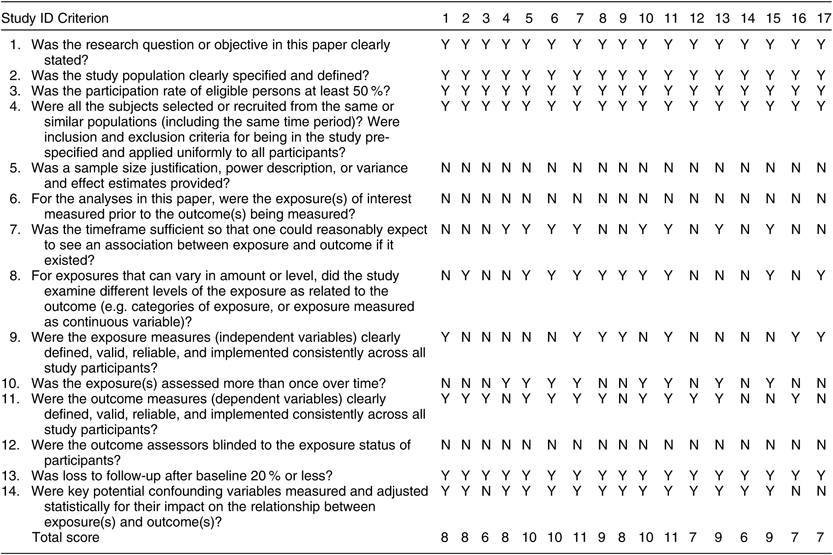
Notes: This study quality assessment tool was adopted from the National Institutes of Health’s Quality Assessment Tool for Observational Cohort and Cross-Sectional Studies. For each criterion, a score of one was assigned if ‘Y’ was the response, whereas a score of zero was assigned otherwise. A study-specific global score, ranging from zero to fourteen, was calculated by summing up scores across all fourteen criteria. Study quality assessment helped measure strength of scientific evidence, but was not used to determine the inclusion of studies.
Discussion
Findings from this review coincide with some of the documented relationships between neighbourhood food environment and diet in developed countries. For example, McInerney et al. found density of food outlets (e.g. fast-food restaurants, cafeterias, carry-out restaurants, full-service restaurants, supermarkets, grocery stores, convenience stores, multiproduct stores selling groceries, and single product specialty stores) to be positively associated with dietary diversity, nutrient adequacy, and diet quality among Canadian adults(Reference McInerney, Csizmadi and Friedenreich34).Skidmore et al. reported proximity to convenience stores to be positively associated with high-calorie food intake(Reference Skidmore, Welch and van Sluijs35). Longacre et al. documented the number of fast-food outlets in a neighbourhood to be positively associated with fast-food consumption among urban adolescents and adults in the USA.(Reference Longacre, Drake and MacKenzie36)
The density and proximity of fast-food restaurants and convenience stores were found to be positively associated with local Chinese people’s body weight status in some but not all studies included in the review. These inconsistencies in findings are also present among US-based studies. Cobb et al. found fast-food restaurant availability to be positively associated with obesity in the USA.(Reference Cobb, Appel and Franco10) In contrast, Mejia et al. reported a null relationship between proximity to fast-food outlets and BMI among American adults(Reference Mejia, Lightstone and Basurto-Davila37). In addition, Shier et al. reported a null relationship between the availability of fast-food restaurants and convenience stores and BMI percentile among children in the USA.(Reference Shier, Nicosia and Datar38)
Policies on SVFS were found to be associated with reduced intake frequency of SSB, snacks, and fast-food, as well as reduced risks of overweight, obesity and central obesity among schoolchildren(Reference Jia, Li and Xue19). This finding is consistent with two other reviews based on developed countries. Policies regulating the food environment in and/or surrounding schools hold the potential to promote healthy dietary behaviour(Reference Micha, Karageorgou and Bakogianni39), reduce junk food and SSB intake, and prevent childhood overweight/obesity among schoolchildren(Reference Osei-Assibey, Dick and Macdiarmid13).
The neighbourhood food environment has received increasing attention from researchers, policy makers, and various stakeholders(Reference de Menezes, Roux and Lopes40–Reference Zenk, Tarlov and Wing42). The existing literature predominantly investigated neighbourhood food environment in relation to diet and obesity in developed countries(Reference Skidmore, Welch and van Sluijs35, Reference Mejia, Lightstone and Basurto-Davila37, Reference An and Sturm43, Reference Chrisinger, DiSantis and Hillier44), whereas its potential influence among the Chinese population has been under-studied. This study serves as the first known attempt to systematically review and synthesize the relevant literature pertaining to the impact of the neighbourhood food environment on diet and adiposity in China. The strengths of the included studies include relatively large sample size and wide geographic coverage. However, several limitations remain. All studies are observational (i.e. either cross-sectional or longitudinal) that involve no controlled experiment, and thus are subject to confounding bias and should be interpreted with caution. Most of the studies used subjectively rather than objectively measured food environment and diet, which is prone to recall error and social desirability bias(Reference Wang and Shi17–Reference Ho, Wong and Lo21, Reference Li, Adab and Cheng23) No two studies included in the review reported quantitative estimates focusing on the same neighbourhood food environment, diet, and body weight measure, which precluded meta-analysis. Although the sample sizes of several included studies were large, they were not nationally or locally representative and the neighbourhoods covered within a study could be relatively homogeneous. The literature search was based on English only, and excluded Chinese and other languages (we identified four peer-reviewed publications in Chinese). This decision was made in part due to concern about the potential discrepancies in study quality and heterogeneities in food environment measures and study designs between English- and Chinese-based literature. This review only included published literature. There might be useful and relevant unpublished studies that were missed by this review. Future work could explore grey literature to see whether it could build on the findings from this review. Many questions remain unanswered, such as: whether and to what extent does the rapid urbanization in China impact the formation of diverse food retail markets that subsequently shape dietary habits among residents? Does the relationship between neighbourhood food environment and diet or obesity differ by city size (e.g. megacities v. provincial cities)? How do the food retail markets in China differ from those in other countries and what are the implications pertaining to their relationship with food purchase and consumption? Answers to these questions call for future research.
The findings of this review may shed light on China’s urban design and zoning regulations. Convenient access to healthy food options such as fruit and vegetables through small- to mid-size grocery stores and large supermarkets may facilitate local residents adopting and maintaining a healthier diet. Urban design should pay attention to neighbourhood walkability and public transportation infrastructure so that people can easily reach grocery stores and supermarkets on a daily basis. Zoning regulations may restrict concentrations of fast food outlets and convenience stores surrounding schools and other places where children frequently gather to discourage fast food and sugar-sweetened beverage consumption. Besides accessibility, affordability also plays an essential role in determining purchase and consumption. Therefore, in addition to modifying physical access to food stores, economic incentives such as junk food and soda tax and a healthy food subsidy could also be employed to jointly nudge people toward a healthier diet.
In conclusion, this study systematically reviewed literature pertaining to the impact of the neighbourhood food environment on diet and obesity in China. Seventeen studies met the selection criteria and were included in the review. Variety, density, and proximity of food outlets were found to be positively associated with local residents’ dietary diversity, portion size, and daily energy intake. The density and proximity of fast-food restaurants and convenience stores were positively associated with local residents’ body weight status in some but not all studies. Evidence linking a specific food outlet type to diet and obesity remains inconclusive owing to the small overall number of studies and heterogeneities in food environment measures, geographical locations, and populations under study. Two major limitations of this work pertain to the small number of studies identified and included in the review, which compromised the scope and generalizability of study findings, and a literature search based on English language only, which excluded articles written and published in Chinese and other languages. Future studies adopting an experimental study design and objective/validated environment and diet measures are warranted to advance research regarding the influence of the neighbourhood food environment on diet and adiposity in China.
Acknowledgements
Acknowledgments: None. Financial support: This research is partially funded by Guangzhou Sport University and National Natural Science Foundation of China (No. 81602869). Conflict of interest: The authors have no conflict of interests to declare. Authorship: R.A. is an Assistant Professor at Washington University in St. Louis. His research examines environmental influences and population-level interventions on weight-related behaviours and outcomes throughout the life course. R.A. designed the study, conducted the review, and wrote the manuscript. L.H. is an Assistant Professor at Beijing Normal University. Her research focuses on health behaviours among Chinese children and adolescents. L.H. contributed to literature review and manuscript drafting. J.S. is a PhD candidate at Beijing Sport University and a visiting scholar at University of Illinois at Urbana-Champaign. J.S. contributed to literature review and manuscript drafting. Ethics of human subject participation: NHANES was approved by the NCHS Research Ethics Review Board. This study is entirely based upon the de-identified public-use datasets from the NHANES, and thus is exempt from ethical approval.



