




1. Introduction
Societies worldwide are undergoing radical transformations, both as a consequence and concomitant of changes in domains like politics, demographics, the economy, and information technology. In this new reality, multilingualism is taking centre stage as the new linguistic dispensation (Aronin, Reference Aronin, Cook and Wei2016). Multilingualism has come to constitute a core competence, a valuable intellectual and socio-economic asset, and a functional prerequisite in a rapidly evolving global polity that has long been operating multilingually and across cultural and national borders (though not quite across ideological ones yet). Education systems in Western countries are seeing a massive increase in learners from different linguistic and cultural backgrounds, and family constellations reflect these macro-level dynamics. Scholarship has captured and synthesised the new multilingual and multicultural realitiesFootnote 1 (with)in the conceptual-theoretical frames of super-diversity (Vertovec, Reference Vertovec2007), metrolingualism (Pennycook & Otsuji, Reference Pennycook and Otsuji2015), heteroglossia (Garcia, Reference Garcia2009), and so forth, as illustrative instantiations of the highly diverse linguistic and cultural landscapes that we are part of. A vast body of literature informs our understanding of multilingualism, and yet, we are still left with many unanswered questions and without a clear, let alone consensual, roadmap for how best to proceed from here.
2. Language discourses and ideologies
The last decades have seen endless polemic debates on the advantages and disadvantages of multilingualism with the tone of the discussion fanned by protectionist and monolingual purist discourses on the intermixture of cultures and languages and the increasingly multilingual social order. In this context, multilingualism has been widely problematised as a threat to established educational standards of monolingual accuracy and precision, and as provoking an irrevocable tailspin of language degeneration (Böhme, Reference Böhme1981). Framed as detrimental to students’ linguistic competence and cognitive capacity (the assumption being that multiple languages cause cognitive overload and mental confusion), multilingualism, it is true to say, has a precarious foothold in many education systems worldwide.
The prevailing perception in many educational settings is still of multilingualism as a ‘problem’ in need of a resolution. This holds particularly for Western countries and the Global North where monoglossic ideologies ascribe symbolic capital and value and where quite ostensibly academia’s research output finds little resonance, or else the call for multilingual learning arrangements would not go so unabashedly unheeded. In a climate of strengthening regio-nationalist forces and in the light of policymakers’ reluctance to commit to a multilingual pluralistic turn, working towards change on this front therefore means relying on needs-driven, bottom-up initiatives and on teachers who are willing to invest in multilingualism and who dare to challenge the top-down regimentation of language practices. Having worked closely with (though sometimes rather more against) political decision makers and educational authorities, we believe that it is only through the ambitious efforts and concrete actions of directly-involved stakeholders that the much-invoked multilingual paradigm shift will find reflection in educational practice. To help bring about this paradigm change, we strongly encourage grass-root action schemes, notably the creation of locally supported multilingual learning spaces, research-led teacher support, and continuous evaluation of classroom activity and learning progress. We reach out to students, researchers, educators, and the teaching profession to urge: 1) the long overdue normalisation of multilingualism and an end to the native-speaker supremacy, 2) the broad application of multilingual norms in educational settings, and 3) the curricular anchoring of multilingual approaches to teaching and assessment in order to bolster multilingual agency and accommodate students with different linguistic and cultural heritage, different resources, and needs. We argue that in order to do justice to all students and equip our pupils with a skill set that empowers them to confidently and successfully navigate the multilingual future that awaits them, schools need to allocate time and space for multilingual learning. Having said that, there are several caveats to be made, as multilingual learning may mean different things to different people, depending on their epistemological perspectives and academic socialisation, and the value and norm systems that underpin them. Following Bourdieu (Reference Bourdieu and Richardson1986), we conceive of linguistic and cultural capital as an arbitrary construct based on an equally arbitrary system of norms and validation criteria. With their strong multiplier impact (or rather mandate), schools play a prominent role in perpetuating this system. They confer legitimacy to the established indexical order and reinforce dominant notions of linguistic standard and normativity which, as indicated, are widely rooted in monolingual native-speaker ideologies and linguistic prescriptivism (cf. Slavkov et al., 2021 and see Llurda & Calvet-Terré, Reference Llurda and Calvet-Terré2022 for an in-depth discussion of native-speakerism and its destabilising and corrupting powers). The intent here is not to get rid of the native speaker (target) altogether. The native speaker is a legitimate speaker (model) in many contexts, but so, we contend, is the multilingual speaker, especially in classrooms with a highly diversified, heterogeneous student population, as well as in out-of-school settings where being multilingually (alongside monolingually) competent is a prerequisite for the performance of one’s everyday functions. Holding on to a monolingual worldview and native speaker norm expectations will, we believe, curtail learners’ affordances for multilingual skill development and with that their opportunities for acting in the world (Jessner et al., Reference Jessner, Hofer, Malzer-Papp, Slavkov, Melo-Pfeifer and Kerschhofer-Puhalo2021).
3. A dynamic multilingual perspective of language development
Taking a complex dynamic systems theory (CDST) approach, Herdina and Jessner introduced the Dynamic Model of Multilingualism (Herdina & Jessner, Reference Herdina and Jessner2002; cf. Jessner, Reference Jessner, Cabrelli, Chaouch-Orozco, Gonzalez Alonso, Pereira Soares and Rothman2023 for an update) which construes multilingual development as a fluid and complex process, as nested and embodied, dependent on initial conditions, non-linear, highly variable, and unpredictable with regard to how it evolves. No multilingual trajectory is then like another, and no two learning outcomes are alike, especially when classroom compositions are linguistically and culturally highly diverse. When students engage with multiple language systems, they undergo important transformations at the level of (meta)cognition and (language) processing, attitude, and mindset (Jessner, Reference Jessner, Cabrelli, Chaouch-Orozco, Gonzalez Alonso, Pereira Soares and Rothman2023). These changes manifest in their linguistic behaviour and overall approach to languages.
As research has quite cogently shown, multilingualism does not cause cognitive overload. Nor is it an impediment to students’ overall language development and literacy attainment. Instead, multilingualism comes with non-negligeable benefits at the level of (meta)cognition, language awareness, and overall linguistic agency (Antoniou, Reference Antoniou2019; Cenoz, Reference Cenoz2013; Cook, Reference Cook, Cook and Wei2016; Paradowski, Reference Paradowski2010). There is evidence to suggest that multilingualism has positive cognitive effects which extend beyond the immediate linguistic domain and include improvements at the level of linguistic reflexivity (Pinto et al., Reference Pinto, Melogno and Iliceto2011), and executive functions (Bialystok, Reference Bialystok2017, Reference Bialystok2015), at the level of (meta)cognition (Jessner, Reference Jessner, Cabrelli, Chaouch-Orozco, Gonzalez Alonso, Pereira Soares and Rothman2023; Pinto et al., Reference Pinto, Melogno and Iliceto2011) and creativity (Kharkhurin, Reference Kharkhurin2012), at the level of language proficiency and multilingual agency (De Angelis & Jessner, Reference De Angelis, Jessner and Manchón2012; Hofer, Reference Hofer2015), at the level of meta- and cross-linguistic awareness (Allgäuer-Hackl, Reference Allgäuer-Hackl2017; Bien-Miller et al., Reference Bien-Miller, Akbulut, Wildemann and Reich2017; Hofer, Reference Hofer2023; Jessner, Reference Jessner2006; Spechtenhauser, Reference Spechtenhauser2022), and more generally, at the level of (socio-critical/politico-ideological) attitudes, motivation (Bozzo, Reference Bozzo2014), and mindset (Weichselbraun, Reference Weichselbraun2014). Jessner (Reference Jessner, Cabrelli, Chaouch-Orozco, Gonzalez Alonso, Pereira Soares and Rothman2023), for instance, points to important advantages in learners of a third and additional language (cf. De Angelis & Jessner, Reference De Angelis, Jessner and Manchón2012; Dahm, Reference Dahm, De Angelis, Kresic and Jessner2015; Kemp, Reference Kemp2007). Her research in the Austrian and (South and North) Tyrol context found enhanced levels of metalinguistic and metacognitive awareness in learners of multiple languages. Similar advantages are reported in (Hofer, Reference Hofer2015, Reference Hofer2023), who studied primary schoolers in the trilingual context of South Tyrol. Hofer found evidence for a metalinguistic/metacognitive edge in children in multilingual versus mainstream educational streams and highly multilingual (compared to monolingual) out-of-school surroundings. In a widelyreceived review paper on the benefits of multilingualism to individuals’ personal and professional development, Kroll and Dussias (Reference Kroll and Dussias2017, p. 251) likewise list enhanced metacognitive functions including attentional control and monitoring performance, problem-solving and inhibition of irrelevant or distracting information as characteristic features of the multilingual child (see also Antoniou et al., Reference Antoniou, Gunasekera and Wong2013). This said, while there is strong support for positive effects of multilingualism, evidence to the contrary (see Bialystok, Reference Bialystok2009, p. 4 for an overview) and findings of a null effect (as reported in Lorenz et al., Reference Lorenz, Toprak and Siemund2021) also exist. As we have noted elsewhere, multilingual development is a function of initial conditions and as such highly contingent (Hofer, Reference Hofer2023; Jessner, Reference Jessner, Cabrelli, Chaouch-Orozco, Gonzalez Alonso, Pereira Soares and Rothman2023).
Following on from the above and in response to urgent demands for a research agenda that helps close important knowledge gaps and helps address some of the pressing issues in the field (among them the woeful neglect of classroom settings/action research as identified by Llurda & Calvet-Terré, Reference Llurda and Calvet-Terré2022, 230, and the general absence of multilingual and metacognitive skills development in classrooms and multilingual assessment observed by Cummins, Reference Cummins, García, Lin and May2017; Garcia, Reference Garcia2009; Jessner & Allgäuer-Hackl, Reference Jessner and Allgäuer-Hackl2022), we propose three research tasks which, we are confident, have the potential to bring about important changes and advance our understanding of multilingualism, metacognition, and multi-competence. Our tasks focus on local needs and contingencies in an effort to bring forth locally relevant and workable solutions, without losing sight of the wider implications that such interventions may draw. Engagement with our tasks calls for a holistic multilingual approach together with an explorative stratagem and an expansion of scope compared to more traditional research. We preface our task section with a brief discussion of conceptual-terminological issues beginning with the role of metacognition and proceeding with an appraisal of the prevailing vigent linguistic norms and attainment targets.
4. On the importance of metacognition for language learning
Researchers and policymakers alike have for some time pointed out the importance of metacognition for learning (Haukås et al., Reference Haukås, Bjørke and Dypedahl2018, p. 1) and academic achievement. As one of the first to draw attention to the role of metacognition for language learning, Wenden (Reference Wenden1987) proposed a definition of metacognition as knowledge about one’s own learning (in Haukås et al., Reference Haukås, Bjørke and Dypedahl2018, p. 13). In similar fashion, the OECD Learning Compass 2030 (OECD, 2019, p. 3) frames metacognitive skills – or ‘thinking about thinking’ (OECD, 2019, p. 6) – as core components of learning (OECD, 2019, p. 6) alongside reasoning, regulation, and reflective thinking. Metacognitive skill is deemed predictive of critical thinking and cognitive adaptability, and key for navigating the challenges of an increasingly complex and hyper-connected world (Haukås, Reference Haukås, Haukås, Bjørke and Dypedahl2018). We understand metacognition to relate to reflective processes revolving around cognition and learning in general, and more specifically to learners’ awareness of and reflections about their knowledge, experiences, and emotions in the context of multilingualism (cf. Haukås, Reference Haukås, Haukås, Bjørke and Dypedahl2018, p. 13). Metacognition then involves thinking about one’s own learning and cognition(s) and it also involves the (re-)action patterns that ensue from such thinking (e.g. increasing investment of time and effort if necessary, establishing learning routines, and deploying strategies). Metacognition comprises awareness – which includes some form of understanding and skill – and comes with the ability to monitor and control one’s learning, learning progression, and/or linguistic output. Metacognition shares considerable common ground with meta- and cross-linguistic awareness and ability which underpin a very specific type of mental operations in and across languages, including analytical, monitoring, evaluative, and control procedures (Hofer & Jessner, Reference Hofer, Jessner, Stavans and Jessner2022). The Dynamic Model of Multilingualism (DMM) theorises metacognition and meta/cross-linguistic awareness as mutually intersecting dimensions of the multilingual system and metacognition as inclusive of meta- and cross-linguistic awareness and ability (Herdina & Jessner, Reference Herdina and Jessner2002). Meta- and cross-linguistic awareness and thinking are in this sense subcomponents of the broader construct of metacognition. Meta- and cross-linguistic awareness and thinking are probably best reflected in externalised meta- and cross-linguistic activity such as verbalised comments or behaviour, but they can also manifest in other, for instance, non-linguistic ways in which students engage with language (Chen & Myhill, Reference Chen and Myhill2016, p. 102; Gutierrez, Reference Gutierrez2008, p. 521). Applied to multilingual learning contexts, metacognition relates in particular to thinking about how multiple linguistic systems with their distinct grammars, morphosyntax, lexicons, and so forth, behave and compare, and how this knowledge and understanding can be exploited for learning.
EU policy documents like The framework of reference for pluralistic approaches to languages and cultures: Competences and resources (FREPA, Candelier et al. Reference Candelier2013), and the recent Council of Europe publication Enriching 21st-century language education: The CEFR companion volume in practice (2022) provide practical recommendations and action examples (cf. North et al., Reference North, Piccardo, Goodier, Fasoglio, Margonis-Pasinetti and Rüschoff2022) for the operationalisation of metacognitive/meta- and cross-linguistic skill sets (cf. Piccardo et al., Reference Piccardo, North and Goodier2019). It is important to consider though that while these documents constitute resources well worth probing, they also represent Eurocentric top-down impositions of language policies, and none of them pays much heed to the multilingual socialisation and languaging realities of students in countries or regions where Western-style educational programmes and literacy development are not the norm. The CEFR with its indiscriminate instantiation of native speaker target norms for all students is particularly problematic in this regard.
A major flaw of the CEFR (2001) is its unilingual perspective which, though probably unintended, buoys up reductionist and discriminatory tendencies in language policy-making. The New Companion Volume (2018) – in a certain sense its successor publication – represents an improvement and conceptual shift which is reflected in some significant rewording of key notions and descriptors (see Appendix 7 of the Companion volume – List of changes to specific 2001 descriptors; Council of Europe, 2018, p. 223). It is clear, however, that more vigorous efforts are needed if the aim is to overcome reductionist notions of -lingualisms, anchor metacognitively-oriented multilingual classroom practice in school curricula, and promote metacognitive and multilingual knowledge and strategy building amongst students and teaching professions. Constructing languages and cultures as separate entities is not only unhelpful but can cause more harm than good, because it leads students to think and operate in compartmentalised pigeonhole rather than in an interdisciplinary and cross-lingual fashion (see also Cummins, Reference Cummins, García, Lin and May2017; MacSwan, Reference MacSwan2017). Our research proposals therefore depart from monolingual norm expectations and native speaker targets. They invite a focal shift from the perennial deficit orientation towards an explicit recognition and valorisation of new skills and qualities and an understanding that having several languages is different from having just one (and even two).
In this sense, engagement with our tasks demands application of a holistic multilingual lens. The tasks key in on areas which we still know little about, and which require further rigorous exploration if we are to make strong claims about the potential benefits of multilingualism. Tasks address, in the following order, 1) metacognitive awareness and meta- and cross-linguistic skill, 2) the benefits of integrated multilingual learning, and 3) multilingual assessment. Running like a common thread through all three tasks is the questionable but enduring monopoly of the native speaker model and normativity (cf. Cummins, Reference Cummins2021). Tasks are conceived in such a way that they can be completed individually or in the sequence proposed here. Research task 1 focalises multilingual (meta)cognition in an effort to capture meta- and cross-linguistic ability as manifested in classroom interactions when students comment on structural and functional aspects in and across different languages. Research task 2 centres on classroom activities and practices that aim to promote metacognitive, and more particularly, meta- and cross-linguistic thinking and skill development, and it discusses the benefits that accrue from such practices. Finally, Research task 3 looks at assessment. It considers new asset-based ways of measuring multilingual metacognitive skill sets and multilingual agency, and addresses issues related to attainment in mainstream monolingual-biased educational systems.
5. Research task 1 – Capturing metacognitive awareness in students’ meta- and cross-linguistic comments
Classrooms are increasingly multilingual and multicultural. Paradoxically, teaching is still for the most part anchored in monolingual instructional approaches and the focus is very much on skill development in the majority (and typically prestige) languages and on language(s) separation. Little consideration, if any, is given to the manifold resources that students bring to the learning context. Multilingual skills are not only not fostered; they are in the majority of cases not even taken notice of. This slighting of students’ special multilingual resources can often be traced to policy-related ideological preconceptions and ontological/epistemological beliefs, or to lack of knowledge, experience, and training on the part of the teacher. Giving greater prominence to students’ multilingual competences can make a significant difference because it lends academic weight to their multilingual skill sets and has the potential to effectuate wider perceptual change over time (Hufeisen, Reference Hufeisen2018).
On this premise, Research task 1 turns the spotlight on real time metacognitive activity. It gives visibility to students’ meta- and cross-linguistic abilities as key components of their multilingual (and metacognitive) competence and as emergent properties of the multilingual system (Herdina & Jessner, Reference Herdina and Jessner2002; Jessner, Reference Jessner2006). Task 1 calls on researchers to gather evidence for multilingual meta- and cross-linguistic thinking during student–student and/or student–teacher interactions in the classroom. Previous research has shown that meta- and cross-linguistic thinking play an important role in (first, second, and additional) language development and competence building, because they give students a profound understanding of linguistic forms and functions in and across different language systems, and a good grasp of lexico-structural convergence and divergence, together with an enhanced capacity to leverage the synergies that arise from their multilingual repertoires and multimodal resources.
Research task 1: Gather instances of metacognitive (i.e. metalinguistic and cross-linguistic) awareness and ability in interactional exchanges in the classroom. Specify whether your focus is on young learners at the primary level or on adolescent/young adult learners.
Research task 1 investigates how metacognitive awareness and skill manifest in students’ language learning and language use behaviour. It invites prospective researchers to garner instances of meta- and cross-linguistic awareness (MLA/XLA) and skill during classroom interactions when students work in pairs or small groups. Task 1 entails observing students as they negotiate meanings and/or remark on formal and functional aspects of languages. It requires meticulous documentation of students’ verbal reflections and systematisation of their metacognitive articulations with particular view to the following questions: 1) How does metacognitive (and more specifically meta- and cross-linguistic awareness/ability manifest in students’ verbalisations or language (use) behaviour? In other words: What do MLA/XLA look like in concrete terms? 2) How can the findings be turned to good account for educational contexts (i.e. how can they be brought to bear for the benefit of the students)?
Instances of meta- and cross-linguistic awareness can include anything from language-related remarks such as:
‘This word reminds me of XX; it sounds/looks like XX; it might mean XX.’
‘In my language this idea is expressed differently; in my language you would say …’,
to compensation strategies such as when students resort to borrowing/code-mixing to bridge a lexical gap.
‘Es ist nicht colpa mia!’ [It’s not colpa mia (my fault)!] ITALIAN WORD USE IN GERMAN LANGUAGE MATRIX (Hofer, Reference Hofer2015, p. 192)
Or questions such as:
‘Why is there an “s” here at the end of this word?’
‘Is the sentence still correct if I omit this word?’
‘Do you not have to say like in German … there you say “Ich habe einEN Bruder und einE Schwester … ?”’ (Pupil X in Hofer, Reference Hofer2015, p. 189)
The use of an observation protocol to record and keep track of students’ meta- and cross-linguistic comments will facilitate the process of data collection. Digital support tools (such as video or audio recording) can help capture instances of multilingual (meta)cognition in dialogic classroom exchanges and can help reconstruct students’ articulations (cf. Reference Hofer, Aronin, Ibrahim and VetterHofer, in print). It might (time and resources permitting) also be helpful to look into the persona and positionality of the teacher and explore what their role is and how they contribute to metacognitive (and more specifically meta- and cross-linguistic) skill development and to learning in general. Since we know that the language teacher plays an important role in scaffolding students’ learning (cf. Andrews, Reference Andrews1999), it will be especially worthwhile to investigate how teachers (do or can) encourage meta- and cross-linguistic thinking amongst their students.
6. Research task 2 – Metacognitive skill development through targeted classroom intervention
Task 2 invites prospective researchers to draw up a targeted classroom intervention plan with focus on multilingual metacognitive skills training for teachers to implement with their students. Research task 2 addresses methods and approaches and provides concrete suggestions for a practicable course of action aimed at working towards a new teaching/learning culture which is based on an understanding of language proficiency and development as plurilithic (as opposed to monolithic; cf. Pennycook, Reference Pennycook, Murata and Jenkins2009) and dynamic and informed by a multilingual rather than monolingual conception of linguistic knowledge and correctness.
In mainstream schooling there may be few opportunities for students to bring to bear their multilingual resources (Garcia & Flores, Reference Garcia, Flores, Martin-Jones, Blackledge and Creese2010). Lessons tend to be organised around monolingually regimented practices and teachers do not habitually make use of languages other than the language of instruction, whether that is students’ home languages or what in many instructional contexts is rather infelicitously referred to as ‘foreign’ languages. This means that important opportunities for learning are missed, and valuable resources remain unexploited. To set a multilingual counterpoint, Research task 2 focuses on the creation of multilingual learning environments aimed at bridging ‘the space between’ (Perren, Reference Perren1974). The aim is to promote multilingual skill development through the inclusion of multiple languages and a focus on cross-linguistic reflection (Cummins, Reference Cummins, García, Lin and May2017; Dahm, Reference Dahm, De Angelis, Kresic and Jessner2015; Daryai-Hansen et al., Reference Daryai-Hansen, Drachmann and Krogager Andersen2023; Duarte & van der Meij, Reference Duarte and van der Meij2018; French, Reference French2017; Ibrahim, Reference Ibrahim, Street and May2015). There is ample evidence to show that students benefit from such interventions (cf. Duarte, Reference Duarte2020; Duarte & van der Meij, Reference Duarte and van der Meij2018; Melo-Pfeifer & Reimann, Reference Melo-Pfeifer and Reimann2018). Allgäuer-Hackl (Reference Allgäuer-Hackl2017) found that regular multilingual awareness training significantly enhances upper secondary students’ meta- and cross-lingual understanding and skill and that it boosts their language learning motivation. Hofer’s (Reference Hofer2015, Reference Hofer2023) research shows that children who have extensive multilingual experience in and outside of school develop higher levels of meta- and cross-linguistic awareness and perform better multilingually than their less experienced peers in more monolingual life ecologies. Similar effects of formal multilingual training are reported in Spechtenhauser (Reference Spechtenhauser2022) for lower secondary pupils. It is unfortunate that findings like these find little resonance (both in and outside the scholarly community) and often completely fail to find their way into schools. One reason therefore may be that the findings are so highly context-specific that generalising them to other contexts is difficult. Adding to general insecurity about how to ‘do multilingual’, this may well cause teachers to abstain entirely from experimenting with multilingual practices which they often perceive as yielding only doubtful learning outcomes. It is all the more important therefore to intensify research efforts and share the results with those stakeholders who are at the control lever and in a position to usher in the structural changes needed. The collected data and the insights gained can then inform local educational practices, and help achieve that multilingual pedagogies find wider application in the school system. In Austria, Allgäuer-Hackl et al. (Reference Allgäuer-Hackl, Naphegyi, Sammer and Steinböck-Matt2018) have presented a DMM-based practical framework for multilingual pedagogy in the form of ‘Five Building Blocks’ for holistic multilingual education (see Jessner & Allgäuer-Hackl, Reference Jessner and Allgäuer-Hackl2022). The five building blocks visualize the complex and dynamic interconnectedness between linguistic and cognitive processes and provide guidance for teachers intent on promoting multilingual awareness and ability in their students. The five building blocks are proposed as key components of multilingual learning and as critical constituents of effective multilingual training approaches.
Research task 2: Think of multilingual-oriented practices (i.e. activities) to be applied at classroom level and draw up a multilingual learning unit aimed at multilingual awareness raising and metacognitive strategy building.
Research task 2 invites the prospective researcher to contemplate ways to implement integrated multilingual learning at classroom level with a view to fostering students’ multilingual competences and overall multilingual agency. This entails specifying the target group and pondering the particulars of the (action) study participants. Prospective researchers are called to compile a series of cognitively engaging and stimulating activities to be implemented in class which do not merely focus on the curricular languages (i.e. those taught in school) but also include additional languages, possibly also (some of) students’ home languages,Footnote 2 as this would greatly valorise their linguistic capital. We also encourage researchers to think of creative ways for collaborative learning where students can mutually learn with, and from, each other. Collaborative learning arrangements/work stations can focalise different skill sets. Accordingly, tasks can tap students’ awareness of (cross-)linguistic structural or lexical similarities or differences, (common) etymologies, as well as transferability of items, (socio-)critical thinking, translanguaging, mediation, translation, and so forth. In short, the aim is to plan a teaching unit (anything from a blocked 2–3 hour session to a series of lessons that can be implemented over a semester or academic yearFootnote 3) and to pilot with a group of students. Researchers will bear in mind that if they intend to audio/videorecord students’ interactions and/or publish their research findings, they will need to obtain permission from the school principal, teacher, and parents prior to carrying out their project.
Activities might, for instance, require students to look for cognates or (psycho)typologically close lexical items in an unfamiliar language or to decode short text(s) in a language they have not studied/encountered before. Tasks could also require students to write up (and act out) short dialogues between people who speak different languages but manage to communicate by way of code-mixing/translanguaging/mediating (possible settings for such sketches could be the airport, the restaurant, a train compartment, a holiday location, etc.). In the following, we provide three sample activities.
Activity 1 is taken from Mehr-Sprachig-Kompetent 9–12: Mehrsprachige Kompetenzen fördern und evaluieren (Hofer & Jessner, Reference Hofer and Jessner2019). Activities 2 and 3 have been devised for a multilingual training seminar at upper secondary level in South Tyrol.Footnote 4
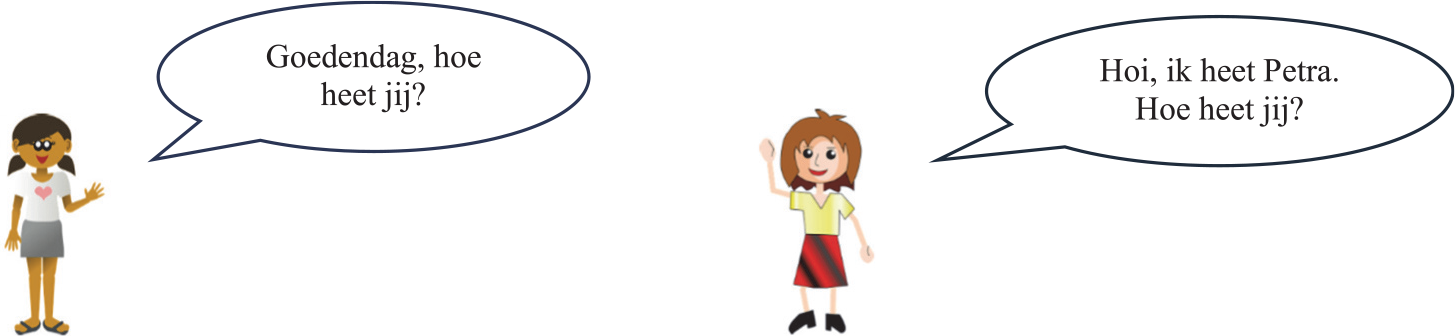
Activity 1: Translating a dialogue from an unknown language into L1 or L2 (level of proficiency: primary school).
What are the two girls saying to each other? Please translate the text into German or Italian.
_________________________________________________________________________
_________________________________________________________________________
___________________________________________________________________
A: Ik ben Anna. Ik kom uit Amsterdam.______________________________________
B: Ik kom ook uit Amsterdam.______________________________________________
(Hofer & Jessner, Reference Hofer and Jessner2019, p. 41)
Activity 2: Translation from an unfamiliar language into an L1/L2 or L3 (level of proficiency: lower/upper secondary school).
Please translate the Polish text passages into one of the languages you know.

Activity 3: Multilingual sketches: At the travel agency (Im Tourismusbüro)
Situation:
Ein Ehepaar, er aus Spanien und sie aus Russland, machen Urlaub in Rom. Sie erkundigen sich im Tourismusbüro, was sie sich in Rom anschauen könnten. Welche Sehenswürdigkeiten empfiehlt ihr der Touristengruppe?
Actors:
1 Spanier, der Spanisch und mit seiner Freundin Englisch spricht
1 Russin, die Russisch und mit ihrem Freund Englisch spricht
1 Angestellter, der Spanisch und Italienisch spricht
1 Angestellter, der Russisch und Italienisch spricht
Researchers might consider administering a short feedback form at the end of the intervention to establish how students feel about the learning experience, whether they have learned or gained anything from the intervention, and whether they find working with and across several languages stimulating. This way students’ perspective can be taken on board and fed back into lesson planning and pedagogical decisions. Again, the researcher may wish to include the teacher in their research and explore how the teacher feels about the multilingual training intervention. The following questions can guide the investigation: 1) Which type of tasks are suited to boosting MLA and XLA in my students? What tasks will students find challenging and enjoyable? 2) Does the teacher think pupils can profit from a multilingual learning approach and what, if so, does s/he think is the learning effect? and Does the teacher feel that multilingual approaches can be applied more systematically? If so, the researcher might suggest actualising multilingual learning spaces in the form of an elective which students can choose as part of their course requirements.
7. Research task 3 – Overcoming the native-speaker ideology: Transitioning from monolingual to multilingual assessment
Language assessment, like teaching, is widely grounded in a monolingual paradigm (De Angelis, Reference De Angelis2014; Bisai & Singh, Reference Bisai and Singh2018). The benchmark is very often the native speaker and performance criteria are typically based on the standard variety (Canagarajah & Wurr, Reference Canagarajah and Wurr2011). What is rarely considered in pertinent discourses is that any instantiation of a named language as a clearly demarcated code with its rigid standardised norms is an arbitrary act of power. So is the idea that a language is to be mastered ‘completely’ and in its ‘pure form’, whatever that means. It is fair to say that named languages and monolingual standard norms are a Western invention and very much related to the political notion of the nation state and its one legitimate (national) language. Quite apart from the political-ideological underpinning of benchmarks informed by language purity and native-speaker norms, the idea that L3 learners or multilingual users (with whatever linguistic heritage) must attain the same level of proficiency in a language as someone who calls that language their first (and perhaps onlyFootnote 5) language, is unrealistic. The same is true for the idealised notion that speakers are to master all their languages equally well. We therefore propose to reconsider the established native speaker benchmark and animate a reorientation towards holistic multilingual assessment as constituted by graded forms of measurement with more and less multi-competent as broad assessment values for example (cf. Hofer, Reference Hofer2023; Jessner, Reference Jessner2006).
It is fair to say that within schooling systems multilingual (metalinguistic and cross-linguistic) competences are held in rather low esteem and since they do not qualify as desirable educational targets, they do not typically form part of institutional assessment procedures (cf. French, Reference French2017). As already said, language testing is generally oriented along monolingual lines and standard varieties. Students’ knowledge of dialect variants, their proficiencies in heritage languages and/or multilingual metacognitive abilities do not normally feature in language testing, not in school settings, and even less so in official language examinations and internationally certified procedures. This, we believe, is a shortcoming that needs to be redressed, not because we would want to throw all traditional assessment overboard but because we wish to see more flexible, situated, and multilingually sustainable testing formats in place. While the monolingual standard is still widely ‘imbued with superior value’ and in that sense indexical of the ‘good’ language (Weichselbraun, Reference Weichselbraun2014, p. 424), the point we are making is that we need a new (multilingual) standard – if not in lieu of then at least – alongside the established (monolingual) one, to give visibility and greater appreciation to multilingual repertoires, partial competences, and hybrid mixed-language use. While we have, over the past few years, seen important improvements in terms of an increased valorisation of multilingualism, small languages, and linguistic plurality more generally, assessment and testing have, both in research and in their practical application, been dealt with in stepmotherly fashion. Assessment formats that evince multilingual skill sets are few and far between. The practical hurdles in the field are conspicuous and include, to name but some, a dazzling diversity relative to educational contexts, classroom constellations, and individual language repertoires. Together these render development of adequate assessment tools a laborious and toilsome task and one fraught with difficulties. A further problem concerns the scarcity of empirical research and experiential values: with consensus on how (best) to assess multilingual agency and competences lacking, conducting empirical research poses serious challenges. Research task 3 is, in this sense, a call to arms. It is an invitation to forge new pathways in language testing and assessment. The long-term aim is to anchor multilingual assessment in school curricula in order to give weight to skill sets which in current assessment practices are given little consideration or go unnoticed entirely.
Research task 3: Think of ways to elicit and evaluate components of multilingual competence as manifested in students’ meta -and cross-linguistic behaviour and verbalised metacognitive reflections. Devise a test (instrument) that allows you to capture and assess multilingual metacognitive activity. Then conduct a pilot test with a group of students with a view to showcasing their special multilingual metacognitive capabilities.
Research task 3 calls for meticulous planning in advance of the actual intervention, i.e. test administration. Firstly, the prospective researcher needs to establish how to operationalise metacognitive/metalingual and cross-lingual ability and how to draw forth said ability by means of a suitable test procedure. This requires careful consideration of the specific skill set that is to be targeted, and the nature of the task items to be included, and it entails factoring in contextual conditions such as respondents’ age, linguistic and cultural background, proficiency levels, and so forth. The existing literature has:
approached multilingual assessment mainly from two vantage points, […] one pertaining to language and minority rights, linguistic and cultural equity and the political ideologies reflected in longstanding monolingual assessment procedures, the other centering on educational issues in a wider sense but with a specific view to promoting (w)holistic multilingual pedagogies and instantiating multilingual norms and assessments within additive (and mainly Western) school contexts. (Hofer & Jessner, Reference Hofer and Jessner2019a, p. 2)
For Research task 3 prospective researchers will attend to the latter. Designing a test tool that meets the requirements for Research task 3 is a time-intensive undertaking and one that comes with important challenges. We therefore suggest researchers begin by consulting test procedures that have already been utilised in earlier studies. Hofer and Jessner (Reference Hofer and Jessner2019) compiled a multilingual competence test (short MCT 9–12) for children aged 9 to 12. The multilingual competence test, or MCT, goes beyond traditional monolingual testing practices in that it integrates multiple languages (nine to be precise) and measures a whole range of linguistic and metacognitive skills (Hofer & Jessner, Reference Hofer and Jessner2019, p. 2). The MCT consists of two parts – each focalising a given set of languages – and includes two types of tasks: one linguistic, the other metalinguistic/metacognitive in nature. The MCT was designed with a specific target group (i.e., South Tyrolean primary schoolers) in mind. Accordingly, tasks are tailor-made to suit the specific sociolinguistic parameters of the local educational landscape. This said, prospective researchers will find that the test can easily be modified to align with the context of their own study.
For an extensive and in-depth theoretical treatment of issues surrounding multilingual testing and assessment, researchers may also wish to consult De Angelis (Reference De Angelis2021). The author provides comprehensive coverage of assessment-related topics and proposes an integrated approach which, she emphasises, is fair and equitable and does justice to culturally and linguistically diverse student populations (De Angelis, Reference De Angelis2021, p. 126). Concrete efforts in this direction are also undertaken by Cenoz et al. (Reference Cenoz, Arocena, Gorter and Gathercole2013), who propose a multilingual scoring procedure for the evaluation of multiple linguistic competences which, they underline, takes account of students’ entire linguistic repertoire and the specific learning experiences resulting from their distinct L1s. A useful overview of extant research in the field of multilingual assessments is further provided by Gorter and Cenoz (Reference Gorter and Cenoz2017). In support of our line of argumentation, the authors state that test outcomes differ ‘when assessment looks at one language at a time instead of the whole linguistic repertoire’ (Gorter & Cenoz, Reference Gorter and Cenoz2017, p. 243, see also De Angelis & Jessner, Reference De Angelis, Jessner and Manchón2012; De Angelis, Reference De Angelis2014; Garcia, Reference Garcia2009; Lopez et al., Reference Lopez, Turkan, Guzman-Orth and Shohamy2016; Roy, Reference Roy, Scott, Scott and Webber2016). Finally, Melo-Pfeifer and Ollivier’s (Reference Melo-Pfeifer and Ollivier2023) recent publication on the assessment of plurilingual competence in plurilingual learners also yields useful information on how to approach testing in multiglossic educational settings (cf. Melo-Pfeifer & Reimann, Reference Melo-Pfeifer and Reimann2018). The following questions can be helpful prior to and during the preparation phase: 1) Which specific multilingual (metacognitive/cross-linguistic) skills or skill sets should the test procedure target? 2) Which activities or task items are suited to capturing these skills? The final step is the pilot or test administration phase which will help establish the feasibility of the test tool and/or bring to the fore any design issues or potential needs for improvement that might subsist.
Tasks that assess multilingual competences can be very similar to the activities that teachers use in the classroom to train these competences in the first place: they can include translations, mixed-language text productions (dialogues, poems, summaries, reports, essays), grammatical/morphosyntactic error detection/correction in vari-lingual sentences, and so forth. In the following we provide two sample tasks (taken from Hofer & Jessner, Reference Hofer and Jessner2019; Spechtenhauser, Reference Spechtenhauser2022). Both include a metalinguistic component which requires students to verbalise their metalinguistic thinking.
Activity 1: Two of the following sentences have the same meaning. Find them (tick the boxes) and explain why you think this is so:
□ La bambina mangia la frutta.
□ The girl likes eating fruit.
□ Das Mädchen isst gerne Obst.
I think that these two sentences have the same meaning because: 
_______________________________________________________________________
_______________________________________________________________________
_______________________________________________________________________
_______________________________________________________________________
Activity 2: Disambiguating semantic ambiguity.
Linguistic question (LQ): Does the word ‘porto’ have the same meaning in the two sentences?
La nave entra nel porto.
Io porto i fiori alla nonna.

Linguistic answer (LA):
________________________________________________________________________
Metalinguistic question (MLQ): What does the sentence ‘La nave entra nel porto’ mean?
________________________________________________________________________
Metalinguistic question (MLQ): What does the sentence ‘Io porto i fiori alla nonna’ mean?
________________________________________________________________________
Metalinguistic answer (MLA):
________________________________________________________________________
8. Conclusion
Working from a complex dynamic systems perspective and based on a holistic conception of language development and learning, our contribution pursues three clearly defined targets. 1) It calls attention to the uniqueness of multilingual competence and skill development and points to the urgent need for new multilingual target norms. 2) It seeks to promote holistic, i.e. integrated language learning and multilingual competence building as important educational goals in schools, and 3) it calls for multilingually sensitive forms of assessment and greater appreciation of multilingual resourcefulness.
By way of conclusion, we make a point of reiterating that multilingual competence is distinct from monolingual competence. Having multiple languages not only affords students multiple ways of seeing and experiencing the world, and multiple windows onto life realities in and with different languages, cultures, and communities of practice, but it also comes with an expansive perspective and a conception of language as pluralistic and fluid rather than monolithic and static. Having multiple languages confers an enhanced understanding of linguistic forms and functions. Metacognitive and cross-linguistic abilities empower students to mobilise and successfully transfer previously acquired knowledge and skill (Jessner, Reference Jessner, Cabrelli, Chaouch-Orozco, Gonzalez Alonso, Pereira Soares and Rothman2023) and they allow them to perceive and maximally exploit the synergies and affordances provided and so optimize learning (Aronin, Reference Aronin, Pawlak and Aronin2014).
In an increasingly multilingual and multicultural world, one of the educational objectives must be the promotion of multilingual competency. This can only ever be achieved through the introduction and institutional anchoring of multilingual learning spaces and a multilingualism-informed standard oriented towards functional multilingual agency.
We anticipate important linguistic, (meta)cognitive, and emotive-motivational advantages for students in multilingual-oriented learning environments where multilingual norms are put in place. Teachers, too, may find that the implementation of a multilingual standard can be a source of relief in the sense that it puts an end to the intractable obsession with the native-speaker norm and the concomitant sanctioning of all forms of (monolingual) norm transgression. The wider appraisal and application of a multilingual standard will give legitimacy to a new, multilingual speaker who unites multilingual versatility and socio-cultural perceptivity (Jessner et al., Reference Jessner, Hofer, Malzer-Papp, Slavkov, Melo-Pfeifer and Kerschhofer-Puhalo2021) and who is a multi-competent and confident –‘received’ – user.
Lastly, from the aforesaid, we identify two fields of action which demand particular attention. There is an urgent need for more empirical research in multilingualism and there is equal urgency to establish an informed research-based dialogue between academic community, the teaching profession, educational authorities, and policymakers. What is needed is a concerted effort to work towards a comprehensive easing of the monolingual stranglehold in the education system.
Competing interests
The authors declare that they have no known competing financial interests or personal relationships that may have influenced the work reported in this paper.
Barbara Hofer lives in the trilingual province of South Tyrol, Italy. She lectures at the Free University of Bolzano/Bozen/Bulsan (I) (Faculty of Education) and at Innsbruck University (A) (English Department) where she is also a member of DyME Research. Barbara Hofer holds a PhD in English linguistics and obtained her Habilitation (Venia docendi-Fachdidaktik Englisch) at the University of Innsbruck. Her research interests include multilingual competences, meta- and cross-linguistic awareness, language attitudes, multilingual assessment, Dominant Language Constellations, and CDST amongst others. She has authored several books and articles on (early) multilingual competences and multilingual learning. In her most recent research she investigates multilingual identities in minority settings and explores how different life ecologies affect students’ perceptions of their multilinguality and self. She is also currently looking into multilingual learning in mature learner-users.
Ulrike Jessner is Professor at the University of Innsbruck (Austria) and the University of Pannonia, Veszprem (Hungary), where she acts as Founding Member of the International Doctoral School of Multilingualism. She has published widely in the field of multilingualism with a special focus on the acquisition of English in multilingual contexts. She is the co-author of A dynamic model of multilingualism (with Philip Herdina in 2002) which pioneered CDST in language acquisition research. She has been engaged in the development of the research area of third language acquisition/multilingualism as a Founding Member and President of the International Association of Multilingualism. She is Founding Editor of the International Journal of Multilingualism and the book series Trends in Applied Linguistics (Mouton de Gruyter). With her work on metalinguistic awareness in multilingual learning she opened a new research avenue on metacognition in multilingual learning and teaching. She is currently carrying out a longitudinal study in the trilingual kindergartens and primary schools in South Tyrol (Italy) and working with the municipality of Innsbruck on the role of communication in understanding energy efficiency.

 Open access

