




Hostname: page-component-77f85d65b8-g4pgd Total loading time: 0 Render date: 2026-03-29T01:57:36.844Z Has data issue: false hasContentIssue false

Global boundedness and large time behaviour in a higher-dimensional quasilinear chemotaxis system with consumption of chemoattractant

Published online by Cambridge University Press:  30 April 2024

Minghua Zhang
Affiliation:
College of Mathematics and Statistics, Chongqing University, Chongqing 401331, P.R. China (mhzhang2209@163.com; clmu2005@163.com)
Chunlai Mu
Affiliation:
College of Mathematics and Statistics, Chongqing University, Chongqing 401331, P.R. China (mhzhang2209@163.com; clmu2005@163.com)
Hongying Yang
Affiliation:
School of Sciences, Shihezi University, Shihezi 832000, P.R. China (yanghongying1980@163.com)

Abstract

This paper deals with the following quasilinear chemotaxis system with consumption of chemoattractant

\[ \left\{\begin{array}{@{}ll} u_t=\Delta u^{m}-\nabla\cdot(u\nabla v),\quad & x\in \Omega,\quad t>0,\\ v_t=\Delta v-uv,\quad & x\in \Omega,\quad t>0\\ \end{array}\right. \]
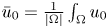
in a bounded domain $\Omega \subset \mathbb {R}^N(N=3,\,4,\,5)$ with smooth boundary $\partial \Omega$. It is shown that if $m>\max \{1,\,\frac {3N-2}{2N+2}\}$, for any reasonably smooth nonnegative initial data, the corresponding no-flux type initial-boundary value problem possesses a globally bounded weak solution. Furthermore, we prove that the solution converges to the spatially homogeneous equilibrium $(\bar {u}_0,\,0)$ in an appropriate sense as $t\rightarrow \infty$, where $\bar {u}_0=\frac {1}{|\Omega |}\int _\Omega u_0$. This result not only partly extends the previous global boundedness result in Fan and Jin (J. Math. Phys. 58 (2017), 011503) and Wang and Xiang (Z. Angew. Math. Phys. 66 (2015), 3159–3179) to $m>\frac {3N-2}{2N}$ in the case $N\geq 3$, but also partly improves the global existence result in Zheng and Wang (Discrete Contin. Dyn. Syst. Ser. B 22 (2017), 669–686) to $m>\frac {3N}{2N+2}$ when $N\geq 2$.

Information

Type
Research Article
Copyright
© The Author(s), 2024. Published by Cambridge University Press on behalf of The Royal Society of Edinburgh

Access options

Get access to the full version of this content by using one of the access options below. (Log in options will check for institutional or personal access. Content may require purchase if you do not have access.)

Article purchase

Temporarily unavailable