


The link between high dietary Na intake and elevated blood pressure in adults is well established(Reference He and MacGregor1, 2). Lifetime reduction in dietary salt intake is likely to reduce risk of CVD(Reference Ritz and Mehls3). Recent evidence indicates that dietary Na can contribute to higher levels of blood pressure during childhood(Reference He, Marrero and MacGregor4). Throughout life, blood pressure follows a tracking pattern, in which those children with elevated blood pressure are more likely to have raised blood pressure as adults(Reference Lauer and Clarke5, Reference Mitsnefes6). These findings highlight the importance of commencing salt reduction strategies during early life. Furthermore, past studies have demonstrated the tracking of dietary patterns from childhood to adolescence(Reference Kelder, Perry and Klepp7) and adulthood(Reference Mikkila, Rasanen and Raitakari8), indicating that early exposure to highly salted foods may increase the likelihood of these dietary patterns continuing into adulthood.
In the most developed countries, dietary Na in adults and children exceeds dietary recommendations(Reference Brown, Tzoulaki and Candeias9). The majority (75–80 %) of dietary Na is derived from salt added to processed foods(Reference James, Ralph and Sanchez-Castillo10). To reduce population salt intake, Na needs to be reduced in the food supply, through the manufacture of lower-Na foods(Reference Brown, Tzoulaki and Candeias9, Reference He and MacGregor11, Reference Keogh and Clifton12). The UK has been at the forefront of this approach, wherein 2006, the Food Standards Agency (FSA) released voluntary Na reduction targets for food products(13). These targets were developed to encourage food manufacturers to reduce Na levels in a range of processed foods to aid in the progression towards reducing population salt intake to 6 g/d(13). This approach has been successful in the UK where since the release of the Na reduction targets in 2006, the daily salt consumption in adults has fallen from 9·5 g in 2001 to 8·6 g in 2008(14). In Australia, in April 2010, voluntary Na reduction targets were released for both bread and breakfast cereals(15). Unlike the UK, a comprehensive list of Na reduction targets for a range of processed foods is not yet available in Australia. The Australian Division of World Action on Salt and Health is working towards the development of Na reduction targets for other processed foods. An overall aim of the Australian Division of World Action on Salt and Health is to reduce Australian adults' daily salt intake to 6 g (Na 2300 mg) by 2012(16).
The most recent data available examining dietary Na intake in Australian children are from the 2007 National Children's Nutrition and Physical Activity Survey (CNPAS)(17). Findings from this survey indicate that, similar to other developed nations such as the UK(Reference Gregory, Lowe and Bates18) and the USA(Reference Wright, Wang and Kennedy-Stehpenson19), Australian children are consuming high levels of dietary Na, with average daily intakes (excluding discretionary use of salt at the table or in cooking) of 1675 mg (salt 4·2 g), 2161 mg (salt 5·4 g), 2694 mg (salt 6·7 g) and 3161 mg (salt 7·9 g) in 2–3 year olds, 4–8 year olds, 9–13 year olds and 14–16 year olds, respectively(17). In Australia, the National Health and Medical Research Council recommends an adequate daily Na intake of 200–400 mg (salt 0·5–1·0 g), 300–600 mg (salt 0·75–1·5 g), 400–800 mg (salt 0·5–2·0 g) and 460–920 mg (salt 1·2–2·3 g); and an upper limit of 1000 mg (salt 2·5 g), 1400 mg (salt 3·5 g), 2000 mg (salt 5 g) and 2300 mg (salt 5·75 g), in children aged 2–3, 4–8, 9–13 and 14–18 years, respectively(20). With comparison to these recommendations, it is evident that children's Na intake is excessively high and public health policy to reduce dietary Na intake in children is urgently required.
In order to reduce Na intake in children, it is necessary to identify the major sources of Na in children's diets. In the present study, we utilised data from the 2007 CNPAS to identify the major dietary sources of Na in children's diets, the frequency of discretionary salt use and associated demographic characteristics in Australian children aged 2–16 years. Additionally, we applied the most recently revised 2012 UK FSA Na reduction targets to Australian food products to investigate the effect these targets have on Na intake in Australian children.
Subjects and methods
2007 Australian National Children's Nutrition and Physical Activity Survey
The full details of the methodology used in the CNPAS have been previously reported(21). A brief overview of the methodology relevant to our analysis is described in a later section. Participants were recruited using a multistage quota sampling framework. The initial target quota was 1000 participants for each of the following age groups: 2–3, 4–8, 9–13 and 14–16 years, to which a 400 booster sample was later provided by the state of South Australia. Postcodes were randomly selected as stratified by state/territory and capital city/rest of state. Randomly selected clusters of postcodes ensured an equal number of participants in each age group, from each of the metro and non-metro areas within each state. Random digit dialling was used to invite eligible households, those with children aged 2–16 years, within selected postcodes to participate in the study. Only one child from each household could participate in the study. The response rate of households was 40 %. Due to the non-proportionate nature of the sampling framework, each participant was assigned a population weighting which weighted for age, sex and region. The study was approved by the National Health and Medical Research Council registered Ethics Committees of Commonwealth Scientific Industrial Research Organisation and University of South Africa.
Data were collected at two time points, between February and August 2007, the first consisting of a face-to-face interview (computer-assisted personal interviewing) which was followed by a telephone (computer-assisted telephone interviewing) interview. A total of 4487 children completed all the components of the survey. Only data from the computer-assisted personal interview are included in this analysis(22). Demographic data were collected for both the participating child and the primary caregiver. A three-pass 24 h dietary recall was used to determine all food and beverages consumed from midnight to midnight on the day before the interview. The three-pass method includes the following stages: (i) provide a quick list of all foods and beverages, (ii) a series of probe questions relevant to each quick list item to gather more detailed information such as portion size and brand name and (iii) finally, a recall review to validate information and make any necessary adjustments(21). Portion sizes were estimated using a food model booklet and standard household measures. Na intake, along with other nutrients, was calculated using the Australian nutrient composition database AUSNUT 2007, specifically developed by the Food Standards Australia and New Zealand for the CNPAS(23). Each food and beverage item recorded was matched to an eight-digit food code, which corresponded to a set of nutrient data. Each eight-digit food code was derived from a five-digit food code that represented ‘minor’ food categories. Each minor food category falls under a three-digit sub-major food category, which then falls within a two-digit major food category. A detailed list of the food group classification system can be found in the CNPAS user guide(21).
In addition, the participants completed a food habits questionnaire, which included two questions relating to discretionary salt use: ‘Does the person who prepares your meal add salt when they are cooking?’ and ‘Do you add salt to your meal at the table?’ Participants could respond yes, usually; yes, sometimes; no; or I do not know. Both the 24 h dietary recall and food habits questionnaire were conducted with the primary caregiver of participants aged 9 years and under, and with the study child in those participants aged 9 years and over. The primary caregiver was encouraged to be present for all the interviews. In the case where children under the age of 9 years were away from the home, a ‘caregiver form’ was provided to the alternative carer to record dietary intake over the recall period. This information was added to the dietary recall during the interview(21).
Data analysis
Food sources of sodium
The CNPAS food group coding system(21) was used to calculate the contribution of Na from major, sub-major and minor food groups. The contribution of each major, sub-major and minor food group to daily Na intake was calculated using the following formula:

The food group contribution calculations were preformed separately for each age group, 2–3, 4–8, 9–13 and 14–16 years, with population weightings applied.
Application of sodium reduction targets
The FSA revised 2012 Na reduction targets(24) were used as a benchmark to determine the percentage reduction of Na content required in Australian food products for them to comply with the FSA targets. Within the UK's FSA targets, sub-categories have been assigned either a maximum or an average target level of Na permitted per 100 g of food. Where possible we have utilised the average level targets in preference to the maximum levels set. It should be noted that the recently set Na target for Australian bread by the end of 2013 is identical to the target set by the FSA for regular breads and bread rolls (i.e. 400 mg/100 g)(15). The Australian Na reduction target for breakfast cereals differs from the UK system, in that a 15 % reduction in the Na content of ready-to-eat breakfast cereals has been set, rather than a Na content level in mg/100 g. The 15 % reduction applies only to those breakfast cereals that exceed 400 mg of Na per 100 g(15). For consistency in this analysis, we have utilised the FSA targets.
To calculate the average Na content (mg/100 g) of Australian food products, the sum of Na provided by all foods consumed within either a sub-major or a minor food category was divided by the sum of g of food consumed within that sub-major or minor food category, multiplied by 100. These calculations were preformed on the full dataset (n 4487), with population weightings applied.
Na reduction targets were applied to those food categories which contain processed foods where reductions in Na levels can be achieved; this accounted for eleven of the twenty-two major food group categories. It was not suitable to apply Na targets within the other eleven categories as these include fresh foods and those with minimal levels of Na, for example, non-alcoholic beverages, fruit products and dishes and sugar products and dishes. The selected eleven major food categories were further broken down into sub and minor categories to determine if an appropriate FSA target could be matched to the Australian food category. It was not possible to assign certain categories with an FSA target due to differences between the Australian food group classification system and that used by the FSA. To avoid missing these categories, for which FSA has targets for but do not match to the Australian categories, we applied a ‘blanket’ 25 % reduction. For example, although the FSA has set a target for a range of different types of savoury sauces, these could not be applied to Australian food categories as too much variation exists between the two classification systems. As this category consists of high-Na food items which contribute significantly to Na intake, hence we applied a 25 % ‘blanket’ target to these categories. We chose 25%, as it has been previously demonstrated that at this level, no change in taste of the food products is detected by the consumer(Reference Grigis, Neal and Prescott25). Furthermore, this is the level recommended by Australian Division of World Action on Salt and Health to reduce the level of salt in food products and within the catering industry(16).
To calculate the percentage reduction required in Na content of each food group category to meet the FSA target, the following formula was used:
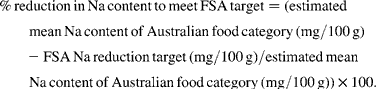
The percentage reduction was then applied to the mean Na intake coming from each food group category for each age group to calculate the new mean daily Na intake.
Assessment of under-reporting
To assess the validity of reported energy intake (EI) at the group level, the EI:estimated BMR ratio was calculated for each age group, using Schofield equations(Reference Schofield26), and compared to the appropriate Goldberg cut-off (1·52)(Reference Gibson27, Reference Goldberg, Black and Jebb28). At the group level, the calculated EI:estimated BMR was 1·67, 1·77, 1·55 and 1·49 in 2–3, 4–8, 9–13 and 14–16 year olds, respectively. This indicates a small degree of under-reporting at the group level in 14–16-year-old participants. To assess the level of over-reporting, we calculated the percentage of participants whose EI exceeded three standard deviations from the mean EI for their age group. On average, only 1 % of the participants were classified as over-reporters. In the present analysis, no participants were excluded on the basis of under- or over-reporting.
Statistical analysis
The frequency of participants, in each age group, reporting discretionary salt use was calculated using descriptive statistics. We used the highest level of education attained by the primary carer as a marker for socio-economic status (SES). Based on this, the participants were grouped into one of the three categories of education attainment: (i) high, includes those with a university/tertiary qualification; (ii) mid, includes those with an advanced diploma, diploma or certificate III/IV or trade certificate; and (iii) low, includes those with some or no level of high school education. Significant relationships between categorical variables were determined using χ2 analysis. A P value of < 0·05 was considered significant. Data and statistical analyses were performed with PASW version 17 (PASW, Inc., Chicago, IL, USA) and Microsoft Excel (Microsoft Corporation, Redmond, WA, USA).
Results
Food sources of sodium
The relative contribution of each major food group to total daily Na intake in children by age group is shown in Fig. 1. Across all age groups, the greatest contributor to Na intake was cereals and cereal products, accounting for over 20 % of intake. Other major sources, contributing to more than 10 % of intake across most age groups, are cereal-based products and dishes; meat, poultry and game products; and milk products and dishes. The contribution of each major food category to Na intake was relatively similar across all age groups. Except for cereal-based products and dishes, which accounted for a greater contribution to Na intake in older children; and milk products and dishes, which accounted for a greater contribution to Na intake of children in the younger age groups.
Sources of Na from major food groups in Australian children aged 2–16 years (n 4487). ■, 2–3 years, n 1071;  , 4–8 years, n 1216;
  , 9–13 years, n 1110;
  , 14–16 years, n 1090.

Table 1 lists those major, sub-major and minor food categories that contributed to more than 2 % of daily Na intake in any age group. Within the cereals and cereal products category, regular breads and bread rolls contributed the greatest proportion to Na intake across all age groups (12–15 %). Pastries contributed between 3 and 6 % of Na intake across age groups and tended to increase with age. Within the meat, poultry and game products and dishes, processed meat made the greatest contribution to Na intake ranging from 7 to 9 %, followed by sausages, frankfurts and saveloys accounting for 2–3 %. Both dairy milk (3–7 %) and cheese (4–7 %) contributed the most Na within the milk products and dishes. Other moderate sources of Na across all age groups were gravies and savoury sauces (5–8 %), soup (2–3 %) and snack foods (2–4 %).
Main food sources of sodium from major, sub-major and minor food categories in 2–16-year-old Australian children (food group categories that contribute>2·0 % of sodium to daily intake across any age group are included, n 4487)

Application of Food Standards Agency sodium reduction targets
Of the 263 minor food categories that were investigated within the eleven major categories, an appropriate FSA target could be applied to eighty-five of the minor food categories. The 25 % ‘blanket’ reduction was applied to an additional eighty-one minor food categories. The remaining ninety-seven minor food categories that were not assigned a Na reduction target included fresh food items and those with negligible Na levels. These included rice and grains (n 6), vegetable oils (n 6), fresh fish and seafood (n 5), fresh meat and poultry (n 13), milk, yoghurt and cream (n 45), vegetables (n 17), herbs, spices and sweeteners (n 5).
Table 2 shows those Australian food categories that were assigned either an FSA Na reduction target or a blanket 25 % reduction target. For the ease of reporting rather than listing all (166) minor food categories, this has been condensed, so that those minor food categories within a sub-category that were all assigned the same target are only presented once as the sub-category.
Application of sodium reduction targets to Australian food categories

FSA, Food Standards Agency.
Six Australian food groups were found to have an estimated Na content level already lower than that of the proposed FSA target; these included sweet breads, buns and scrolls; sweet breads, buns and scrolls, fortified; breakfast cereal, hot porridge type; cheese, natural, traditional; potato products (e.g. potato chips wedges and hash brown) (Table 2). Therefore, for each of these food groups, no adjusted calculation was made, as this would have resulted in an increase in mean Na intake from these food groups.
The percentage reduction in Na required to meet the proposed FSA targets varied considerably among food groups, ranging from 9 to 64 %. The majority of food groups (75 %) require reductions of greater than 20 % in Na to reach the proposed FSA target. Those minor food groups that require the greatest reductions (>40 %) are sweet pastry products, tarts and flans (49 %), sweet pastry products, pies, slices and Danishes (42 %), sausage (41 %), bacon (40 %), ham (57 %), processed delicatessen meat, red (43 %), all processed and fresh cheeses (40–64 %) and canned condensed soup (64 %). Application of the proposed Na reduction targets results in the following changes in mean daily Na intake (mg) to each of the age groups: 2–3 years, 1674–1347 (salt 4·2–3·4 g); 4–8 years, 2160–1705 (salt 5·4–4·3 g); 9–13 years, 2678–2135 (salt 6·7–5·3 g); 14–16 years, 3132–2503 (salt 7·8–6·3 g). The greatest reductions in daily Na intake would be in those children within the older age groups, 629 mg/d (salt 1·6 g/d) and 543 mg/d (salt 1·4 g/d) in 14–16 and 9–13 year olds, respectively, compared to 327 mg/d (salt 0·8 g/d) and 455 mg/d (1·3 g/d) in 2–3 and 4–8 year olds, respectively. However, as daily Na intake increases with age this would equate to a similar percentage reduction in mean Na intake across all age groups: 20, 21, 20 and 20 % in 2–3, 4–8, 9–13 and 14–16 year olds, respectively. Fig. 2 displays the difference these reductions would make to the percentage of children exceeding the recommended daily upper limit of Na. The application of the proposed Na reduction targets results in 15, 20, 21 and 17 % fewer children aged 2–3, 4–8, 9–13 and 14–16 years, respectively, exceeding the daily upper limit of Na for that age group.
Change in percentage of participants exceeding the suggested daily upper limit (UL) for Na before and after the application of Na reduction targets (n 4487). ■, Original data: % above UL; , With Na reduction targets applied: % above UL.

Discretionary salt use
Approximately, 40 % of the participants from all age groups reported that the person who prepares their meal either usually or sometimes adds salt when cooking (Fig. 3(a)). There was no significant difference between age group and salt added during cooking (Pearson χ2 7·6, df 6, P = 0·266). In contrast, there was a significant relationship between the age group and participants' own use of table salt. As participants aged, they were more likely to add salt at the table (Pearson χ2 199·5, df 6, P < 0·001). Of participants, 11, 25, 37 and 39 % aged 2–3, 4–8, 9–13 and 14–16 years, respectively, reported adding salt to their meal at the table usually or sometimes (Fig. 3(b)). With regards to SES, there was no association between SES and salt added during cooking (Pearson χ2 3·87, df 4, P = 0·425) (data not shown). There was a significant association between SES and salt added at the table (Pearson χ2 42·53, df 4, P < 0·001). Of participants, 33, 32 and 25 % grouped as low, mid and high SES, respectively, reported usually adding salt to their meal at the table usually or sometimes.
Discretionary salt use in Australian children aged 2–16 years (n 4481) population weightings applied (those participants who responded ‘do not know’ (n 6) were excluded from this analysis) (a) salt added when cooking and (b) salt added at the table. , No; , Yes, sometimes; ■, Yes, usually.

Discussion
This is the first study to examine the major sources of dietary Na in Australian children. We found the greatest contributors to Na intake were cereals and cereal-based products/dishes (43 %), meat poultry and game products (16 %), milk products/dishes (11 %) and savoury sauces and condiments (7 %). Our findings are similar to those reported in other industrialised countries(Reference Meneton, Lafay and Dufour29).
Findings from our analysis indicate that the adherence to the 2012 FSA Na reduction targets to Australian food products would lower the average Na intake of 2–16 year old Australian children by 20 %. This is a significant reduction and if applied incrementally over the next 10 years could result in a significant reduction in Na intake and bring intakes closer to recommended levels. Gradual, incremental reductions in the salt content of processed foods can be achieved without consumers detecting the reduction(Reference Grigis, Neal and Prescott25). Since the FSA began its salt reduction strategy in 2003/2004, which included the release of the Na reduction targets for food products in 2006, daily salt consumption in adults has fallen from 9·5 g in 2001 to 8·6 g in 2008(14). Although adults are still consuming high levels of salt that are exceeding dietary recommendations, this decrease represents a positive change in the trend from previously increasing salt intakes(Reference He and MacGregor11). The success of the FSA Na reduction targets is also seen within the changing food supply, where on average, the Na content has been reduced by 20–30 %(Reference He and MacGregor11). Other countries are now taking action with respect to salt reduction(30–32).
Based on the UK FSA model, the USA and Canada have developed similar Na reduction targets which specify the level of Na (mg/100 g) permitted across a range of processed foods(30, 32). In comparison, Australia is lagging behind in the development of comprehensive Na reduction targets. In April 2010, Australia's Food and Health Dialogue released targets for bread (400 mg/100 g) and breakfast cereal(15). In contrast to the UK model, the target for breakfast cereal is based on a percentage reduction level (i.e. 15 %), applying only to those cereals where Na levels exceed 400 mg/100 g. In the present analysis, we have calculated that for Australian breakfast cereals to comply with the FSA target a 30 % average reduction in Na content is needed. The range of Na levels across Australian breakfast cereals is large, varying from 4 to 1063 mg/100 g(Reference Webster, Dunford and Neal33). The application of a 15 % reduction to those cereals at the top of the range in Na levels would still promote the manufacture of breakfast cereals with unacceptably high Na levels. Thus, it is recommended that the Na reduction target for Australian breakfast cereals be expressed in mg/100 g and also be lowered in line with the UK target (average 270 mg/100 g; maximum 400 mg/100). Such a target will achieve greater reductions in population Na intake and allow for consistency in Na levels across food products, encouraging a level playing field for food manufacturers. Furthermore, targets set at levels in mg/100 g are more useful for monitoring and evaluating Na levels over time.
We also found that salt is commonly added during cooking and at the table and this has been estimated to contribute 15 % of total daily Na intake(Reference James, Ralph and Sanchez-Castillo10). Therefore, there is a potential for further reductions to total Na intake if the use of discretionary salt is reduced. Findings from the Australian Division of World Action on Salt and Health 2008 consumer survey on parents' attitudes to salt and children revealed that over half (52 %) of respondents reported that their children were consuming salty snacks, such as chips and savoury biscuits, at least a few times a week(34). Variation in salty taste perception and liking is mostly caused by learned experiences rather than genetics(Reference Wise, Hansen and Reed35), exposure to salt in foods after the age of 2 years results in a liking for salt in foods(Reference Beauchamp and Moran36–Reference Sullivan and Birch38). Exposure to foods containing salt provides a learning environment in which children are familiarised with products that are accepted in their specific dietary culture. As salt intake is reduced, adults appear to prefer food with less salt(Reference He and MacGregor39), and this is probably related to the adaptation of taste receptors over the course of weeks to months(Reference Blais, Pangborn and Borhani40). One study has demonstrated that in children aged 12–13 years, those who reported eating at fast food restaurants more than once a month had a greater preference for salty foods(Reference Kim and Lee41). Salt reduction campaigns targeting younger children and their parents to reduce the use of discretionary salt could result in a lifelong reduction in salt intake.
In the present analysis after the application of the Na reduction targets, daily Na intake decreased by 327, 455, 543 and 629 mg (salt 0·8, 1·2, 1·4 and 1·6 g) in 2–3, 4–8, 9–13 and 14–16 year olds, respectively. These findings highlight that incremental product reformulation of lower-Na foods will significantly reduce children's daily Na intake. However, as intakes will still be above levels recommended for health, this strategy should be combined with education and behavioural interventions to achieve greater reductions. Such interventions should aim to limit high-salt processed foods, e.g. savoury snacks and processed meats, and replace these with fresh foods which are low in salt.
The strength of the present study is that the data utilised come from a large national survey. The complex sampling methods employed in the CNPAS enabled the selection of the best available sample of Australian children aged 2–16 years within eligible postcodes. However, the study also has a number of limitations which should be considered when interpreting the findings. First, for determining the average Na content of Australian food products, our calculations were based on the foods that the participants had eaten on the day of the survey and nutrient values obtained from the nutrient composition database AUSNUT 2007(23). No laboratory analyses were conducted to determine Na values of food products and reported Na content was used. In addition, in the CNPAS Na intake was determined via 24-h dietary recall. This method fails to capture the amount of Na coming from salt added at the table and during cooking, and as such is likely to be an underestimation of the true value of Na intake. Furthermore, we acknowledge that there was a small degree of under-reporting detected within the 14–16 year old age group. However, given the aims of the present study and the minor bias detected, it is unlikely that this would have affected our overall results. We applied FSA Na reduction targets to eighty-five minor Australian food categories and a 25 % ‘blanket’ reduction on a further eighty-one minor food categories. This method ensured that the majority of processed foods that can be targeted in Na reduction were included in our analysis. One exception is canned vegetables, where due to the inclusion of both canned and fresh varieties grouped together in the Australian food group classification system, it was not possible to place a Na reduction target on this category. The contribution of vegetables (excluding potato) to Na intake in this sample of Australian children was low (1·6 %). As such it is unlikely that the omission of a target on this food group would significantly alter our overall results.
In summary, we have demonstrated that the application of Na reduction content targets on Australian food products could reduce the average Na intake of Australian children aged 2–16 years by 20 %. This would reduce the present average Na intake, which is approximately 1·6 times the upper daily limit to an average level that is 1·2 times the upper level (currently 7·8 g salt for 14–16 year olds and 4·2 g salt for 1–3 year olds, excluding discretionary use of salt at the table or during cooking) and would result in approximately 20 % fewer children exceeding the daily upper limit for Na. Although this 20 % may seem modest, it is likely that with regular review and consultation with the food industry, similar reductions could be achieved every 2–3 years, which would result in most children falling below the upper limit. For Australia, the UK's FSA targets provide a useful starting framework to guide population-wide Na reductions. Our findings also indicate that the reported frequency of discretionary salt is relatively high among Australian children. To successfully reduce Na intake, there is a need for salt reductions strategies to incorporate education campaigns that target both discretionary salt use and consumption of high salt processed foods. Successful implementation of these strategies will lead to a population-wide reduction in salt intake which will ultimately reduce rates of CVD.
Acknowledgements
We acknowledge Commonwealth Scientific Industry Research Organisation, University of South Australia and the Department of Health and Ageing in the collection of data. We acknowledge the Australian Social Science Data Archive for the availability of the datasets. We declare that those who carried out the original analysis and collection of the data bear no responsibility for the further analysis or interpretation of them. This project was supported by a post-graduate scholarship from the National Heart Foundation of Australia. The author's responsibilities were as follows: C. A. G., K. J. C., L. J. R. and C. A. N. helped in study design; C. A. G. helped in data analysis and writing of the manuscript; K. J. C., L. J. R. and C. A. N.: provision of significant advice and consultation, and revision of the manuscript. None of the authors has any conflicts of interest.



