An important cause of the pandemic of overweight and obesity, and of the rapid rise of related chronic diseases especially in lower-income countries, is the corresponding rapid increase in the production and consumption of readily available ‘fast’ or ‘convenience’ ready-to-eat or ready-to-heat processed food and drink products. This is now commonly accepted by independent authorities(1–5).
In further support, recent evidence from three cohorts in the USA shows that consumption of various products such as cookies (biscuits), white bread, sweets and desserts, sugar-sweetened drinks, processed meats, and French fries and chips (chips and crisps) is associated with weight gain in adults(Reference Mozaffarian, Hao and Rimm6).
Curiously though, the fact that the products in question are processed is almost always either elided or understated, or even overlooked or ignored. Furthermore, food processing as such is not identified in food classifications, such as Canada's Food Guide(7). These still rely on groupings of foods and nutrients developed from systems first devised early last century, when obesity was uncommon and when only a relatively small amount of food was purchased in mass-manufactured form, often for use as ingredients in home cooking. Additionally, food processing is rarely addressed in dietary assessments: methods including the 24 h recall and FFQ are usually not designed to collect sufficient details that would allow the distinction of foods based on processing.
A new classification has been proposed by a research group at the Faculty of Public Health at the University of São Paulo(Reference Monteiro, Levy and Claro8) based on the nature, extent and purpose of food processing. Food processing is defined as ‘all methods and techniques used by industry to turn whole fresh foods into food products’(Reference Monteiro, Levy and Claro8). This classification divides all foodstuffs into three groups: unprocessed or minimally processed foods (Group 1); processed culinary ingredients (Group 2); and ultra-processed products (Group 3). These distinctions address social, economic, cultural and other aspects of public health nutrition, as well as biological issues(Reference Monteiro, Levy and Claro8, Reference Monteiro9). Other recent classifications that pay attention to processing in general, in Europe(Reference Slimani, Deharveng and Southgate10) and in Guatemala(Reference Asfaw11) are based only on the degree of processing, and are therefore of less value.
Using the new classification, researchers at the University of São Paulo have discerned the steady displacement of minimally processed foods and processed culinary ingredients for use at home, by ultra-processed products, over the last three decades in Brazil(Reference Monteiro, Levy and Claro12). Such a study has important implications. These products are often or even typically energy-dense, are high in refined starches, sugars, fats or salt, and have a heavy glycaemic load, as well as being often sold in large portion sizes, typically formulated to be extremely palatable and habit-forming, and aggressively advertised and marketed(Reference Monteiro, Levy and Claro8, Reference Monteiro, Levy and Claro12–Reference Monteiro, Gomes and Cannon15). High consumption of ultra-processed products has also been found to be associated in adolescents with the prevalence of the metabolic syndrome in a cross-sectional study(Reference Tavares, Fonseca and Garcia Rosa13).
Consumption of ultra-processed products outside Brazil is at present unknown. The objective of the current paper is to investigate consumption of ultra-processed products in Canada and to assess their association with dietary quality.
Methods
Data source
The data analysed in the present study come from the most recent Food Expenditure Survey (FOODEX) conducted in Canada by the Income Statistics Division of Statistics Canada throughout 2001. This survey provides national estimates of expenditures and quantities of food and non-alcoholic drinks bought from stores by households, as well as sociodemographic characteristics of each household.
The FOODEX was conducted throughout the year, covers 98 % of the Canadian population and was carried out in all provinces and territories. A stratified sample was obtained by selecting small geographic areas, followed by the selection of dwellings of similar sociodemographic indicators within these clusters. All estimates presented herein take into account sampling weights provided by FOODEX. A detailed description of the FOODEX sampling strategies is available elsewhere(16).
Data collection
Data on income and other socio-economic variables were obtained using standardized questionnaires. Data on food and drink purchases were reported by one member of each household using a diary for fourteen consecutive days. The recording included detailed information for each store-bought item in quantities (kilograms or litres) and expenses ($CAN). Meals and snacks bought in restaurants (including food consumed at home as take-away dishes and deliveries) only had information on expenditure and were not included in our analysis.
Interviewers visited households at the end of the recording phase to make sure all diaries were complete. Quantities of specific food items acquired by the households were taken directly from the expense notebook and missing information on quantities was, as a standard practice, estimated from households of similar geographic and socio-economic characteristics. All food purchase entries were recoded using a list of 194 food items. More detailed information about the data collection and treatment methods is available elsewhere(16).
Data analysis
For the purposes of the current paper, the FOODEX public-use microdata file was systematically reanalysed using the classification system developed at the University of São Paulo(Reference Monteiro, Levy and Claro8, Reference Monteiro9). The characteristics and examples of foods contained in each of these three groups are summarized in Box 1. Further details on the classification are available elsewhere(Reference Monteiro, Levy and Claro8, Reference Monteiro9).
Classification of foods based on the nature, extent and purpose of their processing
Group 1 is made of unprocessed and minimally processed foods. Unprocessed foods are parts of animals immediately after they have been slaughtered and parts of plants after harvesting or collection. Minimally processed foods are unprocessed foods subjected to processes, mostly physical, that do not substantially change the nutritional properties and uses of the original foods. These processes are used to extend the duration and storage of unprocessed foods, and often to reduce the time and effort involved in their preparation. Such processes include cleaning and removal of inedible fractions, portioning, grating, flaking, drying, chilling, freezing, pasteurization, fermentation, fat reduction, vacuum and gas packing, squeezing, and simple wrapping. Group 1 includes fresh or frozen meat, fresh or pasteurized milk and plain yoghurt, whole or polished grains, fresh, frozen or dried fruits and unsweetened fruit juices, fresh and frozen vegetables, whole or peeled roots and tubers, unsalted nuts and seeds, tea and coffee.
Group 2 is made of processed culinary ingredients. These are inexpensive substances extracted from Group 1 foods through physical and chemical transformations, such as refining, milling and hydrolysis. They have nutritional properties and uses entirely different from the original whole foods. Group 2 ingredients include vegetable oils, animal fats, sucrose, and flours and pastas (when made of flour and water). Most are depleted of nutrients and essentially provide energy. However, they are typically inedible in themselves and are rather used in households and also in restaurants to cook and enhance the flavour of meals and dishes prepared with unprocessed or minimally processed foods.
Group 3 is made of ultra-processed food and drink products. These are ready-to-consume/heat industry formulations manufactured from cheap ingredients directly extracted from whole foods, such as oils, fats, sucrose and flours, or processed from components extracted from whole foods such as high-fructose corn syrup, hydrogenated oils, a variety of starches, and the cheap parts or remnants of meat. These products are typically added of several preservatives and cosmetic additives, with little or no content of whole foods. Some ultra-processed products, such as breads and sausages, have been part of dietary patterns in many countries since before industrialization. Others, such as burgers, chips, cookies, cakes, sweets, pizzas, chicken nuggets, energy bars, soft drinks and other sugared drinks, are more recent, at least in the quantity now manufactured. Because of the nature of their formulation (including packaging), these products have a long shelf-life, dispense with culinary preparation and the need for dishes and cutlery, and are intensely palatable and appealing to the senses(Reference Kessler21). They are typically energy-dense, with a high content in total, saturated and trans-fats, free sugars and Na, and little or no water, fibre, micronutrients and other protective bioactive compounds existing in whole foods. Marketing campaigns often overtly promote the compulsive consumption of these products including the use of ‘discounts’ for supersize servings.
Individual households were used as the units of analysis (n 5643). In a first step, purchased food quantities were converted into energy (kcal; 1 kcal = 4·184 kJ) using the Canadian Nutrient File (CNF, Version 2010)(17). To do so, each of the 194 codes provided in FOODEX was matched with an appropriate food item in the CNF. The household average daily per capita energy availability and standard error in 2001 were estimated based on all purchased food items(Reference Monteiro, Levy and Claro12).
The second step involved assigning food purchases to the three food groups specified above(Reference Monteiro, Levy and Claro8, Reference Monteiro9). Some compromises had to be made: for example, all fruit juices were classified as ultra-processed products because the FOODEX data do not distinguish between unsweetened and sweetened juices, or indeed between fruit juices and ‘fruit’ drinks containing only some real fruit juice. Mean estimates and standard errors for the relative contribution of each food group and food item to the total household energy availability were then calculated (as a percentage of total energy) for the whole population. Similar calculations were made for population strata corresponding to quintiles of the distribution of the relative contribution of Group 3 products to total energy availability.
In order to assess the likely impact of the consumption of ultra-processed products on human health, we calculated conventional nutritional indicators for the average Canadian household food basket in 2001, and also for two simulated food baskets: one solely containing ultra-processed Group 3 products and the other combining only unprocessed and minimally processed foods (Group 1) together with processed ingredients (Group 2). In all cases, the energy contribution of each individual food item in the food basket was kept proportional to its energy contribution in the average national household food basket. For instance, if bread and confectionery made up respectively 10 % and 5 % of the total energy in the average national basket, in the simulated basket the same 2:1 proportion was kept.
We then compared dietary indicators in both the average Canadian household food basket and the two simulated food baskets with the recommended ranges for the prevention of chronic diseases specified by the WHO(1). Dietary indicators (with their recommended ranges) included in the present study were the contribution (%) to total energy availability from protein (10–15 %), fat (15–30 %), of which saturated fat (<10 %), carbohydrate (55–75 %), of which free sugars (<10 %), and fibre density (>11·1 g/4184 kJ (1000 kcal)) and Na density (<0·90 g/4184 kJ (1000 kcal)). The recommended limits for these densities were calculated using the total daily recommendation for fibre (>25 g/d) and Na (<2 g/d) and the estimated averaged-out energy requirement for men and women with low levels of activity in Canada (9414 kJ/d (2250 kcal/d))(18). We also compared the energy density of the overall diet, excluding drinks, with the <5·23 kJ/g (1·25 kcal/g) recommended as a goal by the World Cancer Research Fund/American Institute for Cancer Research (WCRF/AICR)(3). For the calculation of energy density, we considered the weight of each food item as usually consumed. To do this, we used the CNF yield correction factor to account for cooking and/or preparation losses(17).
In a second step, we calculated the same nutritional indicators according to quintiles of the distribution of the relative contribution of Group 3 products to total energy availability. Linear regression was also used to test if these indicators varied according to quintile of the relative contribution of Group 3 foods to total energy availability. Adjustment was also made for household income.
All estimates calculated in the study used sampling weights assigned by FOODEX to each household to allow national estimates. Analysis was performed using the statistical software package SPSS version 19 and also accounted for sampling design and weighting effects.
Results
All food purchases made by Canadian households for home consumption in 2001 added up to a mean per capita energy availability of 8908 (se 81) kJ/d (2129 (se 19) kcal/d).
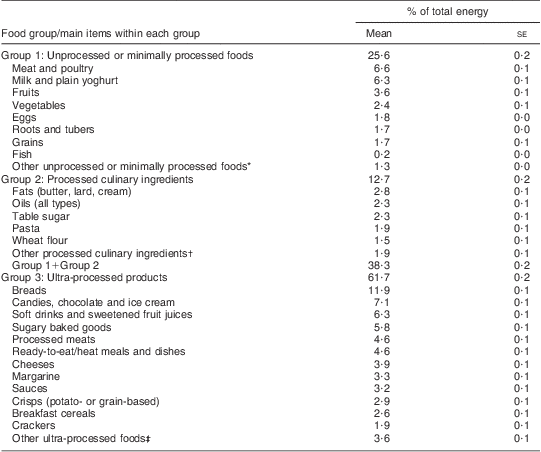
Table 1 shows the energy share of foodstuffs classified according to the nature, extent and purpose of their processing. In 2001, 25·6 % of all energy purchased by Canadian households was from unprocessed or minimally processed foods (Group 1); 12·7 % was from processed culinary ingredients (Group 2); and a total of 61·7 % was from ultra-processed products (Group 3). In terms of energy, the main items in Group 1 were meat and poultry (6·6 %), milk and plain yoghurt (6·3 %) and fruits (3·6 %). Grains including rice and corn contributed very little (1·7 %). The main energy shares for Group 2 were from animal fats (2·8 %), vegetable oils (2·3 %) and table sugar (2·3 %). For Group 3, the main energy shares were from breads (11·9 %), candies (confectionery), chocolate, ice cream and other sweets (7·1 %), soft drinks and sweetened juices (6·3 %), sugary baked goods (5·8 %), ready-to-eat/heat meals and dishes (4·6 %) and processed meats (4·6 %).
Contribution of the three food groups to total daily household energy availability in Canada (2001)

*Nuts and seeds (unsalted), shellfish, dried herbs, coffee, tea.
†Corn flour, starches, honey, other sugars and sweeteners.
‡Salted and dried or oil-preserved canned fish, canned vegetables, instant noodles, sugared milk drinks.
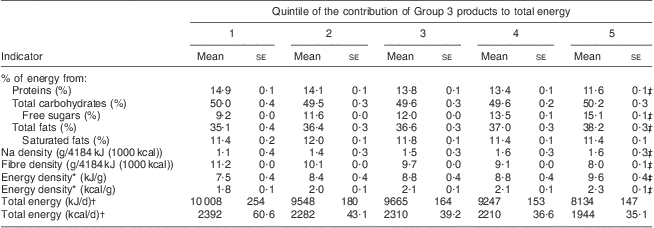
For Table 2, we divided the entire population of households into equal quintiles, according to the amount of ultra-processed products in their diets. These worked out as a range from 33·2 % of total energy in the 20 % of households that purchased least Group 3 items to 84·5 % in the 20 % of households that purchased most Group 3 items.
Contribution (%) of the three food groups to total daily household energy availability by quintile of the contribution of ultra-processed products in Canada (2001)
Group 1: unprocessed /minimally processed foods; Group 2: processed culinary ingredients; Group 3: ultra-processed products.
*Nuts and seeds (unsalted), shellfish, dried herbs, coffee, tea.
†Corn flour, starches, honey, other sugars and sweeteners.
‡Salted and dried or oil-preserved canned fish, canned vegetables, instant noodles, sugared milk drinks.
Table 3 presents conventional nutrient indicators for the average national household food basket in 2001. The overall diet of Canadians in 2001 exceeded the upper limits the WHO has recommended for fat (37·2 v. 30 %), saturated fat (11·6 v. 10 %), free sugars (12·3 v. 10 %), Na density (1·6 v. 0·9 g/4184 kJ (1000 kcal)) and energy density (a very substantial difference: 8·79 kJ/g (2·10 kcal/g) compared with WCRF/AICR's recommended goal of 5·23 kJ/g (1·25 kcal/g)). It also provided less fibre than the WHO minimum recommendation (9·6 v. 11·1 g/4184 kJ (1000 kcal)). Its protein content was within the recommended range (13·2 v. 10–15 %).
Nutrient profile indicators of the average food basket and of two simulated food baskets in Canada (2001)

Group 1, unprocessed/minimally processed foods; Group 2, processed culinary ingredients; Group 3, ultra-processed products.
*Drinks excluded.
Table 3 shows the same indicators for two simulated food baskets, one made up exclusively of ultra-processed products and the other made up only from unprocessed or minimally processed whole foods together with processed culinary ingredients. The food basket containing no ultra-processed products is much higher in protein (19·2 v. 10·1 %) and fibre (14·8 v. 6·8 g/4184 kJ (1000 kcal)); and is lower in fat (33·8 v. 39·3 %), slightly lower in saturated fat (11·3 v. 11·7 %), very much lower in free sugars (3·8 v. 18·6 %) and lower in Na (1·4 v. 1·7g/4184 kJ (1000 kcal) or 3·1 v. 3·8 g/d). The diet made up only from Group 1 foods and Group 2 ingredients is also very much lower in energy density (5·4 kJ (1·3 kcal) v. 11·7 kJ (2·8 kcal)/g).
Table 4 shows nutrient indicators as these vary depending on the amount of ultra-processed products in total purchased energy. The food basket of the lowest quintile compared with the highest quintile is higher in protein (14·9 v. 11·6 %) and fibre (11·2 v. 8·0 g/4184 kJ (1000 kcal)); and is lower in fat (35·1 v. 38·2 %) and much lower in free sugars (9·2 v. 15·1 %), Na (1·1 v. 1·6 g/4184 kJ (1000 kcal)) and energy density (7·53 kJ (1·80 kcal) v. 9·62 kJ (2·30 kcal)/g). There is a significant linear trend across all quintiles for all these indicators (P < 0·01) which remains after adjustment for family income.
Nutrient profile indicators of the overall diet by quintile of the contribution of ultra-processed products to total energy in food purchases in Canada (2001)
*Drinks excluded.
†From store-bought food which represents 70–72 % of all food expenditures for quintiles 1–4 and 65 % for quintile 5.
‡Significant linear trend across all quintiles (P < 0·01).
Discussion
In the present paper we use a new food classification based on the nature, extent and purpose of food processing and apply it to national data on household food purchases made in Canada in 2001. Our purpose has been to investigate the contribution of ultra-processed products in the Canadian diet and to assess their association with dietary quality.
A previous paper using the same classification and similar methods has reported findings in Brazil(Reference Monteiro, Levy and Claro8). These are very different from Canada. The contribution of Group 3 products in Brazil in 2002–2003, at 20·0 %, was less than a third of the 61·7 % found in Canada in 2001. The contribution of Group 1 foods and Group 2 ingredients in Brazil, at 42·5 % and 37·5 % for a total of 80 %, was correspondingly more than twice the 25·6 % and 12·7 % for the total of 38·3 % found in Canada.
There are other striking differences between Brazilian and Canadian diets as reflected in household expenditure. In Brazil the top three contributors to energy from Group 1 foods are rice (16·6 %), meat and poultry (8·2 %) and beans (6·3 %). In Canada the top three items are meat and poultry (6·6 %), milk and plain yoghurt (6·3 %) and fruits (3·6 %), and the contribution of grains such as rice and corn is almost negligible (1·7 %). By contrast, the energy share of plant oils (11·3 %) and table sugar (12·4 %) were both five times higher in Brazil than in Canada (2·3 % and 2·3 %, respectively). What these data show is that food preparation and cooking at the time of the surveys was still normal in Brazil; whereas in Canada only a fraction of the population still regularly prepared and cooked meals at home, and instead consumed ready-to-eat or ready-to-heat ultra-processed products. Even excluding food eaten away from home and also take-away products, the energy share of ready-to-eat/heat dishes and meals in Canada (4·6 %) was nine times that in Brazil (0·6 %).
Approximately 75 % of the free sugars consumed in Canada came from soft drinks, juices, candies (confectionery), chocolates, ice creams, fruit preparations, pastries, cakes and cookies (biscuits). These ready-to-eat or ready-to-drink sweet snacks accounted for 19·2 % of all energy bought by Canadian households. In Brazil the same foods accounted for only 6·6 % of total energy. The consumption of soft drinks and sweetened juices was four times higher in Canada (6·3 %) than in Brazil (1·6 %)(Reference Monteiro, Levy and Claro8). By their nature, Group 3 products are liable to be consumed in the form of snacks. In Canada in 2004, products specifically identified as snacks accounted for 23 % of energy intake, more than consumed at breakfast(19).
In Brazil, a positive relationship between family income and consumption of ultra-processed products was reported(Reference Monteiro, Levy and Claro12). However in Canada, differences in the energy share of ultra-processed products between income groups were very small, ranging from 60·3 % in the lower income group to 62·8 % in the upper income group (data not shown). The driving force here may be the higher relative cost of ultra-processed products in Brazil compared with Canada. Preliminary analysis of food expenditure surveys conducted in Brazil and the UK shows that the cost of ultra-processed products relative to other foods is much higher in Brazil(Reference Monteiro20).
Dietary quality of ultra-processed products
Judged in terms of conventional nutrient indicators, the data presented in the current paper demonstrate that ultra-processed products, as a whole, are unhealthy. Indeed, when compared with a diet made of Group 1 foods and Group 2 ingredients, a diet containing only Group 3 products contains less than half the dietary fibre, almost six times the free sugars, and significantly more Na and fat. There is not much difference in saturated fat. Perhaps most significant of all, the diet made up only of ultra-processed products is more than twice as energy-dense as the other one.
These results led to a crucial finding, which has influenced the analysis and conclusions of this and other papers(Reference Monteiro, Levy and Claro8, Reference Monteiro, Levy and Claro12). Group 2 ingredients are mostly processed fats, oils, sugar and starches. They are by themselves therefore energy-dense and depleted in many nutrients. It seems logical therefore that recommendations designed to improve public health should target them – and of course they can be consumed excessively. However, they are not consumed by themselves. As culinary ingredients they are combined with Group 1 foods. What the present study and the Brazilian one(Reference Monteiro, Levy and Claro12) indicate is that actual diets mainly made up from Group 1 foods and Group 2 ingredients are much less energy-dense than diets mainly made up from Group 3 products, and are also higher in dietary fibre and lower in fat, free sugars and Na. We emphasize this finding here, because it is counterintuitive. This conclusion is, we believe, is of great importance in specifying dietary guidelines, in setting public health nutrition policies, and in undertaking interventions and programmes designed to prevent and control disease and to protect and improve general well-being.
Making the Canadian diet healthy
Our data show that food supplies and dietary patterns dominated by ultra-processed products, as in Canada, exceed WHO upper limits for fat, free sugars and Na, and fall short of recommended levels of dietary fibre. Perhaps even more important, the more ultra-processed products that are consumed, the higher is the energy density of the diet.
Overall quality of diets decreases as the proportion of ultra-processed products increases. However, examination of the quintile of Canadian households in which consumption of ultra-processed products is lowest, at 33·2 % of total energy, shows that these diets are not far away from WHO recommendations. They are adequate in protein (14·9 v. 10–15 %) and in dietary fibre (11·2 v. 11·1 g/4184 kJ (1000 kcal)). They just come within the upper limit recommended for free sugars (9·2 v. 10 %) and are not far above the upper limit for Na (1·1 v. 0·9 g/4184 kJ (1000 kcal)). Where they do not correspond is in fat (35·1 v. an upper limit of 30 %). Saturated fat is also somewhat above the upper limit (11·4 v. an upper limit of 10 %). However, at 7·53 kJ (1·80 kcal)/g, the energy density is still much higher than the WCRF/AICR recommended target of 5·23 kJ (1·25 kcal)/g.
It would be possible to adjust the diets of this fifth of the Canadian population by making changes to the composition of Group 1 foods. For instance, preferring lean cuts of meat, together with preferring 1 % low-fat milk, without making any other changes, would lower saturated fat consumption from 11·4 to 9·9 % of total energy. Changing from red meat to white meat and fish, or substituting legumes for some meat, would reduce saturated fat consumption further.
Further changes to bring nutrient indicators of this fifth of the Canadian population well within WHO recommendations for fat, saturated fat, free sugars and Na, and to come closer to the WCRF/AICR goal for energy density, would be possible only by making changes in the frequency of consumption of some ultra-processed products. For example, if sugared beverages, candies and salty snacks (8·5 % of total energy in this group) were consumed only very occasionally if at all, dietary energy from ultra-processed products would fall under a third of total energy.
A main finding of the study is that 80 % of the Canadian population has diets that include more than 50 % of ultra-processed products in terms of energy. It is not possible to manipulate these diets to make them to correspond with WHO and other recommendations designed to prevent and control obesity and related chronic diseases without radical reductions in ultra-processed products. This would mean a fundamental change, from a reliance on ready-to-eat or ready-to-heat Group 3 products to preparation and cooking of meals based on Group 1 foods and Group 2 ingredients.
Study limitations
The present study has three main limitations, all due to the limitations of using household food purchases as a proxy of individual food consumption.
First, not all food purchased is necessarily consumed. Since most wastage is of perishable Group 1 foods, it is likely that the relative proportion of Group 3 products in Canadian diets as actually consumed is somewhat higher than shown here. Second, the data analysed do not include purchases in restaurants or take-away and home deliveries. Since much of these purchases is liable to be of ultra-processed products, if included in the calculations they would have the general effect of increasing the percentage of such products in Canadian diets.
To attenuate the above limitations in regard to the dietary impact of ultra-processed products, we have presented all nutrient indicators in relative and not absolute terms. The most important finding from our analyses is the fact that the overall quality of diets decreases as the proportion of ultra-processed products increases. This would be in doubt only if the association between nutrient indicators and the proportion of ultra-processed products in wasted foods, and also in foods bought from restaurants or fast-food outlets, was very different from and opposite to the association found for foods bought from stores and consumed.
A third limitation is that the unit of analysis of food purchase surveys was households and not individuals. It is not possible to extrapolate our findings to all household members. This limitation applies to the diet share of ultra-processed products as well as to their impact on the quality of the overall diet.
Future studies on the share and impact of ultra-processed products should use revised food frequency and 24 h recall questionnaires that make clear distinctions between the intakes of Group 1 foods, Group 2 ingredients and Group 3 ultra-processed products and then, with these new instruments, make surveys of complete diets. These surveys will be important to confirm our findings derived from household food purchases. Furthermore, such surveys should also collect data on BMI and disease outcomes to increase the understanding of the impact of the consumption of ultra-processed products.
Conclusions
The present paper shows that 61·7 % of the dietary energy in Canada, as measured by the 2001 national household food expenditure survey, comes from ultra-processed products. We also demonstrate that, as a whole, ultra-processed products are unhealthy as compared with the combination of minimally processed foods and processed culinary ingredients. The data presented here support our previous proposal that diets high in or dominated by ultra-processed products cannot meet WHO and other dietary recommendations designed to prevent and control obesity and chronic diseases(1). Only the one-fifth of the Canadian population that consumes 33·2 % of energy in the form of ultra-processed products is anywhere near reaching all nutrient goals for the prevention of obesity and chronic non-communicable diseases.
A provisional conclusion, at least for Canada, is that a healthy diet would contain less than one-third of energy in the form of ultra-processed products. This could be achieved only if diets are based primarily on meals and dishes prepared with minimally processed foods and processed culinary ingredients.
Acknowledgements
Sources of funding: This manuscript was supported by postdoctoral fellowship funds from Fundação de Amparo à Pesquisa do Estado de São Paulo (FAPESP; #2011/08425-5 and #2010/08421-7). Conflicts of interest: The authors declare no conflicts of interest. Authors’ contributions: The empirical design was planned and supervised by C.A.M. and conducted by J.-C.M. and A.P.B.M. The initial draft was conducted by J.-C.M. following extensive discussions with C.A.M., R.B.L. and R.M.C. Successive drafts were developed by C.A.M. and G.C., with comments by all co-authors. Each author has seen and approved the content of the submitted manuscript.