


Like other developing countries undergoing the nutrition transition, Mexico has experienced a profound increase and one of the most rapid shifts in the prevalence of overweight and obesity over the past two decades(Reference Neufeld, Hernandez-Cordero and Fernald1, Reference Rivera, Barquera and Gonzalez-Cossio2). Consequently, it is facing high rates of chronic diseases associated with obesity such as metabolic syndrome, type 2 diabetes and CVD, among others(Reference Rivera, Barquera and Gonzalez-Cossio2, Reference Denova-Gutierrez, Talavera and Huitron-Bravo3). One factor that may contribute to the obesity pandemic is increasing dietary energy from beverages(Reference Chen, Caballero and Mitchell4, Reference Forshee, Anderson and Storey5). There is ample evidence to support an independent role of the intake of sweetened beverages in the promotion of high energy intake, weight gain, obesity, adiposity, diabetes and high blood pressure in different age groups(Reference Chen, Caballero and Mitchell4, Reference Dennis, Flack and Davy6–Reference Chen, Appel and Loria9). In particular, there have been very few studies on Mexican populations linking sweetened beverage consumption with a higher BMI(Reference Jimenez-Aguilar, Flores and Shamah-Levy10) and with an increased risk of metabolic syndrome(Reference Denova-Gutierrez, Talavera and Huitron-Bravo3).
Mexico is the second largest consumer of soft drinks in the world after the USA(Reference Jimenez-Aguilar, Flores and Shamah-Levy10, Reference Barquera, Hernandez-Barrera and Tolentino11). Between 1999 and 2006, the proportion of energy from beverages doubled in the Mexican population(Reference Rivera, Munoz-Hernandez and Rosas-Peralta12) whereas energy intake from non-beverage foods remained constant(Reference Barquera, Hernandez-Barrera and Tolentino11). Currently, the contribution of beverages to total energy in Mexico ranges from 20 to 22 % for different age–sex groups(Reference Rivera, Munoz-Hernandez and Rosas-Peralta12). Similarly, energy intake from beverages accounts for 21 % of total dietary energy in the US population(Reference Nielsen and Popkin13).
The contribution of beverages to energy and nutrient intakes has been widely documented(Reference Popkin, Armstrong and Bray14). However, there has been little discussion of the fact that beverages may also confer health benefits due to the bioactive compounds they contain and their antioxidant properties. Evidence from epidemiological studies associates consumption of coffee and tea with reduced risk for several chronic diseases such as obesity, diabetes, cardiovascular and neurodegenerative diseases, possibly due to their high polyphenol content and antioxidant properties(Reference Ferruzzi15). Obese individuals are more prone to develop chronic diseases than subjects with a healthy weight, and therefore an increase in dietary polyphenols could be of significant help in preventing such diseases. Nevertheless, there are very few data on the contribution of beverages to polyphenol and antioxidant intakes. Therefore the objectives of the present work were to study beverage consumption among obese women from rural communities in Mexico and to estimate the daily polyphenol intake and dietary antioxidant capacity from beverages in this population.
Experimental methods
Participants
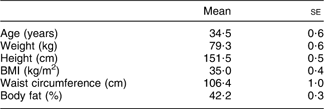
A cross-sectional analysis of baseline data from a previous study was used for individual dietary assessment. That study was a randomised, controlled longitudinal trial that evaluated the effect of a dietary intervention on weight loss, body composition and biochemical parameters in obese women living in rural communities in Mexico. In December 2008, obese women (BMI ≥ 30 kg/m2) aged between 25 and 45 years were recruited from five rural communities in Queretaro State, Mexico, using flyer advertisement and verbal statements to potential participants. A total of 549 women were initially screened by measuring height and weight. One hundred and sixty-nine women were initially identified as obese and in compliance with inclusion criteria: age 25–45 years, BMI ≥ 30 kg/m2, and permanent residence in the selected communities. Exclusion criteria were: pregnancy, lactation, uncontrolled diabetes or hypertension, TAG >400 mg/dl, total cholesterol >239 mg/dl, obesity or steroid treatment in the past 3 months, alcoholism, use of drugs that affect lipid metabolism, or eating disorders. Finally, 139 agreed to participate voluntarily in the study. The study protocol was approved by the Internal Committee for Human Research of the Universidad Autonoma de Queretaro, Mexico. Participant characteristics are shown in Table 1.
Characteristics of the study participants: premenopausal obese women aged 25–45 years (n 139), Queretaro State, Mexico, 2008
Beverage intake assessment
Data on dietary intake of beverages in the Mexican rural diet were obtained through repeated 24 h food recalls. Participants were interviewed by a qualified dietitian using food models to assess food and beverage intake. Three 24 h food recalls from a weekend day and two non-consecutive weekdays were recorded in a month at intervals of 10 d. Food records were coded and analysed for nutrient composition and energy using the US Department of Agriculture's National Nutrient Data Base for Standard Reference (Agricultural Research Service, Beltsville, MD, USA) and a dietary database comprising representative foods of the Mexican diet (NutriKcalVO®; Consinfo, S.C., Mexico, Mexico). The average intake from the completed records was taken for beverages excluding water. Table 2 shows the list of beverage groups included in the diet of study participants (expressed in ml/d) and their dietary contributions of energy and sugar. In the present study, a sweetened beverage is defined as a drink that has added sugars and covers all beverage groups shown in Table 2.
Beverage consumption and contribution to the intakes of energy and sugars among premenopausal obese women aged 25–45 years (n 139), Queretaro State, Mexico, 2008

*Standard serving unit was 240 ml.
†Data were calculated based on energy values and sugar content reported for the same beverage groups by Rivera et al.(Reference Rivera, Munoz-Hernandez and Rosas-Peralta12).
‡Food label provided by manufacturer was used as reference for energy values and sugar content.
Samples and sample preparation
Eighteen samples of the most consumed beverages in the diet of obese women from Mexican rural communities were selected for analysis, except for dairy and maize drinks due to their low polyphenol content. Fresh fruit beverages were also excluded because they were analysed in a previous study(Reference Hervert-Hernández, García and Rosado16) as part of the fresh fruit intake given the high percentage of fresh fruit that they contain. Samples were purchased at local markets in Mexico and are described below.
1. Infusions from loose herbs: orange blossom (Citrus spp.), Agastache mexicana, chamomile (Matricaria recutita), and cinnamon stick (Cinnamommum zeylanicum).
2. Coffee: instant (Nescafé Clásico; Nestlé Mexico) and from grain (Legal; Sabormex, Mexico).
3. Flavoured drinks: orange and grape (Kool Aid; Kraft Foods, Mexico).
4. Flavoured drinks with fruit pulp: mango, tamarindo and strawberry (Tang; Kraft Foods, Mexico).
5. Sweetened fruit juices: guava, orange (Boing!; Sociedad Cooperativa Trabajadores de Pascual, Mexico) and peach (del Valle; Coca-Cola, Mexico).
6. Soft drinks: cola (Coca-Cola; Coca-Cola, Mexico), orange (Fanta; Coca-Cola, Mexico), apple (Manzanita Sol; Pepsico, Mexico) and lemon (Kas; Pepsico, Mexico).
Beverage samples (except for sweetened fruit juices and soft drinks) were prepared in duplicate according to local recipes and manufacturer's instructions. Plant material or flavoured dry powder was weighed and mixed with 100 ml of distilled water (boiling water in the case of coffee and infusions) for 5 min or for the time recommended by the manufacturer, with constant shaking. Infusion and coffee samples were then filtered through filter paper (no. 1 Whatman; Schleicher & Schuell, Castelldefels, Spain). All samples were stored at 4°C and analysed within a few hours of preparation.
Determination of total polyphenol content
Total polyphenol content was determined by the Folin–Ciocalteau method(Reference Montreau17). A volume of 0·5 ml of sample was mixed with 0·5 ml of Folin–Ciocalteau reagent and swirled. After 3 min, 10 ml of sodium carbonate solution (75 g/l) was added and mixed. Additional distilled water was added (14 ml) and mixed. After 1 h, the absorbance at 750 nm was recorded using a UV-1800 UV-VIS spectrophotometer (Shimadzu Europe GmbH, Duisburg, Germany). Total polyphenol content was calculated using calibration curves (10–400 ppm) and expressed as gallic acid equivalents (GAE).
Antioxidant capacity assay
Ferric reducing antioxidant power (FRAP) and free radical scavenging (ABTS method) assays were used to estimate the antioxidant capacity of samples.
Ferric reducing antioxidant power (FRAP)
The method used was described elsewhere(Reference Pérez-Jiménez, Arranz and Tabernero18). Briefly, 900 μl of FRAP reagent, containing 2,4,6-tri(2-pyridyl)-s-triazine (TPTZ; Fluka Chemicals, Madrid, Spain), FeCl3 and acetate buffer, was mixed with 90 μl of distilled water and 30 μl of the sample or the blank. Absorbance values at 595 nm were taken every 15 s at 37°C, using a UV-1800 UV-VIS spectrophotometer (Shimadzu Europe GmbH). The readings at 30 min were selected for calculation of FRAP values. A standard curve of Trolox (6-hydroxy-2,5,7,8-tetramethylchroman-2-carboxylic acid, a water-soluble analogue of vitamin E) was used to estimate the antioxidant capacity of samples and the results were expressed as Trolox equivalents.
Free radical scavenging assay (ABTS method)
The antioxidant capacity was estimated in terms of radical scavenging activity following the procedure described elsewhere(Reference Pérez-Jiménez, Arranz and Tabernero18). Briefly, ABTS (2,2′-azinobis-(3-ethyl-benzothiazoline-6-sulfonic acid)) radical cation (ABTS•+) was produced by reacting 7 mm-ABTS stock solution with 2·45 mm-potassium persulfate in the dark at room temperature for 12–16 h before use. The ABTS•+ solution was diluted with methanol to an absorbance of 0·70 ± 0·02 at 730 nm. After addition of 0·1 ml of sample to 3·9 ml of diluted ABTS•+ solution, absorbance readings were taken every 20 s using a UV-1800 UV-VIS spectrophotometer (Shimadzu Europe GmbH). The reaction was monitored for 6 min. Inhibition of absorbance v. time was plotted, and the area below the curve (0–6 min) was calculated. Solutions of known Trolox concentration were used to estimate antioxidant capacity of samples and the results were expressed as Trolox equivalents.
Estimation of polyphenol intake and dietary antioxidant capacity from beverages
The intake of total polyphenols (mg/person per d) and dietary antioxidant capacity (μmol Trolox equivalents/person per d) from beverages were calculated as the mathematical product of the volume ingested of each beverage (ml/person per d) and their respective polyphenol content (mg/ml) or antioxidant capacity (μmol Trolox equivalents/ml).
Statistical analysis
All data are expressed as means with their standard errors. Determinations were performed at least in triplicate in two independent experimental assays. Differences between samples were evaluated using an unpaired two-sided t-test. A P value of <0·05 was considered significant. Statistical testing was performed using the STATGRAPHICS Centurion XVI statistical software package release 16·1·03 (StatPoint Technologies, Inc., VA, USA).
Results
Beverage consumption and energy contribution
Knowledge of beverage consumption could be useful in order to better understand complex obesity issues. The consumption of beverages in obese women from rural communities in Mexico is shown in Table 2. The contribution of beverages to energy and dietary sugars was 1369 kJ/d (327·2 kcal/d) and 70·5 g/d, respectively. Energy contribution from beverages was consistent with national data for Mexican adult women (1435·1 kJ/d, 343 kcal/d) in the National Health and Nutrition Survey 2006(Reference Rivera, Munoz-Hernandez and Rosas-Peralta12). Beverages account for an estimated 18 % of the total energy intake per capita (7548·8 (se 188·3) kJ/d). This result is comparable to reports for the US population, whose energy intake from beverages accounts for 21 % of total dietary energy(Reference Nielsen and Popkin13). Soft drinks were the most consumed group (283 (se 17) ml/d), followed by coffee (183 (se 13) ml/d) and fresh fruit beverages (110 (se 10) ml/d). The trend was the same for energy and sugars, the major source of which were soft drinks (on average 508·4 kJ/d and 30·6 g/d). This is supported by the fact that Mexico is the second largest consumer of soft drinks after the USA(Reference Jimenez-Aguilar, Flores and Shamah-Levy10). The consumption of alcoholic drinks (data not shown) was very low (21 ml/week) and comprised beer and pulque (a popular Mexican fermented drink). Participants did not report diet drink consumption.
Total polyphenol content and antioxidant activity
We determined the total polyphenol content and antioxidant capacity of individual drinks in order to identify potential health properties of beverages consumed among obese women living in Mexican rural communities (Table 3). Polyphenol content measured by the Folin–Ciocalteu method was high (>50 mg/100 ml) in coffee, roselle drink and peach juice. Guava juice and infusions contained intermediate polyphenol concentrations (10–30 mg/100 ml), while flavoured drinks and soft drinks contained the least (<10 mg/100 ml). The trend of antioxidant capacity (FRAP) was similar; coffee and peach juice were the most active antioxidants (>500 μmol Trolox equivalents/100 ml) followed by roselle drink, guava juice and cinnamon infusion (>200 μmol Trolox equivalents/100 ml). Infusions from chamomile and A. mexicana had a moderate antioxidant power (∼100 μmol Trolox equivalents/100 ml), as did orange blossom infusion, orange juice, orange flavoured drink and orange–lemon sodas (50–100 μmol Trolox equivalents/100 ml). The remaining soft drinks and flavoured drinks had a low antioxidant power (<50 μmol Trolox equivalents/100 ml) as measured by FRAP method. A classification of beverages based on radical free scavenging capacity (ABTS method) was similar.
Polyphenol content and dietary antioxidant capacity of beverages

FRAP, ferric reducing antioxidant power; ABTS, free radical scavenging assay using 2,2′-azinobis-(3-ethyl-benzothiazoline-6-sulfonic acid).
*Data from Sáyago-Ayerdi et al.(Reference Sáyago-Ayerdi, Arranz and Serrano26).
Intake of polyphenols and dietary antioxidant capacity from beverages
Table 4 shows the mean intake of polyphenols (180·9 (se 12·5) mg/person per d) and antioxidant capacity (>1000 μmol Trolox/person per d) from beverages among obese women from rural Mexican communities. In the present study, the polyphenol intake from beverages was similar to the intake from other food groups rich in phenolic compounds like fruits and vegetables(Reference Saura-Calixto and Goñi19). Also, the antioxidant capacity supplied by beverages agreed with reports of antioxidant capacity supplied by fruits and vegetables together(Reference Hervert-Hernández, García and Rosado16, Reference Saura-Calixto, Serrano and Goñi20). These results suggest that beverages are essential contributors of dietary antioxidant bioactive compounds, which is consistent with the data reported in other studies(Reference Saura-Calixto and Goñi19, Reference Saura-Calixto, Serrano and Goñi20). The highest contributor of polyphenols and antioxidant capacity was coffee, followed at a lower level by roselle drink and soft drinks. The Mexican rural diet includes beverages containing high concentrations of bioactive compounds, but the rate of consumption is low and they are therefore not significant polyphenol contributors. The Mediterranean diet is widely recognized as healthy, combining as it does a high intake of vegetables and fruits with moderate consumption of wine and beer. When we compared our results with the beverage pattern from the Spanish Mediterranean diet(Reference Saura-Calixto, Serrano and Goñi20), we found that polyphenol intake from beverages was significantly higher (P = 0·004) in the Spanish diet (580–647 mg GAE/d). This may be due to considerable differences in beverage consumption patterns. For instance, wine and beer, which are rich in polyphenols, are widely consumed in Spain but not in rural Mexico. Beer and red wine contain bioactive compounds with biological activity and chemopreventive properties(Reference Dolara, Luceri and De Filippo21, Reference Ferk, Huber and Filipič22). Apart from that, consumption of coffee, tea/infusions, fruit juices and soft drinks was consistent in both diets. Alcoholic drinks are not highly recommended but based on their health properties, 240 ml of beer or 150 ml of wine are included in Beverage Consumption Recommendations for the Mexican Population(Reference Rivera, Munoz-Hernandez and Rosas-Peralta12).
Total polyphenol intake and dietary antioxidant capacity from beverages consumed in a Mexican rural diet by premenopausal obese women aged 25–45 years (n 139), Queretaro State, Mexico, 2008
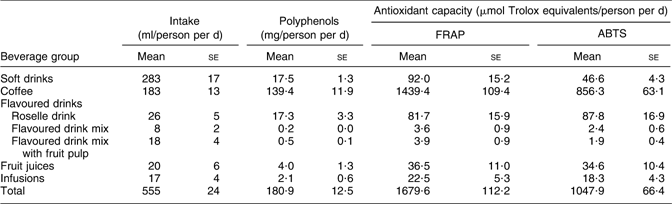
FRAP, ferric reducing antioxidant power; ABTS, free radical scavenging assay using 2,2′-azinobis-(3-ethyl-benzothiazoline-6-sulfonic acid).
Discussion
Our main objective was to study beverage consumption among obese women from rural communities in Mexico and to estimate the daily polyphenol intake and dietary antioxidant capacity from beverages in this population. Polyphenol intake and dietary antioxidant capacity from beverages was 180·9 (se 12·5) mg/person per d and >1000 μmol Trolox equivalents/person per d, respectively.
Overall, obese subjects in the present study do not meet criteria of the Beverage Consumption Recommendations for the Mexican Population(Reference Rivera, Munoz-Hernandez and Rosas-Peralta12), especially for soft drinks and flavoured drinks which should be avoided or ingested only occasionally according to this guidance. Current evidence associates an increased intake of sweetened beverages with higher energy intake, obesity, adiposity and diabetes(Reference Dennis, Flack and Davy6–Reference Malik, Schulze and Hu8, Reference Vartanian, Schwartz and Brownell23). Mexican population studies have also associated consumption of sweetened beverages with an increased BMI and a high risk of metabolic syndrome comprising low plasma HDL cholesterol and raised plasma levels of glucose and TAG, together with an increase in systolic and diastolic blood pressure(Reference Denova-Gutierrez, Talavera and Huitron-Bravo3, Reference Jimenez-Aguilar, Flores and Shamah-Levy10). There is therefore an urgent need to reduce consumption of sugar-sweetened beverages among obese women from Mexican rural communities in view of their detrimental health effects. It is important to note in this connection that sugar or carbohydrate consumption is not a direct cause of obesity. Hofmann and Tschöp(Reference Hofmann and Tschöp24) have suggested that it takes a hyperenergetic environment and sustained overconsumption for dietary sugars to induce metabolically adverse effects. Another important consideration is that reducing energy intake from beverages favours weight loss more than reducing the energy intake from solid foods, probably due to differences in satiating effect and pancreatic responses(Reference Chen, Appel and Loria9). It is therefore recommended to promote the avoidance or significant reduction of sugar in the preparation of home-made drinks (fresh fruit beverages, coffee, infusions, etc.). In any case, pure water consumption also needs to be encouraged among the Mexican population.
Of the beverages studied, coffee and tea are well-known concentrated sources of polyphenols, containing chlorogenic acids, flavan-3-ols, theaflavins and thearubigens(Reference Ferruzzi15, Reference Almajano, Carbó and Jiménez25). Roselle water extracts (Hibiscus sabdariffa L.) are widely consumed in Mexico and provide vitamins, minerals, soluble dietary fibre and bioactive compounds like organic acids, phytosterols and polyphenols, some of which possess antioxidant properties(Reference Sáyago-Ayerdi, Arranz and Serrano26). Moreover, cardioprotective and antihypertensive actions have been associated with the roselle(Reference Sáyago-Ayerdi, Arranz and Serrano26). A. mexicana is a plant employed in Mexican traditional medicine but little is known about the bioactive compounds responsible for its health properties. One recently published work reported vasoactive and antioxidant activities of water extracts from A. mexicana (Reference Ibarra-Alvarado, Rojas and Mendoza27). Of the fruit juices analysed, peach juice had the highest polyphenol content and antioxidant properties, probably because of the high pulp content (100 % nectar), unlike guava (17 % pulp) and orange (30 % juice).
Healthier drink options could be low-sugar roselle drink, infusions and fresh fruit beverages to reduce energy intake and increase the intake of bioactive compounds among the study population. In particular, the great variety of local fruits consumed in Mexico is a remarkable source of phytochemicals(Reference Hervert-Hernández, García and Rosado16). This is quite significant for obese subjects since existing evidence suggests that achievable dietary doses of polyphenols may improve some features associated with overweight and obesity such as metabolic syndrome, cardiovascular risk factors, lipid peroxidation and inflammation(Reference Basu, Du and Leyva28). One issue that needs to be addressed is that even though some beverage categories may have healthy properties, additional energy from drinks would have to be compensated for by reducing dietary energy intake from other foods(Reference Dennis, Flack and Davy6).
In general, the present study underlines the importance of beverages for nutrition, and especially the beneficial role of beverages as significant dietary contributors of bioactive compounds with antioxidant properties. The study also provides the first insights into antioxidant capacity and dietary polyphenol intake from drinks among obese women living in rural communities of Mexico, obtained by analysing local beverages. We should however note some limitations that can affect the interpretation of our results. The Folin–Ciocalteu method can overestimate polyphenol content due to the presence of other non-phenolic reducing compounds such as vitamins, carotenoids, food additives and others(Reference Brat, Georgé and Bellamy29). A more sensitive method is therefore needed to determine the phenolic profiles of phytochemical-rich samples.
In conclusion, the present study strongly highlights the need to replace sugar-sweetened beverages with low-sugar or no-added-sugar drinks, rich in polyphenols and with antioxidant properties, which may also confer additional health benefits. Nutritional intervention and dietary advice on reducing the consumption of sugar-sweetened beverages could be a simple and viable strategy to reduce overweight and obesity prevalence in rural areas in Mexico. Also, more research is needed into the role of polyphenols supplied by the whole diet and beverages in the prevention of chronic diseases in obese individuals.
Acknowledgements
The study was supported by the Spanish Ministry of Science and Innovation, National Program of I + D, AGL-2008-01633. D.H.-H. received predoctoral fellowships from the Mexican institutions, National Council on Science and Technology and Secretariat of Public Education. The authors have no conflicts of interest. D.H.-H. was involved in fieldwork investigation and performed the laboratory determinations, analysed the data, and drafted and revised the manuscript. I.G. revised the manuscript. The authors gratefully acknowledge Olga P. García and Jorge L. Rosado (Universidad Autonoma de Queretaro, Mexico) for designing and conducting the intervention trial from which baseline data were obtained and for their substantial contribution.



