


Picky eating (alternatively known as fussy, faddy, choosy or selective eating) is a common behaviour in early childhood. It can cause considerable stress to parents/caregivers and have a negative impact on family relationships(Reference Goh and Jacob1), but it generally resolves with minimal or no intervention by healthcare providers(Reference Taylor, Wernimont and Northstone2). It is largely a phenomenon of developed countries and involves a complex set of interactions between parents/carers and children centred around food selection and consumption(Reference Dovey, Staples and Gibson3).
There is no agreement on a formal definition of picky eating, although it is generally accepted to include rejection or restriction of familiar foods and unfamiliar foods, and thus including an element of neophobia(Reference Dovey, Staples and Gibson3). To add further complication, there are a variety of tools used for the assessment of picky eating and consequently, there is a wide range of prevalence reported(Reference Taylor, Wernimont and Northstone2). The causes and consequences of picky eating are not well understood because of these inconsistencies and because of heterogeneity in study designs. This is further compounded by a lack of longitudinal observational data, with most studies using only cross-sectional data. Addressing these problems would enable evidence-based contributions to inform more consistent advice for parents and carers from healthcare providers.
This review will first consider the effects of the variety of definitions and assessment tools on the reported prevalence of picky eating. The possible causes of picky eating, including demographics, parental characteristics, early feeding practices and psychosocial factors, will be described. Knowledge of the effects on the child's diet, both as nutrients and diet quality and in relation to reference nutrient intakes (RNI) will be described, with a focus on the few data available on longer-term patterns of intake. The consequences likely to result from any dietary differences between picky and non-picky children, including effects on body weight and composition, growth, eating disorders and psychosocial difficulties will be outlined. There will be a particular focus on data from the UK Avon Longitudinal Study of Parents and Children (ALSPAC)(4), which is one of the most comprehensive sources of longitudinal data on the causes and consequences of picky eating, both short- and long-term. The review will conclude with suggestions for parents/carers and professionals to avert or ameliorate picky eating behaviour.
Definition and prevalence
The most commonly accepted definition of picky eating was proposed by Dovey et al.(Reference Dovey, Staples and Gibson3) in which picky/fussy eaters are children ‘who consume an inadequate variety of foods though rejection of a substantial amount of foods that are familiar (as well as unfamiliar) to them’. Dovey et al.(Reference Dovey, Staples and Gibson3) regard food neophobia (reluctance to eat, or the avoidance of, new foods) as a somewhat separate construct, while recognising that the two factors are inter-related and that both contribute to the rejection or acceptance of foods, particularly of fruit and vegetables. Alternative definitions include specific mention of restriction of intake of vegetables, strong food preferences, provision of meals that are different from those of the caregivers, special methods of food preparation, consumption of inadequate amounts of food and disruption of daily routines that is problematic to the child, parent or parent–child relationship(Reference Mascola, Bryson and Agras5–Reference van der Horst, Eldridge and Deming9). It is clear, however, that picky eating is not synonymous with Avoidant/Restrictive Food Intake Disorder (previously known as Selective Eating Disorder), which has a very specific definition in the Diagnostic and Statistical Manual of Mental Disorders-V, including the presence of nutritional deficiency as a result of inadequate food intake, failure to gain weight in children, a decline in psychological function and a dependency on supplements to maintain nutritional health(Reference Zimmerman and Fisher10).
There are several questionnaires available to identify picky eating, designed for completion by the parent/carer, in which multiple aspects of the child's feeding behaviour are assessed. Several of these questionnaires have been validated. Examples include the Children's Eating Behavior Questionnaire, the Child Feeding Questionnaire, the Lifestyle Behaviour Questionnaire, the Stanford Feeding Questionnaire and the Preschooler Feeding Questionnaire(Reference Taylor, Wernimont and Northstone2). Despite Dovey's caution about the inclusion of food neophobia in the definition of picky eating, several of the questionnaires have subscales that include elements of neophobia. For example, the ‘fussiness’ subscale of the Children's Eating Behavior Questionnaire includes three out of six statement questions that relate directly to neophobia (‘My child enjoys tasting new foods’/‘My child refuses new foods at first’/‘My child is interested in tasting food s/he hasn't tasted before’; used for example by Hendy et al.(Reference Hendy, Williams and Riegel11); Morrison et al.(Reference Morrison, Power and Nicklas12); Tharner et al.(Reference Tharner, Jansen and Kiefte-de Jong13)). An alternative approach to multi-element questionnaires is to ask the caregiver a single question on whether their child is a picky eater (used for example by Mascola et al.(Reference Mascola, Bryson and Agras5); van der Horst et al.(Reference van der Horst, Deming and Lesniauskas14); Orun et al.(Reference Orun, Erdil and Cetinkaya15)). Although this approach is straightforward and enables clear classifications, it has the disadvantage of requiring the carer to create their own definition of picky eating, which may or may not align with the definition that the researcher intends. To address this, studies from ALSPAC have used a single question asking whether the child has definite likes and dislikes for food, with the responses ‘No/Yes, quite choosy/Yes, very choosy’. Although this does not capture all the proposed facets of picky eating behaviour, it does avoid the difficulty of forcing the caregiver to use their own definition of picky eating and is similar to what might be asked of a parent by a healthcare provider(Reference Taylor, Wernimont and Northstone2). This question, which is similar to that used in other recent studies(Reference Mascola, Bryson and Agras5, Reference van der Horst, Deming and Lesniauskas14, Reference Orun, Erdil and Cetinkaya15), was asked at four time points in ALSPAC (24, 38, 54 and 65 months old), which enables both identification of picky eaters at a single time point and identification of persistent picky eaters, who may be more at risk of adverse health and developmental outcomes than transient picky eaters. It also enables modelling of outcomes that occur after the exposure, and thus a greater degree of confidence in the causality of associations than in a strictly cross-sectional approach. The lack of an accepted definition of picky eating amongst researchers and of an accepted and validated method of identification that is used universally are a hindrance to further research: it makes it difficult to compare the results of studies effectively.
There is a wide range of prevalence found in different studies (6–50 %)(Reference Taylor, Wernimont and Northstone2), which is likely to reflect differences in study design and assessment tools but may also be due to social or cultural factors. There is more consensus on the relation of prevalence to the child's age: in ALSPAC prevalence was 10 % at age 24 months, peaking at 38 months (15 %) and then declining at 54 and 65 months (14 % and 12 %, respectively). Other studies have also found the peak age to be at about 3 years old(Reference Hafstad, Abebe and Torgersen7, Reference Cardona Cano, Tiemeier and Van Hoeken16) although one found the peak age to be at 6 years(Reference Mascola, Bryson and Agras5).
There is little known about whether some children sustain picky eating behaviour once it is established, or how this relates to later outcomes such as eating disorders or adult picky eating. Although some studies have found the prevalence to be stable with increasing age (Reference Orun, Erdil and Cetinkaya15, Reference Dubois, Farmer and Girard17, Reference Marchi and Cohen18), in ALSPAC it was found that children with picky eating identified at the earliest time point at which it was measured (24 months) were more likely to be picky at the next time point than if the picky eating was newly incident at a later time point, suggesting that early picky eating behaviour is more persistent(Reference Taylor, Wernimont and Northstone2). The prevalence of picky eating was moderately stable between age 4 and 6 years in a group of Norwegian children, with 50 % being picky at both ages(Reference Steinsbekk, Bonneville-Roussy and Fildes19). Some studies have shown the prevalence to be stable beyond age 3 years(Reference Orun, Erdil and Cetinkaya15, Reference Dubois, Farmer and Girard20), even up to age 11 years(Reference Marchi and Cohen18). In the study in which the prevalence increased up to age 6 years and then plateaued (USA), this was interpreted as evidence of two groups of picky eaters: one in which recovery was relatively swift and another in which the behaviour persisted(Reference Mascola, Bryson and Agras5). Few studies have attempted to identify persistent picky eaters systematically and it is difficult to do, bearing in mind that it requires a longitudinal study and a consistent identification strategy, as well as a definition of persistence and a means of categorisation. Cardona Cano et al.(Reference Cardona Cano, Tiemeier and Van Hoeken16, Reference Cardona Cano, Hoek and van Hoeken21) identified four picky eating trajectories (persistent/remitting/late-onset/never) from assessments at age 1·5, 3 and 6 years, and used the classification to look at associations with child mental health. Children in the ALSPAC cohort have been identified as early- or late-onset picky eaters, and the early picky eaters into subcategories of persistent or non-persistent, based on the scoring patterns for the identifying questions: this categorisation has been used to date for diet analysis(Reference Taylor, Northstone and Wernimont22), but could also be used in studies of predictors of picky eating, and of growth and body composition and other health outcomes.
Causes of picky eating
Accepting that the peak prevalence of picky eating occurs at about age 3 years, factors that are predictive of a child becoming a picky eater as a pre-schooler can occur during three distinct phases: before and during pregnancy, in the early feeding phase (first year of life, reflecting early feeding practices) and in the second year of life (reflecting parental feeding styles in response to increasing child autonomy). They can alternatively be categorised as factors related to the child, to the parent/caregiver and to child–parent interaction. Some of these predictors are fixed, but others can inform the development of advice and strategies for parents and caregiver to avert or ameliorate picky eating behaviour in their child. It is unlikely, however, that any of these predictors acts in isolation: rather, there is a complex mix of parental and child-related characteristics that interact.
With regard to fixed predictors, picky eating at 38 months in ALSPAC was associated with a greater maternal age, maternal smoking (yes), higher maternal social class, lower pre-pregnancy BMI, higher maternal educational attainment, lower parity and the infant being of lighter birthweight and male(Reference Taylor, Wernimont and Northstone2). Other studies, however, have found boys and girls to be equally affected(Reference Moroshko and Brennan23), with the presence of siblings being protective(Reference Hafstad, Abebe and Torgersen7). Several studies have investigated familial similarity for food neophobia (rather than picky eating per se) and found low to moderate similarity, suggesting a moderate degree of heritability. In a study of more than 5000 twin pairs and their parents, it was found that neophobia was highly heritable, with a heritability estimate of 0·78 (95 % CI 0·76, 0·79), although about one-quarter of the phenotypic variation was accounted for by environmental factors(Reference Cooke, Haworth and Wardle24). Genetic variation in sensitivity to bitterness (classified by being tasters/non-tasters of 6-n-propylthiouracil) may play a role in the development of vegetable acceptance and consumption in early childhood(Reference Bell and Tepper25). These studies endorse the call by de Barse et al.(Reference de Barse, Jansen and Edelson-Fries26) that parental picky eating should ideally be accounted for in statistical analyses.
As early as the first month of life, babies aged 2 and 4 weeks who were later identified as picky eaters had a different sucking pattern from non-picky eaters, with fewer sucks per session(Reference Jacobi, Agras and Bryson27). Reduced duration of breast-feeding and late introduction of complementary feeding have been shown to predict later picky eating in some studies(Reference Galloway, Lee and Birch28, Reference Shim, Kim and Mathai29), but another study found no difference in picky eating prevalence in children who were breastfed, formula fed, or a mixture of both(Reference Finistrella, Manco and Ferrara30). Evidence from the Generation R study in the Netherlands suggests that breast-feeding does not predict later picky eating. Breast-feeding prevalence, early feeding practices and timing of complementary feeding were assessed in nearly 5000 infants aged 2, 6 and 12 months and picky eating was assessed at age 4 years with the food fussiness subscale of the Children's Eating Behavior Questionnaire. In adjusted analyses, there was no difference in the prevalence of picky eating in children who were never breastfed compared with those who were breastfed for 6 months or more. However, those who were breastfed for <2 months had a higher food fussiness score than those who were breastfed for 6 months or more. Early feeding of vegetables, however, was protective against later picky eating: those children who had vegetables introduced into their diets between ages 4 and 5 months had lower scores than those who had their introduction delayed until after 6 months. Early introduction of fruit or other solids were not associated with picky eating.
Modelling of positive maternal eating behaviour is frequently cited as being important in averting picky eating in the child. Indeed, in a study of Australian mother–child pairs, maternal healthy eating when the child was 1 year old was predictive of vegetable consumption when the child was 2 years old(Reference Gregory, Paxton and Brozovic31). Further, when the children were 2–4 years old, maternal healthy eating was associated with a lower prevalence of picky eating in the children 1 year later(Reference Gregory, Paxton and Brozovic32). Maternal pressure to eat in this study was also associated with picky eating, and this was mediated by concern about the child being underweight(Reference Gregory, Paxton and Brozovic33). In a more detailed study of pressure to eat, data from the Generation R study showed a bidirectional association with picky eating behaviour: picky eating in 4-year-olds prospectively predicted parental pressure to eat at age 6 years, and pressure to eat at age 4 years predicted picky eating at age 6 years. This was interpreted as suggesting that parental feeding strategies were developed in response to children's food avoidant behaviour, whilst having a counterproductive effect on picky eating behaviour(Reference Jansen, de Barse and Jaddoe34). Combining some of these traits in a study of girls only, mothers who provided a positive model of eating behaviour by consuming more fruit and vegetables were less likely to pressure their children, who, in turn, were less likely to be picky eaters(Reference Galloway, Fiorito and Lee35).
In a study of Norwegian mothers and children, both child and maternal temperament (child emotionality and maternal negative affectivity, respectively) when the child was age 1·5 years were found to increase the risk of later picky eating(Reference Hafstad, Abebe and Torgersen7). Maternal and paternal internalising problems, which are symptoms of anxiety and depression, during pregnancy and in the child's early years, were prospectively associated with picky eating in pre-school in the Generation R study(Reference de Barse, Cardona Cano and Jansen36). Children who have more sensory sensitivity are at greater risk of becoming a picky eater, as are those whose parents have higher levels of sensitivity and lower levels of structuring(Reference Steinsbekk, Bonneville-Roussy and Fildes19).
Bringing data together from these three phases, a study from ALSPAC modelled predictors in about 6000 children for each of these phases separately and then brought the predictors that were significant into a final model(Reference Emmett, Hays and Taylor37). During the first year of life, feeding difficulties and late introduction of lumpy food (>9 months) were associated with an increased likelihood of the child being a picky eater at 38 months. In the second year, the strongest predictor was the child being choosy at 15 months old. 56 % of children were classified as being choosy at this time point. If the mother was not worried by this, then only 17 % went on to be a picky eater at 38 months, but this rose to 50 % if the mother was worried by this choosiness. Provision of fresh fruit and eating the same meal as the child were protective against later picky eating, while providing ready-prepared food predicted later picky eating. In contrast to the finding in Generation R(Reference de Barse, Cardona Cano and Jansen36), maternal anxiety and depression during pregnancy or during the first years of the child's life were not associated with picky eating in the child in the model adjusted for all the predictors listed earlier.
Consequences of picky eating
Diet: nutrients, food groups/foods and diversity
The primary consequence of being a child who is a picky eater is the effect it has on dietary intake, and this is a potential mediator for adverse health and development outcomes. Indeed, adverse effects on diet are encompassed in the proposed definitions of picky eating behaviour. Overall, picky eating could be hypothesised to lead to a reduction in food intake with a distortion of nutrient intake through poor dietary variety. The evidence for these effects, however, is inconclusive, with the exception of a lower intake of vegetables in picky eaters, which is a frequent finding(Reference van der Horst, Deming and Lesniauskas14, Reference Cardona Cano, Tiemeier and Van Hoeken16, Reference Dubois, Farmer and Girard17, Reference Taylor, Northstone and Wernimont22, Reference Jacobi, Agras and Bryson27, Reference Galloway, Fiorito and Lee35, Reference Berger, Hohman and Marini38–Reference Tharner, Jansen and Kiefte-de Jong41), although not universal(Reference Rohde, Handel and Stougaard42, Reference Carruth, Ziegler and Gordon43). There are several reasons for these disparities. As described earlier, there are several different tools used to identify picky eaters and different methods of grouping categories of respondents. Results may also vary by country, reflecting differences in food cultures and feeding practices. Methods of collection of dietary data vary, and include standard methods such as 24-h recalls (e.g. van der Horst et al.(Reference van der Horst, Deming and Lesniauskas14); Dubois et al.(Reference Dubois, Farmer and Girard17)), FFQ (e.g. Taylor et al.(Reference Taylor, Northstone and Wernimont40); Antoniou et al.(Reference Antoniou, Roefs and Kremers44)), 2-, 3- or 4-day food diaries (e.g. Taylor et al.(Reference Taylor, Northstone and Wernimont22); Rohde et al.(Reference Rohde, Handel and Stougaard42)) and combinations of methods(Reference Carruth, Skinner and Houck45, Reference Carruth and Skinner46), as well as alternative methods such as recording food selection from a pre-stocked chiller box(Reference Jacobi, Agras and Bryson27). ALSPAC includes data from both 3-day diet diaries and FFQ at regular time points from early infancy up to age 13 years(Reference Emmett and Jones47). Some studies have not included a control group of non-picky eaters, which limits synthesis of data to comparisons with RNI and estimated average requirements, which are not always available for the country in which the study is carried out. It is also important to know what proportion of children have intakes that are below RNI to enable interpretation of the intakes.
Many studies have reported that energy intakes in picky children are not different from those of non-picky children and adequate in comparison with RNI(Reference Taylor, Northstone and Wernimont22, Reference Galloway, Fiorito and Lee35, Reference Tharner, Jansen and Kiefte-de Jong41, Reference Rohde, Handel and Stougaard42, Reference Carruth, Skinner and Houck45, Reference Carruth and Skinner46). However, others have reported a higher energy intake in picky eaters(Reference Finistrella, Manco and Ferrara30), perhaps due to a high intake of energy-dense foods such as confectionery and savoury snacks(Reference Tharner, Jansen and Kiefte-de Jong41), or intakes lower than non-picky children (Reference Cardona Cano, Tiemeier and Van Hoeken16, Reference Dubois, Farmer and Girard17, Reference Xue, Zhao and Cai48) or substantially below the RNI(Reference Volger, Sheng and Tong49). ALSPAC, using 3-day diet diaries, did not find any differences in energy intakes between picky eaters and non-picky eaters at ages 3·5, 10 and 13 years(Reference Taylor and Emmett50). Other studies have suggested that energy intakes are not affected at some ages, but adversely affected at others: at 7–8 months old, the children of caregivers who had reported that they considered their child to be a picky eater had a similar energy intake to non-picky children, but at 9–11 months old, intakes of energy and other nutrients were significantly lower(Reference Carruth, Ziegler and Gordon43). However, at ages below 12 months children are still learning about food tastes and textures and are too young to experience neophobia, so should not be considered picky eaters in the sense described in the present paper. Protein intakes generally mirror those of energy, so that studies showing lower energy intakes in picky eaters than non-picky eaters tend also show lower protein intakes(Reference Dubois, Farmer and Girard17, Reference Xue, Zhao and Cai48), although it is not always clear whether the protein intake is adequate in regard to RNI or not.
There is a similar mixed picture for micronutrients, but with some consensus around low intakes of zinc and iron in picky eaters(Reference Taylor, Northstone and Wernimont22, Reference Brown, Perrin and Peterson39, Reference Carruth, Skinner and Houck45, Reference Carruth and Skinner46, Reference Volger, Sheng and Tong49). In the few studies that have reported on dietary fibre intakes, there is a consensus that intakes in almost all children are low, but they are particularly low in picky eaters, reflecting their low intakes of vegetables and fruit(Reference Taylor, Northstone and Wernimont40, Reference Xue, Zhao and Cai48, Reference Taylor and Emmett50). Low intakes of meat, especially carcass meat (rather than processed meat) often contribute to low intakes of zinc and iron(Reference van der Horst, Deming and Lesniauskas14, Reference Taylor, Northstone and Wernimont22, Reference Finistrella, Manco and Ferrara30, Reference Berger, Hohman and Marini38, Reference Xue, Zhao and Cai48, Reference Taylor and Emmett50).
The impact of picky eating on dietary diversity and variety has been studied less frequently, but picky eaters have been shown to have less diversity and variety at 24–36 months(Reference Carruth, Skinner and Houck45) or to eat fewer different items of food(Reference Cardona Cano, Tiemeier and Van Hoeken16). At a younger age of 12–16 months, perhaps before the picky eating behaviour is fully expressed, Byrne et al.(Reference Byrne, Jansen and Daniels51) found no difference in dietary diversity score, or intakes of fruit, vegetables or meat, between picky and non-picky eaters. Brown et al.(Reference Brown, Perrin and Peterson39) used the Healthy Eating Index-2010 to evaluate the overall dietary quality of low-income pre-schoolers identified as picky eaters with the Children's Eating Behavior Questionnaire food fussiness subscale: there was a negative relationship with the overall Healthy Eating Index, with scores driven by lower intakes of whole fruit, total vegetables and total protein foods in picky eaters than in non-picky eaters. The authors noted that their results were consistent with the reports of a lower number of foods eaten, especially fruit and vegetables. In a smaller study in girls up to age 15 years reporting only on fruit and vegetable intakes, both picky and non-picky children consumed less than the recommended amount of fruit and vegetables, but picky eaters ate slightly less vegetables than the non-picky eaters at all ages(Reference Berger, Hohman and Marini38).
ALSPAC is one of the very few studies that has been able to document detailed long-term differences in diet (including nutrients, comparisons with RNI and foods/food groups) in a large group of children identified as picky or non-picky eaters, with a single question at age 3 years, using both FFQ and 3-day food records at intervals up to age 13 years (see Table 1). At age 3·5 and 7·5 years, using the 3-day food record, picky eaters had lower intakes of meat, fish, fruit and vegetables than non-picky eaters, and this was reflected in lower intakes of iron, zinc, carotene and dietary fibre, with substantial proportions below the RNI for iron, zinc and dietary fibre. There were no significant differences in energy intake, which was adequate in comparison with estimated average requirements. The differences in intakes of the food groups were also evidenced at age 10 and 13 years, particularly for meat and vegetables, although less so at age 13 years(Reference Taylor and Emmett50). Similar results were obtained using data from the FFQ. Using a longitudinal classification between age 2 and 5·5 years to identify persistent picky eaters, there were again no significant differences in energy intakes between any of the groups. Mean protein intake was 8 % lower in children who were ‘persistent’ picky eaters than those who had ‘never’ been a picky eater, but no child had an inadequate intake. Mean intakes of carotene, vitamin D, iron, zinc and selenium were all lower (3–16 %) in the ‘persistent’ group than in the ‘never’ group, with substantial proportions having intakes below the lower RNI for retinol and zinc. Intakes in the non-persistent group were generally intermediate between the ‘persistent’ and ‘never’ groups. The ‘persistent’ group ate 40 % less carcass meat, 48 % less vegetables and 33 % less fruit than the ‘never’ group. Similar results to those for the ‘persistent’ group were found for a group classified as ‘late-onset’ picky eaters. Overall, picky eating did not result in a compromised macronutrient intake, but there were concerns about intakes of zinc and iron.
Effect of picky eating on intakes of nutrients, foods and food groups and comparison with recommended daily allowances: data from the UK Avon Longitudinal Study of Parents and Children study
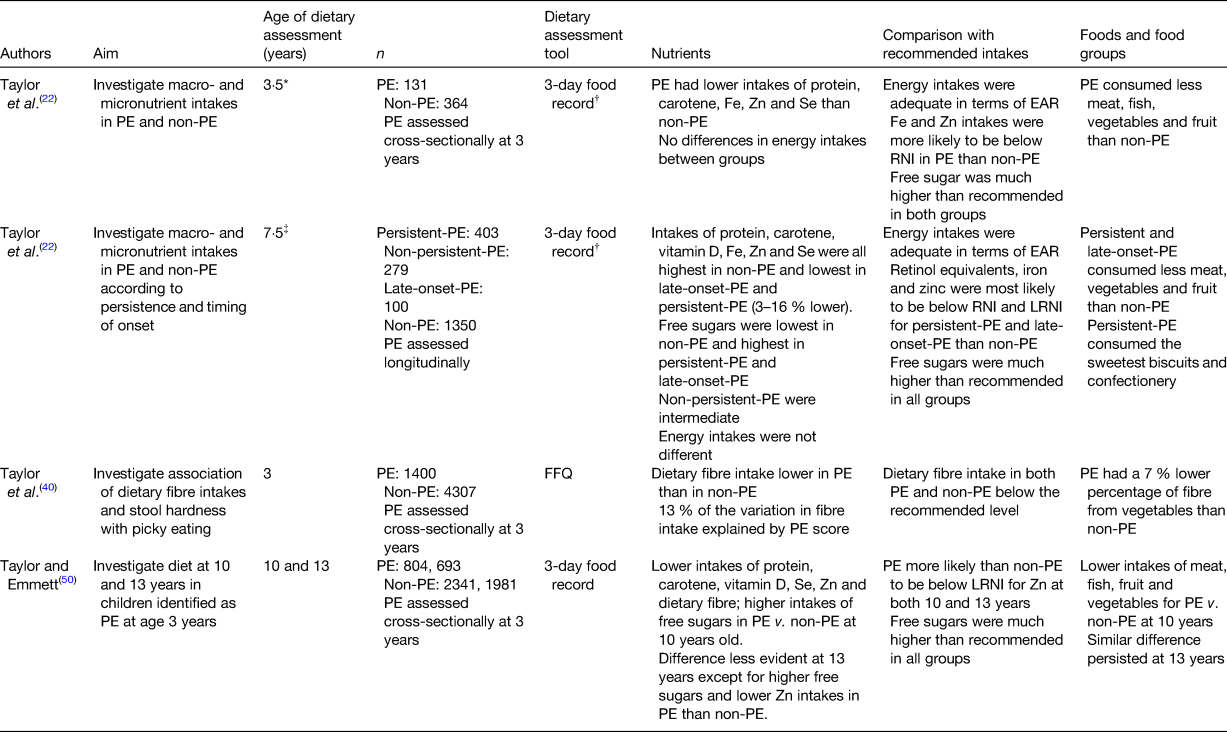
EAR, estimated average requirement; RNI, reference nutrient intake; LRNI, lower reference nutrient intake; PE, picky eater.
* Picky eating identified by single question at 3 years old: Does your child have definite likes and dislikes as far as food is concerned? (No/Yes, quite choosy/Yes, very choosy).
† Similar results obtained from FFQ at 4 years.
‡ Picky eating identified longitudinally as ‘never’/‘low’/‘early-onset’ (persistent or not persistent)/‘late onset’ at 2–5·5 years old (for details see Taylor et al.(Reference Taylor, Northstone and Wernimont22)).
These studies indicate long-term effects on diet that point to an important role for early intervention by parents to increase the quality of their children's diets from an early age. This should include more nutrient-rich and fibre-rich foods, especially fruit and vegetables.
Health and development
There has been a little systematic study of health outcomes of picky eating other than growth and to a lesser extent body composition. Several studies have shown that picky eating is associated with a greater risk of being underweight and having poor growth(Reference Ekstein, Laniado and Glick6, Reference Dubois, Farmer and Girard20, Reference Taylor, Steer and Hays52–Reference Webber, Hill and Saxton55). This could be driven by energy intakes lower than requirements, possibly in combination with low intakes of zinc and iron(Reference Taylor, Northstone and Wernimont22, Reference Galloway, Fiorito and Lee35), which are critical for optimal growth. Others, however, have found an association of picky eating with being overweight(Reference Finistrella, Manco and Ferrara30). As discussed by Berger et al.(Reference Berger, Hohman and Marini38) the interpretation of most of these studies are limited by their cross-sectional design, meaning that it is not possible to establish causation. In a longitudinal study of weight, height, BMI and body composition in ALSPAC, the growth of children (boys and girls) up to age 17 years who were identified as picky eaters at age 3 years were assessed against reference growth charts for British children(Reference Taylor, Steer and Hays52). The mean weights, heights and BMI of the picky eaters were consistently above the 50th centile, even though they were below those of the non-picky eaters, providing reassurance that their growth trajectories were normal(Reference Taylor, Steer and Hays52). However, there was evidence of a slightly increased prevalence of thinness in picky eaters. It is also of note that the non-picky children in ALSPAC had a growth trajectory well above the 50th centile of the growth charts: it is possible that in a population in which the children's growth was generally closer to the 50th centile the trajectories of the picky eaters would be below the 50th centile and therefore of greater concern. Similar results to those in the ALSPAC study in the UK were found in a group of US girls up to age 15 years, in whom picky eaters tracked about 15 centile points below the non-picky girls, who tracked along the 65th centile(Reference Berger, Hohman and Marini38). This difference in the location of the trajectories relative to the centiles could reflect a difference in the prevalence of overweight and obesity in the two cohorts and/or the use of different centile charts.
With regard to body composition in the ALSPAC study, being a male picky eater was associated with a lower lean mass index than being a non-picky eater, but there was no association with percentage body fat or fat mass index and there were no associations at all in females(Reference Taylor, Steer and Hays52). Participants identified as picky eaters at age 4 years in the Generation R study in the Netherlands had lower standard deviation scores for BMI, fat mass index, and fat-free mass index at age 6 years than non-picky eaters, and, as in ALSPAC, a higher risk of being underweight(Reference de Barse, Tiemeier and Leermakers56). There is a need for further longitudinal data on this point, but it seems likely that there is a subsection of picky eaters who are at risk of being underweight who need early identification and intervention or surveillance.
Picky eating has been identified as a risk factor for subsequent anorexia nervosa in one observational study(Reference Marchi and Cohen18), although in a later extension of that study picky eating was not found to be associated with later anorexia or bulimia(Reference Kotler, Cohen and Davies57) making interpretation difficult. In addition, the statistical power of these studies has been questioned and this highlights the limitations of observational studies for studying outcomes that are relatively rare(Reference Micali58). Adult picky eating does occur and causes distress and social impairment(Reference Thompson, Cummins and Brown59): it has been shown to be associated with parental feeding practices in childhood (particularly pressure to eat), childhood picky eating, higher disgust sensitivity and experiencing an adverse food event(Reference Ellis, Schenk and Galloway60).
Picky eating has been associated with a range of other adverse behavioural outcomes, compromising both externalising and internalising behaviours(Reference Jacobi, Schmitz and Agras61). Longitudinal data on picky eating at 1·5, 3 and 6 years old from nearly 4000 participants in Generation R classified into four trajectories of picky eating (persistent/remitting/late-onset/never) were used to identify any associations with emotional problems, behavioural problems and pervasive developmental problems at 7 years old(Reference Cardona Cano, Hoek and van Hoeken21). Persistent picky eating predicted pervasive developmental problems, but not behavioural or emotional problems. The other trajectories were not predictive of any adverse outcomes and so it was concluded that remitting picky eating was part of normal development.
Constipation is a common condition in children, affecting up to 30 % of school-age children in the UK and accounting for about 3 % of paediatric consultations(Reference Auth, Vora and Farrelly62, Reference Mugie, Di Lorenzo and Benninga63), and seems to affect children who are picky eaters disproportionately. In a Korean paediatric gastroenterology clinic, constipation was mentioned as a characteristic of being a picky eater by about 27 % of caregivers compared with 13 % in a control group. Constipation was more common in picky eaters than non-picky eaters in Taiwan (prevalence of 19 % v. 10 %)(Reference Chao64). In Generation R, Tharner et al.(Reference Tharner, Jansen and Kiefte-de Jong13) showed a bidirectional relationship between picky eating and constipation with a ‘vicious circle’ being set up between them. Although low dietary fibre intakes have been documented in picky eaters, with intakes found to be lower in picky eaters than non-picky eaters, intakes in both groups are generally below those recommended(Reference Galloway, Fiorito and Lee35, Reference Xue, Zhao and Cai48, Reference Xue, Lee and Ning65). In the ALSPAC study, the difference in intake for picky eaters compared with non-picky eaters at age 3·5 years was −1·4 (95 % CI −1·6, −1·2) g NSP fibre/day and dietary fibre intake was strongly associated with picky eating. Picky eating was also associated with an increase in the odds of having hard stools of about 30 %, and this relationship was mediated by dietary fibre(Reference Taylor, Northstone and Wernimont40). Dietary fibre intake in children who were not picky eaters was 9·1 g NSP fibre/day (about 11 g AOAC fibre/day), which is below the UK Scientific Advisory Committee on Nutrition guideline of 15 g AOAC fibre/day for children aged 2–5 years(66). The even lower intake of the picky eaters was largely a consequence of a lower intake of vegetables and fruit than the non-picky eaters. The difference between the groups in dietary fibre intake was still evident at age 13 years(Reference Taylor and Emmett50). The primary cause of constipation is lack of dietary fibre, and thus all children, but particularly picky eaters, would benefit from increasing their fruit and vegetable intakes and other foods rich in fibre.
Advice for health professionals and caregivers
Many children go through a period of time as a picky eater and it can be difficult for health providers to judge when intervention is needed. It has been suggested that this decision should be based on whether the child's feeding behaviour is problematic for health, development, education, psychological wellbeing and socialisation(Reference Levene and Williams67). Referral to a paediatric dietitian or psychologist is recommended for children who fulfil the diagnostic criteria for Avoidant/Restrictive Food Intake Disorder or who have special dietary requirements for a chronic disease such as type 1 diabetes, a metabolic disorder or cystic fibrosis, or who have learning difficulties or autistic spectrum disorders. However, there is also a need to identify persistent picky eaters, who may need surveillance of growth and development and detailed advice on management. Many children will not present to a healthcare provider and there is also a need for more general advice for caregivers that is consistent and practical and that can be readily accessed as public health information.
Caregivers should be reassured that picky eating is a common stage of development that is unlikely to cause any permanent harm to the child's long-term development. Levene and Williams(Reference Levene and Williams67) have set out detailed strategies for parents/caregivers and include information on sample portion sizes for pre-school children, a sample plan for graded exposure to food items, and a list of resources for parents and health professionals. Key strategies described in greater detail include: (1) having realistic expectations of children's portion sizes; (2) graded and repeated exposure to unfamiliar foods (10–15 positive experiences may be needed); (3) using non-food rewards to provide motivation; (4) having a positive approach, avoiding negativity and pressure to eat; (5) parental modelling of eating fruit and vegetables and trying unfamiliar foods; (6) promoting appetite by limiting snacks and energy-providing drinks such as milk, juice and soft drinks in between meals; (7) having social food experiences such as family meals with all members eating the same food; (8) focusing on long-term goals and being consistent.
Conclusion
The identification of picky eating in children is hampered by the lack of a universally accepted definition and assessment tool. Their children's picky eating can cause stress to parents/caregivers and may have a negative impact on family relationships, and so it is important that health providers are able to identify picky eating confidently and provide caregivers with appropriate advice. For most children, the behaviour seems to resolve spontaneously, perhaps because the child is exposed to a wider range of foods through gradually being more socially active at pre-school, toddler group, school and getting to know a wider range of peers with growing independence and autonomy. The evidence for an impact of being a picky eater on health and development is mostly limited to studies on growth, but these are generally reassuring. However, there may be a subsample of picky eaters in whom the behaviour does become embedded, and they may be at risk of being thin during adolescence or may emerge later with an eating disorder or as an adult picky eater. Identification, support and parental advice at an early age in this small group of children is very important to be able to avert these more serious outcomes.
Financial Support
C. M. T. was supported by a Wellcome Trust Career Re-Entry Fellowship (Grant ref: 104077/Z/14/Z).
Conflict of Interest
P. M. E. has from time to time received research funding and consultancy funding from Pfizer Nutrition Ltd, Danone Baby Nutrition (Nutricia Ltd) and Nestle Nutrition. C. M. T. has received research funding from Nestle Nutrition.
Authorship
C. M. T. wrote the manuscript and P. M. E. critically revised it. Both authors have read and approved the final version.



