



In the nutrition field, the effects of food consumption on health are tested through randomised-controlled trials. Unlike pharmaceutical studies, dietary trials present with a number of challenges( Reference Jacobs, Tapsell and Temple 1 ), not least of which is adherence to dietary advice. Food supplementation can be a means of strategically improving subject adherence( Reference Wing and Jeffery 2 – Reference Jeffery, Wing and Thorson 4 ) but the impact on study outcomes is debatable. For example, in the Prevención con Dieta Mediterránea (PREDIMED) study, which tested the effects of the Mediterranean diet on CVD risk, intervention groups were provided with food supplements of olive oil or mixed nuts. A high level of adherence to the Mediterranean diet was observed over a 3-month period in the two intervention groups( Reference Estruch, Martínez-González and Corella 5 ). Editorial commentary on the study stated that the supplemental foods, rather than the dietary advice, created the most striking differences between groups( Reference Appel and Van Horn 6 ). It was noted, for example, that food supplementation appeared to lead to modest between-group differences in legume and fish consumption compared with the control group( Reference Appel and Van Horn 6 ). Another analysis of the PREDIMED study reported that the 2-year retention rate was higher in the intervention groups (96·2 and 92·1 %) compared with the controls (82·7 %)( Reference Martínez-González, Corella and Salas-Salvadó 7 ). Thus, the impact of food supplementation as a study design strategy warrants investigation.
A common outcome of dietary trials is weight loss, whether intended or not( Reference Tapsell, Batterham and Huang 8 ). The provision of food supplements may even enhance this effect but not necessarily if the food supplement is provided without additional advice on the total diet to adjust for total energy intake( Reference Tapsell, Dunning and Warensjo 9 ). Studies of food supplementation can elucidate why food supplementation may be useful, how the effectiveness of food supplementation can be maintained and over what period of time food supplementation will remain effective( Reference Wing 3 , Reference Metz, Kris-Etherton and Morris 10 ). For example, food supplementation may be effective when the time available for dietary education is restricted or if a particular dietary prescription may be difficult to follow ( Reference Wing 3 ). Although the provision of structured meal plans may be helpful, food supplementation may serve as a greater incentive to maintain self-monitoring strategies( Reference Wing and Jeffery 2 , Reference Metz, Kris-Etherton and Morris 10 ), and appears to positively influence behaviour change, improving adherence towards the dietary intervention itself( Reference Appel and Van Horn 6 ). Even so, other factors that influence outcomes may need to be considered. Behaviour change can also be influenced by behaviour therapy, which can create awareness of food habits and help gain control over food-related cues( Reference Wing and Jeffery 2 ). In the case of weight-loss interventions, there is good evidence that weight loss can be achieved and maintained with cognitive behavioural therapies, motivational interviewing, self-monitoring and the use of structured meal plans as part of the counselling process( Reference Spahn, Rebecca and Keim 11 ).
Finally, in dietary trials, adherence to dietary recommendations is necessary to draw valid conclusions on dietary effects. Although it is assumed that the prescribed diet is necessary to achieve outcomes( Reference Metz, Kris-Etherton and Morris 10 , Reference Burke, Styn and Steenkiste 12 , Reference Williamson, Anton and Han 13 ), the concept of adherence remains a multi-dimensional construct( Reference Williamson, Anton and Han 13 ) and there are many ways of assessing it. When weight loss is an outcome of interest, adherence characteristically involves multiple behavioural domains( Reference Williamson, Anton and Han 13 ). For food-based studies, trials involving weight loss present a particular set of conditions, where total energy intake and diet quality are important considerations. Total energy intake will be reflected in weight-loss outcomes, but diet quality reflects adherence to dietary prescriptions. The aim of this review was to examine the impact of food supplementation on weight loss in randomised-controlled dietary intervention trials.
Methods
A systematic literature review was conducted according to the requirements of the Preferred reporting items for systematic reviews and meta-analyses (PRISMA) statement checklist( Reference Moher, Liberati and Tetzlaff 14 ) and registered on PROSPERO (international database of prospectively registered systematic reviews; registration number: CRD42015017563). A quality assessment was also conducted on included studies based on the quality criteria checklist from the Academy of Nutrition and Dietetics Evidence Analysis Manual( 15 ) to identify potential risk of bias (online Supplementary file S1). The research question addressed was ‘In overweight or obese adults, does food supplementation result in greater weight loss compared to controls?’. The primary outcome of this review was to assess whether greater weight loss would result with food supplementation in a dietary intervention trial. Secondary to weight loss, adherence towards an intervention was also addressed, in order to determine whether any differences in behaviour change between intervention and control groups of a trial were notable.
The search was commenced in March 2015 across three scientific databases – Scopus, PubMed and the Cochrane Library, and was limited to the period between January 2004 and March 2015 and to articles published in English language. Keywords used were a combination of ‘trial’ OR ‘intervention’, ‘food’ OR ‘diet’, ‘weight loss’ and ‘adherence’ OR ‘adherence’. Studies were included if they (1) followed a randomised-controlled trial design, (2) provided food as a dietary intervention to at least one group of subjects, (3) reported weight change as one of the study outcomes and (4) assessed adherence to the dietary intervention in terms of consuming the supplemented food. For the purpose of this review, food supplementation was defined as the provision of a food item to study subjects with the purpose of incorporation into usual diets, and would be deemed suitable for habitual consumption beyond a research context. The selection of studies was not restricted by sex or duration of the intervention and included study populations that were overweight and/or obese( 16 ).
Studies were excluded if they (1) were based on animal studies, (2) involved population groups that included children or adolescents (aged<18 years), intellectually disadvantaged subjects or cancer patients, (3) provided dietary interventions considered inappropriate for this review, including feeding trials, technology-based interventions, meal-replacement therapies, commercial diets or non-nutritional supplements and (4) lacked a control/comparator group.
One investigator (C. W.) was responsible for conducting the keyword search, reviewing of articles and quality assessment. A second investigator (E. N.) independently conducted a quality assessment of the studies; both investigators were in agreement over the quality of the studies included. Results were initially screened for duplicates with early round eliminations excluding articles by title and abstract. Full-text articles were then retrieved and reviewed. Three additional investigators (L. T., Y. P. and E. N.) independent of the initial keyword search reviewed the categorisation and representation of the articles to assist in the analysis described below. Consensus was reached where there was disagreement. Where data were not immediately available in the published article, corresponding authors were contacted to clarify outcomes.
In the first instance, trial designs were summarised in a tabular form, outlining the key features of sample size and characteristics, duration of study, dietary intervention and control and finally weight loss as a reported outcome. The table of results was organised to first indicate trials where significant between-group differences were found. In the second instance, the use of energy restriction and/or behavioural support (by psychological or dietary counselling) was considered. By nature, energy restriction would require behavioural support/dietary counselling as adherence to whole dietary patterns is required, but behavioural support does not necessarily require energy restriction. The number of studies that fell into those categories (energy restriction+behavioural support or behavioural support only or neither energy restriction nor behavioural support) were identified. Finally, each study was scrutinised for the way in which dietary adherence was assessed.
Body weight data for each study were pooled using Review Manager (computer program, version 5.3; The Nordic Cochrane Centre, The Cochrane Collaboration, 2014). Random effects meta-analyses were carried out to assess the weighted mean differences (WMD) and 95 % CI in final mean values or change in weight. Subgroup analysis was performed by categorising the studies according to the dietary intervention provided – that is, if only the intervention group (food v. no food) or all subjects (food v. food) were supplemented with a food. The consistency of the WMD was explored using the χ 2 test, with I 2 calculated using the following formula: I 2=100 %×(Q−df)/Q (where Q is the χ 2 statistic)( Reference Higgins, Thompson and Deeks 17 ). An I 2 value of 75 % or greater was considered to be indicative of high-level inconsistency( Reference Higgins, Thompson and Deeks 17 ).
Results
A total of 1951 articles were identified from Scopus (n 802), PubMed (n 435) and the Cochrane Library (n 722) based on the keywords and search parameter limitations (Fig. 1; online Supplementary files S2 and S3). In all, seventy-nine (n 79) full-text articles were retrieved and assessed for eligibility (Fig. 1). In total, seventeen (n 17) articles from sixteen studies met the inclusion criteria. A review of each article according to the quality criteria checklist( 15 ) rated all studies as positive with a score range of 8–10/10, indicating sound study design and scientific rigour overall (online Supplementary file S1). A list of studies excluded following full-text reviews has also been included (online Supplementary file S4).
PRISMA flow diagram of study selection.

The studies were from various geographical locations with a range of intervention periods (Table 1). All the studies included overweight and/or obese (BMI range 26–49·9 kg/m2) adults, and two studies( Reference Wien, Oda and Sabate 18 , Reference Whybrow, Mayer and Kirk 19 ) included lean subjects (BMI<25 kg/m2). Three studies( Reference Baxheinrich, Stratmann and Lee-Barkey 20 – Reference Kristensen, Toubro and Jensen 22 ) included female subjects only. In all, twelve studies were identified where food was provided as part of the dietary intervention to at least one intervention group( Reference Wien, Oda and Sabate 18 , Reference Whybrow, Mayer and Kirk 19 , Reference Hannum, Carson and Evans 21 , Reference Sabaté, Cordero-MacIntyre and Siapco 23 – Reference Zemel, Teegarden and Van Loan 31 ). In two of these studies, beverages were the dietary variable of interest( Reference Tate, Turner-McGrievy and Lyons 26 , Reference Akers, Cornett and Savla 28 ). Four studies( Reference Baxheinrich, Stratmann and Lee-Barkey 20 , Reference Kristensen, Toubro and Jensen 22 , Reference Piehowski, Preston and Miller 32 , Reference Tonstad, Malik and Haddad 33 ) provided food supplementation to all study groups. One study provided full meals for consumption off-site during a 1-week induction phase as a means of educating subjects regarding portions sizes and facilitate adherence for the duration of the study period( Reference Tonstad, Malik and Haddad 33 ). Control groups in two studies were supplemented with capsules( Reference Zemel, Teegarden and Van Loan 31 , Reference Thorsdottir, Birgisdottir and Kiely 34 ). These two studies were included in this review as the intervention groups were supplemented with food. The capsules were not treated as food for this review. A commonality in study design was a prescribed target of a daily or weekly amount of supplemented food for consumption.
Study characteristics of included randomised-controlled trials

Weight loss
Weight loss was reported in all but three of the sixteen trials identified in the search (Table 1). Intervention groups lost significantly more weight than the controls in only three studies( Reference Hannum, Carson and Evans 21 , Reference Murphy, Thomson and Coates 25 , Reference Thorsdottir, Tomasson and Gunnarsdottir 30 ), and in each case the control groups were not provided with food supplements.
In other studies where the control groups were not supplemented with a food, the within-group weight change was statistically significant( Reference Wien, Oda and Sabate 18 , Reference Hannum, Carson and Evans 21 , Reference Tate, Turner-McGrievy and Lyons 26 , Reference Akers, Cornett and Savla 28 ), and in most cases( Reference Wien, Oda and Sabate 18 , Reference Hannum, Carson and Evans 21 , Reference Tate, Turner-McGrievy and Lyons 26 – Reference Zemel, Teegarden and Van Loan 31 ) the intervention groups lost more weight than the controls. Weight gain occurred among subjects in two trials using a cross-over design (+0·2 kg( Reference Sabaté, Cordero-MacIntyre and Siapco 23 ) and +0·5 kg( Reference Crichton, Howe and Buckley 24 )) and in one using a parallel design( Reference Murphy, Thomson and Coates 25 ), where the intervention group lost 0·8 kg and the control group gained 0·4 kg. Where the control group was also given food supplements, statistically significant within-group weight changes were observed in all( Reference Baxheinrich, Stratmann and Lee-Barkey 20 , Reference Kristensen, Toubro and Jensen 22 , Reference Piehowski, Preston and Miller 32 ) but one study( Reference Tonstad, Malik and Haddad 33 ).
Provision of a food supplement was found to result in a significant reduction in weight compared with a control diet (WMD −0·74 kg; 95 % CI −1·40, −0·08; P=0·03, I 2=63 %). In comparison, a non-significant increase in weight was found in the studies where both intervention and control groups received a food supplement (WMD 0·84 kg; 95 % CI −0·60, 2·27; P=0·25, I 2=0 %). Pooled results from both sets of studies found non-significant weight loss overall (WMD −0·57 kg; 95 % CI −1·17, 0·03; P=0·06, I 2=54 %) (Fig. 2). There was significant substantial heterogeneity between the two sets of studies (P=0·05, I 2=73·9 %), indicating significant differences in the pooled effects of the two subgroups.
Forest plot presenting the subgroup meta-analysis of weight loss outcomes by study classification.

Energy restriction and behavioural/dietary counselling
There was considerable variation in the approach to energy restriction and the provision of behavioural/dietary counselling across the studies (Table 2). On this basis, there appeared to be no differentiation between trials that provided food supplements to intervention and/or control groups.
Number of studies including energy restriction (E) and behavioural/dietary counselling (B) in the design

* Intervention group only.
Two studies included an reduced-energy dietary prescription for all subjects based on a 2100 kJ (500 kcal) energy deficit( Reference Akers, Cornett and Savla 28 ) or a hypoenergetic diet ranging between 5040 and 6300 kJ/d (1200–1500 kcal/d)( Reference Wien, Oda and Sabate 18 ). In these studies, the supplemented foods were integrated into the dietary prescription, whereas the control groups were advised to continue with usual diets. Seven studies integrated a prescribed amount of the supplemented foods within a reduced-energy prescription to facilitate weight loss( Reference Wien, Oda and Sabate 18 , Reference Baxheinrich, Stratmann and Lee-Barkey 20 , Reference Kristensen, Toubro and Jensen 22 , Reference Akers, Cornett and Savla 28 , Reference Thorsdottir, Tomasson and Gunnarsdottir 30 – Reference Piehowski, Preston and Miller 32 ), whereas two studies provided the supplemented food to replace usual food choices( Reference Whybrow, Mayer and Kirk 19 , Reference Tonstad, Malik and Haddad 33 ). Studies that did not provide a reduced-energy dietary prescription encouraged integration or replacement of usual food choices with the supplemented foods( Reference Sabaté, Cordero-MacIntyre and Siapco 23 – Reference Tate, Turner-McGrievy and Lyons 26 , Reference Salas-Salvadó, Bulló and Estruch 29 ) or gave suggestions for integrating the supplemented foods into usual diets by providing an overview of a healthy eating dietary pattern/food model( Reference Hannum, Carson and Evans 21 , Reference Waller, Vander Wal and Klurfeld 27 ).
The types and intensity of behavioural and dietary interventions also varied considerably across studies (Table 2). In five studies( Reference Whybrow, Mayer and Kirk 19 , Reference Hannum, Carson and Evans 21 , Reference Sabaté, Cordero-MacIntyre and Siapco 23 , Reference Crichton, Howe and Buckley 24 , Reference Waller, Vander Wal and Klurfeld 27 ), neither the intervention nor control groups were exposed to dietary counselling, and the nature of the interventions was limited to instructions related to consumption of the supplemented foods. In another study( Reference Murphy, Thomson and Coates 25 ), only the intervention group was provided with recipe books and advice on how the supplemented food should be incorporated into meals. In four studies( Reference Wien, Oda and Sabate 18 , Reference Tate, Turner-McGrievy and Lyons 26 , Reference Akers, Cornett and Savla 28 , Reference Salas-Salvadó, Bulló and Estruch 29 ), individualised dietary counselling was provided in equal amounts to all subjects. A common approach was advice on methods for incorporating the recommended amount of supplemented foods into meals( Reference Baxheinrich, Stratmann and Lee-Barkey 20 , Reference Kristensen, Toubro and Jensen 22 , Reference Thorsdottir, Tomasson and Gunnarsdottir 30 – Reference Piehowski, Preston and Miller 32 , Reference Thorsdottir, Birgisdottir and Kiely 34 ), supported with follow-up meetings( Reference Baxheinrich, Stratmann and Lee-Barkey 20 , Reference Thorsdottir, Tomasson and Gunnarsdottir 30 , Reference Tonstad, Malik and Haddad 33 , Reference Thorsdottir, Birgisdottir and Kiely 34 ) and the provision of resources such as recipe books or meal plans( Reference Baxheinrich, Stratmann and Lee-Barkey 20 , Reference Thorsdottir, Tomasson and Gunnarsdottir 30 , Reference Zemel, Teegarden and Van Loan 31 , Reference Tonstad, Malik and Haddad 33 , Reference Thorsdottir, Birgisdottir and Kiely 34 ).
Dietary adherence
As with energy restriction and behavioural/dietary counselling, there was considerable variation in the approaches to assessment of dietary adherence (Table 3). All studies applied self-reported dietary assessment methods such as food diaries or records or FFQ. One study( Reference Salas-Salvadó, Bulló and Estruch 29 ) used a questionnaire( Reference Martínez-González, Corella and Salas-Salvadó 7 ) developed specifically to assess adherence to a Mediterranean-style diet. Adherence was variably reported as a target amount of supplemented food consumed( Reference Whybrow, Mayer and Kirk 19 , Reference Kristensen, Toubro and Jensen 22 , Reference Crichton, Howe and Buckley 24 , Reference Murphy, Thomson and Coates 25 , Reference Zemel, Teegarden and Van Loan 31 , Reference Thorsdottir, Birgisdottir and Kiely 34 ) or changes in foods or beverages consumed before and after intervention( Reference Hannum, Carson and Evans 21 , Reference Tate, Turner-McGrievy and Lyons 26 ). Two studies( Reference Wien, Oda and Sabate 18 , Reference Murphy, Thomson and Coates 25 ) examined between-group differences in adherence and reported no differences in energy intakes. Only one study, a subgroup analysis of a trial, reported a significant difference in dietary adherence between groups( Reference Salas-Salvadó, Bulló and Estruch 29 ). Adherence was considered acceptable in studies where it was reported as the proportion of subjects who met the prescribed amount of supplemented food consumed( Reference Wien, Oda and Sabate 18 , Reference Sabaté, Cordero-MacIntyre and Siapco 23 , Reference Waller, Vander Wal and Klurfeld 27 , Reference Akers, Cornett and Savla 28 , Reference Piehowski, Preston and Miller 32 ). Acceptable adherence was noted in one study that reported weight gain as an outcome( Reference Sabaté, Cordero-MacIntyre and Siapco 23 ) and five studies( Reference Wien, Oda and Sabate 18 , Reference Murphy, Thomson and Coates 25 , Reference Tate, Turner-McGrievy and Lyons 26 , Reference Akers, Cornett and Savla 28 , Reference Salas-Salvadó, Bulló and Estruch 29 ) that reported weight loss. The latter group included a study that also assessed changes in a biomarker of food intake( Reference Sabaté, Cordero-MacIntyre and Siapco 23 ). In two studies, the analysis of adherence was limited to data on subjects meeting a pre-determined adherence criteria( Reference Hannum, Carson and Evans 21 , Reference Waller, Vander Wal and Klurfeld 27 ).
Summary of dietary adherence measures in reviewed trials
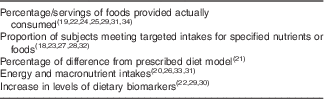
In studies that provided all subjects with the same quantity and form of supplemented food( Reference Whybrow, Mayer and Kirk 19 , Reference Baxheinrich, Stratmann and Lee-Barkey 20 , Reference Kristensen, Toubro and Jensen 22 , Reference Piehowski, Preston and Miller 32 ), the authors reported good adherence based on food records and no group differences were detected. In two studies( Reference Baxheinrich, Stratmann and Lee-Barkey 20 , Reference Zemel, Teegarden and Van Loan 31 ), the consumption of supplemented food were reported alongside adherence with other aspects of the dietary intervention (reductions in energy and macronutrient intakes). The amount of supplemented food consumed was commonly reported. In one case( Reference Baxheinrich, Stratmann and Lee-Barkey 20 ), adherence with consumption of the supplemented food was only considered in terms of reported energy and nutrient intakes. In some cases( Reference Zemel, Teegarden and Van Loan 31 , Reference Piehowski, Preston and Miller 32 ), the specific adherence criterion – a minimum level of supplemented food consumed – was reported, whereas in others( Reference Baxheinrich, Stratmann and Lee-Barkey 20 , Reference Zemel, Teegarden and Van Loan 31 , Reference Thorsdottir, Birgisdottir and Kiely 34 ) subjects were specifically requested not to consume other foods or supplements similar to the supplemented food provided; in two of these studies( Reference Baxheinrich, Stratmann and Lee-Barkey 20 , Reference Thorsdottir, Birgisdottir and Kiely 34 ), this was included as a measure of adherence.
Other measures of adherence were also noted, and these related to study protocols such as the proportion of completed food records, tracking sheets or meeting attendance( Reference Hannum, Carson and Evans 21 , Reference Crichton, Howe and Buckley 24 , Reference Tate, Turner-McGrievy and Lyons 26 – Reference Akers, Cornett and Savla 28 ). In one study, the intervention group recorded significantly higher attendance at group meetings compared with the controls: in this case, a mean of 5·4 sessions (P<0·001) and 5·2 sessions (P=0·001) v. a mean of 4·4 sessions for the controls( Reference Tate, Turner-McGrievy and Lyons 26 ). In another study, a slightly higher number of subjects in the control group completed food records (n 23 v. 17 in the intervention group)( Reference Waller, Vander Wal and Klurfeld 27 ).
Discussion
This review suggests that food supplementation may result in significant weight loss in dietary intervention trials, even though it is only one influencing factor in trial design. Food supplementation appears to act as an incentive to modulate intakes and improve adherence to dietary recommendations. This is important because adherence to dietary targets is imperative in being able to draw valid conclusions on effects of foods and dietary patterns. To our knowledge, this is the first review of this nature. It also exposed other features of dietary trials that could be implicated in influencing weight loss. In the three studies in which significant between-group differences in weight loss were reported( Reference Hannum, Carson and Evans 21 , Reference Murphy, Thomson and Coates 25 , Reference Thorsdottir, Tomasson and Gunnarsdottir 30 ) (and only the intervention groups received food supplements), the authors considered different food effects( Reference Murphy, Thomson and Coates 25 , Reference Thorsdottir, Tomasson and Gunnarsdottir 30 ), differences in sex, metabolic efficiency( Reference Thorsdottir, Tomasson and Gunnarsdottir 30 , Reference Labayen, Dı́ez and Parra 35 ) and inaccuracies of dietary assessment tools( Reference Murphy, Thomson and Coates 25 ) as possible confounders. Neither energy restriction nor dietary counselling was consistently addressed across the trials considered. Evidence of moderate heterogeneity within the ‘food v. no food’ subgroup may also reflect differences in trial design and warrants investigation in further research.
Simply providing food may act as an incentive or a driver to modulate diet, but it appears to sit with other influential factors. Better weight loss outcomes were generally observed when there was greater adherence with the total diet plan. This was most commonly observed when food was supplemented within a reduced-energy prescription and subjects were supported with dietary counselling. For example, among the studies where food was supplemented to the intervention group only, Waller et al. ( Reference Waller, Vander Wal and Klurfeld 27 ) reported no association between food supplementation adherence and weight loss, but the extent of weight loss appeared proportional to adherence to the overall intervention. This observation was consistent with other studies where control groups were able to make sufficient changes to habitual dietary intakes despite the absence of a test food and dietary intake recommendations( Reference Hannum, Carson and Evans 21 , Reference Tate, Turner-McGrievy and Lyons 26 ). In addition, the type of supplemented food may be important. For example, in the study by Tonstad et al. ( Reference Tonstad, Malik and Haddad 33 ), only 36·1 % of females and 32·5 % of males successfully achieved the target levels of dietary fibre, despite reports that an increased amount of fibre was ‘well tolerated’. Measures of adherence will confirm whether foods have been actually consumed, but approaches to assessing adherence are a major source of variation in trial design that confound the ability to integrate the body of evidence.
Some weight loss can be anticipated in dietary studies where specific dietary advice is provided, possibly due to elimination of extra foods normally consumed as snacks( Reference Tapsell, Batterham and Thorne 36 ). In our consideration of studies where all groups were supplemented with food, the weight loss achieved could be attributed to the provision of energy-restricted diets in most cases. The provision of portion-controlled entrée-sized meals( Reference Hannum, Carson and Evans 21 ) may act in the same way. Where weight gain was reported( Reference Sabaté, Cordero-MacIntyre and Siapco 23 , Reference Crichton, Howe and Buckley 24 ), this may have been caused by including a supplemented food in addition to usual dietary intakes. Unfavourable changes in body weight can be offset even when mandatory food supplementation is integrated into a dietary prescription as long as the required energy deficit for weight loss has been accounted for( Reference Tapsell, Dunning and Warensjo 9 ). As an example, when foods were provided for mandatory inclusion as snacks, subjects were still able to lose weight( Reference Waller, Vander Wal and Klurfeld 27 , Reference Piehowski, Preston and Miller 32 ). These findings clearly demonstrate that supplementing a diet with food must be structured for displacement of other foods normally eaten if weight gain is to be avoided or weight loss achieved. Emphasis must be placed on the overall energy intake when building food-based dietary models for weight loss to ensure the energy-deficit diet prescribed includes the test food( Reference Tapsell, Dunning and Warensjo 9 , Reference Mozaffarian, Hao and Rimm 37 ).
Behavioural support and the intensity of intervention are also important trial design features. Generally, it appears that food supplementation in studies is assumed to lead to dietary adherence, and thereby weight loss( Reference Wing and Jeffery 2 – Reference Appel and Van Horn 6 ). This review suggests that the inclusion of dietary counselling also favourably contributes to dietary adherence, and thereby weight loss. In the studies reviewed here, when food was provided to both groups, dietary counselling and the provision of nutrition education resources were also provided in all but one study( Reference Whybrow, Mayer and Kirk 19 ), and this may have contributed to the weight loss that was achieved in all these studies. When only the intervention group received food, the smaller proportions of weight loss observed in the control groups may have been influenced by a lower intensity of dietary intervention( Reference Hannum, Carson and Evans 21 , Reference Waller, Vander Wal and Klurfeld 27 ). In the study by Murphy et al. ( Reference Murphy, Thomson and Coates 25 ), the control group gained weight despite the provision of a reduced-energy dietary prescription to all subjects. This study also reported no differences in adherence to dietary prescriptions but there was no dietary counselling provided.
The extent of dietary counselling appeared to influence weight loss and adherence outcomes. Independent of food supplementation, dietary counselling resulted in reduced subject withdrawal rates, better adherence and greater weight loss( Reference Svendsen, Blomhoff and Holme 38 , Reference Digenio, Mancuso and Gerber 39 ). The convenience factor may be another reason for enhanced adherence with food and meal plans provided to study subjects. These resources provide a structure for facilitating behaviour change, help develop understanding of diet therapies (particularly if several diet-related modifications are required), minimise the rigour of meal-planning processes and assist with portion control( Reference Wing and Jeffery 2 – Reference Jeffery, Wing and Thorson 4 , Reference Metz, Kris-Etherton and Morris 10 ). Ultimately, these factors all simplify what can be perceived as a complex and integrative change process. In the absence of dietary counselling, there appears to be some benefit from regular and frequent monitoring, for the purpose of assessing adherence. This perhaps instils a sense of accountability, encouraging dietary adherence and, ultimately, greater weight loss.
The key appears to lie with behaviour change following high-intensity dietary counselling during the early stages of an intervention( Reference Sacks, Bray and Carey 40 ). Regardless of the mode of intervention, the frequency of dietary counselling has been shown to attenuate declines in treatment adherence leading to sustained weight loss in the long term( Reference Svendsen, Blomhoff and Holme 38 , Reference Sacks, Bray and Carey 40 ). Behavioural support in all its forms appears equally important. For effective outcomes to be achieved, it has been argued that interventions should be aligned with patients’ stage of change( Reference Spahn, Rebecca and Keim 11 ). Although behavioural support strategies were not fully addressed in the studies reviewed, our review suggests that reports of regular monitoring( Reference Spahn, Rebecca and Keim 11 , Reference Svendsen, Blomhoff and Holme 38 ), together with food supplementation, may serve as beneficial tools in the nutrition education process.
Although food supplementation could influence study subjects’ behaviours through a placebo effect, this was not discussed as a possible confounder in the studies included and we are also unable to suggest whether this phenomenon was indeed present. The length of the study period may also influence subjects’ willingness to comply with dietary studies, particularly if usual diets are assessed( Reference Burke, Styn and Steenkiste 12 , Reference Thorsdottir, Birgisdottir and Kiely 34 ). Subject fatigue in long-term studies has been identified as a common reason for withdrawals, contributing to declining motivation and tapering of effects on weight loss( Reference Wing and Jeffery 2 , Reference Jeffery, Wing and Thorson 4 , Reference Bartfield, Stevens and Jerome 41 ). Finally, the process of meal planning itself in dietary interventions can pose a time burden, along with the requirement for study subjects to invest time for collecting test foods and maintaining appointments( Reference Bartfield, Stevens and Jerome 41 ).
Although a systematic process was followed in conducting this review, the authors acknowledge that results may have been limited by the number and choice of databases used, combination of search terms and inclusion/exclusion criteria. In this sense, there is potential for more extensive research using other and more databases with different search criteria. We also acknowledge that weight loss and adherence outcomes may vary according to intervention periods, and it is likely that different results may have been reported if studies were analysed as short- or long-term studies separately. Another main limitation of this review is that our interpretations were significantly hampered by the different study designs. The different choice of food supplementation provided, dietary assessment methods, duration of intervention periods and mixed study population characteristics in terms of sex and body weight classifications meant that it was not feasible to conduct forms of direct comparisons between studies. From a physiological perspective, we know that weight loss can also be affected by different metabolic responses between sexes( Reference Thorsdottir, Tomasson and Gunnarsdottir 30 ), as well as with baseline body weight( Reference Labayen, Dı́ez and Parra 35 ). Duration of the intervention period has been shown to affect dietary adherence( Reference Crichton, Howe and Buckley 42 ), which in turn affects outcomes. Moreover, methods used to determine dietary adherence were not uniform. Self-reporting biases and misreporting are also common limitations associated with the tools used to collect dietary data and potentially impact the integrity of findings( Reference Kuhnle 43 ). For example, FFQ used to collect dietary data are not sufficiently sensitive to detect differences in energy intake( Reference Murphy, Thomson and Coates 25 ). In the study of Whybrow et al.( Reference Whybrow, Mayer and Kirk 19 ), the authors noted that subjects may have demonstrated compensatory behaviour to account for the additional intake of energy, enabling weight loss in the latter study period. Self-reporting bias may have also occurred, resulting in subjects making conscious efforts to change eating habits when recording food intakes in food records. With these types of limitations present, it was not plausible to draw direct comparisons between studies. More research is required to further elucidate the effects of food supplementation in controlled intervention settings designed for weight loss. Studies designed with uniform, similar intervention periods and other influential variables identified from this review, namely, the provision of energy restriction and dietary counselling, are recommended to enable direct conclusions to be drawn.
In conclusion, food supplementation may act as an incentive to modulate intakes and improve adherence to dietary recommendations, resulting in significant weight loss in dietary intervention trials. This review has also presented other intervening factors influencing the impact of food supplementation. How the supplemented food is integrated into the total diet and the cumulative effect on daily energy intake bear a direct impact on change in body weight. Adherence with the overall nutrition prescription has also shown to be another influential factor. This review indicated that adherence with dietary prescriptions led to greater weight loss. Supplemented foods prescribed must also be integrated into reduced-energy diet prescriptions if weight loss is the intended outcome. Although food supplementation may improve adherence to dietary interventions, this cannot be separated out from dietary counselling and frequent monitoring as key variables in maintaining motivation and adherence.
Acknowledgements
This research received no specific grant from any funding agency, commercial or not-for-profit sectors.
C. W. conceptualised and formulated the research questions, designed the study, carried out the study, evaluated the data, drafted the initial manuscript, revised the manuscript and approved the final manuscript as submitted; Y. P., E. N. and L. T. made substantial contributions to the study design, analysis and interpretation of the data, critically reviewed the manuscript and approved the final manuscript as submitted.
The authors declare that there are no conflicts of interest.
Supplementary Material
For supplementary material/s referred to in this article, please visit http://dx.doi.org/10.1017/S0007114516000337



