


Consumption of 100 % fruit juice (FJ) by children and adolescents continues to be questioned since some scientists categorize 100 % FJ as a sweetened beverage( Reference Tanasescu, Ferris and Himmelgreen 1 – Reference Welsh, Cogswell and Rogers 3 ) or believe that children consume excessive amounts of 100 % FJ( Reference Dennison, Rockwell and Baker 4 ), which may be partly responsible for the paediatric obesity epidemic( Reference Dennison, Rockwell and Baker 4 – Reference Faith, Dennison and Edmunds 6 ). Although some studies have shown an association between 100 % FJ consumption and weight( Reference Dennison, Rockwell and Baker 4 – Reference Melgar-Quinonez and Kaiser 7 ), the majority have not( Reference Newby, Peterson and Berkey 8 – Reference O'Neil and Nicklas 14 ). A systematic review published in 2008 showed no consistent association between consumption of 100 % FJ and overweight/obesity in children or adolescents( Reference O'Neil and Nicklas 14 ).
Concern over the tenuous relationship with weight has overshadowed the contribution of 100 % FJ to nutrient intake and diet quality: 100 % FJ is a nutrient-dense food( Reference Rampersaud 15 ) and a source of valuable nutrients, especially vitamin C, folate, Mg and K( 16 ). Consumption of 100 % FJ has been associated with improved diet quality in children( Reference O'Neil, Nicklas and Zanovec 17 ); it was not associated with decreased intake of other nutrient-dense foods in the children's diets (e.g. milk, meat, vegetables) but it was associated with increased intake of whole fruit( Reference Nicklas, O'Neil and Kleinman 9 , Reference O'Neil, Nicklas and Kleinman 10 ). The 2010 Dietary Guidelines for Americans (DGA) recognized dietary fibre, Ca, vitamin D and K as nutrients of public health concern; folate is also of concern for women of childbearing potential. Vitamins A, C, D and E, P and Mg( 18 ) were also identified as nutrients that were underconsumed. In two nationally representative studies, the overall nutritional profile of children( Reference Nicklas, O'Neil and Kleinman 9 ) and adolescents( Reference O'Neil, Nicklas and Kleinman 10 ) consuming 100 % FJ had significantly higher intakes of vitamins C and B6, K, Mg and folate, and lower intakes of total fat, SFA and added sugars, compared with non-consumers.
The US Department of Agriculture conducted a special modelling study for the 2005 Dietary Guidelines Advisory Committee( 18 ) that looked at the effect of removing 100 % FJ from the fruit intake and substituting a composite of whole fruit. The Committee concluded that 100 % FJ provided higher amounts of several vitamins and minerals, including vitamin C, folate, Mg and K, than whole fruits. Dietary fibre was lower when whole fruit was removed from the diet, which led to the recommendation by the Committee that no more than one-third of fruit servings should come from 100 % FJ and two-thirds should come from whole fruit( 18 ). The 2010 DGA did not make a specific recommendation for 100 % FJ consumption, simply stating that ‘the majority of the fruit recommendation should come from whole fruit’( 19 ). The consumer information accompanying the DGA suggests that consumers should choose 100 % FJ in place of fruit-flavoured drinks, but no specific amount was recommended.
Consumers may be confused about the nutritional benefits of 100 % FJ. This confusion has been fuelled by the lack of consensus among health professionals based on their interpretation of the evidence and the lack thereof. The goal of the present study was to determine the contribution of 100 % FJ consumption to dietary adequacy of selected nutrients in a nationally representative sample of US children and adolescents aged 2–18 years.
Methods
Study population
Data from children aged 2–12 years (n 4111) and adolescents aged 13–18 years (n 3139) participating in the 2003–2006 National Health and Nutrition Examination Survey (NHANES) were combined for thee present analyses to increase the sample size. Females were excluded from the study if they were pregnant or lactating (n 82). NHANES has stringent consent protocols to ensure confidentiality which protects individual participants from identification by federal law( 20 ). Owing to the nature of the analysis (secondary data analysis) and the lack of personal identifiers, the present study was exempted by the Institutional Review Board of the Louisiana State University Agricultural Center.
Determination of dietary intake data
Dietary data were obtained from the 2003–2006 NHANES. The data were collected using two 24 h dietary recalls using an automated multiple-pass method( Reference Blanton, Moshfegh and Baer 21 ); the first recall was conducted in person by a trained interviewer and the second recall was conducted over the telephone 3–10 d later. Parents/guardians of children aged 2–5 years provided the 24 h dietary recalls for their children; children aged 6–11 years were assisted by an adult; and all others provided their own recall. Only recall data judged to be complete and reliable by the National Center for Health Statistics staff were included in these analyses. Detailed descriptions of the dietary interview methods are provided in the NHANES MEC In-Person Dietary Interviewers Procedures Manual, which includes pictures of the Computer-Assisted Dietary Interview system screens, measurement guides and charts that were used to collect dietary information( 22 ).
In the present study, 100 % FJ was defined using the definition of the Food and Drug Administration; i.e. the package label had to state that the product contained 100 % fruit juice. This includes 100 % juice made from concentrate and 100 % juice with added nutrients, such as Ca or vitamin D; but does not include juice drinks or other products that contain some fruit juice( 23 ).
The National Cancer Institute (NCI) method was used to estimate usual intakes of 100 % FJ and selected nutrients in consumers and non-consumers. Usual intake assessment is essential to assess distribution of intake and for comparison with Dietary Reference Intakes (DRI). Determination of mean intakes will be similar to intakes assessed with a single 24 h recall and usual intakes; however, the distributions, especially at both ends of the distribution, will be quite different, with usual intakes having a tighter overall distribution. For usual 100 % FJ intake, which is consumed episodically, the two-part NCI model (probability and amount) was used; while for all nutrients, which are consumed nearly every day by most people, the one-part model was used. The NCI SAS macros (Mixtran v1·1 and Distrib v1·1) were used to generate parameter effects after covariate adjustments and to estimate the distribution of usual intake via Monte Carlo simulation methods, respectively( 24 ). Covariates in the study were day of the week of the 24 h recall (coded as weekend (Friday–Sunday) or weekday (Monday–Thursday)) and sequence of dietary recall (first or second). Software provided by NCI was used with the two days of intake using 2 d sampling weights to obtain appropriate variance estimates. Balanced repeated replication was performed to obtain standard errors and confidence intervals for the percentiles. Balanced repeated replication weights were constructed with Fay adjustment factor M = 0·3 (perturbation factor 0·7) and further adjusted to match the initial sample weight totals within specific age/gender/ethnicity groupings for the full data set. The DRI age groups were used to present usual intake for each of the nutrients studied. A weighted average approach was used to estimate overall population usual intake and probabilities above/below certain levels similar to that used by Moshfegh et al. ( 25 ).
The focus of the current paper is limited to intakes of vitamins A, C and E; Mg; folate; P; K; and dietary fibre. Although Ca was also included as a nutrient of public health concern by the 2010 DGA( 19 ), it was not included herein owing to the issuance of a new DRI( 26 ) and potential confusion with working with data sets that pre-date this new DRI. Estimates of nutrient intakes were based on food alone, and did not include contributions from supplements. These nutrients were selected because they have been previously identified as shortfall nutrients in children's diets by the 2010 DGA( 19 ) or most or all 100 % FJ are good sources of these nutrients. The US Department of Agriculture's Food and Nutrient Database for Dietary Studies, versions 2( 27 ) and 3( 28 ), were used in NHANES 2003–2004 and 2005–2006, respectively. Groups with mean intakes at or above the Adequate Intake (AI) can generally be assumed to have a low prevalence of inadequate intake for the defined criterion of nutritional status( 29 ). The percentages at or above the AI for K and dietary fibre were estimated. To assess the extent of inadequate intake of vitamins A, C and E, folate, Mg and P, the Estimated Average Requirement (EAR) cut-point method proposed by the Institute of Medicine( 29 ) was used. The EAR is the appropriate DRI to use when assessing the adequacy of group intakes( 29 ). The EAR cut-point method provides an estimate of the proportion of individuals in the group with inadequate intakes by age and gender. With the cut-point method, there are a number of assumptions made regarding the data on intakes and requirements. This method estimates the proportion of the usual intake distribution of each nutrient that falls below the EAR by age and gender. The use of the EAR for assessing inadequate intake of selected nutrients is consistent with what has been reported using previous NHANES data on nutrient intakes from food compared with DRI.
The sample was divided into two groups: consumers and non-consumers of 100 % FJ. These groups were determined using the NCI method for estimation of usual 100 % FJ intake; similar to what was used for the nutrients. The percentage of the two consumption groups with intakes less than the EAR or that exceeded the AI was determined, and a Z-statistic for differences in population proportions was used to determine significance (P < 0·05).
Results
Sample demographics and usual intake of 100 % fruit juice
The children and adolescents’ consumption of 100 % FJ by age group and their demographic characteristics by levels of 100 % FJ consumption and non-consumption are presented in Tables 1 and 2, respectively.
Consumption of 100 % FJ by age group: children and adolescents aged 2–18 years, NHANES 2003–2006

FJ, fruit juice; NHANES, National Health and Nutrition Examination Survey.
†Data are expressed as mean and standard error.
‡Data are expressed as number and percentage. Percentages are sample-weighted population percentages representing the percentage of the total population aged 2–18 years participating in the 2003–2006 NHANES.
Demographic characteristics by levels of 100 % FJ consumption and non-consumption: children and adolescents aged 2–18 years, NHANES 2003–2006
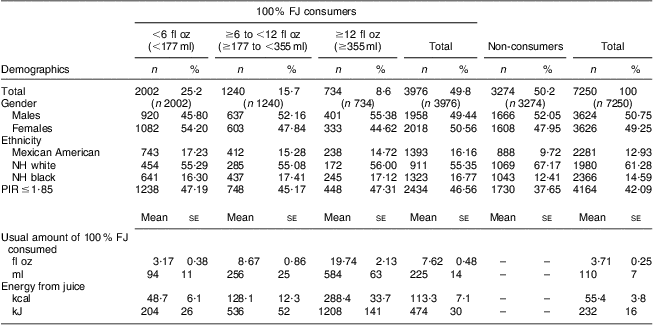
FJ, fruit juice; NHANES, National Health and Nutrition Examination Survey; NH, non-Hispanic; PIR, poverty index ratio.
Percentages are sample-weighted population percentages representing the percentage of the total population aged 2–18 years participating in the 2003–2006 NHANES.
The sample consisted of children and adolescents aged 2–18 years (n 7250); 23·0 % were aged 2–5 years, 33·7 % were 6–12 years and 43·3 % were 13–18 years. Approximately 51 % were males; 13 % were Mexican-Americans, 61 % were white and 15 % were black; thus 11 % did not report race, or were either biracial or of another race. Overall, approximately 55 % of the children consumed 100 % FJ; however, this was dependent on age: 71 % of 2–5-year-old children, 57 % of 6–12-year-old children and 45 % of 13–18-year-old adolescents consumed 100 % FJ. Approximately 55 % of whites consumed 100 % FJ, compared with 17 % of blacks and 16 % of Mexican Americans.
The usual per capita intake of 100 % FJ was 3·7 fl oz (109 ml), which contributed a mean of 55 kcal (232 kJ). Among 100 % FJ consumers, the usual intake of 100 % FJ was 7·6 fl oz (225 ml), which contributed a mean of 113 kcal (475 kJ). The amount of 100 % FJ consumed was highest among those aged 2–5 years: 5·8 fl oz (172 ml; 89 kcal (373 kJ)) per capita and 8·5 fl oz (251 ml; 131 kcal (547 kJ)) for consumers only. Approximately 50 % of 100 % FJ consumers consumed 0 to <6 fl oz (0 to <177 ml; 49 kcal (204 kJ)), whereas approximately 19 % consumed at least 12 fl oz (355 ml) of 100 % FJ (288 kcal (1208 kJ)).
Usual intake of key nutrients
The usual intake and the percentage of children and adolescents below the EAR or above the AI for key nutrients by consumption category are given in Table 3.
UI and percentage of individuals below the EAR or above the AI for key nutrients by consumption and non-consumption of 100 % FJ and age group: children and adolescents aged 2–18 years, NHANES 2003–2006
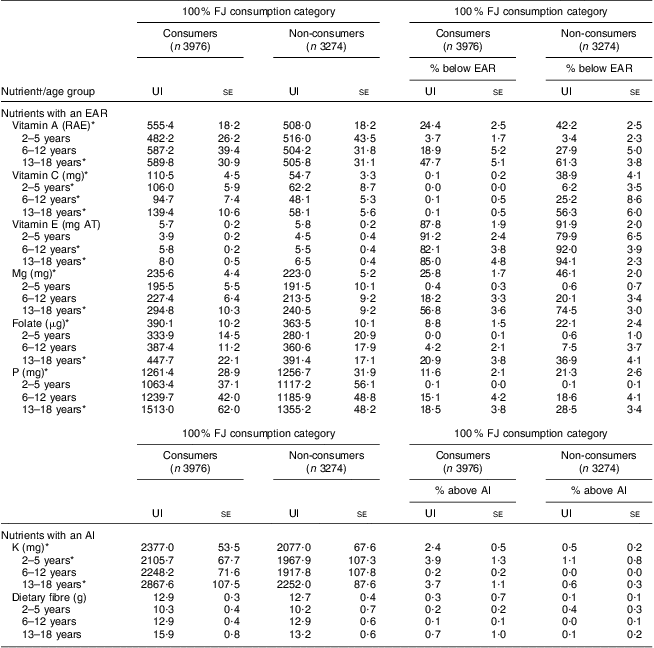
UI, usual intake; EAR, Estimated Average Requirement; AI, Adequate Intake; FJ, fruit juice; NHANES, National Health and Nutrition Examination Survey; RAE, retinol activity equivalents; AT, α-tocopherol.
*Indicates significant difference between 100 % FJ consumers and non-consumers (P < 0·05).
†Values in the first row for each nutrient correspond to all children aged 2–18 years.
The usual intakes of vitamins A (555·4 (se 18·2) retinol activity equivalents (RAE) v. 508·0 (se 18·2) RAE) and C (110·5 (se 4·5) mg v. 54·7 (se 3·3) mg), Mg (235·6 (se 4·4) mg v. 223·0 (se 5·2) mg), folate (390·1 (se 10·2) μg v. 363·5 (se 10·1) μg), P (1261·4 (se 28·9) mg v. 1256·7 (se 31·9) mg) and K (2377·0 (se 53·5) mg v. 2077·0 (se 67·6) mg) were significantly higher among 100 % FJ consumers aged 2–18 years compared with non-consumers. There was no difference in vitamin E or dietary fibre intake between consumers and non-consumers of 100 % FJ.
Consumers of 100 % FJ had a significantly lower percentage of individuals failing to meet the EAR for vitamins A (24·4 (se 2·5) % v. 42·2 (se 2·5) %) and C (0·1 (se 0·2) % v. 38·9 (se 4·1) %), Mg (25·8 (se 1·7) % v. 46·1 (se 2·0) %), folate (8·8 (se 1·5) % v. 22·1 (se 2·4) %) and P (11·6 (se 2·1) % v. 21·3 (se 22·6) %). Consumers of 100 % FJ also had a higher percentage of individuals above the AI for K (2·4 (se 0·5) % v. 0·5 (se 0·2) %).
Usual intake of key nutrients by age group
The usual intake and percentage of children and adolescents below the EAR or above the AI for key nutrients by age group are also given in Table 3.
In children aged 2–5 years, usual intakes of vitamin C (106·0 (se 5·9) mg v. 62·2 (se 8·7) mg) and K (2105·7 (se 67·7) mg v. 1967·9 (se 107·3) mg) were significantly higher among 100 % FJ consumers than non-consumers. In children 6–12 years of age, usual intakes of vitamins C (94·7 (se 7·4) mg v. 48·1 (se 5·3) mg) and E (5·8 (se 0·2) mg α-tocopherol (AT) v. 5·5 (se 0·4) mg AT) were higher among 100 % FJ consumers. In adolescents aged 13–18 years, usual intakes of vitamins A (589·8 (se 30·9) RAE v. 505·8 (se 31·1) RAE), C (139·4 (se 10·6) mg v. 58·1 (se 5·6) mg) and E (8·0 (se 0·5) mg AT v. 6·5 (se 0·4) mg AT), Mg (294·8 (se 10·3) mg v. 240·5 (se 9·2) mg), folate (447·7 (se 22·1) μg v. 391·4 (se 17·1) μg), P (1513·0 (se 62·0) mg v. 1355·2 (se 48·2) mg) and K (2867·6 (se 107·5) mg v. 2252·0 (se 87·6) mg) were all significantly higher among 100 % FJ consumers.
The percentage of children aged 2–5 years with inadequate intakes of vitamin C was 0·1 (se 0·2) % v. 38·9 (se 4·1) % in 100 % FJ consumers v. non-consumers, respectively; the percentage with intakes greater than the AI for K was 3·9 (se 1·3) % v. 1·1 (se 0·8) %, respectively. In children 6–12 years of age, the percentage of individuals with inadequate intakes of vitamins C and E were 0·1 (se 0·5) % v. 25·2 (se 8·6) % and 82·1 (se 3·8) % v. 92·0 (se 3·9) %, respectively.
In adolescents aged 13–18 years, the percentages of individuals with inadequate intakes among consumers v. non-consumers of 100 % FJ were as follows: 47·7 (se 5·1) % v. 61·3 (se 3·8) % for vitamin A; 0·1 (se 0·5) % v. 56·3 (se 6·0) % for vitamin C; 85·0 (se 4·8) % v. 94·1 (se 2·3) % for vitamin E; 56·8 (se 3·6) % v. 74·5 (se 3·0) % for Mg; 20·9 (se 3·8) % v. 36·9 (se 4·1) % for folate; and 18·5 (se 3·8) % v. 28·5 (se 3·4) % for P. The percentage of adolescents aged 13–18 years with intakes greater than the AI for K was 3·7 (se 1·1) % v. 0·6 (se 0·3) %.
Discussion
The present study showed that the percentage of children and adolescents consuming 100 % FJ was age dependent; younger children consumed more 100 % FJ than adolescents. This is consistent with results from other studies( Reference Nicklas, O'Neil and Kleinman 9 , Reference O'Neil, Nicklas and Kleinman 10 , Reference Lorson, Melgar-Quinonez and Taylor 30 , Reference Rampersaud, Bailey and Kauwell 31 ). Previous studies using 1 d intakes from 1999–2002 NHANES data showed that 43 % of children( Reference Nicklas, O'Neil and Kleinman 9 ) and 28 % of adolescents( Reference O'Neil, Nicklas and Kleinman 10 ) consumed 100 % FJ. In the current study, the NCI method was used to determine usual intake of 100 % FJ rather than using a single recall day. The use of usual intake to assess 100 % FJ intake is based on two 24 h recalls and while somewhat better than using a single 24 h recall, we still could have misclassified some participants as non-consumers (although this would have most likely had the effect of biasing our results to the null). The relatively low percentage of 100 % FJ consumers may be one reason why less than 10 % of children meet the recommended daily number of fruit servings( Reference Guenther, Dodd and Reedy 32 , Reference Bazzano 33 ).
The present study also showed that consumption of 100 % FJ was not excessive on a population-wide basis. The mean amount of 100 % FJ consumed was 3·7 fl oz (109 ml), which contributed only 55 kcal (232 kJ) to the diet. The American Academy of Pediatrics (AAP) recommends that 100 % FJ be limited to 4 to 6 fl oz/d (118 to 177 ml/d) for children aged 1–6 years and 8 to 12 fl oz/d (237 to 355 ml/d) for children and adolescents aged 7–18 years; thus, the usual amount of 100 % FJ consumed by our population was well within the AAP recommendations( 34 ). However, there were subgroups of consumers who exceeded these recommendations. Overall, 53 % of 2–5-year-old children who consumed 100 % FJ exceeded the AAP recommendations. Thirteen per cent of 6–12-year-old children and 22 % of 13–18-year-old adolescents also exceeded the recommendations. Only 9 % of children consumed 12 fl oz (355 ml) or more of 100 % FJ daily which contributed a mean of 288 kcal (1208 kJ). However, there was no indication of the effect of this consumption level on total dietary intake or dietary patterns. We know from previous research that consumption of 100 % FJ is associated with higher intakes of fruit and some vegetables, higher intake levels of key nutrients and higher diet quality( Reference Nicklas, O'Neil and Kleinman 9 , Reference O'Neil, Nicklas and Kleinman 10 , Reference O'Neil, Nicklas and Zanovec 17 ). Further, a critical review showed that 100 % FJ consumption was not associated with increased weight or an increased likelihood of obesity( Reference O'Neil and Nicklas 14 ). What is not known is whether children consuming 100 % FJ have an overall healthier lifestyle, including higher levels of physical activity. The overall association of 100 % FJ consumption with dietary and other lifestyle patterns clearly merits further study. Nutrition education provided to older children and parents of children of all ages should emphasize diets that conform to the DGA and provide a balanced intake of whole grains, fruit (including 100 % FJ), vegetables, low-fat dairy and lean meats( 35 ). Further, these groups should be counselled that overconsumption of any food group can lead to excessive energy intake.
Overall intake in children and adolescents aged 2–18 years was slightly lower than that reported previously for children aged 2–11 years (4·1 fl oz (121 ml))( Reference Nicklas, O'Neil and Kleinman 9 ) and the same as previously reported in adolescents aged 12–18 years (3·7 oz (109 ml))( Reference O'Neil, Nicklas and Kleinman 10 ). Reasons for differences might include that mean intake of a single 24 h dietary recall was used in the analyses in the previous studies, and the age groups studied were slightly different. It is also possible that there have been secular changes in 100 % FJ consumption between the 1999–2002 data presented earlier and the 2003–2006 data presented herein.
Currently, the only specific recommendations for consumption of 100 % FJ by children are those of the AAP. These are not evidence-based and the rationale for these recommendations was simply the statement that ‘excessive FJ consumption may be associated with over- and under-nutrition’. It is important to establish consistent, clear and scientifically supported recommendations for consumption of 100 % FJ by children and adolescents and that these recommendations are appropriately communicated to the public. It is also important that consumption of 100 % FJ by children and adolescents be monitored by parents and practitioners to ensure that 100 % FJ consumption meets but does not exceed current recommendations.
Many children and adolescents fail to meet recommendations for food groups, including fruit( Reference Guenther, Dodd and Reedy 32 ), and nutrients, especially micronutrients, in their diets. The aim of the present study was to compare the intake of shortfall nutrients – vitamins A, C and E; Mg; folate; P; K; and dietary fibre( 19 ) – in children and adolescents who did or did not consume 100 % FJ. With the exception of vitamin E and dietary fibre, consumption of 100 % FJ was associated with higher usual intake of all of these nutrients, as well as with a higher likelihood of consumers meeting the recommendations.
Although many types of 100 % FJ, especially citrus juices, are good sources of β-carotene, juices are not especially good sources of vitamin A( 16 ). For example, 8 fl oz (237 ml) of orange juice contains only 25 RAE. This compares with the recommendation of 300 μg (1 μg = 1 RAE)/d for children aged 1–3 years and of 900 μg/d for males aged 14–18 years. That 100 % FJ consumers were more likely than non-consumers to exceed the EAR for vitamin A suggests that 100 % FJ was consumed with other vitamin A-rich foods, such a milk or ready-to-eat cereals( Reference Subar, Krebs-Smith and Cook 36 ).
Vitamin C has been identified as a nutrient of concern for all age groups including children( 19 ). Citrus and tomato juices are excellent sources of vitamin C; one 8 fl oz (237 ml) serving of orange juice, the most commonly consumed fruit juice in the USA, provides the DRI of vitamin C for all age groups( 16 ). The present study showed that 100 % FJ consumers are more likely to exceed the EAR for vitamin C than non-consumers.
Consumers of 100 % FJ were more likely to exceed the EAR for folate than non-consumers. Bailey et al. ( Reference Bailey, McDowell and Dodd 37 ) recently showed that when diet alone was considered only 3 % of children aged 9–13 years consumed less than the EAR; however, for adolescent females and males 22 % and 9 %, respectively, consumed less than the EAR( Reference Bailey, Dodd and Gahche 38 ). In our study, even in 100 % FJ consumers, only 8·8 % of children/adolescents failed to meet the EAR for folate.
K has also been identified as a nutrient of public health concern by the 2010 DGA( 19 ). Virtually no age or gender groups meet the recommendations for K( Reference Nicklas, O'Neil and Fulgoni 39 ); in children and adolescents, this may reflect the high intake of processed foods and the low intakes of fruit, vegetables and low-fat dairy consistently reported in this population. Low intake of K, coupled with high intake of dietary Na and other lifestyle factors, also seen in children and adolescents, has been linked with hypertension( Reference Obarzanek, Wu and Cutler 40 ). Consumers of 100 % FJ were more likely to exceed the AI for K than non-consumers; however, all age groups had a low likelihood of exceeding the AI. Increasing K intake, through increased intake of fruit (including 100 % FJ), vegetables and low-fat dairy, is a major public health objective( 41 ).
Finally, it is important to note that there was no difference in dietary fibre intake between consumers and non-consumers of 100 % FJ. This is in contrast to the findings of the modelling study described in the 2005 DGA report that showed that dietary fibre intake would be lower if whole fruit were replaced with 100 % FJ( 18 ). Consumption of 100 % FJ was associated with higher levels of consumption of whole fruit (data not shown) which may have contributed to the fibre intake of consumers. Overall, however, dietary fibre intake was low in all age groups.
Twenty-four hour recalls have several inherent limitations. Participants relied on memory to self-report dietary intakes and, therefore, data were subject to non-sampling errors such as under-reporting of energy and examiner effects. Caregivers reported or assisted with the 24 h recalls of 2–11-year-old children; parents can often report accurately what children eat in the home( Reference Basch, Shea and Arliss 42 ), but may not know what their children consume outside the home( Reference Baranowski, Sprague and Baranowski 43 ), which could result in reporting errors( Reference Schoeller 44 ). It should also be acknowledged that it is possible that those giving the recalls were unclear if they were consuming 100 % FJ or a fruit drink/ade. This confusion is also reflected in several studies reported in the literature that have assessed ‘juice’ consumption, but have been unclear as to whether this was 100 % FJ or fruit drinks/ades( Reference Tanasescu, Ferris and Himmelgreen 1 – Reference Welsh, Cogswell and Rogers 3 ). The AI cannot be used to determine the prevalence of inadequate intake in a group. Rather, if the mean intake of a group is at or above the AI, and the variance of intake in the group of interest is similar to the variance of intake used in the population originally used to set the AI, the prevalence of inadequate nutrient intakes is likely to be low( 29 ). Finally, because causal inferences cannot be drawn from NHANES analyses and due to multicollinearity of dietary intake, it is possible that foods other than 100 % FJ contributed to differences in nutrient intake of the participants.
Conclusions
Consumption of 100 % FJ by the participants of the 2003–2006 NHANES did not exceed the recommendations of the AAP. It should be noted that some children may exceed the AAP recommendations and they or their parents may need to be advised accordingly. Consumption of 100 % FJ was associated with an increase above the usual intake of vitamins A and C, folate, Mg, P and K. There were no differences in usual intake of vitamin E or dietary fibre. Consumption of 100 % FJ was also associated with an increased likelihood of meeting the recommendations for shortfall nutrients. Thus, 100 % FJ consumption was associated with improved nutrient adequacy and can contribute to a healthy diet.
Acknowledgements
This work is a publication of the US Department of Agriculture/Agricultural Research Service (USDA/ARS) Children's Nutrition Research Center, Department of Pediatrics, Baylor College of Medicine (Houston, TX). The contents of this publication do not necessarily reflect the views or policies of the USDA, nor does mention of trade names, commercial products or organizations imply endorsement from the US Government. This research project was supported by the USDA/ARS through specific cooperative agreement 58-6250-6-003 and the Juice Products Association. Partial support was received from the USDA Hatch Project LAB 93951. Other than the partial funding of this study from the Juice Products Association, the sponsor had no role in the design and conduction of the study; the collection, management, analysis and interpretation of the data; or the preparation and approval of the manuscript. The authors declare that they have no competing interests. T.A.N., C.E.O. and V.L.F. designed the study and had full access to all the data; they take responsibility for the integrity of the data and the accuracy of the data analysis. M.Z. had full access to all data and worked on collating the data and data re-analyses. C.E.O. and T.A.N. were the principal authors; however, all authors were involved in the review of the literature and the writing and critical editing of the manuscript.



