





Introduction
Sweetpotato is an important specialty crop in the United States, ranking ninth in commodity sales among organic vegetable crops (USDA-NASS 2022). Sweetpotato production in the United States fluctuates in response to market demand (USDA-ERS 2017). For example, sweetpotato production declined when market demand fell in the 1930s (Kays and Kays Reference Kays and Kays1998) but production has increased since 2004 when sweetpotatoes gained popularity as a healthy food (Kays Reference Kays2005; USDA-ERS 2017). Along with the rise in conventional sweetpotato production area, the popularity of certified organic sweetpotatoes has grown significantly (Wadl et al. Reference Wadl, Williams, Horry and Ward2022). The organic sweetpotato area in the United States has nearly doubled over the past decade, increasing from 1,707 ha in 2007 to 3,340 ha in 2021 (USDA-NASS 2008, 2022). However, management of weeds and plant–parasitic nematodes remains a continuous challenge for organic sweetpotato growers.
Yellow nutsedge, purple nutsedge (Cyperus rotundus L.), palmer amaranth [Amaranthus palmeri (S.)], large crabgrass [Digitaria sanguinalis (L.) Scop.], barnyardgrass [Echinochloa crus-galli (L.) P. Beauv.], and swinecress [Coronopus didymus (L.)] are important problematic weeds in sweetpotato production in the southeastern United States (Wadl et al. Reference Wadl, Campbell, Rutter, Williams, Murphey, Culbreath and Cutulle2023). Meyers and Shankle (Reference Meyers and Shankle2016) reported that marketable sweetpotato yield was reduced by 6% to 80% when yellow nutsedge densities ranged from 5 to 90 shoots m−2. Season-long interference of Amaranthus species can reduce sweetpotato yields by up to 85% (Basinger et al. Reference Basinger, Jennings, Monks, Jordan, Everman, Hestir, Waldschmidt, Smith and Brownie2019; Meyers et al. Reference Meyers, Jennings, Schultheis and Monks2010; Semidey et al. Reference Semidey, Liu and Ortiz1987; Smith et al. Reference Smith, Jennings, Monks, Chaudhari, Schultheis and Reberg-Horton2020), and large crabgrass has caused a 35% to 75% reduction in sweetpotato yield with densities of 1 to 16 plants m−1 per row (Basinger et al. Reference Basinger, Jennings, Monks, Jordan, Everman, Hestir, Waldschmidt, Smith and Brownie2019).
Among plant–parasitic nematodes, the southern root-knot nematode (SRKN) negatively affects the yield and quality of sweetpotato tubers (Dutta et al. Reference Dutta, Coolong, Hajihassani, Sparks and Culpepper2014). The most common belowground symptoms of SRKN infection include distortion, galling, and cracking of tubers, whereas chlorosis, wilting, and stunted growth are primary aboveground symptoms (Clark et al. Reference Clark, Dukes and Moyer1992; Lawrence et al. Reference Lawrence, Clark and Wright1986). Furthermore, previous studies have shown that yellow nutsedge and other common weeds of sweetpotato can serve as hosts for SRKN (Kokalis-Burelle and Rosskopf Reference Kokalis-Burelle and Rosskopf2012), and an increase in SRKN populations with an increase in yellow nutsedge density was reported by Ou et al. (Reference Ou, Murray, Thomas, Schroeder and Libbin2008). Given the potential role of weeds as hosts for root-knot nematodes, it is imperative to explore and develop acceptable organic pest management strategies that are effective against both pests.
Anaerobic soil disinfestation (ASD) has emerged as a promising alternative to chemical soil fumigation (Butler et al. Reference Butler, Kokalis-Burelle, Albano, McCollum, Muramoto and Shennan2014). ASD has a broad-spectrum inhibitory effect on weeds and soil-borne pathogens, including nematodes (Shrestha et al. Reference Shrestha, Auge and Butler2016). ASD is facilitated by incorporating decomposable carbon amendments into the soil, followed by tarping the soil with impermeable plastic mulch to prevent any gaseous exchange and irrigating the soil to saturation (Blok et al. Reference Blok, Lamers, Termorshuizen and Bollen2000). The decomposition of added carbon amendments creates an anaerobic soil environment and leads to a shift in soil microbial communities; formation of organic acids and volatile compounds; and changes in soil pH, metal ions, and oxygen concentrations. These changes during the ASD process create an unfavorable soil environment for weeds and soil-borne pathogens (Momma et al. Reference Momma, Kobara, Uematsu, Kita and Shinmura2013).
With locally available carbon amendments, ASD can be used anywhere for weed and pest suppression (Butler et al. Reference Butler, Rosskopf, Kokalis-Burelle, Albano, Muramoto and Shennan2012a; Singh et al. Reference Singh, Ward, Levi and Cutulle2022a). In previous research, composted poultry manure and molasses have been widely utilized as carbon amendments for ASD in the United States for weed and nematode control (Muramoto et al. Reference Muramoto, Henry, Rosskopf, Momma, Broome, Gioia, Goodhue, Attanayake, Cai, Daugovish, Fernandez-Bayo, Kortman, Haffa, Hewavitharana, Kobara, Molendijk, Pan and Shennan2025). Molasses is a byproduct of the sugarcane industry. In regions where sugarcane is not a prominent crop, the use of molasses as a carbon amendment for ASD may increase input costs. It is crucial to explore locally available alternative carbon amendments to make ASD more economically viable. Cotton [Gossypium hirsutum (L.)] is grown widely in the southeastern United States, including South Carolina. In 2024, cotton was planted on 91,093 ha in South Carolina (USDA-NASS 2024). As of result of the large cotton acreage, cotton seed meal (CSM) is widely available in the state. Major Brassica crops grown in southeastern United States include broccoli [B. oleracea var. italica (Plenck)], cabbage [B. oleracea var. capitata (L.)], cauliflower [B. oleracea var. botrytis (L.)], collards [B. oleracea var. viridis (L.)], and kale [B. oleracea var. sabellica (L.)] (Kemble Reference Kemble2025). Many spring-planted Brassica crops are harvested around the second week of May. The residue after Brassica crop harvest can be utilized as a carbon amendment for ASD. In the present study, to enhance the economic viability of ASD, CSM and Brassica crop residue (BR) were evaluated as alternative carbon amendments to chicken manure and molasses for ASD.
Sweetpotato exhibits two primary growth habits: bunching (shorter internodes and erect to semi-erect growth) and spreading (longer internodes and trailing growth). Characteristics of bunching sweetpotato clones include a denser canopy with greater branching and height during early growth stages compared with spreading type clones, which allow less light penetration and weed seed germination. Bunching-type sweetpotato clones have a greater ability for weed suppression compared with spreading types that may result from the more effective shading provided by the denser canopy during early growth (Cooper et al. Reference Cooper, Meyers, Arana, Jennings, Adair, Gibson and Johnson2024; Harrison and Jackson Reference Harrison and Jackson2011; LaBonte et al. Reference La Bonte, Harrison and Motsenbocker1999; Wadl et al. Reference Wadl, Campbell, Rutter, Williams, Murphey, Culbreath and Cutulle2023).
Although plasticulture is not as widely used in sweetpotato production as it is in other vegetable crop production, some growers of organic and conventional sweetpotatoes have used it to control weeds (Wadl et al. Reference Wadl, Williams, Horry and Ward2022). Plastic mulches are extensively used in specialty crop production systems because they maintain uniform soil moisture, promote early vegetative growth, increase yield, and effectively suppress most broadleaf and grass weeds (Lamont Reference Lamont2005; Zhang et al. Reference Zhang, Miles, Ghimire, Benedict, Zasada and DeVetter2019). Yellow nutsedge exhibits varying responses to different types of plastic mulches (Patterson Reference Patterson1998; Webster Reference Webster2005). Notably, under opaque plastic mulch, darkness results in elongated rhizomes with sharp tips that readily penetrate opaque plastic mulch. In contrast, under translucent/transparent mulches, rhizome elongation ceases upon detection of light, and leaf expansion occurs instead, resulting in nutsedge shoots being trapped under translucent/transparent plastic mulches (Chase et al. Reference Chase, Sinclair, Shilling, Gilreath and Locascio1998). Opaque polyethylene mulch, however, is not an effective control measure for nutsedge species. Morphological changes under opaque plastic mulches allow yellow nutsedge to puncture plastic mulch, diminishing plastic mulch longevity and durability in addition to competing with crops for resources (Adcock et al. Reference Adcock, Foshee, Wehtje and Gilliam2008; Santos et al. Reference Santos, Morales-Payan, Stall, Bewick and Shilling1997). Holes in plastic mulch allow other grass and broadleaf weed species to emerge, thereby intensifying crop weed competition and consequently reducing yield (Norsworthy et al. Reference Norsworthy, Oliveira, Jha, Malik, Buckelew, Jennings and Monks2008). Considering the limitation of opaque plastic mulch for yellow nutsedge suppression, we proposed using bunch type sweetpotato cultivars with ASD in plasticulture sweetpotato production systems to serve as an additional weed management tool for early weed suppression.
Recent studies in South Carolina have shown that ASD is a promising weed and nematode management technique in sweetpotato production under greenhouse conditions (Singh et al. Reference Singh, Rutter, Wadl, Campbell, Khanal and Cutulle2024, Reference Singh, Cutulle, Rutter, Wadl, Ward and Khanal2025). Therefore, the objectives of this study were to 1) evaluate the effect of various carbon amendments (Brassica residue [BR], chicken manure + molasses [CM+M], and cotton seed meal [CSM]) on anaerobicity; and 2) evaluate the combined effects of ASD and sweetpotato plant architecture on yellow nutsedge density, SRKN population, and sweetpotato yield under field conditions.
Materials and Methods
Experimental Site Location and Field Preparation
Field experiments were conducted at the Coastal Research and Education Center, at Clemson University, in Charleston, South Carolina (32.79°N, 80.06°W) during the 2023 and 2024 growing seasons in a Yonges loamy fine sand soil type (Aeric Paleaquults) with 1.2% organic matter, pH 6.7 (Supplementary Table S1). The experimental site was selected based on the history of vegetable production and potentially high natural infestations of yellow nutsedge and SRKN. A rotary mower (model 2212; Bush Hog, Selma, AL) was used to mow the winter annual weeds and spring cover crops (winter clover [Trifolium repens L.] and Italian rye grass [Lolium multiflorum Lam.]), followed by three passes of a disc harrow (42 Series Offset Wheel Disc Harrows; Tufline Manufacturing, Columbus, MS) and field cultivator (10 Perfecta; Unverferth Manufacturing, Kalida, OH). Prior to the bed formation, 454 kg ha−1 of 10-2-8 N-P-K fertilizer (Nature Safe; New Country Organics, Waynesboro, VA) was applied and mixed with a rotary tiller (RT30 Series; John Deere, Moline, IL). The quantity of fertilizer applied in each carbon amendment treatment plot was adjusted according to the amount of nitrogen content provided by each carbon amendment treatment to result in an equivalent rate of nitrogen application. All carbon amendments were applied evenly to the center of each treatment plot in a strip and mixed with the upper 15 cm of the soil using two passes of the rotary tiller. Then, a tractor-mounted single-row super plastic bedder and drip tape implement (Mini Combo Superbedder and Plastic Layer’ Kennco Manufacturing, Ruskin, FL) was used for the bed formation and covered with white-on-black totally impermeable film plastic mulch (Tri Est Ag Group, Greenville, NC). Drip irrigation tape (Toro Aqua-Traxx Drip Tape; The Toro Company, Bloomington, MN) was installed in the center of each bed as the plastic mulch was applied. To initiate ASD, 5 cm of water was applied to all treatment plots via drip irrigation. ASD was terminated after 3 wk of initiation by punching the planting holes at 0.3 m apart with a tractor-mounted plastic hole puncher. Organic sweetpotato slips (approximately 30 cm long) were planted 0.3 m apart in the center of each bed by hand 1 wk after ASD.
Experimental Design and Treatments
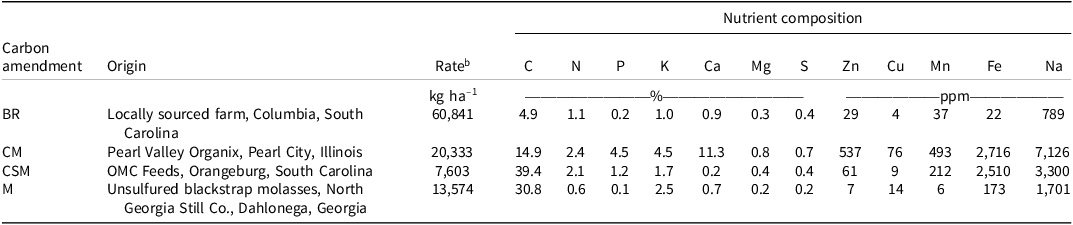
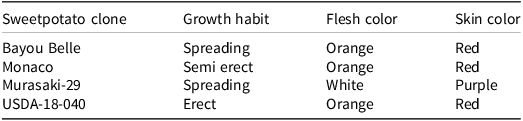
In both years, the experiment consisted of a split-plot treatment arrangement with main plots arranged in a randomized complete block design with four replications. Carbon amendment BR, CM+M, CSM, and the UC for ASD together constituted the main plot factor, and sweetpotato clone (Bayou Belle, Monaco, Murasaki-29, and USDA-18-040) was the subplot factor. Brassica residue consisted of the remnants of broccoli shoots after harvest of marketable heads. No carbon amendment was applied to the UC treatment. The sweetpotato clones Murasaki-29 and Bayou Belle had spreading growth habits (maximum vine length >150 cm); whereas USDA-18-040 and Monaco had bunching growth habits (maximum main vine length <75 cm or 75 to 150 cm, respectively). Sweetpotato clone USDA-18-040 is an advanced selection from the U.S. Vegetable Laboratory, in Charleston, South Carolina, sweetpotato breeding program. Each carbon amendment treatment plot (main plot) was 18.2 m long and 0.8 m wide and contained one bed, and each main plot was further subdivided into four subplots 3.0 m long and 0.8 m wide prior to planting the sweetpotato clones. The rates of BR and CSM were standardized to the amount of carbon provided by CM, thereby ensuring that each amendment provided a carbon content equivalent to that of the CM treatment (Singh et al. Reference Singh, Ward, Wechter, Katawczik, Farmaha, Suseela and Cutulle2022b). Brassica residue was finely chopped using a wood chipper shredder and mulcher (Landworks; Townsend Montrose, CO) prior to application. Detailed information on application rates and nutritional composition of carbon amendments, and sweetpotato clones are provided in Tables 1 and 2, respectively.
Application rates and nutrient composition of carbon amendments employed in this study. a

Table 1. Long description
The table presents the nutrient composition of different carbon amendments used in a study. It includes details such as the origin of each amendment, the application rate in kilograms per hectare, and the percentage content of various nutrients like carbon, nitrogen, phosphorus, potassium, calcium, magnesium, sulfur, zinc, copper, manganese, iron, and sodium. The amendments listed are Brassica residue from Columbia, South Carolina; Pearl Valley Organix compost from Pearl City, Illinois; OMC Feeds composted swine manure from Orangeburg, South Carolina; and unsulfured blackstrap molasses from Dahlonega, Georgia. Each amendment’s nutrient content is detailed, providing a comprehensive overview of their composition.
a Abbreviations: BR, Brassica residue; C, carbon; Ca, calcium; CM, chicken manure; Cu, copper; CSM, cotton seed meal; Fe, iron; K, potassium; M, molasses; Mg, magnesium; Mn, manganese; N, nitrogen; Na, sodium; P, phosphorous; ppm, parts per million; S, sulfur; UC, unamended control; Zn, zinc.
b The rate of molasses is measured in liters per hectare (L ha–1).
Flesh and skin color, germplasm source, and origin of four sweetpotato clones evaluated with different carbon sources using a plasticulture production system.

Table 2. Long description
The table presents data on four sweetpotato clones: Bayou Belle, Monaco, Murasaki-29, and USDA-18-040. It includes three columns: Growth habit, Flesh color, and Skin color. Bayou Belle has a spreading growth habit, orange flesh, and red skin. Monaco has a semi-erect growth habit, orange flesh, and red skin. Murasaki-29 has a spreading growth habit, white flesh, and purple skin. USDA-18-040 has an erect growth habit, orange flesh, and red skin.
Data Collection
To monitor anaerobicity, one oxidation reduction potential (ORP) sensor (S550C-ORP; Sensorex, Garden Grove, CA) was installed at a depth of 15 cm in each carbon amendment treatment (main plot) during the ASD period. Soil ORP values were recorded hourly with a data logger system (CR-1000X with AM 16/32 multiplexers; Campbell Scientific, Logan, UT) and used to determine the critical soil redox potential (CEh = 595 mV − 60 mV [soil pH]). Cumulative soil anaerobicity was calculated for the 3-wk ASD period by summation of the absolute value of the difference between given redox potential and critical soil redox potential (Butler et al. Reference Butler, Kokalis-Burelle, Muramoto, Shennan, McCollum and Rosskopf2012b; Fiedler et al. Reference Fiedler, Vepraskas and Richardson2007; Rabenhorst and Castenson Reference Rabenhorst and Castenson2005). Individual shoot counts of yellow nutsedge were recorded at ASD termination from each main plot (18.2 × 0.8 m2), and at 6 and 10 wk after sweetpotato clones were planted (WAP) from each subplot (3.0 × 0.8 m²) and presented as yellow nutsedge density count per square meter. Grass weeds also emerged through planting holes made for planting sweetpotato clones, and their counts were recorded at 6 and 10 WAP from each subplot. Major grass weed species included barnyardgrass, large crabgrass and goosegrass [(Eleusine indica (L.)]. The counts of large crabgrass and goosegrass were negligible, resulting in only barnyardgrass counts being recorded at 6 and 10 WAP, and presented as density count per square meter. Sweetpotato plant vigor was recorded at 4, 8 and 12 WAP from each subplot based on a visual estimate of 0 to 10 (where 0 = the sweetpotato plants were completely dead, 1–2 = extremely poor and minimal sweetpotato plant growth, 3–4 = poor and fair sweetpotato plant growth, 5–6 = moderate or average sweetpotato plant growth, 7–8 = vigorous and above average sweetpotato plant growth, and 9–10 = very vigorous and excellent sweetpotato plant growth). Data on population of SRKN were recorded at initiation and termination of ASD, mid-season (8 WAP), and harvest (16 WAP). For each sampling, multiple soil samples were taken in a zig-zag pattern from each subplot to a depth of 25 cm with a 12-inch (31 cm) soil probe and combined into a composite soil sample that was stored at 4 C. Subsequently, SRKN were extracted within 2 wk from 100 cm3 of soil taken from each composite sample using the centrifugal-flotation technique (Jenkins Reference Jenkins1964). SRKN were enumerated at 40× magnification within 72 h of extraction using a stereoscopic microscope (American Optical, Southbridge, MA). The average soil population density of SRKN before initiation of ASD was 108 nematodes per 100 cm3 of soil. At 16 WAP, a flail mower was used to remove the sweetpotato plant foliage and a single-row potato digger (Model D-10M; U.S. Small Farm Equipment, Worland, WY) was used to harvest tubers from each subplot (3.0 × 0.8 m²) and yield was calculated as kilograms per hectare (kg ha−1). The harvested tubers were weighed and graded using the following grades: canner (5.08 to 17.78 cm long and/or 2.54 to 5.08 cm diameter), U.S. No. 1 (7.62 to 22.86 cm long and/or 5.08 to 8.89 cm diameter), and jumbo (>22.86 cm long and/or >8.89 cm diameter) (USDA-AMS 2005). Marketable sweetpotato yield was calculated by the summation of canner tubers, U.S. No. 1 tubers, and jumbo tubers.
Tuber Sugar Quantification
A representative U.S. No. 1 tuber from each treatment was used to determine glucose, fructose, and sucrose content. Representative U.S. No. 1 tuber used for sugar quantification was selected based on standard grading criteria, which include uniform size and shape, and free from any mechanical damage or visible defects. Sweetpotato tubers were cured at 85% relative humidity and 29.4 C for 10 d before sugar analysis. A 1-cm-diam cylinder was obtained from the center of the tuber using a cork borer, from which a 3-mm-thick disk was sliced, placed into a 2-mL polypropylene tube, flash-frozen in liquid nitrogen, and stored at −80 C. For preparation, samples were lyophilized, and ground to a fine powder. A sample (5 mg) was homogenized with 500 µL of 1:1 methanol:water solution and 150 µL chloroform, centrifuged at 13,200 rpm at 4 C for 5 min, and 375 µL of supernatant was aliquoted into a fresh 2-mL polypropylene tube and dried in a vacuum concentrator. The pellet was resuspended in 750 µL of water, followed by the addition of 10 mg of polyvinyl pyrrolidone, agitation, and centrifugation at 14,000 rpm at 4 C for 20 min. A 150-µL aliquot of supernatant was added to a 96-well microtiter polystyrene microplate well and enzymatic analysis was carried out on a microplate reader (SpectraMax ID3; Molecular Devices) according to the method described by Gomez et al. (Reference Gomez, Bancel, Rubio and Vercambre2007). Calibration curves were prepared with glucose, fructose, and sucrose, ranging from 0 to 0.066 g L−1, and samples were diluted 10 to 30 times in water to fall within that range. Sugar content was expressed as milligrams per gram (mg g−1) of dry weight using three technical replicates. Technical replicates were measurements obtained from the same extract of a single tuber and used to assess equipment or protocol variability.
Data Analysis
All data were subjected to ANOVA in JMP Pro 18 software (SAS Institute, Cary, NC). Year was considered a random effect to enable inference across various environmental conditions (Blouin et al. Reference Blouin, Webster and Bond2011). Therefore, the linear model for the ANOVA included carbon amendment, sweetpotato clone, and their interactions as fixed effects, and replication and year as random effects. The analysis residuals were evaluated for homogeneity of variance and normality of residuals using Shapiro-Wilk and Anderson-Darling tests. Based on these residual tests, data for cumulative anaerobicity was cube root transformed, whereas data for yellow nutsedge density (at 6 WAP and 10 WAP), barnyardgrass density (at 6 WAP and 10 WAP) and SRKN density (at 8 WAP and 16 WAP) were log transformed for variance stabilization and corrected for non-normality. However, back-transformed data are presented for the treatment means separation. The Fisher LSD test (P < 0.05) was used for the treatment separation.
Overall treatment means for cumulative anaerobicity, yellow nutsedge density (at ASD termination, barnyardgrass density (at 6 WAP and 10 WAP), and SRKN population (at ASD termination, mid-season [8 WAP] and harvest [16 WAP]), sweetpotato plant vigor ratings (at 4, 8, and 12 WAP), marketable sweetpotato yield and sugar content of sweetpotato tuber were reported due to absence of year by treatment interactions. Yellow nutsedge densities at 6 and 10 WAP showed a significant year by treatment interaction during analysis (P < 0.05). Interaction plots were created and revealed that the interaction was due to changes in the magnitude of the treatment mean differences from year to year; not changes in the direction of the treatment mean differences from year to year. Therefore, overall treatment mean differences are reported, not treatment mean differences for each year individually.
Results and Discussion
Cumulative Anaerobicity
The carbon amendments employed in this study significantly affected cumulative anaerobicity during the 3 wk of the ASD period (Table 3). The CM+M and CSM carbon amendments for ASD increased the cumulative anaerobicity compared with UC anaerobicity. Cumulative anaerobicity values under CM+M and CSM treatments were 224% and 282% higher relative to the UC. However, under BR treatment anaerobicity values increased by just 57% over the UC. Higher anaerobicity values observed with both CM+M and CSM treatments indicated that the soil remained anaerobic for a longer duration with these treatments. Although all treatments had the same amount of carbon and the same 3-wk duration, the carbon sources might have differed in their biochemical composition and in the rate of microbial decomposition. Carbon amendments such as molasses may contain soluble sugars and carbohydrates that are rapidly fermented, leading to higher anaerobic conditions (McCarty et al. Reference McCarty, Inwood, Ownley, Sams, Wszelaki and Butler2014). In contrast, BR contains more structural compounds such as lignin, which inhibit microbial decomposition and fermentation (Talwar et al. Reference Talwar, Upadhyay, Verma, Singh, Lindenberger, Pareek, Kovalev, Zhuravleva, Litti, Masakapalli and Vivekanand2024). As a result, oxygen depletion may occur more slowly with a BR treatment, leading to lower anaerobicity values than CM+M and CSM treatments. Results on cumulative anaerobicity were similar to those reported by Butler et al. (Reference Butler, Kokalis-Burelle, Muramoto, Shennan, McCollum and Rosskopf2012b, Reference Butler, Kokalis-Burelle, Albano, McCollum, Muramoto and Shennan2014) and Singh et al. (Reference Singh, Rutter, Wadl, Campbell, Khanal and Cutulle2024), who reported higher values with CM+M and CSM than an untreated control. Cumulative anaerobicity of 20,000 mV h to 45,0000 mV h was observed with mustard/arugula-induced ASD (McCarty et al. Reference McCarty, Inwood, Ownley, Sams, Wszelaki and Butler2014), comparable to that observed in the current study for BR. The achievement of higher cumulative anaerobicity during the ASD process is a strong indicator of the potential for successful weed and soil-borne pathogen suppression (Di Gioia et al. Reference Di Gioia, Ozores-Hampton, Zhao, Thomas, Wilson, Li, Hong, Albano, Swisher and Rosskopf2017). The labile organic carbon amendments applied via CM+M and CSM served as the food substrate for microorganisms. The increased microbial respiration in response to organic amendments leads to depletion of oxygen and subsequent solely anaerobic decomposition (Momma Reference Momma2015; Runia et al. Reference Runia, Thoden, Molendijk, Berg, Termorshuizen, Streminska, Van der Wurff, Feil and Meints2014). The various microbial volatile compounds (methyl sulfides, 2-ethylhexanol, and dimethyl trisulfide), organic acids (butyric acid and acetic acid), anaerobic gases (ammonia, carbon dioxide, nitrous oxide, and methane), and enzymes are released during the ASD process (Momma Reference Momma2008, Reference Momma2015; Runia et al. Reference Runia, Thoden, Molendijk, Berg, Termorshuizen, Streminska, Van der Wurff, Feil and Meints2014). Furthermore, the production of these organic compounds and gases, coupled with elevated temperatures and changes in soil microbial communities, ultimately leads to the development of anaerobic conditions (Butler et al. Reference Butler, Kokalis-Burelle, Muramoto, Shennan, McCollum and Rosskopf2012b; Hewavitharana et al. Reference Hewavitharana, Ruddell and Mazzola2014, Reference Hewavitharana, Shennan, Muramoto and Mazzola2015).
Cumulative anaerobicity, yellow nutsedge density, and southern root-knot nematode population as influenced by carbon amendment at the termination of anaerobic soil disinfestation. a,b

Table 3. Long description
The table presents data on cumulative anaerobicity, yellow nutsedge density, and southern root-knot nematode population as influenced by different carbon amendments at the termination of anaerobic soil disinfestation. It consists of five rows and four columns. The columns are labeled as Carbon amendment, Cumulative anaerobicity, Yellow nutsedge density, and Southern root-knot nematode population. The rows are labeled as UC, BR, CM + M, CSM, and P-value. The cumulative anaerobicity is measured in millivolts hour, yellow nutsedge density is measured in density per square meter, and southern root-knot nematode population is measured in population per 100 cubic centimeters of soil. The table shows that the carbon amendments CM + M and CSM significantly increased cumulative anaerobicity compared to the untreated control (UC). The yellow nutsedge density and southern root-knot nematode population were also affected by the carbon amendments, with CM + M and CSM showing the lowest densities and populations.
a Abbreviations: BR, Brassica residue; CM + M, chicken manure + molasses; CSM, cotton seed meal; UC, unamended control.
b Within columns, means followed by different letters are significantly different according to the Fisher protected LSD test (P < 0.05). Data were pooled over 2 yr and are means of eight replications.
c Yellow nutsedge density was taken from an area of 18.2 × 0.8 m−2 and converted to density per square meter.
d mV h, millivolt hours.
Yellow Nutsedge and SRKN Suppression
Yellow nutsedge and SRKN suppression were evaluated at the end of ASD and during sweetpotato crop development. At the end of ASD, yellow nutsedge and SRKN populations were evaluated for the main plot treatment (carbon amendment) only (Table 3).
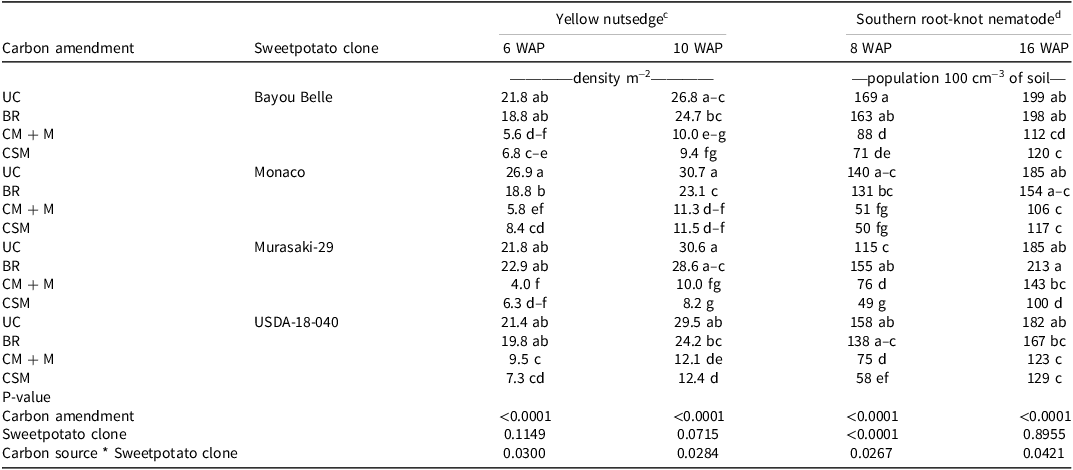
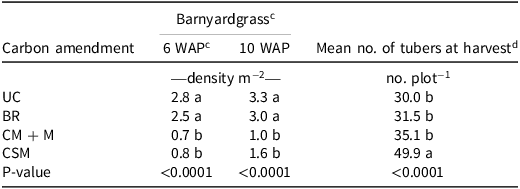
During the sweetpotato crop growing period, populations of yellow nutsedge, barnyardgrass, and SRKN were evaluated for the main effects of carbon amendment and sweetpotato clone, and their interaction (Table 4). Due to the significant interaction between carbon amendment and sweetpotato clone for yellow nutsedge and SRKN, the effects of carbon amendment were examined by clone. However, barnyardgrass density was significantly influenced by the main effect of carbon amendment only (Table 5); therefore, barnyardgrass density was averaged across clones.
Yellow nutsedge density and southern root-knot nematode population as influenced by carbon amendment and sweetpotato clone. a,b

Table 4. Long description
The table presents data on the effects of different carbon amendments and sweetpotato clones on yellow nutsedge density and southern root-knot nematode population. It includes measurements taken at 6 weeks after planting (WAP) and 10 WAP for yellow nutsedge density, and at 8 WAP and 16 WAP for southern root-knot nematode population. The table has 12 rows and 7 columns, with columns labeled for carbon amendment, sweetpotato clone, and the respective measurements at different weeks after planting. Notable trends include variations in yellow nutsedge density and nematode population across different carbon amendments and sweetpotato clones, with specific values provided for each combination. The data highlights significant interactions between carbon amendment and sweetpotato clone for yellow nutsedge and southern root-knot nematode, indicating that the effects of carbon amendment vary depending on the sweetpotato clone used.
a Abbreviations: BR, Brassica residue; CM + M, chicken manure + molasses; CSM, cotton seed meal; UC, unamended control; WAP, weeks after planting.
b Within columns, means followed by different letters are significantly different according to the Fisher protected LSD test (P < 0.05). Data were pooled over 2 yr and are means of eight replications.
c Yellow nutsedge density was taken from an area of 3.0 × 0.8 m−2 at 6 and 10 WAP, and converted to density per square meter.
d Southern root-knot nematode population was assessed at 8 WAP and 16 WAP.
Barnyardgrass density and mean number of sweetpotato tubers as influenced by carbon amendment. a,b

Table 5. Long description
The table presents data on barnyardgrass density and the mean number of sweetpotato tubers influenced by different carbon amendments. It includes measurements at 6 weeks after planting (WAP) and 10 WAP, as well as the mean number of tubers at harvest. The table has four rows and three columns. The rows are labeled with different carbon amendments: UC, BR, CM plus M, and CSM. The columns show the density of barnyardgrass per square meter at 6 WAP and 10 WAP, and the mean number of tubers per plot at harvest. Notable trends include the highest tuber count with the CSM amendment and the lowest barnyardgrass density with the CM plus M amendment.
a Abbreviations: BR, Brassica residue; CM + M, chicken manure + molasses; CSM, cotton seed meal; UC, unamended control; WAP, weeks after planting.
b Within the columns means followed by different letters are significantly different according to the Fisher protected LSD test (P < 0.05). Data were pooled over 2 yr and are means of eight replications.
c Barnyardgrass density was taken from an area of 3.0 × 0.8 m−2 at 6 and 10 WAP and converted to density per square meter.
d The mean number of sweetpotato tubers was calculated from at harvest from an area of 3.0 × 0.8 m−2.
Yellow Nutsedge and SRKN Suppression at the End of ASD. The lowest yellow nutsedge densities were observed with CM+M (2 m−2) and CSM (1 m−2) treatments, whereas BR (9 m−2) also resulted in lower density compared with the UC (Table 3). Lower soil population densities of SRKN were observed following application of CM+M (30 nematodes 100 cm−3 of soil) and CSM (34 nematodes 100 cm−3 of soil) compared with density in the UC (90 nematodes 100 cm−3 of soil); meanwhile, BR (75 nematodes 100 cm−3 of soil) did not result in a significant reduction in SRKN at ASD termination (Table 3).
Persistence of Yellow Nutsedge and SRKN Suppression during the Sweetpotato Crop. Yellow nutsedge density assessed at 6 and 10 WAP was influenced by carbon amendment. However, the extent of yellow nutsedge density reduction differed among sweetpotato clones (Table 4). Relative to UC and BR treatments, yellow nutsedge densities were significantly lower among all sweetpotato clones with CM+M and CSM treatments. At 6 WAP and 10 WAP, yellow nutsedge density in the Bayou Belle clone crop was reduced by 69% to 74% and by 63% to 65% with the CM+M and CSM treatments compared with the UC, respectively. Similar yellow nutsedge density suppression was observed in plots where the clones Monaco and Murasaki-29 were grown with CM+M and CSM treatments compared with UC and BR treatments. However, in numerous instances, the density of yellow nutsedge was lower in USDA-18-040 plots that had received CM+M and CSM treatments (more so with CM+M) than with the other clones that received those treatments. These results are consistent with the findings of the meta-analysis reported by Shrestha et al. (Reference Shrestha, Auge and Butler2016) that yellow nutsedge density was suppressed by 32% to 88% with ASD treatments. In another study, yellow nutsedge tuber viability was reduced by 75% after ASD treatment (Shrestha et al., Reference Shrestha, Rosskopf and Butler2018). Similarly, Chattha et al. (Reference Chattha, Ward, Kousik, Levi, Farmaha, Marshall, Bridges and Cutulle2025), Paudel et al. (Reference Paudel, Di Gioia, Zhao, Ozores-Hampton, Hong, Kokalis-Burelle, Pisani and Rosskopf2020), G. Singh et al. (Reference Singh, Ward, Levi and Cutulle2022a, Reference Singh, Wechter, Farmaha and Cutulle2022c) and S, Singh et al. (Reference Singh, Rutter, Wadl, Campbell, Khanal and Cutulle2024, Reference Singh, Cutulle, Rutter, Wadl, Ward and Khanal2025) have reported that yellow nutsedge density was effectively reduced with ASD under both field and greenhouse conditions.
Similar to yellow nutsedge suppression, significantly lower barnyardgrass densities were recorded with CM+M and CSM treatments, relative to UC and BR treatments (Table 5). Aljawasim et al. (Reference Aljawasim, Johnson, Manchester and Samtani2025) and Singh et al. (Reference Singh, Ward, Wechter, Katawczik, Farmaha, Suseela and Cutulle2022b) also reported that the use of seed meal–based carbon amendments for ASD and soil solarization reduced the grass weed density. Lower yellow nutsedge and barnyardgrass densities with CM+M and CSM treatments might be associated with the higher cumulative anaerobicity that occurred during the ASD process (Table 3). Several researchers concluded that oxidatively reduced soil conditions coupled with changes in soil microbial communities and alleviated temperature during the ASD process were the possible mechanisms for weed seed inactivation (Gilardi et al. Reference Gilardi, Pugliese, Gullino and Garibaldi2020; Huang et al. Reference Huang, Liu, Wen, Zhang, Wang and Cai2016; Momma Reference Momma2008, Reference Momma2015). Additionally, anaerobic decomposition of added carbon amendments result in the production of several poorly oxidized compounds, organic acids, and anaerobic gases that act as natural biofumigants (Butler et al. Reference Butler, Kokalis-Burelle, Albano, McCollum, Muramoto and Shennan2014; Hestmark et al. Reference Hestmark, Fernández-Bayo, Harrold, Randall, Achmon and Vander Gheynst2019; Johansen et al. Reference Johansen, Nielsen, Hansen, Andreasen, Carlsgart, Hauggard-Nielsen and Roepstorff2013) that at high enough concentrations can be lethal to weed seeds and soil-borne pathogens (Gao et al. Reference Gao, Tanji and Scardaci2004; Momma et al. Reference Momma, Kobara, Uematsu, Kita and Shinmura2013).
Population densities of SRKN in soil at mid-season (8 WAP) and harvest (16 WAP) were affected by carbon amendment and its interaction with sweetpotato clone (Table 4). At 8 WAP and 16 WAP, SRKN populations were reduced with CM+M and CSM treatments compared with UC, although the magnitude of SRKN suppression varied depending on the sweetpotato clone. Both BR and UC resulted in similar SRKN soil abundance. Relative to the UC, the soil population density of SRKN with CM+M were decreased by 34% to 64% and by 23% to 44% at 8 WAP and 16 WAP of the sweetpotato crop, respectively. Similarly, with CSM, SRKN populations were reduced by 57% to 64% and by 29% to 46% at 8 WAP and 16 WAP, respectively (Table 4). Our results on SRKN suppression agree with the findings by Butler et al. (Reference Butler, Kokalis-Burelle, Muramoto, Shennan, McCollum and Rosskopf2012b), Guo et al. (Reference Guo, Di Gioia, Zhao, Ozores-Hampton, Swisher, Hong, Kokalis-Burelle, DeLong and Rosskopf2017) and S. Singh et al. (Reference Singh, Cutulle, Rutter, Wadl, Ward and Khanal2025), who reported the efficacy of poultry manure and molasses in suppressing root-knot nematode. In another study, under field conditions and compared with an unamended control, the soil abundance of guava root-knot nematode [M. enterlobii (Yang and Eisenback)] was reduced by 58% with an ASD that included wheat bran (Wu et al. Reference Wu, Wang, Chen and Wu2024). Similarly, Katase et al. (Reference Katase, Kubo, Ushio, Ootsuka, Takeuchi and Mizukubo2009), Momma et al. (Reference Momma, Kobara, Uematsu, Kita and Shinmura2013), Oka (Reference Oka2010), Shennan et al. (Reference Shennan, Muramoto, Koike, Baird, Fennimore, Samtani, Bolda, Dara, Daugovish, Lazarovits, Butler, Rosskopf, Kokalis-Burelle, Klonsky and Mazzola2017), and Testen and Miller (Reference Testen and Miller2018) reported lower nematode disease severity after ASD treatments. Oka (Reference Oka2010) identified several potential mechanisms for nematode suppression during ASD, including the production of nematicidal substances such as ammonia and fatty acids, competition with or antagonism by other microorganisms, and changes in soil microbial communities. Hewavitharana et al. (Reference Hewavitharana, Ruddell and Mazzola2014) and Runia et al. (Reference Runia, Thoden, Molendijk, Berg, Termorshuizen, Streminska, Van der Wurff, Feil and Meints2014) found that decomposition of organic amendments under anaerobic conditions resulted in the production of sulfur compounds (tri-sulfide, dimethyl disulfide, and hydrogen sulfide), which can cause nematode mortality. Furthermore, Sugita et al. (Reference Sugita, Sobagaki and Yoshiga2022) reported that root-knot nematodes are highly sensitive to low oxygen levels, therefore, high levels of anaerobicity observed in the current study with CM+M and CSM treatments may have contributed to the lower soil abundance of SRKN.
Broccoli belongs to the Brassicaceae family, which produces biofumigants that can lethally affect various soil-borne pests including weed seeds and nematodes. In the current study, however, BR did not appear to have contributed biofumigants that acted in a synergistic fashion with ASD to provide effective yellow nutsedge and SRKN suppression. This might be due to the failure of BR treatment to produce greater cumulative anaerobicity during the ASD period (Table 3). Similar to these results, incorporating broccoli residue did not effectively suppress the Verticillium wilt organism in strawberries (Zavatta et al. Reference Zavatta, Muramoto, Milazzo, Koike, Klonsky, Goodhue and Shennan2021).
Sweetpotato Plant Vigor
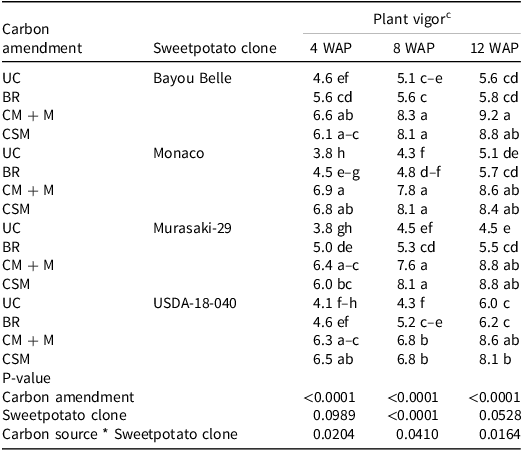
Sweetpotato plant vigor was affected by carbon amendment and its interaction with sweetpotato clone at 4, 8, and 12 WAP (Table 6). Due to the significant interaction, the effects of carbon amendment were examined by clone. Within each clone, CM+M and CSM treatments resulted in the highest plant vigor, whereas the lowest vigor was observed in plants that received BR, followed by UC at all evaluation intervals. Vigor ratings with CM+M and CSM treatments ranged from 6.0 to 6.9, 6.8 to 8.3, and 8.1 to 9.2 at 4, 8, and 12 WAP, respectively. In contrast, BR and UC vigor ratings for various sweetpotato clones consistently remained below 6.0 all evaluation intervals, with the exception of sweetpotato clone USDA-18-040, for which a vigor rating of slightly above 6.0 was observed at 12 WAP. Similarly, the use of chicken manure and mustard seed meal to facilitate ASD and solarization was demonstrated to improve the plant vigor of tomato and strawberry crops under field conditions (Aljawasim et al. Reference Aljawasim, Johnson, Manchester and Samtani2025; Singh et al. Reference Singh, Ward, Levi and Cutulle2022a). Based on visual ratings of sweetpotato vigor, both CM+M and CSM served as excellent sources of essential plant nutrients (Table 1), with laboratory results indicating they provided 0.6% to 2.4% of total nitrogen, 0.1% to 4.5% phosphorus, 2.5% to 4.5% potassium, 0.7% to 11.3% calcium, 0.2% to 0.8% magnesium, 0.2% to 0.7% sulfur, and 14.9% to 39.4% carbon, all of which may contribute to plant growth improvement. Compared with CM+M and CSM, BR contains low levels of these nutrients, which might explain the low plant vigor that occurred with this carbon amendment treatment. Furthermore, lower yellow nutsedge, barnyardgrass and SRKN densities were observed with CM+M and CSM treatments relative to the BR and UC, resulting in lower crop weed competition, and better SRKN suppression, all of which may have contributed to better visual ratings of sweetpotato vigor.
Sweetpotato plant vigor at 4, 8, and 12 WAP as influenced by carbon amendment and sweetpotato clone. a,b

Table 6. Long description
The table presents data on sweetpotato plant vigor affected by different carbon amendments and sweetpotato clones at 4, 8, and 12 weeks after planting (WAP). The table has 13 rows and 6 columns. The columns are labeled as Carbon amendment, Sweetpotato clone, 4 WAP, 8 WAP, and 12 WAP. The rows list different carbon amendments (UC, BR, CM + M, CSM) and sweetpotato clones (Bayou Belle, Monaco, Murasaki-29, USDA-18-040). The data shows vigor ratings for each combination of carbon amendment and sweetpotato clone at different weeks after planting. Notable trends include higher vigor ratings for CMM and CSM treatments across all clones and evaluation intervals, with ratings ranging from 6.0 to 9.2. In contrast, BR and UC treatments consistently show lower vigor ratings, generally below 6.0. The table also includes P-values indicating the statistical significance of the effects of carbon amendment, sweetpotato clone, and their interaction on plant vigor.
a Abbreviations: BR, Brassica residue; CM + M, chicken manure + molasses; CSM, cotton seed meal; UC, unamended control; WAP, weeks after planting.
b Within columns, means followed by different letters are significantly different according to the Fisher protected LSD test (P < 0.05). Data were pooled over 2 yr and are means of eight replications.
c Sweetpotato plant vigor was recorded visually at 4, 8, and 12 WAP from each subplot on a scale from 0 to 10, where 0 = sweetpotato plants were completely dead; 1–2 = extremely poor and minimal plant growth; 3–4 = poor to fair plant growth; 5–6 = moderate or average plant growth; 7–8 = vigorous and above average plant growth; and 9–10 = very vigorous and excellent plant growth.
Sweetpotato Marketable Yield
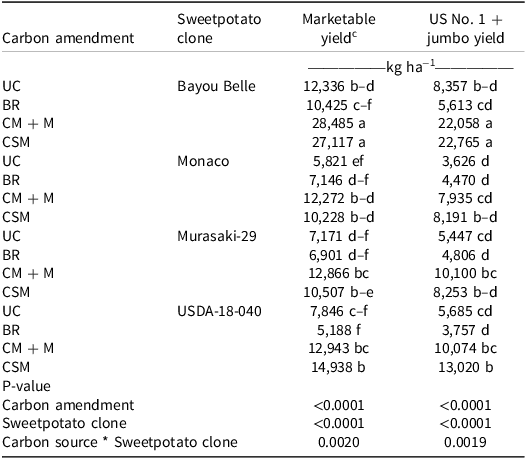
Carbon amendment, sweetpotato clone, and their interaction affected the aggregated US No. 1 + jumbo grade yield and marketable yield (Table 7). Due to the significant interaction, the effects of carbon amendment were examined by clone. Greater marketable yield was observed for each sweetpotato clone that grew in soil that received CM+M and CSM treatments compared with yield from UC plots (Table 7). However, with BR and UC treatments, U.S. No. 1 + jumbo and marketable yields were similar. The marketable yields of Bayou Belle, Monaco, Murasaki-29, and USDA-18-040 clones that received the CM+M treatment increased by 131% (28,485 kg ha−1), 111% (12,272 kg ha−1), 79% (12,866 kg ha−1), and 65% (12,943 kg ha−1), respectively. The marketable yield of the Bayou Belle, Monaco, Murasaki-29, and USDA-18-040 clones that received the CSM treatment increased by 120% (27,117 kg ha−1), 76% (10,228 kg ha−1), 47% (10,507 kg ha−1), and 90% (14,938 kg ha−1), respectively. When grown under UC conditions, marketable yields were 12,336 kg ha−1, 5,821 kg ha−1, 7,171 kg ha−1, and 7,846 kg ha−1 for the Bayou Belle, Monaco, Muraski-29, and USDA-18-049 clones, respectively. Marketable yield of sweetpotato is highly variable and strongly influenced by environmental conditions, including location and soil (Collins et al. Reference Collins, Wilson, Arrendel and Dickey1987; Manrique and Hermann Reference Manrique and Hermann2000; Wadl et al. Reference Wadl, Campbell, Rutter, Williams, Murphey, Culbreath and Cutulle2023). The Bayou Belle clone is a high-yielding cultivar (George et al. Reference George, Reddy, Wadl, Rutter, Culbreath, Lau, Rashid, Allan, Johaningsmeier, Nelson, Wang, Gubba, Ling, Meng, Collins, Ponnia and Gowda2024), which was demonstrated in the present study. The high variability in marketable yield in the current study might be due to the combined influence of environmental conditions and inherent yield differences among clones. Results on improved sweetpotato yield with ASD match findings by Butler et al. (Reference Butler, Kokalis-Burelle, Albano, McCollum, Muramoto and Shennan2014), Ozores-Hampton et al. (Reference Ozores-Hampton, Stansly and Salame2011), and Singh et al. (Reference Singh, Wechter, Farmaha and Cutulle2022c) where the use of chicken manure and molasses, and mustard meal for ASD improved marketable tomato yield. Similarly, ASD with rice bran and mustard seed meal resulted in a greater strawberry yield (Muramoto et al. Reference Muramoto, Shennan, Zavatta, Baird, Toyama and Mazzola2016). Additionally, Huang et al. (Reference Huang, Liu, Wen, Zhang, Wang and Cai2016) observed increased root weight of cucumbers (Cucumis sativus L.) after ASD treatments. Butler et al. (Reference Butler, Kokalis-Burelle, Albano, McCollum, Muramoto and Shennan2014) and Rosskopf et al. (Reference Rosskopf, Serrano-Pérez, Hong, Shrestha, Rodríguez-Molina, Meghvansi and Varma2015) concluded that use of organic carbon amendments in ASD systems induced beneficial changes in soil biological, physical, and chemical properties. These beneficial changes to post-ASD soil environment resulted in increased soil nutrient availability (Butler et al. Reference Butler, Kokalis-Burelle, Albano, McCollum, Muramoto and Shennan2014; McCarty et al. Reference McCarty, Inwood, Ownley, Sams, Wszelaki and Butler2014), increased water or nutrient holding capacity (Chen et al. Reference Chen, Camps-Arbestain, Shen, Singh and Cayuela2018; Minasny and McBratney Reference Minasny and McBratney2018), or improved populations and crop associations of bacteria and fungi that promote plant growth (Mazzola et al. Reference Mazzola, Muramoto and Shennan2018; Poret-Peterson et al. Reference Poret-Peterson, Albu, McClean and Kluepfel2019). These positive changes in soil environment following ASD may have contributed to the improved yields observed in past studies. In the present study, observed increases in marketable yield of each sweetpotato clone with CM+M and CSM treatments compared with UC might be due to lower weed pressure under these treatments, including beneficial changes to post-ASD soil. Yellow nutsedge densities with UC were 125% to 445% higher (Table 4), which might have intensified crop-weed competition and resulted in decreased sweetpotato plant vigor and marketable yields. However, CM+M and CSM effectively controlled yellow nutsedge densities and simultaneously provided a comprehensive source of various macro and micronutrients (Table 1). Reduced weed competition and improved plant nutrition might be associated with the high marketable yield observed with the CM+M and CSM treatments.
U.S. No. 1 + jumbo yield and marketable sweetpotato yield of sweetpotato as influenced by carbon amendment and sweetpotato clone. a,b

Table 7. Long description
The table presents data on the marketable yield and U.S. No. 1 plus jumbo yield of sweetpotato influenced by different carbon amendments and sweetpotato clones. It consists of 16 rows and 4 columns. The columns are labeled ‘Carbon amendment’, ‘Sweetpotato clone’, ‘Marketable yield’, and ‘U.S. No. 1 plus jumbo yield’. The rows list different combinations of carbon amendments (UC, BR, CM plus M, CSM) and sweetpotato clones (Bayou Belle, Monaco, Murasaki-29, USDA-18-040). The yields are measured in kilograms per hectare. Notable trends include higher marketable yields for each sweetpotato clone grown in soil with CMM and CSM treatments compared to UC plots. The Bayou Belle clone shows the highest marketable yield with CMM treatment at 28,485 kilograms per hectare.
a Abbreviations: BR, Brassica residue; CM + M, chicken manure + molasses; CSM, cotton seed meal; UC, unamended control; WAP, weeks after planting.
b Within columns, means followed by different letters are significantly different according to the Fisher protected LSD test (P < 0.05). Data were pooled over 2 yr and are means of eight replications.
c Marketable yield is categorized as U.S. No. 1 tubers, canner tubers, and jumbo tubers graded as follows: U.S. No. 1 tuber has a diameter of 5.08 to 8.89 cm and is 7.62 to 22.86 cm long; a canner tuber is 2.54 to 5.08 cm in diameter and 5.08 to 17.78 cm long; a jumbo tuber is >8.89 cm in diameter and >22.86 cm long. Marketable yield is rounded to the nearest ten.
Glucose, Fructose and Sucrose Content
Glucose, fructose, and sucrose content of sweetpotato was not affected by the carbon amendment treatment (Supplementary Table S2). However, sugar content (glucose and fructose) was affected by sweetpotato clone (Supplementary Table S3), which might be the inherent differences among clones. The interaction between carbon amendment and clone was also not significant for glucose, fructose, and sucrose content. The suppression of weeds and soil-borne pathogens through the use of ASD is achieved with the release of various poorly oxidized compounds and the alteration of soil microbial communities during the anaerobic decomposition of carbon amendments under reduced soil conditions (Butler et al. Reference Butler, Kokalis-Burelle, Albano, McCollum, Muramoto and Shennan2014; Gilardi et al. Reference Gilardi, Pugliese, Gullino and Garibaldi2020). These changes in soil during ASD may collectively influence the nutritional quality of produce, particularly edible storage tuber crops. However, sugar content (glucose, fructose, and sucrose) was similar across all four carbon amendment treatments in the current study (Supplementary Table S2), suggesting that ASD does not adversely affect the sugar content of sweetpotatoes. Similar to these results, Di Gioia et al. (Reference Di Gioia, Ozores-Hampton, Zhao, Thomas, Wilson, Li, Hong, Albano, Swisher and Rosskopf2017), Guo et al. (Reference Guo, Di Gioia, Zhao, Ozores-Hampton, Swisher, Hong, Kokalis-Burelle, DeLong and Rosskopf2017), and Paudel et al. (Reference Paudel, Di Gioia, Zhao, Ozores-Hampton, Hong, Kokalis-Burelle, Pisani and Rosskopf2020) also observed that the use of composted poultry manure, molasses, and other carbon sources for ASD did not influence the fruit quality parameters (firmness, dry matter content, titratable acidity, and total soluble solids) of tomato.
Practical Implication
In summary, the findings of the present study demonstrated the efficacy of CM+M-induced and CSM-induced ASD in organic plasticulture sweetpotato production for the suppression of yellow nutsedge and SRKN. In the present study, to make ASD more economically feasible, BR and CSM were evaluated as alternative carbon sources. The use of CM+M and CSM provided comparable yellow nutsedge and SRKN suppression and improved the marketable yield without affecting sugar content of sweetpotato tubers. Previous research documented that sweetpotato clones with erect growth habit exhibit greater weed suppression than the spreading types on bare ground. However, in the present study, the erect sweetpotato clone was not as effective in suppressing yellow nutsedge as the other clones. Therefore, findings of this study indicate that more breeding efforts are required to develop sweetpotato clones with vigorous erect growth for early weed suppression. The research findings of this study suggest that ASD with CM+M and CSM can be used for effective yellow nutsedge and SRKN suppression for sustainable sweetpotato production. Growing in situ cover crops could serve as the another means of providing a low-cost and sustainable source of carbon for ASD. Therefore, future studies should focus on evaluating different cover crop mixtures as carbon sources for ASD with respect to longer ASD incubation time.
Supplementary material
To view supplementary material for this article, please visit https://doi.org/10.1017/wet.2026.10106
Acknowledgments
We thank Gursewak Singh, Sohaib Chattha, Matt Horry, Sanjeev Sharma, Sam Wittman, Manwinder Singh, Khushwinder Kaur, Dalvir Singh, Zenaba Abdissa, and Ebenezer for providing technical support during the experiments.
Funding
This study received funding from the U.S. Department of Agriculture–National Institute for Food and Agriculture Organic Transitions Program, proposal o. 2022-04689. R. Karthikeyan receives research funds from the Charles Carter Newman Endowment.
Competing Interests
The authors declare they have no competing interests.



 Open access

