





Introduction
Schistosomiasis causes a major disease burden in low- and middle-income countries, and is estimated to affect more than 250 million people with more than 700 million people at risk of infection worldwide (Organization, Reference World Health2023). To control the disease, the WHO recommends preventive chemotherapy in endemic settings, using praziquantel (PZQ) at a standard single dose of 40 mg kg−1. Among children of all ages and adults, low-to-moderate cure rates (CRs) for Schistosoma mansoni (S. mansoni) are reported at this dose (Sousa-Figueiredo et al., Reference Sousa-Figueiredo, Pleasant, Day, Betson, Rollinson, Montresor, Kazibwe, Kabatereine and Stothard2010; King et al., Reference King, Olbrych, Soon, Singer, Carter and Colley2011; Zwang and Olliaro, Reference Zwang and Olliaro2014; Hoekstra et al., Reference Hoekstra, Casacuberta-Partal, van Lieshout, Corstjens, Tsonaka, Assaré, Silué, Meité, N’Goran and N’Gbesso2020, Reference Hoekstra, Casacuberta-Partal, van Lieshout, Corstjens, Tsonaka, Assaré, Silué, N’Goran, N’Gbesso and Brienen2022a; Fukushige et al., Reference Fukushige, Chase-topping, Woolhouse and Mutapi2021). CRs have been found to increase significantly, reaching up to 96%, when PZQ is given in 2 doses of the standard 40 mg kg−1 at varying weekly intervals, instead of a single standard dose (King et al., Reference King, Olbrych, Soon, Singer, Carter and Colley2011; Nalugwa et al., Reference Nalugwa, Nuwaha, Tukahebwa and Olsen2015; Munisi et al. Reference Munisi, Buza, Mpolya, Angelo and Kinung’hi2017; Hoekstra et al., Reference Hoekstra, Casacuberta-Partal, van Lieshout, Corstjens, Tsonaka, Assaré, Silué, Meité, N’Goran and N’Gbesso2020). Additionally, findings from the Praziquantel In Preschool-aged children (PIP) trial demonstrated that double dosing with 40 mg kg−1 at a 3-h interval was safe, feasible and more effective based on parasitic and/or antigenic CR and egg reduction rates than single dosing with 40 mg kg−1, and that twice-a-year treatment compared with once-a-year treatment reduced some intestinal morbidity markers in preschool-aged children (PSAC) (Bustinduy et al., Reference Bustinduy, Edielu, Ayebazibwe, Nakyesige, Anguajibi, Mpooya, Nassuna, Adriko, Elliott and van Dam2025).
The primary trial defined CRs using Kato–Katz (KK) measurements, and the analysis in this manuscript builds on those trial findings by evaluating circulating anodic antigen (CAA) dynamics. The novel approach of double dosing (80 mg kg−1) of crushed PZQ tablets is promising in increasing drug efficacy. A challenge remains in accurate determination of efficacy as determining CRs using the KK approach to estimate eggs per gram of stool (EPG) underestimates the number of positive cases reported due to limited sensitivity of KK (Mwinzi et al., Reference Mwinzi, Kittur, Ochola, Cooper, Campbell, King and Colley2015; Prada et al., Reference Prada, Touloupou, Adriko, Tukahebwa, Lamberton and Hollingsworth2018; Hoekstra et al., Reference Hoekstra, Casacuberta-Partal, van Lieshout, Corstjens, Tsonaka, Assaré, Silué, Meité, N’Goran and N’Gbesso2020, Reference Hoekstra, van Dam and van Lieshout2021a; Yin et al., Reference Yin, N’Goran, Ouattara, Aka, Diakité, Bassa, Kourany-lefoll, Tappert, Yalkinoglu and Huber2021; Clark et al., Reference Clark, Moses, Nankasi, Faust, Moses, Ajambo, Besigye, Atuhaire, Wamboko and Carruthers2022). KK lacks sensitivity for diagnosing light intensity infections. An alternative diagnostic approach is the detection of schistosomal CAA, a worm-derived antigen regurgitated by living adult worms, which provides a more sensitive and accurate assessment of worm burden in the host. Furthermore, since PZQ is only effective against adult worms, egg-based diagnostics may underestimate new infections after treatment and before worms produce eggs. Thus, antigen-based detection methods provide a more reliable measure of active infection and drug efficacy.
The presence of CAA in urine or serum can be detected using an ultrasensitive reporter technology (Up-Converting reporter Particles, UCP) combined with immunochromatography, Lateral Flow (Corstjens et al., Reference Corstjens, De Dood, Kornelis, Fat, Wilson, Kariuki, Nyakundi, Loverde, Abrams and Tanke2014, Reference Corstjens, de Dood, Knopp, Clements, Ortu, Umulisa, Ruberanziza, Wittmann, Kariuki and LoVerde2020). This the Up-Converting reporter Particle, Lateral Flow (UCP-LF) CAA assay is increasingly recognized as a viable method for the diagnosis of schistosomiasis and has been shown to be highly sensitive for different Schistosoma species (Knopp et al., Reference Knopp, Corstjens, Koukounari, Cercamondi, Ame, Ali, de Dood, Mohammed, Utzinger and Rollinson2015; Clements et al., Reference Clements, Corstjens, Binder, Campbell, de Dood, Fenwick, Harrison, Kayugi, King and Kornelis2018; Corstjens et al., Reference Corstjens, de Dood, Knopp, Clements, Ortu, Umulisa, Ruberanziza, Wittmann, Kariuki and LoVerde2020; Ruberanziza et al., Reference Ruberanziza, Wittmann, Mbituyumuremyi, Mutabazi, Campbell, Colley, Fleming, Ortu, van Dam and Umulisa2020; Hoekstra et al., Reference Hoekstra, Casacuberta-Partal, van Lieshout, Corstjens, Tsonaka, Assaré, Silué, N’Goran, N’Gbesso and Brienen2022a, Reference Hoekstra, Chernet, de Dood, Brienen, Corstjens, Labhardt, Nickel, Wammes, van Dam and Neumayr2022b; Kislaya et al., Reference Kislaya, Rakotoarivelo, Rasamoelina, Solonirina, Brito, Ratiaharison, Razafindrakoto, Razafindralava, Rakotozandrindrainy and Radomanana2025; Lorenz et al., Reference Lorenz, Razafindrakoto, Rausche, Rasolojaona, Razafindralava, Zerbo, Höppner, von Thien, Rakotozandrindrainy and Doumbia2025). This increased sensitivity stems from the assay’s ability to detect active infection even when egg output is low, thereby identifying infections that may be missed by the conventional stool (or urine) microscopy. Furthermore, the UCP-LF CAA assay is highly suitable for determining parasite clearance as CAA levels are cleared rapidly from urine or serum after PZQ treatment (Bustinduy et al., Reference Bustinduy, Waterhouse, de Sousa-figueiredo, Roberts, Atuhaire, Van Dam, Corstjens, Scott, Stanton and Kabatereine2016; Sousa et al., Reference Sousa, Van Dam, Pinheiro, De Dood, Peralta, Peralta, D. F. Daher, Corstjens and Bezerra2019; Corstjens et al., Reference Corstjens, de Dood, Knopp, Clements, Ortu, Umulisa, Ruberanziza, Wittmann, Kariuki and LoVerde2020; Langenberg et al., Reference Langenberg, Hoogerwerf, Koopman, Janse, Kos-van Oosterhoud, Feijt, Jochems, de Dood, van Schuijlenburg and Ozir-fazalalikhan2020; Tamarozzi et al., Reference Tamarozzi, Ursini, Hoekstra, Silva, Costa, Gobbi, Monteiro, Motta, van Dam and Corstjens2021; Hoekstra et al., Reference Hoekstra, van Esbroeck, de Dood, Corstjens, Cnops, Wammes, van Dam, Clerinx and van Lieshout2021b, Reference Hoekstra, Casacuberta-Partal, van Lieshout, Corstjens, Tsonaka, Assaré, Silué, N’Goran, N’Gbesso and Brienen2022a, Reference Hoekstra, Chernet, de Dood, Brienen, Corstjens, Labhardt, Nickel, Wammes, van Dam and Neumayr2022b; de Freitas Galvão et al., Reference de Freitas Galvão, Hoekstra, Corstjens, Pinheiro, da Silva, Barbosa, Sá, van Dam and de Moraes Bezerra2025). Sensitive diagnostics are crucial for accurately determining CRs and, consequently, evaluating the efficacy of drug dosing. Accurate dosing is particularly important given that therapeutic efficacy may vary with age; a dose that is effective in adults may not necessarily achieve the same outcomes in children. This was supported by a meta-analysis of 146 articles by (Fukushige et al., Reference Fukushige, Chase-topping, Woolhouse and Mutapi2021) which showed that higher CRs for schistosomiasis could be attained by higher weight based dosing in young individuals. Further, 1 study comparing the efficacy of 20, 40 and 60 mg kg−1 in school-aged children (SAC) and PSAC concluded that the same dose given to each age group resulted in a lower efficacy for PSAC. Furthermore, the study determined that a higher dosing resulted in better efficacy for both age groups (Coulibaly et al., Reference Coulibaly, Panic, Silué, Kovač, Hattendorf and Keiser2017). Another study assessing pharmacokinetic outcomes in children receiving 40 and 60 mg kg−1 dosing of PZQ concluded that higher doses (>60 mg kg−1) are needed, particularly in smaller children (Bustinduy et al., Reference Bustinduy, Waterhouse, de Sousa-figueiredo, Roberts, Atuhaire, Van Dam, Corstjens, Scott, Stanton and Kabatereine2016). This highlights the need for higher dose administration amongst younger individuals to achieve better CRs. Optimal dosing is an important consideration with the recent inclusion of PSAC in preventive chemotherapy programmes. PSAC are commonly provided with the current WHO standard dose of 40 mg kg−1 in these programmes, which could potentially be insufficient to achieve maximal efficacy in the age group. A lack of schistosomal cure with administration of the standard dose of 40 mg kg−1 among young children has been correlated with residual adult worm infection, presence of immature worms and argued to be related to a lower protective immunity and differences in pharmacokinetics in younger children (Nalugwa et al., Reference Nalugwa, Nuwaha, Tukahebwa and Olsen2015; Bustinduy et al., Reference Bustinduy, Waterhouse, de Sousa-figueiredo, Roberts, Atuhaire, Van Dam, Corstjens, Scott, Stanton and Kabatereine2016; Kovač et al., Reference Kovač, Meister, Neodo, Panic, Coulibaly, Falcoz and Keiser2018). It is also important to note that in endemic settings such as the communities surrounding Lake Albert in Uganda, ongoing exposure to contaminated waters means that even after treatment with PZQ, reinfection is likely to happen and may contribute to increases in CAA overtime. Understanding CAA dynamics is useful for estimating treatment efficacy. However, there is only 1 study measuring CAA as a refined measure of worm burden in PSAC (Bustinduy et al., Reference Bustinduy, Waterhouse, de Sousa-figueiredo, Roberts, Atuhaire, Van Dam, Corstjens, Scott, Stanton and Kabatereine2016). PSAC have only recently been included in preventive chemotherapy programmes (Organization, Reference Organization2022) despite the well-known schistosomiasis-associated morbidities they suffer (Organization, Reference Organization2011; Colley et al., Reference Colley, Bustinduy, Secor and King2014; Faust et al., Reference Faust, Osakunor, Downs, Kayuni, Stothard, Lamberton, Reinhard-Rupp and Rollinson2020; Kalinda et al., Reference Kalinda, Mindu and Chimbari2020). To effectively treat PSAC, the optimal PZQ dose and dose interval needs to be established and understanding CAA dynamics would be useful for more accurate estimation of treatment efficacy. As part of the PIP trial, a randomized controlled trial comparing the safety and efficacy of 40 mg kg−1 vs 80 mg kg−1 PZQ and the effect of biannual versus annual treatment among PSAC (Bustinduy et al., Reference Bustinduy, Edielu, Ayebazibwe, Nakyesige, Anguajibi, Mpooya, Nassuna, Adriko, Elliott and van Dam2025), we assessed the efficacy of these treatment regimens using the highly sensitive UCP-LF CAA test to determine schistosome CAA-defined CR and infection intensity reduction. Additionally, factors associated with active infection based on CAA were assessed as a secondary objective.
Materials and methods
Study setting
A randomized, blinded, placebo-controlled, phase II, trial, PIP trial (NCT03640377), evaluating the safety and efficacy of PZQ in children below the age of 4 years infected with S. mansoni in Uganda was conducted between 2021 and 2023, of which the study protocol and main results have been published previously (Webb et al., Reference Webb, Edielu, Wu, Kabatereine, Tukahebwa, Mubangizi, Adriko, Elliott, Hope and Mawa2021; Bustinduy et al., Reference Bustinduy, Edielu, Ayebazibwe, Nakyesige, Anguajibi, Mpooya, Nassuna, Adriko, Elliott and van Dam2025). Participants were recruited from villages along the shores of Lake Albert in Northwest Uganda. Here, we used urine samples collected at baseline, 4 weeks, 6 months and 12 months following baseline PZQ treatment from the PIP cohort to evaluate treatment efficacy based on CAA detection.
PSAC recruitment and randomization
A detailed description of the recruitment of participants into the PIP trial has been described elsewhere (Webb et al., Reference Webb, Edielu, Wu, Kabatereine, Tukahebwa, Mubangizi, Adriko, Elliott, Hope and Mawa2021). Briefly, PSAC were considered eligible if they were aged between 12 and 47 months, resided in 5 villages in the Buliisa and Hoima districts of Uganda, had a positive S. mansoni result, had parental consent, didn’t have chronic illness and severe wasting (weight-for-age Z score of less than –3.0). Participants were screened using the field-based point-of-care circulating cathodic antigen (POC-CCA) test (batch numbers: 191031120 and 210607058, ICT Diagnostics, South Africa) and positive cases were subsequently confirmed by KK microscopy. The POC-CCA test is a urine-based rapid diagnostic that detects CCA, unlike the UCP-LF CAA assay which quantifies CAA in blood or urine.
Randomization was done pre-enrollment by assigning trial arms to specific enrollment numbers, described in more detail elsewhere (Webb et al., Reference Webb, Edielu, Wu, Kabatereine, Tukahebwa, Mubangizi, Adriko, Elliott, Hope and Mawa2021). Participants were randomized to receive a single dose of 40 mg kg−1 PZQ or a split 80 mg kg−1 PZQ crushed tablets regimen (2 doses of 40 mg kg−1 administered 3 h apart), and at 6 months to either retreatment with the same dose of PZQ or placebo.
Study measurements
Fecal occult blood (FOB) and fecal calprotectin (Quantum Blue®, Alpha labs, Hampshire, UK) POC assays were used to measure intestinal morbidity at baseline, 6 months and 12 months (a calprotectin level of >50 µg g−1 was considered positive). Venous blood was drawn at baseline, 6 months and 12 months for complete blood count (CBC) using the Sysmex pocH-100i Automated Haematology Analyzer (McKeson, Irving, Texas, USA). Haemoglobin levels were determined from the CBC result and anaemia was defined as haemoglobin <11.0 g dL−1. This was done as part of the inclusion and exclusion process at baseline, and children with haemoglobin <7.0 g dL−1 were not included. Evidence of periportal thickening at baseline, 6 months and 12 months was determined by ultrasound to determine schistosomiasis-related liver fibrosis.
Determination of CAA
Assessment of CAA in urine was conducted using the laboratory-based highly sensitive UCP-LF CAA assay: the UCAAhT417 dry format (Corstjens et al., Reference Corstjens, de Dood, Knopp, Clements, Ortu, Umulisa, Ruberanziza, Wittmann, Kariuki and LoVerde2020) which has been in use at MRC/UVRI and LSHTM Uganda research Unit Entebbe in Uganda since 2019. Briefly, 500 μL of urine sample was pretreated with 100 μL of 12% trichloroacetic acid, incubated and centrifuged. Centrifugation was followed by concentration of the sample by transferring 500 μL of the clear supernatant into a 2 mL Millipore Amicon centrifugal filtration unit in a collection tube (Merck Chemicals B.V., Amsterdam, The Netherlands). The 20 μL concentrate was subsequently transferred into microtiter plate wells containing run buffer. UCP solution was then added to the wells, the plate sealed and then placed on a shaking incubator at approximately 900 rpm for 1 min. CAA test strips were then added to the mixture in the well and incubation was done overnight. CAA test strips were read using a Labrox Upcon reader (Uniogen, Turku, Finland). A set of samples with known CAA concentrations as well as negative controls were included in each plate as a reference standard to quantify CAA levels in the unknown samples as well as to validate the cut-off of the test (2 pg mL−1). Samples were considered positive if the CAA level was equal to or exceeded the cut-off of 2 pg mL−1 and negative if below this point (Corstjens et al., Reference Corstjens, de Dood, Knopp, Clements, Ortu, Umulisa, Ruberanziza, Wittmann, Kariuki and LoVerde2020). Samples exceeding the upper limit of quantification were assigned a value of 1000 pg mL−1.
Statistical analysis
Data were captured in a REDCap database, reviewed and queried for outliers, and analysed in STATA version 18.0 (Stata Corp, College Station, TX, USA). Participants’ baseline socio-demographic characteristics and morbidity indicators were summarized using median and interquartile ranges (IQR) for continuous data and by counts and proportions for categorical data. Morbidity indicators considered were S. mansoni EPG intensity, anemia as determined by haemoglobin value <11.0 g dL−1, evidence of periportal thickening, FOB, and fecal calprotectin. CR was calculated at the 3 time points, as the proportion of participants being CAA positive at baseline and who became CAA negative after treatment. CR at 4 weeks, 6 months and 12 months was compared between trial arms using chi-square tests and median CAA levels in urine at each time point were compared across the trial arms using Kruskal–Wallis test. Intensity reduction rate (IRR) was determined by comparing arithmetic mean CAA at baseline to arithmetic mean CAA at 4 weeks, 6 months and 12 months after treatment. Differences in IRR across treatment arms and follow-up time points were evaluated using a mixed effects linear regression model with participant-level random effects. For the outcomes assessed at 4 weeks and 6 months, calculations were made with only consideration for the baseline dosage (40 mg kg−1 vs 80 mg kg−1), and not dosing frequency as participants only differed in their dosing frequency from 6 months. At 12 months, however, assessment of outcomes took into consideration the 4 treatment arms determined by both the baseline dosage and dosing frequency.
Multivariable logistic regression was carried out to ascertain factors associated with ‘CAA positivity’ at 4 weeks, 6 months and 12 months after treatment, as well as to determine whether these associations differed by treatment arm. For each variable, odds ratio (OR), 95% confidence interval (CI), and P-values were calculated, and a P-value < 0.05 was considered statistically significant.
Results
Screening and enrolment
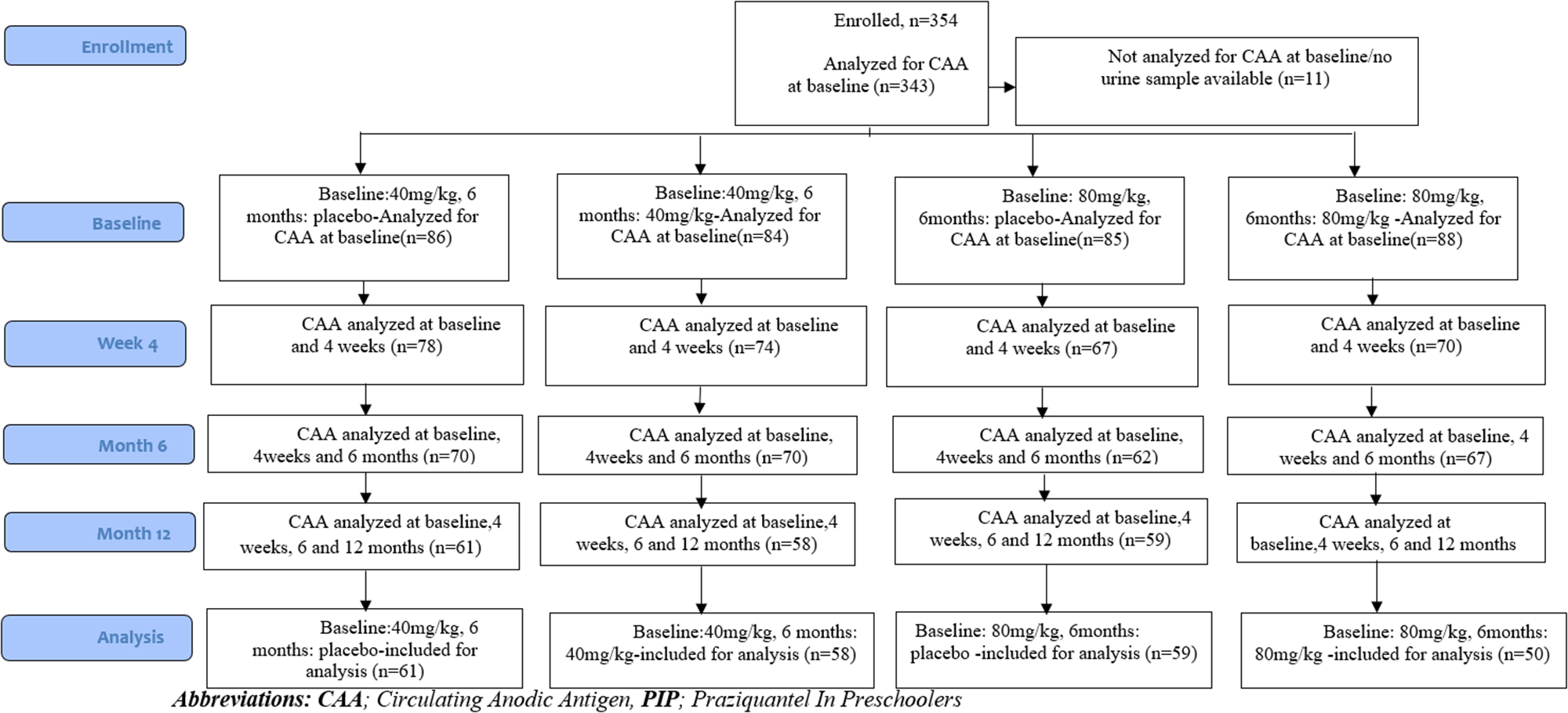
A total of 354 PSAC were enrolled in the main trial, and of these, 228/354 PSAC had complete CAA data at baseline, 4 weeks, 6 months and 12 months, and were included in this analysis. Of these, 61/228 (26.8%) preschoolers in group 1 received 40 mg kg−1 PZQ at baseline and placebo at 6 months, 58/228 (25.4%) in group 2 received 40 mg kg−1 PZQ at baseline and 40 mg kg−1 PZQ at 6 months, 59/228 (25.9%) in group 3 received 80 mg kg−1 PZQ at baseline and placebo at 6 months and 50/228 (21.9%) in group 4 received 80 mg kg−1 PZQ at baseline and 80 mg kg−1 PZQ at 6 months. The number of participants screened, enrolled, and included in this analysis is shown in Figure 1.
Study profile showing number of PSAC analysed for CAA at baseline and follow-up.

Figure 1 Long description
The flowchart presents participant flow across enrollment, baseline and follow-up time points for circulating anodic antigen analysis. The flow moves top to bottom through labeled stages: enrollment, baseline, week 4, month 6, month 12 and analysis. At enrollment, 954 participants were enrolled. Of these, 953 were analyzed for circulating anodic antigen at baseline. One participant was not analyzed due to sample unavailability; this exclusion is shown as a separate path branching away from the main flow at the enrollment stage. At baseline, participants were divided into three parallel treatment arms: placebo, 40 mg per kg and 80 mg per kg. Each arm flows downward independently through the remaining time points. Placebo arm: baseline analyzed n equals 84; week 4 analyzed n equals 70; month 6 analyzed n equals 70; month 12 analyzed n equals 58; included in analysis n equals 50. 40 mg per kg arm: baseline analyzed n equals 84; week 4 analyzed n equals 70; month 6 analyzed n equals 70; month 12 analyzed n equals 58; included in analysis n equals 50. 80 mg per kg arm: baseline analyzed n equals 85; week 4 analyzed n equals 70; month 6 analyzed n equals 82; month 12 analyzed n equals 50; included in analysis n equals 50. Arrows connect each stage within each arm, indicating downward progression. The exclusion at enrollment is shown in a separate box linked by an arrow to the side of the main flow. At each follow-up stage, counts within each arm reflect only those participants with available samples analyzed for circulating anodic antigen. The abbreviation note at the bottom states: circulating anodic antigen equals CAA and Praziquantel in Preschoolers equals PIP.
Demographic and morbidity indicators
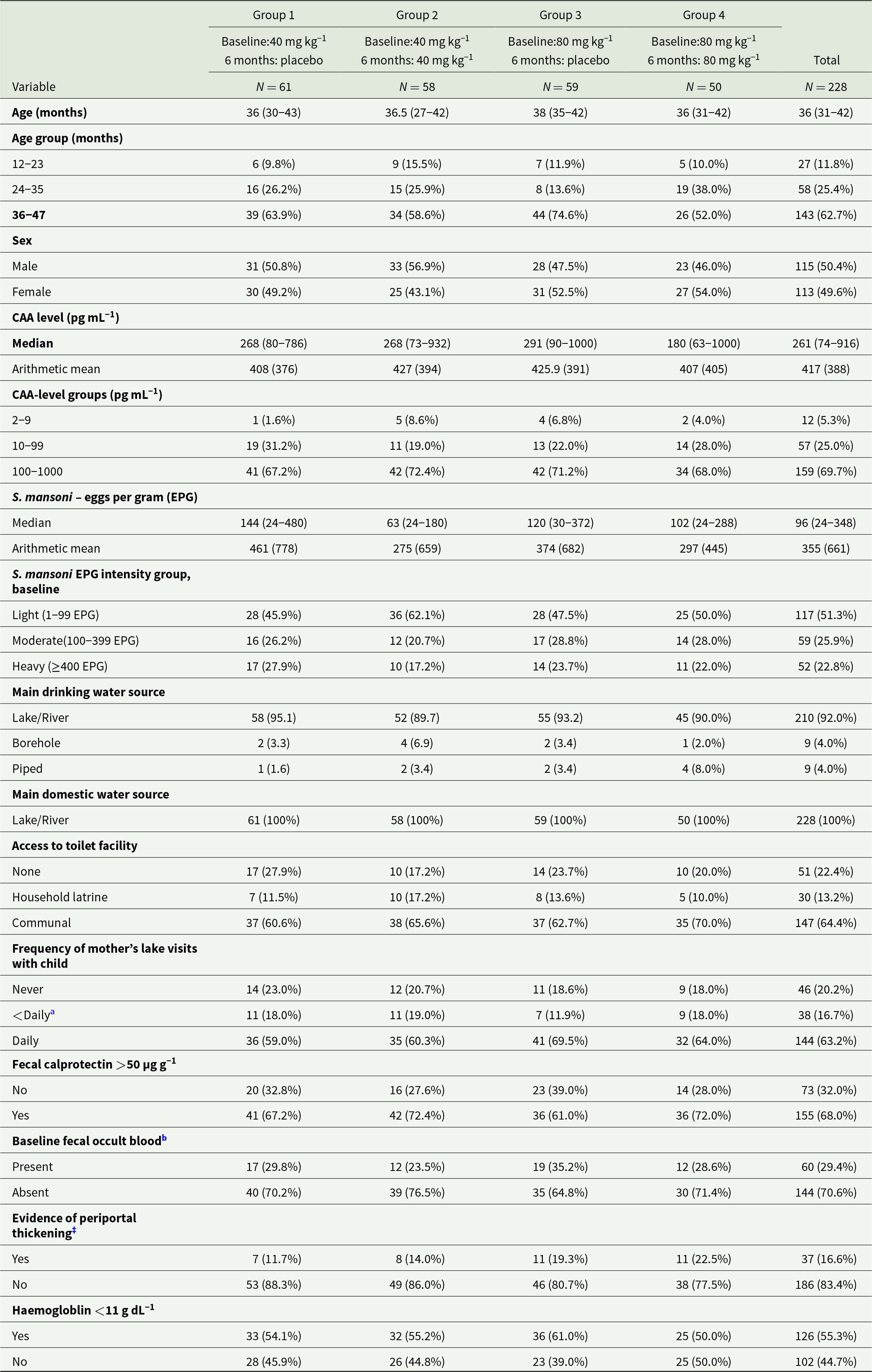
Demographic data at baseline are reported in Table 1. Overall, the median age was 36 months (IQR 31–42), and 49.6% were female. The median CAA concentration at baseline was 260.6 pg mL−1 (IQR 74.4–915.5).
Baseline socio-demographic, infection and morbidity indicators of PSAC enrolled in Praziquantel in Preschoolers (PIP) trial, Buliisa, Uganda, with complete CAA data, 2021–2023, N = 228

Table 1 Long description
Baseline socio-demographic, infection, water and sanitation, and morbidity indicators are summarized for 228 preschool-aged children split into four treatment groups of similar size. Median age was about 36 to 38 months in all groups, and roughly two thirds of children were in the 36 to 47 month age band; sex distribution was close to half male and half female. CAA concentrations were broadly comparable across groups, with medians around 180 to 291 picograms per milliliter and about seven in ten children in each group falling in the 100 to 1000 picograms per milliliter category. Schistosoma mansoni egg counts varied but showed similar patterns across groups, with about half classified as light intensity, about one quarter moderate, and about one quarter heavy. Water contact was high: nearly all households reported lake or river as the main drinking source, all reported lake or river as the main domestic water source, and about six in ten mothers reported daily lake visits with the child. Sanitation access was limited, with communal facilities most common and about one fifth to one quarter reporting no toilet facility. Morbidity indicators were also similar across groups: about two thirds had elevated fecal calprotectin, about three in ten had fecal occult blood among those measured, periportal thickening was uncommon, and just over half had hemoglobin below 11 grams per deciliter. Some measures had missing data for fecal occult blood and periportal thickening, so percentages for those rows reflect only children with available results.
CAA, circulating anodic antigen; PIP, Praziquantel In Preschoolers; EPG, eggs per gram; PSAC; preschool-aged children.
Data are median (IQR), n (%) or arithmetic mean (SD).
a <daily; at most once a week.
b Baseline fecal occult blood missing for 24 children (4 in group 1, 7 in group 2, 5 in group 3, 8 in group 4).
‡ Evidence of periportal thickening missing for 5 children (1 in group 1, 1 in group 2, 2 in group 3, 1 in group 4).
Cure rates
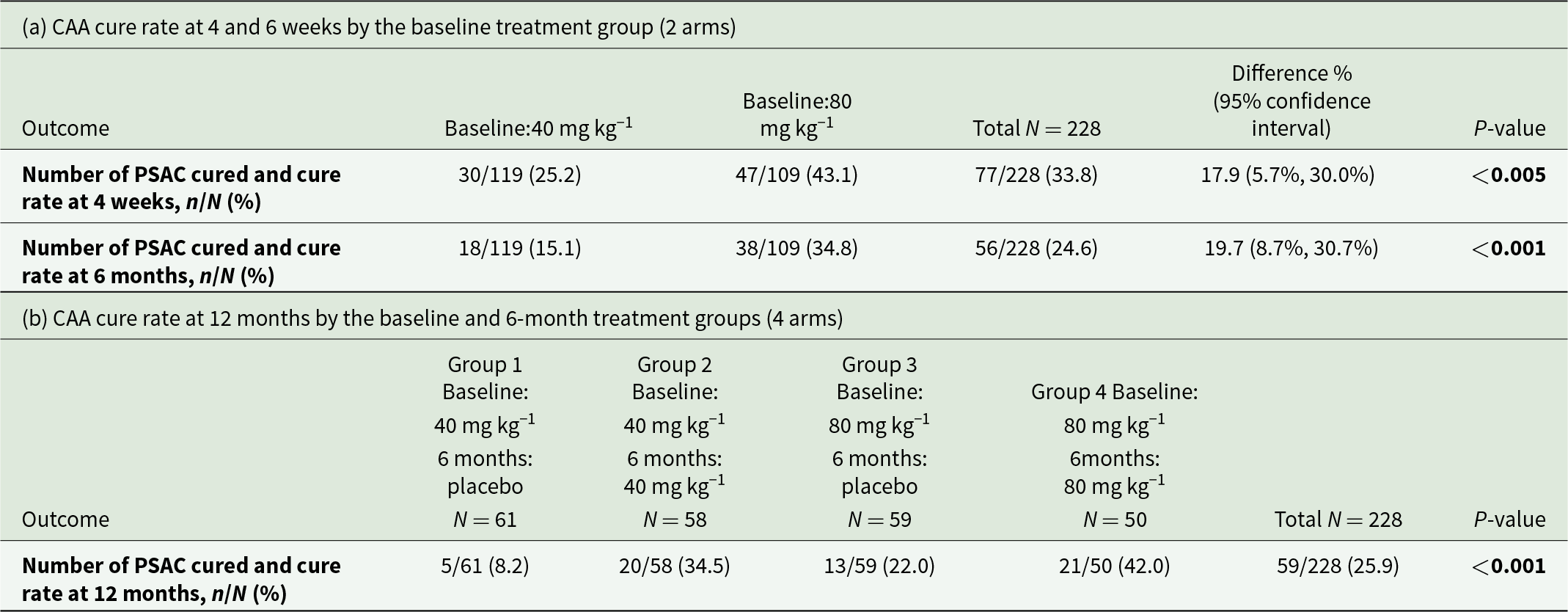
At 4 weeks and 6 months post baseline treatment, the highest CR was observed in the group that received 80 mg kg−1 of PZQ at baseline. At 12 months, the lowest CR was observed in the group that received 40 mg kg−1 of PZQ at only the baseline visit, and the highest CR was seen in the group that received 80 mg kg−1 of PZQ at both the baseline and 6 months visit. (Tables 2a and 2b).
Cure rate based on urine CAA clearance at 4 weeks, 6 months and 12 months post-treatment (N = 228)

Table 2 Long description
The table reports urine CAA clearance cure rates in preschool-aged children after treatment, comparing dosing groups over time. At 4 weeks, 80 mg per kg at baseline cured 47 of 109 children, about 43 percent, versus 30 of 119, about 25 percent, with 40 mg per kg; the between-group difference was about 18 percentage points with a statistically significant p-value below 0.005. At 6 months, cure was 38 of 109, about 35 percent, with baseline 80 mg per kg versus 18 of 119, about 15 percent, with baseline 40 mg per kg; the difference was about 20 percentage points with p below 0.001. At 12 months, four arms are shown based on baseline dose and whether a second dose was given at 6 months: placebo after 40 mg per kg had 5 of 61 cured, about 8 percent; 40 mg per kg again had 20 of 58 cured, about 35 percent; placebo after 80 mg per kg had 13 of 59 cured, about 22 percent; and 80 mg per kg again had 21 of 50 cured, about 42 percent. Overall at 12 months, 59 of 228 children were cured, about 26 percent, and differences across the four arms were statistically significant with p below 0.001. Results suggest higher dosing and repeat dosing are associated with higher cure rates, but the table summarizes group outcomes and does not adjust for other factors.
CAA, circulating anodic antigen; PSAC, preschool-aged children.
Median CAA levels
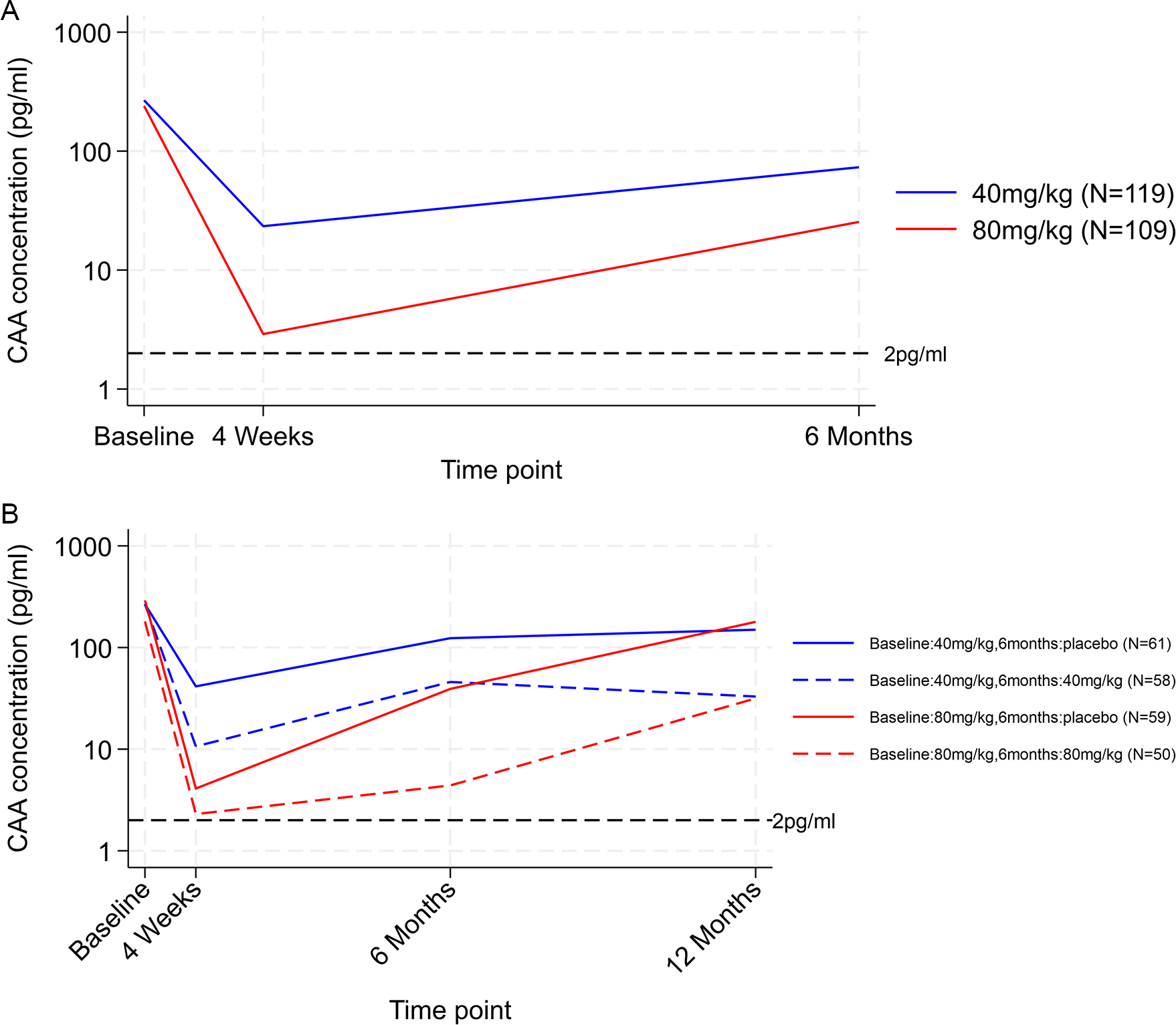
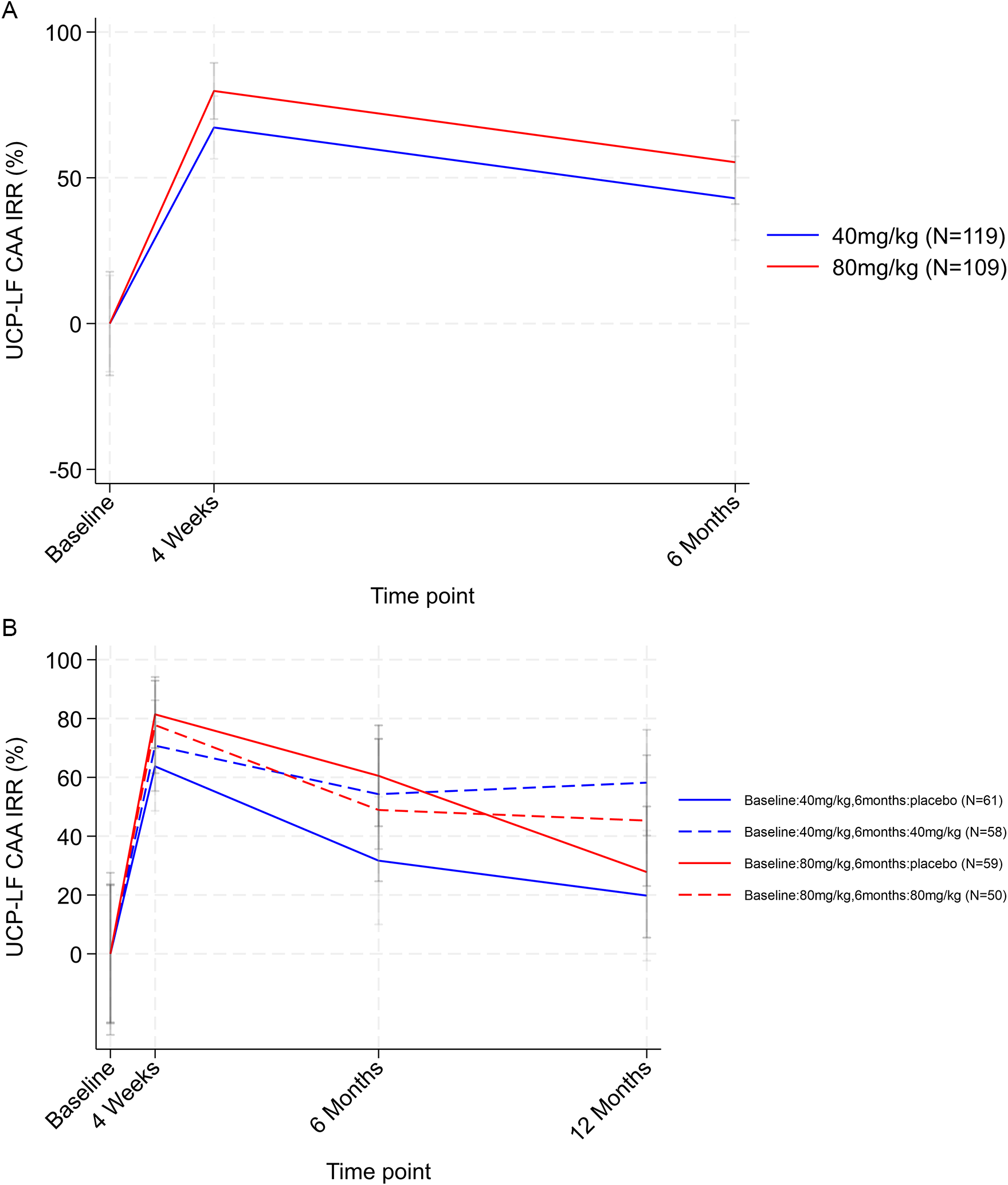
Figure 2 illustrates the infection dynamics over time based on CAA. In both groups, a decrease in CAA level was observed 4 weeks after the first treatment, with a significantly greater decrease in the groups that received 80 mg kg−1. At 6 months post baseline treatment, CAA levels increased in both groups, compared to 4 weeks. The median CAA levels at 6 months were still lower than they were at baseline. There were significant differences in median CAA levels at 4 weeks (P-value 0.003), at 6 months (P-value 0.006) between the 2 groups and at 12 months (P-value 0.002) post-baseline treatment between the 4 groups. Overall, the groups that received treatment at both baseline and 6 months had lower median CAA levels at the 12 months visit than those that received treatment at baseline and placebo at 6 months.
(A) Median CAA levels at 4 and 6 months by the baseline treatment group (2 arms). (B) Median CAA levels at 4 weeks, 6 months, and 12 months by the baseline and 6-month treatment groups (4 arms).

Intensity reduction rate
In the 2 baseline treatment arms, the highest IRR was observed at 4 weeks post-treatment: 67.3% (95% CI 56.5–78.0%) and 79.8% (95% 70.1–89.4%) in the 40 and 80 mg kg−1 groups, respectively (Figure 3A). The IRR decreased over time in all groups and no significant difference in IRR between the groups was observed at any of the post-treatment time points.
(A) IRR based on urine CAA detection with corresponding 95% confidence intervals at 4 weeks, and 6 months by the baseline treatment group (2 arms). (B) IRR based on urine CAA detection with corresponding 95% confidence intervals at 4 weeks, 6 months and 12 months by the baseline and 6-month treatment groups (4 arms).

Associations with CAA positivity
Baseline:40mg/kg 6 months: 40mg/kg
Baseline:40mg/kg 6 months: placebo
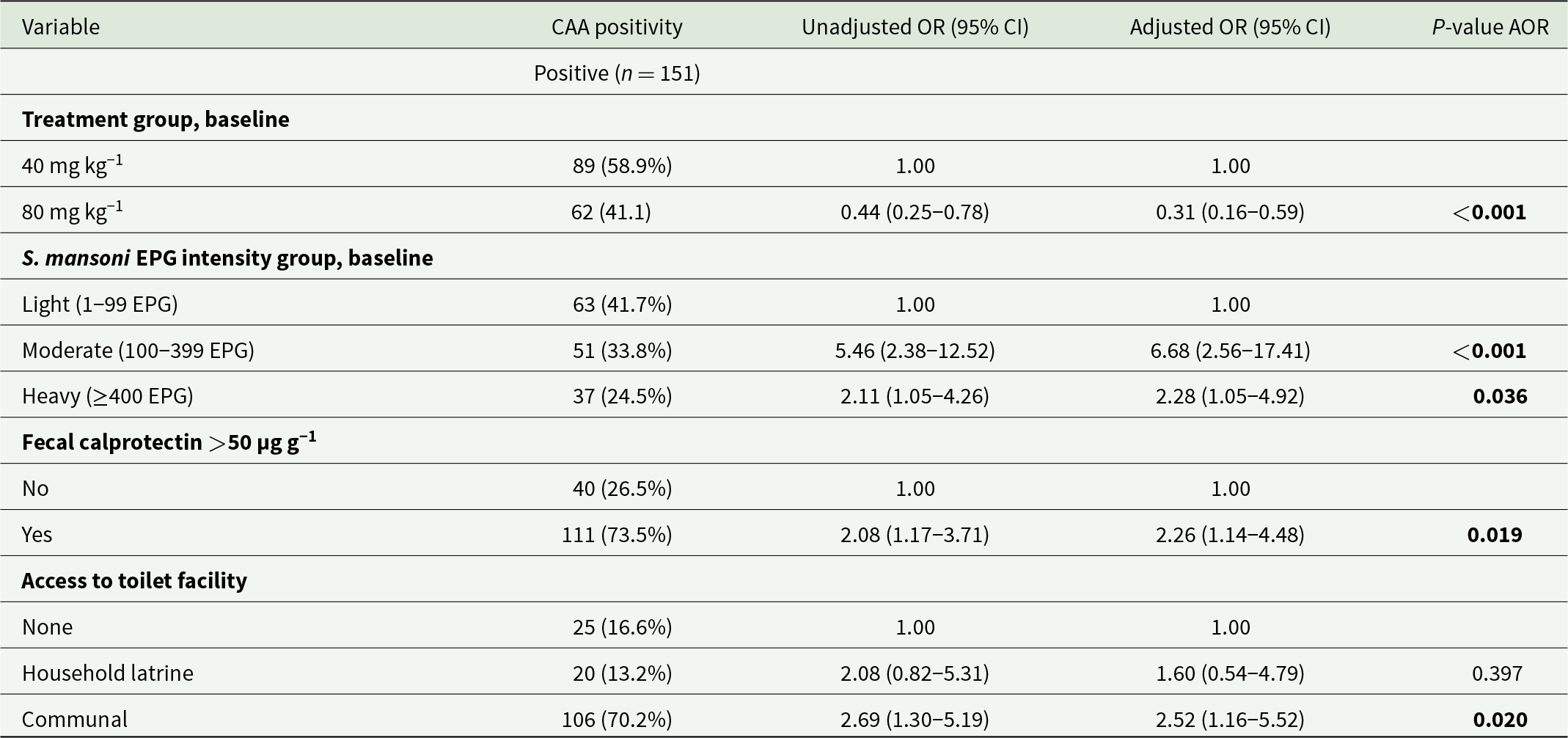
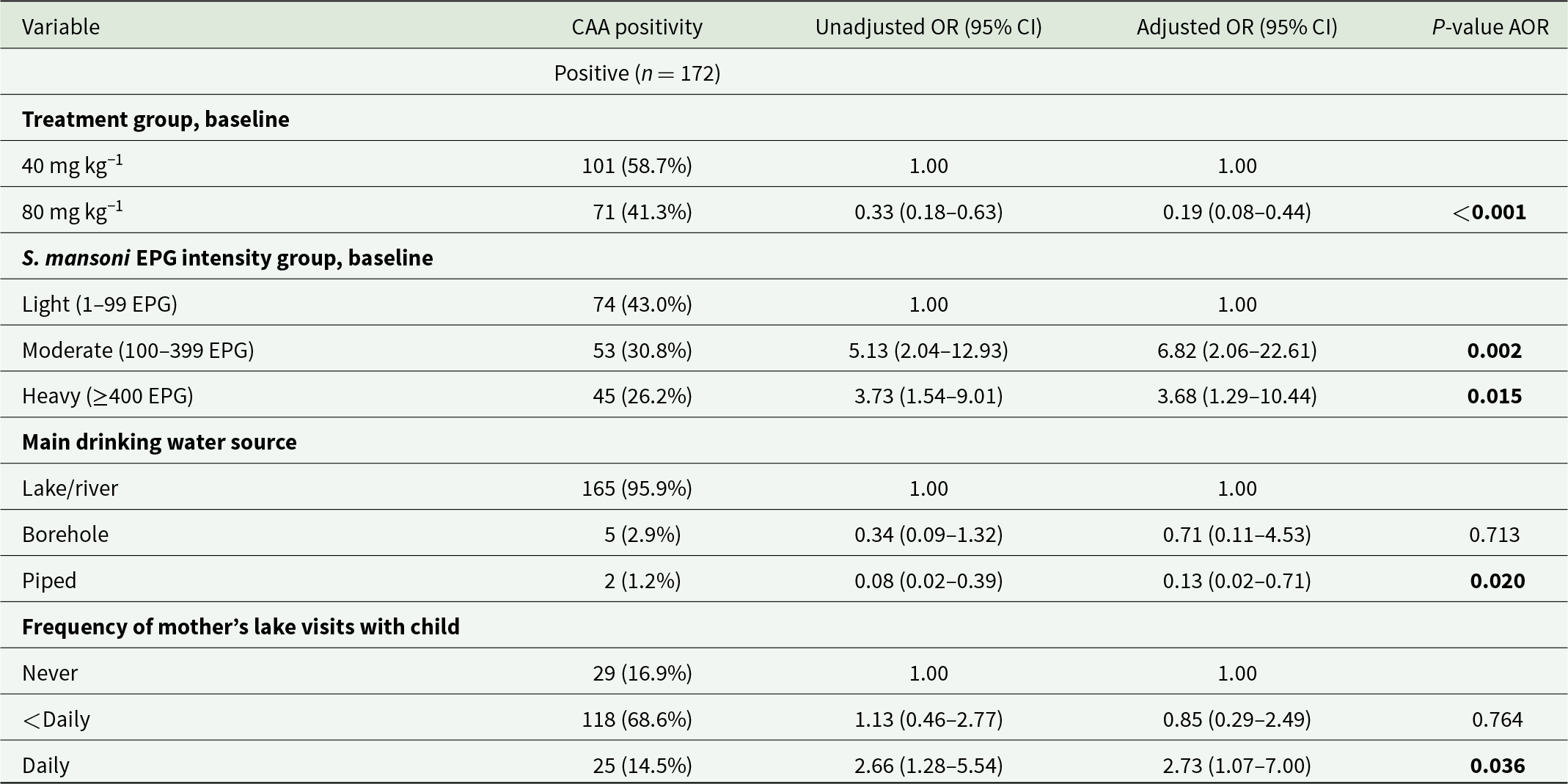
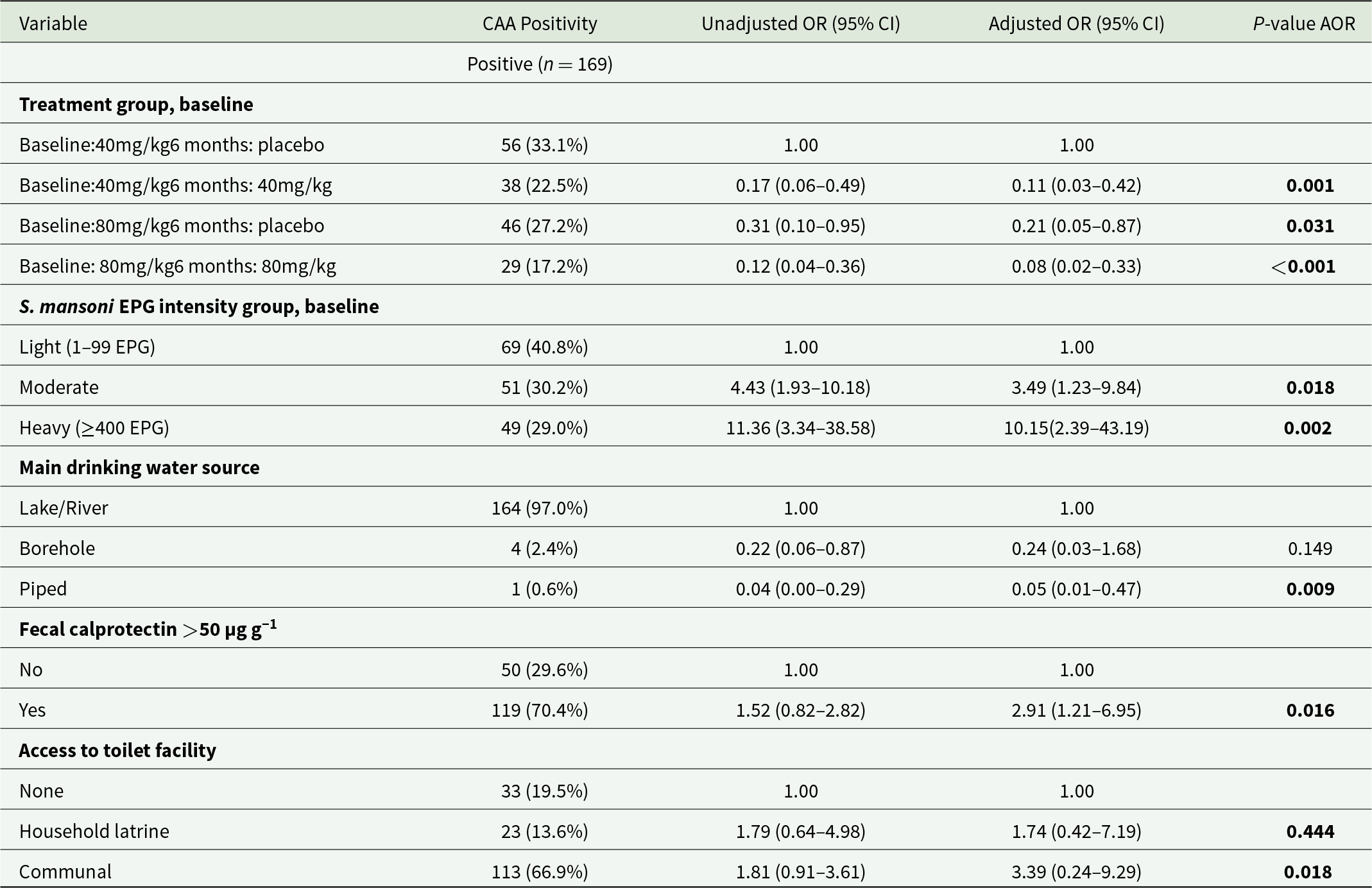
Factors associated with CAA positivity at 4 weeks, 6 months and 12 months in multivariable analyses are described in Tables 3–5, respectively. Participants who received the 80 mg kg−1 baseline PZQ dose were significantly less likely to be CAA positive at 4 weeks (OR 0.31, 95% CI 0.16–0.59), and at 6 months (OR 0.19, 95% CI 0.08–0.44), compared to those receiving standard 40 mg kg−1 dosing. Additionally, participants who received the 80 mg kg−1 PZQ at both baseline and 6 months were significantly more likely to have cleared the infection at 12 months (OR 0.08, 95% CI 0.02–0.33) compared to those receiving standard 40 mg kg−1 PZQ dosing at only baseline. Participants with a high S. mansoni EPG intensity were more likely to have a positive CAA result post-treatment, especially at 12 months post-treatment. Additionally, having a baseline fecal calprotectin measurement > 50 µg g−1 was associated with a higher likelihood of CAA positivity at 4 weeks and 12 months after baseline treatment. Daily visiting the lake resulted in 2.73 higher odds (95% CI 1.07–7.00) of being CAA infected at 6 months (Table 4), and participants with access to piped water were less likely to have a positive CAA result at 6 and 12 months post treatment.
Analysis of factors associated with persistent CAA positivity at 4 weeks post baseline treatment in multivariable analyses

Table 3 Long description
Multivariable results relate baseline factors to persistent CAA positivity at 4 weeks, reporting counts and percentages among 151 CAA-positive participants plus unadjusted and adjusted odds ratios with confidence intervals. Compared with 40 mg per kg, 80 mg per kg had lower adjusted odds of persistent positivity (adjusted odds ratio 0.31, confidence interval 0.16 to 0.59; overall treatment p value below 0.001). Using light baseline egg intensity as the reference, moderate intensity showed much higher adjusted odds (6.68, 2.56 to 17.41; p value below 0.001) and heavy intensity also increased odds (2.28, 1.05 to 4.92; p value 0.036). Participants with faecal calprotectin above 50 micrograms per gram had higher adjusted odds than those at or below that level (2.26, 1.14 to 4.48; p value 0.019). For toilet access, household latrines were not clearly different from having no facility (adjusted odds ratio 1.60, 0.54 to 4.79; p value 0.397), while communal facilities were associated with higher adjusted odds (2.52, 1.16 to 5.52; p value 0.020). Percent distributions within the CAA-positive group were: treatment 58.9 percent at 40 mg per kg and 41.1 percent at 80 mg per kg; egg intensity 41.7 percent light, 33.8 percent moderate, 24.5 percent heavy; calprotectin 73.5 percent above 50; toilet access 70.2 percent communal. Associations are observational and adjusted estimates may still reflect residual confounding, so they do not prove causation.
CAA, circulating anodic antigen; EPG, eggs per gram.
Data are n (%).
Factors associated with CAA positivity at 6 months post baseline treatment in multivariable analyses

Table 4 Long description
Multivariable results relate baseline factors to being CAA positive 6 months after treatment among 172 CAA positive participants, reporting counts with percentages plus unadjusted and adjusted odds ratios with confidence intervals and adjusted p values. Compared with 40 mg per kg, the 80 mg per kg group had much lower adjusted odds of CAA positivity (adjusted odds ratio 0.19, confidence interval 0.08 to 0.44; p less than 0.001). Using light baseline egg intensity as the reference, moderate intensity showed higher adjusted odds (6.82, 2.06 to 22.61; p 0.002) and heavy intensity also showed higher adjusted odds (3.68, 1.29 to 10.44; p 0.015). For drinking water source, lake or river was the reference; piped water was associated with lower adjusted odds (0.13, 0.02 to 0.71; p 0.020), while borehole water was not clearly different (0.71, 0.11 to 4.53; p 0.713). For mothers’ lake visits with the child, daily visits increased adjusted odds compared with never (2.73, 1.07 to 7.00; p 0.036), while less than daily visits did not show a clear difference (0.85, 0.29 to 2.49; p 0.764). Some categories have very small counts, especially piped and borehole water, so those estimates are less precise as reflected by wider confidence intervals.
CAA, circulating anodic antigen; EPG, eggs per gram.
Data are n (%).
Factors associated with CAA positivity at 12 months post baseline treatment in multivariable analyses

Table 5 Long description
Multivariable results relate participant characteristics and treatment regimens to CAA positivity at 12 months, reporting counts and percentages positive plus unadjusted and adjusted odds ratios with p values. The reference treatment group was baseline forty milligrams per kilogram, with fifty six positives (about one third). Compared with that reference, all other listed treatment regimens had lower adjusted odds of CAA positivity, with the lowest odds for baseline eighty milligrams per kilogram with placebo at six months (adjusted odds ratio about 0.08, p less than 0.001). Baseline infection intensity showed a strong dose response: moderate intensity had higher adjusted odds than light (about 3.49, p 0.002), and heavy intensity had the highest adjusted odds (about 10.15). Drinking water source was mostly lake or river; piped water was associated with much lower adjusted odds (about 0.05, p 0.009), while borehole was not statistically clear after adjustment (p 0.149). Faecal calprotectin above fifty micrograms per gram was associated with higher adjusted odds (about 2.91, p 0.016). Toilet access categories had wide confidence intervals and mixed p values, so those estimates are less precise and should be interpreted cautiously.
CAA, circulating anodic antigen; EPG, eggs per gram.
Data are n (%).
Discussion
This study provides a highly sensitive assessment of crushed tablets PZQ efficacy in PSAC by applying CAA detection within an RCT. In contrast to previously reported outcomes based on stool microscopy (KK), CRs estimated by CAA were consistently lower, indicating that a substantial proportion of low-intensity infections are missed with KK and persist after treatment. Nevertheless, a clear dose–response relationship was observed, with higher CRs following 80 mg kg−1 compared to 40 mg kg−1 and further improved when treatment at the higher dose was repeated at 6 months. While all treatment regimens resulted in significant reduction in infection intensity, complete clearance of infection was less frequently achieved, particularly at the standard 40 mg kg−1 dose.
Various studies have reported better efficacy of PZQ with repeated administration of a standard dose of 40 mg kg−1 (given at varying intervals) compared to a single dose of 40 mg kg−1 (Ojurongbe et al., Reference Ojurongbe, Sina-agbaje, Busari, Okorie, Ojurongbe and Akindele2014; Senghor et al., Reference Senghor, Diaw, Doucoure, Sylla, Seye, Talla, Bâ, Diallo and Sokhna2015; Bustinduy et al., Reference Bustinduy, Waterhouse, de Sousa-figueiredo, Roberts, Atuhaire, Van Dam, Corstjens, Scott, Stanton and Kabatereine2016; Munisi et al., Reference Munisi, Buza, Mpolya, Angelo and Kinung’hi2017; Fukushige et al., Reference Fukushige, Chase-topping, Woolhouse and Mutapi2021; Hoekstra et al., Reference Hoekstra, Casacuberta-Partal, van Lieshout, Corstjens, Tsonaka, Assaré, Silué, N’Goran, N’Gbesso and Brienen2022a). To date, no study had explored an even higher PZQ dose (80 mg kg−1), given as 2 doses of 40 mg kg−1 3 h apart would improve the CAA-based CR in comparison to a standard dose of 40 mg kg−1 as well as repeating this same dose (40 or 80 mg kg−1) in a subset of participants 6 months after the initial dose. Results from the main trial, from which the current study is derived, showed that 80 mg kg−1 (2 40 mg kg−1 doses given 3 h apart) was safe, well tolerated and more effective in achieving parasitological cure (based on EPG) in PSAC (CR: 90%) compared to a single dose of 40 mg kg−1 (CR: 67%) (Bustinduy et al., Reference Bustinduy, Edielu, Ayebazibwe, Nakyesige, Anguajibi, Mpooya, Nassuna, Adriko, Elliott and van Dam2025). While the efficacy of PZQ is commonly determined by parasitological CR, the current analysis considered detection of CAA using the UCP-LF CAA urine assay to determine the efficacy of PZQ treatment. CAA detection reflects the presence of living worms and therefore provides a more direct measure of active infection. In comparison to egg-based CRs, we observed lower CAA-based CRs in both groups at 4 weeks post treatment: 25.2% and 43.1%, in the 40 and 80 mg kg−1 group, respectively. The UCP-LF CAA urine assay is more sensitive compared to traditional stool microscopy, allowing detection of low-intensity or persisting infections that are missed by microscopy, resulting in lower estimated CRs. Similar differences between CAA- and egg-based CRs have been reported in other settings, suggesting that this is a general effect of diagnostic sensitivity rather than a population-specific finding (Sousa et al., Reference Sousa, Van Dam, Pinheiro, De Dood, Peralta, Peralta, D. F. Daher, Corstjens and Bezerra2019; Hoekstra et al., Reference Hoekstra, Casacuberta-Partal, van Lieshout, Corstjens, Tsonaka, Assaré, Silué, N’Goran, N’Gbesso and Brienen2022a; Gerstenberg et al., Reference Gerstenberg, Honkpehedji, Dejon-agobe, Mahmoudou, Recker, Mba, Maloum, Lontchi, Moure and Meulah2024; de Freitas Galvão et al., Reference de Freitas Galvão, Hoekstra, Corstjens, Pinheiro, da Silva, Barbosa, Sá, van Dam and de Moraes Bezerra2025).
In regard to dosing frequency, a meta-analysis by King et al. in 2011 concluded that repeated dosing within weeks after the initial dose had incremental benefits in terms of cure (King et al., Reference King, Olbrych, Soon, Singer, Carter and Colley2011). In addition, a cluster randomized trial from Côte d’Ivoire demonstrated that biannual mass drug administration achieved higher CRs compared with annual treatment among SAC, both using a standard single dose of PZQ (40 mg kg−1) (Ouattara et al., Reference Ouattara, Bassa, Diakité, Hattendorf, Coulibaly, Yao, Tian-bi, Konan, Assaré and Koné2022). Another randomized trial in Ugandan children aged 1–5 years concluded that 2 PZQ doses (40 mg kg−1) given 2 weeks apart resulted in significantly higher reduction in number of eggs compared to a single dose of 40 mg kg−1 (Nalugwa et al., Reference Nalugwa, Nuwaha, Tukahebwa and Olsen2015). Since the present study explored treatment effects at 6 months, a time point when reinfection may already have occurred, it offers the advantage of reflecting real life transmission dynamics typically observed in endemic settings. Findings from the present study suggest that biannual treatments have an impact on CAA cure and CAA intensity levels at later time points, indicating potential benefits for sustained disease control.
In addition to the observed significant differences in CAA-defined CRs across the 4 groups, this study demonstrated significant differences in the reduction of infection intensity, as reflected by median CAA levels. Higher PZQ dosing and biannual treatment were associated with greater reductions in CAA levels, supporting their added value not only in improving CRs but also in reducing worm burdens. These findings align with previous work reporting increased IRR following multiple rounds of PZQ (40 mg kg−1) compared to a single treatment (Hoekstra et al., Reference Hoekstra, Casacuberta-Partal, van Lieshout, Corstjens, Tsonaka, Assaré, Silué, N’Goran, N’Gbesso and Brienen2022a). A clear temporal pattern was observed, with median CAA levels reaching the lowest point at 4 weeks post-treatment, suggesting that this time point most accurately captures drug efficacy. However, the subsequent increase in CAA levels at 6 and 12 months post-treatment indicates that these longer-term measurements are influenced by post-treatment dynamics. The rebound in CAA levels likely reflects a combination of ongoing transmission (reinfection) and the survival or maturation of worms that were not susceptible at the time of treatment. In endemic settings, rapid reinfection is expected, particularly in young children with frequent water contact, and may have contributed to the observed increase. At the same time, the detection of low-level infections by CAA suggests that complete parasite clearance is not consistently achieved, even with higher or repeated dosing. Repeating treatment at 6 months did not prevent the re-emergence of infection at later time points, highlighting the challenges of sustaining parasite clearance by PZQ treatment alone.
The findings in this paper suggest that while the 4-week time point is most appropriate for assessing PZQ efficacy, longer follow-up remains essential for capturing reinfection dynamics and the broader impact of treatment strategies. Moreover, they highlight the need for complementary control measures alongside PZQ, including improved access to safe water, sanitation and hygiene (WASH), health education and behaviour change interventions, to achieve sustained reduction in transmission.
In this study, we also explored the predictors of CAA positivity at the 3 time points using socio-demographic characteristics and baseline morbidity indicators. Fecal calprotectin was measured as a marker of intestinal morbidity in the current study. Measurement of fecal calprotectin >50 µg g−1 was associated with a higher likelihood of having a positive CAA result post-treatment. These findings highlight worrisome ongoing intestinal damage in children with persistent infection, as also described previously (Betson et al., Reference Betson, Sousa-Figueiredo, Kabatereine and Stothard2012; Bustinduy et al., Reference Bustinduy, Sousa-Figueiredo, Adriko, Betson, Fenwick, Kabatereine and Stothard2013). Participants with moderate (100–399 EPG) and heavy (>400 EPG) infection intensities were most likely to remain CAA-positive post-treatment, which has been observed in previous studies as well: high-intensity infections are less likely to reach cure (Utzinger et al., Reference Utzinger, N’goran, N’dri, Lengeler and Tanner2000; Montresor, Reference Montresor2011).
The present study also reported an association between higher likelihood of post-treatment CAA positivity with more frequent lake visits, which is likely due to higher reinfection rates during the follow-up. Similarly, other studies have found an association between higher risk of schistosome infection and greater water contact (Moses et al., Reference Moses, Adriko, Kibwika, Tukahebwa, Faust and Lamberton2021; Trienekens et al., Reference Trienekens, Faust, Besigye, Pickering, Tukahebwa, Seeley and Lamberton2022; Reitzug et al., Reference Reitzug, Ledien and Chami2023). Furthermore, a positive association was observed between having the lake as the main source of water and CAA positivity at 6 and 12 months post-treatment, suggesting that treatment must always be complemented with other control measures. These may include behaviour change by encouraging use of safe water and increasing access to clean water in order to enhance the effectiveness of PZQ and progress towards interrupting transmission. Schistosomiasis control programmes should consider intensive implementation of Water, Sanitation and Hygiene programmes along with optimal dosing for PSAC during MDA activities to ultimately achieve disease elimination.
In conclusion, the use of highly sensitive diagnostics, such as the UCP-LF CAA assay, remains crucial for accurately evaluating PZQ treatment efficacy. Future work should also consider the potential role of emerging tools such as the FIND CAA-RDT which may provide an accessible sensitive method that could improve diagnosis and guide treatment strategies in PSAC (FIND, 2026). In addition, ongoing efforts to develop and evaluate paediatric PZQ formulations (Reinhard-Rupp and Klohe, Reference Reinhard-Rupp and Klohe2017; World Health Organization, 2024) may further improve the delivery and acceptability of treatment in PSAC, thereby supporting broader inclusion of this age group in schistosomiasis control programmes. Although higher and repeated dosing improves CRs, complete and sustained clearance of infection remains difficult to achieve in endemic settings. These findings underscore the need to re-evaluate current treatment strategies and suggest that integration of access to safe water would likely reduce child morbidities due to schistosomiasis and be beneficial for achieving elimination of schistosomiasis in endemic settings.
Limitations
This study assessed CAA at baseline and 4 weeks, 6 months and 12 months after treatment with a possibility of reinfection at the latter 2 time points as the PSAC were still exposed to the same risk factors. Additionally, it was difficult to distinguish between treatment failure, reinfection or persistent antigenemia, which could potentially bias CR estimates. The findings, however, demonstrate a higher, long-term antigenic cure in the 80 mg kg−1 group. Additionally, not all 354 PSAC enrolled into the main study were included in the current analysis, as only those PSAC with a complete CAA dataset (N = 228) were included. This was because urine samples were not received for all PSAC at the different time points due to missed visits, and for 32 participants the positive KK result could not be confirmed by CAA.
Supplementary material
The supplementary material for this article can be found at https://doi.org/10.1017/S0031182026102431.
Data availability statement
The data that support the findings of this study are not publicly available and may be availed from the authors upon reasonable request and permission from the principal investigators.
Acknowledgements
The authors are especially grateful to the study participants and their caretakers, without whom this data wouldn’t have been generated, the Buliisa local authorities and District Health Office for the assistance rendered towards completion of the trial. The authors also acknowledge the support of the field teams in Buliisa, Hoima and the staff from the Vector Control Division in Uganda and the PIP trial at large. The authors are grateful to Claudia de Dood and Stan Hilt for offering training on the UCP-LF CAA assay and the MRC/UVRI & LSHTM Uganda research unit where the laboratory UCP-LF CAA assay was performed.
Author contributions
A.L.B., J.F.F., P.H., G.J.D. and G.K.A. conceptualized and designed the study. G.K.A. and P.H. drafted the manuscript, and are both first authors on this manuscript. A.L.B., J.F.F., P.H., G.J.D., E.L., S.C., P.A.M., G.K.A. edited the manuscript and provided invaluable guidance. All authors read and approved the final version of the manuscript. G.K.A., P.T.H., P.A.M., G.J.D., and A.B. contributed equally to this manuscript.
Financial support
This work was supported by US National Institutes of Health’s National Institute of Child Health and Human Development (grant number R01 HD095562 to JFF and ALB). The trial registration information is included: ClinicalTrials.govNCT03640377. Registered on 21 Aug 2018.
Competing interests
The authors declare there are no conflicts of interest.
Ethical standards
The trial was approved by the research ethics committee of Uganda Virus Research Institute (UVRI REC)-reference GC/127/708, the Rhode Island Hospital Institutional Review Board (IRB)-reference 401020, the Uganda National Council for Science and Technology-reference CTA013, and the research and ethics committee of The London School of Hygiene and Tropical Medicine-reference 1485. Before enrollment, written informed consent was sought from the participant’s parent or legal guardian.


 Open access

