


Strong evidence suggests that consumption of a healthy diet can reduce chronic disease risk(1), but there is an urgent need to find effective methods of supporting individuals to make and sustain healthy dietary behaviour change. Lifestyle interventions encouraging dietary behaviour change are often intensive and expensive to roll out through health-care systems. Hence, there is increasing interest in the use of peer-supported interventions (PSI) as a potential flexible, cost-effective and more scalable strategy for improving health behaviours(Reference Heisler2). PSI have been shown to be an effective strategy for supporting self-management of chronic diseases, such as diabetes(Reference Dale, Williams and Bowyer3, Reference Zhang, Yang and Sun4), and improvement of health behaviours, including physical activity(Reference Webel, Okonsky and Trompeta5, Reference Best, Miller and Eng6); however, the effect of PSI on dietary behaviour change is not yet clear.
Findings from intervention studies are inconsistent, largely owing to heterogeneity between studies in terms of populations studied, PSI models and delivery(Reference Dennis7). There is no widely accepted definition of a PSI, which has led to broad interpretations of its meaning. PSI are typically delivered by lay individuals or community health workers (CHW), as opposed to health professionals, and these individuals may assume different roles including a peer supporter, peer educator, peer counsellor, peer facilitator or peer case manager(Reference Ramchand, Ahluwalia and Xenakis8). PSI can be delivered via different models, including group, dyadic or a combination, and via face-to-face, telephone or the web. A recent systematic review suggested that a dyadic PSI model may be more effective in encouraging behaviour change than a group-based model or a combination of dyadic and group-based support(Reference Ramchand, Ahluwalia and Xenakis8). Current literature, however, does not clearly describe an optimal PSI model, peer role, or the attributes, skills and training and support requirements needed to effectively undertake a peer role, and there is limited information on measurement of fidelity of PSI delivery. While optimal PSI durations have been suggested for improving chronic disease self-management(Reference Zhang, Yang and Sun4) and physical activity(Reference Best, Miller and Eng6), the duration of PSI needed to effectively encourage dietary behaviour change is not known. PSI to improve health behaviour have included various population groups(Reference Ramchand, Ahluwalia and Xenakis8); however, it is not clear if PSI may be more effective in encouraging behaviour change among specific groups within the adult population. Additionally, previous research has not considered the impact of behaviour change theory/techniques used on PSI effectiveness(Reference Webel, Okonsky and Trompeta5, Reference Ramchand, Ahluwalia and Xenakis8). Behaviour change theory and techniques are a key element of behaviour change interventions, and it has been demonstrated that the theories and techniques used could impact the effectiveness of behaviour change interventions(Reference Webb, Jospeh and Yardley9). Information on these PSI characteristics is therefore needed to guide the development of PSI targeting dietary behaviour change for public health.
Previous systematic reviews have examined the effect of PSI on health behaviours(Reference Webel, Okonsky and Trompeta5, Reference Ramchand, Ahluwalia and Xenakis8) but, to our knowledge, none have focused on dietary behaviour change in the general adult population. An evaluation of existing evidence is required to determine the effectiveness of PSI for encouraging dietary behaviour change in adults, which in turn will help to inform the design of future studies and eventual public health policy and practice. Therefore, the present systematic review aimed to examine randomised controlled trials that measure the effectiveness of PSI on dietary outcomes in adults, in comparison with other types of intervention and/or a control, and to consider intervention characteristics that may be linked with effectiveness including PSI model used, peer role, peer attributes, behaviour change theory/techniques used, intervention duration and intensity, and population studied.
Methods
The review protocol is registered on PROSPERO (www.crd.york.ac.uk/PROSPERO/; identification number CRD42014009994). Subsequent to protocol registration, it was decided to include all types of PSI rather than peer support alone to enable comparison of effectiveness of interventions by peer role. PSI were described according to definitions provided in a recently conducted review(Reference Ramchand, Ahluwalia and Xenakis8). This section reports the review protocol according to PRISMA (Preferred Reporting Items for Systematic Reviews and Meta-Analyses) guidelines(Reference Moher, Liberati and Tetzlaff10).
Search strategy
A search strategy was devised considering key search terms used in previous PSI or dietary related reviews. A structured search using the devised strategy was then conducted in five electronic databases: MEDLINE, EMBASE, PsycINFO, CINAHL and the Cochrane Library. Databases were searched from inception until 14 June 2018. The search strategy consisted of subject headings and keyword terms relating to PSI, which were combined with terms relating to dietary behaviour change. The search strategy developed in MEDLINE is presented as an example (see online supplementary material, Table S1). This strategy was tailored for other databases. Searches were limited to those published in English language, human studies and adult studies in all databases where possible. Applying an age limit can lead to loss of studies that are not yet coded in the database by age. To assess the impact of this limit, the search was limited for each age limit in each database and run selecting to ‘not’ include these limits, leaving studies not coded by age. A significant number of studies were not coded by age in EMBASE; therefore, the search was rerun in this database without limiting for age.
Studies obtained were screened for suitability for inclusion in the review using the following inclusion and exclusion criteria, which were defined a priori.
Inclusion criteria
1. Adult subjects.
2. Assessed effectiveness of a PSI on dietary behaviour change in comparison with other interventions and/or a control.
3. Dietary or weight-related primary or secondary outcome. Dietary outcomes: any measurement of diet such as estimated intake, change in intake of energy, nutrients or food groups, or biomarker data. Weight-related outcomes: weight, BMI, waist circumference and waist-to-hip ratio. While weight-related outcomes are an indirect indication of dietary behaviour, few randomised controlled trials have assessed dietary behaviour change outcomes, so inclusion of anthropometric measures provided useful additional information.
4. Randomised controlled trial, to determine whether a cause-and-effect relationship between PSI and dietary or weight-related outcomes exists. This study design was selected as it is the gold standard method for assessing the effect of interventions. Other study designs such as quasi-experimental studies were excluded because, due to lack of randomisation, systematic differences between intervention groups are not eliminated at the outset which weakens the ability to determine causality.
5. As the length of time needed to establish dietary behaviour change is not clear, interventions of all durations and lengths of follow-up were included.
Exclusion criteria
1. Studies targeting pregnant women, eating disorders or malnutrition.
2. Studies considering multiple behaviours where the effects of the intervention on diet could not be determined.
3. Multicomponent interventions where the effects of the PSI could not be determined.
4. Studies where it was unclear if the intervention was peer-led.
5. Interventions that included a peer-led component but were primarily professionally led.
6. Web interventions that did not have an interactive/tailored component.
Initially, titles of studies were removed where it was clear that they would not be relevant for inclusion. Abstracts of potentially relevant titles were then obtained and screened. This process was conducted by the principal reviewer, due to the large volume of studies obtained. Full texts of potentially relevant abstracts were then obtained and were all screened independently by two researchers, with discrepancies resolved through discussion.
Data extraction
Data extraction was undertaken by the principal reviewer using a data extraction form, which was developed for the review and pilot tested on a small sample of studies (n 5) to ensure the desired data were captured. Data extraction was independently checked by another reviewer, with discrepancies between reviewers being resolved through discussion. Extracted data included participation details (number in analysis, gender, age, geographical region and characteristics), intervention details (intervention groups and outcome measure) and PSI details (content, behaviour change techniques (BCT) and theoretical framework used, model, peer, peer role, peer training and support, fidelity of PSI delivery and duration/intensity) and results (effect of PSI v. other intervention and/or control). BCT are strategies used to facilitate behaviour change and are therefore key components of dietary behaviour change interventions. BCT used in each PSI were extracted to provide insight into intervention characteristics associated with effectiveness of PSI to encourage dietary behaviour change. BCT were identified using a forty-item taxonomy of BCT to aid dietary behaviour change(Reference Michie, Ashford and Sniehotta11). BCT used by both the experimental intervention and the comparison intervention were not included. To enable comparison of studies, PSI details, including intensity, model and peer roles, were extracted and categorised as suggested by a recent review of peer-led interventions(Reference Ramchand, Ahluwalia and Xenakis8). As a measure of PSI intensity, it was recorded if the PSI was: (i) a single intervention; (ii) an intervention with multiple time points; or (iii) an ongoing intervention. PSI models were recorded as group, dyadic or hybrid (group and dyadic). Peer roles were defined as one or more of the following: (i) peer case manager (helps individuals access or coordinate health and social services including referral to resources, or managing intervention activities); (ii) peer counsellor (provides knowledge, guidance and tools to help individuals set and reach their health goals); (iii) peer educator (delivers formal education utilising a protocolled curriculum and approach); (iv) peer facilitator (facilitates group interactions to create or strengthen relationships to help individuals set and reach goals together); and (v) peer support (informal, unstructured support such as providing reminders, encouragement or reinforcement, informal coaching, and sharing personal experiences or narrative)(Reference Ramchand, Ahluwalia and Xenakis8).
Additionally, risk of bias was assessed at the study level by the principal reviewer to aid with interpretation of the strength of findings. The JADAD scale(Reference Jadad, Moore and Carroll12), a widely used quality assessment tool due to its simplicity, reliability and validity, was utilised. The scale assesses randomisation, blinding and participant follow-up. Points were awarded if: (i) the study was described as randomised; (ii) the method used to generate the sequence of randomisation was described and appropriate; (iii) the method of double blinding was described; (iv) the method of double blinding was appropriate; and (v) the number of and reasons for withdrawals were stated. Based on the JADAD score range obtained, methodological quality was categorised as low (0–1 points), moderate (2 points) or high (3–5 points).
Data synthesis
Due to the heterogeneity of included studies, a narrative synthesis of results was undertaken(Reference Popay, Roberts and Sowden13). A descriptive overview is provided of included studies, which includes information extracted on participation details, intervention details and PSI details. Findings were synthesised on the effect of PSI on dietary behaviour change outcomes, specifically if PSI were more effective than alternative methods of support. This was synthesised for all studies and then by type of dietary outcome measure used (dietary or anthropometric). Relationships in the data were explored through looking at the effect of PSI characteristics on dietary behaviour change including PSI model used, peer type/role used, behaviour change theory/techniques used, PSI duration/intensity and population studied. Specifically, this was done through comparison of these characteristics in studies reporting that PSI were more effective than alternative methods, or reporting mixed results, with studies that found no significant difference between PSI and control groups. This was explored initially in all studies and then by type of dietary outcome used. To help ensure a robust analysis was conducted, the methodological quality of included studies was assessed(Reference Jadad, Moore and Carroll12) and the results of high-quality studies on the effect of PSI on dietary behaviour change outcome(s) were compared with the overall results from all studies on the effect of PSI on dietary behaviour change outcome(s), to confirm that they were consistent.
Results
Effect of peer-supported interventions on dietary behaviour change
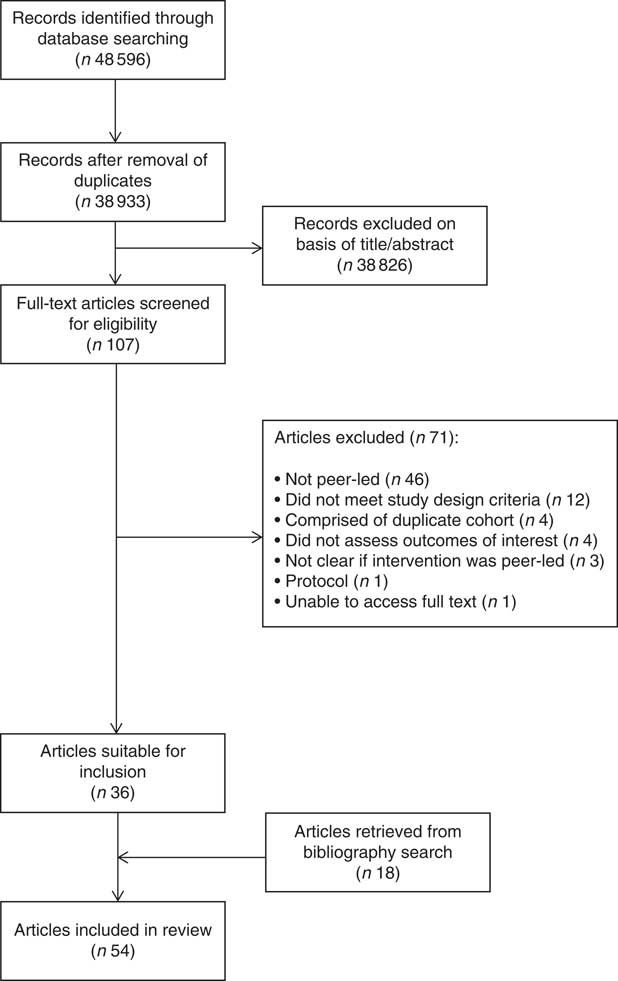
A total of fifty-four studies were included within the review(Reference Perri, Lauer and Yancey14–Reference Allicock, Campbell and Valle67) (Fig. 1). The effect of PSI on dietary behaviour change outcomes varied (Table 1). In comparison with alternative methods of support or a control, fifteen studies (28 %) reported that PSI were more effective for encouraging dietary behaviour change, seventeen (31 %) reported that there were no significant differences between methods, six (11 %) reported mixed results within each dietary behaviour change outcome measured (i.e. different results for different intervention groups/time points) and sixteen (30 %) reported mixed results between dietary behaviour change outcomes measured (i.e. different results for different dietary outcome measures in studies measuring more than one dietary outcome measure). To consider these findings further, studies were categorised into subsets based on outcome(s) used. Outcomes included dietary pattern (n 11), fruit and vegetable intake (n 17), fat intake (n 18), intake of other nutrients/foods (n 13), weight (n 27), BMI (n 23), and waist and hip measurements (n 18).
Summary of study selection process for the present systematic review on the effectiveness of peer-supported interventions for encouraging dietary behaviour change in adults
Summary of the effect of peer-supported interventions (PSI) on dietary behaviour change outcomes (n 54)
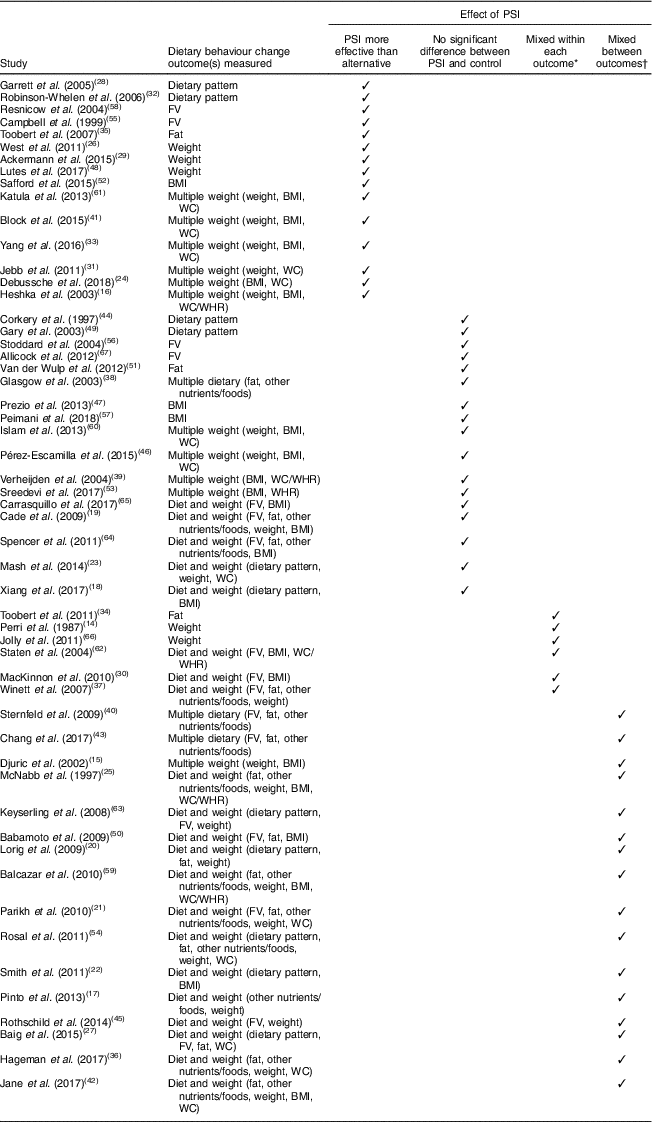
FV, fruit and vegetables; WC, waist circumference; WHR, waist-to-hip ratio.
* Mixed within each outcome: different results for different intervention groups/at different time points.
† Mixed between outcomes: different results for different dietary behaviour change outcome measures.
A total of thirty-five studies assessed the effect of PSI on dietary outcomes (Table 2). Eleven studies assessed the effect of PSI on overall dietary pattern. Four (36 %) of these studies used questionnaires to measure diet that were not validated for the study population. Just over half of the studies assessing dietary patterns reported that there was no significant difference between PSI and a control for improving diet (n 6; 55 %). In total, seventeen studies assessed the effect of PSI on fruit and vegetable intake. Most used validated measures of fruit and vegetable assessment including food diaries, FFQ and specific questions on diet. Five studies (29 %) reported that PSI were more effective than alternative interventions and/or a control for improving fruit and vegetable intake. Ten studies (59 %) reported no significant difference between PSI and alternative interventions and/or a control for improving fruit and vegetable intake. The remaining two studies (12 %) reported mixed results. Eighteen studies examined the effect of PSI on fat intake. Most used validated measures including food diaries, FFQ, dietary recalls and specific questions on diet. Eight studies (44 %) reported that PSI were more effective than a control for improving fat intake, eight studies (44 %) found no significant difference between PSI and an alternative intervention and/or a control for improving fat intake, and two studies (11 %) reported mixed results. Thirteen studies assessed the effect of PSI on intake of other nutrients/foods, including energy, protein, carbohydrates, starch, fibre, sugar, sugar-sweetened beverages, non-sugar sweetened beverages, salt and fast foods. Most studies used validated measures to assess intakes of these nutrients including food diaries, FFQ, dietary recalls and specific questions on diet. One study out of thirteen (8 %) reported that a PSI was more effective than a control for reducing salt intake. Eight studies out of thirteen (62 %) reported no significant difference in intake of various nutrients between PSI and alternative interventions and/or a control. The remaining four studies (31 %) reported mixed results.
Effect of peer-supported interventions (PSI) on dietary outcomes (n 35)
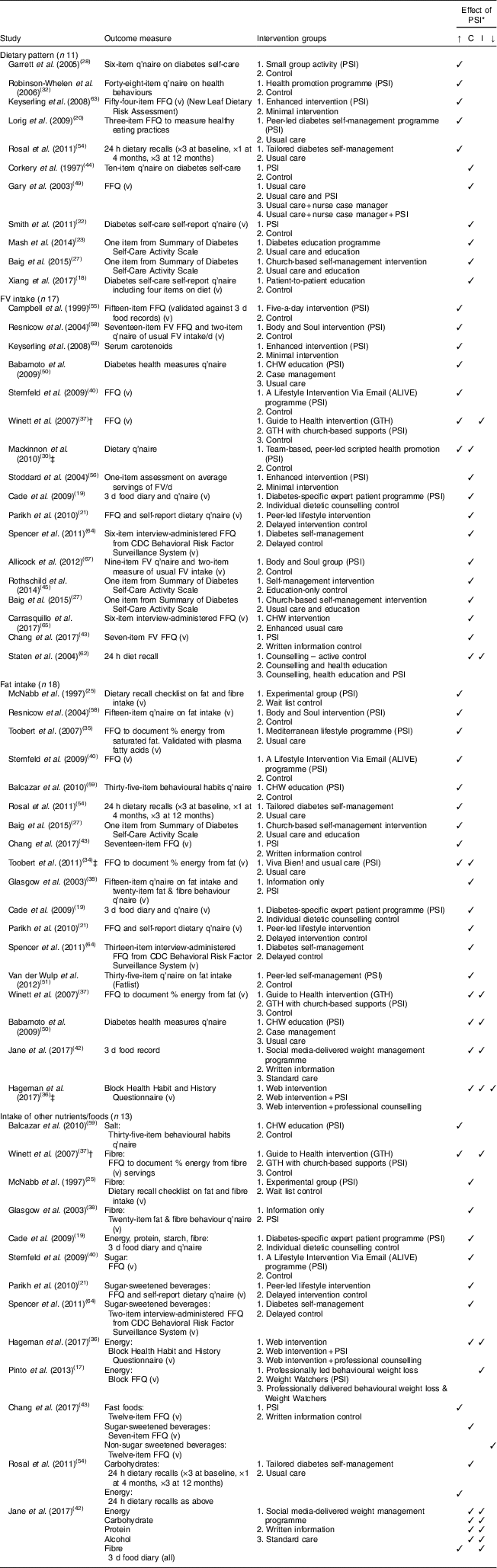
FV, fruit and vegetable; q,naire, questionnaire; v, validated; CDC, Centers for disease control and Prevention; CHW, Community Health Worker.
* Effect of PSI summarised as: ↑, PSI more effective than alternative method of support in improving dietary outcome; C, no significant difference between PSI and control group in improving dietary outcome; I, no significant difference between PSI and intervention group in improving dietary outcome; ↓, PSI less effective than other method of support in improving dietary outcome.
† Different results for different intervention groups.
‡ Different results at different time points.
A total of forty studies assessed the effect of PSI on anthropometric outcomes. Anthropometric data were objectively measured in these studies; however, methods of obtaining measurements were described in only eighteen (45 %) of these studies. Studies often measured more than one anthropometric outcome, therefore results on the effect of PSI on these measurements are based on a number of the same studies. Of the twenty-seven studies examining the effect of PSI on weight (Table 3), twelve studies (44 %) reported that PSI were more effective than alternative interventions and/or a control for improving weight, ten studies (37 %) reported no significant difference in weight between PSI and alternative interventions and/or a control, and five studies (19 %) reported mixed results. Of the twenty-three studies examining the effect of PSI on BMI, eight studies (35 %) reported PSI were more effective than a control for improving BMI, thirteen studies (57 %) reported no significant difference in BMI between PSI and alternative interventions and/or a control, and two studies (9 %) reported mixed results. Of the eighteen studies examining the effect of PSI on waist and hip measurements, seven studies (39 %) reported that PSI were more effective than a control for improving waist and hip measurements; eleven studies (61 %) reported no significant difference in waist and hip measurements between PSI and alternative interventions and/or a control. Studies measuring anthropometric outcomes that found positive effects of PSI were largely weight management interventions, whereas studies reporting no significant difference between PSI and alternative interventions and/or a control or mixed results were generally behaviour change interventions that include improving diet rather than explicit weight loss.
Effect of peer-supported interventions (PSI) on anthropometric outcomes (n 40)
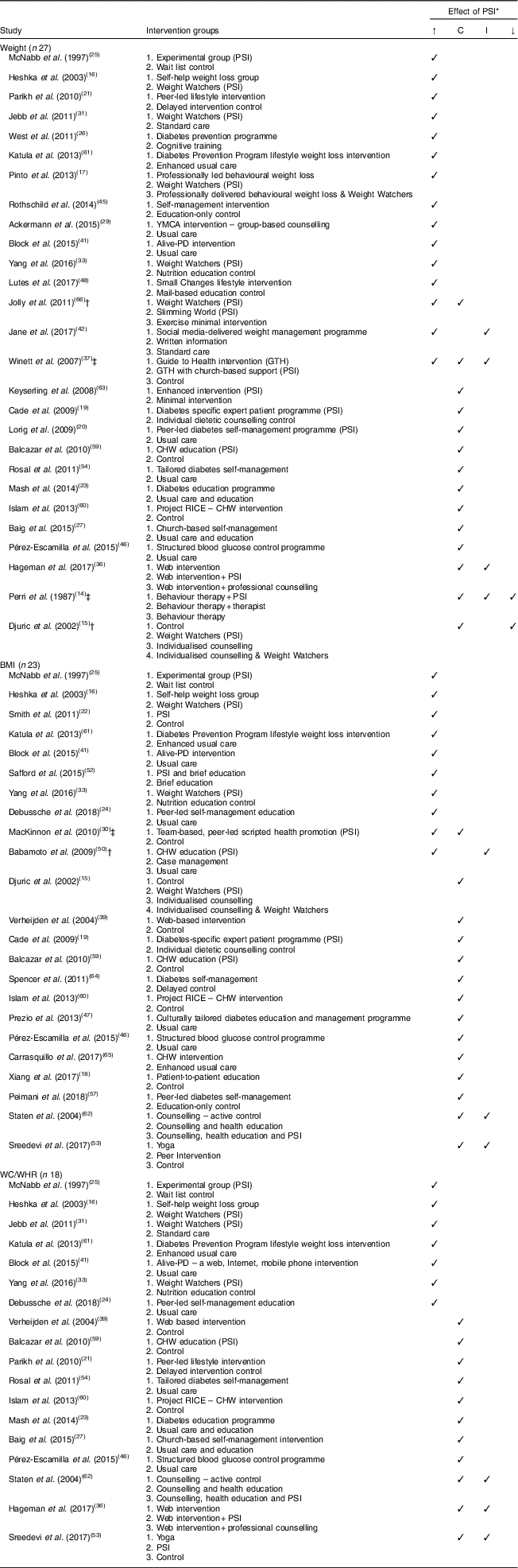
WC, waist circumference; WHR, waist-to-hip ratio; CHW, community health worker.
* Effect of PSI summarised as: ↑, PSI more effective than alternative method of support in improving anthropometric outcome; C, no significant difference between PSI and control group in improving anthropometric outcome; I, no significant difference between PSI and intervention group in improving anthropometric outcomes; and ↓, PSI less effective than other method of support in improving anthropometric outcome.
† Different results for different intervention groups.
‡ Different results at different time points.
Effect of peer-supported intervention characteristics on dietary behaviour change
As demonstrated in Table 4, included studies were published from 1987 to 2018. Studies compared a PSI with a control (n 42; 78 %) or an alternative support intervention and control (n 12; 22 %). Key elements of PSI included: education, use of BCT and provision of emotional support. The total number of participants included was 18 144, of whom 8115 received a PSI. Numbers receiving the PSI in studies ranged from <10 to >1000. Most studies included both genders (n 42; 78 %), but approximately one-quarter of studies included females only (n 12; 22 %). The mean age of participants reported ranged from 28 to 71 years; where only an age range was reported, the youngest age was 21 years and the oldest was 70 years.
Characteristics and methodological quality of studies assessing the effect of peer-support interventions (PSI) on dietary behaviour change in adults (n 54)

BCT, behaviour change techniques; M, male; F, female; T2DM, type 2 diabetes mellitus; HbA1c, glycated Hb; CHW, community health worker; PS, peer supporter; PE, peer educator; PC, peer counsellor; PF, peer facilitator; PSM, peer case manager.
* PSI intensity summarised as: M, intervention with multiple time points, S, single intervention, O, ongoing intervention.
This section of the results presents PSI characteristics that were analysed to determine if they were linked with effectiveness in encouraging dietary behaviour change, which included PSI model used, peer role, peer attributes, behaviour change theory/techniques used, intervention duration and intensity, and population studied (ethnicity and characteristics). Findings on peer role and attributes also include a description of peer training and support and measurement of fidelity of PSI delivery across studies.
PSI were highly heterogeneous. PSI models used included group (n 30; 56 %), dyadic (n 10; 19 %) and a hybrid of models (n 14; 26 %). Group support was largely delivered face-to-face (n 22; 73 %) or was delivered via teleconference (n 1; 3 %) or was web-based (n 7; 23 %). Dyadic support was delivered face-to-face (n 4; 40 %), via telephone (n 1; 10 %) or via face-to-face and/or telephone (n 5; 50 %). There were no clear differences in PSI model between the fifteen studies that reported PSI to be a more effective form of support v. the studies that reported no significant difference between support methods. Of studies using a group PSI (n 30), approximately one-third reported positive effects of PSI (n 10; 33 %); whereas of studies using a dyadic PSI (n 10), one-fifth reported positive effects of PSI (n 2; 20 %) and of studies using a hybrid PSI (n 14), approximately one-fifth reported positive effects of PSI (n 3; 21 %). Of studies measuring the effect of PSI on dietary outcomes, there was no clear difference in PSI models used in studies that reported PSI to be a more effective form of support and studies reporting no significant difference between methods of support. Studies that reported PSI to be more effective for improving weight, BMI and waist measurements mostly used group-based support, whereas studies that reported no significant difference in methods of support for anthropometric outcomes used a range of PSI models.
In six studies, the PSI was delivered by study participants to one another. In the remaining forty-eight studies, the PSI was peer-led by lay individuals (n 30; 63 %), CHW (n 9; 19 %), CHW and health professionals (n 4; 8 %), and lay individuals and health professionals (n 5; 10 %). PSI were delivered via a commercial programme in a small number of studies (n 6; 11 %). Peer roles included a peer supporter (n 24), peer educator (n 22), peer counsellor (n 22), peer facilitator (n 6) and peer case manager (n 5). Studies that reported PSI to be a more effective form of support (n 15; 28 %) mostly used lay-led support (n 11; 73 %), whereas studies reporting no significant difference between methods of support (n 17; 31 %) used a range of individuals to deliver the PSI including lay individuals (n 8; 47 %), other participants (n 3; 18 %) CHW (n 5; 29 %) and a combination of CHW and health professionals (n 1; 6 %). There were no clear differences in peer role between the studies that reported PSI to be a more effective form of support v. the studies that reported no significant difference between support methods. Studies where the peer assumed the role of peer case manager (n 2; 4 %) both reported no significant difference, whereas other peer roles were used in studies reporting PSI to be a more effective form of support and studies reporting no significant difference between support methods. Over half of studies that reported positive effects of PSI (n 15; 28 %) involved peer supporter as the peer role (n 9; 60 %). It was apparent that a third of studies (n 2; 33 %) that reported no significant difference in PSI for improving overall dietary pattern used a peer case manager as the peer role. This peer role was not used in the five studies that reported that PSI were more effective than alternative methods of support for improving overall dietary pattern. Over one-third of studies that reported that PSI were more effective than alternative methods for improving fat intake (n 3; 38 %) included health professionals within the PSI delivery, whereas health professionals were not included in the eight studies that reported no significant difference in methods of support for improving fat intake. Half of studies that reported that PSI were more effective than alternative methods of support for improving weight (n 6; 50 %) used a peer supporter as the peer role, whereas only one study reporting no significant difference in methods of support for improving weight (n 1; 10 %) used this peer role. Most studies that reported that PSI were more effective for improving BMI were lay-led (n 6; 75 %), whereas almost half of studies that reported no significant difference in methods of support for improving BMI used a CHW (n 6; 46 %). There were no clear differences in peer roles and types of peer used between studies reporting positive effects of PSI and studies reporting no significant difference between methods of support for improving other dietary or anthropometric outcomes.
Of the forty-eight studies that were peer-led, just over half (n 33; 69 %) reported that peers were trained to facilitate the intervention. Training programmes ranged in duration from 3h to a 36h programme delivered over 9 weeks and frequently covered: programme delivery; peer role; group facilitation; behaviour change theory and techniques; adult learning; diet and nutrition principals; disease-specific information; taking health assessments; population-specific information; and supporting skills for supporting individuals such as having empathy and dealing with resistance. In two studies, programme activities were demonstrated via role play and, in a small number of studies (n 5; 10 %), individuals undertaking a peer role had the opportunity to practice programme delivery. Few studies (n 7; 15 %) discussed provision of support to individuals undertaking a peer role, but this included: biweekly or monthly meetings with others undertaking a peer role to exchange experiences of delivering a PSI; working alongside an experienced, trained peer; bimonthly supervisory meetings with a health professional; and regular contact with researchers throughout the programme to discuss challenges, answer questions and provide feedback.
Just over one-third of studies (n 20; 37 %) measured fidelity of the PSI delivery. Those that did, measured it through:
1. observation, audio recording or a review of sessions to ensure the structured programme was being followed and performance criteria were being met;
2. supervision of programme delivery by a health professional;
3. notes on PSI sessions kept by individuals undertaking a peer role and contact records with participants;
4. participant diaries of advice received during the intervention;
5. records of contact between individuals undertaking a peer role and the researchers;
6. focus groups/interviews with individuals undertaking a peer role, participants and the researchers about their experience of the intervention; and
7. a participant questionnaire regarding the delivered intervention.
The theoretical basis of the PSI was stated in just over half of studies (n 28; 52 %). The most commonly used theories in included studies were Social Cognitive Theory(Reference Bandura68) (n 11; 39 %), the Transtheoretical Model(Reference Prochaska, DiClemente and Norcross69) (n 8; 29 %) and Social Support Theory(Reference Cohen, Gottlieb and Underwood70) (n 7; 25 %), but it is not known if different or any theories were used in studies where theory was not reported. A summary of BCT used to encourage dietary behaviour change is shown in Table 4. The use of BCT was clearly described in twenty-five studies (46 %). It is therefore not known in some studies if techniques were used, or if further techniques to those reported were used. Of the twenty-five studies that clearly described BCT, over one-quarter of these studies (n 7; 28 %) reported that the PSI was more effective than alternative interventions and/or a control for improving dietary behaviour change outcomes. These seven studies used a mean of six BCT. The most frequently used BCT were behavioural goal setting (used by n 5; 71 %), prompting self-monitoring (used by n 4; 57 %) and provision of feedback (used by n 4; 57 %). The eighteen remaining studies that clearly described BCT reported mixed results (n 13; 52 %) or no significant difference between the PSI and alternative interventions and/or a control (n 5; 20 %). The five studies that reported no significant difference used a mean of three BCT, with frequently incorporated techniques being planning for social support/social change (n 3; 60 %) and barrier identification/problem solving (n 3; 60 %). Studies that included behaviour change theory (n 28; 52 %) reported positive effects of PSI (n 7; 25 %), no significant difference between methods of support (n 9; 32 %) and mixed results (n 12; 43 %). Similarly, studies that did not discuss inclusion of behaviour change theory (n 26; 48 %) also reported positive effects of PSI (n 8; 31 %), no significant difference between methods of support (n 8; 31 %) and mixed results (n 10; 38 %). Considering the main behaviour change theories used in the twenty-eight studies that discussed inclusion of behaviour change theory, namely Social Cognitive Theory(Reference Bandura68) (n 11; 39 %), the Transtheoretical Model(Reference Prochaska, DiClemente and Norcross69) (n 8; 29 %) and Social Support Theory(Reference Cohen, Gottlieb and Underwood70) (n 7; 25 %), there were no clear differences in PSI effectiveness with inclusion of each of these theories.
Intervention periods ranged from 6 weeks to 30 months. The duration of over half of the fifteen studies reporting a positive effect of PSI was ≥1 year (n 9; 60 %), whereas the duration of over half of the seventeen studies that reported no significant difference between PSI and alternative methods of support and/or a control (n 11; 65 %) was <1 year. There were no obvious differences in study intensity between studies reporting a positive effect of PSI on dietary behaviour change and studies reporting no significant difference or mixed results.
Most studies took place in the USA (n 41; 76 %). The remaining studies took place in China (n 2; 4 %), the UK (n 2; 4 %), Republic of Ireland (n 1; 2 %), the Netherlands (n 1; 2 %), Canada (n 1; 2 %), Australia (n 1; 2 %), India (n 1; 2 %), Iran (n 1; 2 %), South Africa (n 1; 2 %) and Mali (n 1; 2 %), while one study (2 %) took place across three locations (Australia, Germany and the UK). Of the forty-one studies that reported participant ethnicity, the ethnicities most commonly included by studies were White Americans (n 10; 24 %), African-Americans (n 8; 20 %) and Hispanics (n 5; 12 %). Studies including a mostly Hispanic or White American population mostly reported mixed results. Of studies including a mostly African-American population, studies reported different findings on the effectiveness of PSI for improving dietary behaviour: four studies (50 %) reported that the PSI was more effective than alternative methods of support, two reported mixed results (25 %) and two reported no significant difference between methods of support (25 %). A range of population groups were used across studies. The main population groups included individuals with type 2 diabetes mellitus (n 20; 37 %) and overweight/obese individuals (n 14; 26 %). Considering the two main population groups included in the study, studies that included overweight/obese individuals (n 14; 26 %) all reported positive (n 5; 36 %) or mixed effects of PSI (n 9; 64 %) on dietary behaviour change outcomes. Studies that included individuals with type 2 diabetes mellitus (n 20; 37 %) mainly reported no significant difference (n 11; 55 %) or mixed results (n 6; 30 %). Considering studies measuring the effect of PSI on fat intake, studies that reported no significant difference (n 8; 44 %) largely included individuals with type 2 diabetes mellitus (n 5; 63 %), whereas in studies that reported positive results (n 8; 44 %), population groups varied. Studies that reported PSI to be more effective for improving weight (n 12; 44 %) or that reported mixed results (n 5; 19 %) mostly included overweight/obese individuals (n 12; 71 %), whereas half of studies that reported no significant difference between methods of support for improving weight (n 10; 37 %) included a sample of individuals with type 2 diabetes mellitus (n 5; 50 %). Studies reporting that PSI were more effective than a control for improving waist and hip measurements (n 7; 39 %) largely included overweight/obese individuals (n 5; 71 %), whereas studies that reported no significant difference (n 11; 61 %) included various populations. There were no clear differences in populations included between studies reporting positive effects of PSI and studies reporting no significant difference between methods of support for improving other dietary or anthropometric outcomes.
Risk of bias
As shown in Table 4, over one-third of included studies were classified as low (n 19; 35 %) or moderate (n 21; 39 %) methodological quality and approximately one-quarter of studies were classified as high methodological quality (n 14; 26 %). Half of included studies (n 27; 50 %), described the method of randomisation and used an appropriate method (e.g. computer-generated randomisation sequence). Double blinding was not reported by any studies as it is generally not feasible to blind participants in the delivery of PSI; however, participants were blinded to randomisation in one web-based study and participants were blinded to the study hypothesis in another. In a small number of studies outcome assessment was blinded (n 9; 17 %) or the research team was blinded to randomisation (n 6; 11 %). Less than half of included studies (n 22; 41 %) recorded the number of participants that withdrew from the study and the reasons for withdrawal. Studies that were classified as low methodological quality (n 19; 35 %) did not describe the method of randomisation, use double blinding, or record the number of participants who withdrew from the study and the reasons for withdrawal.
More studies classified as high methodological quality reported positive or mixed effects of PSI on dietary behaviour change outcomes (n 8; 57 %) than reporting no significant difference between methods of support (n 6; 43 %). This is consistent with overall results from all studies on the effect of PSI on dietary behaviour change.
Discussion
The present review aimed to assess the effectiveness of PSI for encouraging dietary behaviour change in adults and to consider intervention characteristics that might be linked with effectiveness. Findings were inconsistent and therefore do not provide clear evidence supporting the effect of PSI on dietary behaviour, while there is also insufficient evidence to make firm conclusions on what characteristics of PSI are linked with effectiveness.
Effect of peer-supported interventions on dietary behaviour change
Overall, the effect of PSI on dietary behaviour change varied; however, the majority of studies reported that PSI were more effective than alternative interventions and/or a control for improving outcome(s) related to dietary behaviour change or reported mixed results, while 31 % found no significant benefits of PSI. Examination of PSI details highlighted that most studies were group-based or used a combination of models and were lay-led.
Across studies, there was limited detail on intervention development, content and process evaluation, as recommended in the Medical Research Council’s framework for development and evaluation of complex interventions to improve health(Reference Campbell, Murray and Darbyshire71). Only one study(Reference Debussche, Besançon and Balcou-Debussche24) was reported according to the Template for Intervention Description and Replication (TIDieR) checklist(Reference Hoffman, Glasziou and Boutron72), which enables better reporting of intervention details. Several studies did not describe the intensity of the PSI. Just under half of studies that used peers to facilitate the intervention did not mention if training was provided for undertaking this role and limited information was available from studies that reported including training. Few studies discussed provision of support for individuals undertaking a peer role and just over one-third measured the fidelity of the delivered PSI. It is therefore possible that the PSI offered may not have been optimal for encouraging dietary behaviour change. Future interventions assessing the effect of PSI on dietary behaviour change should clearly describe these processes using the available guidance for intervention reporting to enable better detection of factors that may contribute to the effectiveness of PSI to encourage dietary behaviour change.
There was high heterogeneity between studies. Previous reviews considering the effect of PSI on health behaviours have also reported heterogeneity between studies(Reference Dale, Williams and Bowyer3, Reference Webel, Okonsky and Trompeta5, Reference Foster, Taylor and Eldridge73). The mixed evidence found may be due to variation in study characteristics. Sample sizes varied widely. Some studies including small sample sizes may have had insufficient power to detect change in dietary behaviour. Studies also measured different outcomes which are difficult to compare. It may be easier to increase fruit and vegetable intake, for example, than to lose weight or decrease fat intake. Heterogeneity in results, however, was observed within most outcomes.
Effect of peer-supported intervention characteristics on dietary behaviour change
Study characteristics linked with PSI effectiveness for achieving dietary behaviour change, based on studies assessing anthropometric outcomes, included use of a weight management intervention and targeting an overweight/obese sample. This group may have greater motivation for behaviour change than the general population. Further research is needed to determine if PSI are particularly effective for certain population groups or dietary related outcomes. It is possible that the ethnicity of populations included in studies may impact the effectiveness of PSI. However, as shown in the present review, studies conducted with the same ethnic groups reported different effects of PSI and as small numbers of studies included each ethnic group, further research is needed to investigate this. Studies used different intervention models and types of peer to facilitate the intervention, which may differently affect dietary behaviour. More studies using a group PSI model were effective than studies using other PSI models. Evidence from systematic reviews considering the effect of PSI on health behaviours has found no significant effect of PSI models on behaviour change(Reference Webel, Okonsky and Trompeta5) or suggested that dyadic support may be most effective(Reference Ramchand, Ahluwalia and Xenakis8). It has been stated that, based on current evidence, no one PSI model is superior to another for achieving change(Reference Dale, Williams and Bowyer3) and different models may be suited to different populations and settings(Reference Fisher, Earp and Maman74), or a combination of models may offer optimal support(Reference Smith, Paul and Kelly22). Lay-led support was linked with PSI effectiveness in the present review. Some studies used other participants, who were not trained for delivering a PSI, or included a health professional in the PSI team, which changes the reciprocal PSI relationship(Reference MacPherson, Joseph and Sullivan75). Studies assessing effectiveness of PSI on fat intake, however, were linked with effectiveness where health professionals were included in the PSI team. It is possible that professional guidance is helpful for making this type of dietary behaviour change. Use of a peer supporter was also linked with PSI effectiveness in the current review, which is consistent with a previous review(Reference Ramchand, Ahluwalia and Xenakis8). Process evaluations of PSI should include determining an optimal peer role and the key characteristics and skills required to undertake it(Reference Pérez-Escamilla, Hromi-Fiedler and Vega-López76). Intervention duration ranged from 6 weeks to 30 months. Over half of studies reporting positive effects of PSI (n 9; 60 %) were at least 1 year in duration, which may imply that a longer PSI duration is needed to effectively establish dietary change in adults. Minimal research exists that considers the ideal length of time required for successful dietary interventions.
There were no clear differences in PSI effectiveness with use of different behaviour change theories. BCT used in interventions shown to be effective in the present review included behavioural goal setting, prompting self-monitoring and provision of feedback. These BCT have been associated with improved dietary behaviour in other systematic reviews(Reference Greaves, Sheppard and Abraham77) and may be useful to incorporate into future PSI to successfully facilitate dietary behaviour change. Studies reporting positive effects of PSI employed more BCT to target dietary behaviour change than studies reporting no effect. Previous research, however, suggests that the number of BCT employed in interventions does not have an effect on behaviour change(Reference Michie, Abraham and Whittington78), therefore it may be more important to consider the appropriate BCT to include rather than the number. Studies included in the present review used different combinations of BCT. The optimal number and type of BCT to use are likely to depend on the type of dietary behaviour change and the population being investigated. Further research is needed to determine optimal combinations of BCT and behaviour change theories for use in PSI to encourage dietary behaviour change in adults. This will be determined by better reporting of intervention development, content and process evaluation and by using feasibility and pilot studies to address issues in study design.
The implementation of well-designed and well-described PSI interventions to encourage dietary behaviour change will provide an evidence base for further exploration of study characteristics linked with effectiveness in encouraging dietary behaviour change in adults.
Limitations
In the interpretation of these findings, it is important to consider the following limitations at the review level. First, considering the search stage, the incorporation of the different search terms associated with PSI yielded a large volume of studies that did not necessarily incorporate a PSI. This, however, helped to ensure that key studies were captured. The search did not include grey literature; therefore some studies may have been missed and the impact of publication bias could not be determined due to the heterogeneity of results. The search also excluded study designs other than randomised controlled trials. Future reviews of PSI could consider inclusion of other study designs to examine the additional information that they may provide. Second, title and abstract screening and data extraction were conducted by one reviewer; however, two reviewers independently screened all potentially relevant full texts and data extraction was checked by a second reviewer. Third, owing to the methodological diversity of included studies in terms of design and outcomes, the data could not be meta-analysed. However, the narrative synthesis undertaken was implemented rigorously to reduce the potential of bias. At the study level, first it should be considered that over one-third of studies were classified as low methodological quality, largely because blinding is generally not feasible in PSI. Second, measurement of dietary behaviour change outcomes may have been subject to bias as self-report methods of dietary assessment were used(Reference Cade, Thompson and Burley79–Reference Ambrosini, de Klerk and O’Sullivan81) rather than objective markers of actual change such as nutritional biomarkers, and it was not clear in all studies if anthropometric measurements were taken using a standardised approach.
Conclusion
The majority of studies (69 %) reported that PSI were more effective than alternative methods of support or a control for improving dietary behaviour change related outcome(s) or reported mixed results, and 31 % found no significant benefits of PSI. As evidence was mixed, however, the effect of PSI in encouraging dietary behaviour change in adults is not clear. The present systematic review is the first on the effect of PSI on dietary behaviour in adults and has demonstrated that there is currently insufficient evidence to recommended incorporation of PSI into public health policy and practice for encouraging dietary behaviour change in adults. Further well-designed interventions need to be undertaken to build an evidence base for the use of PSI for achieving dietary behaviour change. The review has highlighted specific details needed in future research to advance this field. Descriptive reporting of intervention development and content (including the theoretical basis, BCT used, intervention intensity and peer training and support needs) is needed. Researchers should also report process evaluations of intervention elements that worked or not and ideally examine how behaviour change theory and techniques are linked with effectiveness via mediator and moderator analysis.
Acknowledgements
Acknowledgements: The research team wishes to acknowledge Professor Mike Clarke for his useful advice regarding the review search strategy. Financial support: This research was supported by PhD studentship funding provided by the Department of Education and Learning and funding from the National Prevention Research Initiative (NPRI; http://www.npri.org.uk) (grant number MR/J000388/1). NPRI funding partners (in alphabetical order) were: Alzheimer’s Research Trust; Alzheimer’s Society; Biotechnology and Biological Sciences Research Council; British Heart Foundation; Cancer Research UK; Chief Scientist Office, Scottish Government Health Directorate; Department of Health; Diabetes UK; Economic and Social Research Council; Health and Social Care Research and Development Division of the Public Health Agency (HSC R&D Division); Medical Research Council; The Stroke Association; Wellcome Trust; Welsh Assembly Government; and World Cancer Research Fund. The funders had no role in the design, analysis or writing of this article. Conflict of interest: None. Authorship: S.E.M. and C.T.M. devised the search strategy. S.E.M. conducted the database searches, study selection, data extraction, data synthesis and drafted the manuscript, and M.M. provided substantial assistance with this process. J.V.W. and M.C.M. designed the review and provided guidance throughout the review process. J.V.W. assisted in study selection and data extraction. All authors critically reviewed drafts of the manuscript. Ethics of human subject participation: Not applicable.
Supplementary material
To view supplementary material for this article, please visit https://doi.org/10.1017/S1368980018003294



