


Introduction
Anthropogenic activities are impacting biodiversity globally and an estimated c. 45% of angiosperms are at risk of extinction (Pimm et al., Reference Pimm, Jenkins, Abell, Brooks, Gittleman and Joppa2014; Nic Lughadha et al., Reference Nic Lughadha, Bachman, Leão, Forest, Halley and Moat2020; Bachman et al., Reference Bachman, Brown, Leão, Nic Lughadha and Walker2023), with c. 600 species lost in the last 250 years (Humphreys et al., Reference Humphreys, Govaerts, Ficinski, Nic Lughadha and Vorontsova2019). Populations can go extinct before they are scientifically studied and described (Antonelli, Reference Antonelli2022). Brown et al. (Reference Brown, Bachman and Lughadha2023) suggested that three of every four undescribed plant species are currently under threat. Assessing threats is key to providing the baseline information required to develop effective conservation strategies (Rodrigues et al., Reference Rodrigues, Pilgrim, Lamoreux, Hoffmann and Brooks2006).
Brazil is home to a rich flora (BFG, 2021), for which the Brazilian National Center for Plant Conservation (abbreviated CNCFlora in Portuguese) is responsible for assessing, monitoring and cataloguing threatened plant species. It is part of the Rio de Janeiro Botanic Garden Research Institute, affiliated to the Ministry of the Environment and Climate Change, and the national IUCN Plant Red List Authority. Although significant advances have been made in assessing extinction risk and developing a Red List of Brazilian flora (Martinelli & Moraes, Reference Martinelli and Moraes2013; Martinelli et al., Reference Martinelli, Messina and Santos-Filho2014; Martinelli et al., Reference Martinelli, Martins, Moraes, Loyola and Amaro2018), only a minority of endemic species have been assessed to date (Martins et al., Reference Martins, Martinelli and Loyola2018). Set against the rapid rate of extinction (Humphreys et al., Reference Humphreys, Govaerts, Ficinski, Nic Lughadha and Vorontsova2019; Nic Lughadha et al., Reference Nic Lughadha, Bachman, Leão, Forest, Halley and Moat2020), there is an urgent need to carry out conservation assessments to guide management strategies and policy decisions.
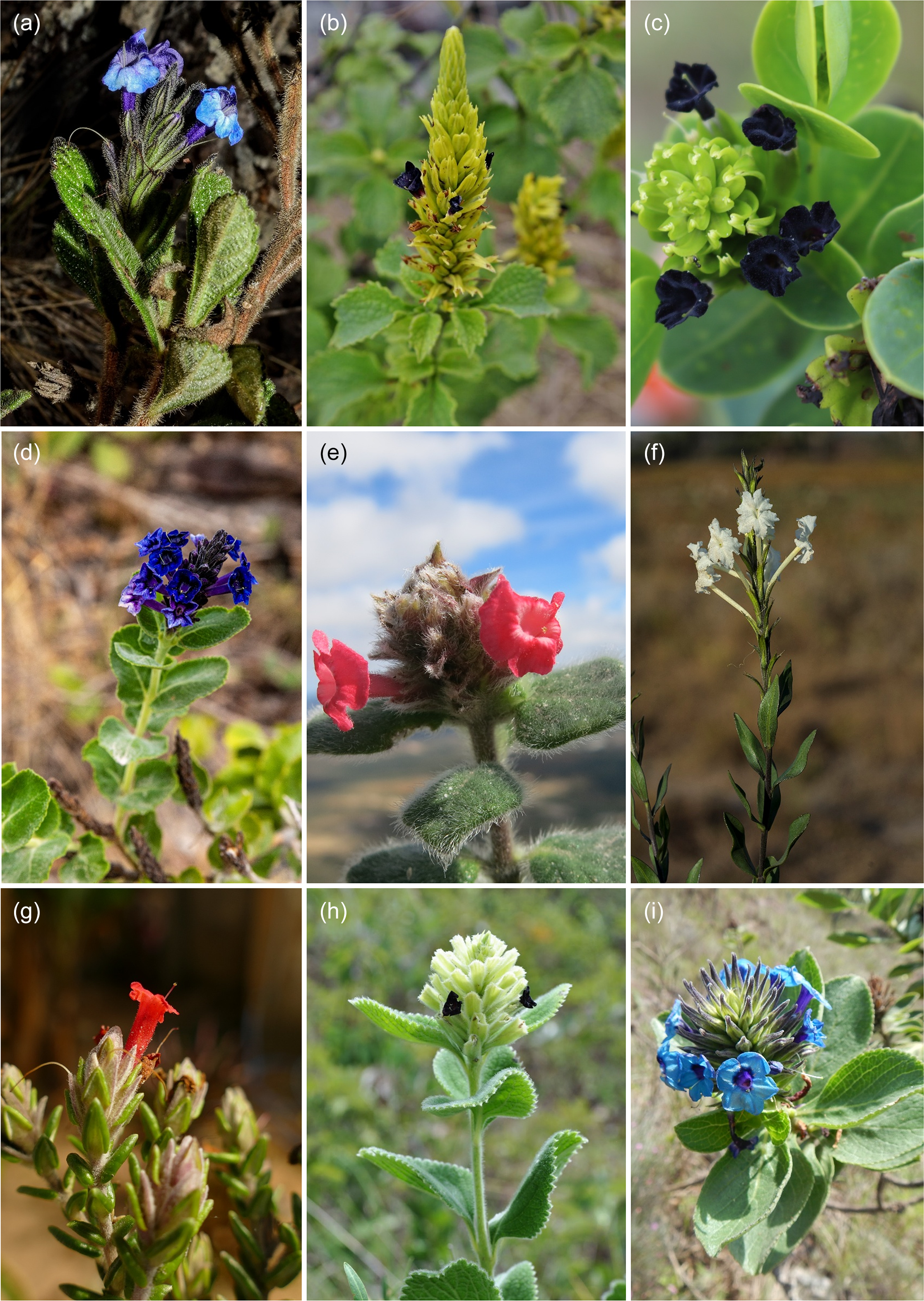
Stachytarpheta Vahl is a species-rich genus of Verbenaceae encompassing c. 120 species of mainly shrubs and subshrubs distributed throughout the Neotropical Region (Cardoso et al., Reference Cardoso, O’Leary, Olmstead, Moroni and Thode2021). Distinctive features include flowers arranged in terminal inflorescences, an androecium composed of two stamens and two staminodes, and a capitate stigma (Plate 1; Atkins, Reference Atkins2005). Brazil is the centre of diversity of this genus, with 90 recognized species, 82 of which are endemic (Atkins, Reference Atkins2005; Cardoso & Salimena, Reference Cardoso and Salimena2024; Cardoso et al., Reference Cardoso, Colli-Silva, Menini Neto and Trovó2024a). These species are predominantly distributed in the Cerrado, Caatinga and Atlantic Forest biomes, and mainly inhabit campos rupestres (a rocky-outcrop ecosystem associated with ancient landscapes above 900 m altitude) and savannah landscapes (Atkins, Reference Atkins2005; Alves et al., Reference Alves, Silva, Oliveira and Medeiros2014; Cardoso & Salimena, Reference Cardoso and Salimena2024). Most Stachytarpheta species are centred on the Espinhaço Range in Bahia and Minas Gerais states and the Chapada dos Veadeiros in Goiás state (Atkins, Reference Atkins2005; Cardoso et al., Reference Cardoso, Colli-Silva, Menini Neto and Trovó2024a). These regions are known for their exceptional biodiversity, particularly the campos rupestres, and are priority areas for conservation (Rapini et al., Reference Rapini, Ribeiro, Lambert and Pirani2008; Colli-Silva et al., Reference Colli-Silva, Vasconcelos and Pirani2019).
Examples of threatened Stachytarpheta species showing flowers arranged in terminal inflorescences: (a) S. ajugifolia (Endangered);(b) S. flavovirescens (Endangered);(c) S. glauca (Endangered); (d) S. grandiflora (Endangered); (e) S. lycnitis (Endangered); (f) S. monachinoi (Endangered); (g) S. radlkoferiana (Vulnerable); (h) S. salimenae (Vulnerable); (i) S. sellowiana (Vulnerable). Photos: (a) Marcos Silveira, (b) Maurício Mercadente, (c), (i) Pedro Cardoso, (d) Suzana Martins, (e) Nádia Roque, (f) Pedro Henrique Nobre, (g) Raymond Harley, (h) Marcelo Brotto.

Many species of Stachytarpheta in Brazil are narrowly endemic and some are restricted to a single locality (Atkins, Reference Atkins2005). However, prior to this study only 13 species had been assessed by CNCFlora, of which 11 were categorized as threatened (Salimena et al., Reference Salimena, Kutschenko, Monteiro, Mynssen, Martinelli and Moraes2013, Reference Salimena, Moraes, Kutschenko, Novaes, Martinelli, Messina and Santos-Filho2014). The conservation status of most Brazilian plant species remains unknown, underscoring the need for in-depth studies. We conducted a comprehensive conservation assessment for the 82 Stachytarpheta species endemic to Brazil. We determined the main threats to each species and estimated their occurrence within protected areas, and lodged our results with CNCFlora, the IUCN Red List and plant species Red Lists in Brazil. We provide insights into Stachytarpheta ecology to help formulate conservation strategies for the species and their primary habitats, notably the campos rupestres and savannahs.
Methods
Data collection and taxonomic curation
We compiled a georeferenced dataset of the 82 species of Stachytarpheta endemic to Brazil, using a standardized and automated workflow developed by CNCFlora (see Moura et al., Reference Moura, Melo, Amorim, Marcusso and Carvalho-Silva2022, for details). Eight non-endemic species were not assessed, of which S. fiebrigii, S. gesnerioides, S. hassleri, S. paraguariensis and S. sprucei are found throughout South America, and S. cayennensis, S. indica and S. jamaicensis are circumtropical (Atkins, Reference Atkins2005; Cardoso & Salimena, Reference Cardoso and Salimena2024).
During January 2020–December 2023, we analysed all records of Stachytarpheta. We identified species through comparison with type specimens, literature (Atkins, Reference Atkins2005; Cardoso & Salimena, Reference Cardoso and Salimena2024) and examination of protologues. We also analysed images of Stachytarpheta to check key identification characteristics (GBIF, 2024; JABOT, 2024; REFLORA, 2024; speciesLink, 2024) and we consulted herbaria in Brazil that house representative collections of the genus (ALCB, BHCB, CEN, CESJ, ESA, HB, HEPH, HUEFS, MBM, R, RB, RFA, SP, SPF, UB, UPCB; abbreviations following Thiers, Reference Thiers2024). We manually added c. 500 occurrence records to the CNCFlora database for specimens that are not yet available through digitized online platforms. Specimens compiled by CNCFlora whose identification could not be confirmed were marked as such during the assessment process, unless the record was verified by a specialist taxonomist and the collection information aligned with the species’ known geographical distribution and characteristics. We conducted field surveys in Minas Gerais and Goiás states during 2020–2024 to collect additional specimens, which were incorporated into our analyses and facilitated the description of new species (Cardoso et al., Reference Cardoso, Gonzaga and Trovó2024b).
Conservation Assessments
We followed the IUCN Red List Categories and Criteria (IUCN, 2012) and the latest guidelines (IUCN, 2022a) to assess the conservation status of each species. We employed criterion B, geographical range in the form of extent of occurrence (EOO) and area of occupancy (AOO), based largely on information from georeferenced herbarium specimens (Rivers et al., Reference Rivers, Bachman, Meagher, Nic Lughadha and Brummitt2010). Extent of occurrence was determined by the size of the minimum convex polygon that encompassed all known occurrences of a species, and area of occupancy was the area of all known cells for a species at a resolution of 2 × 2 km (Bachman et al., Reference Bachman, Moat, Hill, De La Torre and Scott2011). These estimates of geographical range were obtained using ProFlora (National System for the Conservation of Flora) at CNCFlora (Calfo et al., Reference Calfo, Eppinhaus, Fernandez and Silva2021). Location follows the definition: ‘a geographically or ecologically distinct area in which a single threatening event can rapidly affect all individuals of the taxon present’ (IUCN, 2022a).
We conducted an overlay analysis (Jordão et al., Reference Jordão, Ferreira and Icalho2022) to quantify historical data on land use and fire-affected areas, serving as a proxy for decline in habitat area, extent and quality. The conversion of natural vegetation into anthropogenic land use, as well as the recurrence of fire events, was interpreted as evidence of continuous decline in habitat area (AOO; Red List subcriterion ii) and quality (subcriterion iii). When such changes occurred in peripheral grid cells of a species’ distribution, defined in 2 × 2 km cells, they were considered indicative of reduction in EOO (subcriterion i). These spatial patterns supported the application of criteria B1b(i,ii,iii) and B2b(i,ii,iii) (Jordão et al., Reference Jordão, Ferreira and Icalho2022); i.e. geographical range (B), EOO (1) and AOO (2) and continuing decline, observed, inferred or projected (b). We also used number of locations or subpopulations (criterion iv). We combined the AOO and EOO shape files with data provided by MapBiomas (Souza et al., Reference Souza, Shimbo, Rosa, Parente, Alencar and Rudorff2020) for 1985–2020. We calculated the rate of change in each land use over time through trend analysis, using basicTrendline (Mei et al., Reference Mei, Yu and Lai2018). We estimated the annual rate of increase or decrease in land use using a linear regression model, following Jordão et al. (Reference Jordão, Ferreira and Icalho2022), in which the slope of the line was divided by the number of years analysed (36). We carried out data processing and analyses in R 4.3.2 (R Core Team, 2023) using packages raster 3.6-20 (Hijmans et al., Reference Hijmans, Etten and Sumner2024) and sf 0.6-1 (Pebesma, Reference Pebesma2018). We coded the major threats to Stachytarpheta species using the Threats Classification Scheme (IUCN, 2022b).
Maps
Maps depicting the geographical distribution of each of the 82 Stachytarpheta species endemic to Brazil were generated using ArcGIS Pro 3.0.3 (Esri, USA). We compared the distribution of all species to the network of protection sites in Brazil. Areas managed for sustainable use were not considered in this analysis. The Espinhaço Range and the Chapada dos Veadeiros constitute two key regions discussed in this study. The geographical features and delimitation of these areas are detailed in Gontijo (Reference Gontijo2008), Carvalho Júnior et al. (Reference Carvalho Júnior, Guimarães, Martins, Gomes, Vieira, Salgado and Santos2015), Matins-Ferreira & Campos (Reference Martins-Ferreira and Campos2017), and Alves & Buril (Reference Alves and Buril2022).
Results
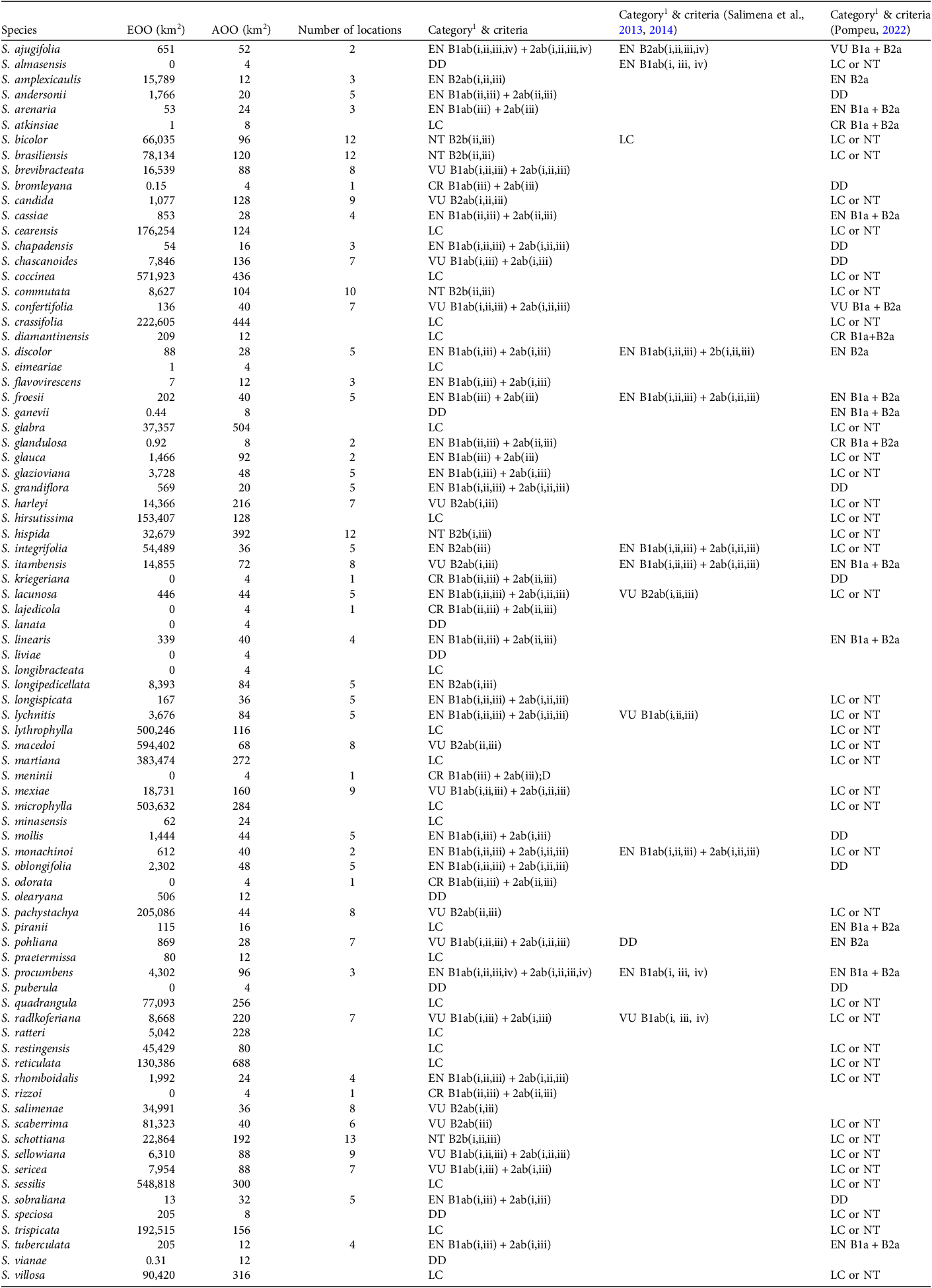
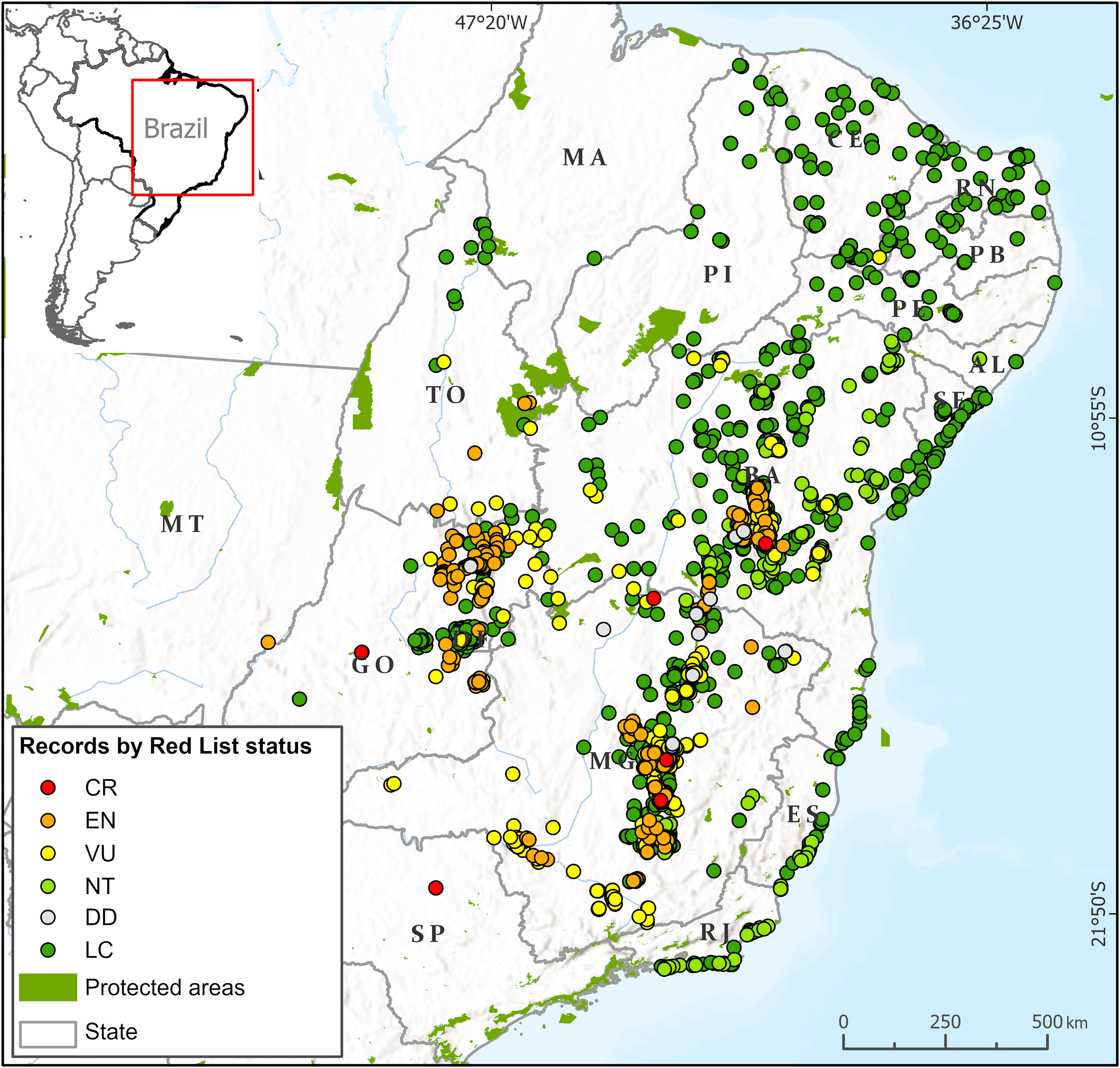
Of the 82 endemic Stachytarpheta species, we categorized 47 (57%) as threatened (i.e. Crtically Endangered, Endangered, Vulnerable), five as Near Threatened (6%), 22 (27%) as Least Concern, and eight (10%) as Data Deficient (Table 1). Their geographical distribution is concentrated in the eastern and central regions of Brazil (Fig. 1), with the EOO of c. 60% (54 species) < 10,000 km2 (Table 1, Supplementary Fig. 1). This characterizes them as narrowly distributed sensu Silva et al. (Reference Silva, Rapini, Barbosa and Torres2019), and rare. Of the 13 species evaluated by Salimena et al. (Reference Salimena, Kutschenko, Monteiro, Mynssen, Martinelli and Moraes2013, Reference Salimena, Moraes, Kutschenko, Novaes, Martinelli, Messina and Santos-Filho2014), we found the category of seven species to be the same, the extinction risk of four species had increased, and we categorized S. almasensis Mansf. as Data Deficient rather than Endangered and S. itambensis S. Atkins as Vulnerable rather than Endangered (Table 1). In an automated evaluation of the status of endemic Brazilian flora (Pompeu, Reference Pompeu2022) that included 65 species of Stachytarpheta, three were categorized as Critically Endangered, 12 as Endangered, two as Vulnerable, 38 as Near Threatened or Least Concern and 10 as Data Deficient (Table 1); our categorization differed for 37 of these species.
Conservation status of 82 Stachytarpheta species endemic to Brazil, categorized according to extent of occurrence (EOO, km2), area of occupancy (AOO, km2) and number of locations, using the IUCN Red List criteria (IUCN, 2012). Categorization in previous assessments by Salimena et al. (Reference Salimena, Kutschenko, Monteiro, Mynssen, Martinelli and Moraes2013, Reference Salimena, Moraes, Kutschenko, Novaes, Martinelli, Messina and Santos-Filho2014) and Pompeu (Reference Pompeu2022) are shown for comparison. Blank cells indicate number of locations unknown or species not evaluated. For distribution maps of each species, see Supplementary Fig. 1.

1 CR, Critically Endangered; EN, Endangered; VU, Vulnerable; NT, Near Threatened; LC, Least Concern; DD, Data Deficient.
Occurrence of records of the 82 Stachytarpheta species endemic to Brazil, with their IUCN Red List status, and protected areas. CR, Critically Endangered; EN, Endangered; VU, Vulnerable; NT, Near Threatened; LC, Least Concern; DD, Data Deficient.

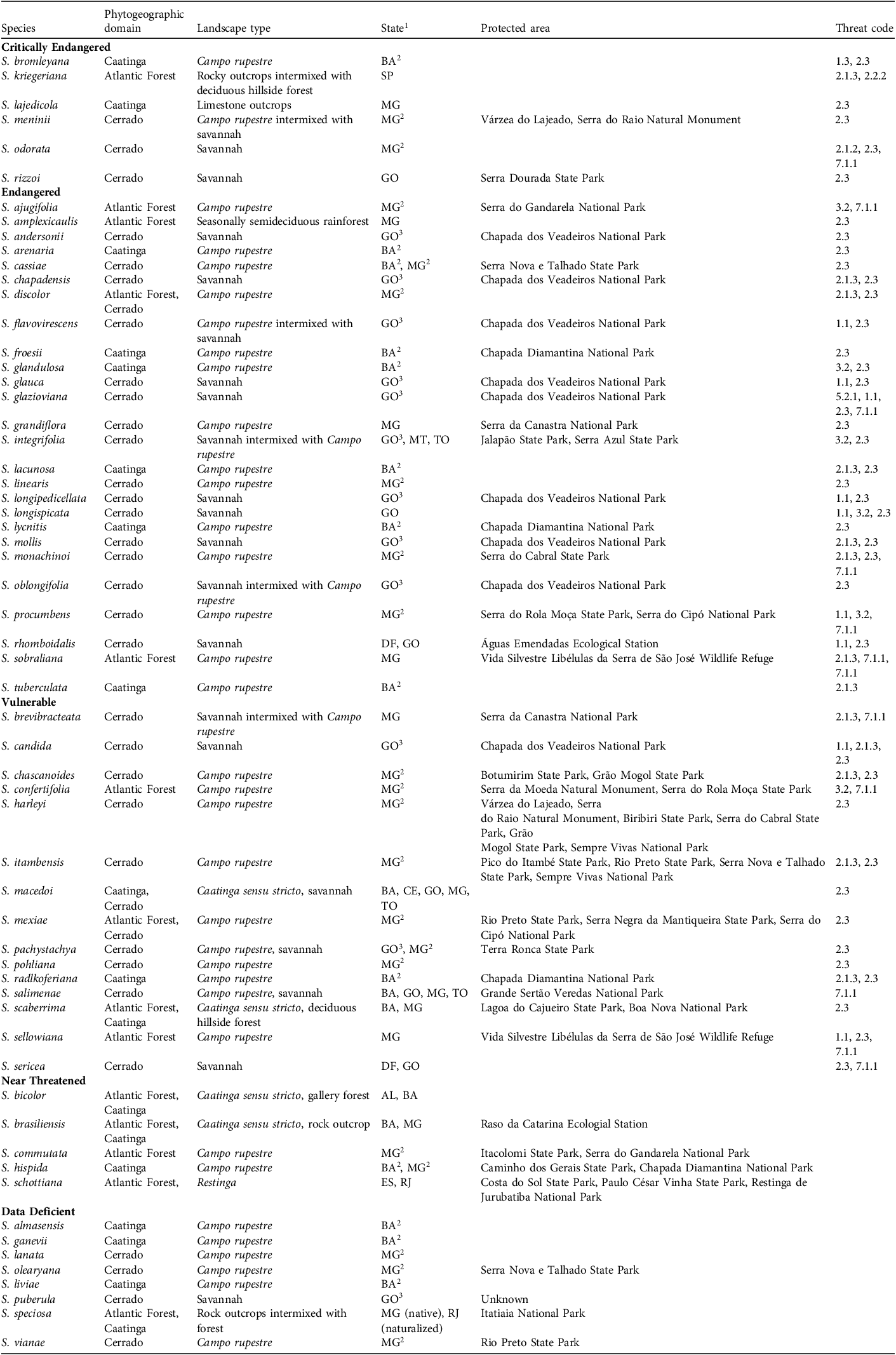
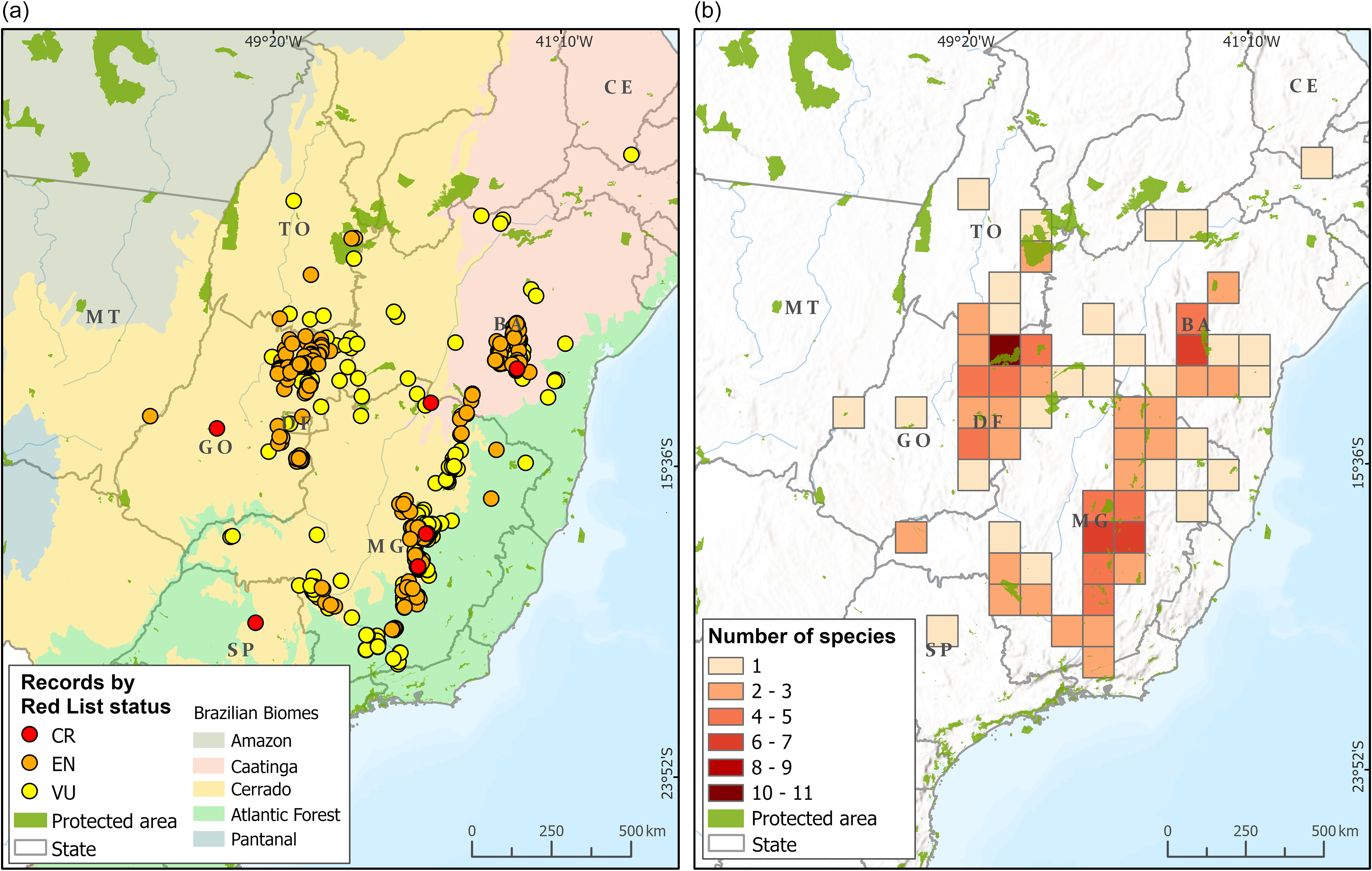
The 82 species are found in the Cerrado, Caatinga and Atlantic Forest biomes, with 31 threatened species occurring in the Cerrado, of which 28 are endemic; 11 in the Caatinga, of which nine are endemic; and nine in the Atlantic Forest, of which six are endemic (Table 2, Fig. 2a). Of the 47 species we categorized as threatened, 43 occur in campos rupestres and savannah landscapes. Amongst states, the highest number of threatened species occur in Minas Gerais (24 species, 19 endemic), Goiás (17 species, 11 endemic) and Bahia (12 species, eight endemic; Table 2). The Espinhaço Range (Bahia and Minas Gerais states) and the Chapada dos Veadeiros (Goiás state) support high numbers of threatened species: 23 in the Espinhaço Range (notably the Diamantina Plateau of Minas Gerais, and the Chapada Diamantina of Bahia) and 11 in the Chapada dos Veadeiros, of which nine occur in the Chapada dos Veadeiros National Park (Fig. 2b).
Distribution of threatened (Critically Endangered, Endangered, Vulnerable), Near Threatened and Data Deficient species of Stachytarpheta (Table 1) by phytogeographic domain, landscape type, state, protected area (Fig. 2) (blank cells indicate species is not known to occur in a protected area), and threats categorized according to IUCN (2022b).

1 AL, Alagoas; BA, Bahia; CE, Ceará; DF, Distrito Federal; ES, Espírito Santo; GO, Goiás; MT, Mato Grosso; MG, Minas Gerais; RJ, Rio de Janeiro; SP, São Paulo; TO, Tocantins.
2 Occurs within the Espinhaço Range.
3 Occurs within the Chapada dos Veadeiros.
Occurrence of the 47 threatened Stachytarpheta species endemic to Brazil (a) by IUCN Red List category (CR, Critically Endangered; EN, Endangered; VU, Vulnerable), with biomes, (b) by species richness per 10,000 km2 grid square. BA, Bahia; CE, Ceará; GO, Goiás; MT, Mato Grosso; MG, Minas Gerais; RJ, Rio de Janeiro; SP, São Paulo; TO, Tocantins.

Amongst the eight Data Deficient species, four are endemic to the Cerrado and three to the Caatinga. Of these, six occur in the Espinhaço Range and one in the Chapada dos Veadeiros, all of them in either campos rupestres or savannahs or in both landscapes (Table 2). Stachytarpheta speciosa Pohl ex Schauer, which is native to northern Minas Gerais state, in the Caatinga and Atlantic Forest, also occurs as a naturalized species in the Itatiaia region in Rio de Janeiro state (Table 2).
We identified livestock farming and ranching, agroindustry, mining, and an increased frequency and intensity of wildfires as the main threats to Stachytarpheta species (Table 2). Approximately 68% of the threatened species had at least one collection record within a protected area (two Critically Endangered, 18 Endangered 12 Vulnerable; Table 2). However, there are no records of four Critically Endangered, eight Endangered and three Vulnerable species in protected areas, nor of five of the eight Data Deficient species (Table 2).
Discussion
Following this assessment of the conservation status of Brazilian Stachytarpheta, the number of evaluated species increased substantially from 13 (Salimena et al., Reference Salimena, Kutschenko, Monteiro, Mynssen, Martinelli and Moraes2013, Reference Salimena, Moraes, Kutschenko, Novaes, Martinelli, Messina and Santos-Filho2014) to 82. These evaluated species represent c. 68% of the genus’s global diversity (Cardoso et al., Reference Cardoso, O’Leary, Olmstead, Moroni and Thode2021). The change in the categorization of six species may be a result of advances in genus taxonomy (see Flora do Brasil 2020 and Flora e Funga do Brasil projects; BFG, 2021; Cardoso & Salimena, Reference Cardoso and Salimena2024). For example, Stachytarpheta lacunosa Mart. ex Schauer was believed to occur in Bahia and Minas Gerais states (Salimena et al., Reference Salimena, Moraes, Kutschenko, Novaes, Martinelli, Messina and Santos-Filho2014) but subsequent studies revealed that specimens in Minas Gerais were misidentified (this species is now known to be endemic to Bahia; Cardoso & Salimena, Reference Cardoso and Salimena2024), and the known geographical range of S. itambensis has increased following the identification of additional specimens from recent collections and herbarium material.
We found disparities between our conservation assessments and the automated approach of Pompeu (Reference Pompeu2022). Although automated analysis enhances awareness and aids in prioritizing species and regions for conservation purposes, it does not accurately differentiate amongst the Critically Endangered, Endangered and Vulnerable species (Pompeu, Reference Pompeu2022), and lacks relevant input from specialists. These reservations underline the indispensable role of taxonomists in ensuring the efficacy of conservation assessments based upon examination of herbarium collections, knowledge of the nuanced differences between species, reliable identification and in-depth knowledge of species distributions (Callmander et al., Reference Callmander, Schatz and Lowry2005; Marinoni & Peixoto, Reference Marinoni and Peixoto2010). Numerous new species of Stachytarpheta at risk of extinction have recently been described (e.g. Cardoso et al., Reference Cardoso, Menini Neto, Bernacci and Salimena2019, Reference Cardoso, Salimena, Somavilla, Menini Neto and Trovó2023a, Reference Cardoso, Menini Neto and Trovó2023b, Reference Cardoso, Gonzaga and Trovó2024b,Reference Cardoso, Salimena, Dittrich, Menini Neto and Trovóc), underscoring the importance of taxonomic studies.
Threatened species
The threatened species of Stachytarpheta in Brazil are distributed across three biomes. The Cerrado and Atlantic Forest are recognized as global biodiversity hotspots and are a conservation priority (Mittermeier et al., Reference Mittermeier, Turner, Larsen, Brooks, Gascon, Zachos and Habel2011), and the Caatinga is the largest and most biodiverse tropical dryland globally (Albuquerque et al., Reference Albuquerque, Lima-Araújo and El-Deir2012). Within these biomes, the highest number of threatened Stachytarpheta species occur in the Espinhaço Range and Chapada dos Veadeiros regions, both centres of Stachytarpheta diversity (Atkins, Reference Atkins2005; Cardoso et al., Reference Cardoso, Colli-Silva, Menini Neto and Trovó2024a). Most of the Stachytarpheta species in Chapada dos Veadeiros are protected within the Chapada dos Veadeiros National Park (Table 2). However, Stachytarpheta glazioviana S. Atkins is extensively harvested from this region by local people for sale as incense in Alto Paraíso de Goiás city and surrounding areas (PHC, pers. obs., 2024). In the Espinhaço Range, several threatened species lack any protection where they occur. In the Chapada Diamantina, Bahia state, Stachytarpheta arenaria S. Atkins, Stachytarpheta bromleyana S. Atkins, S. lacunosa and Stachytarpheta tuberculata S. Atkins do not occur in protected areas (Table 2). In the Diamantina Plateau, Minas Gerais state, Stachytarpheta discolor Cham., Stachytarpheta linearis Moldenke and Stachytarpheta pohliana Cham. do not occur in protected areas (Table 2). In the Serra Geral de Licínio de Almeida, Bahia state, Stachytarpheta glandulosa S. Atkins faces immediate threats from mining activities and does not occur in protected areas. All these regions along the Espinhaço Range are known for their high floristic richness and endemism, highlighting the need for conservation action and greater protection across larger areas (Echternacht et al., Reference Echternacht, Trovó, Oliveira and Pirani2011; Campos et al., Reference Campos, Guedes, Acevedo-Rodríguez and Roque2017; Fernandes et al., Reference Fernandes, Arantes-Garcia, Barbosa, Barbosa, Batista and Beiroz2020).
Some threatened Stachytarpheta species have not been collected recently: Stachytarpheta rizzoi P.H. Cardoso (last recorded collection in 1993), Stachytarpheta kriegeriana P.H. Cardoso & Salimena (sole collection in 1995) and Stachytarpheta odorata P.H. Cardoso & Salimena (sole collection in 2005). Field surveys have so far been unsuccessful in finding new populations (Cardoso et al., Reference Cardoso, Menini Neto, Bernacci and Salimena2019, Reference Cardoso, Salimena, Somavilla, Menini Neto and Trovó2023a,Reference Cardoso, Menini Neto and Trovób). Some species, such as Stachytarpheta confertifolia Moldenke and Stachytarpheta rhomboidalis (Pohl) Walp., are directly affected by mining and/or land speculation (Atkins, Reference Atkins2005; Carmo & Kamino, Reference Carmo and Kamino2023), and are represented by only a few records in herbarium collections.
Non-threatened species
Most Stachytarpheta species categorized as Near Threatened or Least Concern have a broad distribution in Brazil and are well represented in botanical collections. However, Stachytarpheta atkinsiae Harley & Giul., Stachytarpheta diamantinensis Moldenke, Stachytarpheta eimeariae Giul. & Harley, Stachytarpheta longibracteata P.H. Cardoso, Stachytarpheta minasensis (S. Atkins) P.H. Cardoso, Stachytarpheta piranii S. Atkins and Stachytarpheta praetermissa Giul. & P.H. Cardoso have a geographical range of < 10,000 km2, characterizing them as narrowly distributed sensu Silva et al. (Reference Silva, Rapini, Barbosa and Torres2019), with some being microendemic. There were insufficient data to infer a continuous decline in AOO or EOO for these species.
Apart from Stachytarpheta longibracteata, which is found in the savannahs of Jalapão in Tocantins state (Cardoso et al., Reference Cardoso, Menini Neto and Trovó2023b), the other six species occur in the campos rupestres of the Espinhaço Range (Atkins, Reference Atkins2005; Giulietti-Harley et al., Reference Giulietti-Harley, Harley, Antar, Marinho and Cardoso2024) within protected areas (except for S. eimeariae). Nevertheless, stochastic events such as uncontrolled fires could pose a significant threat to their survival (Melbourne & Hastings, Reference Melbourne and Hastings2008), underscoring the need for species-specific management plans. Stachytarpheta eimeariae, in particular, warrants specific conservation attention as a microendemic species that currently lacks protection (Giulietti-Harley et al., Reference Giulietti-Harley, Harley, Antar, Marinho and Cardoso2024).
Data Deficient species
There are few collection records for most Stachytarpheta species categorized as Data Deficient, and they have not been collected recently. Stachytarpheta puberula (Moldenke) S. Atkins is known only from the type specimen collected in 1979 (Atkins, Reference Atkins2005). Stachytarpheta lanata Schauer was described in 1847 and is currently known from only two specimens, with the most recent collection in 1937 (Cardoso et al., Reference Cardoso, Moroni, Antar, Menini Neto and Trovó2022). Stachytarpheta almasensis Mansf. is known from only three collections, with the most recent dating from 1988, and Stachytarpheta ganevii S. Atkins was last collected in 2007. Field surveys are imperative to locate new populations along the Espinhaço Range and Chapada dos Veadeiros, where these species mainly occur, and to gather information about potential threats. This applies to all Data Deficient species, including those recently described with a relatively higher number of records, such as Stachytarpheta olearyana P.H. Cardoso and Stachytarpheta vianae P.H. Cardoso.
Implications for conservation
This assessment of the extinction risk of 82 species of Stachytarpheta in Brazil contributes to the conservation of biodiversity in a country that harbours a rich flora with a high level of endemism (Martins et al., Reference Martins, Martinelli and Loyola2018; BFG, 2021). Yet, assessing species extinction risk represents only an initial step, as categorization alone does not enhance their probability of survival (Moraes et al., Reference Moraes, Borges, Martins, Fernandes, Messina and Martinelli2014). Nevertheless, conducting such assessments in megadiverse countries and key regions is essential to guide effective conservation strategies and policy development.
Although 67% of threatened plant species in Brazil, and c. 68% of threatened Stachytarpheta species, have at least one record of occurrence within a protected area (Ribeiro et al., Reference Ribeiro, Martins, Martinelli and Loyola2018), this is below the 75% in situ target set by the Global Strategy for Plant Conservation (Convention on Biological Diversity, 2012). The protected area network in Brazil encompasses c. 25% of the country’s territory (Oliveira et al., Reference Oliveira, Soares Filho, Paglia, Brescovit, Carvalho and Silva2017) but their distribution is not uniform, being largely concentrated in Amazonia, where no threatened species of Stachytarpheta occur. The Cerrado, Atlantic Forest and Caatinga, the biomes that host all threatened species of the genus, contain fewer protected areas (Oliveira et al., Reference Oliveira, Soares Filho, Paglia, Brescovit, Carvalho and Silva2017).
Furthermore, protected areas in Brazil are failing to conserve the majority of threatened plant species (Ribeiro et al., Reference Ribeiro, Martins, Martinelli and Loyola2018). Notably, illegal fires continue to pose a major threat to the integrity of these areas (Mistry & Bizerril, Reference Mistry and Bizerril2011). Government investment is needed to enhance the management of existing protected areas and to create new ones in regions with exceptional biodiversity (Martins et al., Reference Martins, Loyola and Martinelli2017; Fonseca & Venticinque, Reference Fonseca and Venticinque2018; Thomaz et al., Reference Thomaz, Barbosa, Duarte and Panosso2020). This is crucial to protect this rich flora, including Stachytarpheta species and numerous other threatened and endemic plant groups, especially in the context of climate change (Thomas & Gillingham, Reference Thomas and Gillingham2015).
We hope our assessment of the conservation status of Stachytarpheta will prove valuable for the development of effective conservation policies in Brazil, especially for the campos rupestres and savannahs of the Espinhaço Range and Chapada dos Veadeiros within the Cerrado, Caatinga and Atlantic Forest biomes. These important regions support extraordinary and imperilled biodiversity and should be the focus of urgent national and international conservation action.
Author contributions
Study design: PHC, LMN, MT; data collection: PHC, MT, EPF; taxonomic analysis: PHC; conservation status assessment: PHC, MBB, EPF; figure preparation: GCF; writing: PHC, LMN, EPF, MT.
Acknowledgements
We thank the IUCN Species Survival Commission for facilitating open access publication under the IUCN SSC–Oryx Partnership Fund, and the anonymous reviewers and Editor for their critiques. This work was supported by the Conselho Nacional de Desenvolvimento Científico e Tecnológico (CNPq 141837/2020-9 and CNPq 150222/2024-6) and Fundação Carlos Chagas Filho de Amparo à Pesquisa do Estado do Rio de Janeiro (processes no. 200.029/2025 and 200.030/2025).
Conflicts of interest
None.
Ethical standards
This research abided by the Oryx guidelines on ethical standards and followed ethical research standards in Brazil.
Data availability
Requests for access to the data should be directed to CNCFlora.
Supplementary material
The supplementary material for this article is available at doi.org/10.1017/S0030605324001868


 Open access

