


The author regrets the inclusion of the below errors in the above article. These errors concern the numbering of several figures and supplementary figures.
The correct list is as follows:
Figures
Organization of the Amphalius spirataenius mitogenome. tRNA genes were shown with the single-letter abbreviations of their corresponding amino acids. (note: The morphological figure of Ochotona thibetana from the volume 7 of The Mammals of The World (Wilson et al., 2017))

Skewness of 13 protein-coding genes of Amphalius spirataenius

Relative synonymous codon usage (RSCU) of Amphalius spirataenius. The Y-axis represents the RSCU value, and the X-axis represents the codons corresponding to each amino acid

Analysis of 13 protein-coding genes of Amphalius spirataenius. A PR2; B ENC-plot; C Neutral curve

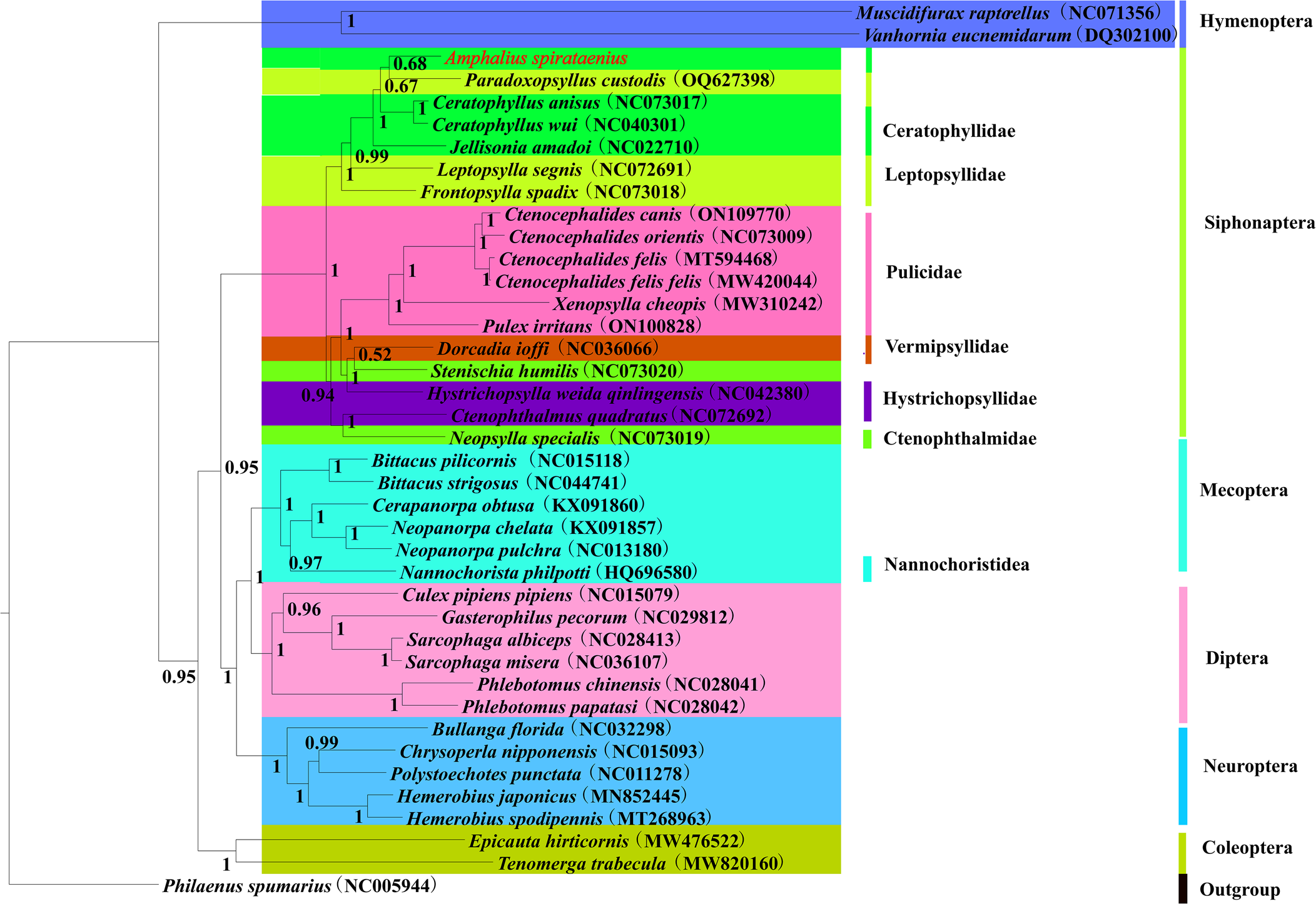
Phylogenetic tree of 40 insect species was constructed using Bayesian methods with Philaenus spumarius as the outgroup and node values as posterior probability values (PP). Amphalius spirataenius was labelled in red
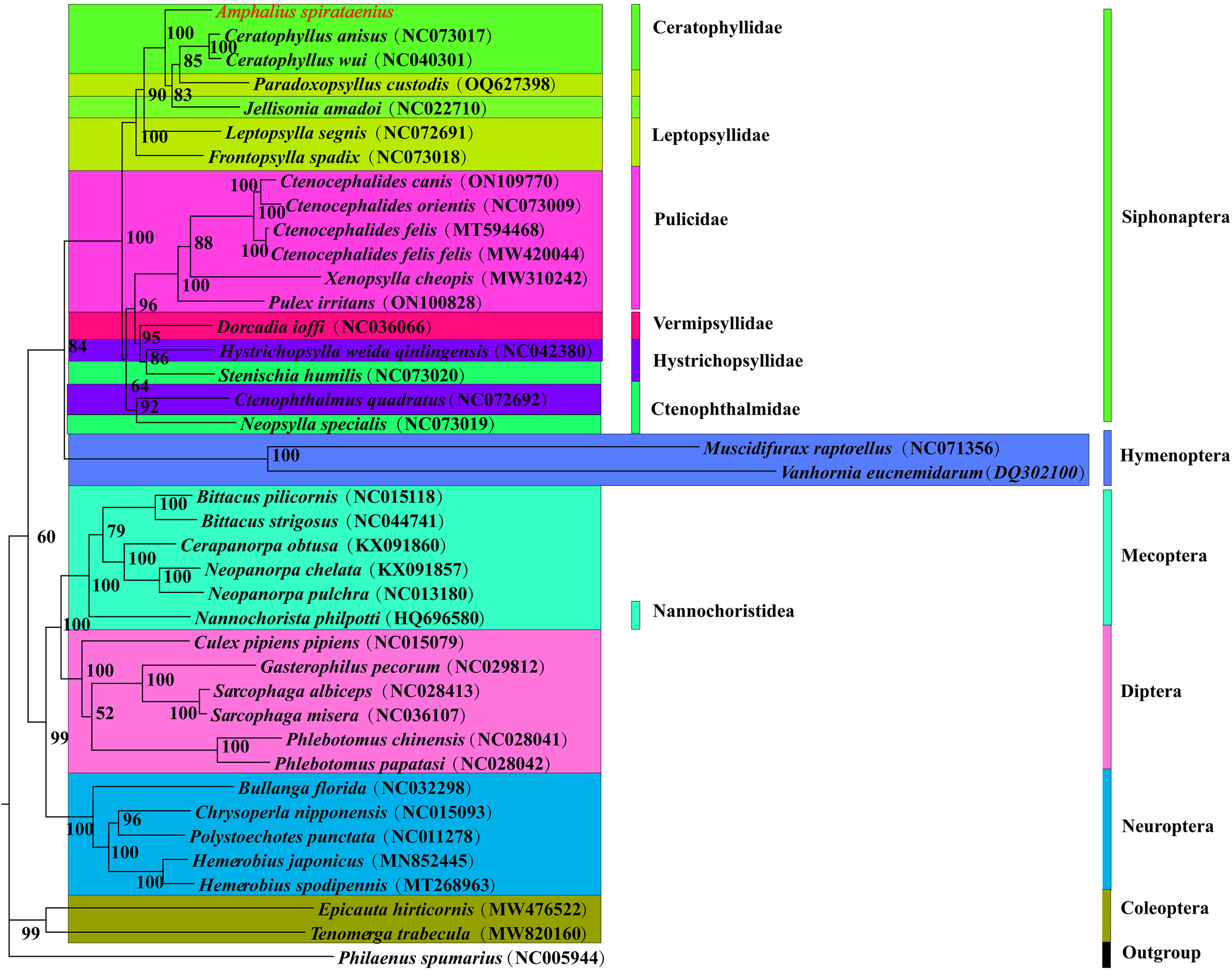
Phylogenetic tree of 40 insect species was constructed by Maximum likelihood method with Philaenus spumarius as an outgroup and node values as bootstrap values (BS). Amphalius spirataenius was labelled in red
Supplementary Figures
The author apologises for these errors and wishes to correct them through this notice.


 Open access

