




1. Introduction
The ‘multilingual turn’ contests the monolingual ideology by repositioning linguistic practices as a semiotic repertoire that encourages researchers to examine how language users mobilise linguistic, cultural, and social resources to construct meaning in multilingual contexts (May, Reference May2014; see also Li, Reference Li2018; Liu & Fang, Reference Liu and Fang2022). This conceptual reorientation is rooted in contemporary heteroglossic environments, where named languages, dialects, and registers circulate across domestic, educational, and digital spaces (e.g., Blackledge & Creese, Reference Blackledge and Creese2014; Nagashima & Lawrence, Reference Nagashima and Lawrence2022; Song, Reference Song2016; Zhao & Flewitt, Reference Zhao and Flewitt2020). Such heterogeneity reflects the complexity of language use in today’s globalised world. It is, therefore, irrational to expect multilingual individuals to behave as monolinguals in that their language use is deeply connected to personal and cultural spheres and the interactions among them (e.g., Abourehab & Azaz, Reference Abourehab and Azaz2023; Fisher et al., Reference Fisher, Evans, Forbes, Gayton and Liu2020; Liao et al., Reference Liao, Fang and Zhang2025; Liu & Fang, Reference Liu and Fang2022; Richards & Wilson, Reference Richards and Wilson2019). This multilingual environment calls for pedagogical practices that recognise and respond to multilingual learners’ language practice patterns. Against this backdrop, translanguaging pedagogy (TP), as a pedagogical framework that legitimates learners’ use of their full multilingual resources, has increasingly gained scholarly attention (Cenoz & Gorter, Reference Cenoz and Gorter2020; Cummins, Reference Cummins2019; see also interviews with Li and Canagarajah by Zhang, Reference Zhang2022a, Reference Zhang2022b).
An increasing body of research has documented that TP nurtures language development, cognitive flexibility, emotional security, as well as learner agency by satisfying learners’ multilingual needs across different instructional contexts (Dryden et al., Reference Dryden, Tankosić and Dovchin2021; Rajendram, Reference Rajendram2023; Wawire & Barnes-Story, Reference Wawire and Barnes-Story2023; Yasar Yuzlu & Dikilitas, Reference Yasar Yuzlu and Dikilitas2022). Although the majority of studies have highlighted positive impacts of TP on language development (e.g., Busse et al., Reference Busse, Cenoz, Dalmann and Rogge2020; Luo & Sun, Reference Luo and Sun2025; Yasar Yuzlu & Dikilitas, Reference Yasar Yuzlu and Dikilitas2022), Hopp et al. (Reference Hopp, Kieseier, Jakisch, Sturm and Thoma2021) and Qureshi and Aljanadbah (Reference Qureshi and Aljanadbah2022) held different opinions. They found that TP did not contribute significantly to language performance. The mixed results might be attributed to the differences in study designs, instructional contexts, assessment standards, or sample sizes. This variability may prevent teachers from determining when, how, and to what extent such practices can be applied in instructional contexts. Previous studies have provided valuable insights into the effects of TP and have clarified its theoretical grounding (e.g., Sun & Zhang, Reference Sun and Zhang2022). However, this evidence is largely fragmented, with findings drawn from individual studies that vary in design, context, and outcome measures. This lack of cumulative evidence limits a comprehensive understanding of TP effectiveness across contexts.
Due to the heterogeneity in research designs, sample characteristics, and effect sizes reported across the current literature, a multilevel Bayesian meta-analytic approach might be appropriate. Unlike traditional frequentist meta-analysis, Bayesian methods can provide probabilistic statements about effect sizes and accommodate various sources of uncertainty (Bürkner, Reference Bürkner2017; Reis et al., Reference Reis, Kaizer, Kinney, Bahraini, Holliday, Forster and Brenner2023; Vehtari et al., Reference Vehtari, Gabry, Magnusson, Yao, Bürkner, Paananen and Gelman2023 Reference Vehtari, Gelman and Gabry2017; Williams et al., Reference Williams, Rast and Bürkner2018). This approach also allows researchers to quantify the probability that the true effect falls within a range of practical significance. Moreover, a three-level meta-analytic model is particularly suitable when multiple effect sizes are reported within individual studies, as it accounts for the dependency among effect sizes nested within the same study (Assink & Wibbelink, Reference Assink and Wibbelink2016; Cheung, Reference Cheung2014). Therefore, the present study aims to achieve two research objectives: (1) to estimate the overall effectiveness of TP on L2 achievement by synthesising effect sizes from existing empirical studies; and (2) to identify and examine potential moderators that may account for variability in the effectiveness of TP. This study will contribute to research syntheses in applied linguistics by providing a methodological demonstration of Bayesian multilevel meta-analysis and advancing empirical understanding of TP effectiveness.
2. Literature review
2.1. Translanguaging and TP
The theory of translanguaging rose from classroom practice, then returned there to be tested and refined. Each cycle of implementation reshaped what the theory claimed. It is recognised that translanguaging originates from bilingual classrooms in Wales, where Williams (Reference Williams1994) first coined the term trawsieithu to describe the practice of switching between Welsh and English in language teaching practices. It was Baker (Reference Baker2001) who provided a voice in English for the Welsh term trawsieithu by translating it into translanguaging. Since its introduction, translanguaging has increasingly attracted attention as a pedagogy and a theoretical framework for analysing diverse language usage. García (Reference García2009) extended earlier models to conceive translanguaging as a dynamic discourse practice through which bilinguals mobilise their full linguistic repertoire to make sense of their multilingual worlds across language boundaries. Canagarajah (Reference Canagarajah2011) foregrounded attention towards the rhetorical and strategic nature of multilingual communication, defining translanguaging as ‘the ability of multilingual speakers to shuttle between languages, treating the diverse languages that form their repertoire as an integrated system’ (p. 401). He emphasised multilinguals’ strategic use of their integrated repertoires to negotiate meaning in situated communicative contexts. García and Li (Reference García, Li, Wright, Boun and García2015) further propelled the evolution of translanguaging theory. In their collaborative work, they argue that translanguaging challenges monolingual ideologies and valorises marginalised linguistic resources. Translanguaging, in their view, can create spaces to afford bilingual and multilingual learners the opportunity to exercise epistemic agency, negotiate identities, and engage with academic content through their full spectrum of linguistic and semiotic repertoires. More recently, Li (Reference Li2018) described translanguaging as a practical theory of language, where meaning develops through the dynamic and integrated use of multilingual, multisemiotic, multisensory, and multimodal resources in interaction. From his perspective, communication is an active process. It is multilingual, multisemiotic, multisensory, and multimodal, shaped by the coordination of cognitive, semiotic, sensory, and multimodal resources in real-time social interaction. Based on these insights, we can argue that translanguaging can be understood as a dynamic and intentional process through which multilingual individuals draw on integrated linguistic and semiotic resources to make meaning and participate in social and academic practices.
The theoretical development of translanguaging has led to related teaching approaches, most notably TP. This approach draws on students’ multilingual resources to raise awareness of language, support both language and subject learning, and promote active participation in linguistically diverse classrooms (Cenoz & Gorter, Reference Cenoz and Gorter2021, Reference Cenoz and Gorter2020). García et al. (Reference García, Johnson, Seltzer and Valdés2017) outlined TP in terms of three connected components: stance, design, and shift. Stance, a philosophical, ideological, or beliefsystem that teachers draw from to design pedagogical frameworks, treats learners’ language repertoire as a resource, never as a deficit. Design involves the systematic planning of instruction and assessment around the integration of the language and cultural practices that students bring from their home, school, and community environments. Shifts capture the teachers’ moment-by-moment decisions through which the course of the lesson and assessment together with language use are adjusted to release and support students’ voices. Cenoz and Gorter (Reference Cenoz and Gorter2017) differentiated between pedagogical and spontaneous translanguaging. Pedagogical translanguaging involves the planned and systematic use of students’ full language resources across teaching activities, with the aim of supporting learning in an organised way. Spontaneous translanguaging, in contrast, occurs naturally and without prior planning in response to learners’ communicative needs. Although it is unplanned, spontaneous translanguaging still holds pedagogical value because it reflects the reality of how language resources are naturally used and teachers can use it as an instructional strategy in the classroom (Cenoz & Gorter, Reference Cenoz and Gorter2021). Rather than treating pedagogical and spontaneous translanguaging as separate or competing practices, Cenoz and Gorter (Reference Cenoz and Gorter2020, Reference Cenoz and Gorter2021) view them as points along a single continuum. This continuum captures the close relationship between teacher planning and learner agency in multilingual classrooms. By encouraging learners to draw on their full linguistic and semiotic resources, TP broadens opportunities for meaning-making beyond the boundaries of named languages (Cenoz & Gorter, Reference Cenoz and Gorter2020, Reference Cenoz and Gorter2021). This flexibility supports learners in engaging with complex academic content and in taking part in the shared construction of subject knowledge through multilingual and multimodal interaction (Li, Reference Li2018). Based on these theoretical and pedagogical insights, we define TP in the present study as instructional practices that deliberately integrate students’ full linguistic resources to support content learning and meaning-making. This definition includes both planned classroom practices and teachers’ responsive adjustments to learners’ spontaneous cross-linguistic use during interaction.
2.2. Effects of TP on L2 achievement
TP has turned out to not merely contribute to general language development but also tailor its contributions to specific language skills, such as vocabulary, speaking, listening, grammar, and writing. In the following section, we review TP studies that focus on these specific language skills to reveal its nuanced role in language learning.
For listening skills, Zhou et al. (Reference Zhou, Chen and Wang2024) carried out a mixed-methods study to explore the influence of multilingual note-taking on listening comprehension among 90 Chinese English-as-a-Foreign-Language (EFL) university students. Based on the principles of translanguaging, Zhou et al. discovered that students who adopted multilingual and multimodal strategies attained better listening comprehension as compared to the students who were restricted to using only English or Chinese for taking notes. By leveraging their entire linguistic and semiotic resources, these students benefited from organising and interpreting the listening content and showed a stronger inclination to insert multilingual and semiotic assets in their listening tasks. Robillos (Reference Robillos2023) also implemented translanguaging into metacognitive listening and writing instruction in his 11-session research targeting 16 college students. The author found a significant increase in the listening comprehension scores of students after the intervention using TP. The mean of the pre-test was 9.19, while the mean of the post-test was 15.56. Turning to speaking skills, Luo and Sun (Reference Luo and Sun2025) ran a quasi-experiment testing translanguaging against L2-only planning in EFL speaking tasks. Drawing on task-based teaching and Levelt’s (Reference Levelt1989) speech production model, they reported that the translanguaging group demonstrated significantly greater syntactic complexity and idea development (e.g., higher clause ratios, longer AS-units, and more idea units) than the comparison group. Translanguaging also supports reading comprehension. Mgijima (Reference Mgijima2021) tested this in a quasi-experiment with Grade 4 isiXhosa-English bilinguals in South Africa. Students who received translanguaging-based instruction showed some improvement in predicting narrative events, with stronger and more consistent gains observed in their home language (isiXhosa) than in their target language (English). But the evidence was mixed across different analyses. Zhang (Reference Zhang2023) reported similar gains in translation-based writing. When Chinese EFL students were encouraged to draw on their L1 during English composition, it worked as a productive resource, supporting both writing performance and learner confidence. Moreover, TP has also lent support to grammar and vocabulary acquisition (e.g., Hopp & Thoma, Reference Hopp and Thoma2021; Sun, Reference Sun2024). For example, Hopp and Thoma (Reference Hopp and Thoma2021) demonstrated that pedagogical translanguaging, through cross-linguistic comparisons among learners’ majority, minority, and target languages, facilitated the acquisition of English object wh-questions. However, for grammatical features that were similar across languages, such as passives, both groups showed comparable gains.
While TP has shown the above pedagogical benefits, other studies have yielded inconsistent findings. Doubts about its effectiveness have been raised by teachers, who worry that the use of home languages may hinder target language development (Ticheloven et al., Reference Ticheloven, Blom, Leseman and McMonagle2021). Students have also reported confusion during language alternation and expressed concern that such practices might lead to language mixing and affect their speaking and writing. Moreover, Hopp et al. (Reference Hopp, Kieseier, Jakisch, Sturm and Thoma2021) did not find significant advantages of TP over monolingual instruction in vocabulary and grammar development for early foreign language learners. Qureshi and Aljanadbah (Reference Qureshi and Aljanadbah2022) also observed similar null effects for translanguaging instruction on L2 reading comprehension among Arabic–English bilingual learners in the United Arab Emirates. Sun and Zhang (Reference Sun and Zhang2022) observed that although there were writing gains in the first few rounds of translanguaging-supported peer feedback, these advantages disappeared in later stages. These findings suggest that the pedagogical value of TP may not be consistent but conditional on specific instructional and learner-related factors. Wen et al. (Reference Wen, Zhang, Kong and Han2022) introduced a translanguaging-informed, genre-based pedagogical framework for designing tasks and classroom practices in business communication courses. They highlighted both the benefits and the challenges of applying this approach to curriculum development and professional training in superdiverse megacities such as the Great Bay Area.
2.3. Potential moderators
Among the factors that may influence the effectiveness of TP, educational level has been a hot topic in meta-analytic scholarship. Based on a comparative analysis of Korean heritage language learners in first and third grades, Lee (Reference Lee2024) found that, although students at both levels engaged in translanguaging to facilitate meaning- and sense-making processes, the specific mechanism differed. Younger learners tended to rely on translanguaging to deal with lexical uncertainty, and their use could not be separated from teachers’ language use. By contrast, older students held more strategic regulation of language choices. Their translanguaging practices operated as a strategic resource for articulating evaluative stances. It also supported flexible alignment with interlocutors’ language preferences and interactional roles. For inter-educational-level differences, Zainuddin and Zaki (Reference Zainuddin and Zaki2023) found variance in translanguaging practices among Malaysian secondary and tertiary English as a second language (ESL) classrooms. Ulum (Reference Ulum2024) also found educational-level differences, with students at different educational stages differing in how they evaluated and experienced translanguaging in terms of confidenceand in how they perceived its academic and classroom-related benefits. These perceptual and psychological differences across educational levels may condition how TP operates.
Despite growing empirical attention to the instructional benefits of TP, little research has examined whether its effectiveness varies with target language characteristics or with the linguistic distance between learners’ first language and the target language. The similarities between first and second languages could influence cross-linguistic transfer and language development (Chiswick & Miller, Reference Chiswick and Miller2005; Melby‐Lervåg & Lervåg, Reference Melby‐Lervåg and Lervåg2011). Qureshi and Aljanadbah (Reference Qureshi and Aljanadbah2022) investigated the impact of TP on L2 reading comprehension among Arabic-speaking learners of English. But they found no significant difference between translanguaging and monolingual instructional conditions. When Teng and Fang (Reference Teng and Fang2024) examined Japanese learners acquiring Chinese, they found significant gains in morphological awareness under translanguaging instruction. Learners who engaged in translanguaging across Japanese, English, and Chinese outperformed those in the monolingual group. Given the theoretical plausibility that linguistic distance may affect the transferability of linguistic resources, this study considers linguistic distance as a potential moderator. In addition, as English occupies a distinct status as a global lingua franca with widespread exposure and pedagogical support, its instructional outcomes under TP may differ from those of other languages. Thus, target language type (English vs Languages other than English, LOTE) is also examined as a separate moderator.
Intervention duration constitutes another variable when assessing instructional effectiveness in second language acquisition (SLA). Existing studies on TP have adopted flexible intervention durations, ranging from a single session (e.g., Qureshi & Aljanadbah, Reference Qureshi and Aljanadbah2022) to long-term interventions up to 6 months (e.g., Hopp & Thoma, Reference Hopp and Thoma2021). This variation may reflect different instructional objectives and theoretical assumptions about how and why learners would benefit from translanguaging practices. Shorter interventions may be assumed to make immediate, task-related gains, whereas longer intervention durations are likely to focus on the development of metalinguistic awareness and the acquisition of cross-linguistic skills in the long run. But Plonsky and Oswald (Reference Plonsky and Oswald2014) noted that although longer interventions generally yield larger effect sizes, the correlation between treatment length and learning outcomes tends to be small. These insights prompted the inclusion of treatment duration as a moderator to assess its moderating effect on TP’s effectiveness.
TP produces gains in L2 learning, yet different language skills respond unevenly to its influence. As reviewed earlier, TP has been implemented to support learning outcomes in both receptive skills (e.g., reading and listening) and productive skills (e.g., speaking and writing), as well as in lexical and grammatical development. However, the mechanisms through which translanguaging supports these outcomes differ across skill domains. Reading may benefit from learners’ capacity to draw on cross-linguistic resources and to transfer inferencing strategies across languages, as evidenced by improved text prediction outcomes among bilingual learners engaged in translanguaging-based reading instruction (Mgijima, Reference Mgijima2021). Luo and Sun (Reference Luo and Sun2025) found that TP facilitates speaking production by enabling learners to use multiple linguistic resources during oral tasks, which can enhance communication efficiency and support idea exchange. As for lexical development, TP facilitates vocabulary discussion by enabling learners to draw on multilingual resources and collaboratively search for appropriate expressions (Teng & Fang, Reference Teng and Fang2024). TP also improves listening comprehension through providing learners with multilingual and multimodal resources for note-taking, which may benefit encoding of listening input and meaning reconstruction (Zhou et al., Reference Zhou, Chen and Wang2024). These exemplar variations suggest that TP may function through different facilitative processes for the target language skills. Liao et al. (Reference Liao, Fang and Zhang2025) conducted a qualitative meta-synthesis of ten English medium instruction (EMI) TP studies published between 2014 and 2024. Their review found a strong emphasis on qualitative methods, mainly case studies and thematic analyses, focused largely on tertiary Asian contexts and on teachers’ and students’ translanguaging perceptions and practices. Noting limited quantitative, mixed-methods, and context-diverse research, the authors called for broader methodological approaches and expanded investigations across varied EMI settings and subject areas.
2.4. The present study
TP has gained recognition as a viable approach to promoting second and foreign language development. However, the field is still lacking a generalisable account of TP’s impact on language achievement across diverse educational settings. The present study overcomes this limitation by applying a Bayesian multilevel meta-analytic approach to control for dependencies and decompose variance across sampling, within-study, and between-study levels (Assink & Wibbelink, Reference Assink and Wibbelink2016; Cheung, Reference Cheung2014). Unlike the conventional frequentist approaches used in previous syntheses, this approach allows for direct probability statements about effect magnitude and precision (e.g., Norouzian et al., Reference Norouzian, De Miranda and Plonsky2018). Bayesian estimation may provide improved estimation accuracy and enhanced assessment of between-study heterogeneity, particularly when only a small number of studies are available (Reis et al., Reference Reis, Kaizer, Kinney, Bahraini, Holliday, Forster and Brenner2023). The Bayesian framework further allows for direct modelling of uncertainty through prior and posterior distributions, which is suitable for synthesising heterogeneous studies (Schmid & Mengersen, Reference Schmid, Mengersen, Koricheva, Gurevitch and Mengersen2013; Sutton & Abrams, Reference Sutton and Abrams2001). The present meta-analysis is guided by two research questions:
(1) What is the overall effectiveness of TP on L2 achievement?
(2) To what extent is the effectiveness of TP moderated by educational stage, target language, linguistic distance, intervention duration, and language skills?
3. Methodology
3.1. Literature identification and inclusion criteria
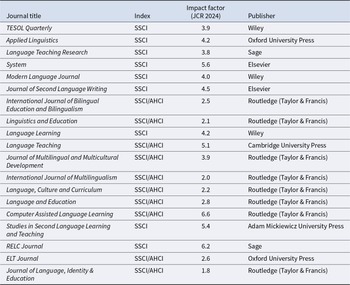
Literature identification was carried out following the Preferred Reporting Items for Systematic Reviews and Meta-Analyses guidelines (Page et al., Reference Page, McKenzie, Bossuyt, Boutron, Hoffmann, Mulrow, Shamseer, Tetzlaff, Akl, Brennan, Chou, Glanville, Grimshaw, Hróbjartsson, Lalu, Li, Loder, Mayo-Wilson, McDonald and Moher2021). As bilingual researchers proficient in both English and Chinese, we searched English together with Chinese databases. They are Web of Science, Scopus, ERIC, ProQuest, and China National Knowledge Infrastructure (CNKI). The search for the literature began with Williams (Reference Williams1994), which is widely marked as one of the key contributions that brought translanguaging into scholarly attention. A three-stage search strategy was adopted in this study to guarantee comprehensive and systematic literature retrieval. Firstly, a database search was conducted based on two sets of keywords: one targeting language learning domains and the other focusing on translanguaging-related pedagogy. Within the English-language databases, the search string was: (‘foreign language’ OR ‘second language’ OR ‘L2’ OR ‘FL’ OR ‘SL’ OR ‘additional language learning’ OR ‘language education’) AND (translanguag* OR ‘pedagogical translanguag*’ OR ‘translanguaging pedagogy’ OR ‘translanguaging practices’ OR plurilingual*). ‘AND’ and ‘OR’ are Boolean operators that enable the combination of different terms. The asterisk (*) is a wildcard symbol, which means that it can be used to reflect lexical variants. To incorporate Chinese-language scholarship, equivalent keywords such as ‘超语’, ‘超语言’, ‘跨语言’, ‘多语教学’, and ‘超语言教学’ were used in the CNKI. The term ‘超语’ was used to capture studies on translanguaging. CNKI is the largest academic database in China, which indexes peer-reviewed journals, dissertations, and conference proceedings in Chinese. The language of the articles included in the search was limited to English and Chinese. The next search strategy involves the manual screening of high-impact journals in applied linguistics and language education, as shown in Table 1.
List of journals selected for the analysis
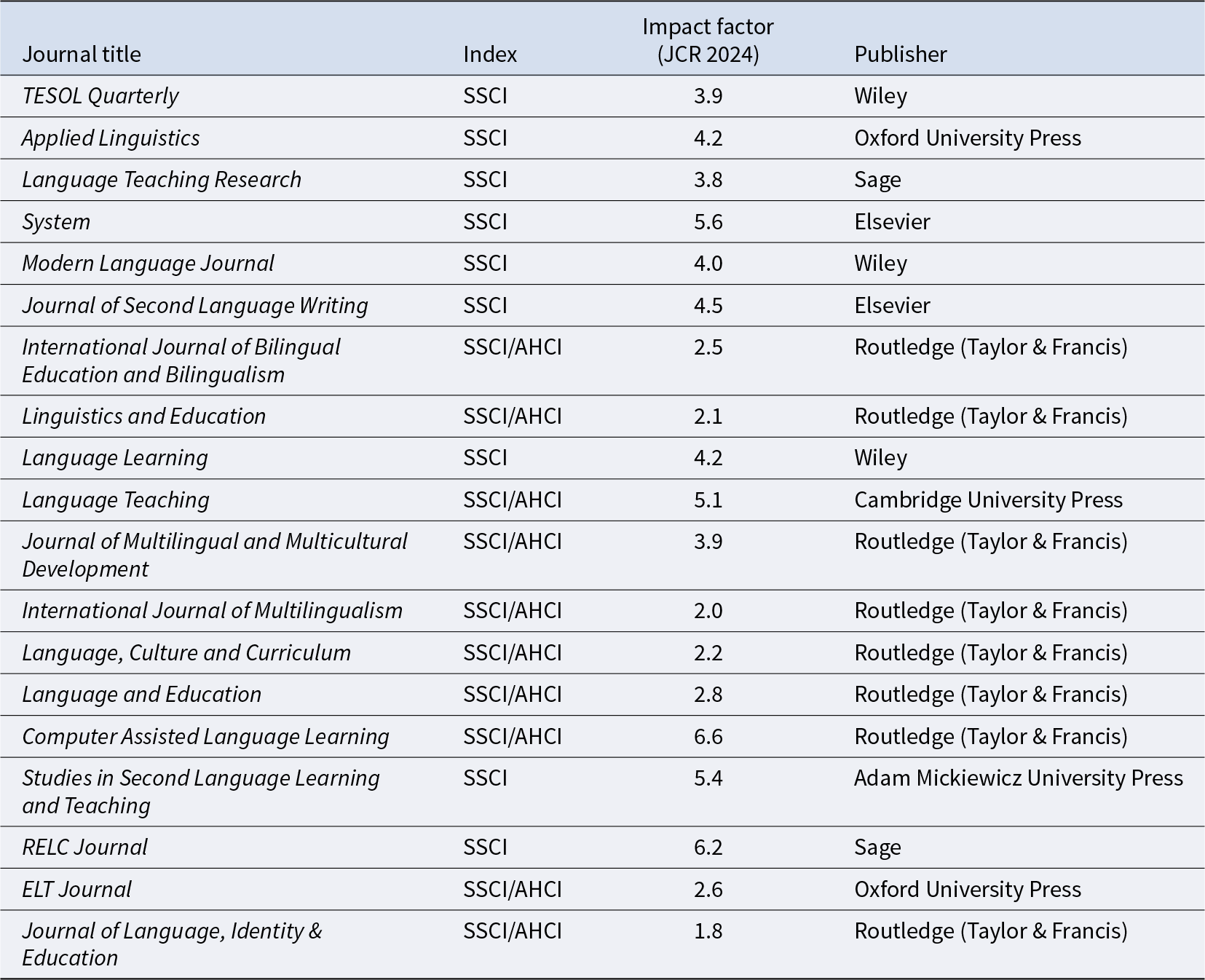
Table 1 Long description
The table lists journals selected for analysis, detailing their index, impact factor for JCR 2024, and publisher. Computer Assisted Language Learning leads with an impact factor of 6.6, published by Routledge, while Journal of Language, Identity & Education has the lowest impact factor of 1.8, also published by Routledge. Most journals are indexed in SSCI, with some also in AHCI, and Routledge is the most frequent publisher. Impact factors range from 1.8 to 6.6, indicating varying levels of influence in the field. Wiley, Oxford University Press, and Elsevier are other notable publishers. The data suggests a trend where journals with higher impact factors are often published by larger, well-established publishers.
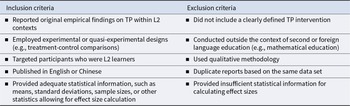
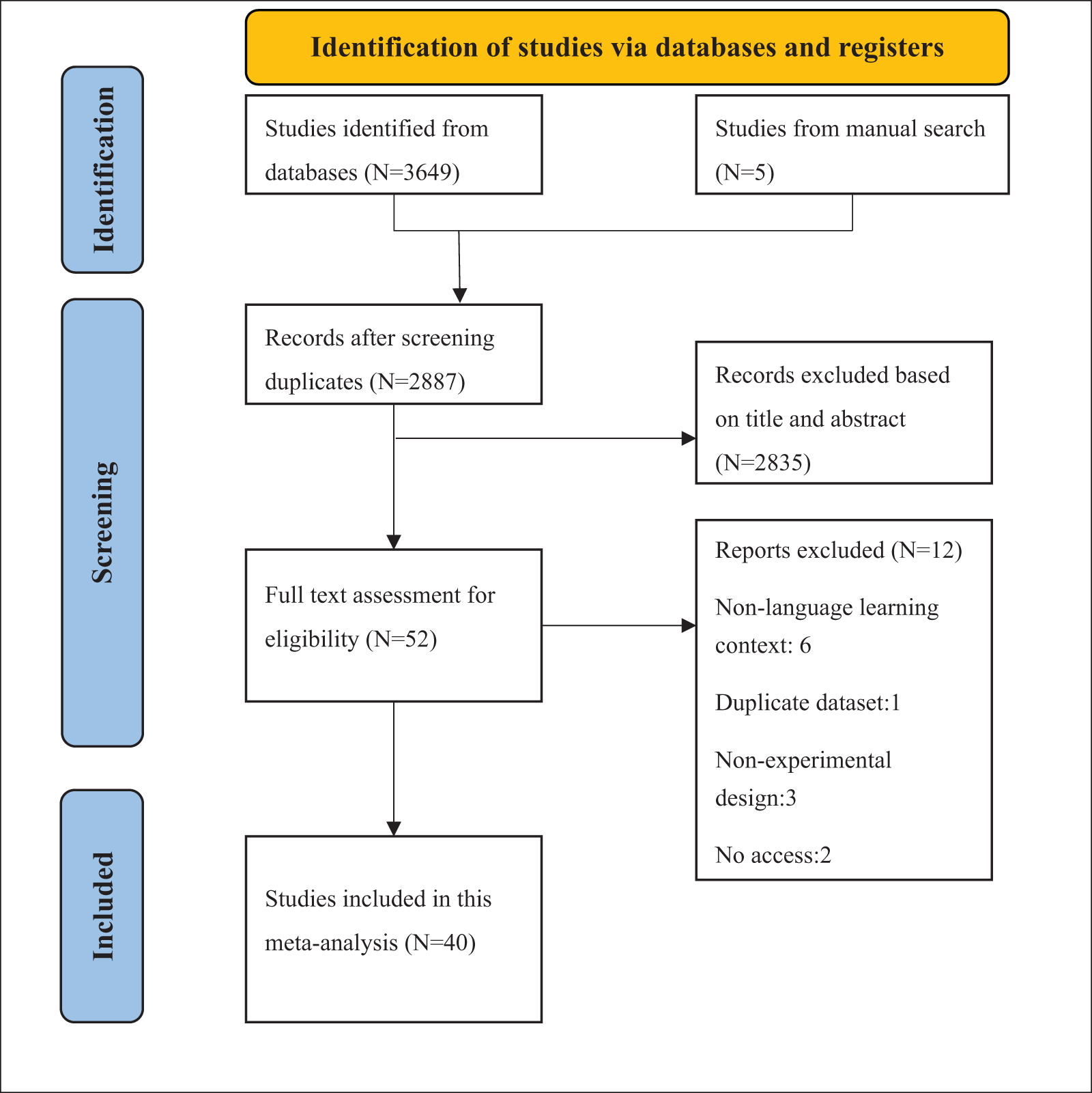
Moreover, backward reference searches were conducted on studies retained after full-text screening to identify earlier works not captured through database queries. Forward citation tracking via Google Scholar was also used to locate recent publications citing the same studies and meeting the inclusion criteria. We also included grey literature to reduce the risk of publication bias. This included unpublished master’s theses, doctoral dissertations, and conference proceedings retrieved from dissertation and conference proceedings databases, such as ProQuest Dissertations and CNKI Dissertations. A total of 3,649 records were retained from the above searching process. After removing 762 duplicate records, we yielded 2,887 unique records. Following the assessment of titles, keywords, and abstracts, we excluded 2,835 records that did not meet the objectives of this study. A total of 52 full-text articles were retrieved and reviewed for eligibility using the inclusion and exclusion criteria listed in Table 2.
Inclusion and exclusion criteria
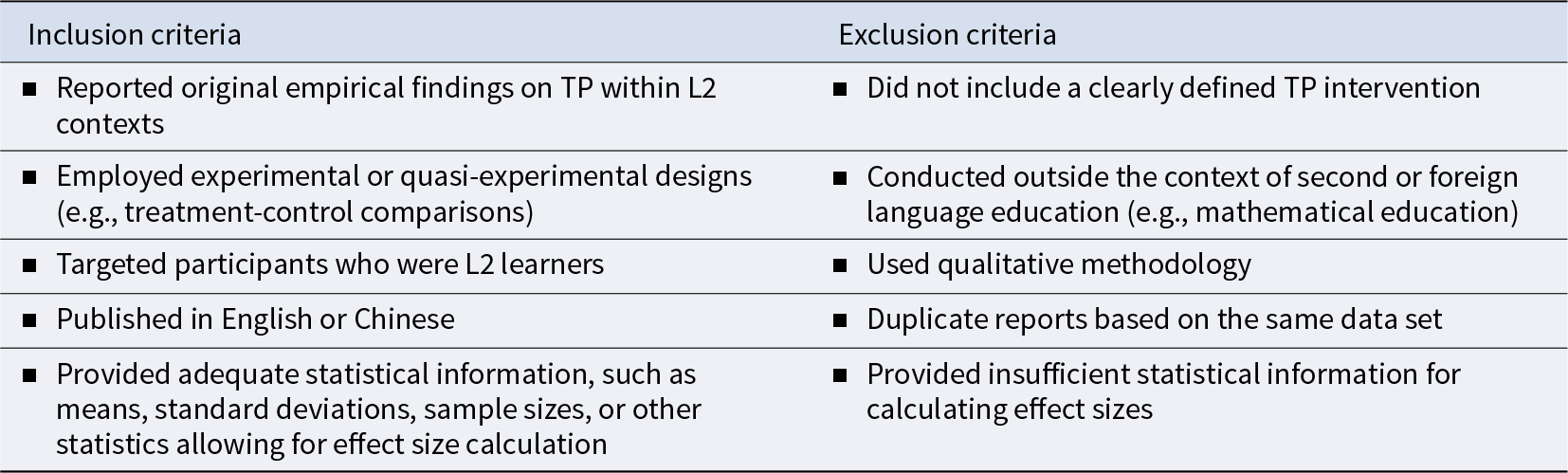
Table 2 Long description
The table outlines criteria for including and excluding studies on teaching practices within second language contexts. Inclusion criteria require studies to report original empirical findings, use experimental designs, target L2 learners, be published in English or Chinese, and provide adequate statistical information. Exclusion criteria include studies without a defined TP intervention, those conducted outside language education, using qualitative methods, duplicate reports, and insufficient statistical data. The table highlights the importance of rigorous methodology and clear statistical reporting in selecting relevant studies.
We applied a set of eligibility criteria to determine whether each record was suitable for inclusion and excluded records that did not meet these criteria. A total of 40 studies were retained for the final analysis, comprising 34 journal articles, 3 Chinese master’s theses, 2 English doctoral dissertations, and 1 book chapter (see Appendix A in the Supplementary Material). The flow diagram illustrating the study retrieval and screening process is presented in Figure 1.
Flow diagram. Source: Adapted from Page et al. (Reference Page, McKenzie, Bossuyt, Boutron, Hoffmann, Mulrow, Shamseer, Tetzlaff, Akl, Brennan, Chou, Glanville, Grimshaw, Hróbjartsson, Lalu, Li, Loder, Mayo-Wilson, McDonald and Moher2021).
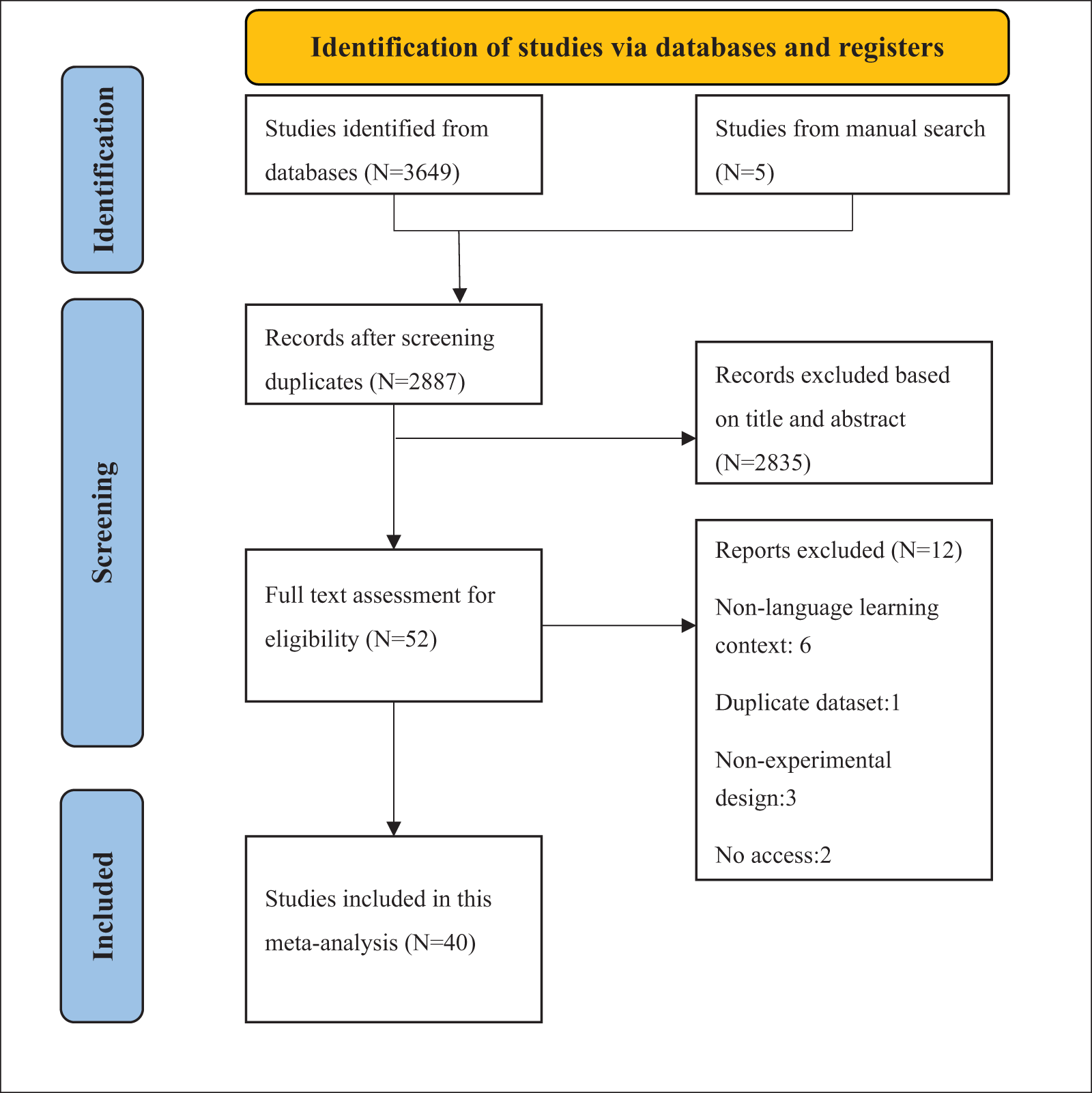
Figure 1 Long description
A flowchart detailing the process of identifying and screening studies for a meta-analysis. The process begins with 'Identification of studies via databases and registers' with 3649 studies identified from databases and 5 from manual search. After screening duplicates, 2887 records remain. 2835 records are excluded based on title and abstract. A full text assessment for eligibility is conducted on 52 studies. 12 reports are excluded for reasons such as non-language learning context (6), duplicate dataset (1), non-experimental design (3) and no access (2). Finally, 40 studies are included in the meta-analysis.
3.2. Data extraction and effect size calculation
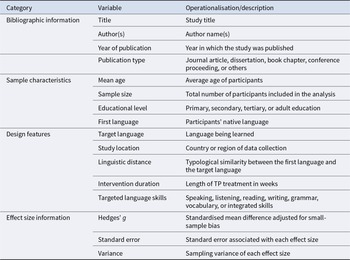
A data coding scheme was applied to extract bibliographic, sample, design, and effect size information from each eligible study (see Table 3). Two researchers independently coded all eligible studies after receiving training on the coding scheme. Inter-rater reliability was checked before the final coding results were obtained. For categorical variables, agreement between coders was measured using Cohen’s kappa (k), and continuous variables were checked using intra-class correlation coefficients (see Supplementary Material Appendices B and C). Any differences between coders were settled through discussion until full agreement was reached. Because many studies reported more than one effect size (e.g., multiple language skills, outcome measures, or assessment time points), we used a three-level meta-analytic model to account for the statistical dependence. This approach nested the data structure at three levels: sampling variance (Level 1), within-study variance (Level 2), and between-study variance (Level 3) (Assink & Wibbelink, Reference Assink and Wibbelink2016; Cheung, Reference Cheung2014). Hedges’ g serves as the primary effect size measure, as it corrects for small-sample bias and provides less biased estimates of intervention effects (Hedges, Reference Hedges1981). We obtained 108 effect sizes from 40 eligible studies with 3,145 participants.
Coding scheme
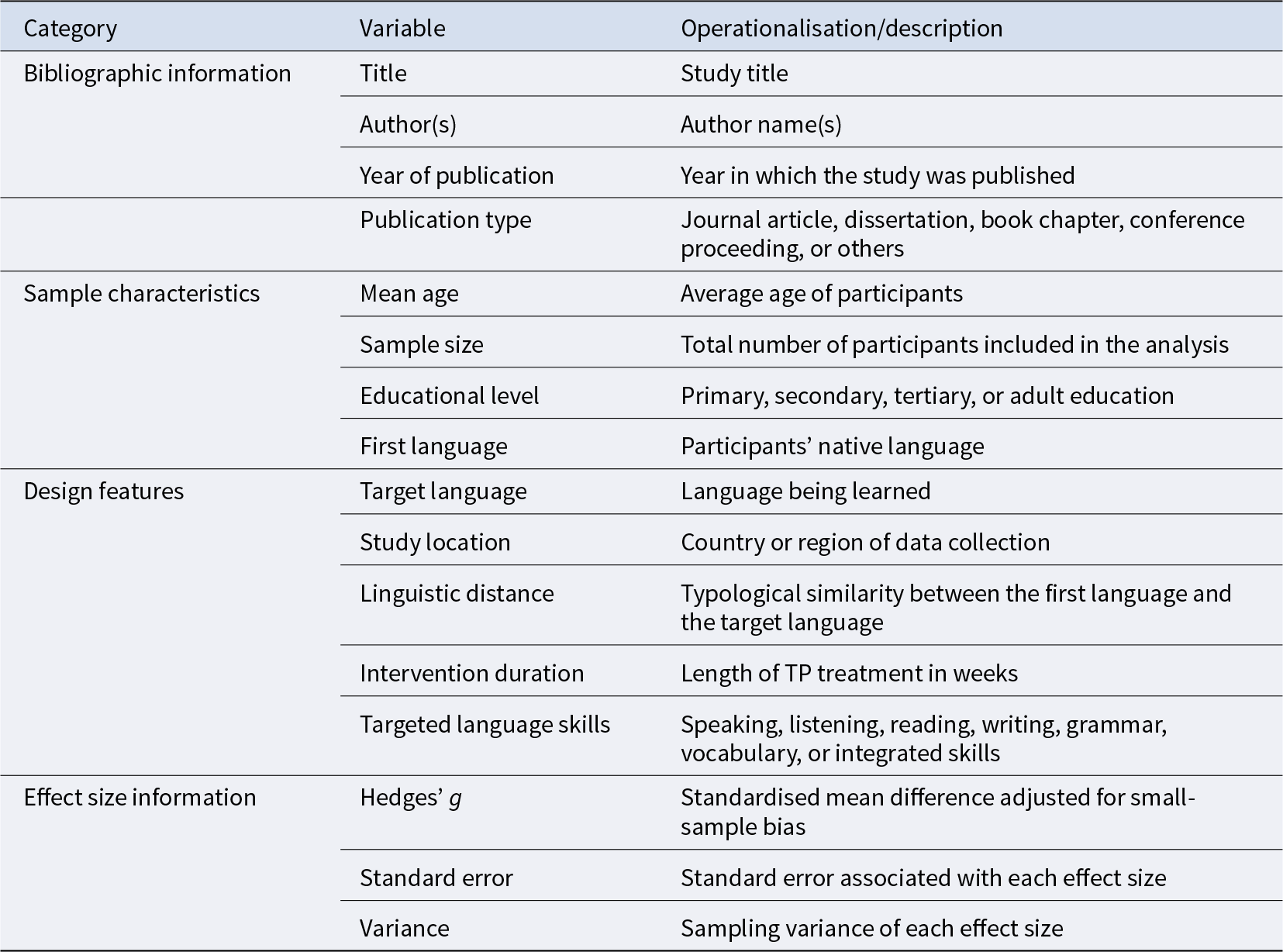
Table 3 Long description
The table provides a comprehensive coding scheme for analyzing study data across four categories: bibliographic information, sample characteristics, design features, and effect size information. Bibliographic details include the study title, authors, publication year, and type. Sample characteristics cover mean age, sample size, educational level, and first language of participants. Design features describe the target language, study location, linguistic distance, intervention duration, and targeted language skills. Effect size information includes Hedges' g, standard error, and variance, offering insights into the statistical significance and reliability of the study's findings. This structured approach aids in understanding the study's methodology and results, highlighting key variables and their operationalization.
3.3. Statistical analysis
The multilevel Bayesian meta-analysis was conducted in RStudio 4.4.1 under the brms (Bürkner, Reference Bürkner2017) and rstan (Stan Development Team, 2019) packages. The Bayesian framework integrates prior knowledge with observed data and estimates effect sizes through posterior distributions, which tend to be more robust than those produced by frequentist methods (Schmid & Mengersen, Reference Schmid, Mengersen, Koricheva, Gurevitch and Mengersen2013; Sutton & Abrams, Reference Sutton and Abrams2001).
The Bayesian framework is often recommended in meta-analyses with few included studies, as conventional estimators of between-study variance may yield boundary estimates of zero and thereby distort inference for the overall effect (Williams et al., Reference Williams, Rast and Bürkner2018). The Bayesian framework yields a posterior distribution, and uncertainty is represented by highest-density credible intervals (CrIs), which allow researchers to quantify the probability that the parameter falls within a specified range (Kruschke & Liddell, Reference Kruschke and Liddell2018; Norouzian et al., Reference Norouzian, De Miranda and Plonsky2018). This approach accounts for uncertainty in three steps: (a) specifying a prior distribution, which may come from external sources, (b) updating this distribution based on observed data, and (c) deriving the posterior distribution via Bayes’ theorem (Schmid & Mengersen, Reference Schmid, Mengersen, Koricheva, Gurevitch and Mengersen2013). These properties have been demonstrated in recent applications of Bayesian methods in applied linguistics research synthesis (e.g., Brown et al., Reference Brown, Liu and Norouzian2023; Norouzian et al., Reference Norouzian, De Miranda and Plonsky2018).
Given that multiple effect sizes were nested within individual studies, we compared a two-level model and a three-level model to determine the optimal structure for handling dependent effect sizes. Model comparison was conducted using leave-one-out cross-validation information criterion (LOOIC) and the widely applicable information criterion (WAIC) as implemented in the loo package (Vehtari et al., Reference Vehtari, Gabry, Magnusson, Yao, Bürkner, Paananen and Gelman2023, Reference Vehtari, Gelman and Gabry2017). A lower WAIC and LOOIC indicate a better-fitting model.
Because the included studies were heterogeneous, and following the previous Bayesian meta-analyses, such as Griffin and Oswald (Reference Griffin and Oswald2022), we placed a weakly informative Normal (0, 5) prior distribution for the overall effect size to reflect uncertainty regarding its magnitude and direction of TP’s effectiveness. For estimating variance parameters, we employed a non-negative half-Cauchy distribution (Cauchy ∼ [0, 0.3]), as this distribution ensures non-negative estimates and is commonly used in psychological and educational meta-analyses due to its favourable properties for modelling variability (Williams et al., Reference Williams, Rast and Bürkner2018). For the moderator analysis, we specified weakly informative Normal (0, 5) priors to stabilise estimation as well. All models were fit via Hamiltonian Monte Carlo (HMC) sampling implemented in the brms package (Bürkner, Reference Bürkner2017), using four chains and 20,000 iterations (including 5,000 warm-up samples). Stan’s adaptation period is specified as a target average proposal acceptance probability of 0.99 and a maximum tree depth of 12 (Griffin & Oswald, Reference Griffin and Oswald2022). Before examining the parameter estimates, we ensured the HMC simulation exhibited reasonable properties by visually inspecting trace plots, evaluating chain convergence through the potential scale reduction factor ( $\hat{R}$), and confirming that the effective sample size for each parameter was sufficiently large. For model interpretability, trace plots should show good mixing (i.e., well-overlapping chains), while $\hat{R}$ values close to 1 (Gelman & Rubin, Reference Gelman and Rubin1992), and sufficiently large effective sample sizes were taken as indicators of satisfactory convergence (Griffin & Oswald, Reference Griffin and Oswald2022).
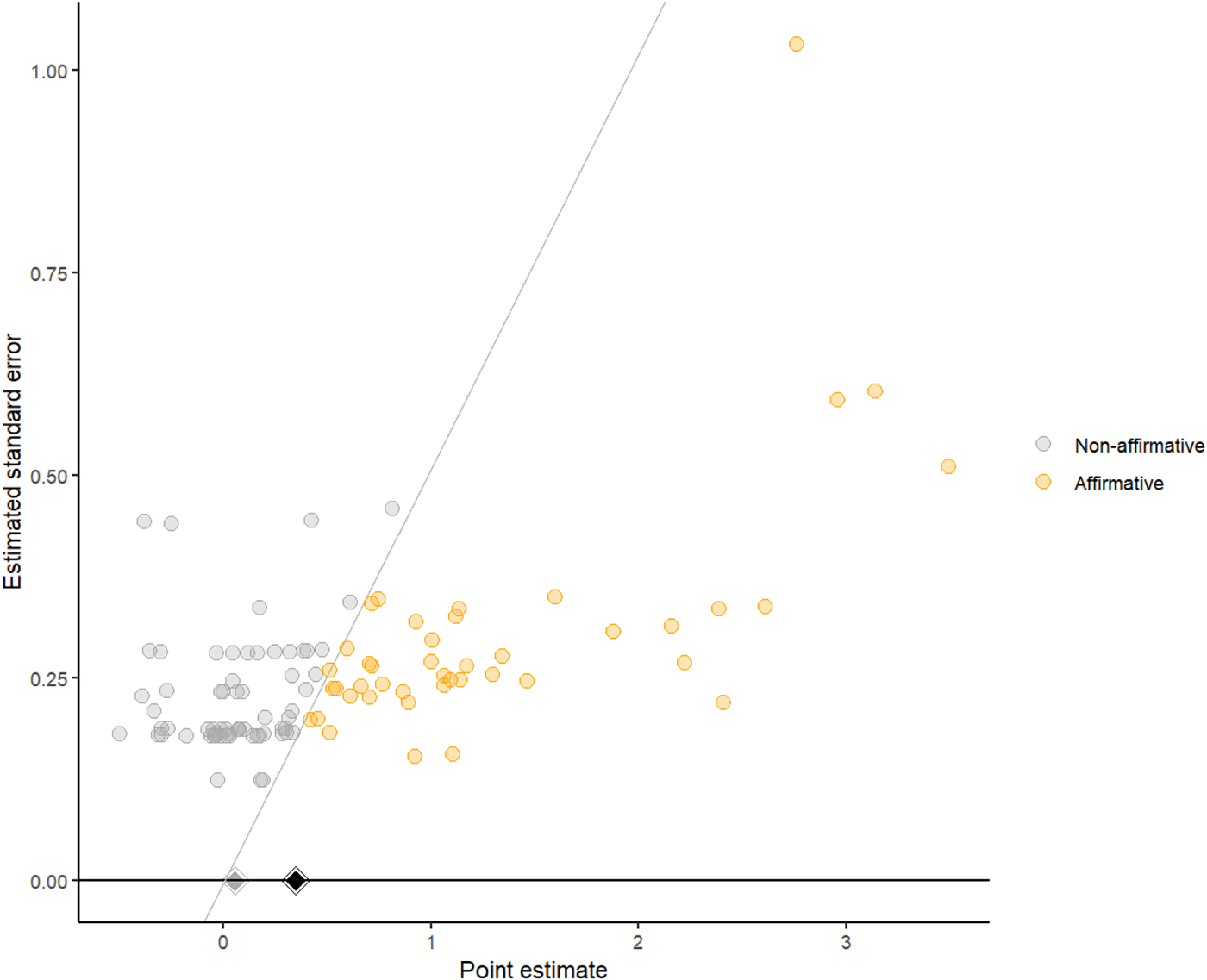
Heterogeneity was tested with the I 2 statistic (Higgins & Thompson, Reference Higgins and Thompson2002). The total, between-study, and within-study variance components were estimated at the three levels. Categorical moderators were translated into dummy indicators so that differences between subgroups could be examined. We calculated the posterior probability of a positive or negative difference for each comparison. For continuous moderators, meta-regression coefficients were estimated, and posterior probabilities exceeding 0.95 were taken as evidence for credible effects (Griffin & Oswald, Reference Griffin and Oswald2022). For publication bias analysis, we used the PublicationBias package in RStudio (Braginsky et al., Reference Braginsky, Mathur and VanderWeele2023; Mathur & VanderWeele, Reference Mathur and VanderWeele2020) for a sensitivity analysis framework that does not rely on funnel plot symmetry. This method gauges how strong publication bias would need to be to bring the observed effect, or its CrI, down to a given threshold. Assuming that statistically significant positive results were more likely to be published (favor_positive = TRUE), we generated a significance-based funnel plot. This plot allows the comparison between affirmative and non-affirmative studies. Affirmative studies demonstrated significant positive outcomes, whereas non-affirmative investigations yielded non-significant or negative results. Using non-affirmative data alone, the worst-case estimate established a conservative robustness baseline. We also computed the s-value to identify how strong selection (η) would need to be to drive the effect to null, with ‘not possible’ indicating that bias cannot fully account for the findings.
In addition, we used traditional methods from the metafor package as a supplement to this method. Egger’s regression test offers another test for possible publication bias (Egger et al., Reference Egger, Smith, Schneider and Minder1997). When Egger’s test indicated publication bias (p < 0.05), the trim-and-fill procedure was applied to estimate missing studies and adjust the pooled effect size. Leave-one-out sensitivity analysis was conducted at both the study level and the effect size level to examine whether removing individual studies or specific effect sizes would substantially alter overall results.
4. Results
4.1. Overall effectiveness
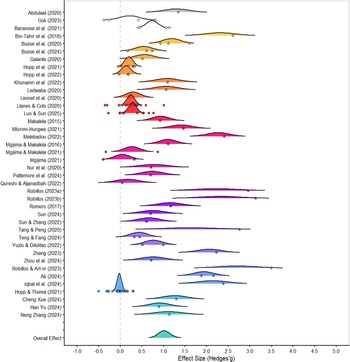
This synthesis brings together evidence from 40 studies (k = 108 effect sizes; N = 3,145 learners). Before pooling effect sizes, we conducted a model comparison to evaluate the suitability of each model. The results favoured the three-level Bayesian meta-analytic model, which showed a lower LOOIC (113.1, SE = 20.8) than the two-level model (124.5, SE = 26.9). WAIC results also preferred the three-level model (75.7, SE = 17.0) over the two-level model (97.1, SE = 24.1). Trace plots indicated consistent chain mixing with highly overlapping paths. Potential scale reduction factor values ranged from 1.00 to 1.002, and effective sample sizes were above 1,000 (see Supplementary Material Appendix D). These findings showed that the HMC produced reliable posterior estimates (Bürkner, Reference Bürkner2017; Gelman & Rubin, Reference Gelman and Rubin1992). The results show a positive effect of TP on L2 achievement (Hedges’ g = 1.014, SE = 0.138, 95% CrI [0.748, 1.291]). Most of the variation came from differences between studies (85.8%), while smaller portions were due to sampling error (10.8%) and differences within studies (3.3%). The related heterogeneity estimates were τ_within = 0.157 (95% CrI [0.057, 0.243]) and τ_between = 0.794 (95% CrI [0.610, 1.054]). The posterior probability that the effect size exceeded zero was close to 100%, which supports a positive effect of TP. Figure 2 shows the posterior distributions of effect sizes for individual studies together with the overall pooled effect. The horizontal axis displays the size of the effect (Hedges’ g), and the dashed vertical line marks the zero-effect point. The vertical axis lists the studies included in the meta-analysis by study identifier, with the overall effect shown separately at the bottom to distinguish it from the individual study estimates. Each row represents one study, and the ridge-shaped curve shows the posterior distribution of that study’s effect size. Narrower curves indicate more stable estimates, while wider curves reflect greater uncertainty. Dots placed on the curves show the effect size estimates for each study.
Forest plot of study-level posterior distributions (N = 40).
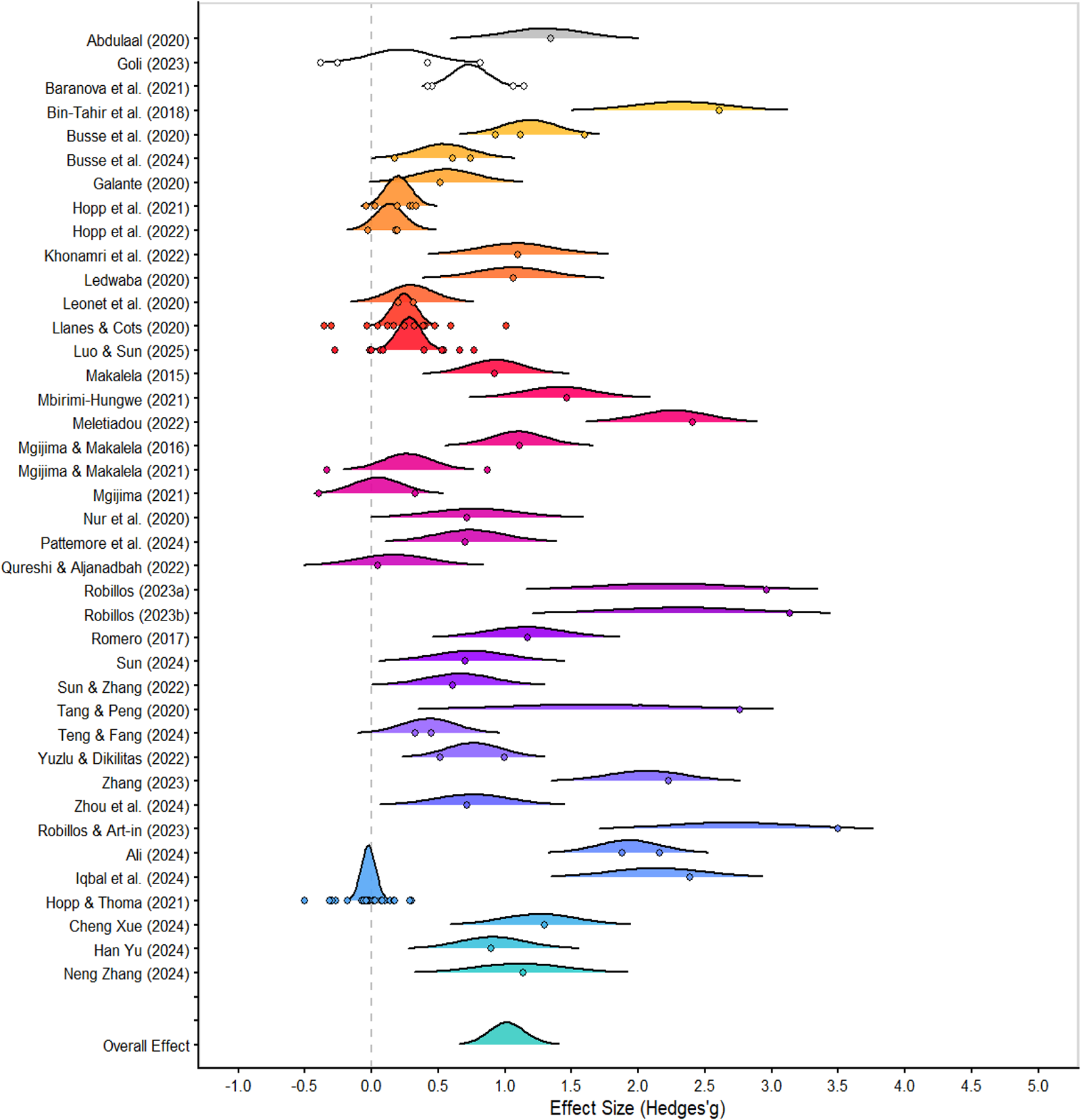
Figure 2 Long description
A forest plot displays the effect sizes for 40 studies, each represented by a ridge-shaped curve indicating the posterior distribution of the study's effect size. The horizontal axis is labeled 'Effect Size (Hedges' g)' and the vertical axis lists the studies by identifier. A dashed vertical line marks the zero-effect point. Each row corresponds to a study, with dots on the curves showing the effect size estimates. The overall effect is shown at the bottom, separate from individual study estimates. Narrower curves suggest more stable estimates, while wider curves indicate greater uncertainty.
4.2. Publication bias and sensitivity analysis
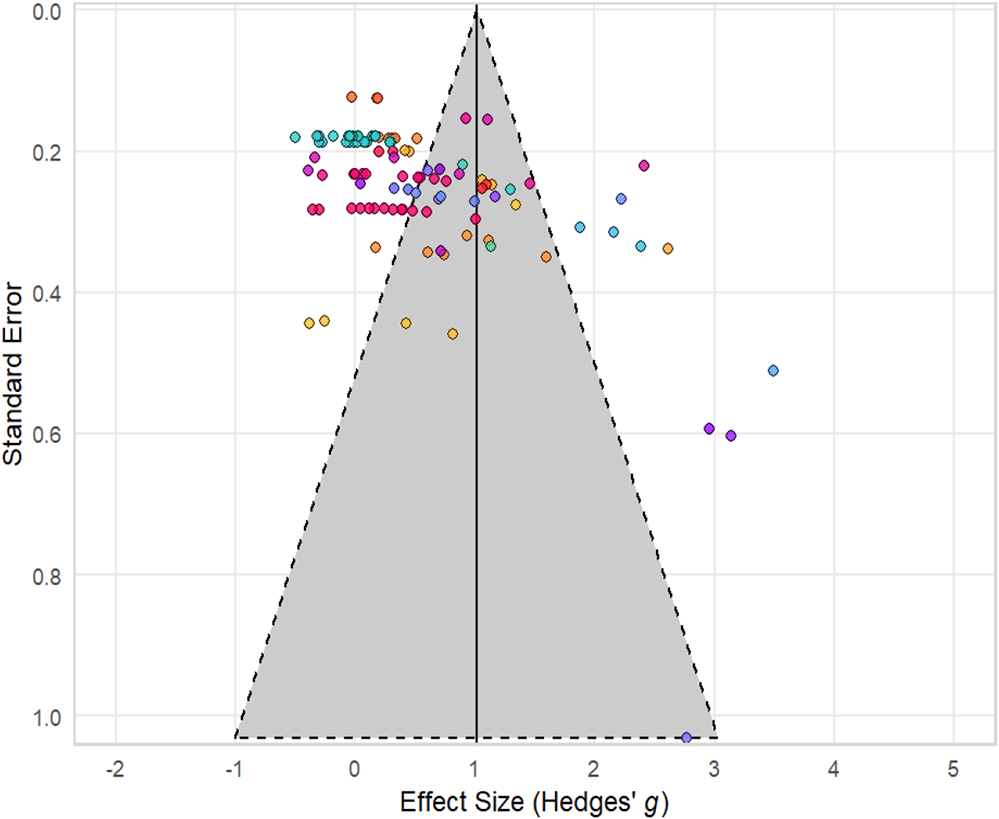
The funnel plots produced from the PublicationBias and metafor packages are shown in Figures 3 and 4, respectively. A multilevel Egger’s test detected clear asymmetry in the data (p < 0.0001), and the result points to the possibility of publication bias. The significance funnel plot generated by the PublicationBias package (Figure 3) showed that studies with non-affirmative results, such as non-significant or negative findings, outnumbered studies reporting significant positive effects. The grey diamond, which summarises estimates based only on non-affirmative studies, closely overlapped with the black diamond that represents all included studies. This suggests that the overall effect of TP is relatively stable even in the presence of possible selection bias. In addition, the s-value analysis indicated no severe degree of publication bias (s-value = not possible).
Funnel plot from the PublicationBias package.
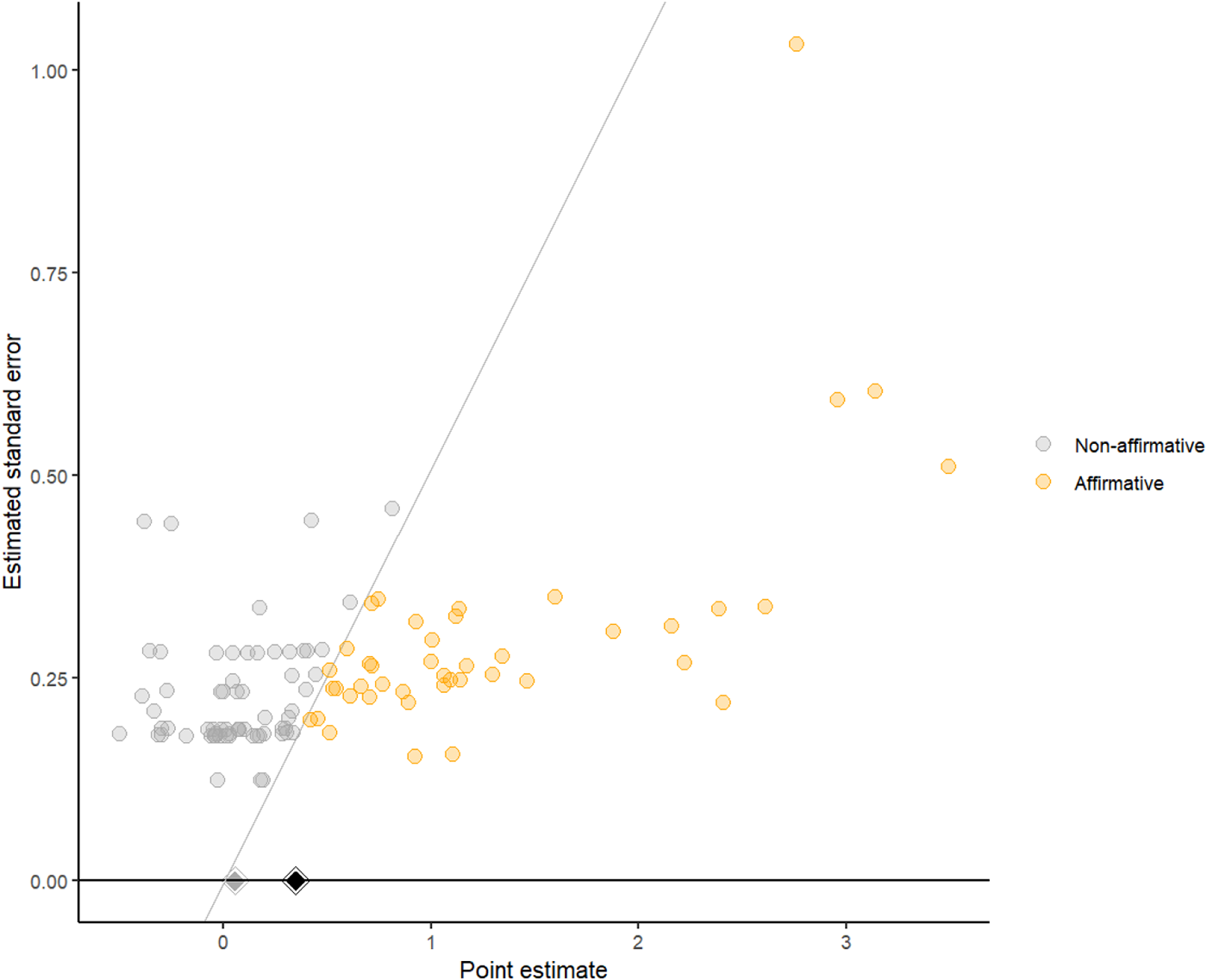
Figure 3 Long description
A funnel plot displays point estimates on the x-axis and estimated standard error on the y-axis. The plot includes data points categorized as non-affirmative and affirmative, represented by different colors. A diagonal line runs through the plot and two horizontal lines are present at the bottom. A black diamond is located near the origin, summarizing the estimates. The plot visually represents the distribution and potential bias in the data.
Traditional funnel plot analysis conducted via the metafor package (Figure 4) provided converging evidence. The trim-and-fill analysis imputed zero studies, indicating no clear asymmetry requiring adjustment. Next, leave-one-out sensitivity analysis at both the study level and effect size level demonstrated that the overall results remained stable across all iterations. At the effect size level, removing individual effect sizes yielded estimates ranging from 0.958 to 1.043, while at the study level, removing individual investigations produced estimates ranging from 0.958 to 1.047. All pooled estimates remained statistically significant during at each removal, indicating that no single data point disproportionately influenced the synthesised result.
Funnel plot from the metafor package.
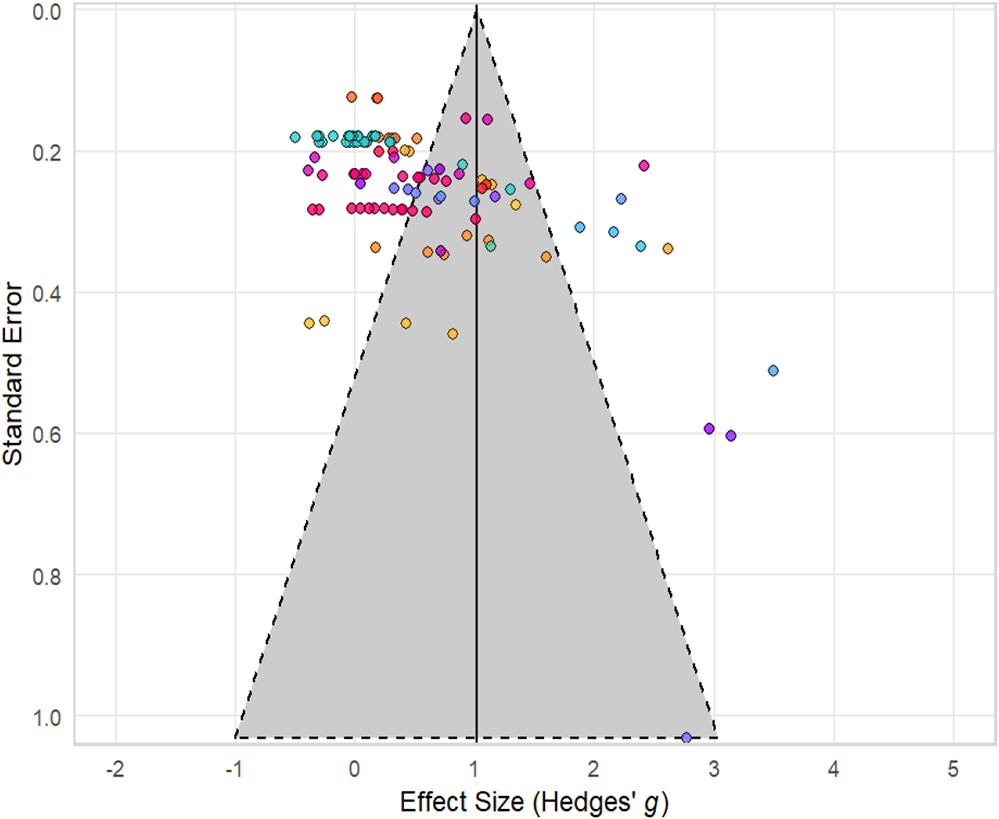
Figure 4 Long description
A funnel plot displaying the relationship between effect size (Hedges' g) on the x-axis and standard error on the y-axis. The plot features a triangular area shaded in grey, bounded by dashed lines. Numerous data points are scattered within and outside the triangle, representing different studies or observations. The x-axis ranges from negative two to five, while the y-axis ranges from zero to one point two. The central vertical line within the triangle indicates the mean effect size. The distribution of points suggests variability in effect sizes and standard errors across the studies.
4.3. Moderator analysis
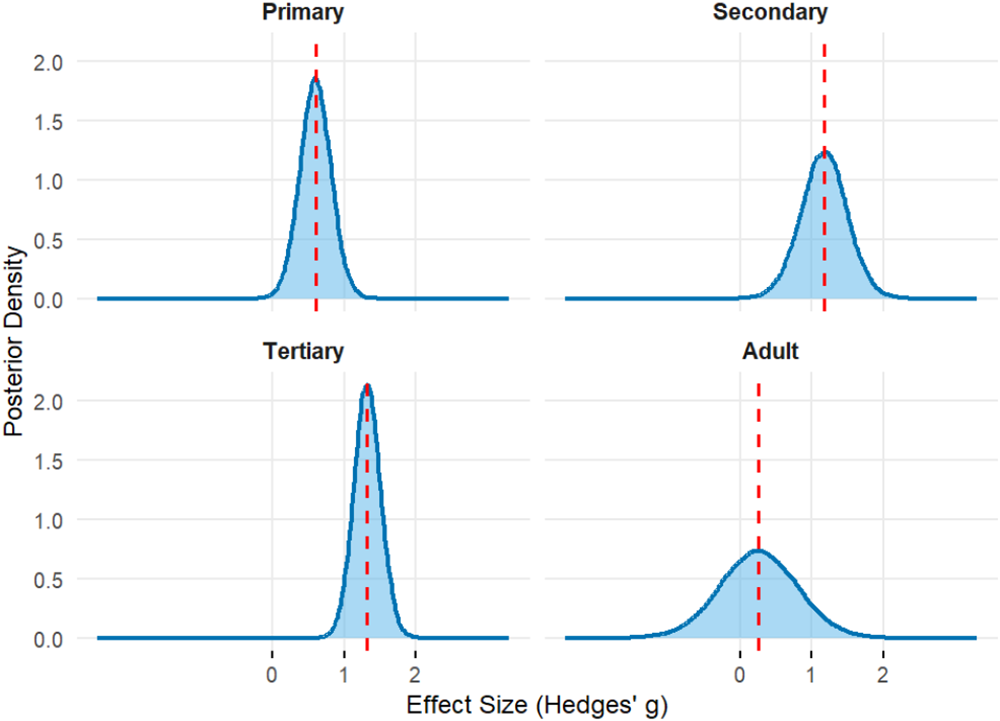
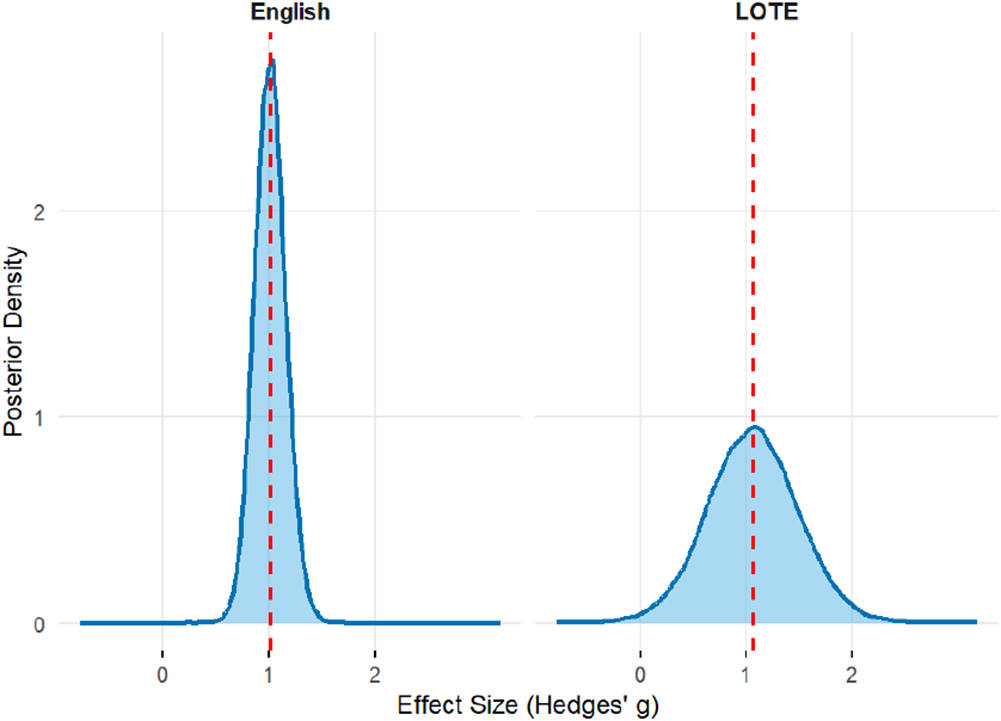
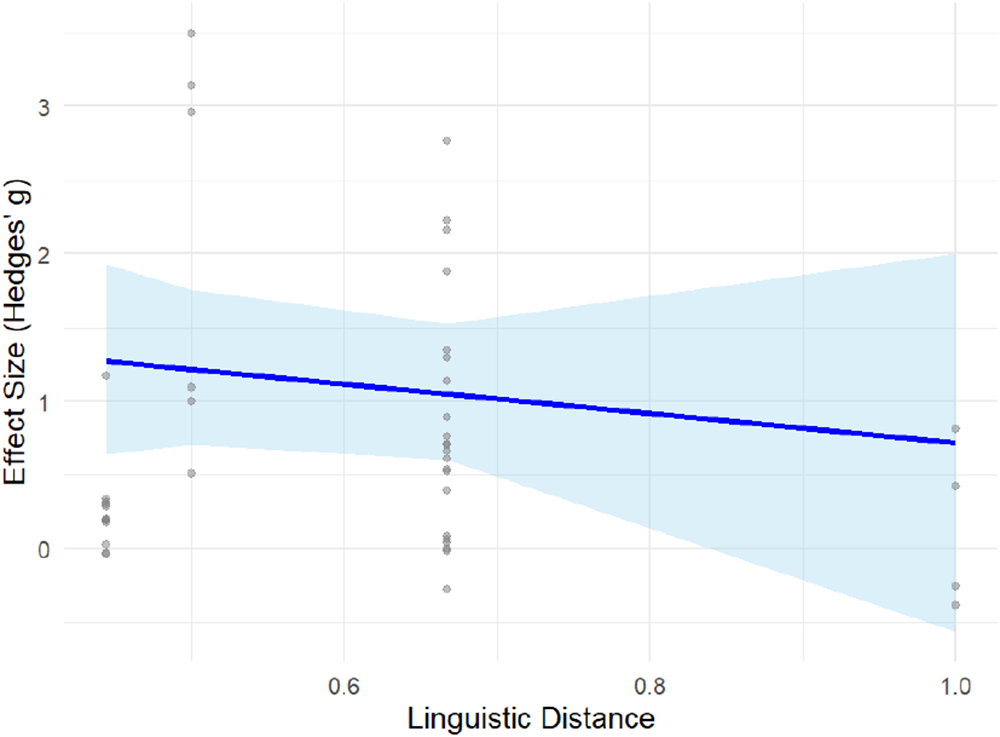
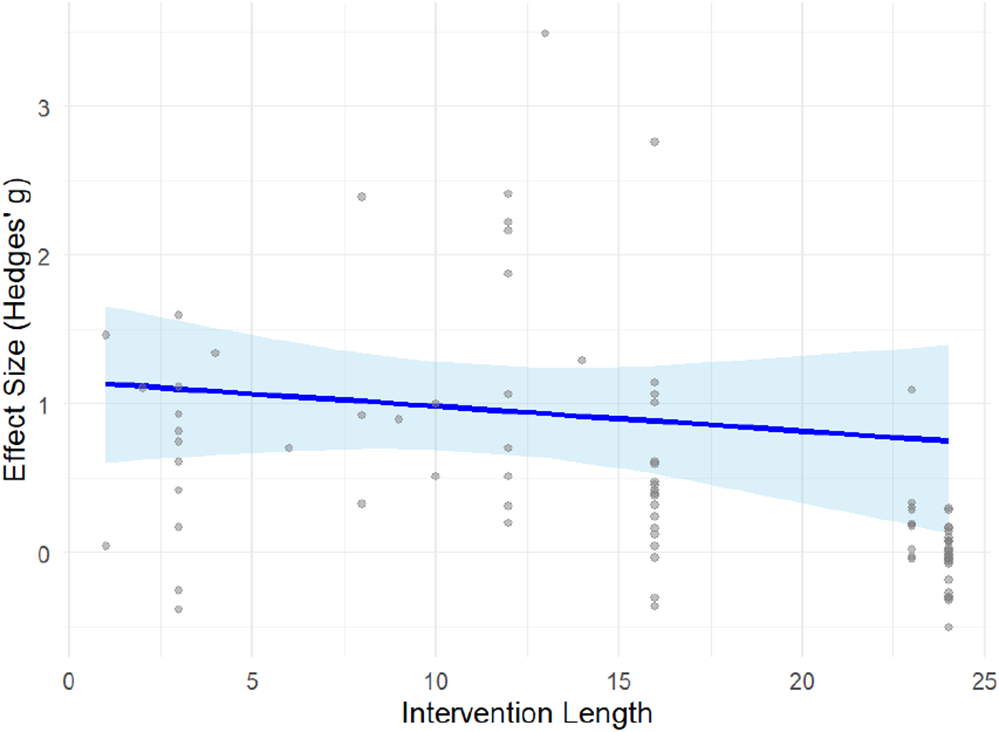
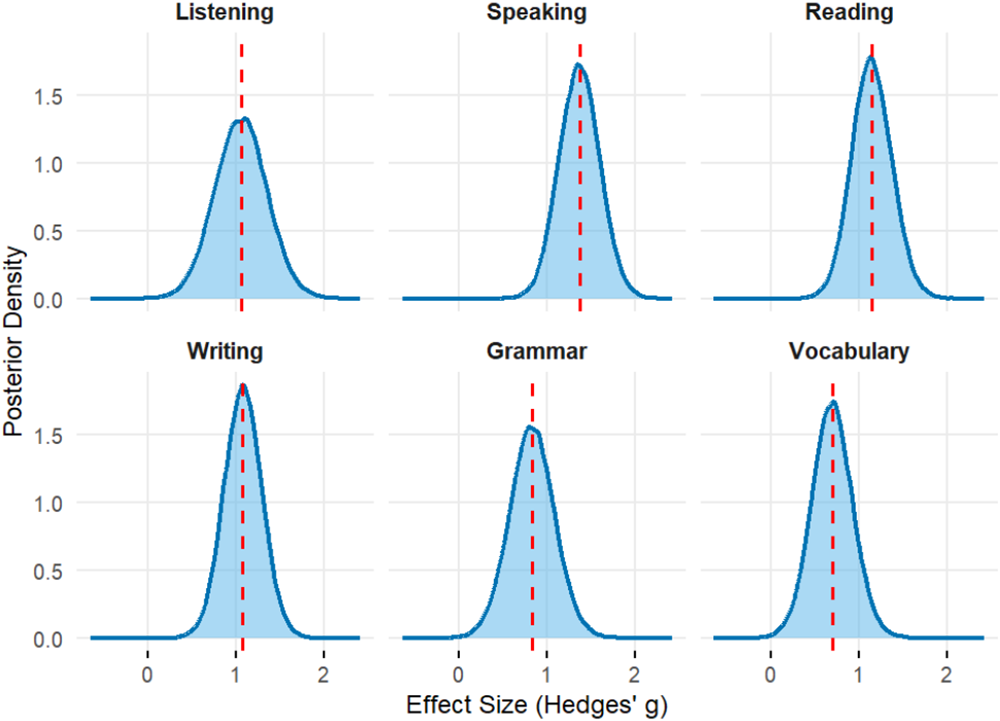
Considering the moderating role of educational level (see Figure 5), the posterior estimates indicated that the tertiary group tended to show a larger estimated effect relative to other educational levels (Hedges’ g = 1.326, SE = 0.188, 95% CrI [0.962, 1.702], k = 44), followed by the secondary group (Hedges’ g = 1.165, SE = 0.332, 95% CrI [0.509, 1.815], k = 7) and the primary group (Hedges’ g = 0.602, SE = 0.220, 95% CrI [0.178, 1.042], k = 51). By contrast, the adult group demonstrated the smallest and non-credible effect (Hedges’ g = 0.263, SE = 0.549, 95% CrI [−0.824, 1.344], k = 6). Pairwise contrasts showed that the difference between tertiary and primary education reached a posterior probability exceeding the 0.95 benchmark (99.3%), which provides credible evidence for a stronger effect in the tertiary group. While other contrasts showed different effect sizes, they did not reach the 95% thresholds for credible inference. For the target language (English vs language other than English, LOTE), the results yielded comparable effects for both groups. The effect size for the English group (Hedges’ g = 1.010, SE = 0.148, 95% CrI [0.726, 1.309], k = 100) was slightly lower than that of the LOTE group (Hedges’ g = 1.064, SE = 0.432, 95% CrI [0.211, 1.916], k = 8). The probability that the effect for the English group was greater than that for the LOTE group was 45.2%, thus providing weak evidence for a credible difference between the two groups. The comparison of the two groups is visually presented in Figure 6. Linguistic distance was also not a credible moderator. The regression coefficient was −0.998 (SE = 1.540, 95% CrI [−4.076, 2.029], k = 44). The posterior probability of a negative association was 74.7%, which did not reach the 95% threshold for credible inference (Figure 7). For treatment duration, the estimated regression coefficient was −0.017 (SE = 0.022, 95% CrI [−0.060, 0.027], k = 86), with a posterior probability of a negative association of 78.3% (Figure 8). Moreover, the effects of TP varied across language skill domains. Speaking was associated with the largest estimated effect (Hedges’ g = 1.364, SE = 0.234, 95% CrI [0.908, 1.825], k = 19), followed by reading (Hedges’ g = 1.143, SE = 0.229, 95% CrI [0.704, 1.602], k = 15), writing (Hedges’ g = 1.084, SE = 0.218, 95% CrI [0.657, 1.516], k = 16), and listening (Hedges’ g = 1.061, SE = 0.300, 95% CrI [0.477, 1.654], k = 4). Grammar showed a moderate effect (Hedges’ g = 0.826, SE = 0.259, 95% CrI [0.316, 1.339], k = 29), while vocabulary exhibited the smallest effect (Hedges’ g = 0.693, SE = 0.236, 95% CrI [0.232, 1.162], k = 16). The general language outcome also demonstrated a positive effect (Hedges’ g = 0.919, SE = 0.271, 95% CrI [0.393, 1.461], k = 9). Among the pairwise contrasts, two comparisons reached the conventional posterior probability threshold of 0.95. The effect of speaking was credibly greater than that of vocabulary (97.8%) and writing (96.0%). A visual representation of the effect size distribution across language skills is presented in Figure 9.
Posterior distributions of effect sizes across educational levels.
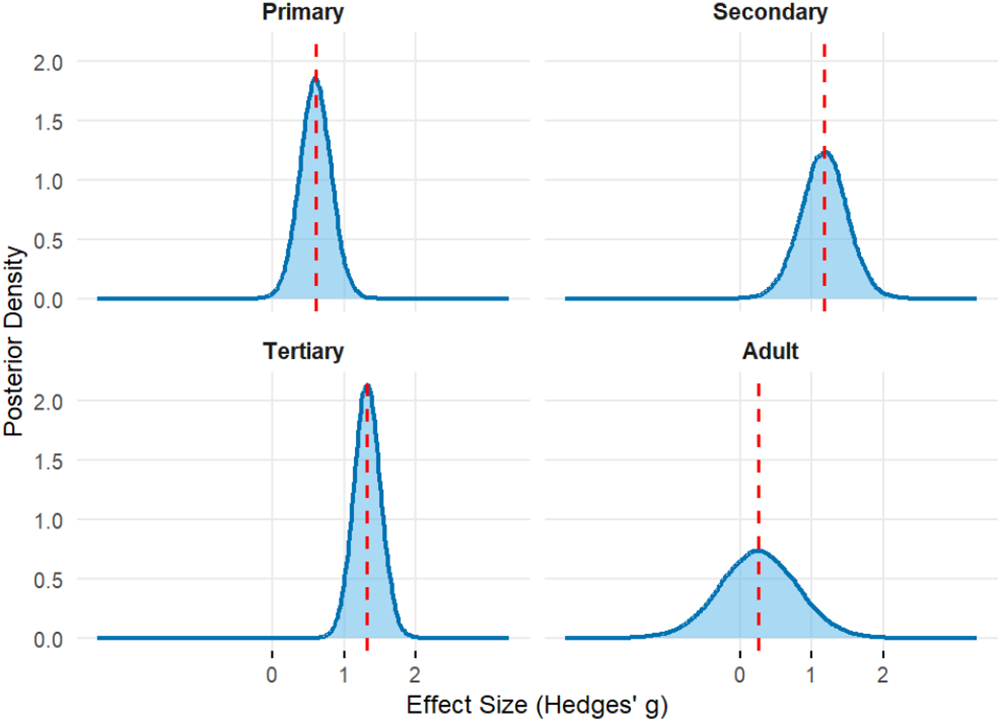
Figure 5 Long description
The image contains four graphs, each representing posterior density distributions of effect sizes for different educational levels. The x-axis is labeled 'Effect Size (Hedges’ g)' and the y-axis is labeled 'Posterior Density'. The first graph, labeled 'Primary', shows a peak around 0.6. The second graph, labeled 'Secondary', has a peak near 1.2. The third graph, labeled 'Tertiary', displays a peak around 1.3. The fourth graph, labeled 'Adult', shows a broader distribution with a peak near 0.3. Each graph includes a red dashed line indicating the mean effect size.
Posterior distributions of effect sizes across the target language.
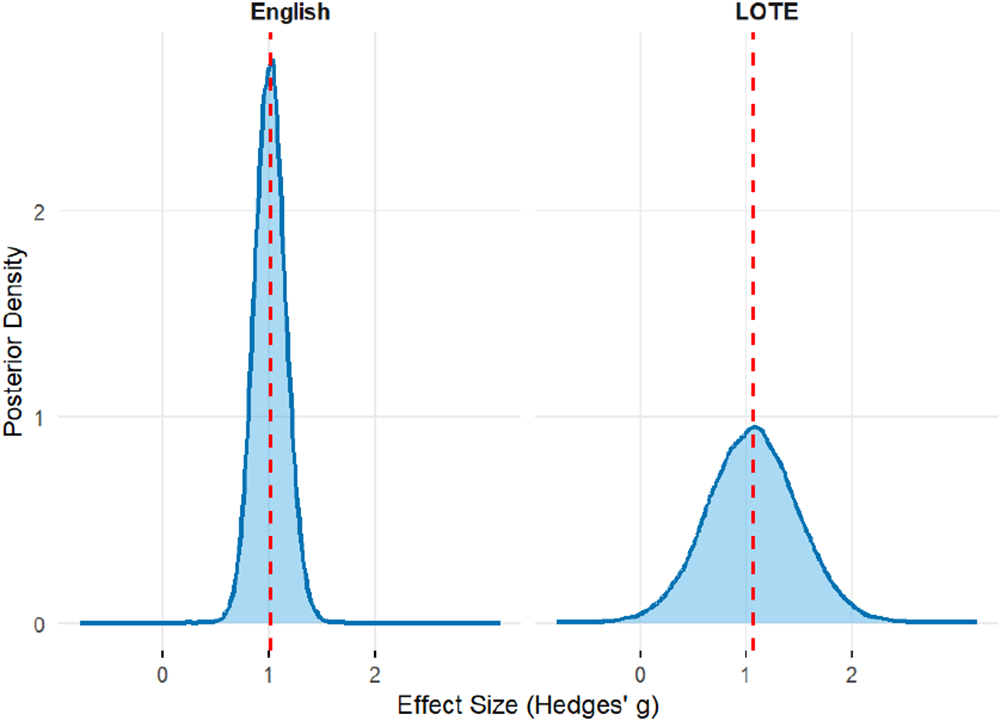
Figure 6 Long description
Two density plots show the posterior density of effect sizes (Hedges' g) for English and LOTE. The x-axis is labeled 'Effect Size (Hedges' g)' and the y-axis is labeled 'Posterior Density'. The plot for English shows a sharp peak around 1, while the LOTE plot is wider and centered around a similar value. Both plots have a red dashed line indicating the mean effect size.
Posterior estimates of effect sizes across linguistic distance. Shaded areas represent 95% CrIs.
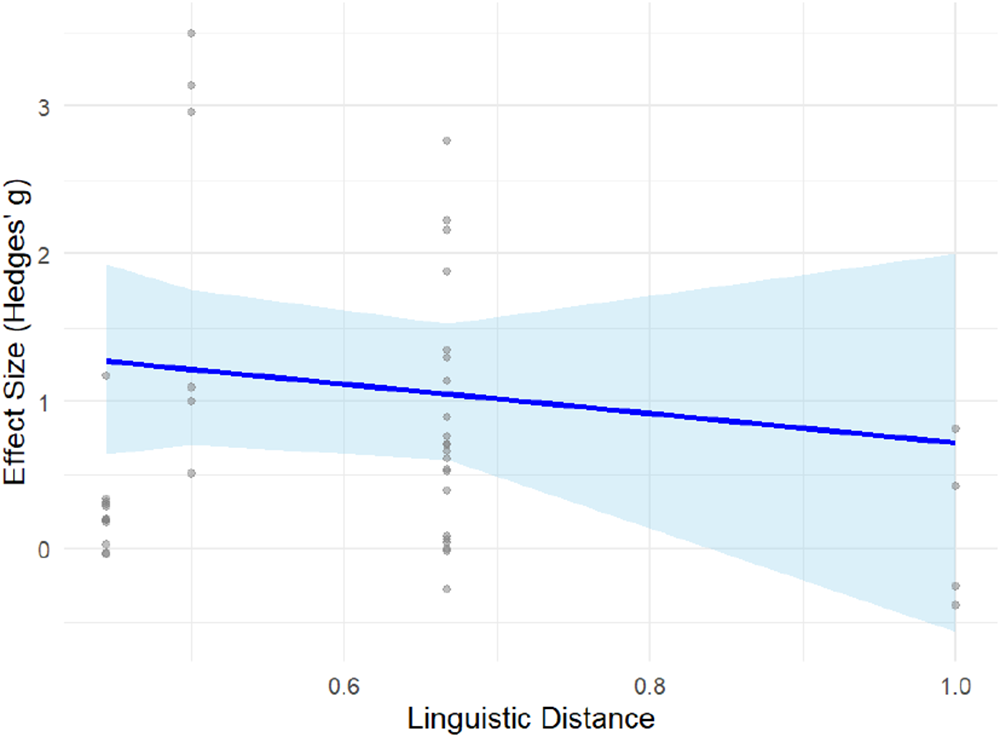
Figure 7 Long description
A scatter plot displays the relationship between effect size, measured in Hedges' g, on the y-axis and linguistic distance on the x-axis. The plot includes a trend line that slopes slightly downward, indicating a potential negative correlation. Data points are scattered around the trend line and a shaded area represents the 95 percent credible interval around the trend line.
Posterior estimates of effect sizes across treatment length. Shaded areas represent 95% CrIs.
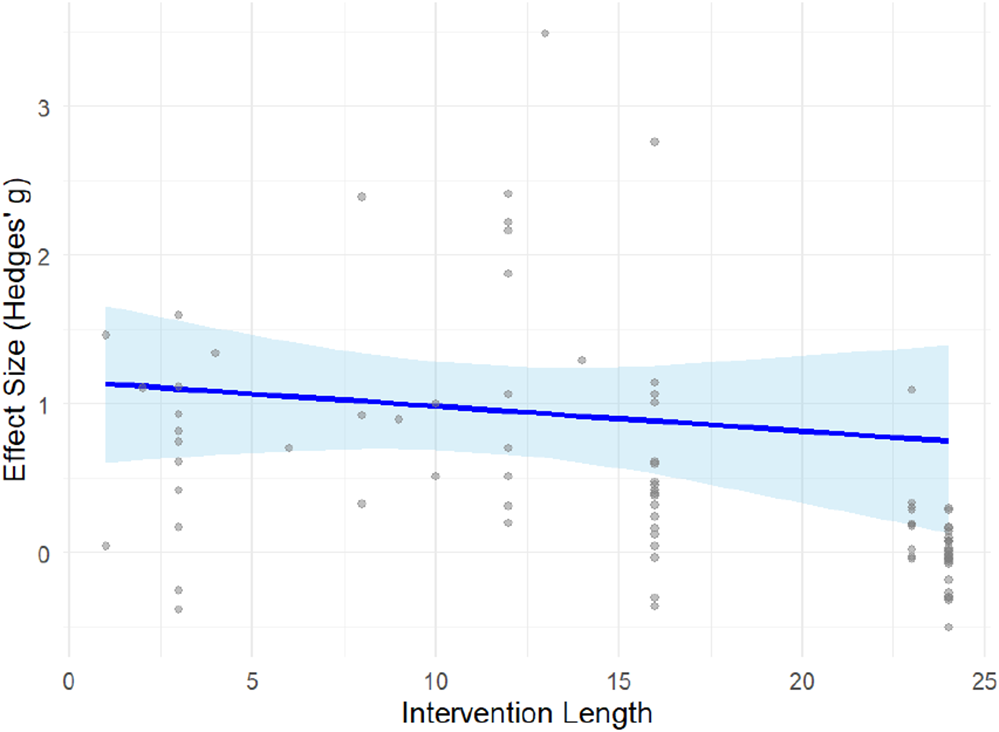
Figure 8 Long description
A scatter plot displays the relationship between intervention length on the x-axis and effect size (Hedges' g) on the y-axis. Individual data points are scattered across the plot. A blue trend line runs through the data, slightly declining from left to right, indicating a potential decrease in effect size with longer intervention lengths. A shaded area around the trend line represents the 95 percent credible intervals.
Posterior estimates of effect sizes across language skills. Shaded areas represent 95% CrIs.
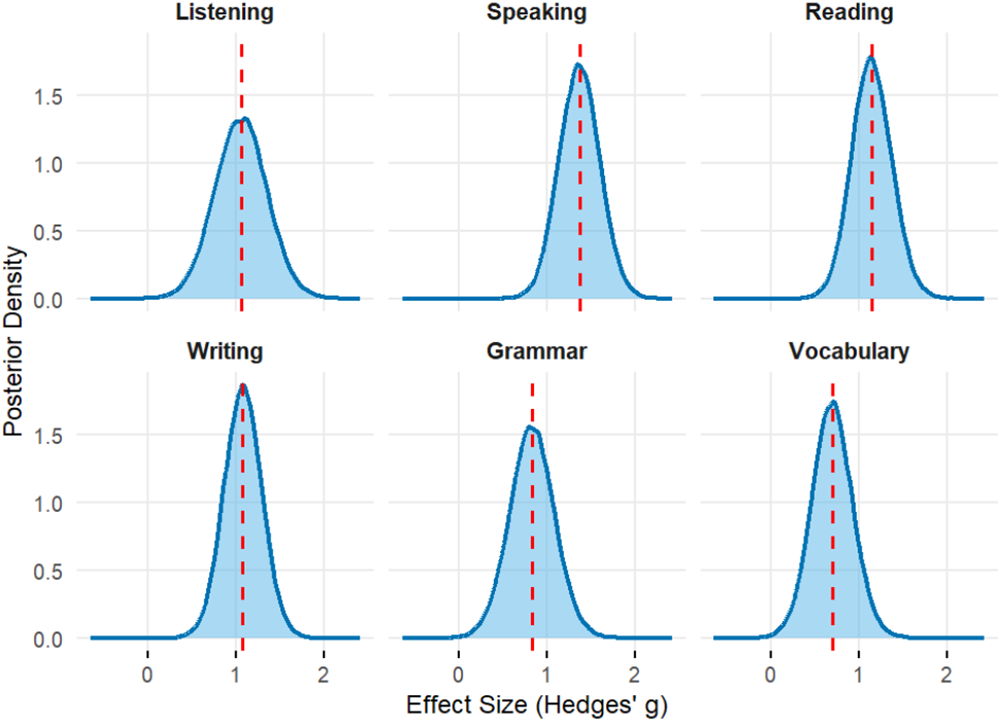
Figure 9 Long description
Six graphs display posterior density distributions for different language skills: listening, speaking, reading, writing, grammar and vocabulary. Each graph has the x-axis labeled 'Effect Size (Hedges' g)' and the y-axis labeled 'Posterior Density'. The graphs show a peak around the effect size of 1, with shaded areas representing the density distribution. Red dashed lines indicate the mean effect size for each skill.
5. Discussion
5.1. The overall effectiveness of TP
We combined 108 effect sizes from 40 independent studies and found a strong positive effect in the multilevel Bayesian meta-analysis (g = 1.014). These findings suggest that TP has a positive effect on language development across the educational settings and learner groups represented in this synthesis. The  $\hat{R}$ values were 1.00, and effective sample sizes were above 1,000, showing reliable posterior estimation in the HMC simulations (Griffin & Oswald, Reference Griffin and Oswald2022). Our findings are consistent with theoretical views that regarded translanguaging as a teaching response to the structural limits imposed by monolingual language ideologies (Li, Reference Li2018). They also reflect the ‘multilingual turn’ in language education (May, Reference May2014) and substantiates the rationality of viewing learners’ full linguistic resources as learning foundations. When learners are encouraged to use their entire linguistic and communication repertoires, translanguaging supports the building of new linguistic knowledge with less cognitive effort (Cenoz & Gorter, Reference Cenoz and Gorter2017, Reference Cenoz and Gorter2020; García & Li, Reference García, Li, Wright, Boun and García2015; Luo & Sun, Reference Luo and Sun2025). This movement among linguistic repertoires supports both linguistic development and learner agency in multilingual environments. These teaching effects match the findings of Yasar Yuzlu and Dikilitas (Reference Yasar Yuzlu and Dikilitas2022), who showed that students taught through translanguaging-based approaches performed better than those taught through traditional methods in the development of language skills. The benefits of TP fit within sociocultural models of language learning that view meaning construction as interactional and mediated by cultural and semiotic tools (Lantolf, Reference Lantolf2000; Vygotsky, Reference Vygotsky1978). The synthesised evidence establishes TP as a credible instructional practice, offering empirical grounding for existing theoretical discussions of its pedagogical implications.
5.2. The interpretation of each moderator of TP
The moderator analysis for education level showed the strongest effects in tertiary education (Hedges’ g = 1.326), followed by secondary (g = 1.165) and primary education (g = 0.602). In contrast, the smallest effect was observed in adult education (g = 0.263). The contrast between tertiary and primary groups returned a posterior probability above 95%, which provides credible evidence that the effect in tertiary education is stronger than that in primary education. The stronger effect in tertiary settings may be due to instructional contexts that allow for more flexibility in language use and provide opportunities for learners to engage with discipline-related content with different linguistic resources. This is exemplified in a study of Zhou et al. (Reference Zhou, Lee and Kew2025). Zhou and her colleagues found that in a translanguaging-multiliteracies learning program, university students tend to assess multiple linguistic and semiotic resources and exhibit more agency and active participation in meaning-making practices. In contrast, the small effect sizes in primary education and adult education may reflect developmental and institutional constraints. For primary education, the limited effectiveness may be attributed to the diverse home language competences among learners and the absence of language peers for some students (Foster et al., Reference Foster, Auger and Van Avermaet2023). Unless sufficient support and gradual exposure are provided, pupils in this age group are likely to struggle to engage actively with multilingual practices. In adult education, Teng and Fang’s (Reference Teng and Fang2024) study using TP to promote morphological awareness among Japanese adult learners of Chinese revealed a mixed response. Some of them are engaging productively with the multilingual approach, but others reported confusion towards multilingual learning environments and a preference for monolingual instruction. The limited influence in adult learning contexts implies that TP may be less effective in informal contexts than in formal school-based settings. Therefore, we call for more attention to explore how distinctive curriculum designs, teacher styles, and institutional conditions influence both the acceptance and the effectiveness of TP.
The moderator analysis showed that neither the target language nor the linguistic distance affected the effectiveness of TP. Learners demonstrated comparable gains regardless of whether the target language was English (Hedges’ g = 1.010) or a non-English language (Hedges’ g = 1.064). Similarly, the slope for linguistic distance was negative but not credibly different from zero (b = −0.998, SE = 1.540), which means that typological distance did not condition the TP’s effectiveness. These results challenge the assumption that linguistic proximity serves as a reliable pathway to efficient language development (e.g., Chiswick & Miller, Reference Chiswick and Miller2005). One interpretation is that TP works across language differences because learning through translanguaging is organised around meaning rather than language boundaries (Li, Reference Li2011). Within such a space, learners are positioned to make use of their full linguistic repertoires in a fluid manner, unbound by fixed language distinctions (Li, Reference Li2011). Another possible explanation for this finding may lie in the measurement of linguistic distance. Our study adopted the scale developed by Chiswick and Miller (Reference Chiswick and Miller2005), which is based on the difficulty English speakers face in learning other languages. When using this scale, we did not consider the language pairs in which the target language was not English. Although only four studies in our sample focused on non-English target languages, it is possible that the linguistic distance scale based on English may have obscured the possible moderating effects of those studies. We therefore recommend that future research develop linguistic distance measures that cover a wider range of target languages and explore how typological distance influences pedagogical outcomes.
The posterior estimate of the regression coefficient for intervention duration was −0.017 (SE = 0.022), with a posterior probability of a negative association being 78.3%. Although the results showed a weak trend towards smaller effects for longer interventions, the association is not statistically credible. This finding partially supports the empirical findings from Sun and Zhang (Reference Sun and Zhang2022), who found that the effectiveness of TP in online peer feedback was confined to the initial phase of L2 writing instruction. This suggests that extending implementation duration alone may not be sufficient to sustain continuous learning gains from TP. Given the inconclusive evidence, future research could benefit from adopting a dosage–response perspective. For example, this would involve looking at how long TP is used, along with how often and how consistently it appears in classroom instruction. This may help move beyond one-time measures to better understand how TP works in practice.
For target language skills, the speaking skill had the largest effect size (Hedges’ g = 1.364) and was credibly greater than vocabulary (g = 0.693) and writing (g = 1.084), with posterior probabilities above the 0.95 threshold. This is consistent with the empirical results that TP may be more effective for speaking development. For instance, in Baranova et al.’s (Reference Baranova, Kobicheva, Tokareva and Vorontsova2021) work for teaching foreign language students Spanish through a translingual model, statistically significant gains were observed across all four language skills (listening, speaking, reading, and writing), with the gains for speaking being the greatest. The large effect size for speaking may be explained by the overlap between the nature of oral communication and the operational logic of TP. For example, speaking tasks are dialogic, interactive, and immediate, and learners are required to negotiate meaning-making in real-time interaction. TP may be well-suited to the demands of oral skills because it matches the immediacy, interactivity, and meaning-negotiation required in speaking tasks. Although the gains for other skills were not as large as those for speaking, the positive consistency across skills suggests that TP supports development in both productive and receptive skills. However, vocabulary (g = 0.693) and grammar (g = 0.826) showed smaller effect sizes. This difference may be attributed to the cognitive and instructional differences. These two skill types are often taught as discrete units, focusing on decontextualised patterns such as word lists, morphological rules, or syntactic structures. Such components of language tend to require accuracy, memorisation, and rule-based manipulation. It may not fully align with the demands of the meaning-focused and learner-driven nature of translanguaging.
6. Implications
The large, pooled effect size (g = 1.014) provides empirical support for moving beyond traditional SLA models that treat languages as separate systems, showing that language development benefits when learners can draw on their full linguistic resources. Pedagogically, teachers can ask students about their home languages, literacy backgrounds, and daily language use at the beginning of a course. This provides information about what the language resources students bring to the classroom, which can then inform instructional design that fits the students in that particular class. For example, students can develop ideas in their native language before expressing them in the target language. They may also be permitted to annotate texts using multiple languages to support meaning-making and learning. The construction of multilingual glossaries can also help students relate new vocabulary to familiar words from their linguistic repertoires. Methodologically, this study illustrates the strengths of Bayesian meta-analysis in handling the complexity and uncertainty in applied linguistics research. With the growing use of more complex data in applied linguistics, Bayesian meta-analysis offers a powerful statistical framework for synthesising findings across studies.
7. Conclusions
This study represents an attempt to apply multilevel Bayesian meta-analysis in exploring the effectiveness of TP within the field of SLA. The 40 empirical studies, including 108 effect sizes, returned a positive pooled effect of TP on L2 achievement (Hedges’ g = 1.014, SE = 0.138, 95% CrI [0.748, 1.291]). Speaking was associated with the largest effect size across language skill domains, while effect sizes were larger among tertiary-level learners than among other educational levels. Subsequent analysis found limited moderating evidence from target language, treatment duration, or linguistic distance. These findings reinforce the pedagogical value of translanguaging as a context-sensitive approach to language instruction that reflects the linguistic realities of multilingual classrooms. In addition, the study illustrates how Bayesian hierarchical modelling can be applied to provide more reliable heterogeneity estimates and probabilistic interpretations of effect sizes, offering methodological insights for future quantitative work in SLA. This study intends to advance our understanding of how and when TP benefits L2 learning and provides an empirical basis for the targeted use of TP in language classrooms where learner backgrounds and educational contexts vary.
Despite the increasing use of technology in TP, the technology type was not examined as a moderator because scarce studies tested the same digital tools. An initial step would be to examine how different technologies, such as generative artificial intelligence (GenAI), are integrated into TP, which would increase the number of primary studies.. With more studies focusing on comparable forms of technology-meidated instruction, it would then be possible to compare different technology integration patterns using network meta-analysis.. Of the 40 studies included in this meta-analysis, only 3 used delayed post-tests, and most assessed learning outcomes immediately after instruction. This pattern makes it difficult to tell whether the observed gains endure beyond the immediate task or fade once instruction ends. An important direction for future research is the inclusion of delayed assessments several weeks or months after instruction to evaluate the durability of TP’s effectiveness. Another limitation is that the analysis relied on quantitative effect sizes and did not incorporate qualitative insights. This limitation may be addressed through integrative mixed methods meta-analysis (Levitt, Reference Levitt2024), which combines quantitative effect estimation with qualitative analysis. If this approach is applied in future work, it might become clearer how learners experience, accept, and deal with the use of TP across instructional contexts.
Supplementary material
The supplementary material for this article can be found at https://doi.org/10.1017/S0261444826101335.
Funding statement
This research did not receive any specific grant.
Author contributions
The authors have contributed equally to the manuscript, with Lawrence Jun Zhang serving as the corresponding author.
Competing interests
The authors declare that there is no conflict of interest.
Xiaoqi Wang is currently a full-time Ph.D. student in the Faculty of Arts and Education, University of Auckland, Auckland, New Zealand. His research interests include multilingualism, translanguaging, individual differences in language learning, GenAI for language education, and informal digital learning of English. He has published several empirical articles and reviews in leading SSCI-indexed journals such as System, Interactive Learning Environments, Innovation in Language Learning and Teaching, Journal of Computer Assisted Learning, and CSSCI-indexed journals, including Modern Foreign Languages, Foreign Language World, and Foreign Language Research, among others.
Lawrence Jun Zhang, Ph.D., is Professor of Applied Linguistics and Associate Dean, Faculty of Arts and Education, University of Auckland, Auckland, New Zealand. His research focuses on the psychology of language learning and teaching, including learner metacognition, L2 reading and writing development, motivation, teachers’ use of AI, and assessment literacy. He has published widely in leading journals such as Applied Linguistics, Modern Language Journal, TESOL Quarterly, Language Teaching, Language Teaching Research, Computer Assisted Language Learning, Computers & Education, and System. He serves on several editorial boards and was Co-Editor-in-Chief of System until December 2024. He received the International TESOL Association’s ‘50@50’ Award in 2016 and has been consistently listed among the top 2% most-cited scholars in linguistics and language education.


 Open access

