


Introduction
Recent research on bilingualism has shown that lexical access in isolated visual word recognition by bilinguals is non-selective, with phonological and/or semantic information about words in each language being activated in parallel even when reading or listening to a word in one language alone (e.g., Costa, Caramazza & Sebastián-Gallés, Reference Costa, Caramazza and Sebastián-Gallés2000; Dijkstra, Reference Dijkstra, Kroll and De Groot2005; Macizo & Bajo, Reference Macizo and Bajo2006; Marian & Spivey, Reference Marian and Spivey2003). Cross-language activation of the language not in use is observed even when bilinguals are highly proficient in the second language (L2) or when they maintain dominance in their first language (L1). Sebastián Gallés, Rodriguez-Fornells, Diego-Balaguer, and Diaz (Reference Sebastián-Gallés, Rodrıguez-Fornells, Diego-Balaguer and Diaz2006), for example, have reported interference effects when Spanish-dominant bilinguals had to decide on the lexical status of non-word items which were phonologically similar to existing Catalan (L2) words.
Grammatical gender is a classificatory syntactic feature valued on the noun's lemma, i.e., at a level distinct from the conceptual or phonological representation of the noun (Chomsky, Reference Chomsky1995; Corbett, Reference Corbett1991; Levelt, Roelofs & Meyer, Reference Levelt, Roelofs and Meyer1999). Thus, unlike other grammatical features of nouns whose values are optional in that they are determined by the syntactic context in which they occur (Chomsky, Reference Chomsky1995), the value of grammatical gender is lexically specified. In many languages, like Spanish, French and Greek, gender is morpho-phonologically realized through the agreement of elements (e.g., determiners, adjectives, nouns) within the Determiner Phrase (DP).
The processing of grammatical gender in the monolingual mental lexicon has been well-documented in the literature, with relevant evidence coming primarily from offline picture-naming experiments and online picture-word interference (PWI) paradigms (Alario & Caramazza, Reference Alario and Caramazza2002; Costa, Sebastián-Gallés, Miozzo & Caramazza, Reference Costa, Sebastián-Gallés, Miozzo and Caramazza1999; Janssen & Caramazza, Reference Janssen and Caramazza2003; La Heij, Mak, Sander & Willeboordse, Reference La Heij, Mak, Sander and Willeboordse1998; Miozzo & Caramazza, Reference Miozzo and Caramazza1999; Miozzo, Costa & Caramazza, Reference Miozzo, Costa and Caramazza2002; Schiller & Caramazza, Reference Schiller and Caramazza2003; Schriefers, Reference Schriefers1993; Schriefers, Jescheniak & Hantsch, Reference Schriefers, Jescheniak and Hantsch2002; Schriefers & Teruel, Reference Schriefers and Teruel2000). How activation of and access to grammatical gender representations takes place is subject to different accounts in the psycholinguistic literature. More modular models claim that information about a word's grammatical gender is activated before and independently of the word's conceptual or/and phonological form (Marx, Reference Marx1999; Van Turennout, Hagoort & Brown, Reference van Turennout, Hagoort and Brown1998). On the other hand, constraint-satisfaction models consider the availability of gender information as an automatic consequence of the selection of one lexical–phonological node (Caramazza & Miozzo, Reference Caramazza and Miozzo1997) or, alternatively, that gender retrieval results from a competitive process among relative activation levels of the target and distractor words (Cubelli, Lotto, Paolieri, Girelli & Job, Reference Cubelli, Lotto, Paolieri, Girelli and Job2005; Levelt et al., Reference Levelt, Roelofs and Meyer1999; Paolieri, Cubelli, Macizo, Bajo, Lotto & Job, Reference Paolieri, Cubelli, Macizo, Bajo, Lotto and Job2010; Schriefers, Reference Schriefers1993).
One particular aspect of gender retrieval for which competition-based models make contradicting assumptions is the context in which the gender of a distractor word may interfere. It has been assumed that grammatical gender is selected only in the production of noun phrases (Alario & Caramazza, Reference Alario and Caramazza2002; Caramazza & Miozzo, Reference Caramazza and Miozzo1997; La Heij et al., Reference La Heij, Mak, Sander and Willeboordse1998; Levelt et al., Reference Levelt, Roelofs and Meyer1999; Schriefers, Reference Schriefers1993; Schriefers & Teruel, Reference Schriefers and Teruel2000) or in bare noun production also (Cubelli et al., Reference Cubelli, Lotto, Paolieri, Girelli and Job2005; Ganushchak, Verdonschot & Schiller, Reference Ganushchak, Verdonschot and Schiller2011; Paolieri et al., Reference Paolieri, Cubelli, Macizo, Bajo, Lotto and Job2010). According to the former hypothesis, grammatical gender is only accessed when specifically required within a sentential context for the selection of gender-marked determiners and/or agreement morphemes (syntactic hypothesis); if this hypothesis is true, gender effects are not expected to emerge when a noun is produced in isolation. According to the second theory, grammatical gender is an intrinsic part of the noun's lexical representation and it is always available when a lexical item is retrieved (lexical hypothesis; Cacciari & Cubelli, Reference Cacciari and Cubelli2003; Carstens, Reference Carstens2000; Mastropavlou & Tsimpli, Reference Mastropavlou and Tsimpli2011). What follows from the lexical hypothesis is that gender effects should emerge in all tasks requiring lexical access.
Theories concerning how grammatical gender interacts during lexical selection in bilingual speakers have not been less contradicting than the theories on the processing of grammatical gender in native speakers. For instance, the gender-shared hypothesis states that gender specifications, and hence inherent syntactic properties of words, are shared across languages; if L1 and L2 gender features are shared, then the activated L1 gender information will affect the retrieval and selection of the L2 gender; it will facilitate retrieval if it coincides with L2 gender or inhibit retrieval if it is different from the L2 gender (La Heij et al., Reference La Heij, Mak, Sander and Willeboordse1998; Levelt et al., Reference Levelt, Roelofs and Meyer1999; Roelofs, Reference Roelofs1998). On the other hand, the gender independent hypothesis claims that gender features are language-specific: as such there should be no gender-congruency effects across languages (Costa et al., Reference Costa, Kovacic, Franck and Caramazza2003; Foucart, Reference Foucart2008). If L1 and L2 gender features are independently represented, L1 gender information may be activated but will not influence gender retrieval and selection in L2, even when the target utterance requires computation of gender information.
Evidence in favor of the complete autonomy or interdependence of the gender systems of the two languages of bilinguals has been provided by several studies with language production experiments that have mainly examined how cross-language activation at the gender level modulates word retrieval capacities in real time. Costa, Kovacik, Franck, and Caramazza's (Reference Costa, Kovacic, Franck and Caramazza2003) and Foucart's (Reference Foucart2008) picture-naming studies both explored cross-language transfer of gender properties in highly proficient bilinguals. Both studies found no difference in naming latencies for the gender congruent and incongruent conditions, nor a significant congruency effect depending on whether the two languages shared the same or different grammatical gender across lexical items. The absence of significant interactions between the two languages suggested to the authors that the gender systems in highly proficient bilinguals may be represented separately for each language, making it, thus, possible for bilingual speakers to restrict lexical access to the language selected for speaking, or, alternatively, that proficient bilinguals may not rely on inhibitory control of the language not in use but rather on enhanced activation of the language in use (Costa & Santesteban, Reference Costa and Santesteban2004, Reference Costa and Santesteban2006).
Other studies, however, obtained different results from Costa et al. (Reference Costa, Kovacic, Franck and Caramazza2003). More specifically, transfer of grammatical gender properties of a first to a second language has been found in a number of bilingual populations irrespective of whether both languages had their gender grammaticalized (Bordag & Pechmann, Reference Bordag and Pechmann2007; Lemhöfer, Spalek & Schriefers, Reference Lemhöfer, Spalek and Schriefers2008; Morales, Paolieri & Bajo, Reference Morales, Paolieri and Bajo2011; Paolieri et al., Reference Paolieri, Cubelli, Macizo, Bajo, Lotto and Job2010; Salamoura & Williams, Reference Salamoura and Williams2007) or not (Ganushchak et al., Reference Ganushchak, Verdonschot and Schiller2011). What should be noted is that in these studies all bilinguals were highly proficient individuals; therefore, it is not fully understood to what extent cross-language interaction at the grammatical gender level is conditioned by language proficiency or age of L2 acquisition. Furthermore, inhibitory control in grammatical gender interference has been studied separately from cognitive control despite the fact that early exposure to the L2 and relative balance in the dominance of the two languages have been shown to result in more enhanced language control abilities in bilinguals (e.g., Bialystok, Craik & Luk, Reference Bialystok, Craik and Luk2012; Fiszer, Reference Fiszer2008; Luk, DeSa & Bialystok, Reference Luk, DeSa and Bialystok2011). Green's Inhibitory model (1988) was one of the first to suggest that different languages are represented by different language schemes and use of one language involves inhibitory control over the interfering non-target language. However, the studies that have investigated the interaction of gender systems in bilingual language production rarely discussed the role and the function of the bilingual speakers’ inhibitory control in the PWI tasks.
As such, the question whether the lack or presence of gender congruency effects in bilingual populations may also relate to distinct cognitive control abilities stemming from variation in their inhibitory functions has not been yet explored. The present study is concerned with timing differences that early and late successive bilinguals display in picture naming when the nouns of the two languages have the same or different grammatical gender, and how the bilinguals’ performance may be linked to the participants’ age of onset of exposure to the L2, as well as to differences in the participants’ non-verbal inhibition abilities.
The present study
In our study we investigated cross-language gender activation effects and non-verbal inhibition in two groups of early and late successive Serbian–Greek bilingual speakers and a group of Greek-speaking monolinguals. The three groups were tested on the same experiments.
The first task was a PWI naming task, in which participants are asked to name pictures as quickly as they can while ignoring a distractor word that is superimposed on the target picture. The relationship between the distractor word and the picture has been shown to affect participants’ response times in picture naming. A well-established finding is that participants take longer to name a target picture when a distractor word is present (vs. no distractor word) and longer yet when the to-be-ignored distractor word is categorically related to the picture (e.g., Caramazza & Costa, Reference Caramazza and Costa2000; De Zubicaray, Miozzo, Johnson, Schiller & McMahon, Reference de Zubicaray, Miozzo, Johnson, Schiller and McMahon2012; Glaser & Glaser, Reference Glaser and Glaser1989; Lupker, Reference Lupker1979). This finding has been interpreted in terms of competitive lexical selection processes (Levelt et al., Reference Levelt, Roelofs and Meyer1999; Roelofs, Reference Roelofs1998; Starreveld & La Heij, Reference Starreveld and La Heij1996); for instance, in cases of semantic PWI tasks a distractor word that is semantically related to the picture will be more highly activated than an unrelated word, and it will consequently compete more fiercely for selection because of its increased activation.
The present study used a PWI paradigm that invoked competition at the grammatical gender level. Specifically, the task manipulated grammatical gender (in)congruencies within the same/target language, i.e., Greek, and interlingual gender competition, i.e., between Greek and Serbian, with half of the items sharing the same grammatical gender across the two languages and the rest having different gender features. In this task, participants were asked to name target pictures in Greek by producing DP sequences and ignore the distractor word. In line with the lexical hypothesis (Cacciari & Cubelli, Reference Cacciari and Cubelli2003; Carstens, Reference Carstens2000; Mastropavlou & Tsimpli, Reference Mastropavlou and Tsimpli2011), which claims that gender is activated in all tasks requiring lexical access, we assume that the gender feature of both the pictured noun and the distractor word would be activated, thus, resulting in gender congruency effects. The gender value of the DP in Greek is determined by the gender value of the head noun and is spread to all its modifying elements, including the determiner, through agreement. In this sense, we hypothesize that heightened activation of a non-target gender node stemming from either the distractor word or the pictured noun's translational equivalent in Serbian would result in gender congruency effects reflected in delayed DP naming. What should be stressed is that the specific language experiment did not test knowledge of grammatical gender but rather measured grammatical gender production for Greek nouns whose gender was known by all participants as confirmed by a picture naming screening test administered before the PWI task (see Methodology).
The second was a non-verbal spatial target-stimulus locating task modelled after Treccani, Argyri, Sorace, and Della Sala (Reference Treccani, Argyri, Sorace and Della Sala2009). The specific task has been used to index balanced bilinguals’ and monolinguals’ ability to inhibit perceptual conflict in non-linguistic input. In this task, participants were asked to detect target stimuli (‘X’) which were presented along with to-be-ignored distractors (‘O’). The PWI and the non-verbal target detection task allowed us to investigate language and cognitive control processes as well as possible interactions between the two processes in each bilingual group.
Considering evidence of previous studies on bilingual speech production showing that gender is activated in the non-response language and that subsequent cross-language competition is resolved by the recruitment of domain-general inhibitory processes (language non-selectivity model; Lemhöfer et al., Reference Lemhöfer, Spalek and Schriefers2008; Morales et al., Reference Morales, Paolieri and Bajo2011; Paolieri et al., Reference Paolieri, Cubelli, Macizo, Bajo, Lotto and Job2010), we hypothesize that both early and late successive bilingual groups will experience L1 interference at the grammatical gender level during picture naming in the L2. Moreover, given early successive bilinguals need to concentrate on the relevant linguistic system and suppress interference from the second linguistic system in language production over a more extended period of time than late successive bilinguals (e.g., Bialystok et al., Reference Bialystok, Craik and Luk2012; Luk et al., Reference Luk, DeSa and Bialystok2011), we hypothesize that early successive bilinguals should experience a smaller size of between-language interference caused by the grammatical gender system of the language not in use (i.e., Serbian) compared to the late successive bilingual group. If early successive bilinguals enjoy more enhanced inhibitory capacities than late successive bilinguals (Bialystok, Reference Bialystok2010, Reference Bialystok2011; Bialystok, Craik, Klein & Viswanathan, Reference Bialystok, Craik, Klein and Viswanathan2004; Tao, Marzecová, Taft, Asanowicz & Wodniecka, Reference Tao, Marzecová, Taft, Asanowicz and Wodniecka2011), we expect early successive bilinguals to show different response patterns from late successive bilinguals, and convergence on the monolingual native group's profile in the PWI task.
With respect to the within-language congruency effects in the PWI task, we expect that monolinguals will show a robust congruency effect, which is in line with previous studies examining gender congruency effects in monolingual populations (e.g., Costa et al., Reference Costa, Kovacic, Franck and Caramazza2003; Schiller & Caramazza, Reference Schiller and Caramazza2003; Schriefers, Reference Schriefers1993). We also expect a discrepancy to emerge between early and late successive bilinguals reflected in the emergence of an L2 congruency effect in early successive bilinguals only, due to the specific group's greater reliance on procedurally-based grammatical gender knowledge in Greek. Following Ullman's (Reference Ullman2001) dual-process account of lexical processing, we hypothesize that early successive bilinguals’ naming responses will be subject to consolidated, highly intuitive grammatical gender constraints in the L2 that have precedence over working memory and cognitive ability. Crucially, proceduralization of relevant grammatical knowledge in Greek is predicted to result in an automation of processing gender congruency relations in Greek and native-like performance in the PWI task. On the other hand, we expect late successive bilinguals’ naming performance to rely on a rather analytical-logical deliberation enforced by rule-following rather than intuitive knowledge during gender assignment; such deliberation in lexical processing is expected to prevent the emergence of a congruency effect in the L2 for the late successive bilingual group.
Finally, in line with a number of studies (e.g., Luk et al., Reference Luk, DeSa and Bialystok2011; Tao et al., Reference Tao, Marzecová, Taft, Asanowicz and Wodniecka2011) showing that early successive bilinguals exhibit more efficient inhibitory control abilities than late successive bilinguals because early successive bilinguals use their inhibitory control abilities from early on in their life, we expected that the early successive bilingual group would show an advantage over late successive bilinguals on the non-verbal task involving interference suppression. Thus, early successive bilinguals should have faster RTs and/or higher accuracy of target-detection than late successive bilinguals in the non-verbal spatial target-stimulus locating task.
The grammatical gender systems in Serbian and Greek
Serbian nouns are coded for grammatical gender (masculine, feminine, neuter), number and case within a single suffix (e.g., медвед (medved)/‘bear’, крава (kravu)/‘cow’, село (selo)/‘village’). Masculine nouns usually end in a consonant, while feminine nouns end in /–a/ and neuter nouns in /–o/ and /–e/, although not without exceptions (Seva, Kempe, Brooks, Mironova, Pershukova & Fedorova, Reference Seva, Kempe, Brooks, Mironova, Pershukova and Fedorova2007). Serbian nouns agree with quantifiers, possessives, and ordinary adjectives in gender, number (singular, plural) and case (7 cases), in a single (syncretic) suffix (e.g., ovaj student “this-N.Masc.Sing. student-N.Masc.Sing.”, stara knjiga “old-N.Fem.Sing. book-N.Fem.Sing.”, svaka ova knjiga “each-N.Fem.Sing. this-N.Fem.Sing. book-N.Fem.Sing.”; examples taken from Zlatić, Reference Zlatić1997). Subject nouns agree with the verb in number as well as gender in some cases. In many of these properties Serbian is similar to other grammatical gender languages. According to Corbett (Reference Corbett1988, Reference Corbett1991), the Serbian gender system is morphological since the gender value of a noun can be reliably identified if inflectional forms of the noun other than the citation form (nominative singular) are taken into account.
Greek is also a grammatical gender language with a tripartite gender distinction: masculine-feminine-neuter. This distinction is marked on definite determiners in both the singular and the plural, on indefinite articles, as well as adjectives. Gender marking on the noun follows certain phonological regularities (e.g., in the citation form an -s ending usually marks masculine, whereas /-a/ and /-o/ mark feminine and neuter, respectively). More specifically, Greek nouns are suffixed by a syncretic form, which includes gender, number, and case information (Holton, Mackridge & Philippaki-Warburton, Reference Holton, Mackridge and Philippaki-Warburton2004; Ralli, Reference Ralli2002). With respect to gender marking, Mastropavlou and Tsimpli (Reference Mastropavlou and Tsimpli2011) show that despite the possibility of some of these endings such as /-os/ and /–i/ to occur with more than one gender feature (e.g., /-os/ could be masculine, feminine or neuter while /–i/ could be feminine or neuter), predictive values are very high for one of these values, ranging from .84 to .98 (cf. Varlokosta, Reference Varlokosta, Galani, Hicks and Tsoulas2011). The only exception is ending /-i/ which is indeed ambiguous between feminine and neuter gender in spoken language, since spelling conventions distinguish between the two. Crucially, although noun gender is in many cases identifiable on the noun suffix alone, use of a determiner (definite or indefinite) to introduce the noun eliminates any ambiguity on the gender value.
On the basis of the above, the main difference between Greek and Serbian refers to the lack of a definite/indefinite article system in Serbian. Accordingly, while Greek has a determiner paradigm which also agrees with the noun in terms of gender, number and case, Serbian determiners such as jedan/neki ‘one/some’ or demonstratives such as ova ‘this’ have been argued to function as adjectives according to some analyses (Bošković, Reference Bošković and Boeckx2006; Trenkic, Reference Trenkic2004), while others have argued that the noun phrase in Serbian is a DP (Bašić, Reference Bašić2004; Progovac, Reference Progovac1998). Despite this difference, a number of factors like the similarities in gender-marking cues on the noun itself, the three-way gender distinction shared by both languages, the spread of gender agreement marking on all elements in the noun phrase and the availability of semantic and morpho-phonological cues that the parser encodes to establish gender agreement, reveal similar gender mechanisms in the two languages.
Method
Participants
The study included three experimental groups, i.e., monolingual controls, Serbian–Greek early and late successive bilinguals. Twenty Greek-speaking monolinguals (8 males; group mean age: 31.7, SD: 6.3; group mean education: 14;5, SD: 3.1), 16 Serbian-native early successive bilingual speakers (7 males; group mean age: 24.5, SD: 5.2; group mean education: 15;9, SD: 1.7) and 16 Serbian-native late successive bilinguals (5 males; group mean age: 29.6, SD: 8.1; group mean education: 15;6, SD: 1.6) who spoke Greek as an L2 were recruited. The monolinguals and the two bilingual groups were matched on education (F(2, 51) = 1.753, p = .184) but not on age; there was a significant age effect (F(2, 51) = 5.725, p = .006) which stemmed from the fact the early successive bilingual group was younger than the monolingual participants (p = .005). There was no significant age difference between early and late successive bilinguals (p = .091) nor between monolinguals and late successive bilinguals (p = .613). Monolingual participants were native Greek speakers and had not studied any other language extensively before the age of 12; some of them reported speaking English as a foreign language, but none were functionally fluent in the English language, and none had more than minimal exposure to other foreign languages. The bilingual participants were divided into two groups depending on the age of onset of exposure to the L2, i.e., Greek. The terms early and late successive bilingualism are used to refer to bilinguals who are exposed to the second language before and after the critical period, respectively, in second language acquisition (e.g., Epstein, Flynn & Martohardjono, Reference Epstein, Flynn and Martohardjono1996; Meisel, Reference Meisel2009). All early successive bilinguals were born to a Greek and a Serbian parent; twelve of them were exposed to both languages from birth and four before/at the age of four. On the other hand, the members of the late successive bilingual group had been exposed to Greek as their L2 in adulthood (age ≥ 22). The overwhelming majority of this group (N=14) has been married to Greek citizens and moved to Greece after having finished their undergraduate studies in Serbian universities. Both early and late successive bilingual speakers reported having regular and proficient oral use of both languages on a daily basis. Moreover, both groups reported having high literacy skills in Greek. Several bilingual participants reported knowledge of a third language besides Serbian and Greek (Italian, French, Bulgarian, and Russian) though they rated their proficiency in these languages as much lower than in Serbian and Greek.
Bilinguals were also administered a cloze test (maximum score: 50) that evaluated grammatical knowledge of pronominal clitics in Greek. The production of object clitics constitutes a vulnerable domain for learners of Greek as an L2 - especially for learners whose native language allows the use of null objects in similar contexts, such as Slavic languages (cf. Chondrogianni, Reference Chondrogianni2008; Tsimpli & Mastropavlou, Reference Tsimpli, Mastropavlou, Goodluck, Liceras and Zobl2007). Based on the learnability challenge presented by clitic placement to native speakers of Slavic languages, the specific cloze test was used as an index of the Serbian subjects’ proficiency in the Greek language. Analyses revealed no significant difference between early and late successive bilinguals’ scores in the specific task (t(15) = 1.252, p = .230; mean score: 46.7, SD: 2.4, range: 42–50 for early successive bilinguals; mean score: 45.6/50, SD: 1.8, range: 41–48 for late successive bilinguals).
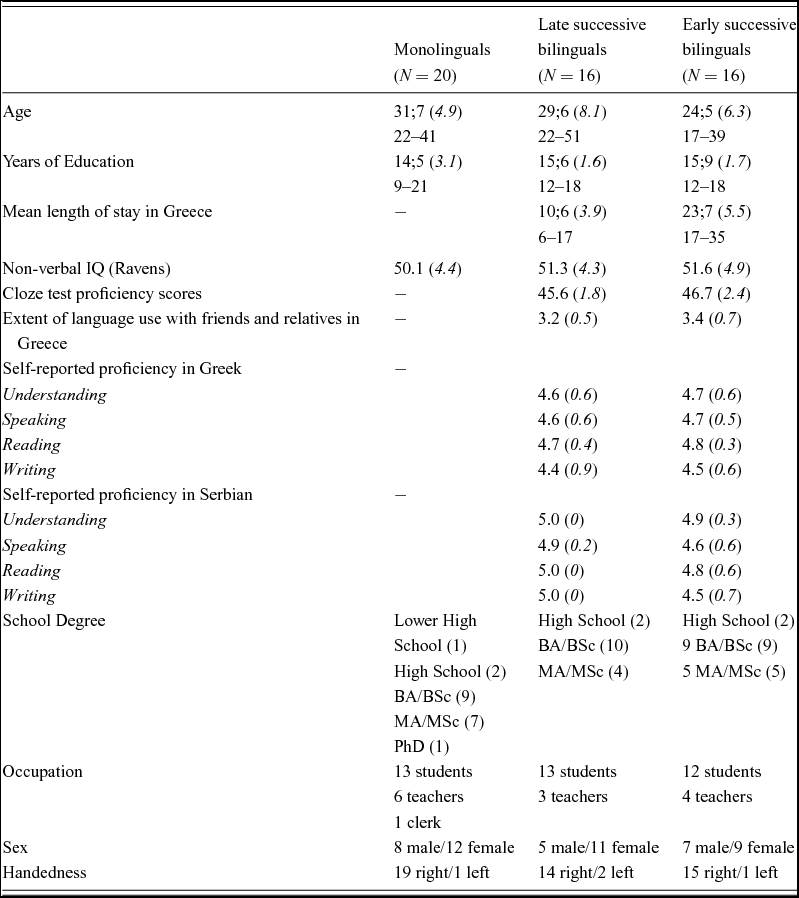
Finally, all three groups were administered the Raven's Standard Progressive Matrices (SPM) for adults (Raven, Reference Raven1962). There was no group difference in the non-verbal IQ test (F(2, 51) = .583, p = .562). Also, the three groups had similar profiles in terms of sex, handedness, and occupation (see Table 1).
Group means (SDs) and ranges of participants’ socio-demographic traits, Raven's Standard Progressive Matrices Scores, Cloze test proficiency scores in Greek for Serbian participants and extent of language use and self-reported proficiency in each language for Serbian participants
Experiment 1: Gender Picture-Word Interference Task
Materials
We selected 72 black-and-white line drawings of common inanimate objects from the Snodgrass and Vanderwart (Reference Snodgrass and Vanderwart1980) object databank with the restriction that superimposing a distractor stimulus would not impair their recognizability. Twenty-four of the pictures corresponded to masculine, 24 to feminine and the remaining 24 to nouns of neuter gender in Greek. Most importantly, half of the pictures in each of the three categories matched the grammatical gender of the corresponding inanimate object in Serbian (Greek/Serbian picture congruency) and the other half did not (Greek/Serbian picture incongruency). For instance, of the 24 masculine nouns in Greek, 12 were masculine, 6 feminine, and 6 neuter in Serbian (see Appendix A for the list of the picture names in Greek and their translational equivalents in Serbian).
Seventy-two additional Greek words were selected as distractors, 24 masculine, 24 feminine and 24 neuter nouns (Mean average frequency per million: Masc. 55.9; Fem. 54.0; Neut. 65.7, F (2, 69) = 1.829, p = .168); Mean word length in syllables: Masc. 2.8; Fem. 2.6; Neut. 2.6, F (2, 69) = .752, p = .475). Distractor words always shared the same gender across the two languages and they were semantically unrelated to the picture names (see Appendix B for the list of the distractor words in Greek and their translational equivalents in Serbian). Moreover, Greek and Serbian cognate words with varying degrees of orthographic and phonological overlap were excluded from the list of materials in order to avoid any possible cognate facilitation effects. More information on the comparisons of the length and the lexical frequencies between picture names and the distractor words in Greek, as well as their translational equivalents in Serbian, is attached in Appendix C.
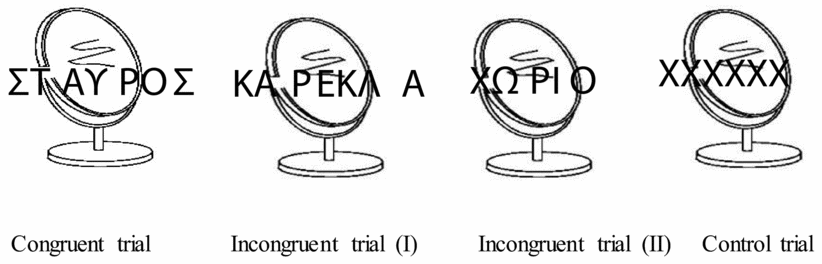
Grammatical gender congruency effects in the PWI task were drawn from manipulating two basic dimensions: the Greek picture-word congruency and the Greek/Serbian picture congruency. With respect to the Greek picture-word congruency dimension, this was created by manipulating the target and distractor (in)congruency relationship in the response language, i.e., Greek. As such, pictures were presented with a gender-congruent distractor (Greek picture-word congruent trials), a gender-incongruent distractor (Greek picture-word incongruent trials), or a row of Xs (control trials) (see Figure 1). The labels ‘Greek picture-word congruent’-‘Greek picture-word incongruent’ below the picture-word pairings in Figure 1 refer to the Greek picture-word congruency relationship between the picture name and the superimposed distractor word in the response language, i.e., Greek. More specifically, the Greek picture-word congruent trials were formed by using a picture name and a distractor word carrying the same gender in the L2/Greek (picture name: kathreftis/‘mirror’MASC, distractor word: stavros/‘cross’MASC). On the other hand, Greek picture-word incongruent trials were formed by using a distractor word that differed from the gender of the picture name; since the Greek language has a three-way gender distinction, two sets of Greek picture-word incongruent trials were formed: Greek picture-word incongruent trials (set I) (picture name: kathreftis/‘mirror’MASC, distractor word: karekla/‘chair’FEM) and Greek picture-word incongruent trials (set II) (picture name: kathreftis/‘mirror’MASC, distractor word: horio/‘village’NEUT).
Examples of four picture-word interference displays in the Greek picture-word congruent, incongruent and control trials (σταυρός/‘cross’ is masc. in both Greek and Serbian, karekla/‘chair’ is fem. in both Greek and Serbian, horio/‘village’ is neut. in both Greek and Serbian. Notice: the name of the picture ‘mirror’ is masc. in Greek (kathreftis) and neut. in Serbian (ogledalo)
As already mentioned, apart from the Greek picture-word congruency relationship between the gender of the picture name and the gender of the distractor word in Greek, Greek/Serbian picture congruency, i.e., between-language gender congruencies stemming from the gender feature of the picture name in Greek and its translational equivalent in Serbian were also manipulated to create the following conditions: (1) Greek picture-word and Greek/Serbian picture congruency, whereby there was congruency among the Greek gender of the picture noun, the Serbian gender of the picture noun and the gender of the distractor word, (2) Greek picture-word congruency and Greek/Serbian picture incongruency, whereby there was congruency between the gender of the picture and the gender of the distractor word in Greek, but incongruency between the gender of the picture noun in Serbian and the gender of the distractor word, (3) Greek picture-word incongruency and Greek/Serbian picture congruency, whereby there was incongruency between the gender of the picture noun in Greek and the gender of the distractor, but congruency between the gender of the picture noun in Serbian and the gender of the distractor word, and (4) Greek picture-word and Greek/Serbian picture incongruency, whereby there was incongruency between the gender of the distractor word and the gender of the picture name irrespective of language (see Table 2 for examples per each condition).
Examples of the picture-word interference conditions created by manipulating, first, Greek picture-word congruency created by the relation between the gender of the picture name and the gender of the distractor word in Greek, and, second, Greek/Serbian picture congruency created by the relation between the gender of the picture name and its translational equivalent in Serbian
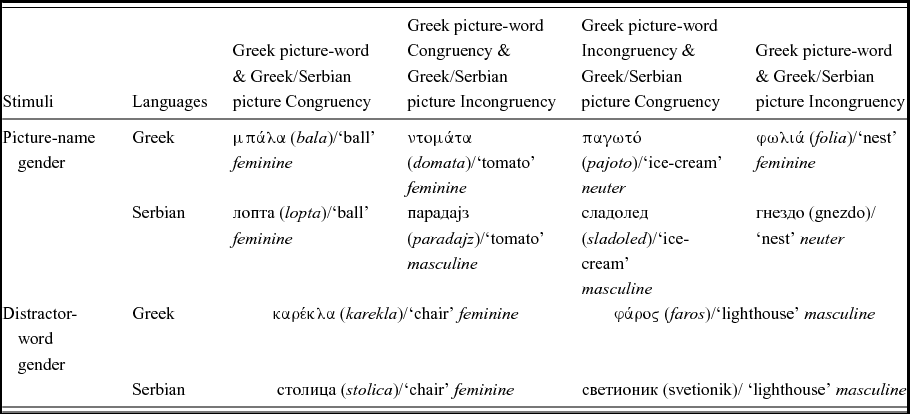
Finally, two more conditions were created depending on whether there was incongruency between the gender of the picture word in Greek and its translation in Serbian in the control trials in which the distractor word was replaced by a row of Xs. More specifically: (5) the gender of the picture in Greek was congruent with the gender of its translational equivalent in Serbian (e.g., picture: μπάλα (bala)/‘ball’ (fem.) – лопта (lopta)/‘ball’ (fem.) – distractor: xxxxxx), and, finally, (6) the gender of the picture in Greek was incongruent with the gender of the Serbian noun (e.g., picture: ντομάτα (domata)/‘tomato’ (fem.) – парадајз (paradajz)/ ‘tomato’ (masc.) – distractor: xxxxxx).
None of the resulting picture-word pairings were semantically and/or phonologically related. Three lists were created such that each picture was seen in a Greek picture-word congruent, incongruent and control context but in only one context per list. Each list included 72 test items (i.e., 24 items for each L2 context, i.e., congruent, incongruent, control), and 28 filler trials (fillers were presented only with Xs, not with a distractor word). The order of presentation was pseudo-randomized for each participant with the restriction that no semantically or phonologically related stimuli (either picture names or distractors) occur in five consecutive trials. The picture-word pairs were shown at + 200ms Stimulus Onset Asynchrony (SOA), i.e., the distractor appeared 200ms after the picture appeared on the screen (Foucart, Reference Foucart2008). Though the selection of the determiner form in Greek is not dependent on the phonological features of the local context like in French and Italian (Miozzo & Caramazza, Reference Miozzo and Caramazza1999), a number of researchers, like Mastropavlou and Tsimpli (Reference Mastropavlou and Tsimpli2011), Varlokosta (Reference Varlokosta, Galani, Hicks and Tsoulas2011) and Ralli (Reference Ralli2002), show that adult native speakers of Greek use morphological information carried by the noun suffix to predict gender, thus, confirming the claim that morphology plays an important role in the assignment of gender to Greek nouns. Assuming that the determiner in Greek is selected as soon as the lemma is selected and morphological information stemming from the noun's suffix becomes available, the picture-word pairs in the present study were presented at a positive SOA to allow speakers time to gain access to the nouns’ inflectional morphemes.
Design
The experimental design included the following factors: Greek picture-word Congruency (Greek picture-word congruent, Greek picture-word incongruent) and Greek/Serbian picture Congruency (Greek/Serbian picture congruent vs. Greek/Serbian picture incongruent) as within-subjects factors, and group (Greek-speaking monolinguals, early Serbian (L1)–Greek (L2) bilinguals, late Serbian (L1)–Greek (L2) bilinguals) as between-subjects factor.
Apparatus
The stimuli were presented as black line drawings on white background from an Acer computer and the experiment was run using the E-Prime software (Schneider, Eschman & Zuccolotto, Reference Schneider, Eschman and Zuccolotto2002). Responses were measured to the nearest millisecond with a microphone (Sennheiser ME40) connected to a voice-response box. Target pictures were enlarged to a size of approximately 18 x 18 cm, and distractor pictures were shrunk to a size of approximately 8 x 8 cm. Distractor words were presented in black uppercase Arial 18 Bold font in the center of each target picture.
Procedure
Before the experiment proper, all the pictures included in the PWI task were presented in a Power Point file with superimposed Xs to represent the position where the distractor words would appear in the experiment. Participants were required to think of the name they would spontaneously use in Greek to describe the picture they saw on the screen, and then the name (i.e., determiner+noun) they were expected to produce for this particular picture. Successful naming of 90% (i.e., at least 65/72 pictures) of the whole picture set was a prerequisite for participation in the PWI task. In case Serbian-speaking participants made a gender mistake while naming the pictures, the examiner told them the correct gender. The percentage of times the Serbian-speaking participants made a gender error while naming the pictures in the pretest was very low (Mean: 0.5%), thus, implying that these speakers were highly proficient in their L2 (Greek). Apart from naming the target pictures in Greek, Serbian bilinguals were also asked to name them in Serbian in order to examine whether they would use the intended L1/Serbian word (with the intended grammatical gender feature). Participants’ responses were recorded and a native speaker of Serbian, who was not involved in the tasks, transcribed the data. The Serbian words produced for the target pictures were perceived to converge on 99 percent of the words’ (intended) translational equivalents in Serbian.
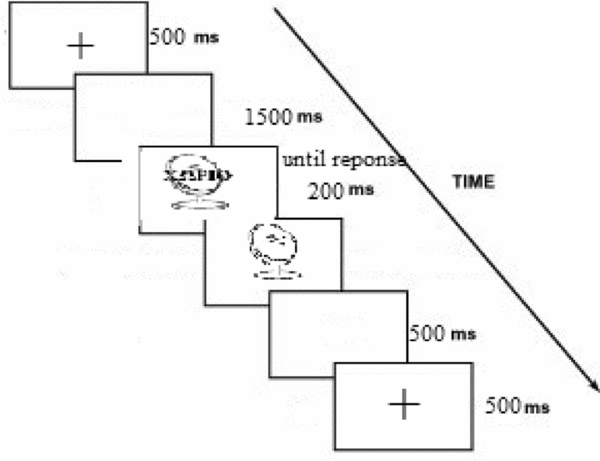
The participants were tested individually. Three experimental sessions were carried out, consisting of 100 naming responses each, with a minimum interval of two days between sessions. On-screen written instructions informed the subjects to name the picture in Greek as fast and accurately as possible using a DP sequence and ignore the distractor word. Speed as well as accuracy was emphasized. On each individual trial, the participants first viewed a fixation cross presented at the center of the screen for 500 msec. After a blank interval of 500 msec, the target picture was displayed and the distractor-word, which was either gender-congruent or gender incongruent with the target picture, appeared at the centre of the picture with a 200 msecs delay. The picture-distractor word pairing would stay on the screen until the verbal response, i.e., the DP, was provided, up to a maximum of 2000ms. The participants performed the naming response on the target picture by speaking the picture label into a microphone from the onset of the produced DP (i.e., determiner + noun). The picture and the distractor stimulus disappeared from the screen as soon as the voice key was triggered. Each trial was concluded by a 1500-msec inter-trial interval (see Figure 2 for a schematic representation of the event sequence of each trial in the task). Each experimental session was preceded by a training session of 10 naming trials, whereby the procedure was exactly the same as the procedure of the experimental phase. The 100 trials per block were the same across participants and were randomized per block with the constraint that stimuli in the same (congruent or incongruent) condition could not appear on more than three consecutive trials.
Schematic representation of the event sequence in each trial of the picture-word interference task.
Results
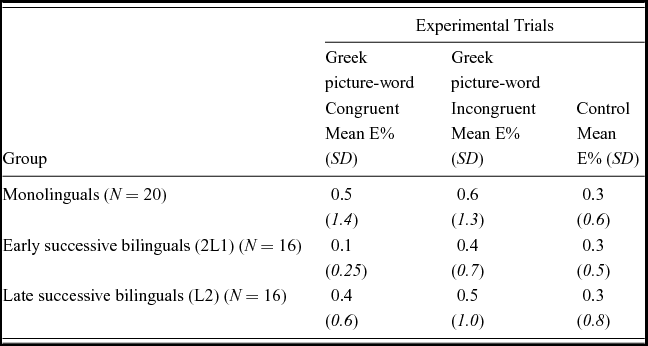
Prior to the statistical analysis of the data, responses which were judged by the experimenter as being incorrect (i.e., inappropriate grammatical gender attribution to the determiner, incomplete naming responses, disfluencies that triggered the voice key, and pauses), as well as subject-by-subject latencies which were smaller than 250ms and those over two SDs from each participant's mean were removed and replaced by the mean (see Janssen, Schirm, Mahon & Caramazza, Reference Janssen, Schirm, Mahon and Caramazza2008; Meyer, Reference Meyer1996; Ratcliff, Reference Ratcliff1993, among others, for a similar design). This procedure yielded 4.7%, 4.9%, and 1.7% for the Greek-speaking monolingual group, 2.2%, 3.9% and 1.6% for the early successive Serbian–Greek bilingual group, and 3.3%, 3.7% and 3.9% for the late successive Serbian–Greek bilingual group for the Greek picture-word congruent, incongruent and control trials, respectively. Table 3 illustrates that the error rates in the three categories were low across groups. Error rates were submitted to a one-way analysis of variance (ANOVA) with group (Greek-speaking monolinguals, early successive bilinguals, late successive bilinguals) as the between-subjects variable and error rates as the dependent variable; the main effect of the group variable was non-significant in both the subject and the item analysis (F1(2, 51) = 1.058, p = .355; F2(2, 71) = 1.060, p = .352 for the Greek picture-word Congruent trials, F1(2, 51) = .262, p = .771; F2(2, 71) = .049, p = .952 for the Greek picture-word Incongruent trials, and F1(2, 51) = .005, p = .995; F2(2, 71) = .196, p = .823 for the Control trials).
Groups’ error rates (E%) and standard deviations (SDs) (in msecs) in the Greek picture-word congruent, incongruent and control trials of the Gender Picture-Word Interference Task
Furthermore, measurements of Pearson Correlation Coefficients were performed to examine the relationships among the RTs of the three experimental blocks of the PWI task. Reaction times on the first experimental block showed significant correlations with the reaction times of the second, r=0.762, p < 0.01, and the third experimental block, r=0.725, p < 0.01, while the RTs of the second experimental block also showed a significant correlation with the RTs of the third experimental block, r=0.804, p < 0.01.
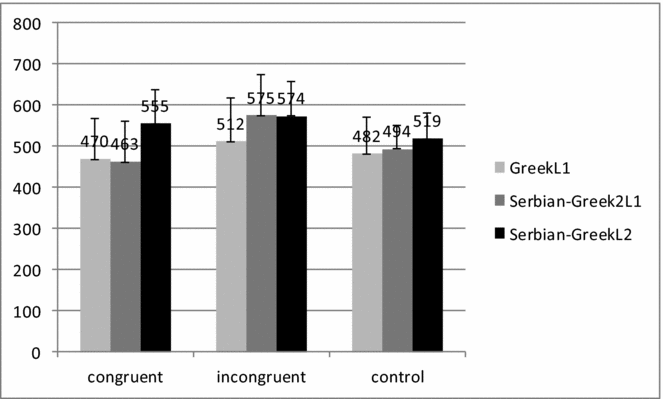
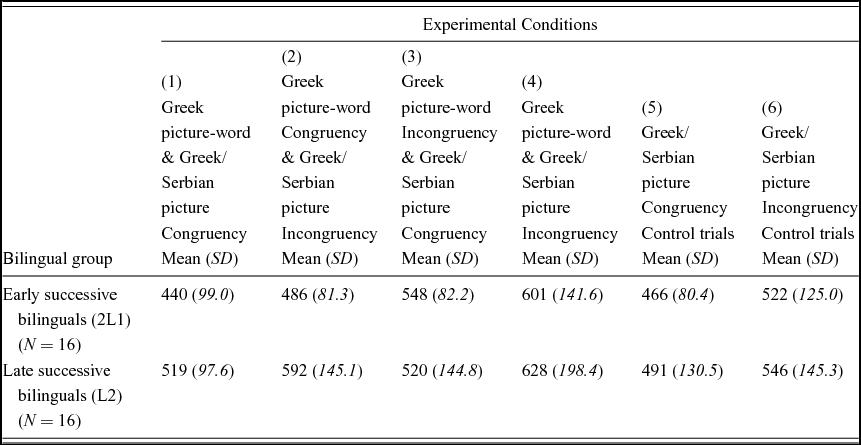
Figure 3 displays the mean response latencies (in msecs) varied by experimental group (Greek-speaking monolinguals, early successive bilinguals, late successive bilinguals) and Greek picture-word Congruency (Greek picture-word congruent, incongruent, control) depending on the congruency relationship between the grammatical gender of the picture name in Greek and the gender of the distractor word. Table 4, on the other hand, presents the two bilingual groups’ mean response latencies (in msecs) in the trials conditioned by the Greek/Serbian picture Congruency factor, i.e., whether the grammatical gender of the picture-name in Greek agreed or not with the gender of the picture-name's translational equivalent in Serbian.
Groups’ naming latencies (in msecs) in the Gender Picture-Word Interference Task after collapsing over Greek picture-word congruency, i.e. the congruency relationship between the gender of the picture-name and the gender of the distractor-word in the response language (Greek)
Note. GreekL1, monolingual Greek-speaking adults; Serbian-Greek2L1, early successive Serbian-Greek bilingual adults; Serbian-GreekL2, late successive Serbian-Greek bilingual adults.
Early and late successive bilinguals’ naming latencies (in msecs) (SDs) in the Greek picture-word (in)congruent and Greek/Serbian picture (in)congruent trials of the Gender Picture-Word Interference Task
We conducted a repeated measures ANOVA with group (Greek monolinguals, early successive bilinguals, late successive bilinguals) as a between-subjects factor, and Greek picture-word Congruency (Greek picture-word congruent, Greek picture-word incongruent) and Greek/Serbian picture Congruency (Greek/Serbian picture congruent, Greek/Serbian picture incongruent) as within-subjects factors. Both subject (F1) and item (F2) analyses were conducted. An effect of Greek picture-word Congruency was observedFootnote 1; F1(1, 49) = 11.362, p = .001; F2(1, 105) = 25.967, p < .001. There were significant main effects of Greek/Serbian picture Congruency (F1(1, 49) = 13.193, p = .001; F2(1, 105) = 25.409, p < .001) and group (F1(2, 49) = 112.040, p < .001; F2(2, 105) = 227.602, p < .001, respectively); subsequent post-hoc tests revealed that the monolingual group was significantly different from late successive bilinguals (p = .034) but not early successive bilinguals (p = .591), while the difference between early and late successive bilinguals was not significant either (p = .291). The analysis also revealed a significant two-way interaction between group and Greek picture-word Congruency (F1(2, 49) = 3.751, p = .031; F2(2, 105) = 4.617, p = .012), and a significant interaction between group and Greek/Serbian picture Congruency (F1(2, 49) = 4.791, p = .013; F2(2, 105) = 10.991, p < .001). Finally, there was a significant three-way interaction among group, Greek picture-word Congruency, and Greek/Serbian picture Congruency, F1(2, 49) = 23.064, p < .001; F2(2, 105) = 10.991, p < .001.
We next conducted separate repeated measures ANOVAs (Greek picture-word Congruency: (in)congruency relationship between the gender of the picture name and the gender of the distractor word in Greek; Greek/Serbian picture Congruency: (in)congruency relationship between the gender of the picture name in Greek and the gender of the picture name's translational equivalent in Serbian) for each group to search for the source of this interaction. We report on our analysis for the early successive bilingual group first. We observed a significant main effect of Greek picture-word Congruency, F1(1, 15) = 20.784, p < .001; F2(1, 35) = 46.161, p < .001, which was due to the fact that the group's response latencies for the Greek picture-word congruent trials (463 msecs) were considerably faster relative to the Greek picture-word incongruent trials (575 msecs) (see Figure 3); no significant main effect of Greek/Serbian picture Congruency was observed, F1(1, 15) = 3.135, p = .160; F2(1, 35) = .249, p = .621, since the early successive bilingual group's response latencies for the Greek/Serbian incongruent trials (543 msecs, i.e., the average between conditions (2) and (4) in Table 2) were not significantly slower than Greek/Serbian congruent trials (494 msecs, i.e., the average between conditions (1) and (3) in Table 2). For the late successive bilingual group, the effects were reversed; there was a significant main effect of Greek/Serbian picture Congruency, F1(1, 15) = 7.541, p = .015; F2(1, 35) = 19.960, p < .001, but no significant main effect of Greek picture-word Congruency, F1(1, 15) = .239, p = .632; F2(1, 35) = 3.390, p = .080. An examination of Table 4 reveals the source of the Greek/Serbian picture Congruency effect for the late successive bilingual group: response latencies for the Greek/Serbian picture incongruent trials (610 msecs) were significantly slower than for the Greek/Serbian picture congruent trials (520 msecs). The specific results show that the interference effect as indexed by the difference in RTs between Greek/Serbian incongruent and Greek/Serbian congruent trials was nearly double for the late (91 msecs) relative to the early successive bilingual group (49 msecs). For the monolingual group, a significant main effect of Congruency was observed, F1(1, 19) = 8.024, p = .011; F2(1, 35) = 8.087, p = .007, while the Greek/Serbian picture Congruency effect was not significant, F1(1, 19) = 1.330, p = .263; F2(1, 35) = 1.896, p = .177, as expected. A look at the RT data in Figure 3 reveals that the Congruency effect stemmed from monolinguals’ significantly faster RTs in the congruent (470 msecs) relative to the incongruent (512 msecs) trials.
The next step of data analyses was to examine any Serbian interference effects on the groups’ response latencies in the control trials, i.e., the trials where the to-be-named target pictures were presented along a row of Xs superimposed on the target picture. As such, our second repeated measures ANOVA was conducted with group (Greek monolinguals, early successive bilinguals, late successive bilinguals) as a between-subjects factor, and Greek/Serbian picture Congruency (Greek/Serbian picture congruent, Greek/Serbian picture incongruent) as within-subjects factor. We observed a main effect of Greek/Serbian picture Congruency, F2(1, 105) = 8.376, p = .005 (item-based data; no effect on subject-based data was observed, F1(1, 49) = 2.834, p = .099), which stemmed from the fact that RTs for the control trials involving congruency between the gender of the picture name and its translational equivalent in Serbian were significantly faster (476 msecs) than the RTs for the trials involving Greek/Serbian incongruency (516 msecs). No significant group effect (F1(2, 49) = .666, p = .519; F2(2, 105) = 1.455, p = .238) or interactions between group and Greek/Serbian picture Congruency (F1(2, 49) = .927, p = .402; F2(2, 105) = 2.269, p = .110) were observed.
Experiment 2: Non-verbal Spatial Target-Stimulus Locating Task
Materials, design, apparatus and procedure
Four horizontal white lines, two on the top and two on the bottom of the black background of the screen served as the stimuli marking the locations in which the target and the possible distractor could appear. The lines remained on the screen for 1500 msecs after which the prime display appeared. After 150 msecs from the prime's onset, the four horizontal lines appeared for 2850 msecs. Half of the participants in each of the three groups were required to report the location of a target (‘X’) appearing in one of four locations by pressing the corresponding key on the keyboard and to ignore a distractor (‘O’) that occurred in one of the other three locations (the opposite mapping was assigned to the other half of the participants). Responses consisted of pressing one of four green-labeled keys, each spatially compatible with one of the four marked positions on the screen. After a response was made or the time granted for response elapsed, there was a 350 msecs auditory feedback interval before the critical probe display appeared for 150 msecs. This display could exhibit either the target and the distractor or just the target. The timing procedure was identical to the one used for the prime display.
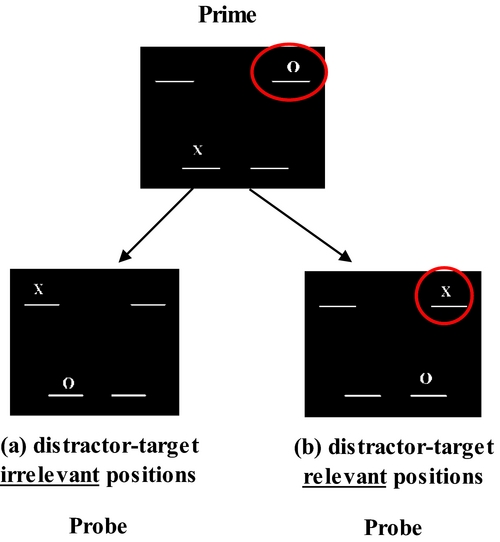
On the whole, the task included 96 prime-probe combinations divided into two experimental blocks. Prime-probe sequences were manipulated along the prime-probe location relationship, i.e., whether the probe target was presented in the previously inhibited location occupied by the prime distractor (i.e., prime-probe related trials; negative priming effect) as opposed to the trials in which the probe target appeared in a previously empty location on the prime display (prime-probe unrelated trials) (see Figure 4). Latency in the responses (in msecs) and response accuracy (in %) across the prime-probe related and prime-probe unrelated trials were recorded with E-Prime software (Schneider et al., Reference Schneider, Eschman and Zuccolotto2002).
Examples of (a) prime distractor-probe target relevant and (b) prime distractor-probe target irrelevant trials in the non-verbal Spatial Target-Stimulus Locating Task.
Results
Reaction times deviating more than two SDs from a participant's mean were eliminated and replaced by the mean for each participant (3.95%, 4.12%, and 2.95% of trials for the Greek-speaking monolinguals, early successive bilinguals, and late successive bilinguals, respectively).
We report on our analyses for the RTs first. Our first mixed-design ANOVA was conducted with participants’ group (monolinguals, early successive bilinguals, late successive bilinguals) as a between-subjects factor, and prime-probe relationship (prime distractor-probe target related locations vs. prime distractor-probe target unrelated locations) as within-subjects factor. A significant two-way interaction between distractor-target relationship and group (F1(2, 49)=14.563, p<.001; F2(2, 141) = 7.707, p = .001) was found, while both group and distractor-target location effects were significant only in the item analyses (F1(2, 49)=.193, p=.825; F2(2, 141) = 6.223, p = .003 for the group effect; F1(1, 49)=1.414, p=.238; F2(1, 141) = 35.126, p < .001 for the distractor-target location effect). Separate repeated measures ANOVAs conducted for each group revealed a significant negative priming effect for the monolingual and the early successive bilingual group only (F1(1, 19) = 10.625, p = .006; F2(1, 47) = 20.742, p<.001 for monolinguals, and F1(1, 15) = 92.466, p<.001; F2(1, 47) = 15.925, p<.001 for early successive bilinguals; F1(1, 15) = 1.632, p = .214; F2(1, 47) = 3.925, p = .171 for the late successive bilingual group). As shown in Table 5, the negative priming effect stemmed from monolinguals’ and early successive bilinguals’ considerably slower response latencies in the distractor-target related trials – where the target in the probe trial occupied a location that has previously been occupied by the distractor – compared to the distractor-target unrelated trials.
Mean Reaction Times (in msecs) (SDs) and percentages of errors (SDs) of the experimental groups as a function of Prime-Probe [± Relatedness] in the non-verbal Spatial Target-Stimulus Locating Task

The same analyses performed on the percentages of errors showed a significant group effect (F1(2, 49) = 2.911, p = .054; F2(2, 141) = 8.617, p < .001), a significant distractor-target location relationship effect (F1(1, 49) = 14.226, p < .001; F2(1, 141) = 47.052, p < .001), as well as a significant interaction between distractor-target location relationship and group (F1(2, 49) = 3.006, p = .046; F2(2, 141) = 6.737, p = .002). Separate repeated measures ANOVAs conducted for each group revealed a significant distractor-target location relationship effect for monolinguals (F1(1, 19) = 6.821, p = .017; F2(1, 47) = 20.047, p < .001) and late successive bilinguals (F1(1, 15) = 6.398, p = .023; F2(1, 47) = 6.714, p = .013) which was driven from both groups’ more erroneous performance in the distractor-target location related vs. unrelated trials (94.9% vs. 99.6% for monolinguals, and 93.2% vs. 98.9% for late bilinguals) in comparison to early successive bilinguals (F1(1, 15) = 2.143, p = .164; F2(1, 47) = 2.714, p = .213) who did not exhibit a significant distractor-target location relationship effect in accuracy.
To further investigate the size of the groups’ negative priming effect, i.e., the extent to which the three groups varied in their sensitivity to the spatial relatedness between target and distractor location, we conducted an ANOVA with group as the between-subjects factor (monolinguals, early successive bilinguals, late successive bilinguals) and a negative priming effect size index – based on the difference between each group's RT and accuracy means in the distractor-related and the distractor-unrelated trials – as the dependent variable. The ANOVA on the groups’ RTs revealed a significant group effect (F1(2, 51) = 9.667, p < .001; F2(2, 143) = 7.707, p < .001). Subsequent post-hoc evaluations of subject-based data showed that the negative priming effect for late successive bilinguals (-41 msecs) was of significantly smaller magnitude as that observed for early successive bilinguals (97 msecs) and monolinguals (78 msecs) (p = .001 for both differences), while there was no significant difference between early successive bilinguals and monolinguals (p = .955). Post-hoc tests on item-based data revealed that the negative priming effect for early successive bilinguals (87 msecs) was of significantly larger magnitude relative to both monolinguals (56 msecs; p = .05) and late successive bilinguals (9 msecs; p < .001), while the negative priming effect for monolinguals was significantly stronger than late successive bilinguals (p < .001).
On the other hand, the ANOVA conducted on the groups’ negative priming effect as reflected in the accuracy measure revealed a significant group effect only in the item analysis (F1(2, 51) = 1.906, p = .160; F2(2, 143) = 6.737, p = .002). Subsequent post-hoc tests showed that the negative priming effect for monolinguals (4,6%) and late successive bilinguals (5,7%) was of larger magnitude as that observed for early successive bilinguals (1,0%; p = .004 for the difference with monolinguals, and p = .005 for the difference with late successive bilinguals), while there was no significant difference between monolinguals and late successive bilinguals (p = .968).
Regression analyses: Between Tasks Comparisons
We also conducted linear regression analyses to test the hypothesis that constant language control shapes cognitive control abilities and, thus, results in more pronounced cognitive control. The selection of the variables was based on our aim to determine whether language control in the gender interference task would predict performance in the non-verbal task and in particular on the distractor-target location related trials of the non-verbal task. In particular, we examined the amount of variance in the negative priming effect accounted for by the Greek picture-word congruency and the Greek/Serbian picture congruency effects in the verbal task. The Greek picture-word congruency effect was expressed as the “gender incongruent minus congruent” RT difference for all three groups, while the Greek/Serbian picture congruency effect was measured as the “between-language incongruent minus between-language congruent” RT difference. The analyses were only conducted on RTs, since the error rates in the PWI task were low (see Table 3).
Regression analyses revealed that monolinguals’ performance in the distractor-target interference (location-related) trials of the non-verbal task was not predicted by either Greek picture-word congruency (R2= .049, R2Adjusted= .011, F1(1, 19) = .819, p = .379) or Greek/Serbian picture congruency (R2= .082, R2Adjusted= .031, F1(1, 19) = 1.606, p = .221). The same pattern was observed for the location-unrelated trials of the non-verbal task (R2= .018, R2Adjusted= .044, F1(1, 19) = .286, p = .600 for Greek picture-word congruency; R2= .056, R2Adjusted= .004, F1(1, 19) = 1.072, p = .314 for Greek/Serbian picture congruency).
Considering early successive bilinguals, performance in the prime-probe related trials was significantly predicted by both Greek picture-word congruency (R2= .541, R2Adjusted= .508, F1(1, 15) = 16.475, p = .001) and Greek/Serbian picture congruency (R2= .304, R2Adjusted= .255, F1(1, 15) = 6.129 p = .027); specifically, 54.1% and 30.4% of the variance in the non-verbal task was accounted for by the Greek picture-word and the Greek/Serbian picture congruency effect, respectively (subject-based data, collapsing across items). For late successive bilinguals, performance in the prime-probe related trials was not predicted by either Greek picture-word congruency (R2= .18, R2Adjusted= .012, F1(1, 15) = 3.209, p = .095) or Greek/Serbian picture congruency (R2= .041, R2Adjusted= .027, F(1, 15) = .599, p = .452).
Finally, the performance of the two bilingual groups in the prime-probe unrelated trials of the task was not found to be predicted by either Greek picture-word congruency (R2= .061, R2Adjusted= .006, F1(1, 15) = .906, p = .357 for late successive bilinguals; R 2=.004, R2Adjusted= .073, F1(1, 15) = .052, p = .824 for early successive bilinguals) or Greek/Serbian picture congruency (R2= .000, R2Adjusted= .071, F(1, 15) = .000, p = .988 for late successive bilinguals; R 2=.001, R2Adjusted= .076, F(1, 15) = .007, p = .935 for early successive bilinguals).
Discussion
The present study aimed at comparing early and late successive Serbian (L1)–Greek (L2) bilinguals along their efficiency of inhibitory control at both language and non-verbal cognitive domains. We used a picture naming paradigm that prompted both within- and between-language conflict at the grammatical gender level. Inhibition at the non-verbal level was measured by evaluating groups’ performance on a spatial target-stimulus locating task that tested negative priming effects indexed by participants’ RTs and accuracy performance in trials where the target-stimulus appeared in a location that had previously been occupied by the distractor. In the verbal interference experiment we found that late successive bilinguals were more susceptible than early successive bilinguals to grammatical gender interference from their mother tongue. Moreover, early successive bilinguals (along with monolinguals) exhibited a significant Greek picture-word interference effect in contrast to late successive bilinguals whose response latencies in the Greek picture-word incongruent trials did not differ from congruent trials. With respect to the non-verbal task, early successive bilinguals showed a stronger negative priming effect in their RTs compared to late successive bilinguals; yet they exhibited significantly fewer errors in the prime-probe related condition relative to both monolinguals and late successive bilinguals. Moreover, the linear regression analyses indicated that language control, inferred from the size of interference effect in gender-incongruent trials within Greek as well as in the trials inflicting conflict between the picture-word's grammatical gender in Greek and its translational equivalent in Serbian, significantly predicted performance in the cognitive interference task only for early successive bilinguals.
More specifically, language control in the PWI task was established by measuring processing costs caused, first, by gender congruency effects between the picture and the word in the response language, i.e., Greek, and, second, by L1-L2 congruency effects generated by manipulating the congruency relationship between the gender of the pictured noun in Greek and Serbian. The pattern of performance observed for monolingual speakers confirms the gender congruency effect also found in other studies (La Heij et al., Reference La Heij, Mak, Sander and Willeboordse1998; Schriefers, Reference Schriefers1993; Schiller & Caramazza, Reference Schiller and Caramazza2003; Costa et al., Reference Costa, Kovacic, Franck and Caramazza2003); monolingual speakers were slower in producing noun phrases when the distractor word had a different gender from the gender of the target picture compared to the same-gender trials.
In our study, early successive bilinguals showed no between-language congruency effects in both the distractor-present and the control trials of the PWI task in which the target-pictures were not accompanied by a distractor word. More specifically, early successive bilinguals’ naming latencies in the trials where the gender of the picture in Greek and the gender of the picture's translational equivalent in Serbian were incongruent and a distractor word was present, were not slower than in the trials where the genders were congruent. In fact, the size of the interference effect from the gender system of the Serbian language in the distractor-present trials of the PWI task was 49 msecs, which was very close to the size of the interference effect (i.e., 56 msecs) that early successive bilinguals experienced while naming pictures which were not accompanied by a distractor word. On the contrary, late successive bilinguals demonstrated a cross-linguistic gender congruency effect, which was nearly double in size (i.e., 91 msecs) relative to that in early successive bilinguals, when naming pictures with superimposed distractor words. Crucially, the RT difference (i.e., 55 msecs) between the Greek/Serbian congruent and the Greek/Serbian incongruent condition for the late successive bilingual group in the task's control trials was considerably lower than the interference effect in the distractor-present trials and almost equal to the congruency effect that early successive bilinguals exhibited in the control trials (see Table 4). Since the interaction between L1-L2 congruency and group was not statistically significant for the control trials, the pattern of performance in the PWI indicates that late successive bilinguals were different from early successive bilinguals in showing conflict costs for the trials in which the gender of the picture-noun did not agree with the gender of the picture's translational equivalent in Serbian, yet only for the picture trials with a distractor word. Such discrepancy in late successive bilinguals, i.e., the emergence of between-language congruency in the distractor-present, but not in the distractor-absent trials, implies that the written text superimposed on the target-picture may have increased the activation of the picture's translational equivalent in Serbian, thus leading to the development of conflict between the gender features of Greek and Serbian, as indexed by the considerable Greek/Serbian picture congruency effect. It seems that late successive bilinguals’ access to the written form of the Greek distractor word (and, more specifically, to the word's inflectional suffix carrying grammatical gender information) also activated the word's translational equivalent in Serbian, thus strengthening the competition between the Greek and the Serbian gender, at least in the Greek/Serbian picture incongruent trials. At the level of lexical processing, late successive bilinguals were more sensitive than early successive bilinguals to the grammatical gender of the target distractor word in the presence of the inflectional suffix that activated the gender of the distractor word in both languages. The absence of between-language conflict in the control trials implies that the lexical nodes of the picture words in Greek and Serbian did not act as lexical competitors during picture naming when the written form of the distractor word was absent. Overall, the results suggest that late successive bilinguals experienced stronger interference from the activated lexical items in the non-response language compared to early bilinguals and, most importantly, that mechanisms responsible for the inhibition of gender competitors in Serbian – if in use – were not effective enough to avoid suppression costs.
The results are consistent with the gender-shared models of bilingual language production, which claim that the L1 and L2 gender systems are not separate but interact in the bilingual mental lexicon during language production (La Heij et al., Reference La Heij, Mak, Sander and Willeboordse1998; Levelt et al., Reference Levelt, Roelofs and Meyer1999; Roelofs, Reference Roelofs1998). Lexical items appear to preserve their strong interrelations across languages even in speakers with high L2 proficiency, at least for pairs of languages that have symmetrical grammatical gender systems (i.e., they share type of gender values) like Greek and Serbian, which were the languages examined in the present study. Late successive bilinguals’ weakened resistance to information stemming from the non-response language in the PWI task appears to corroborate earlier studies in demonstrating that during a naming task parallel lexical representations are activated even when only one language is needed for naming and that this parallel activation includes the feature of gender (Bordag & Pechmann, Reference Bordag and Pechmann2007; Ganushchak et al., Reference Ganushchak, Verdonschot and Schiller2011; Kroff, Coffman, Dussias, Gerfen, Gullifer & Guzzardo-Tamargo, Reference Kroff, Coffman, Dussias, Gerfen, Gullifer and Guzzardo-Tamargo2010; Morales et al., Reference Morales, Paolieri and Bajo2011). In a nutshell, the gender retrieval process in Greek for the late Serbian-speaking bilinguals can be thought of as a race where both lexical items across languages are activated, and delay in gender retrieval accuracy is determined by the gender congruency relation between the two languages. Conflict between the gender features of a lexical item across the two languages lowers the activation of the target item, which in turn leads to an increase of the average retrieval time in picture naming.
Costa et al.’s (Reference Costa, Kovacic, Franck and Caramazza2003) study with highly proficient Croatian–Italian bilinguals, however, showed that their naming latencies for pictures whose translational equivalents in the L2 had the same gender value as the L1 names (and for pictures with different gender values across the two languages) were similar. As such, Costa et al.’s (Reference Costa, Kovacic, Franck and Caramazza2003) study provides no evidence in favor of inter-language interaction at the grammatical gender level. Since the onset of the L2 acquisition in Costa et al.’s (Reference Costa, Kovacic, Franck and Caramazza2003) sample of Croatian–Italian bilinguals varied from 5 to 9 years, our knowledge of the effect of onset of exposure to the L2 on bilinguals’ language control abilities cannot be clearly evaluated. Spanish–French bilingual participants in Foucart's (Reference Foucart2008) study, on the other hand, were late bilingual adult students, while their precise onset of exposure to French is unspecified. The absence of interlingual interaction at the gender level in both these studies suggests that age of onset of exposure to the L2 may alter the dynamics of cross-language activation of grammatical gender features in bilinguals. Late successive bilinguals in the present study were a more cohesive group relative to previous studies, in the sense that they were all first exposed to Greek after the age of 22; thus they all had a highly functioning procedural L1 system. It is possible that setting the threshold that triggers interaction between the grammatical gender features of the two languages critically relies on the bilinguals’ age of the exposure to the L2, and that late age (>20 yrs.) at onset of exposure to the L2 exacerbates cross-language conflict at the grammatical gender level. Moreover, the fact that neither of the studies (i.e., Costa et al., Reference Costa, Kovacic, Franck and Caramazza2003; Foucart, Reference Foucart2008) that have examined interlingual competition has included a task measuring inhibition may have obscured the contribution of bilingual participants’ cognitive control abilities to their performance in the gender interference tasks.
When age of acquisition was manipulated in the present study, we found that very early exposure to the L2 plays an important role in regulating competition between conflicting gender features during naming. We would like to entertain two possibilities for the difference between the performances of early and late successive bilingual speakers. On the one hand, it may imply that that the intended language, along with its grammatical gender specifications, were automatically selected due to bilinguals’ high proficiency in the L2 (Costa & Santesteban, Reference Costa and Santesteban2004). It is possible that early successive bilinguals activated the two languages in parallel, so that the parser could evaluate the gender properties of the response language only. On the other hand, the asymmetric cost obtained by the two bilingual groups may reflect greater efficiency to inhibit L1 gender for early successive bilinguals. Proficiency has been found to affect the form that grammatical gender interactions take in bilinguals, and early bilinguals with high literacy levels in both languages are less likely to reveal asymmetrical costs when asked to switch between the two languages because efficient inhibition is applied to the two languages depending on the linguistic context in which bilinguals participate (Costa, Santesteban & Ivanova, Reference Costa, Santesteban and Ivanova2006). Early successive bilinguals in the present study may have been more efficient in inhibiting interfering co-activated information from their mother tongue than late successive bilinguals. Therefore, the weak L2 gender interference effect in early successive bilinguals may be interpreted as indicating that gender-incongruent competitors in Serbian were more effectively inhibited by the early bilingual group relative to late successive bilinguals.
At first glance, the presence of a strong interference effect in early successive bilinguals’ (and monolinguals’) performance in the task's Greek picture-word incongruent trials speaks against a better selection/inhibition mechanism for the specific group. Together, the presence of processing cost associated with interference from gender-incongruent distractors in Greek and the lack of cost for the between-language interaction results suggests that the precise nature of inhibition for early successive bilinguals was specific to between- but not within-language operations at the grammatical gender level. However, the observed strong predictive relation between early successive bilinguals’ within- and between-language interference effect in the PWI task and the non-verbal interference effect in the spatial task as revealed by the regression analyses challenges an otherwise tempting account based on the level of inhibition's computational specificity.
One possible explanation for the discrepancy in performance between Greek picture-word incongruent and Greek/Serbian incongruent trials in early successive bilinguals is that knowledge of Greek gender was subject to different memory mechanisms in early compared to late successive bilinguals. The presence of processing cost stemming from Greek picture-word incongruency in early bilinguals (as well as monolinguals) implies that only this group relied on native-like processing mechanisms, possibly related to the procedural consolidation of grammatical gender knowledge in the L2 (Ullman, Reference Ullman2001, Reference Ullman and Sanz2005). The L2 lexical network in early successive bilingual participants was probably denser than in late successive bilinguals and implicit/intuitive enough to minimize any inhibition demand. As such, the strong Greek picture-word congruency effect in early successive bilinguals may reflect automaticity in gender processing in the non-native language which is associated with the earliness of onset of L2 acquisition and the proceduralization (or else consolidation) of L2 grammatical gender competence for the specific group. On the other hand, if the late bilingual group relied on declarative memory-based explicit knowledge for picture naming in the L2 (i.e., paying attention to whether their DP output would be consistent with the morpho-phonological rules they have learnt) this could simply take precedence over, and block any, L2 grammatical gender interference. Crucially, late successive bilinguals’ overreliance on declarative memory-based explicit knowledge for picture naming in the L2 may account for the lack of a congruency effect in Greek. If late bilinguals relied on analytical-logical deliberation enforced by rule-following, they might have taken longer to activate the gender of the distractor in their L2 which cancelled out competition with the gender of the picture and therefore rendered invisible a gender congruency effect.
Late learners’ tendency to apply declarative knowledge of grammar to syntactic processing in the second language has been confirmed by neuroimaging measures. In a study of regular and irregular verb processing in Spanish, Hernández, Hofmann and Kotz (Reference Hernández, Hofmann and Kotz2007) found that late second language learners exhibit increased left inferior frontal gyrus activity as compared to early learners of Spanish of matched proficiency. Furthermore, activity in the prefrontal cortex was significantly higher in the late bilingual group compared to the early one, suggesting that additional syntactic processing was requested when late bilinguals were confronted with L2 irregular items that had to be retrieved from declarative memory (Ullman, Corkin, Coppola, Hickok, Growdon, Koroshetz & Pinker, Reference Ullman, Corkin, Coppola, Hickok, Growdon, Koroshetz and Pinker1997). The asymmetric cost experienced by the early and late successive bilingual speakers, when naming pictures whose gender in Greek conflicts with the pictures’ gender properties in the bilinguals’ first language, fits within a growing body of work on how age of acquisition influences brain structures in bilinguals. While children use basic level or sensorimotor mechanisms to learn L2, late or low proficiency bilinguals require additional higher-level processing reflected in the recruitment of more extensive left hemisphere regions in contrast to early bilinguals who tend to recruit basic level linguistic information processing regions (Bloch, Kaiser, Kuenzli, Zappatore, Haller, Franceschini, Luedi, Radue & Nitsch, Reference Bloch, Kaiser, Kuenzli, Zappatore, Haller, Franceschini, Luedi, Radue and Nitsch2009; Hernández & Li, Reference Hernández and Li2007). The current results on the distinct patterns of grammatical gender processing of early and late bilinguals provide support that syntactic processing in bilinguals shows effects of age of onset of exposure to the L2.
The spatial target-stimulus locating task focused on the groups’ cognitive control abilities by exploring their performance in conditions where the locations occupied by the distractor and the target in the prime and probe trials, respectively, were the same or not. The analyses of early successive bilinguals’ and monolinguals’ RTs across prime-probe related trials indicated that processing costs incurred by the ‘long-lived’ distractor inhibition effect survived over the probe trial when the target occupied its location. The presence of a significant negative priming effect in the RT performance of monolinguals replicates previous studies on monolingual subjects’ tendency to put more effort in reactivating the representation of a stimulus from its inhibited state (Treccani et al., Reference Treccani, Argyri, Sorace and Della Sala2009; Amso & Johnson, Reference Amso and Johnson2005; Buckolz, Edgar, Kajaste, Lok & Khan, Reference Buckolz, Edgar, Kajaste, Lok and Khan2012). The finding (at least, in the by-item analysis) that early successive bilinguals had a significantly larger negative priming effect than monolinguals suggests that the specific group had more cognitive resources available and, thus, was able to spend more time to reactivate the inhibited target stimulus which was suppressed due to the inhibition spread from the prime distractor to the probe target occupying a distractor-related position. A significant negative priming effect was also elicited by monolinguals’ and late successive bilinguals’ significantly less accurate performance in the prime-probe related (vs. unrelated) trials, but not in early successive bilinguals; such finding implies that early bilingual participants were better able to withhold strong inhibition acting on the target stimulus when performing their motor responses in the task.
The finding that early successive bilinguals differed from monolinguals in the size of the negative priming effect appears to align with Treccani et al.’s study (Reference Treccani, Argyri, Sorace and Della Sala2009), though, a stronger negative priming effect was exhibited by early bilinguals in Treccani et al. (Reference Treccani, Argyri, Sorace and Della Sala2009) in the accuracy but not in the RT measure. The fact that the bilingual groups across the present study and Treccani et al. (Reference Treccani, Argyri, Sorace and Della Sala2009) are not directly comparable, i.e., not all bilinguals in the latter study were exposed to both languages from birth, may have affected the pattern of performance. The asymmetry between the two studies may also be attributed to the early bilingual group's greater emphasis on accuracy rather than on the speed of responding in the present study. Placing emphasis on one of the two measures has been shown to have distinct performance effects on the patterns of the negative priming effect observed in similar tasks, with emphasis on the accuracy of responding leading to robust negative priming effects in RTs but not in accuracy (Neill & Westberry, Reference Neill and Westberry1987; Neumann & DeSchepper, Reference Neumann and DeSchepper1992). Although we did not find a significant negative priming effect in early successive bilinguals’ accuracy performance, RTs may be sufficiently sensitive to detect such an effect. Taken together, early successive bilinguals’ stronger negative priming effect in RTs relative to monolinguals and late successive bilinguals suggests that early bilinguals had relatively more efficient inhibitory control mechanisms than the rest of the groups.
According to the results of the linear regression analyses, late successive bilinguals’ performance aligned to the performance of the monolingual group, with language control performance in the PWI task failing to predict cognitive control performance in the non-verbal task for either group. On the contrary, early bilinguals’ interference effect in the PWI task was found to be a significant predictor of their response latencies in the prime-probe related trials of the non-verbal task, suggesting a link between language control and non-verbal inhibitory processes only for early bilinguals. This result supports the claim that there may be transferability of impact from language control to general-purpose inhibitory control processes, which potentially stems from early successive bilinguals’ constant practice of inhibitory control from a very early age to choose which language they need to respond in (e.g., Blumenfeld & Marian, Reference Blumenfeld and Marian2013).
If the length of simultaneous exposure to two languages is critical for more efficient inhibitory control processes to emerge, then early successive bilinguals operate differently from late successive bilinguals. The difference in the size of the negative priming effects exhibited by late and early successive bilinguals suggests unequal levels of cognitive resources for the two groups. The evidence from the regression analyses examining possible interactions between language and cognitive control processes expands on Foucart's (Reference Foucart2008) and Costa and colleagues’ (Reference Costa, Kovacic, Franck and Caramazza2003, Reference Costa and Santesteban2004, Reference Costa and Santesteban2006) findings with bilinguals showing that inhibitory mechanisms modulated by the onset of exposure to L2 may play a significant role in language interference resolution. These results further highlight the need to contextualize the naming patterns of bilingual individuals within studies on bilingual non-verbal inhibitory control and on bilingual groups with different ages of onset of exposure to the second language.
A limitation of the present study is that apart from the clitic elicitation task in Greek, the proficiency of the two bilingual groups in Greek was not thoroughly evaluated. Though both groups orally reported high proficiency of reading and speaking in Greek, subtle differences in Greek proficiency might have existed that affected their naming performance in the PWI naming task. Future studies should seek to explore the influence of both age of onset of exposure and proficiency effects in L2 grammatical gender processing.
Conclusions
Taken together, these results provide experimental support for the shared gender hypothesis in bilingual production according to which gender representations are shared across L1 and L2 in bilinguals. Furthermore, the results of the present study indicate that there is an age of L2 acquisition effect on diverging grammatical gender systems between the two languages in bilingual adults, with later exposure to the L2 favoring stronger grammatical gender interference from the L1. The strength of interference appears to be modulated by the bilingual groups’ inhibition abilities. The data from the non-verbal task suggest that early successive bilinguals had more enhanced inhibitory functions compared to late successive bilinguals and monolinguals. The findings imply that inhibition is potentially operative in contexts that trigger the resolution of grammatical gender conflict between two languages; though other factors such as late successive bilinguals’ overreliance on declarative memory-explicit knowledge while assigning grammatical gender in the L2 might also account for their performance difference from early successive bilinguals.
Appendices
Picture names in Greek and their translational equivalents in Serbian in the Gender Picture-Word Interference Task
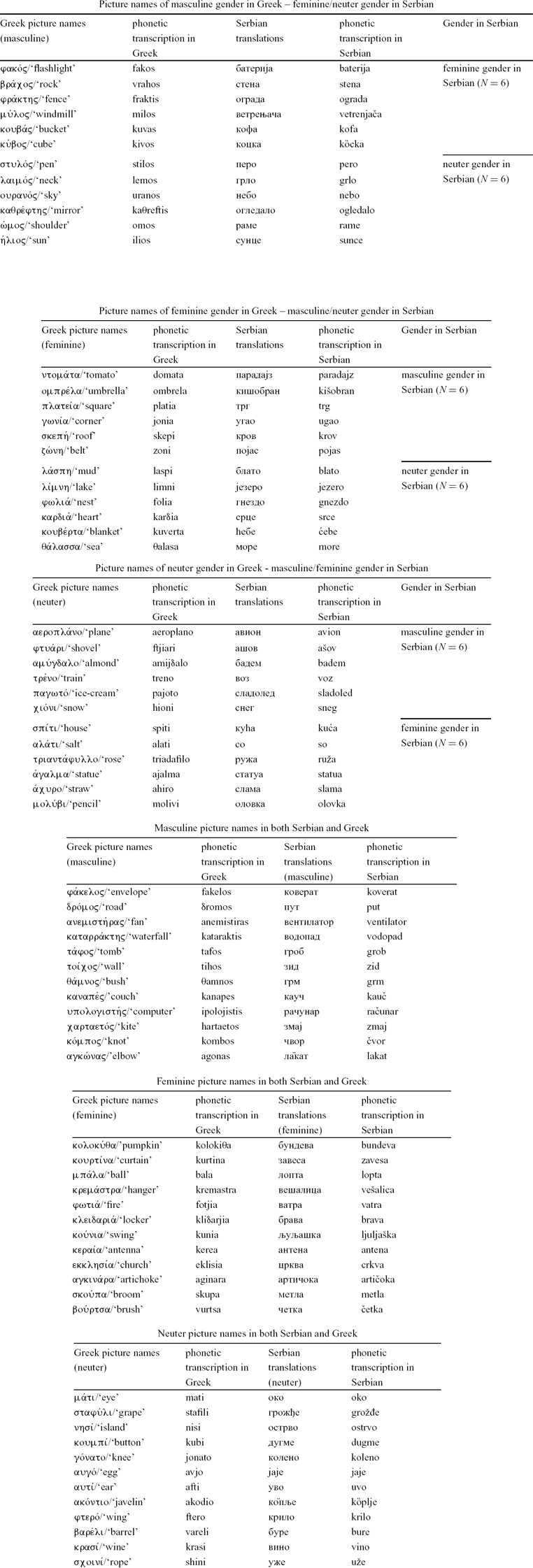
Distractor words in Greek and their translational equivalents in Serbian in the Gender Picture-Word Interference Task
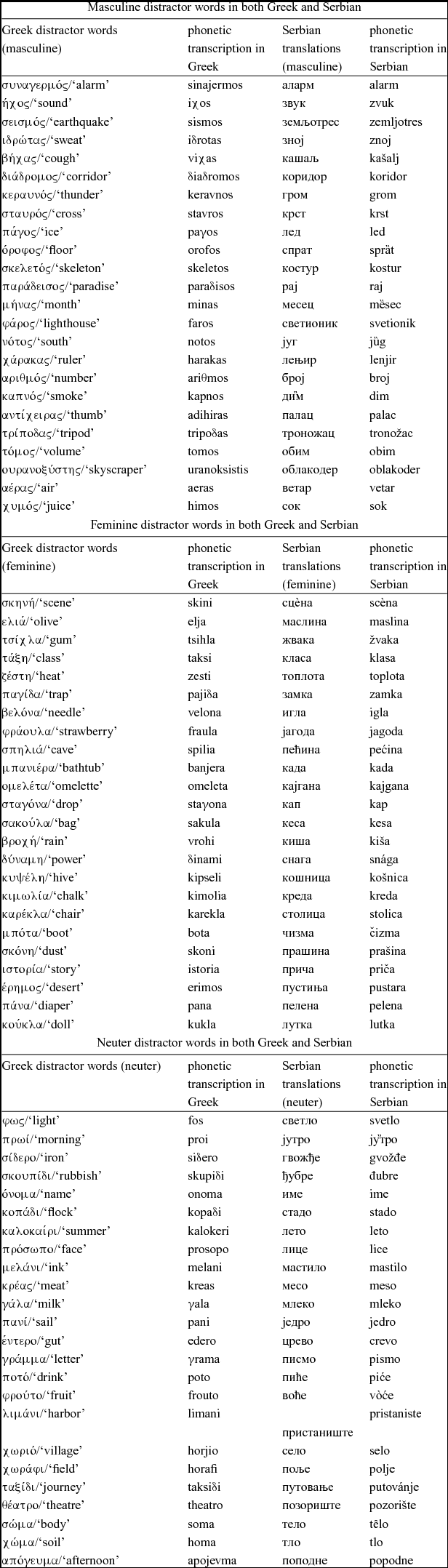
Appendix C. Comparisons of the length and the lexical frequencies of the picture names and distractor words in Greek, as well as their translational equivalents in Serbian across the congruent and incongruent trials of the Gender Picture-Word Interference Task
Picture names in Greek were balanced in frequency and length separately for the Greek/Serbian picture congruent (Mean frequency per million: Masc. 70.2; Fem. 55.9; Neut. 79.5, F (2, 35) = .098, p = .907); Mean word length in syllables: Masc. 3.0; Fem. 2.8; Neut. 2.4, F (2, 35) = 1.454, p = .248; Institute for Language and Speech Processing (ILSP) database, www.ilsp.gr), and the Greek/Serbian picture incongruent trials (Mean frequency per million: Masc. 44.9; Fem. 61.6; Neut. 79.1, F (2, 35) = .816, p = .451); Mean word length in syllables: Masc. 2.2; Fem. 2.5; Neut. 2.7, F (2, 35) = 2.650, p = .089). There were no significant frequency differences between the Greek/Serbian picture congruent and the Greek/Serbian picture incongruent trials for either gender category in Greek (F (1, 23) = .343, p = .564 for masculine pictures; F (1, 23) = 2.859, p = .138 for feminine pictures; F (1, 23) = .387, p = .540 for neuter pictures). Pictures’ translational equivalents in Serbian were balanced only for length since no lemma/surface frequency database has been yet compiled for the Serbian language (Greek/Serbian picture congruent trials: Mean word length in syllables: Masc. 2.7; Fem. 2.8; Neut. 2.3, F (2, 35) = 1.027, p = .369; Greek/Serbian picture incongruent trials: Mean word length in syllables: Masc. 2.0; Fem. 2.5; Neut. 2.3, F (2, 35) = .666, p = .521). Paired t-tests on the pictured words’ length for each gender category revealed no significant differences between languages (t (23) = 1.273, p = .216 for masculine pictures; t (23) = 1.310, p = .203 for feminine pictures; t (23) = 2.762, p = .112 for neuter pictures).
Distractor words’ translational equivalents in Serbian were also balanced for length across the three genders (Mean word length in syllables: Masc. 2.2; Fem. 2.4; Neut. 2.6, F (2, 69) = 1.273, p = .286). Paired t-tests on the distractor words’ length for each gender category revealed no significant differences between languages (t (23) = 2.035, p = .076 for masculine distractors; t (23) = 1.366, p = .185 for feminine distractors; t (23) = .000, p = 1.00 for neuter distractors).



